There’s nothing quite like the satisfaction of biting into a perfectly cooked rib, where the meat practically melts off the bone.
The Ultimate Smoky BBQ Ribs offer a perfect balance of smoky, sweet, and savory flavors that delight the senses.
These ribs are an embodiment of the American barbecue tradition, bringing families and friends together over a hearty meal.
Whether it’s a summer backyard gathering or a cozy fall dinner, these ribs promise to impress with their rich flavor and tender texture.
For those who cherish a well-executed barbecue, this recipe promises mouth-watering results with each bite.
Dive into the world of BBQ mastery and learn how to create ribs that will become the talk of any event.
The History and Cultural Significance
• The Ultimate Smoky traces its origins to the Southern United States, where it was originally created by pitmasters perfecting the art of slow-cooking.
• The dish evolved over decades as smoking techniques and seasoning blends were refined, eventually becoming the beloved version we know today.
• In Southern culture, this dish traditionally appears at family reunions and public gatherings, symbolizing community and tradition.
• While many variations exist across different regions, the authentic version maintains a deep smoky flavor and tender meat that sets it apart from imitations.
Recipe Overview
Nutritional Information (per serving)
You Might Also Like

How to Make Irresistible Keto Avocado Brownies: Rich, Fudgy, and Guilt-Free – Recipe Zesty – Bold Flavors, Simple Recipes
Essential Equipment Guide
Smoker: A smoker is crucial for achieving the authentic smoky flavor that defines this dish. If a smoker is unavailable, a charcoal grill with a smoking box can serve as an alternative. Look for a smoker with adjustable vents for better temperature control.
Meat Thermometer: Ensuring the ribs reach the right internal temperature is essential for safety and texture. A digital meat thermometer with a probe is ideal for accuracy. Make sure the thermometer can measure up to high temperatures.
Sharp Knife: A sharp knife is essential for trimming excess fat from the ribs, which helps in even cooking and flavor penetration. A good chef’s knife or a boning knife is recommended. Keep the knife well-honed for precision cuts.
Ingredients
For the Ribs
|
|
| Amount | Ingredient | Notes |
|---|---|---|
| 2 racks | pork ribs | trimmed of excess fat |
For the Rub
| Amount | Ingredient | Notes |
|---|---|---|
| 2 tablespoons | paprika | adds color and flavor |
| 1 tablespoon | brown sugar | for sweetness |
| 1 teaspoon | cayenne pepper | adds heat |
| 1 teaspoon | garlic powder | enhances flavor |
| 1 teaspoon | onion powder | for depth |
| 1 teaspoon | black pepper | for spice |
For the Sauce
| Amount | Ingredient | Notes |
|---|---|---|
| 1 cup | ketchup | base for the sauce |
| 1/2 cup | apple cider vinegar | for tanginess |
| 1/4 cup | honey | adds sweetness |
| 1 tablespoon | Worcestershire sauce | adds umami |
| 1 teaspoon | liquid smoke | for extra smokiness |
Preparation Methods
Rub Application: Applying a rub is more than just sprinkling spices. It's about massaging the flavors into the meat to ensure even distribution and penetration. When applying the rub, use your hands to press it into the meat firmly. This allows the spices to adhere well and enhances the flavor profile.
Indirect Smoking: This technique involves cooking the ribs away from the direct heat source, allowing the smoke to circulate around the meat. It’s crucial for developing that deep, smoky flavor without charring. To master this, ensure that the heat source is to one side of the smoker, and the meat is placed on the opposite side.
Sauce Basting: Basting the ribs with sauce is essential for building layers of flavor. It also helps keep the meat moist during cooking. Use a brush to apply the sauce evenly, and do so in the final stages of cooking to avoid burning the sugars in the sauce.
Step 1: Prepare the Ribs
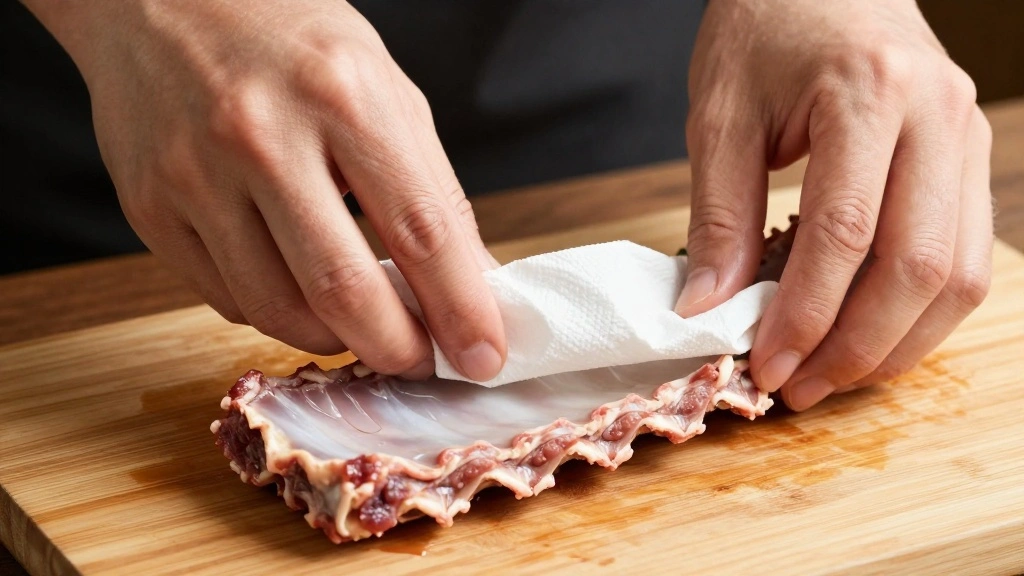
Remove the membrane from the back of the ribs.
Use a paper towel for better grip if needed.
Trim excess fat from the ribs to ensure even cooking.
Pat the ribs dry with paper towels for optimal rub adhesion.
Step 2: Apply the Rub
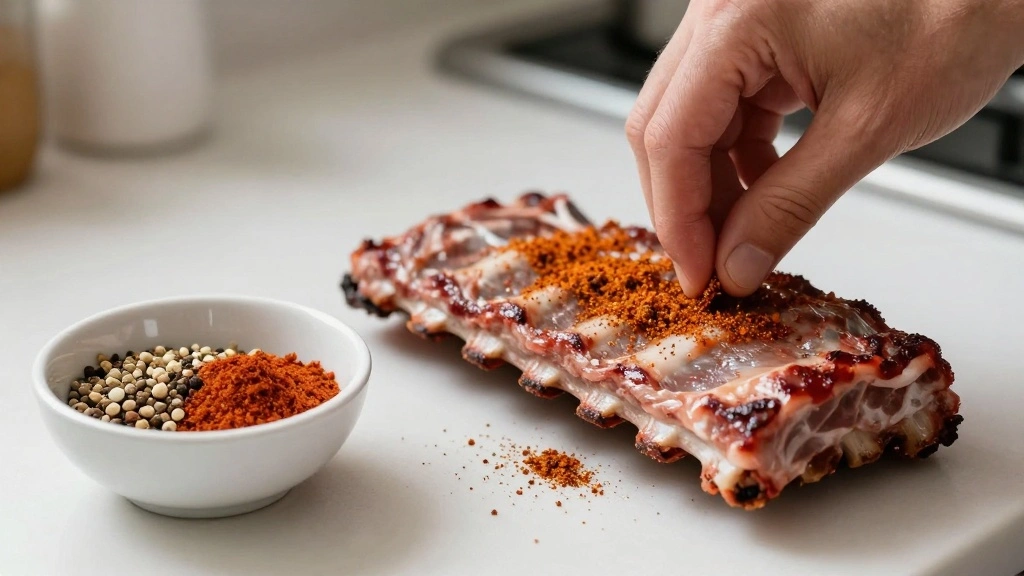
Combine all rub ingredients in a small bowl.
Generously sprinkle the rub over both sides of the ribs.
Massage the rub into the meat to ensure even coverage.
Let the ribs sit at room temperature for 20 minutes to absorb flavors.
Step 3: Preheat the Smoker
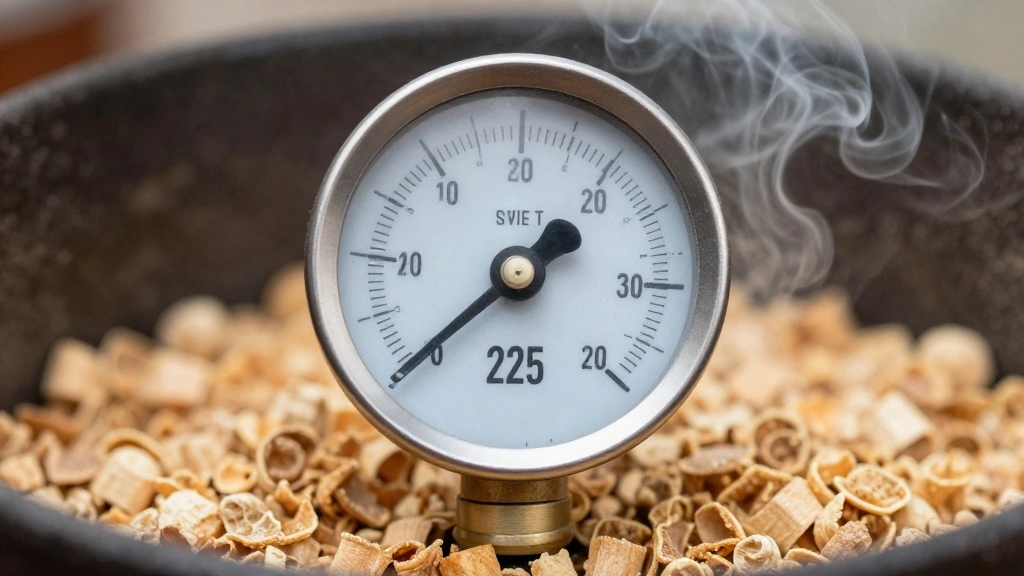
Set up your smoker for indirect heat.
Preheat to 225°F (107°C).
Add wood chips or chunks for smoke flavor.
Ensure the smoker has a steady temperature before adding the ribs.
Step 4: Smoke the Ribs
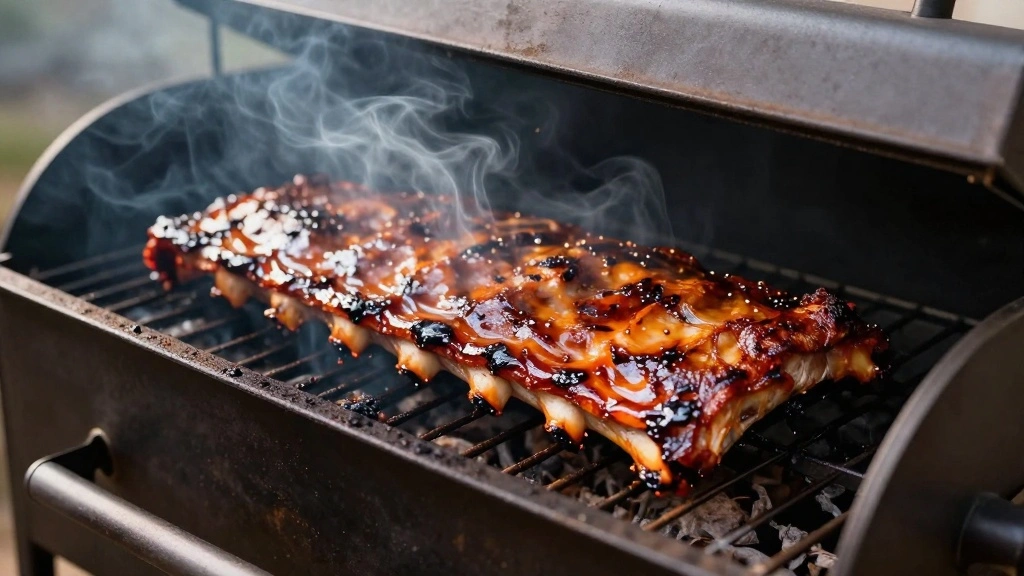
Place the ribs on the smoker grate with the bone side down.
Close the lid to trap in the smoke.
Maintain a consistent temperature throughout the cooking process.
Smoke the ribs for about 3 hours without opening the lid.
Step 5: Prepare the Sauce
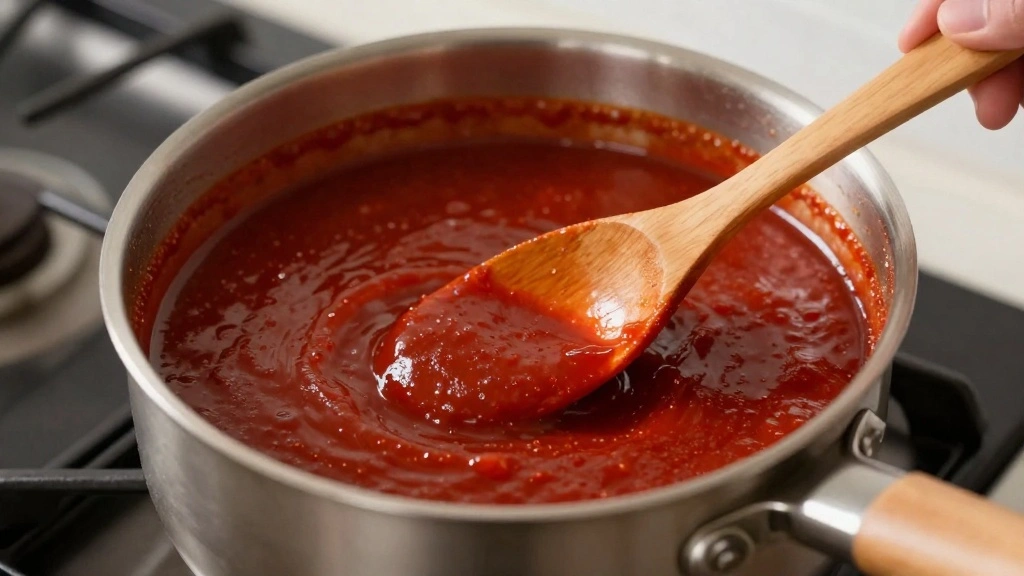
Combine all sauce ingredients in a saucepan.
Bring to a simmer over medium heat.
Stir occasionally to prevent sticking.
Let the sauce thicken slightly, about 10 minutes.
Step 6: Wrap the Ribs
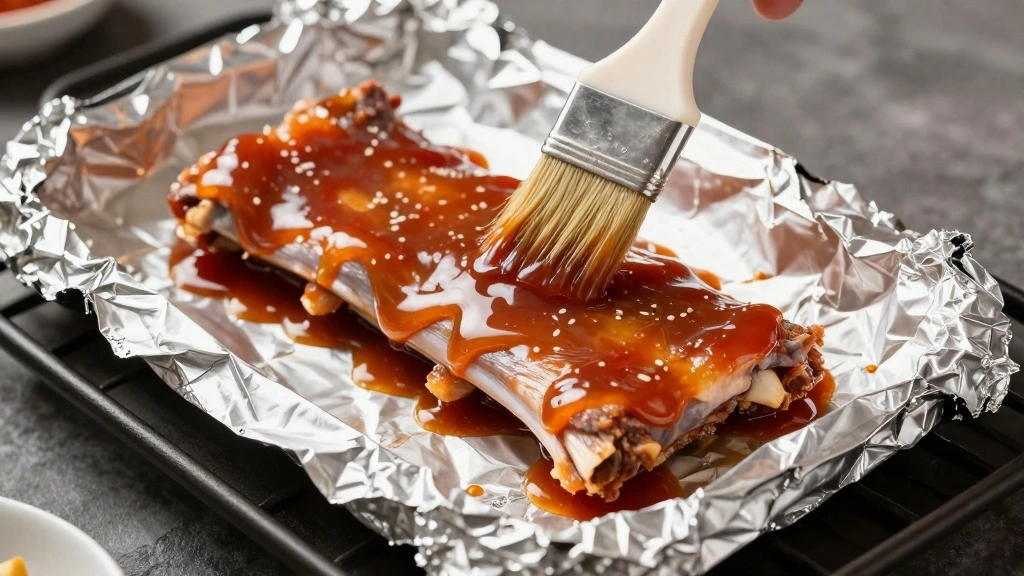
Remove the ribs from the smoker carefully.
Place each rack on a large piece of aluminum foil.
Add a small amount of sauce over the ribs before sealing.
Wrap tightly to create a packet and return to the smoker.
Step 7: Continue Smoking
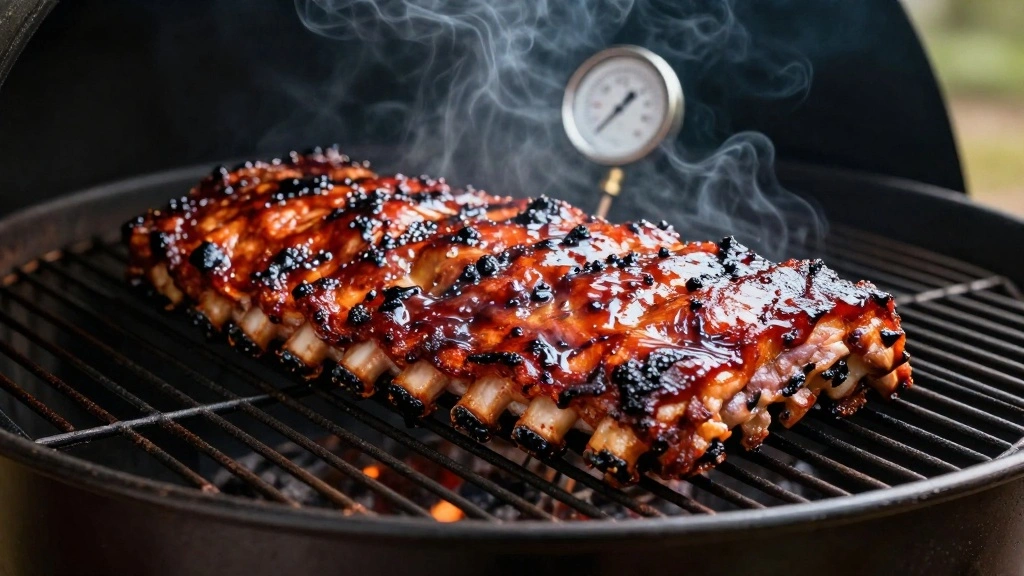
Return the wrapped ribs to the smoker.
Close the lid and maintain 225°F (107°C).
Smoke for an additional 2 hours.
Check for tenderness by unwrapping slightly and probing with a toothpick.
Step 8: Final Basting and Grilling
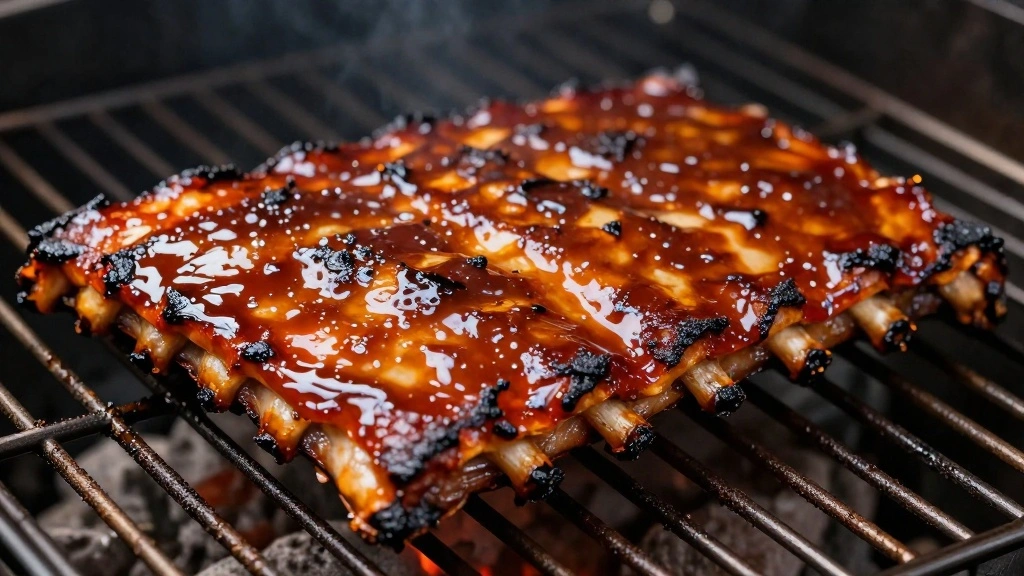
Unwrap the ribs and place back on the smoker grate.
Baste generously with sauce using a brush.
Let the ribs cook for an additional 30 minutes to caramelize the sauce.
Look for a glossy finish and slightly charred edges.
How to Make the Ultimate Smoky BBQ Ribs: Fall-Off-The-Bone Goodness
Ingredients
Method
- Remove the membrane from the back of the ribs. Trim excess fat and pat the ribs dry with paper towels.
- Mix paprika, brown sugar, cayenne, garlic powder, onion powder, and black pepper. Massage the rub generously over both sides of the ribs. Let rest at room temperature for 20 minutes.
- Preheat smoker to 225°F (107°C) using indirect heat. Add wood chips or chunks for smoke flavor.
- Place ribs bone-side down on the smoker. Close lid and smoke for 3 hours, maintaining a steady temperature.
- Combine ketchup, apple cider vinegar, honey, Worcestershire sauce, and liquid smoke in a saucepan. Simmer over medium heat for about 10 minutes until slightly thickened.
- Remove ribs from smoker and place each rack on foil. Add a small amount of sauce, wrap tightly, and return to smoker.
- Smoke wrapped ribs at 225°F (107°C) for an additional 2 hours until very tender.
- Unwrap ribs and place back on smoker. Baste generously with sauce and cook for 30 minutes until sauce is caramelized and glossy.
Nutrition
Critical Timing and Temperature Guide
Smoking Process: Maintain a temperature of 225°F (107°C) for the entire cooking process. Look for a consistent smoke output and avoid opening the lid frequently. A common mistake is letting the temperature fluctuate, which can lead to uneven cooking.
Wrapping Process: After 3 hours of initial smoking, wrap the ribs tightly in foil. This step is crucial for tenderizing the meat. Ensure no gaps in the foil where heat can escape, as this can dry out the ribs.
Final Basting and Grilling: Unwrap and baste the ribs, then return to the smoker for 30 minutes. Monitor the sauce to prevent burning. A common mistake is applying the sauce too early, which can lead to burnt sugars.
Pro Tips for the Ultimate Smoky
• Ingredient Selection: Choose fresh, high-quality ribs with a good ratio of meat to bone. The freshness and cut quality of the ribs significantly affect the final tenderness and flavor.
• Preparation Secret: Allow the rub to sit on the ribs for at least 20 minutes before smoking. This resting time helps the flavors penetrate the meat more deeply.
• Temperature Management: Keep a close eye on the smoker's temperature, as fluctuations can affect the cooking time and texture. Use a reliable thermometer to ensure accuracy.
• Texture Enhancement: Wrapping the ribs in foil during the cooking process helps retain moisture and achieve that fall-off-the-bone texture.
• Flavor Layering: Utilize wood chips like hickory or applewood for smoking to add depth to the flavor profile. Combining different wood types can enhance the smoky complexity.
• Make-Ahead Strategies: Prepare the rub and sauce in advance and store them in airtight containers. This allows the flavors to meld and makes cooking day less hectic.
• Restaurant-Quality Finishing Touches: After basting, finish the ribs on a hot grill for 5 minutes to caramelize the sauce and create a slightly crispy exterior.
• Equipment Optimization: If using a charcoal grill, create a two-zone fire by placing coals on one side and cooking the ribs on the opposite side for effective indirect cooking.
Troubleshooting Common Issues
• Ribs Too Dry: This can be caused by overcooking or failing to wrap the ribs properly. To fix, ensure proper wrapping and consider adding a moisture source like apple juice when wrapping.
• Lack of Smoky Flavor: This could be due to insufficient smoking time or not enough smoke production. Use fresh wood chips and pre-soak them for better smoke output.
• Burnt Sauce: Adding sauce too early can result in burnt sugar. Apply the sauce only in the last 30 minutes of cooking to prevent this issue.
• Uneven Cooking: Uneven heat distribution in the smoker can lead to this problem. Ensure the ribs are placed away from direct heat and rotate them if necessary.
• Tough Meat: Toughness can occur if the ribs are cooked at too high a temperature or not long enough. Always maintain a low, consistent temperature and allow enough cooking time.
Variations and Regional Differences
• Memphis-Style Ribs: These ribs are typically served dry with a seasoning rub applied after cooking, focusing more on the meat's natural flavors.
• Texas-Style Ribs: Known for their bold flavors, Texas-style ribs often feature a simple rub of salt and pepper, with a focus on smoking over mesquite wood.
• Kansas City-Style Ribs: These ribs are known for their thick, sticky sauce that is applied generously throughout the cooking process.
• Carolina-Style Ribs: Emphasizing a tangy vinegar-based sauce, these ribs are often cooked over low heat for an extended period to achieve tenderness.
Food Science Behind the Recipe
• Maillard Reaction: This chemical reaction between amino acids and reducing sugars gives the ribs their brown color and complex flavor, especially when the sauce is caramelized.
• Collagen Breakdown: Slow cooking at low temperatures gradually breaks down collagen in the meat, turning it into gelatin and resulting in a tender texture.
• Smoke Penetration: Smoke particles adhere to the meat’s surface, imparting flavor and aroma. The moisture on the ribs helps capture more smoke particles for a richer flavor.
Frequently Asked Questions
What's the most common mistake people make when preparing BBQ ribs? One of the most common mistakes is cooking the ribs at too high a temperature, which can lead to dryness and toughness.
Can I use a regular grill instead of a smoker? Yes, you can use a regular grill by setting it up for indirect cooking and using a smoking box or foil packet with wood chips.
How can I tell when my ribs are done? The ribs are done when the meat is tender and easily pulls away from the bone, and the internal temperature reaches about 190°F (88°C).
What type of wood chips should I use for smoking? Hickory and applewood are popular choices for their robust flavor, but mesquite can also be used for a more intense smoky taste.
Is there a way to make the ribs spicier? Increase the amount of cayenne pepper in the rub or add hot sauce to the barbecue sauce for extra heat.
Can I prepare the ribs in advance? Yes, you can apply the rub and refrigerate the ribs overnight to enhance the flavor before cooking.
How do I store leftover ribs? Wrap the ribs tightly in foil or place them in an airtight container and refrigerate for up to 3 days. Reheat gently to avoid drying them out.
Serving and Presentation Guide
• Traditional Presentation: Serve the ribs on a large platter, with sauce on the side for dipping and a sprinkle of fresh parsley for color.
• Casual Presentation: Cut the ribs into individual portions and serve on a wooden board with a variety of dipping sauces.
• Elegant Presentation: Stack the ribs in a neat pile on a white platter, drizzled with a reduction of the barbecue sauce for a refined look.
• Family-Style Presentation: Serve the ribs directly from the smoker onto a large table, allowing guests to help themselves, with sides like coleslaw and cornbread.
Conclusion
Making the Ultimate Smoky BBQ Ribs at home is a rewarding experience that combines tradition with culinary skill.
By following these detailed steps and tips, you’ll achieve ribs that are tender, flavorful, and sure to be a hit at any gathering.
Embrace the art of barbecue and enjoy the satisfaction of serving ribs that are truly fall-off-the-bone.
With practice and patience, you'll master this recipe and become the go-to BBQ expert in your circle.