
Learning how to rest brisket after smoking is the single most important step that backyard cooks skip and professional pitmasters never do without. You can nail your rub, manage your fire perfectly for 12 to 16 hours, and hit that magic internal temp of 203 degrees Fahrenheit, but if you slice into that brisket straight off the smoker, you are going to watch all those hard-earned juices pour right out onto the cutting board. That is heartbreaking, and it is entirely avoidable.
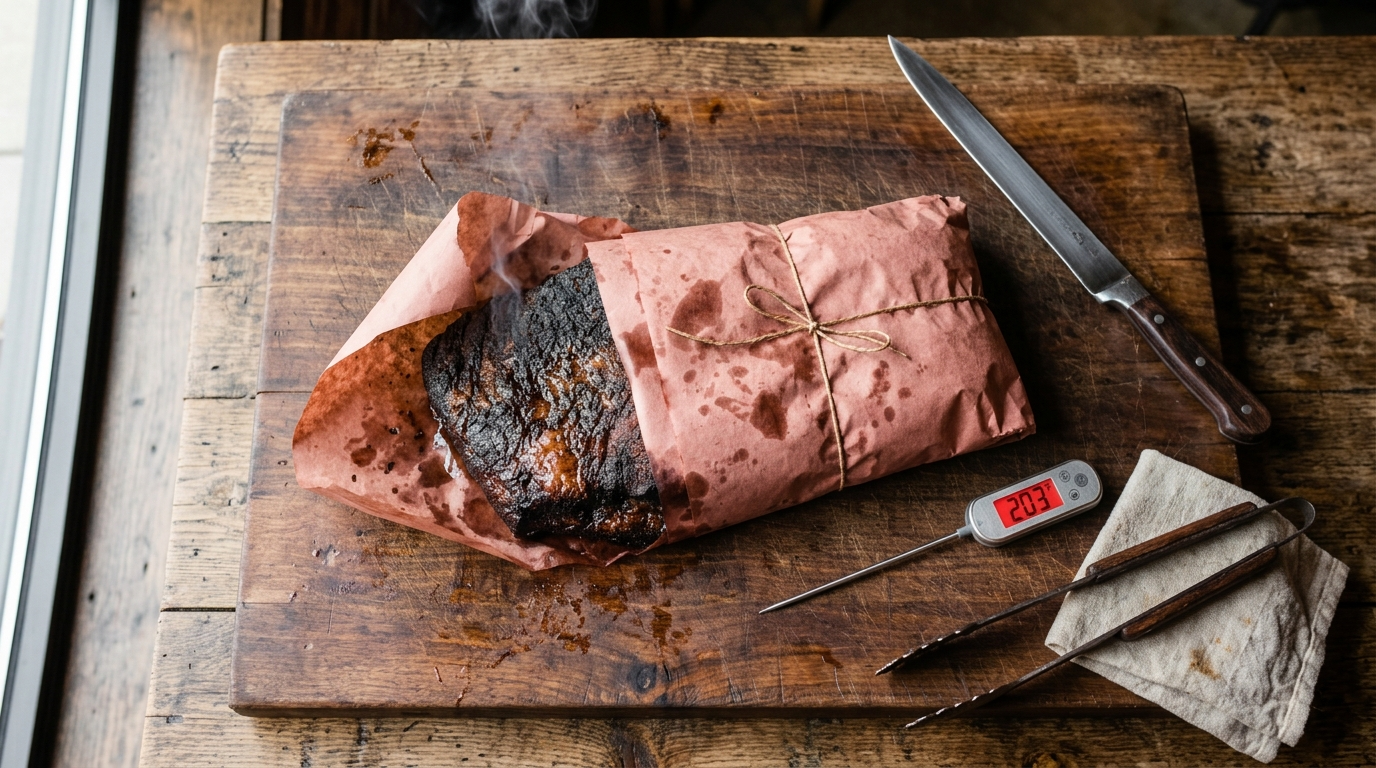
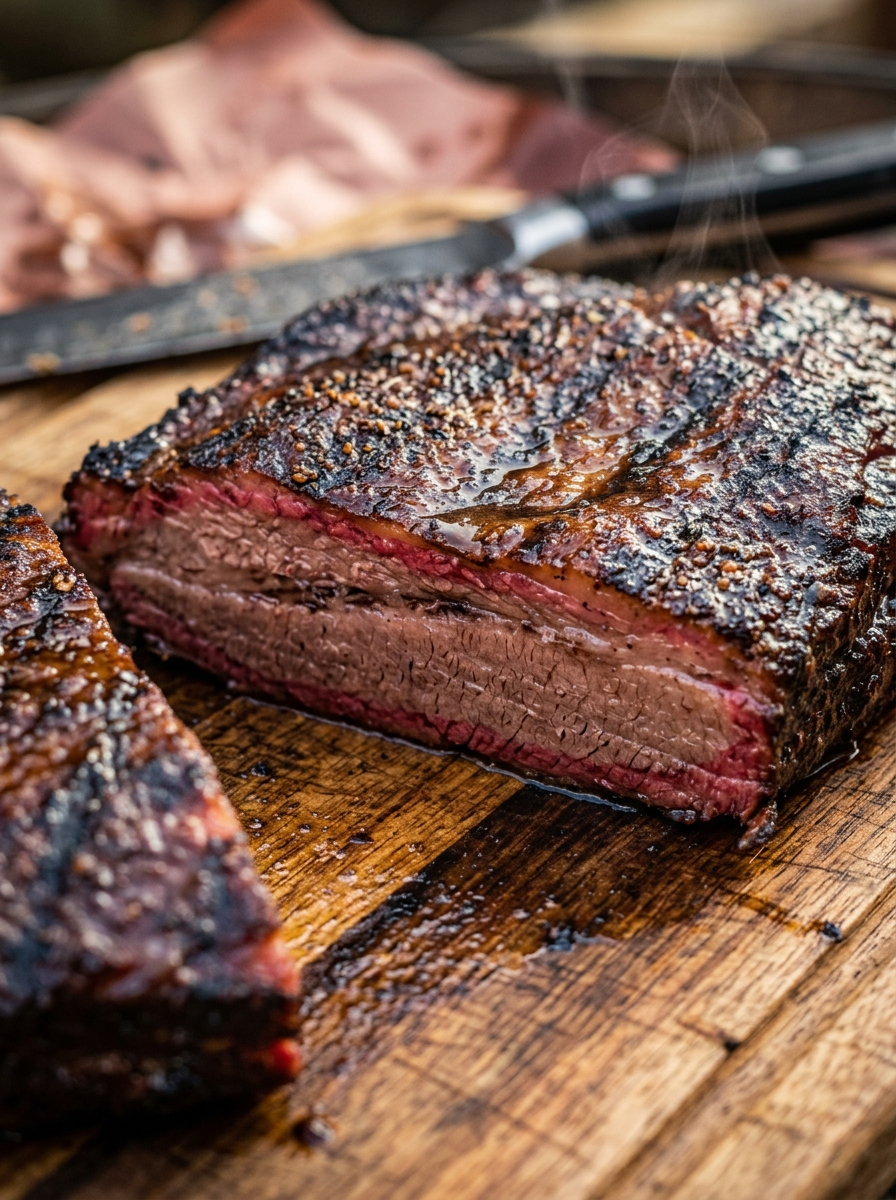
Resting is not just a suggestion or an old pitmaster wives tale. It is rooted in the actual science of what happens inside a large cut of beef during and after a low and slow cook. When that brisket is sitting at 203 degrees internal temp, the muscle fibers are contracted and the moisture is being pushed toward the center of the meat. Give that brisket time to rest and those fibers begin to relax, reabsorbing all that collagen-rich, smoke-infused liquid gold. The result is a brisket that slices clean, holds its moisture on the board, and delivers a bite that is tender, juicy, and deeply flavorful from edge to edge.
At GrillMasterHQ we have tested every resting method out there, from a simple cooler hold to a professional warming oven setup. The good news is you do not need a restaurant kitchen to rest your brisket like a seasoned pitmaster. You need the right technique, a little patience, and the confidence to keep your slicing knife in the drawer for just a bit longer. Follow this guide and your next brisket will be the one people talk about for months.
How to Rest Brisket After Smoking: Pitmaster Secrets
Knowing how to rest brisket after smoking is the secret separating good BBQ from legendary BBQ. Proper resting locks in moisture, softens the bark beautifully, and delivers that perfect slice every single time. Fire up the smoker and do this right today.
Ingredients
| AMOUNT | INGREDIENT | NOTES |
|---|---|---|
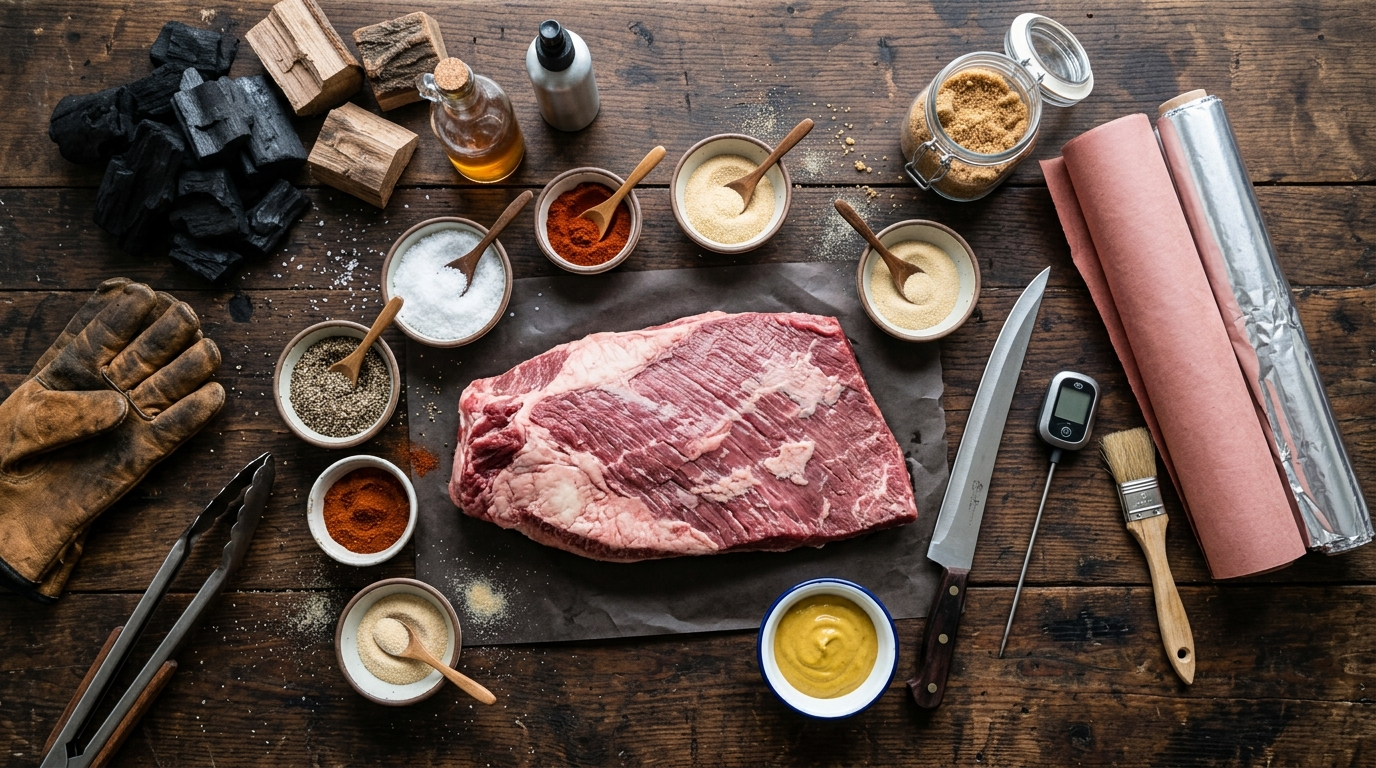
| 1 whole | packer brisket | 12 to 16 pounds, choice or prime grade, fat cap trimmed to one-quarter inch |
| 4 tablespoons | coarse kosher salt | for the base rub |
| 4 tablespoons | coarse black pepper | freshly cracked, 16 mesh preferred for proper bark formation |
| 1 tablespoon | garlic powder | optional addition to the base rub |
| 1 tablespoon | smoked paprika | optional for added color and depth |
| 2 sheets | pink butcher paper | uncoated, food-safe, approximately 36 inches each for double wrapping |
| 1 large | insulated cooler | at least 48-quart capacity to comfortably hold a whole packer brisket |
| 2 whole | old bath towels | clean, used to insulate the brisket inside the cooler during the rest |
Instructions
Nutrition (per serving)
The BBQ Story Behind This Recipe
Brisket has deep roots in Texas BBQ culture, where Czech and German butcher immigrants in the Hill Country towns of Lockhart, Luling, and Taylor began slow-smoking tough beef cuts over post oak in the late 1800s and early 1900s. Back then, brisket was a cheap, working-class cut that nobody else wanted. Those old-school pitmasters figured out that if you could keep a steady fire going low and slow for many hours, the tough connective tissue in the brisket would break down into gelatin, transforming the cut into something extraordinary. Resting the meat was a natural part of their process, not a calculated technique but a practical reality of running a busy butcher shop and smokehouse where the meat sat after coming off the pit before service began.
Over the decades, the practice of resting brisket became codified in BBQ competition circles and celebrated in legendary joints like Franklin Barbecue in Austin, where Aaron Franklin famously holds his briskets wrapped in butcher paper for hours before the doors open each morning. The modern BBQ renaissance of the 2000s and 2010s brought serious scientific attention to the resting process, and pitmasters began to understand that a long, controlled rest, sometimes lasting four to six hours in an insulated environment, produces results that a short rest simply cannot match. Today, the brisket rest is considered a pillar of proper Texas-style BBQ technique, and any pitmaster worth their salt will tell you the rest is part of the cook.
Hot Off the Grill
A Closer Look
Pitmaster Tips for Best Results
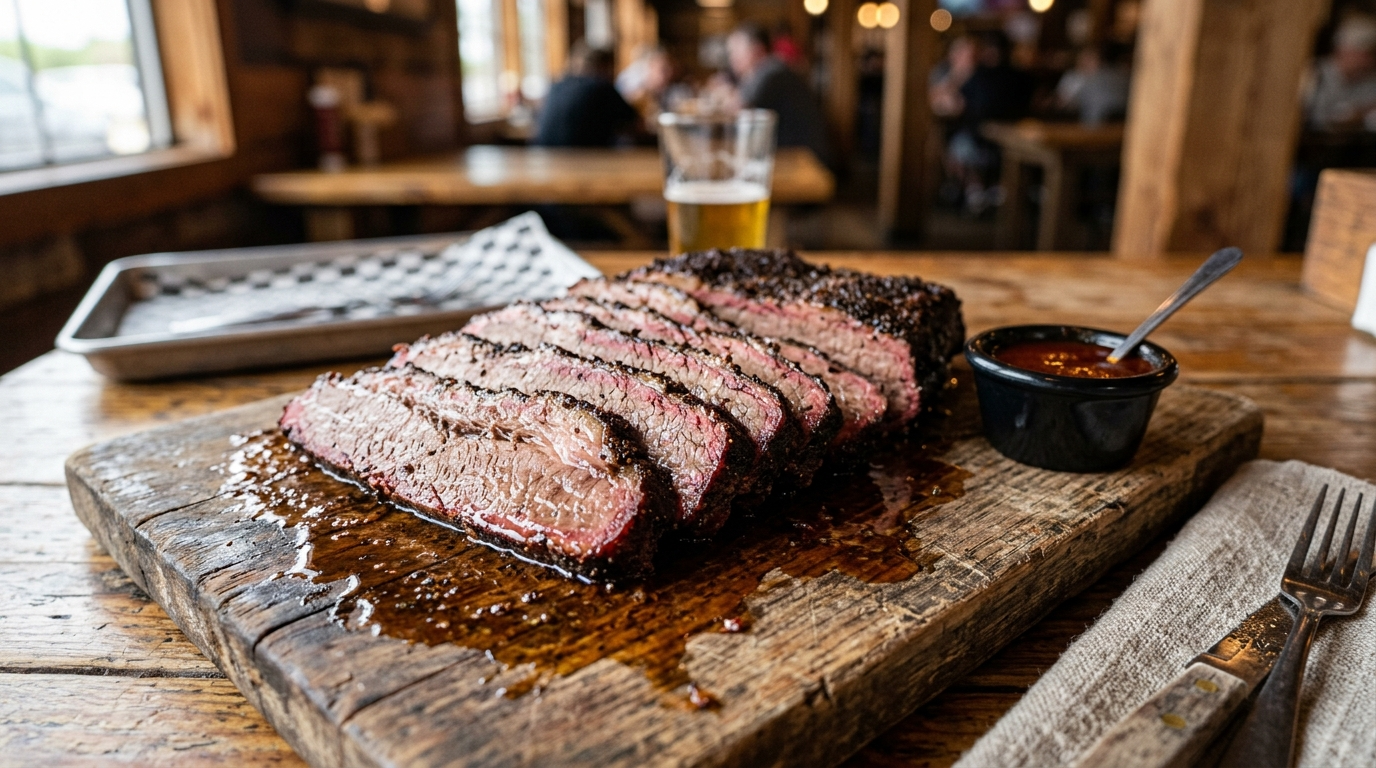
- Never skip the rest, even if you are short on time. A minimum 1-hour rest is non-negotiable for a brisket. Slicing immediately after pulling off the smoker will cause you to lose up to 30 percent of the internal moisture onto the cutting board.
- Preheat your cooler before placing the brisket inside by filling it with hot water for 15 to 20 minutes, then dumping it out and drying it. A preheated cooler dramatically extends how long it can maintain safe holding temperatures above 140 degrees Fahrenheit.
- If you have a warming oven or a restaurant-style holding cabinet available, set it to 150 to 160 degrees Fahrenheit and hold your wrapped brisket there instead of a cooler. This is the method used by high-volume BBQ joints and gives you even more precise temperature control over a longer hold period.
- Do not open the cooler to check on the brisket during the rest. Every time you lift that lid you release heat and shorten your effective hold window. Trust the process and let the insulation do its job.
- When you probe for doneness before pulling the brisket off the smoker, focus on the flat, which is the leaner and thicker muscle. The point will always feel tender first because of its higher fat content. If the flat probes like soft butter, the whole brisket is ready to come off and rest.
🔧 Pitmaster Equipment
Offset Smoker or Pellet Grill: Delivers the low and slow heat environment and smoke exposure necessary to properly cook a full packer brisket over 12 to 16 hours.
Instant Read Thermometer: Critical for confirming your brisket has reached the target internal temp of 200 to 205 degrees Fahrenheit before pulling it off the smoker.
Leave-In Probe Thermometer: Allows you to monitor the internal temp throughout the cook and during the rest without opening your cooler or wrapping.
Butcher Paper or Aluminum Foil: Used to tightly wrap the brisket before resting, sealing in moisture and helping maintain bark texture during the hold.
Large Insulated Cooler: The pitmaster standard for holding a brisket during a long rest, maintaining safe temperature above 140 degrees Fahrenheit for hours.
Old Towels or Blankets: Used to fill the cooler around the wrapped brisket, adding insulation and extending the effective hold time significantly.
Sharp Slicing Knife: A long, sharp brisket slicing knife is essential for clean cuts against the grain once the rest is complete.
Large Cutting Board: You need a full-size cutting board with a juice groove to handle a whole packer brisket and capture any runoff juices.
🔥 Variations
Competition-Style Extended Rest: Many competition BBQ teams rest their briskets for 4 to 6 hours or even overnight using a commercial warming cabinet set to 150 degrees Fahrenheit. This extended rest allows the collagen to fully integrate back into the muscle fibers, producing an almost buttery texture that is nearly impossible to achieve with a short rest. If you do not have a warming cabinet, a preheated cooler packed with towels can hold a brisket safely for up to 6 hours.
Foil Boat Method Rest: Instead of fully wrapping the brisket in butcher paper for the rest, some pitmasters use the foil boat method where the brisket sits in a cradle of foil with the fat cap exposed to the smoker air. When you pull the brisket using this method, simply fold the foil up around the sides before placing it in the cooler. This technique preserves a crispier bark texture during the rest because the top surface stays drier.
Tallow-Basted Rest: A technique popularized in central Texas BBQ is basting the brisket with rendered beef tallow right before wrapping for the rest. After the brisket comes off the smoker, unwrap it briefly, apply a generous coat of warm liquid beef tallow over the surface, then rewrap tightly in fresh butcher paper before going into the cooler. The tallow seeps into the bark and adds an additional layer of rich, beefy moisture that elevates the final result significantly.
Overnight Hold Method: For events or large family gatherings, you can cook your brisket overnight and hold it for service the next day. Pull the brisket at 200 to 203 degrees Fahrenheit, wrap tightly, and place in a warming oven set to 145 to 150 degrees Fahrenheit. It can hold safely at this temperature for 8 to 12 hours. This method is used by legendary BBQ restaurants that start their smokers late at night and hold briskets through the morning until doors open.
❓ Pitmaster FAQ
How long should I rest brisket after smoking?
At minimum, rest your brisket for 1 hour. The ideal rest window for a full packer brisket is 2 to 4 hours in an insulated cooler packed with towels. Competition pitmasters and BBQ restaurants regularly hold briskets for 4 to 6 hours or longer without any loss of quality. The brisket will remain safely above 140 degrees Fahrenheit throughout this window.
What internal temp should my brisket reach before I rest it?
Target an internal temp of 200 to 205 degrees Fahrenheit, but more importantly, probe the thickest part of the flat with an instant read thermometer or skewer. When the probe slides in with zero resistance, like pushing through warm butter, the brisket is ready to pull off the smoker and rest. Probe tenderness always matters more than a specific number.
Can I rest brisket in a cooler safely?
Yes, resting brisket in a large insulated cooler is the standard pitmaster method. As long as the brisket goes into the cooler at 200 degrees Fahrenheit or above, wrapped tightly in butcher paper or foil, and packed with towels for insulation, the internal temp will remain above the safe holding threshold of 140 degrees Fahrenheit for 4 to 6 hours or more. Preheat the cooler with hot water first for maximum hold time.
Should I wrap the brisket before resting it?
Yes, always keep the brisket wrapped during the rest. Whether you used butcher paper or foil during the cook, keep that wrap on when you transfer it to the cooler. The wrap traps steam and heat, allows the muscle fibers to relax and reabsorb moisture, and prevents the bark from becoming too wet or too dry during the rest period.
Will resting the brisket make the bark go soft?
Resting in butcher paper will soften the bark slightly, which most pitmasters consider a positive result since it makes the bark easier to eat while still maintaining deep color and flavor. If you want a firmer bark, use the foil boat method during the cook and keep the top of the brisket exposed, then fold up the foil sides for the cooler rest. The bark will retain more texture this way.
Can I rest brisket too long?
There is a practical upper limit. If the internal temp drops below 140 degrees Fahrenheit during the rest, you enter the food safety danger zone. In a properly insulated cooler, a full packer brisket wrapped tightly and packed with towels can hold safely for 6 hours and sometimes longer. If you need to hold for more than 6 hours, use a warming oven set to 145 to 150 degrees Fahrenheit rather than a cooler.