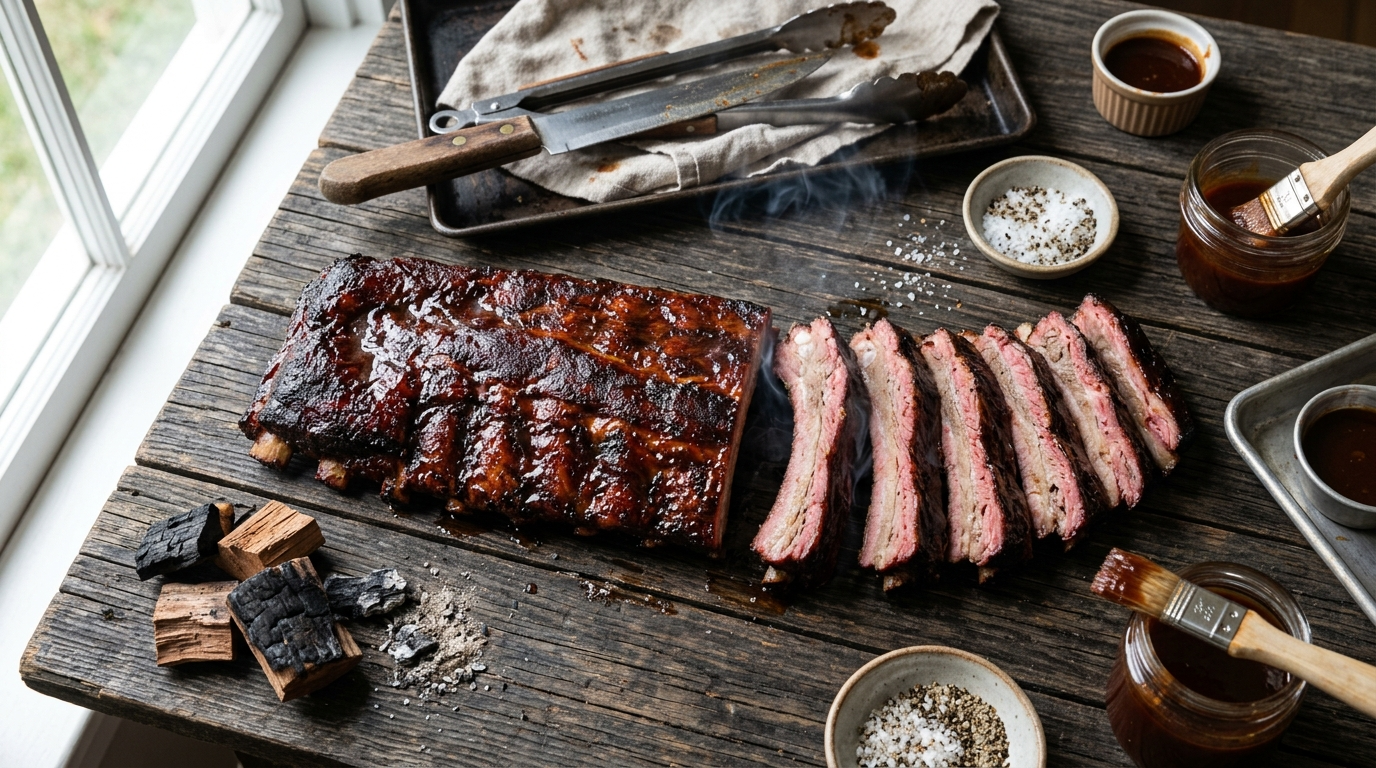
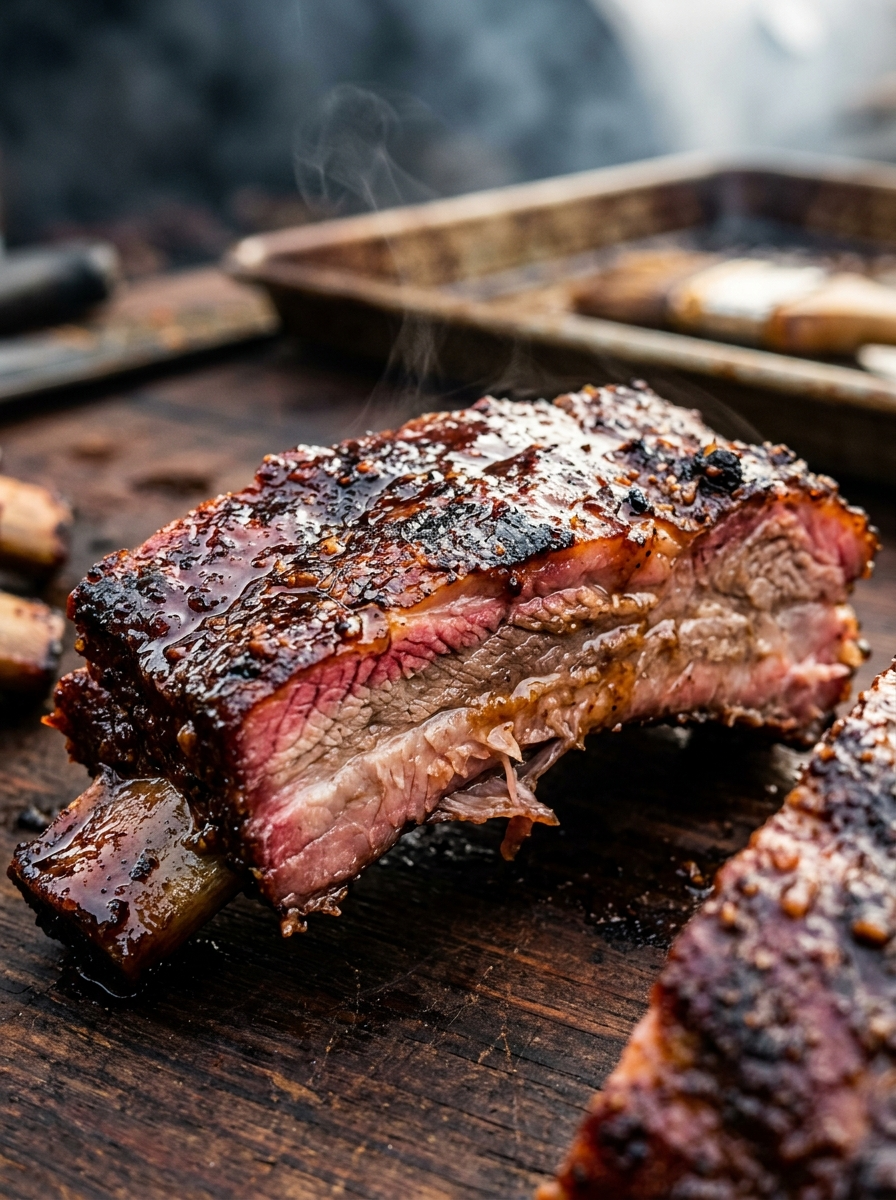
Competition BBQ ribs recipe secrets are the difference between a good rack and a ribbon-winning masterpiece, and today I am pulling back the curtain on everything I have learned after years on the circuit. We are talking about a full low and slow cook at 225 degrees Fahrenheit for 5 to 6 hours using the legendary 3-2-1 method, dialed-in wood selection, and a bark so deep and mahogany-dark it practically glows under the tent lights. Every single decision you make from the moment you trim that rack to the moment you slice it matters at this level.
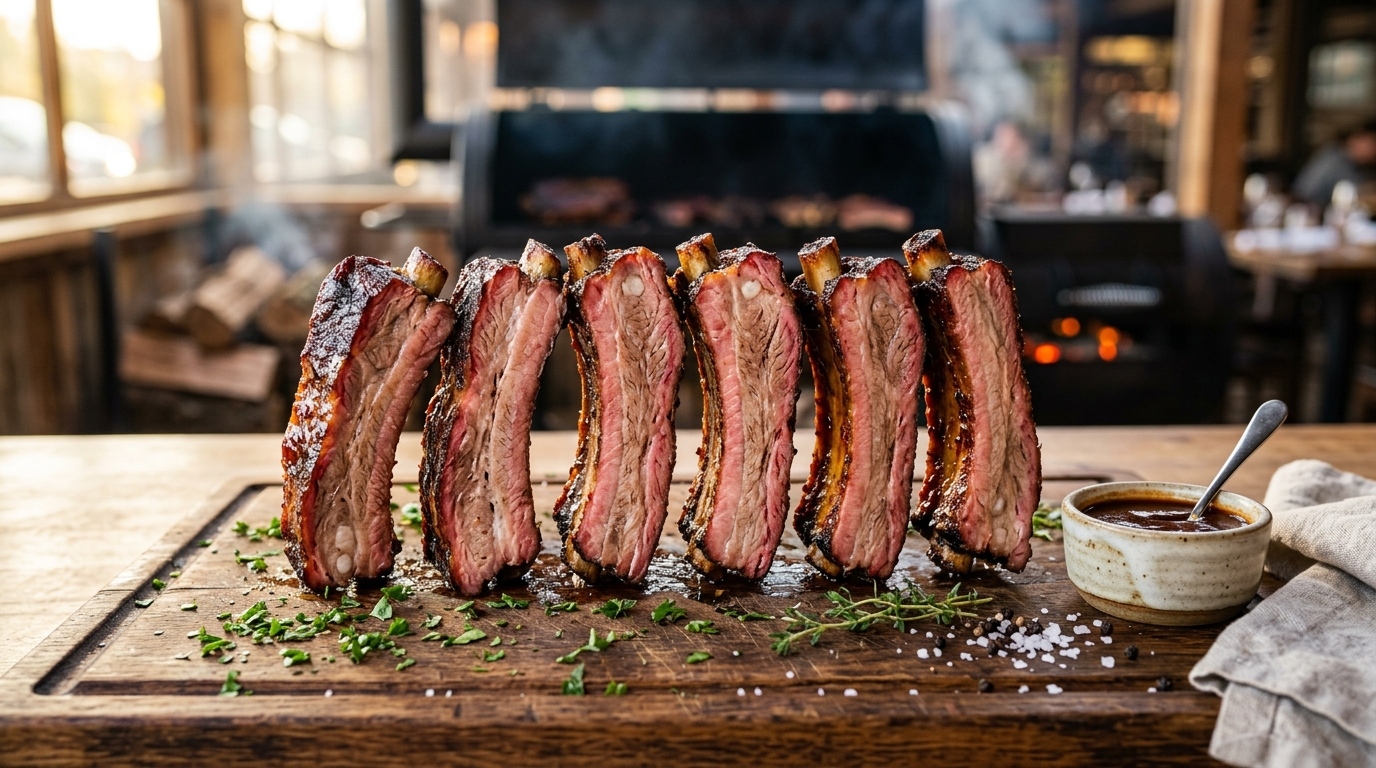
I have cooked ribs on everything from a basic offset smoker to a $10,000 competition rig, and I can tell you with absolute confidence that the secrets are not locked inside expensive equipment. They live in your process – your rub application, your fire management, your wrap timing, and most importantly how you rest the meat before it ever hits a judging tray or a dinner plate. The smoke ring, that beautiful pink halo just beneath the surface, is your badge of honor and it tells the judges everything they need to know about your commitment to the craft.
In this post I am going to walk you through my full competition rib process step by step, including the exact internal temp targets, the butter and honey wrap technique that locks in moisture, and the glaze timing that gives you that tournament-ready shine. Whether you are competing in your first backyard cookoff or chasing a Kansas City circuit trophy, these techniques will absolutely level up your game. Get your charcoal lit and your wood chunks ready – this is the real deal.
Competition BBQ Ribs Recipe Secrets from a Pitmaster
These competition BBQ ribs recipe secrets will transform your backyard cook into a trophy-worthy experience. Learn the low and slow techniques, rub layering, and wrap timing that professional pitmasters guard closely. Your best rack of ribs is waiting – fire up the grill today.
Ingredients
| AMOUNT | INGREDIENT | NOTES |
|---|---|---|
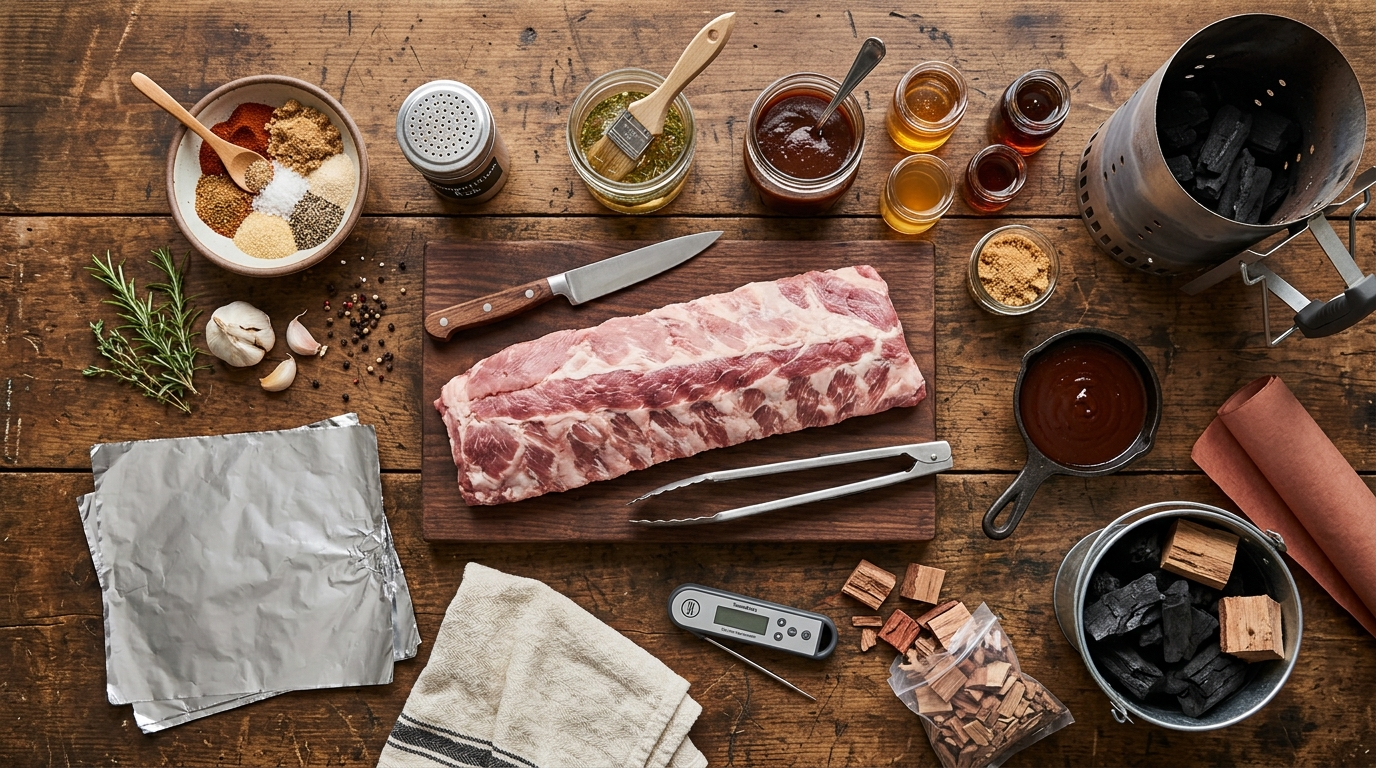
| 2 full racks | St. Louis cut pork spare ribs | approximately 3 to 3.5 lbs each, membrane removed, trimmed competition style |
| 4 tablespoons | yellow mustard | used as a binder to help the dry rub adhere to the meat surface |
| 4 tablespoons | brown sugar | light or dark both work, forms the base of your bark and caramelizes beautifully |
| 3 tablespoons | paprika | use a mix of sweet and smoked paprika for depth and color |
| 2 tablespoons | kosher salt | coarse kosher salt for even seasoning penetration |
| 1 tablespoon | coarse black pepper | freshly cracked for the best bite and aroma |
| 1 tablespoon | garlic powder | not garlic salt – adds savory depth without excess sodium |
| 1 tablespoon | onion powder | balances the garlic and sweetness in the rub |
| 1 teaspoon | cayenne pepper | adjust to your heat preference, competition judges typically prefer mild to medium heat |
| 1 teaspoon | chili powder | adds earthy complexity and a reddish tone to the bark |
| 1 teaspoon | celery salt | a competition pitmaster trick that adds a subtle savory undertone |
| 4 tablespoons | unsalted butter | sliced into pats, used in the foil wrap phase to add richness and moisture |
| 4 tablespoons | raw honey | drizzled over ribs in the wrap, adds sweetness and helps build glaze |
| 4 tablespoons | apple juice | poured into the foil wrap to create steam and keep ribs moist during the braise phase |
| 2 tablespoons | apple cider vinegar | mixed with apple juice in a spray bottle for spritzing throughout the cook |
| 1 cup | competition BBQ sauce | a thick sweet and tangy sauce for glazing in the final 45 minutes, use your favorite or make from scratch |
| 4 chunks | cherry wood smoking chunks | approximately fist-sized, provides sweet mild smoke that complements pork beautifully |
| 2 chunks | hickory wood smoking chunks | adds a deeper more traditional BBQ smoke character without overpowering the cherry |
Instructions
Nutrition (per serving)
The BBQ Story Behind This Recipe
Smoked pork ribs have deep roots in American BBQ culture stretching back centuries, tracing their lineage to the Indigenous and African cooking traditions that shaped the foundation of Southern food. Whole hog and rib cookery were common at communal gatherings across the Carolinas, Tennessee, and the Mississippi Delta long before anyone thought to put up a trophy or hand out a ribbon. The low and slow method was born out of necessity – tougher, fattier cuts of pork needed time and smoke to become something transcendent, and the pit became a place of patience, community, and serious culinary pride.
Competition BBQ as an organized sport really began gaining momentum in the 1970s and 1980s, with events like the Memphis in May World Championship Barbecue Cooking Contest and the American Royal in Kansas City establishing the gold standard for judged rib cookery. The Kansas City Barbecue Society formed in 1986 and helped codify rules and judging criteria that spread competition culture across the country. Today there are thousands of sanctioned events every year from coast to coast, and the pork spare rib has remained the crown jewel of the competition circuit – a cut that rewards technical precision, creativity in seasoning, and an almost meditative dedication to fire management.
Hot Off the Grill
A Closer Look
Pitmaster Tips for Best Results
- Temperature consistency is your single biggest competitive advantage – invest in a dual probe wireless thermometer so you can monitor both your pit temp and meat temp simultaneously without opening the lid. Every degree of fluctuation costs you time and moisture.
- Build your rub at least 24 hours before the cook and store it in an airtight jar. Fresh-mixed rubs have better aroma and the spices bloom together overnight, giving you a more cohesive and complex flavor profile than a last-minute mix.
- When selecting your ribs at the butcher, look for St. Louis cut spare ribs with even fat marbling throughout and a consistent thickness across the entire rack. Uneven thickness means uneven cooking, and one end will always be overdone by the time the other end hits 200 degrees Fahrenheit.
- For a smoke ring that will make judges stop and stare, add a small amount of curing salt – specifically pink curing salt number 1 – to your rub at a ratio of one quarter teaspoon per full rack. The nitrates react with the myoglobin in the meat during the low and slow cook to create a deep, vivid pink smoke ring that extends a full half inch into the meat.
- Always spritz with cold liquid rather than room temperature liquid. The cold spritz hitting the hot surface creates rapid evaporation which cools the bark slightly, slows the crust from hardening too fast, and keeps the surface receptive to continued smoke absorption throughout the first 3 hours of the cook.
🔧 Pitmaster Equipment
Offset Smoker or Charcoal Smoker: The cornerstone of authentic competition results. An offset or kettle-style charcoal smoker gives you superior heat management and true wood smoke penetration that builds a legitimate smoke ring.
Instant Read Thermometer: Hitting the precise internal temp of 195 to 203 degrees Fahrenheit is non-negotiable for competition-tender ribs. A quality instant read saves you from guessing and losing a cook.
Probe Thermometer with Ambient Probe: Monitoring your smoker chamber temp continuously at 225 to 250 degrees Fahrenheit is just as important as monitoring your meat. Spikes and drops ruin competition timelines.
Long Tongs and Heat-Resistant Gloves: You will be managing fire, moving hot racks, and wrapping foil around sizzling ribs. Proper protection keeps your hands safe and your movements confident around the fire.
Heavy Duty Aluminum Foil: The Texas Crutch wrap is central to the competition 3-2-1 method. You need wide, heavy duty foil to create a tight steam pocket around the ribs during the braise phase.
Basting Brush or Silicone Mop: Applying your glaze in thin layered coats during the final hour requires a good brush. A silicone brush holds up to heat and gives you even coverage without tearing the bark.
Rib Rack or Hanging Hooks: Standing ribs upright or hanging them in your smoker allows smoke to circulate evenly around all surfaces, building a uniform bark and consistent color on every bone.
Spray Bottle: A 50/50 mix of apple juice and apple cider vinegar spritzed every 45 minutes keeps the surface moist, encourages bark development, and adds subtle flavor complexity.
🔥 Variations
Pellet Grill Competition Version: Set your pellet grill to 225 degrees Fahrenheit using a competition blend or cherry and hickory pellets. Follow the exact same 3-2-1 timeline and wrap technique. For extra smoke flavor that pellet grills sometimes lack, place a smoke tube filled with hickory pellets on the grate next to your ribs during the first unwrapped phase. The results are remarkably close to a traditional offset cook and pellet precision makes temp management nearly effortless.
Gas Grill Low and Slow Version: Set up your gas grill for two-zone indirect cooking by lighting only one or two burners and placing the ribs on the unlit side. Target 225 degrees Fahrenheit using your built-in thermometer adjusted down slightly since lid thermometers read high. Place a smoker box or foil packet of soaked cherry and hickory wood chips directly over a lit burner and replace it every 45 minutes for continuous smoke. Follow the same wrap technique and glaze timing for surprisingly competitive results off a standard gas grill.
Baby Back Competition Style: Switch from St. Louis cut spare ribs to baby back ribs and reduce your total cook time to a 2-1-1 method instead of 3-2-1. Baby backs are leaner and shorter and they hit that competition-tender internal temp of 195 degrees Fahrenheit faster than spare ribs. Everything else stays the same – the rub, the wrap ingredients, the glaze technique, and the rest period. Many competition circuits have a separate baby back category and these techniques translate perfectly.
Sweet Heat Competition Glaze Variation: For a bold competition glaze that stands out from the crowd, mix your base BBQ sauce with 2 tablespoons of ghost pepper hot sauce, 2 tablespoons of peach preserves, and 1 tablespoon of soy sauce. This sweet heat profile creates a complex layered flavor that hits the judge’s palate in waves – first the sweetness, then the smoke, then the building heat that lingers. Apply using the same thin layered coat method in the final 45 minutes and watch the turn-in box empty fast.
❓ Pitmaster FAQ
What internal temperature should competition ribs reach for perfect tenderness?
Target an internal temp between 200 and 203 degrees Fahrenheit for true competition-tender ribs. At this range the collagen has fully converted to gelatin, giving you that silky bite-through texture judges look for. Use your instant read thermometer between the bones and avoid touching bone with the probe tip since bone reads artificially hot and will give you a false reading.
What does 3-2-1 mean in competition rib cooking?
The 3-2-1 method refers to the three phases of the competition rib cook at 225 degrees Fahrenheit. Three hours unwrapped to build bark and smoke ring, two hours wrapped in foil with butter and honey to braise and tenderize, and one final hour unwrapped to set the glaze and firm up the bark. This method is the foundation of competition rib cooking and produces consistent results across virtually every smoker and fuel type.
How do I get a deep smoke ring on my ribs?
A great smoke ring comes from three things working together – thin blue smoke rather than thick white smoke, a moist meat surface during the first phase of the cook which you achieve with your apple juice and vinegar spritz, and keeping your smoker temp at or below 225 degrees Fahrenheit during the unwrapped phase. The smoke ring stops developing once the meat surface hits approximately 170 degrees Fahrenheit internally, so keeping your cook temperature low during that first window is critical for maximum smoke ring depth.
Should competition ribs fall off the bone or have bite-through texture?
Professional competition judging standards actually penalize fall-off-the-bone texture. The KCBS standard calls for bite-through texture, meaning when a judge bites into a rib the meat should cleanly release from the bone in that bite without pulling or shredding the entire bone clean. Fall-off-the-bone texture signals that the ribs are slightly overcooked past their ideal window. Aim for 200 to 203 degrees Fahrenheit and use the bend and toothpick tests to confirm doneness before relying solely on the thermometer.
Can I prepare competition ribs the day before and reheat them?
Yes, and many competition teams actually cook their ribs the day before for practice runs or catering events. After the final cook, wrap the racks tightly in foil and refrigerate immediately. To reheat, place the still-wrapped racks in a 275 degree Fahrenheit oven or smoker for 30 to 45 minutes until the internal temp returns to 165 degrees Fahrenheit per USDA food safety guidelines. Apply a fresh thin coat of glaze and let it set for 10 minutes uncovered before slicing. The texture will not be quite as pristine as a fresh cook but the flavor will be fully developed and delicious.
What wood is best for competition pork ribs?
Cherry wood is the gold standard for competition pork ribs because it produces a beautiful deep red color on the bark and smoke ring while delivering a mild sweet smoke that does not overpower the pork flavor. Combining cherry with a smaller amount of hickory gives you that classic BBQ smoke depth without going bitter. Avoid mesquite for a full low and slow rib cook as it burns hot and produces a strong aggressive smoke that can turn acrid over a 5 to 6 hour cook. Apple wood is a great alternative to cherry if that is what you have access to locally.