
This grilled pineapple rum glaze recipe is the dessert your backyard BBQ has been missing – a tropical stunner that hits the grates at around 450 degrees Fahrenheit and comes off caramelized, smoky, and absolutely dripping with a buttery dark rum glaze that would make any pitmaster proud. We are talking deep mahogany grill marks, edges that crisp and blister like the bark on a well-smoked brisket, and a sweetness that gets amplified ten times over the moment that pineapple hits direct high heat. It is proof that the grill belongs to dessert just as much as it belongs to ribs and brisket.
The science here is beautiful and simple. Pineapple is loaded with natural sugars that react fast under direct flame, caramelizing within two to three minutes per side when your grill is dialed in at 450 to 500 degrees Fahrenheit. That Maillard reaction – the same magic that builds the bark on your smoked pork shoulder – creates complex toasted, slightly smoky flavors that raw pineapple could never deliver. When you layer on a rum glaze built from dark rum, brown sugar, butter, cinnamon, and a pinch of cayenne, you are adding another dimension of deep, sticky, lacquered flavor that goes on in layers just like a competition BBQ sauce.
At GrillMasterHQ we believe dessert should earn its place at the cookout. No soggy sheet cakes carried out of the house. No bowls of fruit salad sitting in the shade. When the main course comes off the smoker and everyone is gathered around the pit, you slide these pineapple rings straight onto the hot grates and let the fire do what the fire does best. Five to six minutes total cook time, a final brush of warm rum glaze, and you are serving a dessert that gets talked about all summer long. Let us fire up the grill and get into it.
Grilled Pineapple Rum Glaze Recipe – Sweet Fire Dessert
This grilled pineapple rum glaze recipe transforms a simple fruit into a caramelized, smoky masterpiece straight from the fire. With deep char marks and a buttery rum glaze that bubbles and blisters on the grates, this is the dessert that proves the grill is not just for meat. Fire it up tonight.
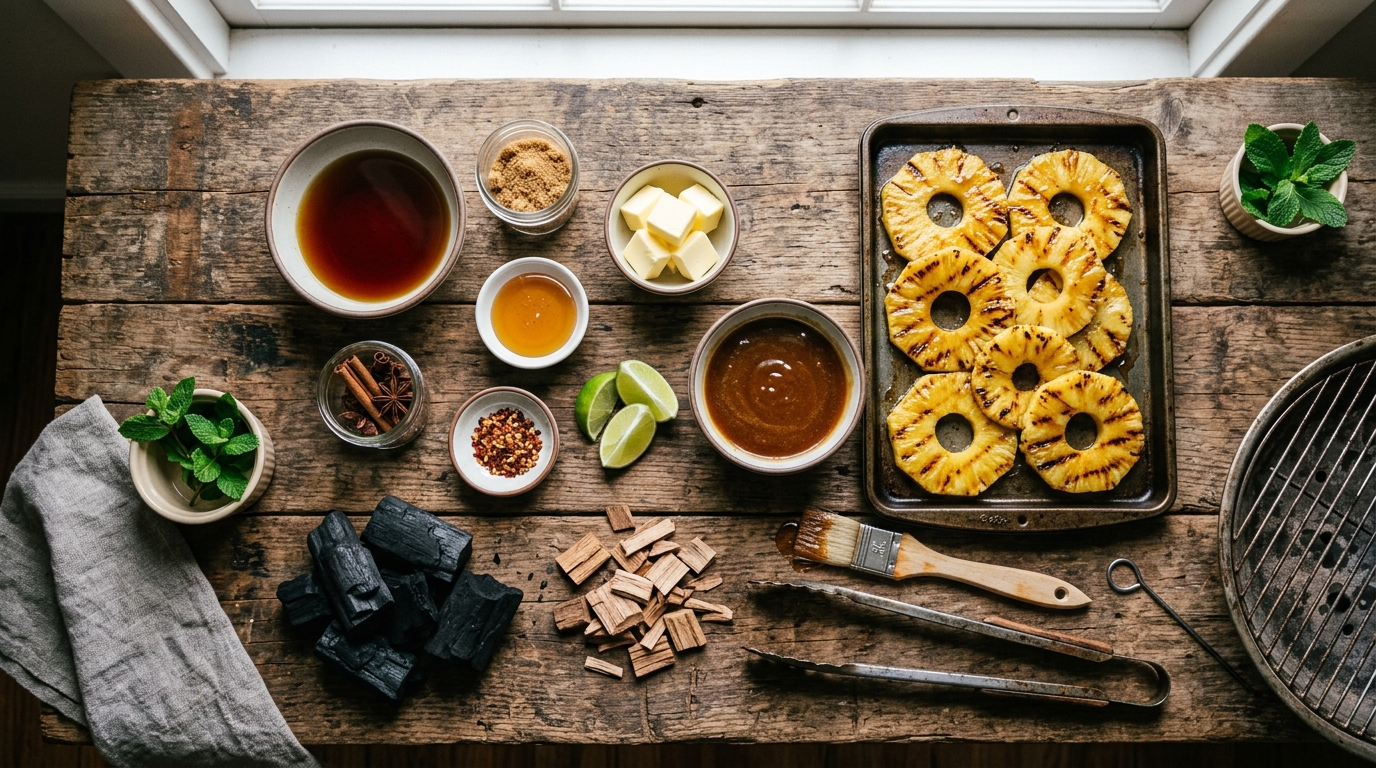
Ingredients
| AMOUNT | INGREDIENT | NOTES |
|---|---|---|
| 1 large | fresh pineapple | peeled, cored, and sliced into half-inch rings – about 8 to 10 rings total |
| 4 tablespoons | unsalted butter | cut into cubes for the rum glaze |
| 0.5 cup | dark rum | a quality aged dark rum works best – do not use spiced rum |
| 0.5 cup | packed dark brown sugar | dark brown sugar gives deeper molasses flavor than light brown |
| 1 teaspoon | ground cinnamon | freshly ground if possible |
| 0.25 teaspoon | ground cayenne pepper | optional but highly recommended for a sweet heat finish |
| 0.25 teaspoon | pure vanilla extract | add off the heat to preserve the aroma |
| 1 pinch | kosher salt | balances the sweetness and elevates all the flavors |
| 1 tablespoon | fresh lime juice | brightens the glaze and cuts through the richness of the butter |
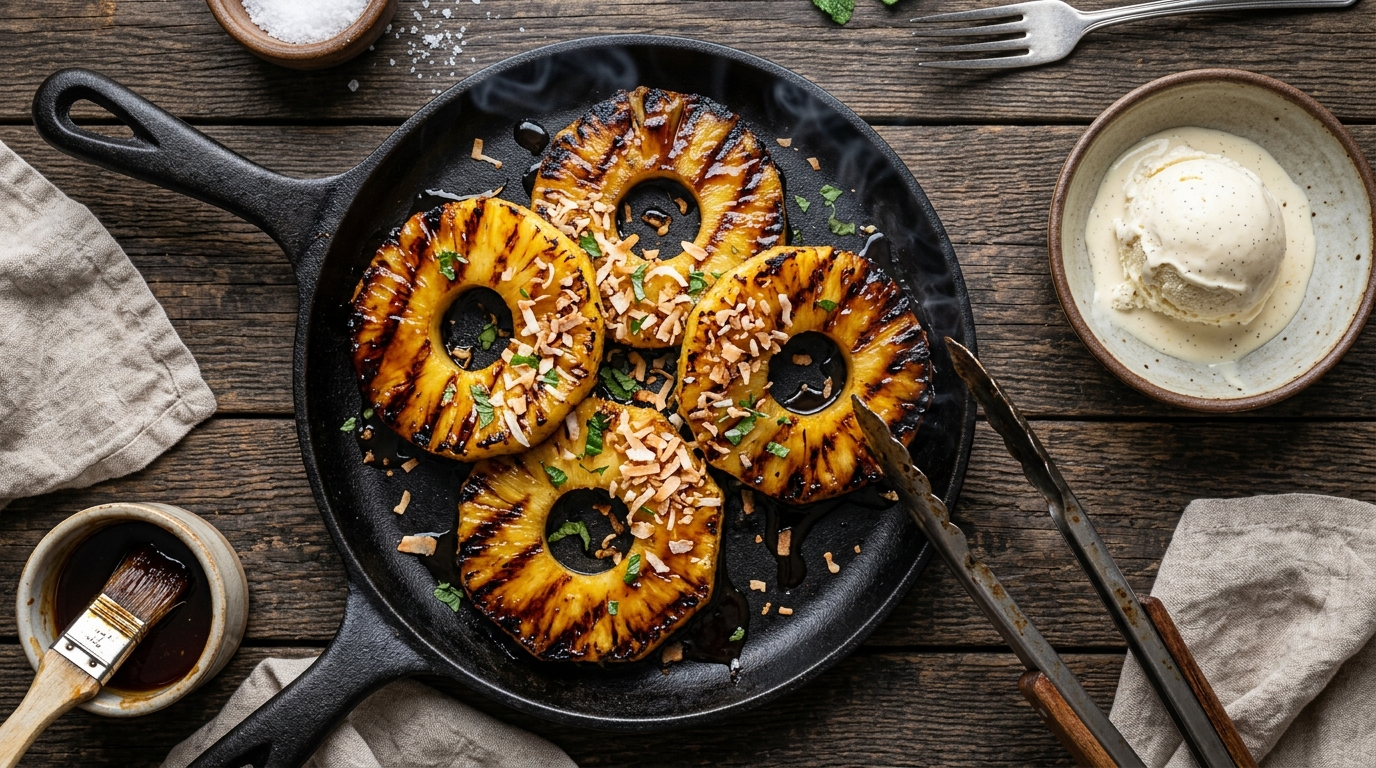
| 0.5 cup | toasted coconut flakes | for garnish – toast in a dry pan until golden |
| 1 pint | vanilla bean ice cream | for serving – the contrast of hot pineapple and cold ice cream is everything |
Instructions
Nutrition (per serving)
The BBQ Story Behind This Recipe
Grilling fruit over open fire is one of the oldest cooking traditions in the world, predating even the earliest BBQ pits of the American South. In the Caribbean and Central America, pineapple has been roasted over wood coals for centuries, often as part of communal feasts where every part of the meal – from the protein to the fruit – was cooked over the same fire. The practice of adding rum to grilled pineapple has deep roots in Caribbean cuisine, where locally distilled rum became a natural pairing with the island fruit, particularly in countries like Jamaica, Barbados, and Trinidad. Rum glazes were originally built to preserve and intensify flavor, and the alcohol burn-off over high heat left behind a rich, molasses-forward sweetness that colonial plantation cooks turned into one of the region earliest signature preparations.
In American BBQ culture, grilled fruit has long lived in the shadow of the big proteins – the briskets, the pork butts, the racks of ribs. But competitive pitmasters and backyard grill enthusiasts have spent the last two decades elevating the dessert category, and grilled pineapple with rum glaze has become a staple at cook-offs and backyard gatherings from Texas to the Carolinas. Modern pitmasters have borrowed the technique from Caribbean traditions and adapted it for charcoal kettles, offset smokers, and pellet grills, adding their own regional twists like smoked brown sugar, chipotle-spiked glazes, and even wood chip infusions to deepen the smoke profile. Today it stands as one of the most celebrated dessert preparations in the grilling world – simple enough for a Tuesday night, impressive enough for a championship table.
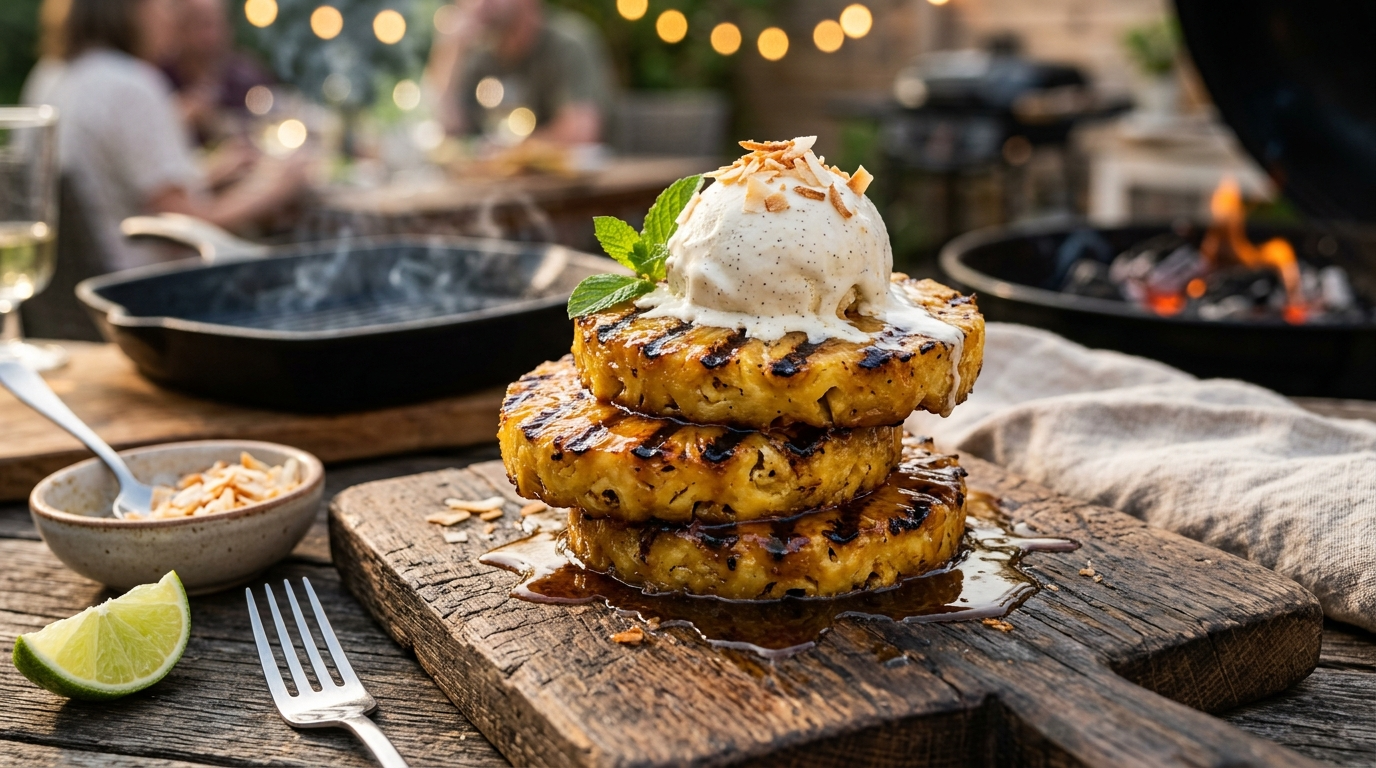
Hot Off the Grill
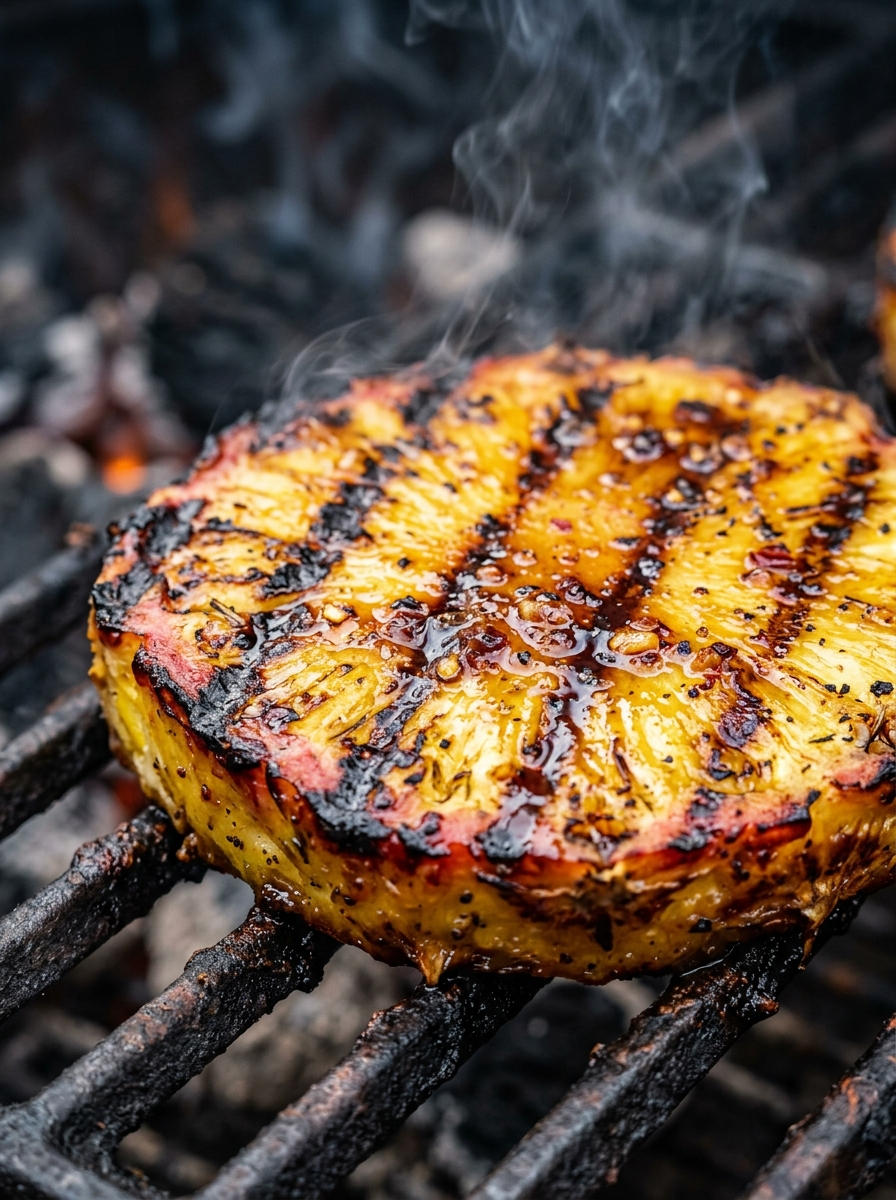
A Closer Look
Pitmaster Tips for Best Results
- Always use fresh pineapple over canned – canned pineapple carries too much moisture and will steam on the grates instead of caramelizing. Fresh pineapple also has a higher natural sugar content that reacts beautifully under direct heat at 450 to 500 degrees Fahrenheit.
- Pat your pineapple rings completely dry before they go on the grate. Surface moisture creates steam, steam prevents caramelization, and without caramelization you lose those signature grill marks and deep flavor. A quick 30-second press with paper towels makes a real difference.
- Do not glaze too heavy on the first pass – a thin foundation coat is all you need before the rings hit the grates. Heavy glaze at the start will drip into the fire, cause flare-ups, and burn before the fruit cooks through. Save the generous glazing for after the first flip and immediately off the grill.
- Keep your rum glaze warm throughout the cook. A glaze that cools and stiffens will not spread evenly and will not absorb into the hot pineapple the same way. Keep the saucepan on low heat or set it near the warm zone of your grill so it stays fluid and brushable.
- If you want a subtle smoke layer on your grilled pineapple, toss a small chunk of fruitwood – apple or cherry works beautifully – onto the coals just before the pineapple goes on. It will produce a light aromatic smoke for 3 to 4 minutes that perfumes the fruit without overpowering the rum glaze. This is the pitmaster move that takes this dessert from great to unforgettable.
🔧 Pitmaster Equipment
Charcoal Kettle Grill or Gas Grill: You need direct high heat at 450 to 500 degrees Fahrenheit to get proper caramelization and char marks on the pineapple rings.
Long-Handled Tongs (16-inch): Keep your hands safe from the high heat and control your flips precisely so those grill marks stay clean and defined.
Small Saucepan: You will build the rum glaze directly on the stovetop or over indirect heat on the grill – a small heavy-bottomed saucepan gives you control.
Basting Brush (Silicone): A silicone brush handles the high-heat glaze application without burning off bristles and gives you an even, generous coat.
Sharp Chef Knife and Cutting Board: Proper prep starts with clean cuts – you need uniform half-inch rings so every piece cooks evenly on the grates.
Chimney Starter: If using charcoal, a chimney starter gets your coals lit and ready in 15 to 20 minutes for consistent high heat without lighter fluid taste.
🔥 Variations
Pellet Grill Version: Set your pellet grill to 450 degrees Fahrenheit using a fruitwood pellet blend like apple or cherry. Follow all the same steps – the pellet grill will add a gentle background smoke that pairs beautifully with the rum glaze. You may need an extra minute per side since pellet grills can be slightly less intense on direct heat than charcoal.
Gas Grill Version: Preheat all burners on high for 10 minutes to get the grates fully hot. Turn one burner to medium and keep the others on high to create heat zones. Grill the pineapple over the high burners for direct caramelization and follow the same 2 to 3 minutes per side timing. Add a handful of soaked fruitwood chips in a smoker box under the grates for a hint of wood smoke.
Spicy Chili-Lime Variation: Swap the cayenne for a full teaspoon of ancho chili powder and double the lime juice in the glaze. This takes the flavor profile in a Mexican-inspired direction – smoky, tangy, and sweet all at once. Finish with a sprinkle of Tajin seasoning and serve with cinnamon whipped cream instead of ice cream.
Coconut Rum Version: Replace the dark rum with a quality coconut rum and add two tablespoons of coconut cream to the glaze while it simmers. This makes the glaze richer and more tropical. Toast the coconut flake garnish extra dark for contrast and serve alongside mango sorbet for a fully tropical dessert experience.
Smoked Brown Sugar Glaze: Replace the standard dark brown sugar with smoked brown sugar – available at most specialty food stores or easily made at home by cold smoking brown sugar for an hour on your smoker. It adds a deep woodsy undertone to the glaze that pairs exceptionally well with the rum and takes the BBQ credentials of this dessert to a whole new level.
❓ Pitmaster FAQ
Can I use canned pineapple rings instead of fresh?
You can in a pinch but the results will not be as good. Canned pineapple holds significantly more water content which causes steaming on the grates instead of caramelization. If you do use canned, drain the rings thoroughly and press them with paper towels for several minutes before grilling. Fresh pineapple is always the better call for this grilled pineapple rum glaze recipe.
What is the best rum to use for the glaze?
A quality aged dark rum is the move here – something with good body and molasses character. Brands like Goslings, Myers, or Mount Gay work beautifully. Avoid spiced rum because the added spice flavors can compete awkwardly with the cinnamon and cayenne already in the glaze. Light rum is too thin and lacks the depth you want in a BBQ-style glaze.
How do I know when the pineapple is done on the grill?
Visual cues are your best tool here since internal temp is not the target metric for fruit. You are looking for deep golden-to-mahogany grill marks on both sides, slightly softened texture when you press gently with tongs, and edges that have taken on a caramelized, almost candied appearance. The total time at 450 to 500 degrees Fahrenheit is 5 to 6 minutes flipping once. The glaze should bubble and blister on the surface.
Can I make the rum glaze ahead of time?
Yes – the rum glaze can be made up to 3 days in advance and stored in an airtight container in the refrigerator. When you are ready to grill, reheat it gently in a small saucepan over low heat, stirring until it returns to a smooth, pourable consistency. Do not boil it again or it may over-reduce and become too thick to brush.
Is this recipe safe for kids if it has rum in it?
The alcohol content in the rum reduces significantly during the cooking process as the glaze simmers and then hits the high-heat grates. Most of the alcohol burns off during both stages of cooking. That said, if you are serving kids or prefer a completely alcohol-free version, simply replace the dark rum with equal parts pineapple juice and a tablespoon of apple cider vinegar for acidity. The glaze will still be rich and delicious.
How do I prevent the pineapple from sticking to the grates?
Two things will prevent sticking – a properly preheated and oiled grate, and dry pineapple rings. Make sure your grate is fully hot before the fruit goes on, then wipe it with an oil-soaked paper towel using long tongs right before adding the rings. Pat your pineapple completely dry beforehand. A hot, oiled grate combined with dry fruit creates a natural release within 2 to 3 minutes. Do not try to flip early – if it is sticking, it needs another 30 to 60 seconds.