Learning how to rest brisket after smoking is the single most important skill a pitmaster can master, yet it is the step most backyard cooks completely skip or rush through. You have spent 12, 14, maybe even 18 hours tending your fire, managing your smoke, and coaxing that beautiful bark onto a full packer brisket at a steady 225 to 250 degrees Fahrenheit. Skipping the rest is like running a marathon and stopping 100 yards before the finish line. All that work, all that time, and you leave the best part on the table.
Here is what is actually happening inside that brisket when you pull it off the smoker at an internal temp of around 200 to 205 degrees Fahrenheit. The muscle fibers have been contracting hard throughout the entire cook, squeezing moisture toward the center of the meat. When you let the brisket rest, those fibers slowly relax and reabsorb all of that flavorful, collagen-rich juice back into the meat. Cut into it too early and that liquid pours out onto your cutting board instead of staying where it belongs. A proper rest of at least one hour, and ideally two to four hours for a full packer, is what transforms a decent brisket into something extraordinary.
Pitmasters across Texas, Kansas City, and the Carolinas have known this secret for generations. Whether you are wrapping in butcher paper and sliding into a 150-degree Fahrenheit warming oven, or going old school with a towel-lined cooler, the method matters just as much as the smoke ring on your flat. In this guide we are breaking down every resting technique the pros use, the exact temperatures to hold during the rest, how long to rest based on brisket size, and the critical mistakes that will ruin your rest before it even starts. Get ready to level up your low and slow game for good.
How to Rest Brisket After Smoking: Pitmaster Secrets
Knowing how to rest brisket after smoking is the secret weapon separating good BBQ from legendary BBQ. Proper resting locks in every drop of juice, protects that hard-earned bark, and guarantees melt-in-your-mouth slices every single time. Fire up the smoker and do this right today.
Ingredients
| AMOUNT | INGREDIENT | NOTES |
|---|---|---|
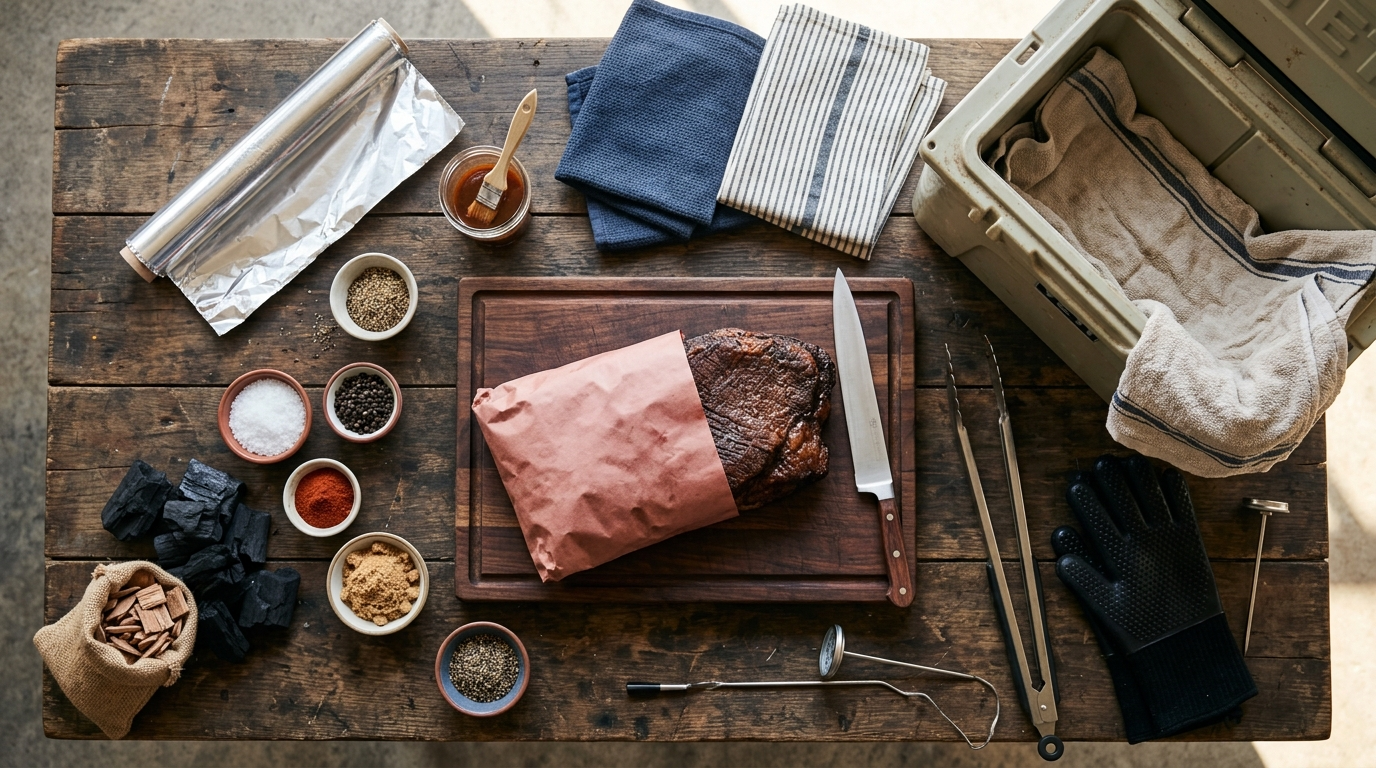
| 1 whole | packer brisket | 12 to 16 lbs, USDA Choice or Prime grade for best fat content and resting results |
| 4 tablespoons | coarse kosher salt | for the classic Texas-style rub base |
| 4 tablespoons | coarse black pepper | 16-mesh butcher grind preferred for proper bark formation |
| 1 tablespoon | garlic powder | optional, adds depth to the bark |
| 2 sheets | unwaxed pink butcher paper | large enough to double-wrap the full brisket, approximately 36 inches each |
| 1 large | insulated cooler | pre-warmed with hot water before use, 60-quart or larger recommended |
| 2 large | old bath towels | clean, used to insulate the brisket inside the cooler during the rest |
| 4 to 6 | chunks of oak or post oak wood | for smoking fuel, the traditional Texas brisket wood choice |
Instructions
Nutrition (per serving)
The BBQ Story Behind This Recipe
Resting meat after cooking is a technique as old as fire itself, but the art of resting a smoked brisket is deeply rooted in Texas BBQ culture. In the early 20th century, Central Texas meat markets like those in Lockhart and Luling were smoking beef brisket as a way to use tougher, less desirable cuts for working-class customers. These pitmasters cooked whole packer briskets overnight in massive offset smokers and naturally allowed the meat to sit and carry over before slicing to order throughout the day. That practice of holding brisket at temperature for extended periods was not just practical, it was transformative. The connective tissue had more time to fully break down, the bark set harder, and every slice came out more tender and juicy than if it had been cut straight off the smoker.
Over the decades, competitive BBQ culture elevated the science behind the rest. Teams competing on the KCBS circuit and in Texas-style competitions began experimenting with insulated coolers, commercial warming ovens called Cambros, and precise holding temperatures to dial in the perfect rest window. What was once an instinctual practice became a refined, deliberate step in the pitmaster process. Today, legendary joints like Franklin Barbecue in Austin and Snow is Barbecue in Lexington, Texas have built their entire reputation on not just the smoke but the rest. Aaron Franklin himself has spoken at length about holding brisket for up to four hours before service, calling it non-negotiable for achieving that signature buttery, pull-apart texture that defines world-class Texas brisket.
Hot Off the Grill
A Closer Look
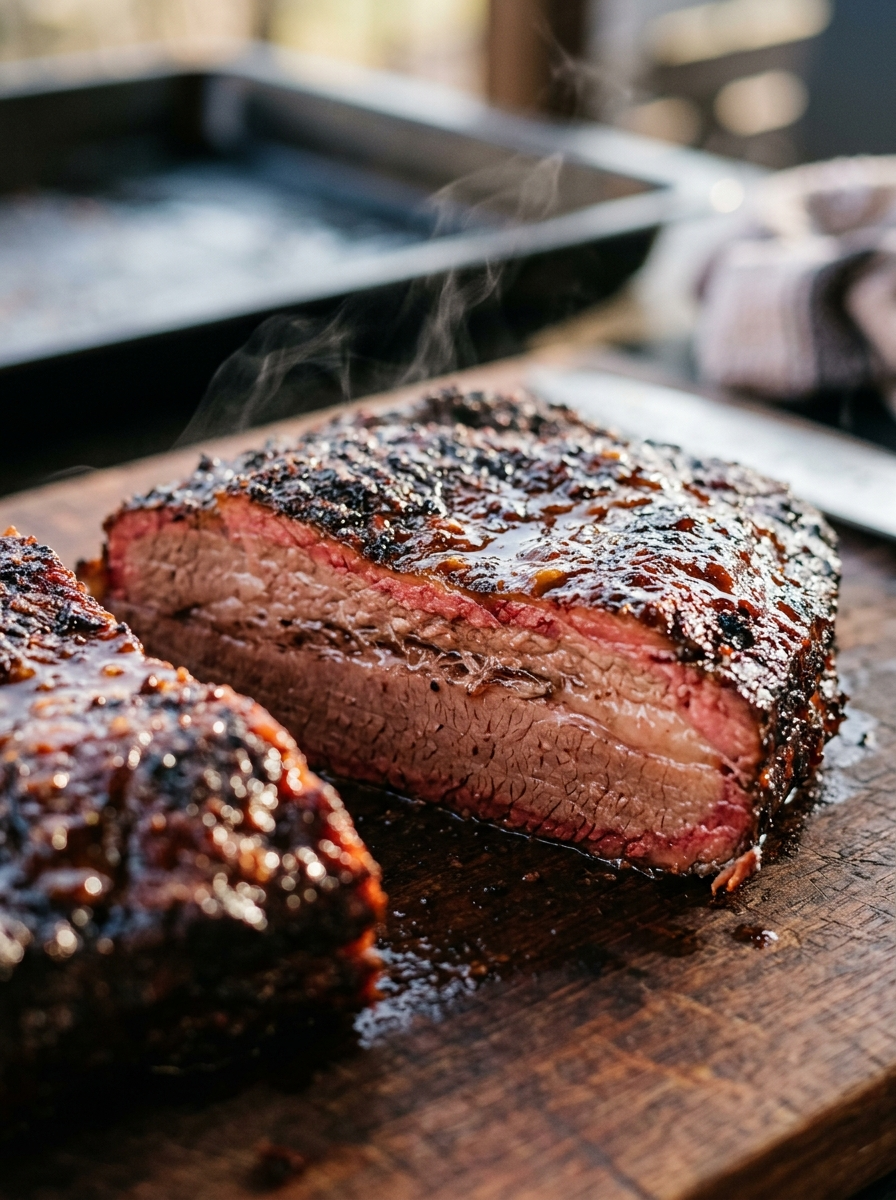
Pitmaster Tips for Best Results
- Never skip the probe test when checking for doneness. The target internal temp of 200 to 205 degrees Fahrenheit is a guideline, but the real indicator is that butter-soft probe feel across the entire flat. A brisket that probes perfectly at 198 degrees Fahrenheit is ready before one that feels tight at 205 degrees Fahrenheit.
- Always pre-warm your cooler before placing the brisket inside. Fill it with hot water for five full minutes, drain completely, and dry before loading the wrapped brisket. A cold cooler will steal 15 to 20 degrees Fahrenheit from your brisket in the first 30 minutes of the rest, cutting your safe holding window significantly.
- Rest time scales with brisket size. A smaller 8 to 10 lb flat needs a minimum of one hour of rest. A full 14 to 16 lb packer benefits from a full two to four hour rest. Competition pitmasters routinely rest large briskets for six hours in a Cambro warming cabinet without any loss in quality.
- If you wrapped in foil during the cook and want to protect your bark during the rest, crack the foil open slightly during the first 10 minutes after pulling from the smoker before resealing and placing in the cooler. This brief venting releases steam pressure that would otherwise continue softening your bark throughout the rest period.
- Use your leave-in probe thermometer to monitor the internal temp during a long rest. Food safety requires the brisket to stay above 140 degrees Fahrenheit throughout the hold. If the temp drops close to that threshold before you are ready to serve, slide the wrapped brisket into a 200-degree Fahrenheit oven to bring it back up safely without continuing to cook the meat.
🔧 Pitmaster Equipment
Offset Smoker or Pellet Grill: The foundation of any great brisket cook. You need a smoker capable of holding a steady 225 to 250 degrees Fahrenheit for 12 or more hours to properly render the collagen before resting.
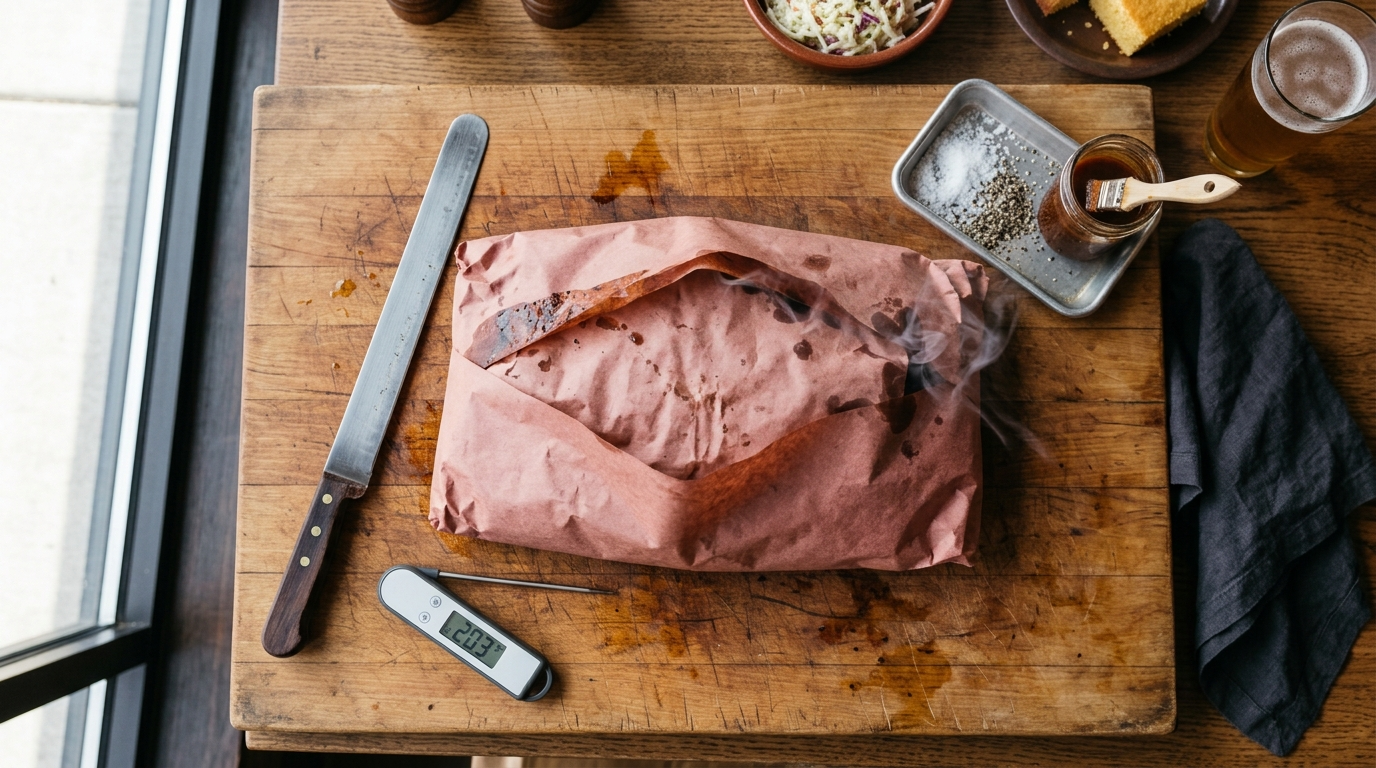
Instant Read Thermometer: You need to hit that target internal temp of 200 to 205 degrees Fahrenheit before pulling the brisket. A quality instant read thermometer like a Thermapen ensures you are not guessing at the single most critical moment of the cook.
Leave-In Probe Thermometer: Essential for monitoring the internal temp throughout the rest period. You want the brisket to hold above 140 degrees Fahrenheit for food safety and to stay above 145 degrees Fahrenheit for the best texture.
Unwaxed Butcher Paper: The pitmaster wrapping method of choice. Pink butcher paper lets the bark breathe while locking in moisture during the rest, unlike foil which can steam and soften the bark.
Heavy Duty Aluminum Foil: An alternative to butcher paper when you want a tighter, more intense hold. Foil traps more steam and is ideal for a faux Cambro rest in a dry cooler.
Insulated Cooler or Cambro: This is your pitmaster rest station. A large cooler pre-warmed with hot water and lined with towels will hold a wrapped brisket safely above 145 degrees Fahrenheit for up to four to six hours.
Old Bath Towels: Layer these around your wrapped brisket inside the cooler to create an insulating buffer that slows heat loss dramatically and extends your rest window.
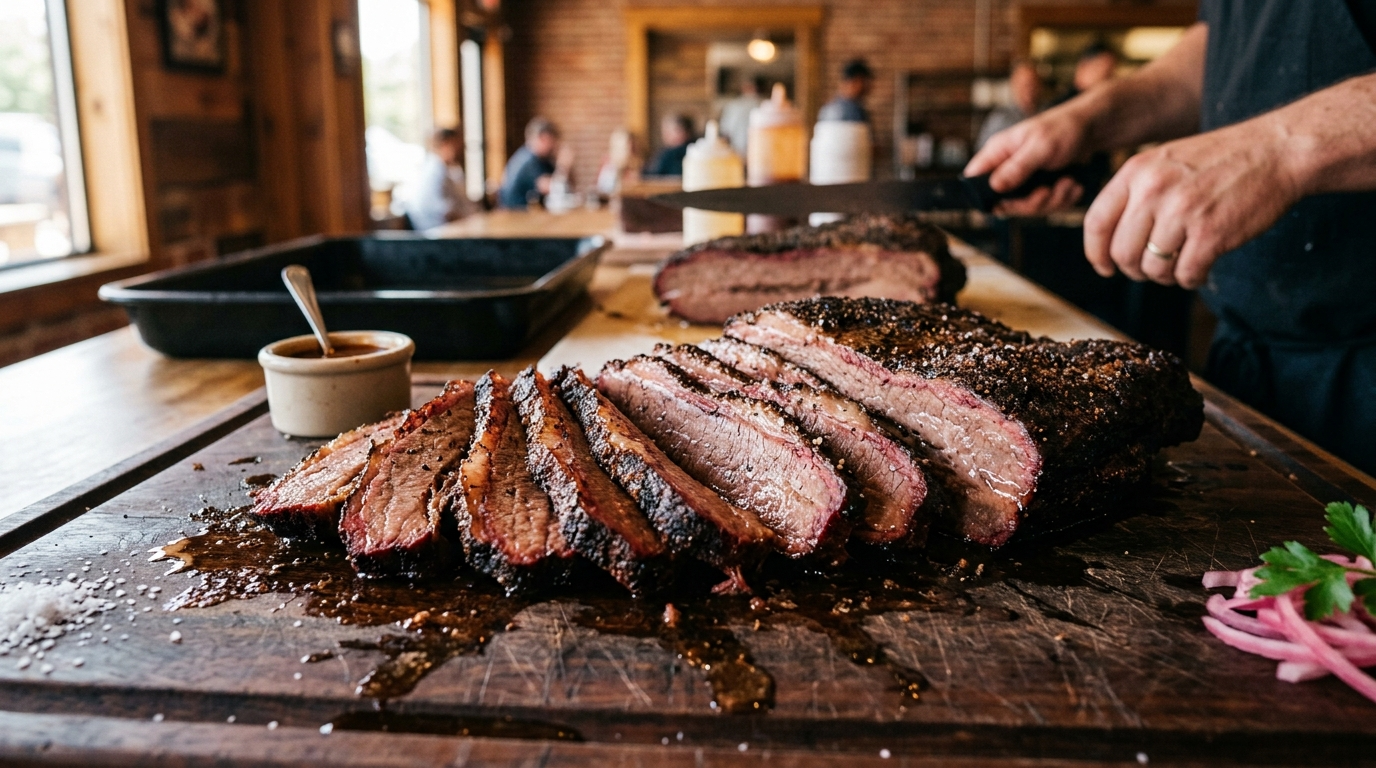
Sharp Brisket Slicing Knife: A long, sharp slicing knife, ideally 12 inches or longer, is critical for clean slices once the rest is complete. Tearing through rested brisket with a dull knife is a crime at any BBQ joint.
🔥 Variations
Competition Cambro Hold Method: Serious competition pitmasters use a Cambro insulated food service box set to 150 degrees Fahrenheit for long holds of four to eight hours. The Cambro maintains a perfectly even temperature throughout, eliminating any risk of temp drop and keeping the brisket in ideal serving condition for an extended window. If you cook for large crowds or want restaurant-level consistency, investing in a Cambro or commercial warming cabinet is a game changer that most serious backyard pitmasters eventually make.
Foil Wrapped Texas Crutch Rest: If you cooked your brisket wrapped in heavy duty aluminum foil rather than butcher paper, you can rest it in the same cooler method but be aware the bark will continue softening from the steam trapped inside the foil. To minimize this, open the foil for five minutes immediately after pulling from the smoker to vent excess steam, then re-seal tightly before placing in the pre-warmed cooler. This preserves more bark texture than leaving the foil sealed throughout the entire rest.
Overnight Rest for Meal Prep: If you are cooking brisket for a large event the following day, pull the brisket at 200 degrees Fahrenheit, wrap tightly in butcher paper, then wrap again in heavy foil, and place in a 150-degree Fahrenheit oven overnight. In the morning, the brisket will still be at a safe holding temp and at peak tenderness. Slice to order as guests arrive. This is exactly how some of the best BBQ restaurants in Texas manage their brisket for opening service and it works beautifully for backyard events.
Pellet Grill Rest Method: If you cooked your brisket on a pellet grill at 225 to 250 degrees Fahrenheit, the resting process is identical. Once the internal temp hits 200 to 205 degrees Fahrenheit and passes the probe test, pull it immediately. Wrap in butcher paper, load into your pre-warmed cooler with towels, and rest for two to four hours. Some pellet grill models have a keep warm setting around 165 degrees Fahrenheit, which can also serve as a short-term rest option if your cooler is not available.
❓ Pitmaster FAQ
What internal temperature should brisket reach before resting?
Pull your brisket off the smoker when the internal temp of the flat reaches 200 to 205 degrees Fahrenheit and the probe slides through like warm butter. The temperature reading is a starting point, but the probe feel test is the true indicator. Some briskets are done at 198 degrees Fahrenheit while others need to hit 207 degrees Fahrenheit before the collagen is fully rendered. Always trust the feel over the number.
How long should I rest a smoked brisket?
Rest a full packer brisket for a minimum of one hour, with two to four hours being the sweet spot for optimal moisture and texture. A smaller flat can get away with 45 to 60 minutes. The brisket will stay safely above 140 degrees Fahrenheit in a pre-warmed, towel-insulated cooler for three to five hours, so you have a wide service window once the rest begins.
Can I rest brisket too long?
Yes, but the window is wider than most people think. In a proper faux Cambro setup, a brisket can hold safely for up to five to six hours without quality loss. Beyond that, the texture can begin to break down further than desired and the bark can soften significantly from continued moisture migration. If you need to hold longer than six hours, use a commercial warming cabinet or Cambro set to exactly 150 degrees Fahrenheit for the most controlled result.
Should I rest brisket in butcher paper or foil?
Butcher paper is the preferred choice among most Texas-style pitmasters because it is breathable and allows some steam to escape, which helps maintain a firmer bark throughout the rest. Foil traps more steam and produces a softer bark but retains slightly more moisture in the meat. If bark texture is your priority, rest in butcher paper. If you cooked in foil and want maximum juice retention, keeping the foil with a brief initial vent is acceptable.
What is a faux Cambro and how do I set one up?
A faux Cambro is a pitmaster term for using a large insulated cooler as a makeshift commercial warming cabinet. Fill the cooler with hot water for five minutes to pre-warm the walls, dump and dry the interior completely, then line the bottom with a towel, place your wrapped brisket inside, cover with another towel, and seal the lid. This setup mimics the insulating properties of a professional Cambro food service box and will hold your brisket above 145 degrees Fahrenheit for three to five hours at no extra cost.
Does resting brisket really make a difference?
Absolutely, and the science backs it up. During the smoke, muscle fibers contract and push moisture toward the center of the brisket. Cutting immediately after cooking causes that moisture to pour out of the meat and onto your cutting board. A proper two-hour rest gives those fibers time to relax and reabsorb the moisture-rich gelatin back into the meat, resulting in slices that are noticeably juicier, more tender, and far more flavorful. Skip the rest and you are leaving the best version of your brisket on the table.