
Smoked almonds are one of the easiest and most rewarding things you can make on a BBQ smoker. Unlike store-bought versions that often rely on liquid smoke flavoring, this recipe uses actual wood smoke to build a deep, complex flavor that is genuinely hard to replicate any other way. The process is straightforward: coat raw almonds in a seasoned oil mixture, spread them on a wire rack or cast iron pan, and let the smoker do the work at a low temperature.
The result is a batch of almonds with a crisp, dry exterior, a subtly smoky aroma, and a savory-sweet seasoning that makes them nearly impossible to stop eating. They keep well for up to two weeks in an airtight container, which makes them excellent for road trips, charcuterie boards, holiday gift tins, or simple everyday snacking. This recipe produces two cups of finished smoked almonds and scales easily.
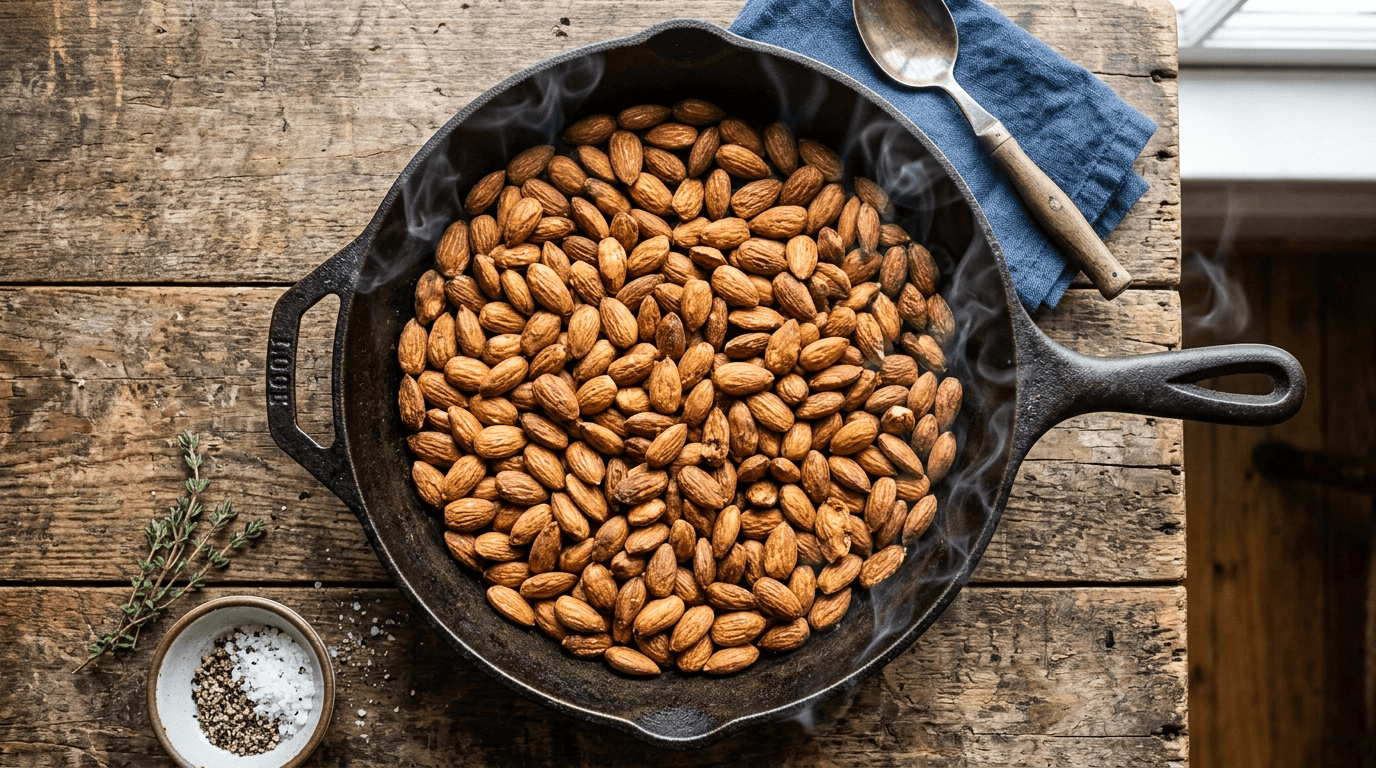
Smoked Almonds Recipe – Easy BBQ Smoker Method
This smoked almonds recipe uses a low-and-slow BBQ smoker method to infuse raw almonds with rich, wood-smoke flavor and a savory seasoned coating. Ready in about 90 minutes with simple pantry ingredients.
Prep: 10 minutes | Cook: 75 minutes | Servings: 8
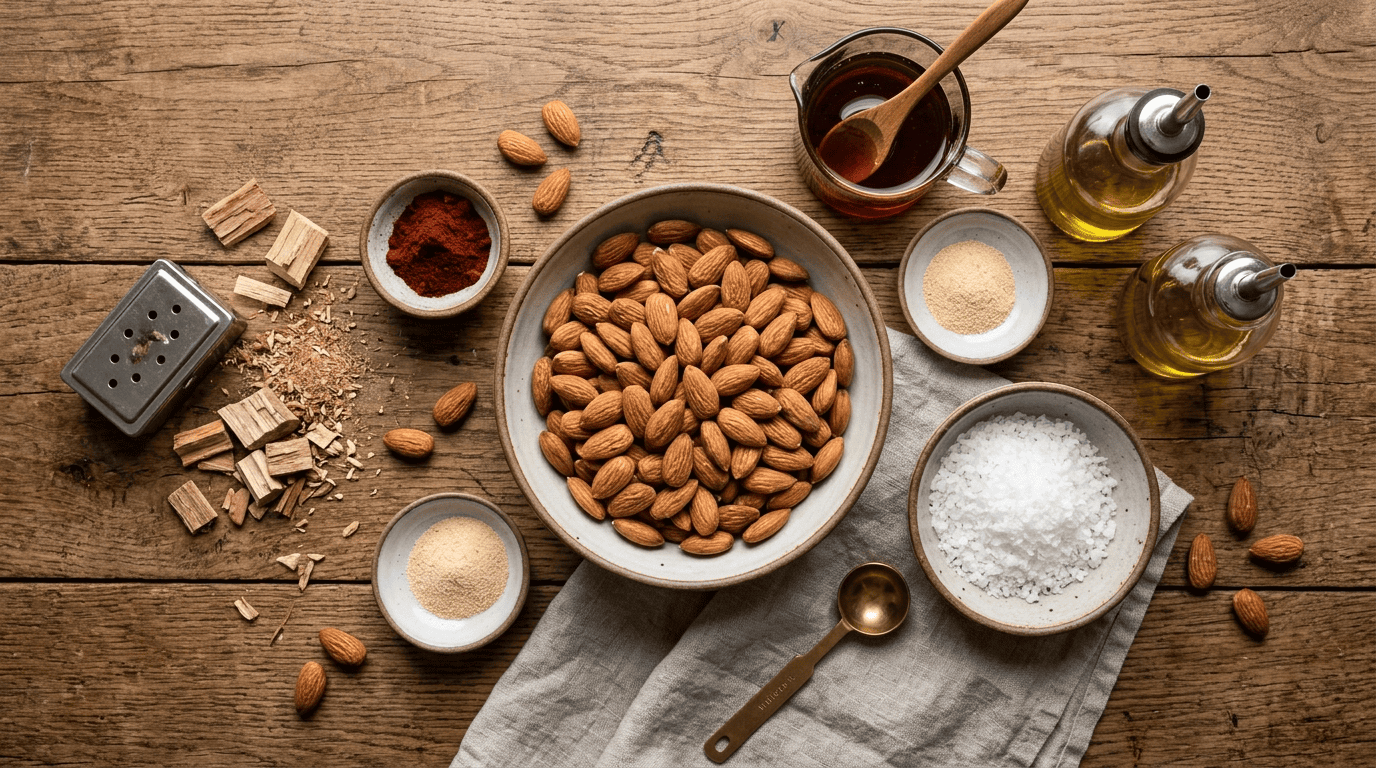
Ingredients
- 2 cups raw whole almonds Do not use pre-roasted or salted almonds; raw almonds absorb smoke and seasoning best
- 1 tablespoon olive oil or avocado oil Acts as a binder for the dry seasoning; avocado oil has a higher smoke point
- 1 teaspoon kosher salt Coarse kosher salt adheres well and seasons evenly
- 1 teaspoon smoked paprika Adds color and reinforces the smoke flavor
- 1/2 teaspoon garlic powder Use powder not granules for even coating
- 1/2 teaspoon onion powder
- 1/4 teaspoon cayenne pepper Optional; adjust to taste for heat level
- 1 teaspoon light brown sugar Helps seasoning caramelize and balances the savory spices; omit for strict keto
- 1 teaspoon Worcestershire sauce Adds umami depth; helps seasoning stick alongside the oil
Instructions
- Preheat your smoker to 225°F (107°C). Use a mild hardwood such as applewood, cherry, or pecan. Hickory works but delivers a stronger smoke flavor; use it sparingly. Allow the smoker to stabilize at temperature before adding the almonds.
- In a large mixing bowl, combine the olive oil and Worcestershire sauce. Stir to combine.
- Add the kosher salt, smoked paprika, garlic powder, onion powder, cayenne pepper, and brown sugar to the bowl. Stir all the dry seasonings into the oil mixture until it forms a uniform paste.
- Add the 2 cups of raw almonds to the bowl. Toss thoroughly using a spoon or your hands until every almond is evenly coated with the seasoning mixture. There should be no dry pockets of spice or pools of oil left in the bowl.
- Pour the seasoned almonds into a cast iron skillet or a disposable aluminum pan in a single layer. Avoid piling them up; a single layer ensures even smoke exposure and consistent cooking.
- Place the pan on the smoker grate away from direct heat. Close the lid. Smoke the almonds at 225°F for 60 to 90 minutes, stirring every 30 minutes to expose all sides to smoke and prevent any almonds sitting on the bottom from over-toasting.
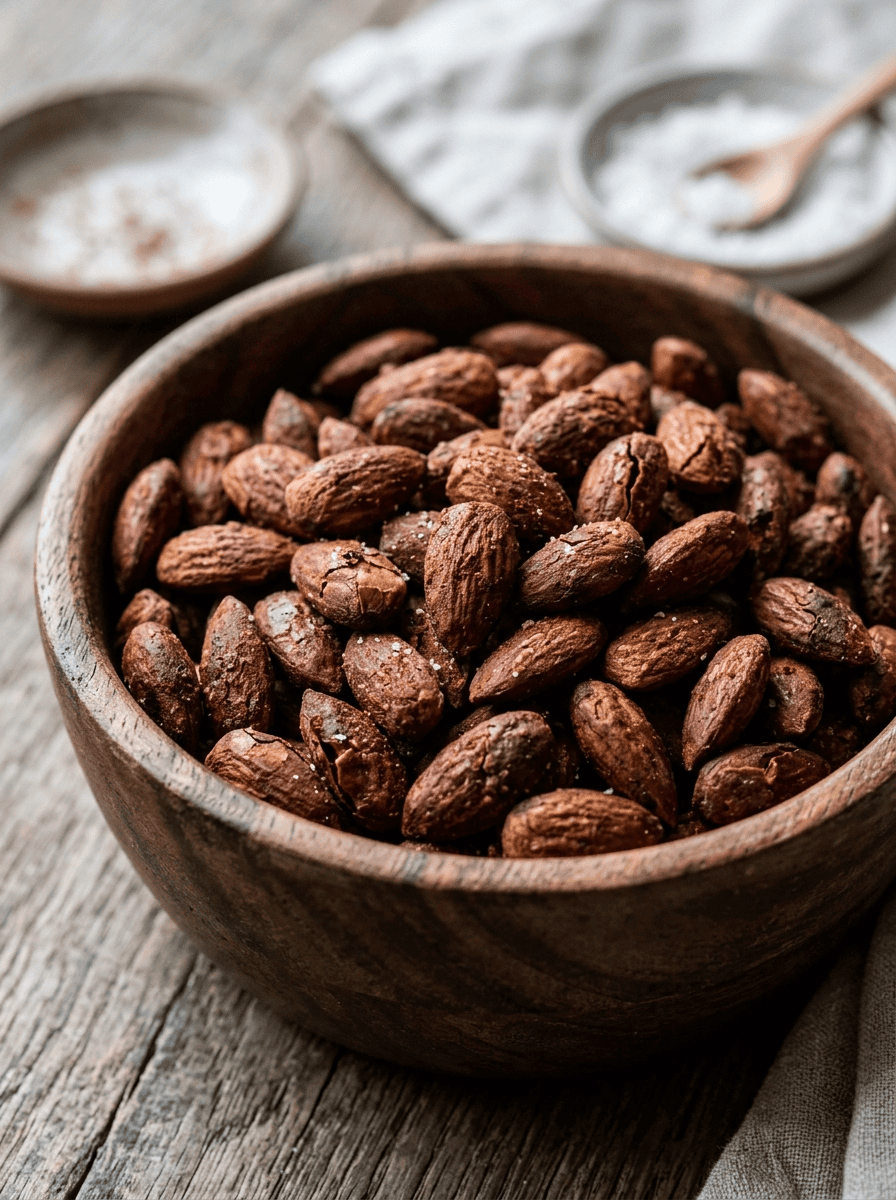
- At the 60-minute mark, check for doneness. The almonds should be dry to the touch with no oily surface sheen, the coating should appear set and slightly darkened, and the nuts should smell toasty and smoky. If they still feel tacky, continue smoking for another 15 to 30 minutes.
- Remove the pan from the smoker. The almonds will still feel slightly soft when hot. Spread them on a baking sheet lined with parchment paper and allow them to cool completely at room temperature, about 20 to 30 minutes. They will firm and crisp as they cool.
- Taste one almond once fully cooled. Adjust with a light pinch of additional salt if needed, tossing while still slightly warm so salt adheres.
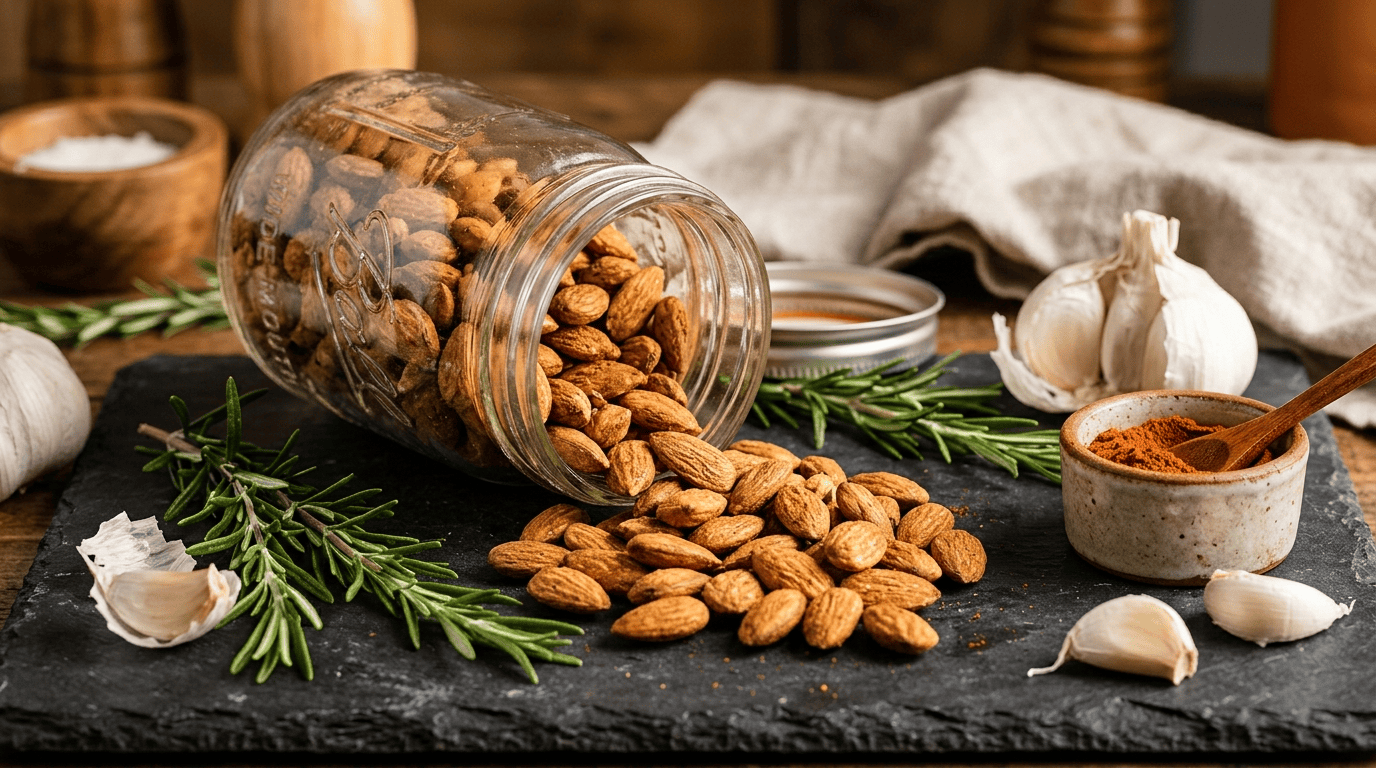
- Transfer cooled almonds to an airtight container or mason jar. Store at room temperature for up to 2 weeks. For longer storage, keep in the refrigerator for up to 6 weeks.
Almonds have been cultivated for thousands of years across the Mediterranean, Middle East, and Central Asia, with commercial production now dominated by California's Central Valley. The practice of smoking nuts is rooted in traditional preservation and flavoring techniques that predate refrigeration. Smoke acts as a mild preservative and imparts phenolic compounds that give food its characteristic smoky taste. Commercial smoked almonds became widely popular in the United States in the latter half of the 20th century, with brands like Blue Diamond bringing them to mainstream grocery stores. Home BBQ enthusiasts began replicating and improving on these commercially available versions as backyard smoking culture grew in the early 2000s, taking advantage of low-temperature smoking techniques originally developed for meats.
Practical Tips
- Always start with raw, unsalted almonds. Pre-roasted nuts will over-toast at smoking temperatures and can turn bitter.
- Do not exceed 250°F smoker temperature. Higher heat burns the sugar in the seasoning and can make the nuts taste acrid.
- Stir every 30 minutes without fail. Almonds sitting on the hot pan surface without movement can develop hot spots and uneven coloring.
- The almonds will seem underdone while hot. Do not judge doneness by texture while they are warm; the crunch develops fully only after cooling.
- Use a mild wood like apple or cherry for a subtle smoke. Mesquite is too aggressive for nuts and can overwhelm their natural flavor.
- If your smoker runs hot or cold, verify temperature with a secondary thermometer placed near the almonds rather than relying solely on the built-in lid gauge.
- For a gifting batch, double or triple the recipe and use the same pan size by spreading in a thicker layer — just add 20 to 30 minutes and stir more frequently.
- If you do not own a smoker, this recipe can be adapted for an oven at 250°F with 1/4 teaspoon of liquid smoke added to the oil mixture, though the flavor profile will differ significantly.
Charcoal or pellet smoker: Provides consistent low heat and wood smoke; a kettle grill with indirect setup also works
Cast iron skillet or disposable aluminum pan: Keeps small almonds from falling through grill grates and allows even heat distribution
Instant-read thermometer: Verifies smoker is holding the correct 225°F temperature throughout the cook
Large mixing bowl: Used to toss almonds evenly in oil and seasoning before smoking
Wooden spoon or silicone spatula: For stirring almonds periodically during smoking without scratching the pan
Airtight storage container or mason jar: For storing finished almonds; they crisp up fully as they cool and store well for up to 2 weeks
Sweet and Spicy Smoked Almonds: Increase brown sugar to 2 teaspoons and cayenne to 1/2 teaspoon. Add 1/4 teaspoon of cinnamon and 1/4 teaspoon of ground chipotle powder. The result has a noticeable heat that finishes with a caramelized sweetness.
Rosemary Sea Salt Smoked Almonds: Omit the paprika, cayenne, garlic powder, onion powder, and brown sugar. Replace with 1 tablespoon of finely minced fresh rosemary and 1 and 1/4 teaspoons of flaky sea salt. Use cherry or applewood smoke for a clean, herbal flavor profile.
BBQ Smoked Almonds: Replace the seasoning mix with 1 tablespoon of your favorite dry BBQ rub plus 1/2 teaspoon of additional salt. Use hickory wood for a more pronounced barbecue character that mirrors the spice profile of smoked brisket or ribs.
Tamari Smoked Almonds: Replace the Worcestershire sauce with 1 tablespoon of tamari or soy sauce, and omit the kosher salt from the mix since tamari provides sufficient sodium. Add 1/2 teaspoon of sesame oil and 1/4 teaspoon of ground ginger. Use pecanwood for a milder smoke that complements the umami base.
Maple Smoked Almonds: Replace the brown sugar and Worcestershire with 1 tablespoon of pure maple syrup. Keep all other spices. The maple syrup will caramelize during smoking, creating a glossy, lightly sweet coating. Monitor closely during the last 20 minutes to prevent burning.
What wood is best for smoking almonds?
Mild fruitwoods like apple and cherry are the most commonly used for smoking nuts because they add a gentle sweetness without overwhelming the almond's natural flavor. Pecan is another good option with a slightly nuttier smoke. Hickory can be used but should be limited to small amounts — one or two chunks maximum — as it can overpower the nuts. Avoid mesquite entirely for this application.
Why are my smoked almonds soft and not crunchy?
Smoked almonds are almost always soft when they come off the smoker. Crunch develops as they cool and the moisture from the coating fully evaporates. If they remain soft after 30 minutes of cooling, they likely need more time on the smoker. Return them to the smoker for an additional 20 to 30 minutes, or place the pan in a 250°F oven for 15 minutes.
Can I make smoked almonds without a smoker?
Yes, though the result will differ. Add 1/4 teaspoon of liquid smoke to the oil mixture and roast the seasoned almonds on a baking sheet in a 250°F oven for 60 to 75 minutes, stirring every 20 minutes. They will be roasted and flavored but will lack the complex layered smoke character that comes from an actual wood-burning smoker.
How long do homemade smoked almonds stay fresh?
Stored in an airtight container at room temperature, smoked almonds remain fresh for up to 2 weeks. In the refrigerator they last up to 6 weeks. In the freezer in a sealed bag they can be stored for up to 3 months. Bring refrigerated or frozen almonds to room temperature before serving, as cold temperatures slightly mute their flavor and can affect perceived texture.
Can I use other nuts with this same recipe?
Yes. Cashews, pecans, walnuts, and mixed nuts all work well with this method. Adjust smoking time downward for softer nuts like cashews and walnuts, which can reach the right texture in 45 to 60 minutes. Pecans behave similarly to almonds in smoking time. Always watch carefully in the final 20 minutes regardless of which nut you use.
Do I need to soak the almonds in water before smoking?
No. Soaking is sometimes used with meats to extend cooking time, but with nuts it introduces excess moisture that dramatically extends the drying time in the smoker and can lead to uneven texture. Start with dry raw almonds coated in the oil-based seasoning mixture only.
What is the correct internal temperature for smoked almonds?
Unlike meats, nuts do not have a food safety internal temperature target. Doneness is judged by visual and tactile cues: the coating should appear dry and set, the almonds should smell toasty without any raw or grassy aroma, and they should feel firm when pressed rather than soft or tacky. Full texture confirmation comes only after cooling.