
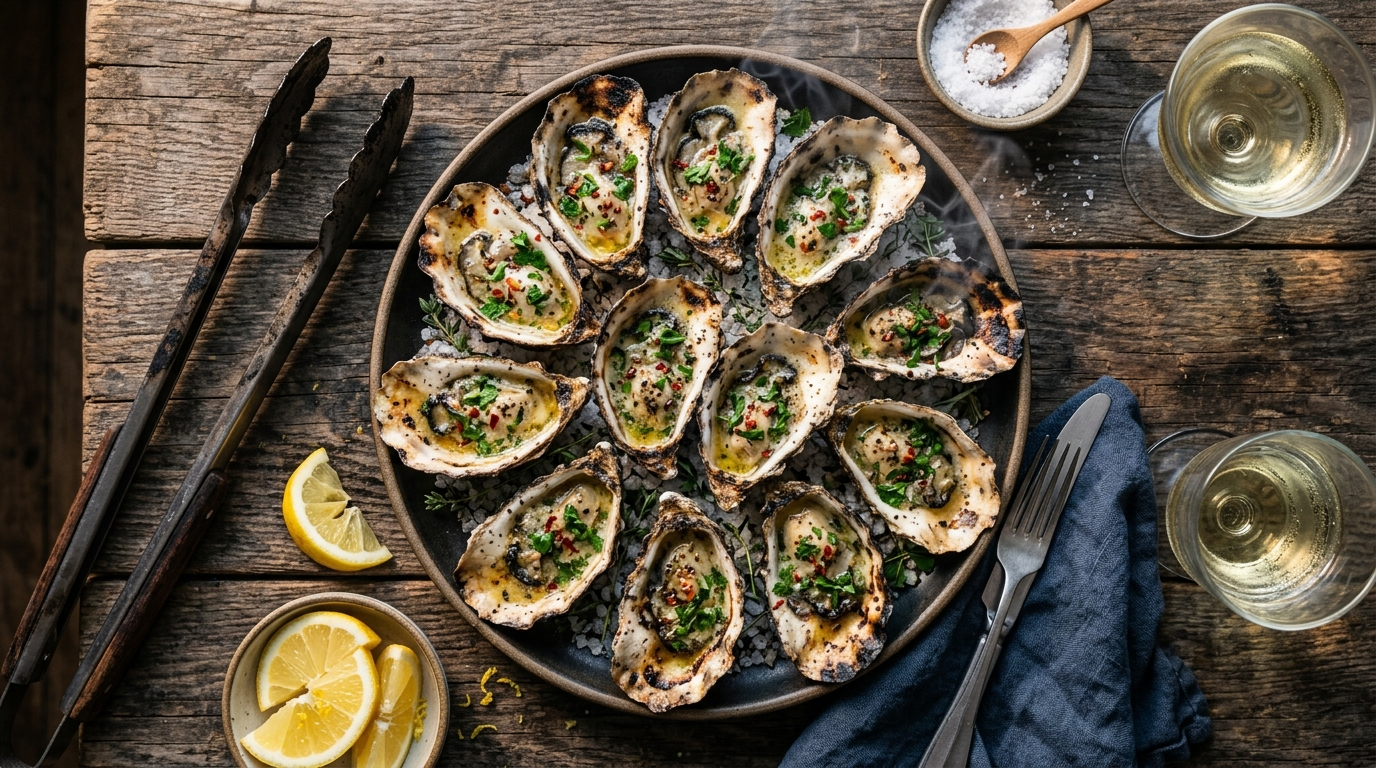
Grilled Oysters Recipe with Garlic Butter Sauce
Ingredients
Method
- Fire up the grill and build a two-zone fire by loading your charcoal chimney full and letting it rip until the coals are fully ashed over and glowing orange - about 20 to 25 minutes. Spread the coals evenly for direct high heat across the entire grate. You are targeting 450 to 500 degrees Fahrenheit at the grate level. If you are on a gas grill, crank all burners to high and let it preheat with the lid closed for 10 to 15 minutes. Clean the grates thoroughly with a wire brush - you want clean metal for this cook.
- While the grill is preheating, prepare your garlic butter compound. In a small bowl, combine the softened unsalted butter, minced garlic, chopped parsley, lemon juice, lemon zest, hot sauce, kosher salt, and cracked black pepper. Mix thoroughly with a fork until everything is fully incorporated and the butter is smooth. If you are going the New Orleans charbroiled route, stir the grated Parmesan in now as well. Set this aside at room temperature so it stays workable - do not refrigerate it at this point.
- Scrub the outside of each oyster shell under cold running water with a stiff brush to remove any mud, grit, or debris. This matters because those shells are going directly on your grates and you do not want grit falling into your food. Set the cleaned oysters on a rimmed baking sheet and carry them out to the grill station. Work in batches if your grill surface requires it - do not crowd the grates.
- Now comes the shucking. Put on your cut-resistant glove and grip each oyster flat-side up with the hinge pointing toward you. Insert the tip of your oyster knife into the hinge point and apply firm twisting pressure until you feel the hinge give way. Slide the knife along the top flat shell to sever the adductor muscle, then remove and discard the top flat shell entirely. Run the knife underneath the oyster meat to free it from the bottom cup shell but leave the oyster sitting in the cup shell in its natural liquor. This is called serving them on the half shell. Repeat for all 24 oysters.
- Place each half-shell oyster directly on the hot grill grates, cup side down, making sure they sit level enough to hold their liquor. You should hear an immediate sizzle - that is exactly what you want. Work quickly and get them all on the grate within 60 to 90 seconds. Close the grill lid and let them cook for 4 to 5 minutes. You are looking for the natural oyster liquor in the shell to start bubbling and the very edges of the oyster meat to just begin to curl and firm up. That is your visual cue that they are nearly there.
- Working quickly with your long tongs and heat-resistant gloves, drop approximately one teaspoon of the garlic butter compound directly into each oyster shell right on top of the meat. Close the lid and cook for another 60 to 90 seconds until the butter is fully melted and sizzling in the shell and you can see it starting to caramelize slightly around the edges. If you added Parmesan to your butter, you will start to see the faintest golden color developing - that is the sweet spot. Total cook time should be right around 5 to 6 minutes from when the oysters first hit the grates.
- Using tongs and a folded kitchen towel or grill gloves, carefully transfer the oysters to a serving platter or keep them right on the rimmed baking sheet - just be careful not to spill that beautiful garlic butter out of the shells. Squeeze fresh lemon juice over the top of the whole platter and finish with an extra scattering of fresh chopped parsley. Serve immediately with thick slices of grilled crusty French bread on the side for soaking up every last drop of that smoky garlic butter. These do not wait - get them to the table and get people eating.
Nutrition
This grilled oysters recipe is one of the fastest, most impressive things you will ever fire up the grill for – these briny, smoky beauties go from grate to plate in under 10 minutes and deliver a flavor punch that will have your guests convinced you spent hours in the kitchen. We are talking about raw oysters cracked open, kissed by live fire at around 450 to 500 degrees Fahrenheit, and finished with a garlic herb butter that melts right into the shell. It is the kind of dish that makes people stop mid-conversation and walk toward the smoke.
Now I know what some of you are thinking – oysters are for fancy restaurants, not the backyard pit. Let me tell you right now, that is the wrong mindset. Some of the greatest oyster traditions in this country were born outdoors, over open fire, with nothing but butter, garlic, and good company. The high direct heat of a charcoal grill does something incredible to a fresh oyster – it tightens the meat just slightly, concentrates that ocean brine, and adds a whisper of woodsmoke that no steamer or oven can replicate.
The key to nailing this grilled oysters recipe is working fast and working hot. You want your grill ripping at 450 to 500 degrees Fahrenheit with the grates clean and oiled. The oysters only need 4 to 6 minutes directly over the coals – you are looking for the shells to pop open slightly and the edges of the oyster meat to just begin to curl. That is your visual cue. Pull them at that moment, drop your garlic butter right in, and serve immediately. No resting time needed here – this is one recipe where speed is everything.
Grilled Oysters Recipe with Garlic Butter Sauce
This grilled oysters recipe delivers smoky, buttery perfection straight off the grates in under 15 minutes. With a rich garlic butter sauce that sizzles right in the shell, these are the ultimate backyard appetizer. Fire up the grill today and impress your whole crew.

Ingredients
| AMOUNT | INGREDIENT | NOTES |
|---|---|---|
| 24 | fresh oysters | in the shell, scrubbed clean – Gulf Coast or Pacific varieties both work great |
| 8 tablespoons | unsalted butter | 1 stick, softened to room temperature |
| 6 cloves | fresh garlic | minced very fine or pressed – do not use garlic powder here |
| 2 tablespoons | fresh flat-leaf parsley | finely chopped |
| 1 tablespoon | fresh lemon juice | about half a lemon, plus wedges for serving |
| 1 teaspoon | lemon zest | from the same lemon |
| 1 teaspoon | hot sauce | Louisiana-style like Crystal or Tabasco – adjust to your heat preference |
| 0.5 teaspoon | kosher salt | for the butter compound |
| 0.25 teaspoon | freshly cracked black pepper | |
| 2 tablespoons | finely grated Parmesan cheese | optional but highly recommended for a New Orleans charbroiled style |
| 1 loaf | crusty French bread | sliced and grilled, for soaking up all that garlic butter |
Instructions
Nutrition (per serving)
The BBQ Story Behind This Recipe
Oyster roasts over open fire have deep roots in American coastal culture, particularly across the Lowcountry of South Carolina and Georgia. For generations, communities along the Atlantic coast would gather in late fall and winter for oyster roasts – heaping fresh-harvested clusters of oysters onto sheet metal over wood fires, covering them with wet burlap sacks, and steaming and roasting them until they cracked open. These were not formal affairs. They were communal, messy, hands-on celebrations of the water and the harvest, where wooden picnic tables were covered with newspaper and everyone shucked their own shellfish with a glove and a flat-blade knife. That tradition of live-fire oyster cookery is the direct ancestor of what we are doing here on the grill.
Further west along the Gulf Coast, particularly in Louisiana and coastal Texas, grilled oysters took on a different identity – one heavily influenced by Cajun and Creole cooking. The famous charbroiled oysters of New Orleans are a point of regional pride, finished with bold garlic butter, herbs, and sometimes a hit of hot sauce right on the half shell over screaming-hot grill grates. These Gulf Coast pitmasters understood something fundamental: fire and shellfish are a natural pairing, and butter is the bridge between them. The recipe you are about to make today honors both of those great American traditions – the communal fire-roasted oyster of the Atlantic coast and the bold, buttery charbroiled oyster of the Gulf.
Hot Off the Grill

A Closer Look

Pitmaster Tips for Best Results
- Buy oysters the same day you plan to grill them – fresh is everything with shellfish. When you get them home, store them cup-side down in a bowl covered with a damp towel in the refrigerator until you are ready to fire up the grill. Do not store them in an airtight container or submerged in water.
- If shucking raw oysters feels intimidating, try this pitmaster shortcut: place the whole unshucked oysters directly on the 450 to 500 degree grill grates for 2 to 3 minutes until they pop open on their own. Carefully remove the top shell, add your butter, and finish them for another 2 minutes. This method is slightly less precise but works great for beginners.
- For an extra layer of smoke flavor, toss a small chunk of applewood or alder wood directly onto your charcoal just before the oysters go on. These light fruitwoods complement the briny sweetness of oysters beautifully without overpowering them the way heavier woods like oak or hickory can.
- Make your garlic butter compound up to 3 days in advance and keep it wrapped in plastic wrap in the refrigerator. Take it out about 30 minutes before you fire up the grill so it comes back to room temperature and is easy to spoon onto the hot shells. You can also freeze the compound butter for up to 2 months.
- Watch your oysters like a hawk – the difference between perfectly cooked and overcooked is only about 60 to 90 seconds at these high temperatures. Overcooked oysters become rubbery and lose that silky texture that makes them so special. Pull them the moment the edges start to curl and the liquor is bubbling. When in doubt, go a little under rather than over.
🔧 Pitmaster Equipment
Charcoal Grill or Gas Grill: High direct heat at 450 to 500 degrees Fahrenheit is essential for properly grilling oysters and developing that signature smoky flavor in the shell.
Oyster Knife and Shucking Glove: A proper oyster knife and cut-resistant glove are critical safety tools for shucking raw oysters before they go on the grill.
Long Tongs: Keep your hands safe from the high heat while placing and retrieving oyster shells directly on the hot grates.
Heat-Resistant Grill Gloves: Essential for handling the extremely hot oyster shells when pulling them off the grill at 450 to 500 degrees Fahrenheit.
Small Saucepan or Cast Iron Skillet: Used to prepare and melt your garlic butter sauce either on the side burner or directly on the grill grates.
Rimmed Baking Sheet: Use this to transport oysters from prep station to grill and back to the table safely without spilling the precious butter.
🔥 Variations
Pellet Grill Version: Set your pellet grill to its highest temperature setting – ideally 450 to 500 degrees Fahrenheit – and use alder or applewood pellets for a clean, light smoke that complements the oysters without overwhelming them. Follow all the same steps and timing. The convection heat on a pellet grill may cook the oysters slightly faster so start checking at the 4-minute mark.
Gas Grill Version: Crank all burners to high and preheat with the lid closed for a full 15 minutes before the oysters go on. To add smoke flavor on a gas grill, place a small smoker box filled with alder or applewood chips directly over one of the burners during preheat. Follow the same cook time and visual cues. The results will be excellent even without charcoal.
New Orleans Charbroiled Style: This is the full Gulf Coast treatment. Double the Parmesan in your butter compound and add 2 tablespoons of Romano cheese as well. Increase the hot sauce to a full teaspoon and add a pinch of dried oregano and dried thyme to the butter. Grill exactly as directed and finish with an aggressive squeeze of fresh lemon. Serve over toasted French bread that catches all the cheese-crusted garlic butter dripping from the shells.
Spicy Cajun Butter Version: Swap the standard hot sauce for a full tablespoon of your favorite Cajun seasoning blend mixed into the butter along with a teaspoon of smoked paprika and half a teaspoon of cayenne pepper. This version brings serious heat and bold Cajun flavor that pairs beautifully with cold beer on a hot grilling day.
Asian-Inspired Miso Butter Version: Replace the lemon juice and Parmesan with 1 tablespoon of white miso paste, 1 teaspoon of toasted sesame oil, 1 teaspoon of fresh grated ginger, and a splash of soy sauce blended into your softened butter. Finish the grilled oysters with thinly sliced scallions and a drizzle of chili oil. A completely different flavor profile that is absolutely worth firing up the grill for.
❓ Pitmaster FAQ
How do I know when grilled oysters are done cooking?
The clearest visual cue is when the natural oyster liquor inside the shell begins to actively bubble and the very edges of the oyster meat start to curl and turn slightly opaque. This typically happens right around the 4 to 5 minute mark at 450 to 500 degrees Fahrenheit. The shells will also start to show light charring on the outside. Do not wait for the oyster to be fully opaque throughout – that means they are overcooked and heading toward rubbery territory.
Can I grill oysters without shucking them first?
Absolutely – this is actually a great technique for beginners. Place whole unshucked oysters flat-side up directly on the hot grates at 450 to 500 degrees Fahrenheit. After about 2 to 3 minutes, the shells will pop open slightly on their own as the steam inside builds. Use tongs to remove them, carefully pry off the top shell, add your garlic butter directly to the cupped bottom shell, and return them to the grill for another 2 minutes to finish.
Are grilled oysters safe to eat?
Yes – grilling oysters over high heat cooks them thoroughly and makes them safe for most people to eat. The heat from a 450 to 500 degree grill will kill harmful bacteria. However, individuals who are pregnant, elderly, immunocompromised, or have liver conditions should consult their doctor before consuming shellfish. Always buy oysters from a reputable seafood supplier and cook them the same day you purchase them for maximum safety and quality.
Can I use frozen oysters for this grilled oysters recipe?
Fresh oysters in the shell are strongly preferred and will deliver the best results by a wide margin. If you absolutely cannot get fresh oysters, you can use pre-shucked fresh oysters from a container – just nestle them into crumpled aluminum foil cups on the grill to hold them in place since you do not have the natural shell as a vessel. Frozen oysters tend to release too much water and will steam rather than grill, which defeats the whole purpose of using live fire.
What type of oysters work best for grilling?
Gulf Coast oysters like those from the Gulf of Mexico are the classic choice for this style of cooking – they are plump, briny, and hold up beautifully to high heat. Pacific oysters from the West Coast are also excellent and have a slightly sweeter, more delicate flavor. East Coast oysters like Wellfleets or Blue Points are wonderful raw but their smaller size can make them trickier to grill without overcooking. Whatever variety you choose, freshness is the single most important factor.
Can I make the garlic butter ahead of time?
Yes and you absolutely should. Making the garlic butter compound up to 3 days ahead is one of the best things you can do to streamline your cook day. Mix everything together, roll it into a log in plastic wrap, and refrigerate it. Pull it out 30 minutes before you fire up the grill so it comes back to a spreadable consistency. You can also freeze the compound butter for up to 2 months and thaw it in the refrigerator the night before your cook.