
An internal temperature guide for grilling is the single most important tool you can have in your pitmaster arsenal – more important than any rub, sauce, or fancy gadget on the market. After years of standing over live fire, I can tell you that the difference between a dry, overcooked chicken breast and a juicy, perfectly rendered piece of bird comes down to about ten degrees of internal temp. That is it. Ten degrees separates a showstopper from a disaster, and knowing your numbers cold is what separates a backyard cook from a true pitmaster.
When you fire up the grill without a thermometer and rely on the old poke test or the timer method, you are gambling with your food and your guests. I have seen a rack of ribs that looked done from the outside turn out completely underdone at the bone, and I have watched beautiful thick-cut steaks get pushed past 165 degrees by someone who thought they were being safe. The reality is that every protein has its own magic number – a target internal temp where the fat has rendered, the proteins have set properly, and the moisture is locked in at its peak. Whether you are chasing 130 for a medium-rare ribeye or 165 for pull-apart chicken thighs, knowing your numbers is non-negotiable.
In this guide, we are going to walk through the definitive internal temp targets for beef, pork, poultry, fish, and even vegetables. We will cover how to use an instant read thermometer correctly, when to pull the meat early and let carryover cooking do the work, and why resting the meat after it comes off the grill is just as important as hitting the right number. Bookmark this page, print it out, and tape it inside your grill lid – because once you start cooking by temperature instead of by instinct alone, your BBQ game will never be the same.
Internal Temperature Guide for Grilling: Master Every Meat
Stop guessing and start grilling with precision. This internal temperature guide for grilling covers every protein from chicken to brisket so you hit perfect doneness every single time. Safe, juicy, and packed with flavor – this is your reason to fire up the grill today.

Ingredients
| AMOUNT | INGREDIENT | NOTES |
|---|---|---|
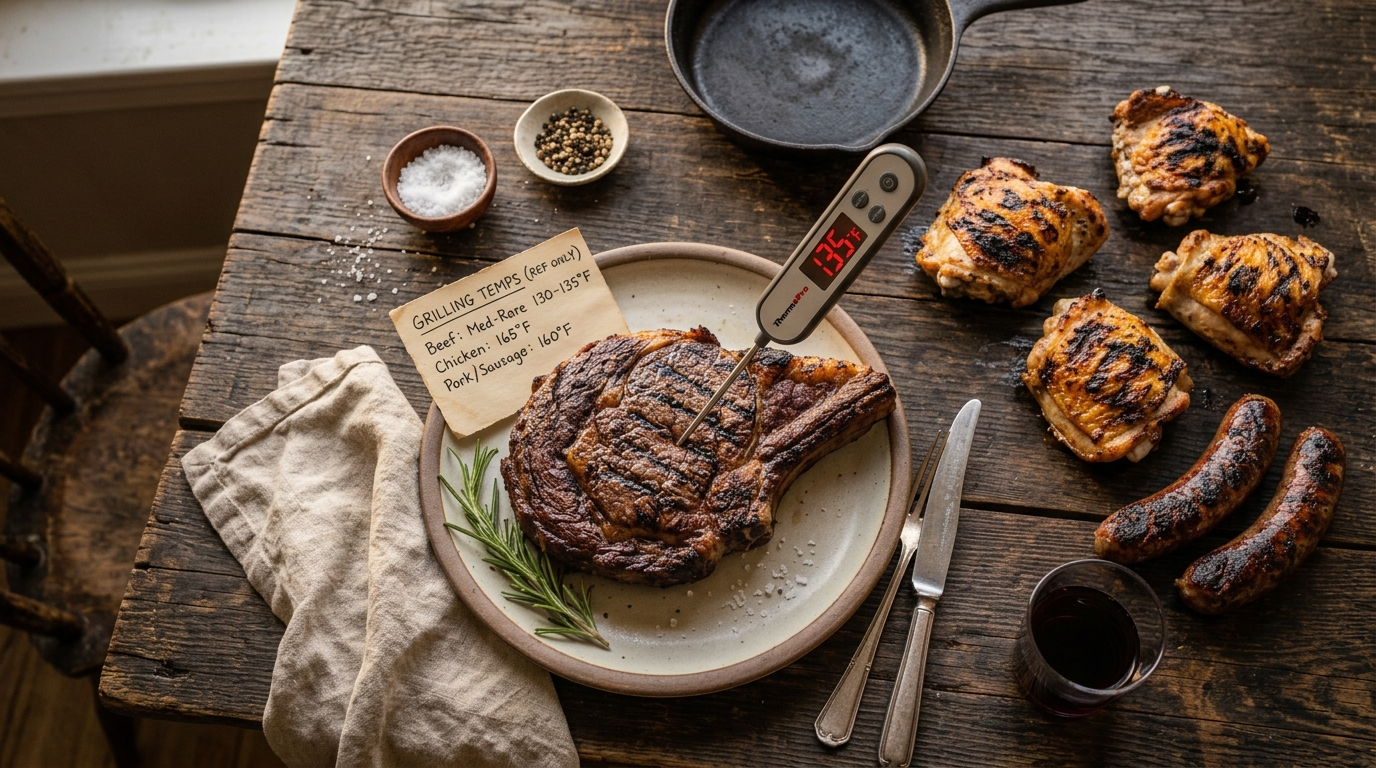
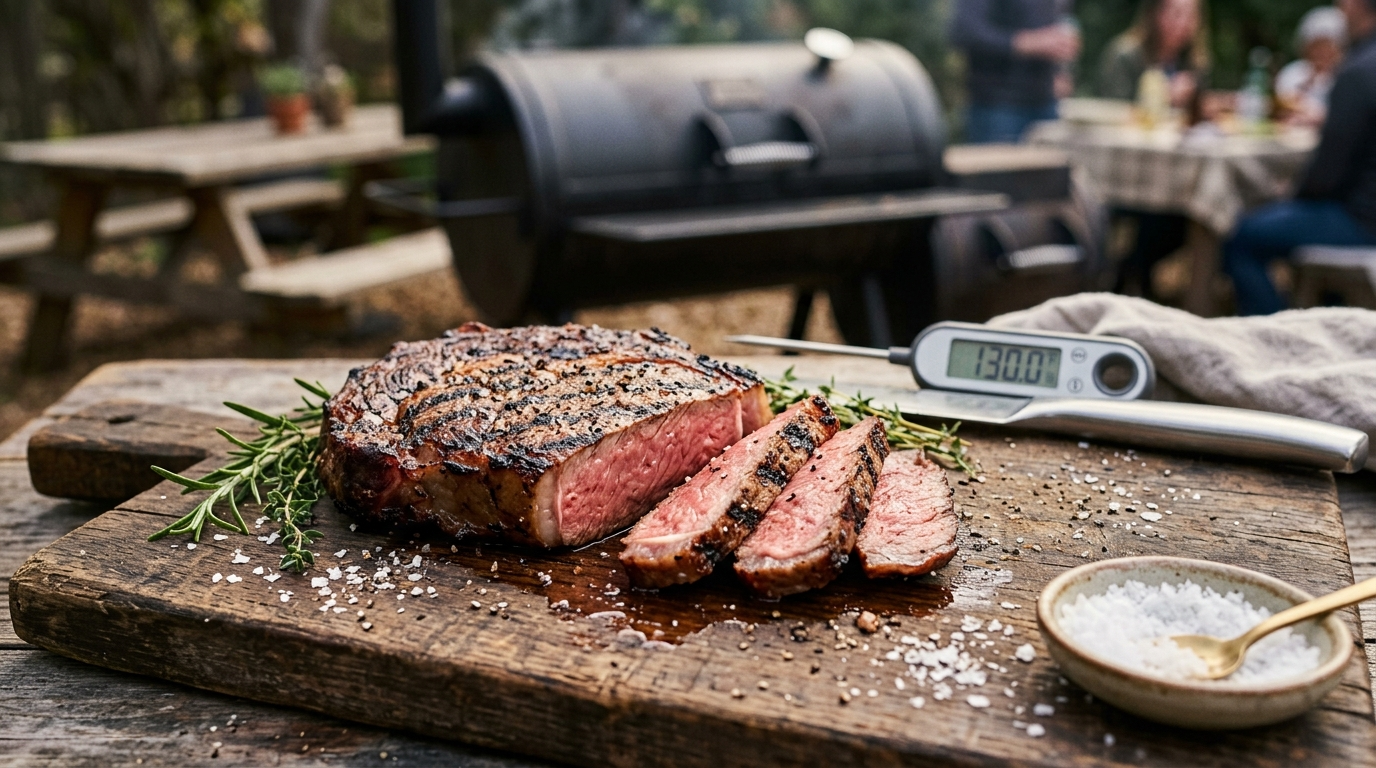
| 1 whole | beef ribeye steak (1.5 inches thick) | target 130 degrees F for medium-rare, 135 for medium |
| 2 lbs | bone-in skin-on chicken thighs | target 165 degrees F internal temp for safe, juicy results |
| 1 rack | baby back ribs | target 195 to 203 degrees F for tender, pull-back texture |
| 2 lbs | pork tenderloin | target 145 degrees F internal temp per USDA guidelines |
| 4 fillets | salmon (1-inch thick) | target 125 to 130 degrees F for moist, just-cooked texture |
| 1 whole | beef brisket (10 to 12 lbs) | target 195 to 205 degrees F for the probe-tender sweet spot |
| 4 links | Italian or bratwurst sausage | target 160 degrees F internal temp for pork sausage |
| 1 whole | spatchcocked chicken (3 to 4 lbs) | target 165 degrees F at the thickest part of the thigh |
| 2 tablespoons | neutral oil (avocado or vegetable) | for coating proteins before grilling to prevent sticking |
| 2 tablespoons | kosher salt and coarse black pepper | universal seasoning base for all proteins in this guide |
Instructions
Nutrition (per serving)
The BBQ Story Behind This Recipe
The tradition of cooking meat over fire goes back tens of thousands of years, but the science of internal temperature is a relatively modern obsession. In the early days of American BBQ, pitmasters in the Carolinas, Texas, and Tennessee relied entirely on experience – the way the meat looked, how it pulled back from the bone, the color of the smoke coming off the pit. These men and women developed an almost supernatural ability to read a piece of meat without ever sticking a probe in it. The low and slow traditions of whole hog BBQ in Eastern North Carolina or brisket smoking in Central Texas were built on time-honored instinct passed down through generations, not digital readouts.
It was not until the mid-twentieth century, as backyard grilling became a cornerstone of American suburban culture and food safety regulations became more formalized, that the USDA began publishing safe internal temperature guidelines for home cooks. The introduction of affordable instant read thermometers in the 1970s and 1980s democratized precision cooking in a way that changed backyard BBQ forever. Suddenly, the home griller had access to the same kind of feedback that professional pitmasters had spent decades developing by feel. Today, the best competition BBQ teams and Michelin-starred chefs alike rely on accurate temperature readings to ensure consistency, safety, and that perfect bite every single time. The thermometer is not a crutch – it is the bridge between tradition and precision.
Hot Off the Grill
A Closer Look
Pitmaster Tips for Best Results
- Always insert your thermometer probe into the thickest part of the meat and away from any bone, fat cap, or gristle. Bones conduct heat differently than muscle tissue and will give you a false high reading if your probe tip is touching one.
- Account for carryover cooking by pulling most proteins 5 to 10 degrees below your target internal temp. A thick ribeye pulled at 125 degrees F will coast up to 130 to 132 degrees F during a proper 7-minute rest. Thin cuts carry over less, thick cuts carry over more.
- The stall is real and it is not your enemy. When large cuts like brisket and pork butt hit 150 to 165 degrees F internal temp, evaporative cooling from the surface moisture can hold the temp flat for 2 to 4 hours. Do not panic and crank the heat – wrap in butcher paper and keep the low and slow process going.
- Use a two-probe setup for large cooks. Place one probe in the meat and a second probe at grate level to monitor your actual cooking environment temperature. The built-in dome thermometer on most grills and smokers reads 25 to 50 degrees higher than the actual grate temp where your food is sitting.
- For whole birds and thick roasts, check the internal temp in multiple locations before calling the cook done. The breast and thigh of a whole chicken can differ by 10 to 15 degrees F at the same moment – always verify the lowest reading hits your target temp before pulling the bird off the grill.
🔧 Pitmaster Equipment
Instant Read Thermometer: This is the single most critical tool for this guide. A quality instant read thermometer like a Thermapen or ThermoPop gives you an accurate reading in two to three seconds so you can pull your meat at exactly the right moment without losing heat by leaving the lid open too long.
Leave-In Probe Thermometer: For long cooks like brisket, pork butt, or whole chicken, a leave-in probe thermometer lets you monitor the internal temp without opening the grill. Set an alarm for your target temp and walk away with confidence.
Charcoal Kettle Grill or Offset Smoker: Charcoal and wood fire provide the most authentic heat environment for testing temps across different cooking styles – from high heat searing to low and slow indirect cooking. Understanding how your fire behaves is key to hitting target temps consistently.
Long Tongs and Heat Resistant Gloves: When you are managing a live fire and repositioning meat for even cooking, you need tongs that give you reach and gloves that protect your hands. Safety at the grill is non-negotiable.
Cutting Board with Juice Grooves: After you pull the meat and rest it, a cutting board with deep juice grooves catches all those beautiful juices that release during resting. Those juices are flavor gold – do not lose them to the counter.
🔥 Variations
Pellet Grill Version: Set your pellet grill to the exact same temperatures listed in this guide and follow every step identically. Pellet grills excel at maintaining consistent indirect heat for low and slow cooks – set your target temp, insert your leave-in probe, and let the automation handle the fire management while you monitor the internal temp. Use hickory or mesquite pellets for beef, apple or cherry for pork and poultry.
Gas Grill Version: All the same internal temp targets apply on a gas grill – the thermometer does not care what fuel you are using. For indirect cooking, light only one side of the burners and place your meat on the unlit side. Add a smoker box filled with soaked wood chips over a lit burner to introduce smoke flavor. Monitor grate temperature with a separate thermometer since gas grill dome gauges are notoriously inaccurate.
Offset Smoker Version: An offset smoker is the purist low and slow machine. Manage your firebox to maintain 225 to 250 degrees F in the cooking chamber and rely on your leave-in probe to monitor internal temps over long cooks. The smoke ring and bark development on brisket and pork butt cooked in an offset are unmatched – but the internal temp targets remain exactly the same. When your brisket flat reads 200 to 203 degrees F and the probe slides through like warm butter, you are done.
Reverse Sear Method: The reverse sear flips the traditional cook-over-direct-heat approach on its head and delivers the most evenly cooked steaks possible. Start your thick-cut ribeye or tomahawk over indirect heat at 225 to 250 degrees F until the internal temp reaches 115 to 120 degrees F, then blast it over raging direct heat for 60 to 90 seconds per side to build a crust. The carryover from the sear will push you right to 130 degrees F for medium-rare. This method gives you edge-to-edge perfect doneness with zero gray band.
❓ Pitmaster FAQ
What is the safe internal temperature for chicken on the grill?
The USDA recommends a minimum internal temperature of 165 degrees F for all poultry including chicken breasts, thighs, drumsticks, and whole birds. Always measure at the thickest part of the meat away from bone. Dark meat like thighs actually tastes better when cooked to 175 to 180 degrees F because the extra collagen has more time to break down, giving you a richer, more tender result while still being completely safe.
What internal temp should a steak be pulled at for medium-rare?
Pull your steak off the grill at 125 degrees F and let carryover cooking bring it up to 130 to 132 degrees F during a 5 to 7 minute rest. That is the sweet spot for medium-rare – warm red center, maximum juiciness, and full flavor. For medium, pull at 130 degrees F and rest to 135 to 137 degrees F. Never cook a quality steak past 145 degrees F unless that is genuinely your preference.
How do I know when brisket is done without relying on internal temp alone?
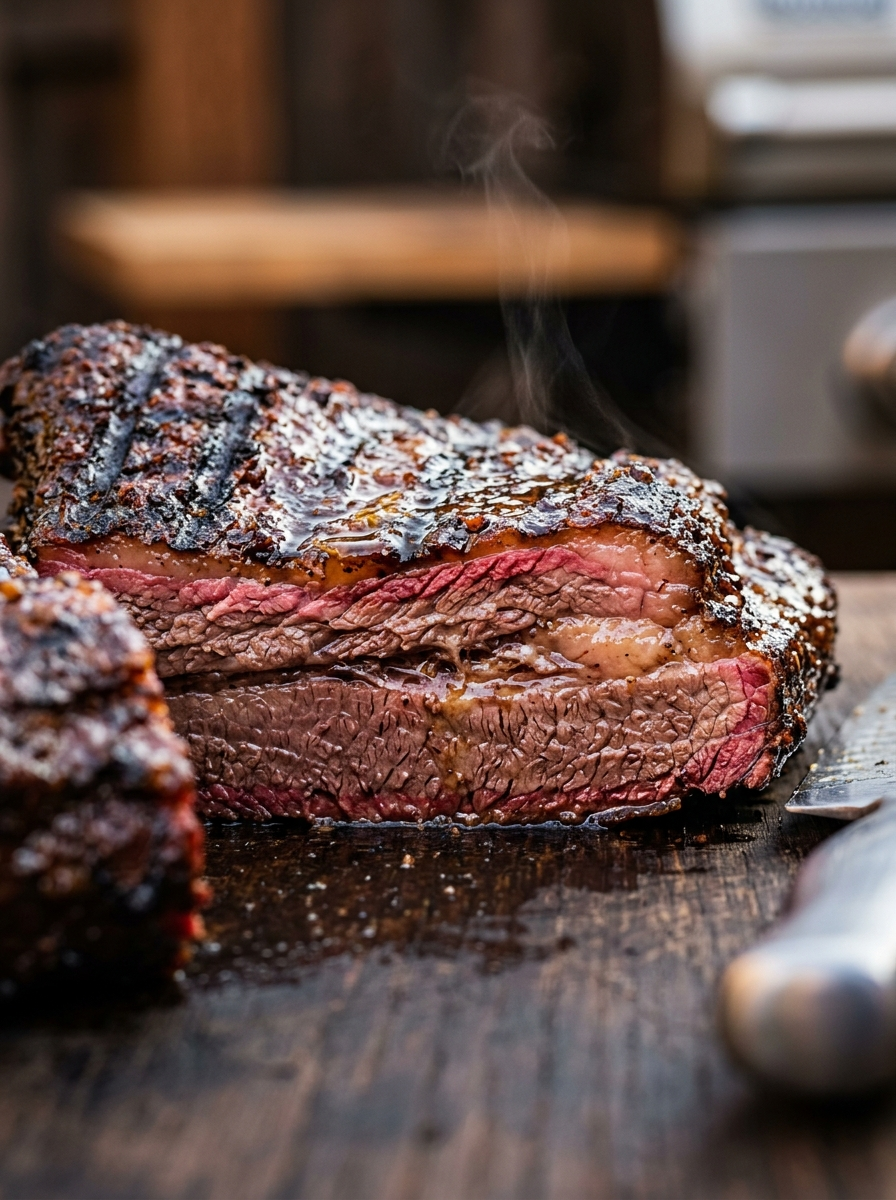
The probe test is your best friend for brisket. When the internal temp is in the 195 to 205 degrees F range, start testing by inserting your thermometer probe or a wooden skewer into the thickest part of the flat. It should slide in and out with zero resistance – like pushing through warm butter or soft room temperature cream cheese. If you feel any drag or tightness, the collagen has not fully converted to gelatin yet and you need more time regardless of what the number says.
Can I eat pork that is still slightly pink inside?
Yes, absolutely. Since the USDA updated its guidelines in 2011, whole muscle pork like chops, tenderloin, and roasts can be safely consumed at 145 degrees F with a 3-minute rest. At this temperature, the center may have a blush-pink color and that is completely normal and safe. The pink does not mean the pork is undercooked – it means you hit the target temp before all the myoglobin had a chance to fully denature. Ground pork must still reach 160 degrees F.
Why does my meat temperature keep rising after I pull it off the grill?
This is carryover cooking, and understanding it is one of the biggest separators between average grillers and true pitmasters. The outer layers of your meat are significantly hotter than the center when it comes off the grill, and that stored heat continues conducting inward even after the heat source is removed. Thick steaks can rise 8 to 10 degrees F during rest, while thin cuts rise only 3 to 5 degrees F. Always factor carryover into your pull temperature so you do not overshoot your target internal temp.
Where exactly do I insert the thermometer for the most accurate reading?
Insert the probe horizontally into the thickest part of the meat for the most accurate internal temp reading. For steaks, go in from the side so the tip of the probe sits in the very center. For chicken thighs, insert near the joint but make sure the tip is not touching bone. For whole brisket, probe the flat – the thickest section – not the point. The tip of the probe is where the reading is taken, so placement of that tip is everything.