
A great rib mop sauce recipe is the unsung hero of backyard BBQ, and once you start mopping your ribs the right way, you will never go back to dry cooking again. Mop sauce is a thin, liquid basting sauce applied to ribs throughout the smoking process, typically every 45 minutes, to keep the meat hydrated, add layers of complex flavor, and help develop that gorgeous mahogany bark that every pitmaster chases. At temperatures between 225 and 250 degrees Fahrenheit, fat renders slowly and moisture evaporates fast, so a mop sauce is not just optional – it is essential.
The beauty of a mop sauce is in its simplicity and versatility. Unlike a thick finishing sauce, a mop is meant to be thin enough to penetrate the outer bark without washing away your dry rub. It usually starts with an acidic base like apple cider vinegar or beer, which tenderizes the meat while cutting through the richness of pork fat. From there, you layer in aromatics, spices, butter, and a touch of sweetness to build something that evolves beautifully over a 5 to 6 hour smoke session.
At GrillMasterHQ we have tested this rib mop sauce recipe on baby back ribs, St. Louis-style spare ribs, and everything in between. The result is always the same: ribs with a deep smoke ring, a sticky lacquered surface, and flavor that reaches all the way to the bone. Whether you are running a charcoal smoker, an offset pit, or a kettle grill set up for indirect heat, this recipe is going to become your go-to every single time you fire up the grill.
Rib Mop Sauce Recipe: Keep Ribs Juicy All Cook Long
This rib mop sauce recipe is the secret weapon every pitmaster needs in their arsenal. Applied every 45 minutes during a low and slow smoke session, it builds moisture, flavor, and a competition-worthy bark. Fire up the grill today and taste the difference.
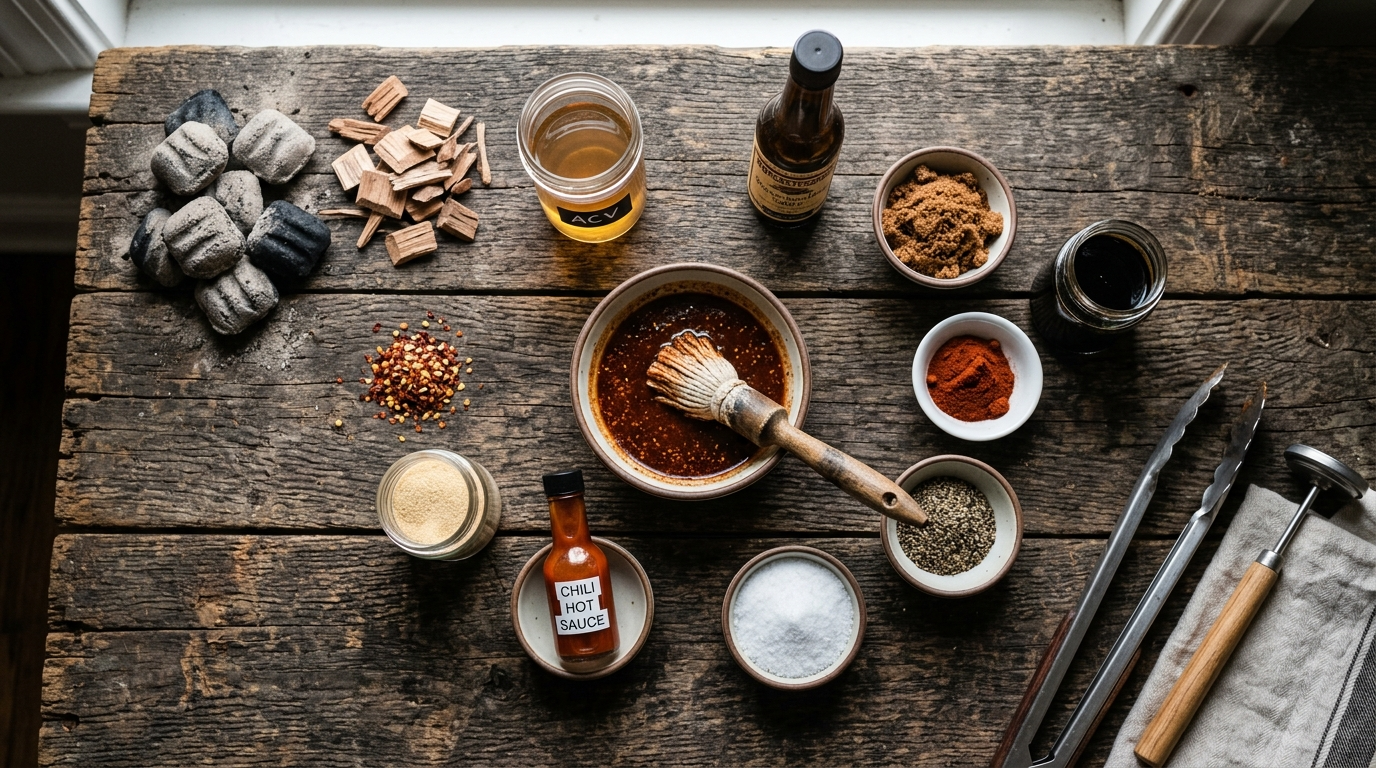
Ingredients
| AMOUNT | INGREDIENT | NOTES |
|---|---|---|
| 1 cup | apple cider vinegar | the acidic backbone that tenderizes and brightens flavor |
| 1 cup | apple juice | adds sweetness and helps develop the bark color |
| 1/2 cup | water | thins the mop to the right consistency for penetration |
| 1/4 cup | unsalted butter | adds richness and helps carry fat-soluble flavors |
| 2 tablespoons | Worcestershire sauce | deep savory umami base |
| 2 tablespoons | brown sugar | lightly packed, for caramelization and bark development |
| 1 tablespoon | yellow mustard | adds a tangy layer and helps emulsify the sauce |
| 1 tablespoon | hot sauce | use your favorite brand, adds heat and acidity |
| 1 teaspoon | smoked paprika | reinforces smoke flavor from the pit |
| 1 teaspoon | garlic powder | for savory aromatic depth |
| 1 teaspoon | onion powder | rounds out the savory base |
| 1/2 teaspoon | cayenne pepper | adjust up or down to control heat level |
| 1/2 teaspoon | black pepper | freshly ground preferred |
| 1/2 teaspoon | kosher salt | balances and amplifies all other flavors |
| 1 tablespoon | vegetable oil | helps the mop adhere to the surface of the ribs |
Instructions
Nutrition (per serving)
The BBQ Story Behind This Recipe
Mopping ribs is a tradition as old as American BBQ itself, rooted in the pits of the American South where cooks would tend whole hogs and large cuts of meat over open wood fires for hours on end. The term mop comes from the literal tool used – a long-handled cotton mop or a bundle of rags tied to a stick – that pitmasters would dip into buckets of seasoned liquid and slather over the meat to prevent it from drying out in the intense heat. These early mop sauces were often simple mixtures of water, vinegar, lard, and salt, designed more for function than for flavor, but they laid the foundation for the rich basting traditions we still celebrate today.
Regional BBQ cultures each developed their own spin on the mop. In the Carolinas, pitmasters leaned into vinegar-heavy mops with red pepper flakes that complemented their whole-hog traditions. Texas pitmasters favored beef-based mops with Worcestershire sauce and butter for brisket and beef ribs. In Kansas City and Memphis, where pork ribs reign supreme, mop sauces evolved to include sweeter elements like brown sugar, molasses, and fruit juices that contributed to the legendary sticky bark those regions are famous for. This recipe draws from all of those traditions to create a universally outstanding mop that honors the craft.
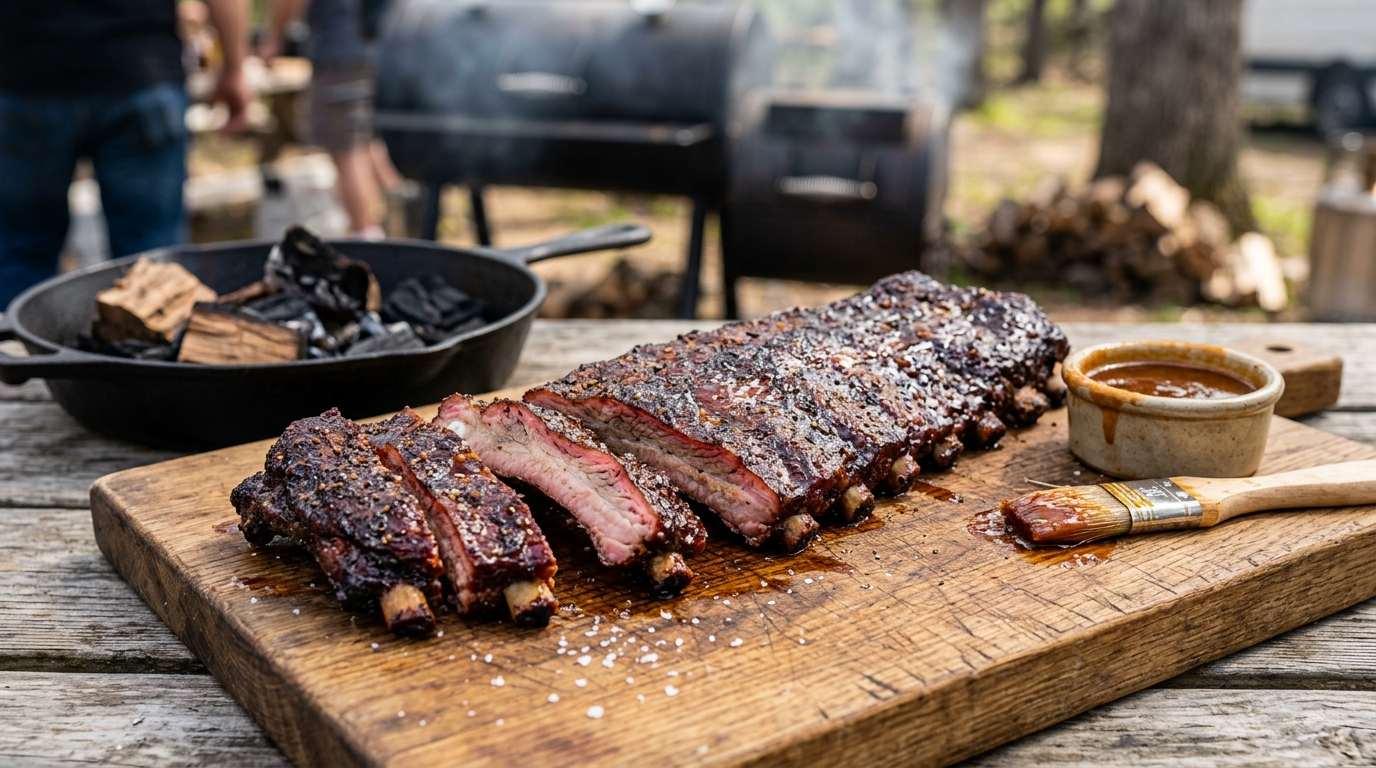
Hot Off the Grill
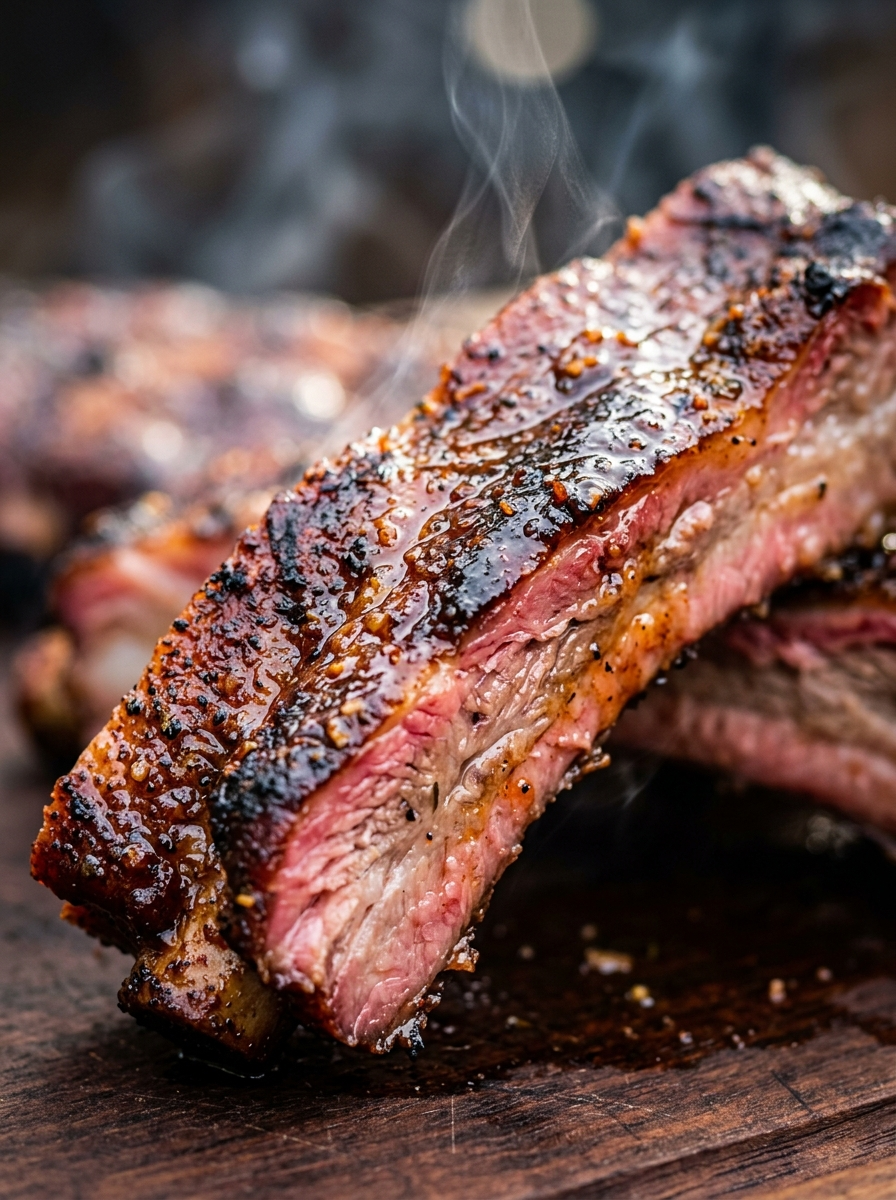
A Closer Look
Pitmaster Tips for Best Results
- Always warm your mop sauce before each application session. Cold mop sauce applied to hot meat can cause the surface to tighten and hinder bark development. Keep the saucepan on low heat near the smoker throughout the cook.
- Do not skip the first 90-minute uninterrupted smoke window. Opening the smoker early disrupts the smoke ring formation and prevents the rub from setting properly into the bark. Patience is the most important tool a pitmaster has.
- If your mop sauce is too thin and running off the ribs without sticking, add another tablespoon of oil or a small squeeze of mustard to help it emulsify and adhere to the meat surface better.
- For competition-style ribs with an extra glossy bark, apply your mop sauce, then during the final 30 minutes brush on a thin layer of honey mixed with your favorite finishing BBQ sauce. Pull back from this application at least 20 minutes before the ribs come off so the sugars caramelize without burning.
- Store any leftover mop sauce in an airtight jar in the refrigerator for up to two weeks. Never reuse mop sauce that has come into contact with raw meat – always work from a separate bowl and discard what is left in your mopping vessel after the cook.
🔧 Pitmaster Equipment
Charcoal Smoker or Offset Pit: Delivers the authentic low and slow environment needed for ribs to render properly and develop a real smoke ring.
Silicone Basting Mop or Brush: A long-handled silicone mop or basting brush lets you apply mop sauce evenly and safely without losing heat from the smoker.
Instant Read Thermometer: Critical for monitoring internal temps to ensure ribs are properly cooked and safe to eat.
Long Tongs: Keep your hands safe while repositioning ribs on the grate and managing your fire throughout the long cook.
Small Saucepan: Used to warm and combine your mop sauce ingredients before the cook begins, ensuring everything is fully dissolved.
Aluminum Drip Pan: Placed under the ribs to catch drippings and can be filled with water or apple juice to help regulate smoker humidity.
🔥 Variations
Texas-Style Beef Rib Mop: Swap the apple juice for strong black coffee and replace the hot sauce with a full tablespoon of Worcestershire sauce. Add a quarter cup of beef tallow in place of butter and skip the brown sugar entirely. This makes a savory, beef-forward mop that is perfect for massive beef plate ribs cooked over post oak at 250 degrees Fahrenheit for 8 to 10 hours.
Carolina Vinegar Mop: Double the apple cider vinegar to two cups and eliminate the apple juice entirely. Add a full teaspoon of red pepper flakes and a tablespoon of ketchup for color. Drop the butter and oil to keep this mop razor thin and highly acidic, which is the traditional Eastern Carolina style for whole hog and spare ribs cooked over direct wood coals.
Bourbon and Honey Mop: Add a quarter cup of your favorite bourbon and two tablespoons of raw honey to the base recipe. Reduce the water to a quarter cup. The bourbon adds smoky complexity and the honey promotes deep caramelization on the bark. This variation pairs especially well with cherry wood smoke and baby back ribs.
Pellet Grill Version: Set your pellet grill to 225 degrees Fahrenheit and load it with apple or cherry pellets. Follow the exact same mopping schedule starting at 90 minutes. Pellet grills run cleaner and more consistently, which is great for beginners, but you may want to add a smoke tube filled with extra pellets during the first two hours to boost the smoke flavor before mopping begins.
Gas Grill Version: Set up your gas grill for two-zone indirect cooking by lighting only one or two burners and placing the ribs on the unlit side. Use a smoker box filled with soaked apple wood chips on the lit burner side to generate smoke. Target a lid temperature of 250 degrees Fahrenheit and follow the same mop schedule. Refill the smoker box every hour to maintain consistent smoke throughout the cook.
❓ Pitmaster FAQ
What is a mop sauce and how is it different from BBQ sauce?
A mop sauce is a thin, liquid basting sauce applied to meat during the smoking process to add moisture and layered flavor. Unlike thick, sweet BBQ finishing sauces, a mop is designed to be thin enough to penetrate the bark without washing away your dry rub. Think of BBQ sauce as the final coat and mop sauce as the foundation you build throughout the entire cook.
When should I start mopping my ribs?
Always wait at least 90 minutes into the cook before applying your first mop. The ribs need that initial undisturbed time for the smoke ring to develop and the dry rub to set into a proper bark. Mopping too early can prevent the bark from forming correctly and wash away your seasoning before it has a chance to adhere to the meat surface.
How often should I apply mop sauce to ribs?
After the initial 90-minute window, apply your mop sauce every 45 minutes throughout the remainder of the cook. Stop mopping during the final 30 minutes so the last layer has time to set and the bark can firm up before you pull the ribs off the smoker. Over-mopping in the final stretch can leave the surface wet and soft rather than giving you that desirable firm bark.
What internal temperature should ribs reach?
For ribs with the fall-off-the-bone texture everyone loves, target an internal temp of 195 to 203 degrees Fahrenheit using an instant read thermometer inserted between bones without touching bone. At this temperature range the collagen in the connective tissue has fully broken down into gelatin, which gives ribs that luscious, tender pull. Always use a reliable thermometer rather than guessing by time alone.
Can I make mop sauce ahead of time?
Absolutely, and it is actually recommended. Make your mop sauce up to a week in advance and store it in an airtight jar in the refrigerator. The flavors will meld and deepen over time. Just reheat it gently on the stovetop or in a microwave before your cook begins and give it a good whisk before each application to make sure everything is properly combined.
Does mop sauce prevent bark from forming?
Applied correctly, mop sauce actually contributes to bark development by adding sugar and fat that caramelize on the surface over time. The key is applying thin coats, not flooding the ribs, and stopping the mop applications 30 minutes before the cook ends. If your bark is coming out soft and wet, try reducing the frequency of mop applications or thin out your mop sauce slightly with more water or vinegar.