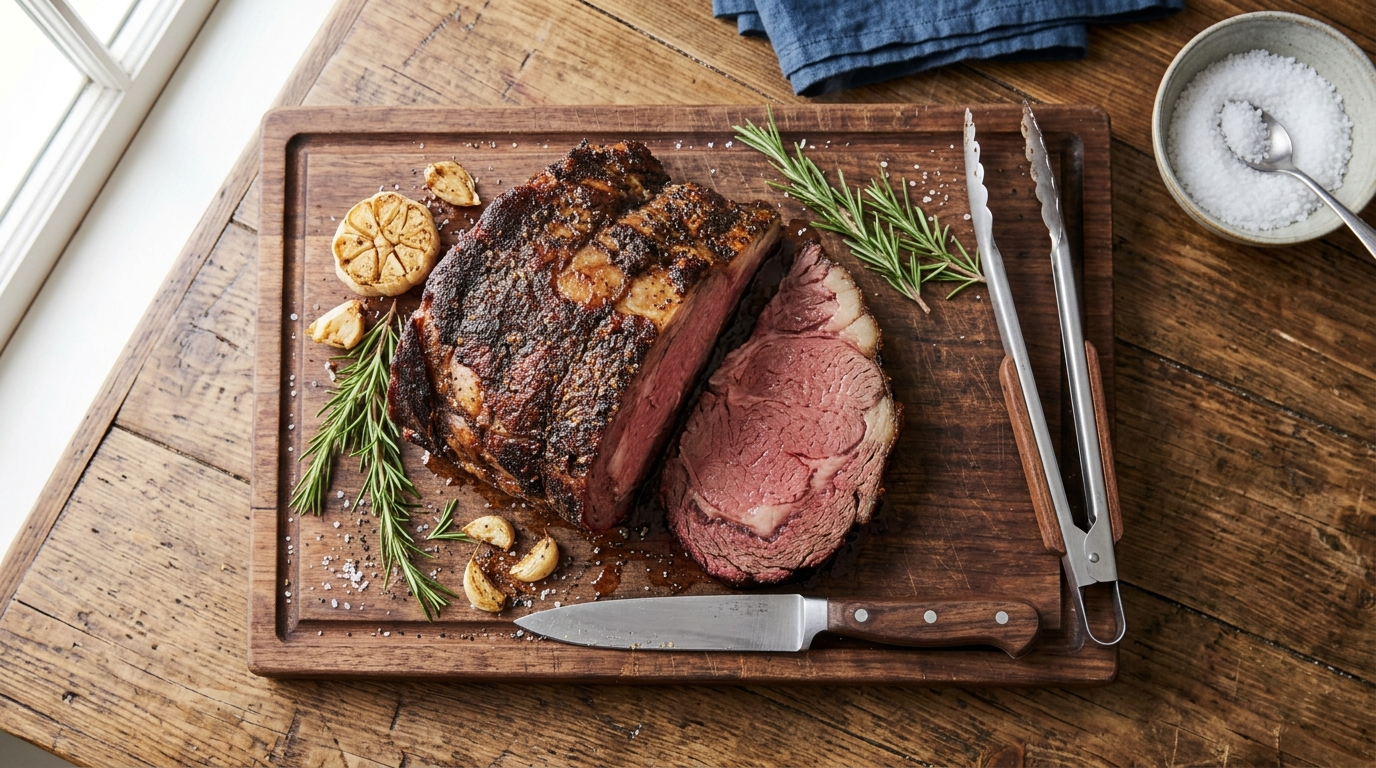
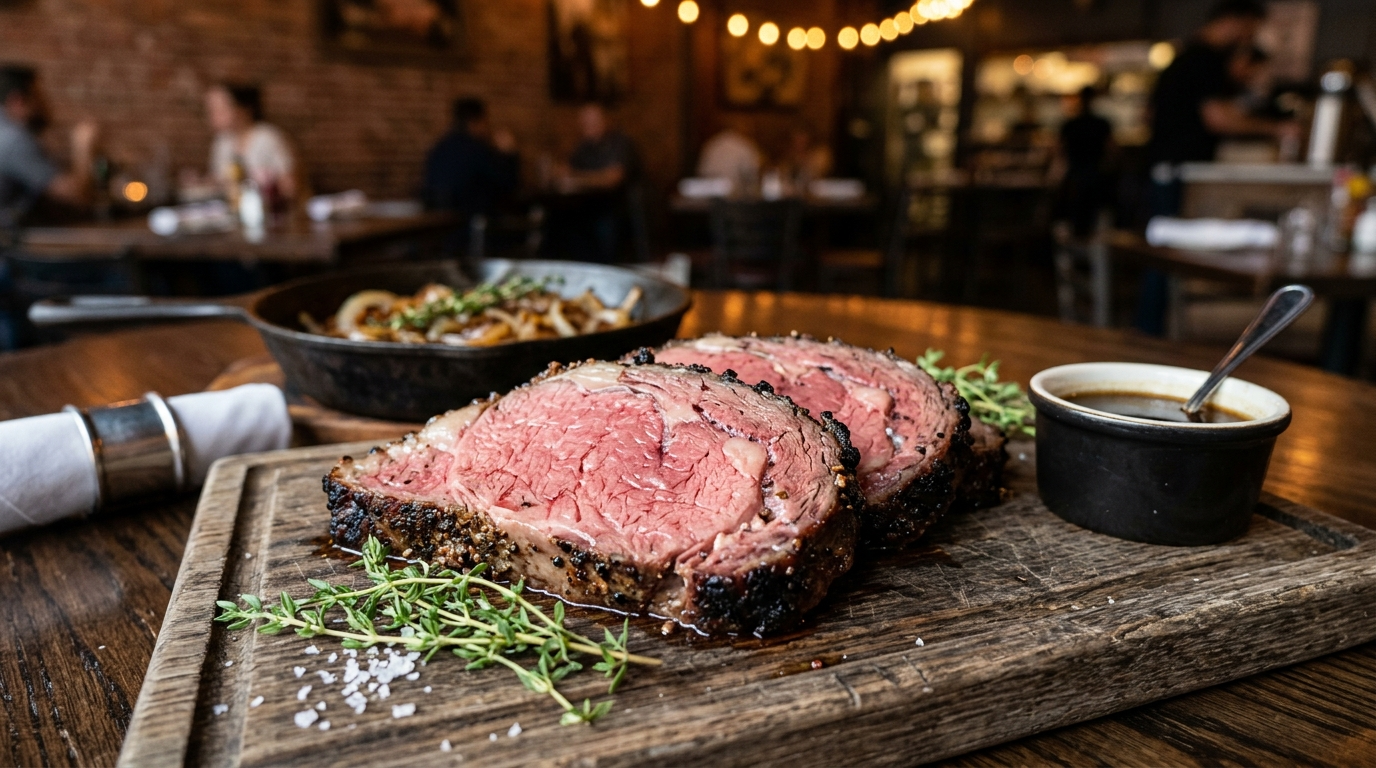
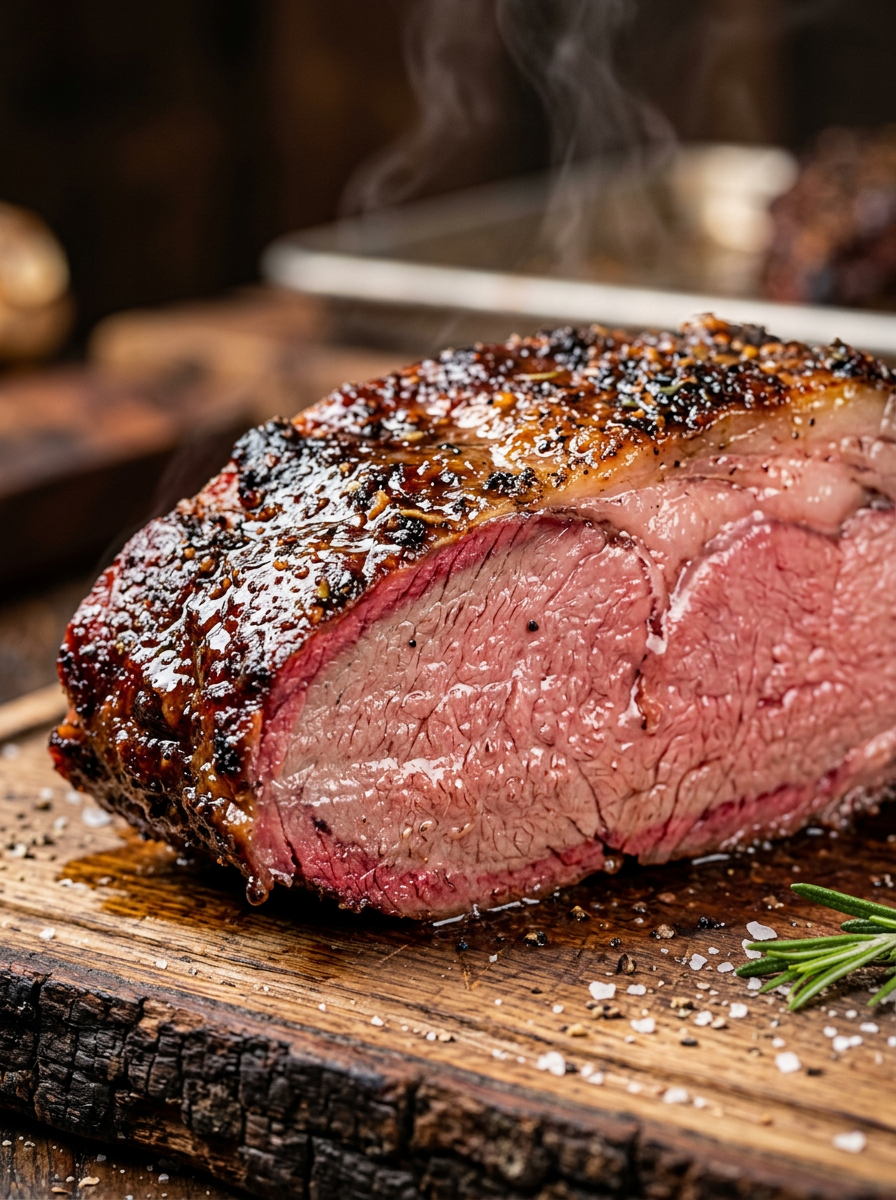
This smoked prime rib recipe is the crown jewel of any BBQ spread, delivering a bone-in standing rib roast with a crackling herb-crusted bark, a deep rosy smoke ring, and an interior so tender it practically carves itself. We are talking about smoking a 6 to 8 pound prime rib at 225 degrees Fahrenheit for 4 to 5 hours until it hits a perfect 130 degrees internal temp for a stunning medium-rare finish. This is the kind of cook that turns heads, silences the room, and makes people ask for your secrets.
Smoking prime rib is not complicated, but it does reward patience and attention to detail. The low and slow method does the heavy lifting here, allowing the smoke to penetrate deep into the meat while the fat cap slowly renders down and bastes the roast from the outside in. We finish with a high-heat sear at 450 degrees to lock in that gorgeous bark and give you that irresistible crust that photographs like a dream and tastes even better.
Whether you are cooking for the holidays, a special Sunday dinner, or simply because you deserve something extraordinary, this smoked prime rib recipe is your ticket to BBQ royalty. We are using a bold garlic-herb butter crust, a kiss of oak or hickory smoke, and a proper rest that lets every juice redistribute so your first slice is as perfect as your last. Fire up the smoker, pour yourself something cold, and let us get to work.
Smoked Prime Rib Recipe: Perfect Holiday Showstopper
This smoked prime rib recipe delivers a show-stopping centerpiece with a deep mahogany bark, a gorgeous smoke ring, and a buttery-tender interior that melts on your tongue. Low and slow smoking transforms this king of roasts into pure BBQ magic. Fire up the smoker today and impress your whole crew.
Ingredients
| AMOUNT | INGREDIENT | NOTES |
|---|---|---|
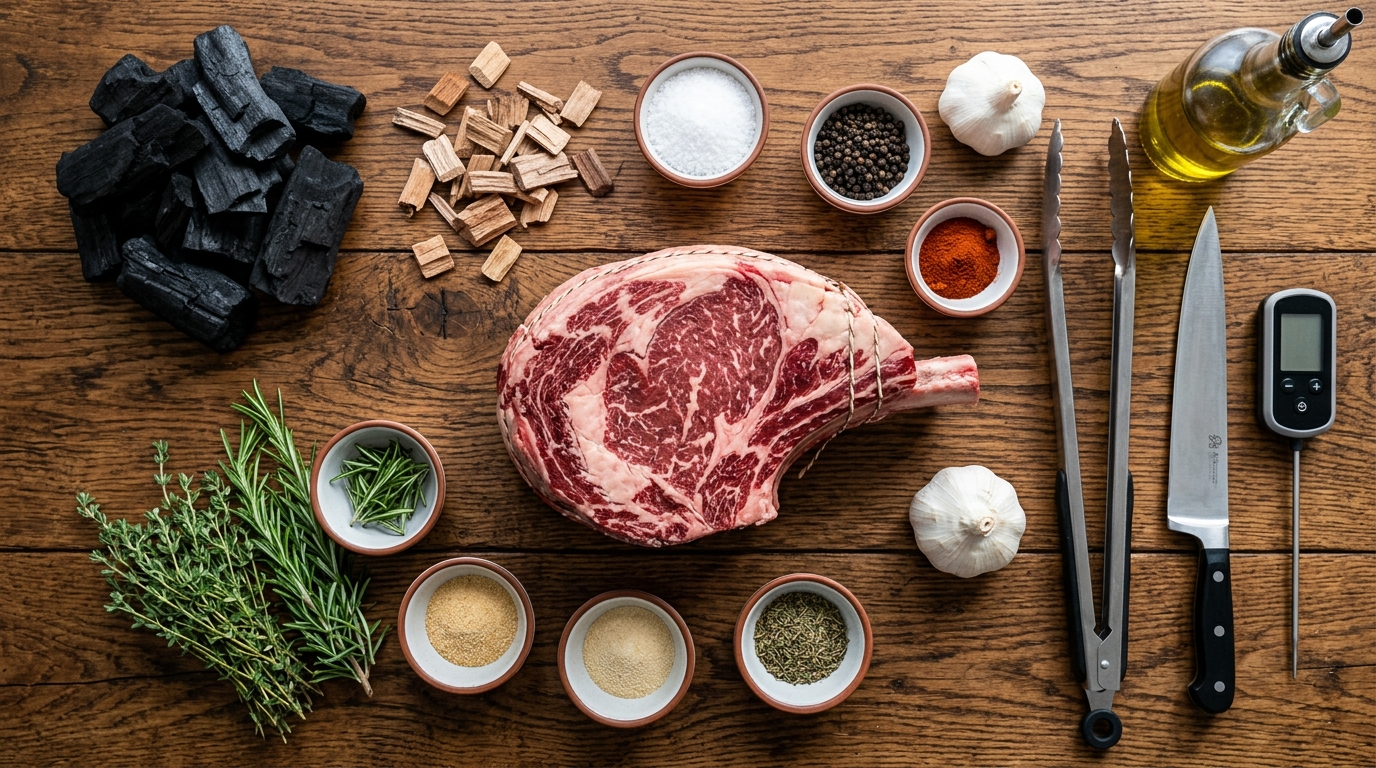
| 1 | bone-in standing rib roast (6 to 8 pounds, 3 ribs) | choose USDA Choice or Prime grade for best marbling and flavor |
| 4 tablespoons | unsalted butter | softened to room temperature |
| 6 cloves | fresh garlic | minced fine |
| 2 tablespoons | fresh rosemary | finely chopped |
| 2 tablespoons | fresh thyme leaves | stripped from stems |
| 2 tablespoons | coarse kosher salt | do not use table salt |
| 2 tablespoons | coarse black pepper | freshly cracked for best flavor |
| 1 tablespoon | smoked paprika | adds color and depth to the bark |
| 1 teaspoon | onion powder | |
| 1 teaspoon | dried mustard powder | helps the bark set and adds subtle heat |
| 2 chunks | oak or hickory wood | for smoking; cherry wood works beautifully for a sweeter smoke profile |
| 2 tablespoons | Worcestershire sauce | mixed into the butter for extra umami depth |
| 1 tablespoon | olive oil | for initial surface coating before applying butter rub |
Instructions
Nutrition (per serving)
The BBQ Story Behind This Recipe
Prime rib has been the centerpiece of celebratory American feasts since the colonial era, when roasting a standing rib roast over an open fire was the ultimate display of abundance and hospitality. The cut itself comes from the primal rib section of the beef, ribs six through twelve, and earned its reputation as the king of roasts through centuries of Sunday dinners, steakhouse menus, and holiday tables. Traditional preparation called for a hot oven roast, but pitmasters across the American South and Midwest began experimenting with smoke-kissed variations decades ago, discovering that low and slow BBQ techniques could elevate this already extraordinary cut into something transcendent.
The smoked prime rib tradition really gained momentum in Texas BBQ culture, where whole beef roasts over post oak became a weekend ritual at family ranches and backyard pits alike. Competition BBQ circuits helped spread the technique nationwide, with pitmasters competing to achieve the deepest smoke ring, the most defined bark, and the most perfectly blushing interior. Today, smoking a prime rib for Christmas, New Year, or a milestone celebration has become a beloved ritual for backyard BBQ enthusiasts everywhere who want to honor a classic cut with the most flavorful cooking method ever invented.
Hot Off the Grill
A Closer Look
Pitmaster Tips for Best Results
- Always use a leave-in probe thermometer rather than relying on time alone. Every smoker runs differently and every roast is a different size. The only reliable way to hit a perfect 130 degree medium-rare is to monitor the internal temp continuously throughout the cook.
- Do not skip the overnight dry brine. Salting your prime rib 12 to 24 hours ahead is the single biggest improvement you can make to the final result. It seasons the meat deeply, dries out the surface for better bark formation, and improves the overall texture of the finished roast.
- Go easy on the smoke. Prime rib has a naturally rich, beefy flavor that does not need to be overwhelmed. Two to three wood chunks over a 4 to 5 hour cook is plenty. Too much smoke and you will end up with a bitter, acrid crust that masks the flavor of the beef rather than complementing it.
- Pull the roast 5 degrees below your target internal temp every single time. The carryover cooking that happens during the 30 to 45 minute rest period will raise the temp by 5 to 7 degrees. Pull at 125 degrees and you will land at a stunning 130 to 132 degrees medium-rare by the time you carve.
- Save every drop of those drippings from the pan under the roast. Skim the fat, deglaze the pan with a splash of beef broth and a little red wine, simmer for 5 minutes, and you have an au jus that will make your guests think you trained at a French steakhouse. It takes 10 minutes and it absolutely elevates the entire plate.
🔧 Pitmaster Equipment
Offset Smoker or Kamado Grill: Provides the ideal indirect heat environment and consistent airflow needed for a long 4 to 5 hour smoke at 225 degrees Fahrenheit.
Instant Read Thermometer: Critical for nailing the exact internal temp on a prime rib. Pulling at 125 to 130 degrees for medium-rare is the difference between perfection and an overcooked disaster.
Leave-In Probe Thermometer: Allows you to monitor the internal temp of the roast continuously without opening the smoker lid and losing precious smoke and heat.
Long Tongs and Insulated Gloves: Keep your hands safe when managing hot grates and positioning a heavy bone-in roast on the smoker rack.
Boning or Carving Knife: A sharp, long-bladed carving knife is essential for slicing through that gorgeous bark and presenting clean, restaurant-quality cuts at the table.
Large Roasting Pan or Foil Drip Pan: Catches all those incredible drippings underneath the roast that you can use to make an outrageously good au jus.
Pastry Brush or Gloved Hands: For applying the herb butter crust evenly across every surface of the roast before it goes on the smoker.
🔥 Variations
Pellet Grill Version: Set your pellet grill to 225 degrees Fahrenheit and load up with oak, hickory, or a competition beef blend of pellets. Follow the exact same steps, applying the herb butter crust and using a leave-in probe thermometer. Pellet grills are exceptionally consistent for this cook and produce a beautiful, clean smoke ring. Crank the pellet grill to its maximum temp setting for the reverse sear finish, or transfer to a 450 degree oven if your grill cannot get hot enough.
Charcoal Grill Version: Set up a two-zone indirect fire on a large kettle grill with coals banked to one side. Maintain 225 degrees Fahrenheit by controlling the vents carefully, and add two or three soaked wood chunks directly to the coals for smoke. Position the roast on the cool side of the grill away from the direct heat and follow the same low and slow approach. When you hit 115 degrees internal temp, shovel the coals directly under the roast and open all the vents to sear at high heat for that final bark.
Garlic Parmesan Crust Variation: Swap the herb butter paste for a mixture of softened butter, roasted garlic, grated Parmesan cheese, fresh parsley, and cracked black pepper. The Parmesan builds an incredibly crispy, deeply savory bark during the reverse sear and adds a nutty, salty crust that pairs beautifully with the smoky beef interior. Apply it the same way and smoke at the same temps.
Coffee and Pepper Bark Variation: For a bold, intensely flavored bark inspired by Texas BBQ tradition, replace the herb butter paste with a dry rub of finely ground dark roast coffee, coarse black pepper, kosher salt, smoked paprika, and a pinch of cayenne. Pat it on dry without the butter, smoke over post oak at 225 degrees, and the result is a deeply complex, almost black bark with a rich, slightly bitter crust that contrasts magnificently with the rosy, beefy interior.
❓ Pitmaster FAQ
What internal temperature should smoked prime rib reach?
For medium-rare, which is the gold standard for prime rib, pull the roast at 125 degrees Fahrenheit on your instant read thermometer. Carryover cooking during the 30 to 45 minute rest period will bring it up to 130 to 132 degrees, which is that perfect rosy medium-rare. For medium, pull at 130 degrees and rest to 135 to 138 degrees. Do not go beyond 140 degrees or you will lose the magic of this cut.
How long does it take to smoke a prime rib?
At 225 degrees Fahrenheit, plan on approximately 35 to 40 minutes per pound for a bone-in prime rib roast. A 6 pound roast will take roughly 4 to 4.5 hours to reach 115 to 120 degrees before the reverse sear. Always cook to internal temp, not time. Every smoker and every roast is different, so a leave-in probe thermometer is your most reliable guide throughout the cook.
Do I need to wrap the prime rib in foil while smoking?
No, do not wrap the prime rib in foil during the smoke. This roast benefits from an open smoke environment throughout the entire cook. Wrapping in foil, also called the Texas Crutch, steams the bark and softens that incredible crusty exterior you worked hard to build. The only time you tent loosely with foil is during the resting period after the cook is completely finished.
What wood is best for smoking prime rib?
Oak is the classic choice for beef and produces a bold, clean smoke flavor that complements prime rib beautifully. Hickory is a close second with a slightly stronger, bacon-like smoke profile. Cherry wood is a fantastic option if you prefer a slightly sweeter, milder smoke and it also gives the bark a gorgeous deep red color. Avoid mesquite for a long cook like this, as it can turn bitter and overpowering over several hours.
Can I smoke a boneless prime rib roast?
Absolutely. A boneless rib roast follows the exact same process, and many pitmasters actually prefer it because it is easier to carve and the surface area to weight ratio means the rub and bark cover more of the meat. Note that a boneless roast may cook slightly faster than a bone-in roast of the same weight since bones slow down heat transfer, so monitor your internal temp closely and do not rely on timing alone.
How do I reheat leftover smoked prime rib without drying it out?
The best method is a low and slow reheat in the oven. Place slices in a baking dish with a splash of beef broth or au jus, cover tightly with foil, and warm at 250 degrees Fahrenheit until the internal temp reaches 120 to 125 degrees Fahrenheit, about 20 to 30 minutes depending on slice thickness. This gentle reheating method preserves the moisture and keeps the meat tender. Avoid the microwave at all costs, as it will toughen the meat and ruin that beautiful bark.