Smoking meat in winter is one of the most rewarding challenges a pitmaster can take on, and once you crack the code, you will never let a cold forecast stop your cook again. Cold air, wind, and dropping temperatures all work against your smoker, pulling heat away from the cooking chamber and forcing your fire to work overtime just to maintain that sweet spot between 225 and 275 degrees Fahrenheit. The good news is that with a few smart adjustments to your fuel load, airflow management, and session prep, you can produce a bark so deep and a smoke ring so vivid that your summer cooks will have some serious competition.
The single biggest enemy of a winter smoke session is not the cold itself but the temperature swings that come with it. When ambient temps drop into the 20s and 30s Fahrenheit, your smoker loses heat through the metal walls at a rate that can demand 30 to 50 percent more fuel than a warm-weather cook. Wind makes things even worse by stripping residual heat from vents and seams. Experienced pitmasters know to pre-season their smoker longer in winter, often an extra 30 to 45 minutes of burn time before the meat ever touches the grate, ensuring the cooking chamber is fully stabilized before you commit to a long low and slow session.
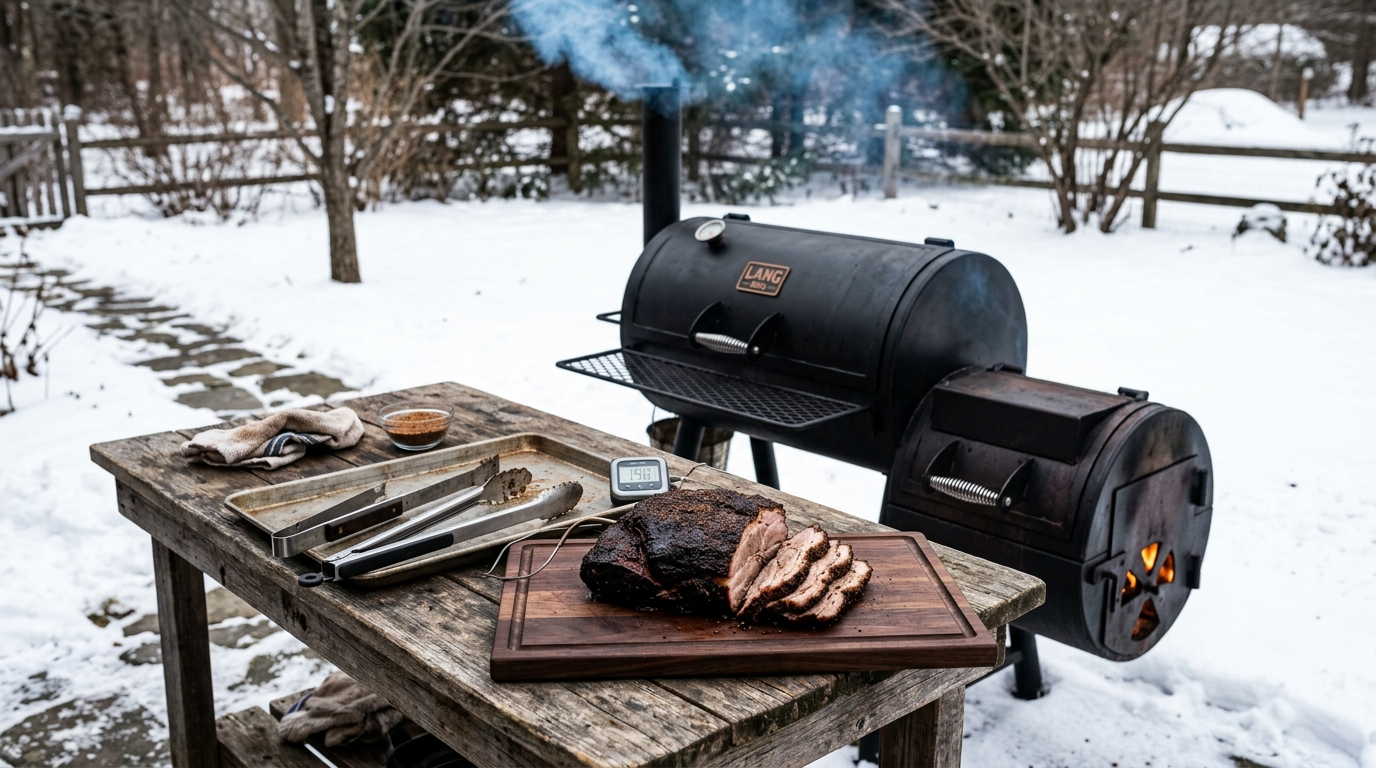
Beyond fuel management, cold weather smoking rewards patience and preparation. Wrapping your smoker in a welding blanket or fireproof insulating jacket can cut fuel consumption significantly and keep chamber temps rock solid through a 6 to 12 hour brisket or pork shoulder cook. Positioning your rig out of the prevailing wind, even if that means rearranging your backyard setup, is worth the effort. Once you dial in your cold weather process, you will find that the dense, cold air actually carries smoke beautifully, giving your meat an extraordinary depth of flavor that is tough to replicate on a hot July afternoon.
Smoking Meat in Winter: Cold Weather BBQ Guide
Smoking meat in winter does not have to mean hanging up your tongs until spring. With the right techniques, cold weather can actually produce some of the most incredible low and slow results of your BBQ career. Fire up the smoker today and own every season.
Ingredients
| AMOUNT | INGREDIENT | NOTES |
|---|---|---|
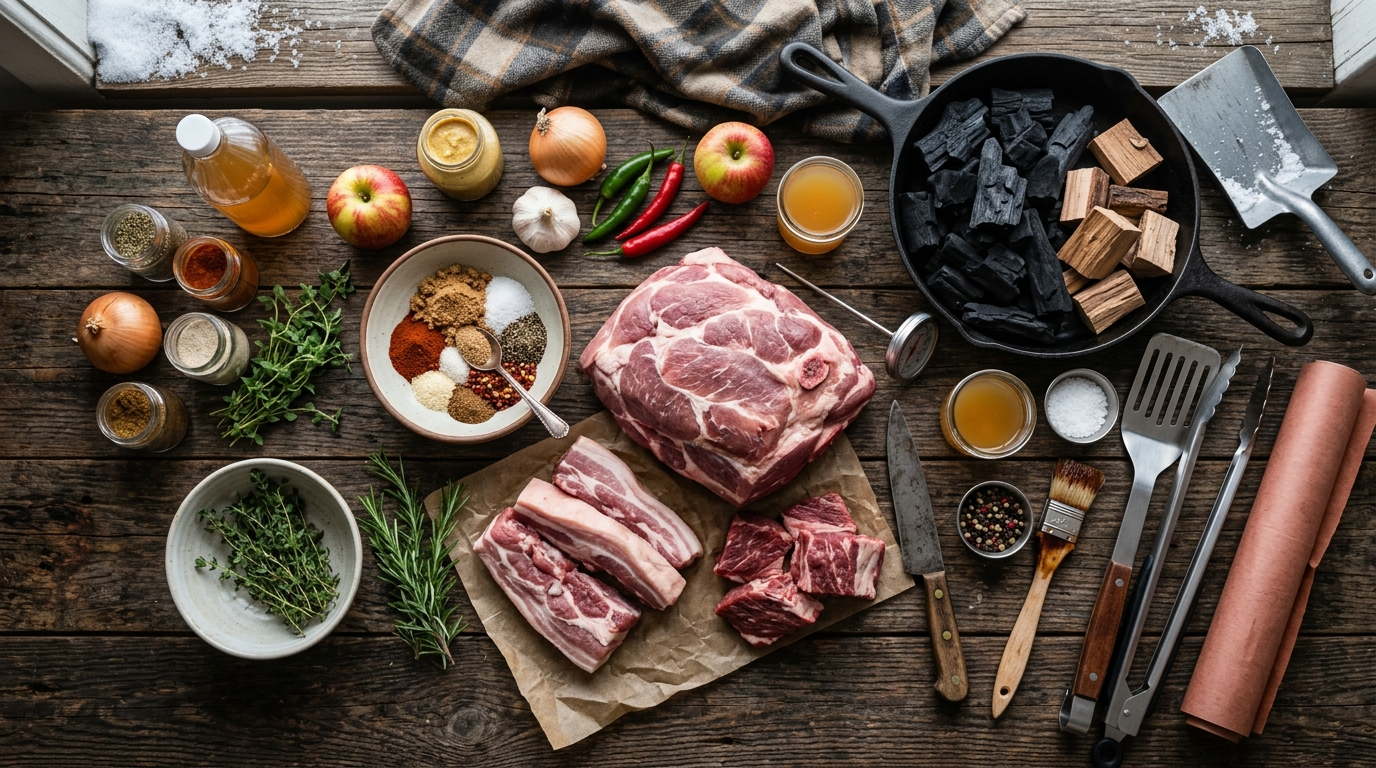
| 6 lbs | bone-in pork shoulder (Boston butt) | fat cap on, room temperature for 30 minutes before smoking |
| 3 tablespoons | coarse kosher salt | for dry brine |
| 3 tablespoons | coarse black pepper | freshly cracked for maximum bark development |
| 1 tablespoon | smoked paprika | adds color and depth to the bark |
| 1 tablespoon | garlic powder | for savory base flavor |
| 1 tablespoon | onion powder | for rounding out the rub |
| 1 teaspoon | cayenne pepper | optional, for heat |
| 2 tablespoons | yellow mustard | binder for the rub, burns off during the cook |
| 6 chunks | hickory or oak wood chunks | not chips – chunks burn slower and more consistently in cold weather |
| 8 lbs | charcoal briquettes or lump charcoal | plan for 30 to 50 percent more fuel than a warm weather cook |
| 1 cup | apple cider vinegar | mixed with water for spritzing after the bark sets |
| 1 cup | water | for the spritz mixture |
Instructions
Nutrition (per serving)
The BBQ Story Behind This Recipe
Low and slow smoking has roots that run deep into American history, born out of necessity and community in the rural South and the cattle country of Texas. Long before thermometers and pellet grills existed, pitmasters learned to read smoke color, wood coals, and the behavior of meat by touch and smell alone. Winter smoking was never a seasonal hobby for these communities – it was a year-round way of preserving and celebrating protein, from whole hogs slow-cooked over oak in the Carolinas to massive beef briskets held low over post oak coals in central Texas. Cold weather was simply another variable to manage, and managing variables is what separates a real pitmaster from a fair-weather griller.
The tradition of cold weather BBQ has experienced a powerful revival in the modern era, fueled by competition BBQ culture and the year-round enthusiasm of backyard pitmasters who refuse to let a frost warning shut down their operation. Regional BBQ styles across Kansas City, Memphis, and the Hill Country of Texas all have proud winter cooking traditions, with teams firing up smokers in below-freezing temps to compete and celebrate. That stubborn, passionate spirit is exactly what GrillMasterHQ is built on – the idea that great BBQ does not wait for perfect weather, it creates its own warmth.
Hot Off the Grill
A Closer Look
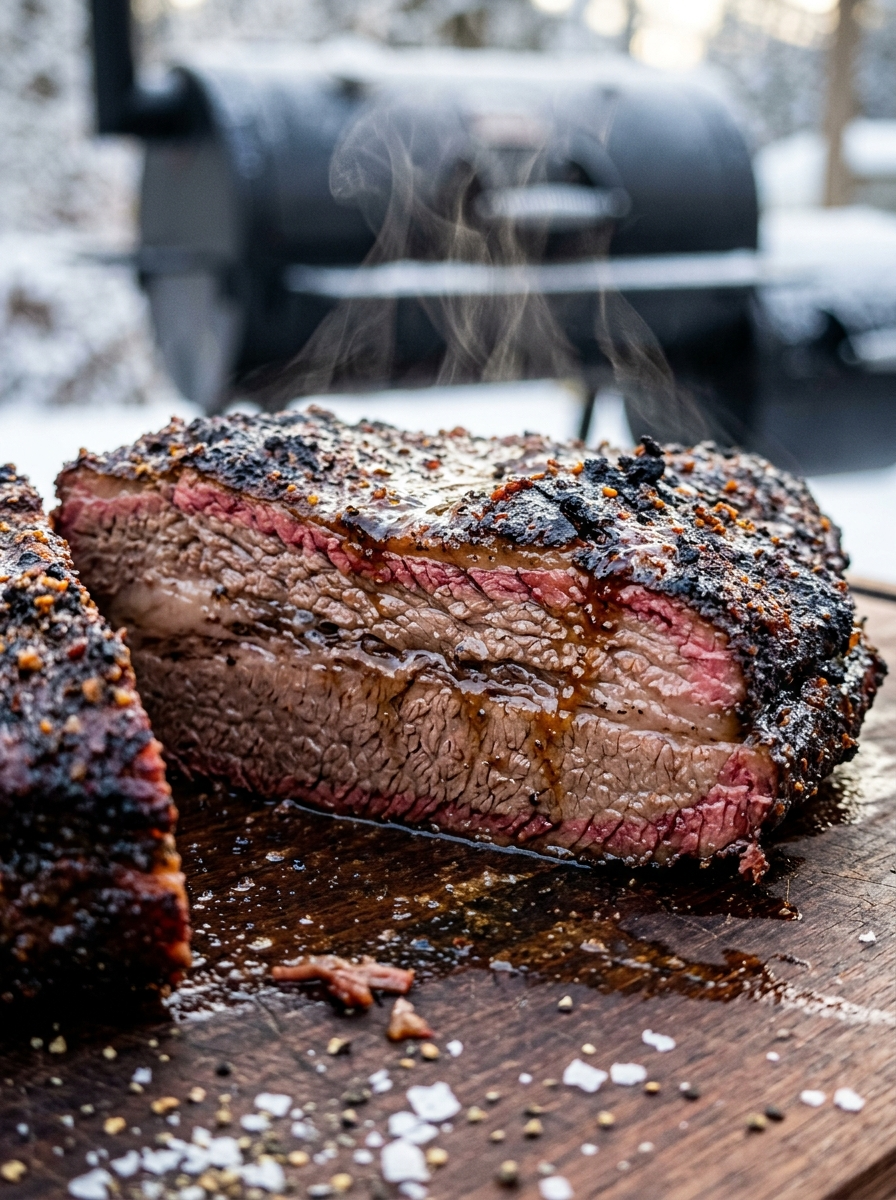
Pitmaster Tips for Best Results
- Add 30 to 50 percent more charcoal to your fuel plan for any cook when ambient temps drop below 40 degrees Fahrenheit. Cold air demands more energy to maintain chamber temps, and running out of fuel mid-cook is a disaster you can avoid with simple planning.
- Use wood chunks instead of chips in cold weather. Chunks burn slower and more consistently, giving you sustained smoke production without the constant babysitting that chips demand. Hickory, oak, and apple all perform reliably in cold conditions.
- Keep a chimney starter ready throughout your cook so you can add fully lit coals to the firebox without the smoke interruption that comes from adding cold, unlit charcoal mid-cook. Pre-lit coals maintain your chamber temp and keep your smoke clean.
- If your internal temp stalls for more than 2 hours and you are losing daylight or fuel, do not hesitate to use the Texas crutch wrap. Wrapping in foil is not cheating – it is smart pitmaster technique that has been used in competition BBQ for decades.
- Always bring a thermos of hot coffee or a warm drink to your winter cook session. A focused pitmaster is a patient pitmaster, and staying comfortable in the cold helps you make better decisions about fire management and timing over a long low and slow cook.
🔧 Pitmaster Equipment
Offset Smoker or Kamado Grill: An offset smoker gives you precise fire management and large capacity, while a kamado like a Big Green Egg retains heat exceptionally well in cold temps due to its ceramic construction.
Instant Read Thermometer: Hitting the correct internal temp is non-negotiable. In cold weather, cook times can vary wildly, so a reliable thermometer like a Thermapen is your best friend on every cook.
Leave-In Probe Thermometer: A dual-probe unit lets you monitor both the meat internal temp and the grate-level chamber temp simultaneously without opening the lid and losing precious heat.
Fireproof Insulating Blanket: A welding blanket or purpose-built smoker jacket wrapped around your cooker reduces heat loss dramatically in cold and windy conditions, saving fuel and stabilizing temps.
Long Tongs and Heat-Resistant Gloves: Keep your hands safe while managing the fire, adding wood chunks, and adjusting your meat. Cold weather means your hands are already vulnerable, so protect them from both the cold and the heat.
Chimney Starter: Get your charcoal fully lit and ashed over before adding it to the firebox. In winter, a chimney starter ensures you are working with consistent, hot coals from the first moment.
Wind Screen or Natural Wind Block: Positioning a barrier on the windward side of your smoker prevents dramatic heat loss from vents and seams. A simple sheet of plywood or a patio wall works perfectly.
🔥 Variations
Pellet Grill Version: Set your pellet grill to 250 degrees Fahrenheit and follow the exact same steps. Pellet grills excel in cold weather because their automated auger system maintains consistent temps even as ambient temps drop. Use hickory or competition blend pellets for maximum smoke flavor. Consider enabling the super smoke or smoke boost mode during the first 3 hours for deeper smoke penetration.
Kamado Grill Version: A kamado like a Big Green Egg is one of the best options for smoking meat in winter because its thick ceramic walls retain heat with extraordinary efficiency. Set up for indirect cooking with a plate setter, dial in 250 degrees Fahrenheit, and use fewer wood chunks than you would in an offset since kamados trap smoke more effectively. You will use significantly less charcoal than an offset smoker in cold conditions.
Brisket Version: Apply this exact same cold weather framework to a full packer brisket. Trim the fat cap to a quarter inch, apply a simple salt and pepper rub, and smoke at 250 degrees Fahrenheit until the internal temp reaches 165 degrees Fahrenheit, then wrap and continue to 202 to 205 degrees Fahrenheit. Rest the brisket for at least one hour in a warm cooler before slicing against the grain. Plan for a 12 to 16 hour cook in cold weather conditions.
Chicken Version: For smoking chicken in winter, bump your chamber temp up to 300 to 325 degrees Fahrenheit to ensure crispy skin and food-safe results without extending your cook time unnecessarily. Apply your dry rub under and over the skin, smoke using apple or cherry wood chunks, and pull the bird when the breast internal temp hits 165 degrees Fahrenheit and the thigh reads 175 degrees Fahrenheit.
❓ Pitmaster FAQ
How much longer does smoking meat in winter take compared to summer?
Expect cold weather smoking sessions to run 20 to 40 percent longer than a comparable warm weather cook. A pork shoulder that takes 8 hours in July might take 10 to 12 hours in January. Plan ahead, start early, and use an insulating blanket to reduce the time gap as much as possible.
What internal temperature should my pork shoulder reach?
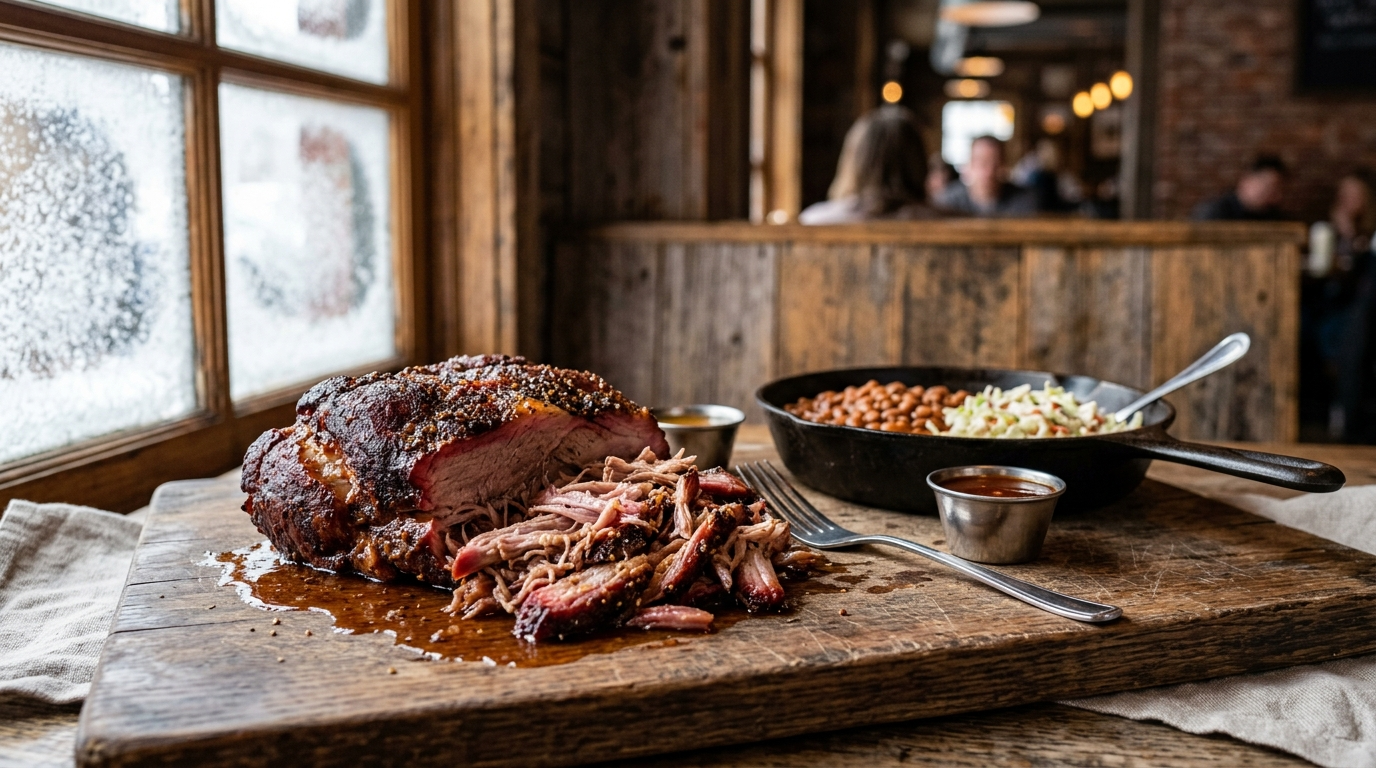
For pulled pork, you want the internal temp to hit 200 to 205 degrees Fahrenheit. At that range, collagen fully converts to gelatin and the meat pulls apart effortlessly. Always verify with an instant read thermometer and probe for zero resistance before pulling off the smoker.
How do I keep my smoker temperature stable in cold weather?
Use an insulating blanket or welding blanket around your smoker, position it out of the wind, pre-heat the smoker 45 minutes longer than usual, and maintain a larger coal bed than you would in warm weather. A leave-in probe thermometer monitoring grate-level temps is essential for catching and correcting temperature drops early.
Can I smoke meat in freezing temperatures?
Absolutely yes. Many championship BBQ teams smoke in below-freezing conditions regularly. The key is insulation, extra fuel, and patience. A ceramic kamado or an insulated smoker cabinet handles freezing temps far better than a thin-walled offset, but even an offset performs well when wrapped and sheltered from wind.
What wood is best for smoking meat in cold weather?
Use wood chunks rather than chips in cold weather for more consistent, longer-lasting smoke production. Hickory and oak are reliable in all conditions. Apple and cherry add a sweeter, milder smoke that works beautifully on pork and chicken. Avoid green or unseasoned wood, which produces harsh, acrid smoke regardless of season.
Should I wrap my meat during a winter smoke session?
The Texas crutch wrap in foil or butcher paper is especially valuable in cold weather because the stall can drag on even longer than usual when ambient temps are pulling heat away from your cooker. Wrapping at 160 to 165 degrees Fahrenheit internal temp helps you push through the stall efficiently and keeps your cook on schedule.