Ingredients
Method
- Trim the brisket the night before your cook. Lay the cold brisket fat-side up on your cutting board and trim the hard fat cap down to about one quarter inch thick using a sharp boning knife. Remove any hard crusty fat nodes and the large deposit of hard fat between the flat and the point. Flip the brisket over and trim away any silver skin and thin flap meat on the bottom that will burn instead of bark. A properly trimmed brisket should look aerodynamic and uniform so smoke and heat can flow evenly around the whole surface.
- Season the brisket generously right after trimming. Coat the entire surface lightly with yellow mustard - this acts purely as a binder and you will not taste it after the long smoke. Mix your kosher salt, coarse black pepper, garlic powder, and smoked paprika together in a bowl at a roughly 50-50 salt-to-pepper ratio. Apply the rub heavily and evenly on all sides including the fat cap, the edges, and the underside. Do not be shy here - a thick even crust of salt and pepper is what builds that legendary Texas bark. Wrap loosely in plastic wrap and refrigerate overnight for at least 8 hours.
- About 90 minutes before your target start time, pull the brisket from the refrigerator and let it come toward room temperature. Fire up your smoker and bring it to a steady 225 to 250 degrees Fahrenheit using your charcoal base and post oak or hickory wood chunks. You want a clean thin blue smoke coming from your exhaust vent - not thick billowy white smoke which carries bitter creosote. Give your smoker a full 30 to 45 minutes to stabilize before you put any meat on.
- Place the brisket on the smoker fat-side up with the thicker point end toward your heat source. Close the lid and let the smoke do its work. For the first 4 to 5 hours do not open the smoker unless you need to adjust your fire or add wood. You are looking to build bark and allow the smoke ring to develop during this critical open-smoke phase. Maintain your smoker temp between 225 and 250 degrees Fahrenheit throughout. Add one or two wood chunks every 45 to 60 minutes to maintain a steady clean smoke.
- Monitor the internal temp of the brisket flat with your leave-in probe. Around 150 to 165 degrees Fahrenheit the brisket will hit the stall - a frustrating plateau where evaporative cooling keeps the temp flat for hours. This is completely normal and is exactly when you wrap. Pull the brisket off the smoker and place it on a large sheet of pink butcher paper. Wrap it tightly but not so tight you crush the bark - you want a snug butcher-paper bundle that still breathes slightly. Return it to the smoker fat-side up.
- Continue smoking the wrapped brisket until the internal temp of the flat reaches 200 to 205 degrees Fahrenheit. At 200 degrees start probing with your instant read thermometer in multiple spots across the flat. When the probe slides into the thickest part of the flat with zero resistance - like pushing into room temperature butter - the brisket is done regardless of what the numbers say. This probe tenderness test is the real signal. The point will always run a few degrees hotter than the flat so focus your probing on the flat.
- Rest the meat - and this step is absolutely mandatory. Do not skip it. Pull the wrapped brisket off the smoker and place it in an empty cooler lined with old towels. Close the cooler lid and let it rest for a minimum of 1 hour and ideally 2 hours. This rest allows the collagen that converted to gelatin during the cook to redistribute back through the muscle fibers. Cutting too early means all those incredible juices flood out onto your cutting board instead of staying inside the meat where they belong.
- After the rest, unwrap the brisket over your cutting board to capture every drop of juice. Separate the point from the flat by slicing along the fat seam that runs between them at an angle. The point is the fattier thicker end and will be used primarily for chopped beef due to its incredible marbling. Slice the flat against the grain first, then transfer both the flat slices and the entire point to your cutting board.
- Chop the brisket using two large chef knives or a heavy cleaver in a rhythmic rocking motion. You want a coarse uneven chop - not a fine grind and not huge chunks. Aim for roughly half-inch to one-inch irregular pieces that still show off that deep mahogany bark and vivid smoke ring in every piece. As you chop, drizzle a few tablespoons of the reserved brisket drippings from the butcher paper back over the chopped meat and toss it through. This is liquid gold and adds incredible richness to every bite.
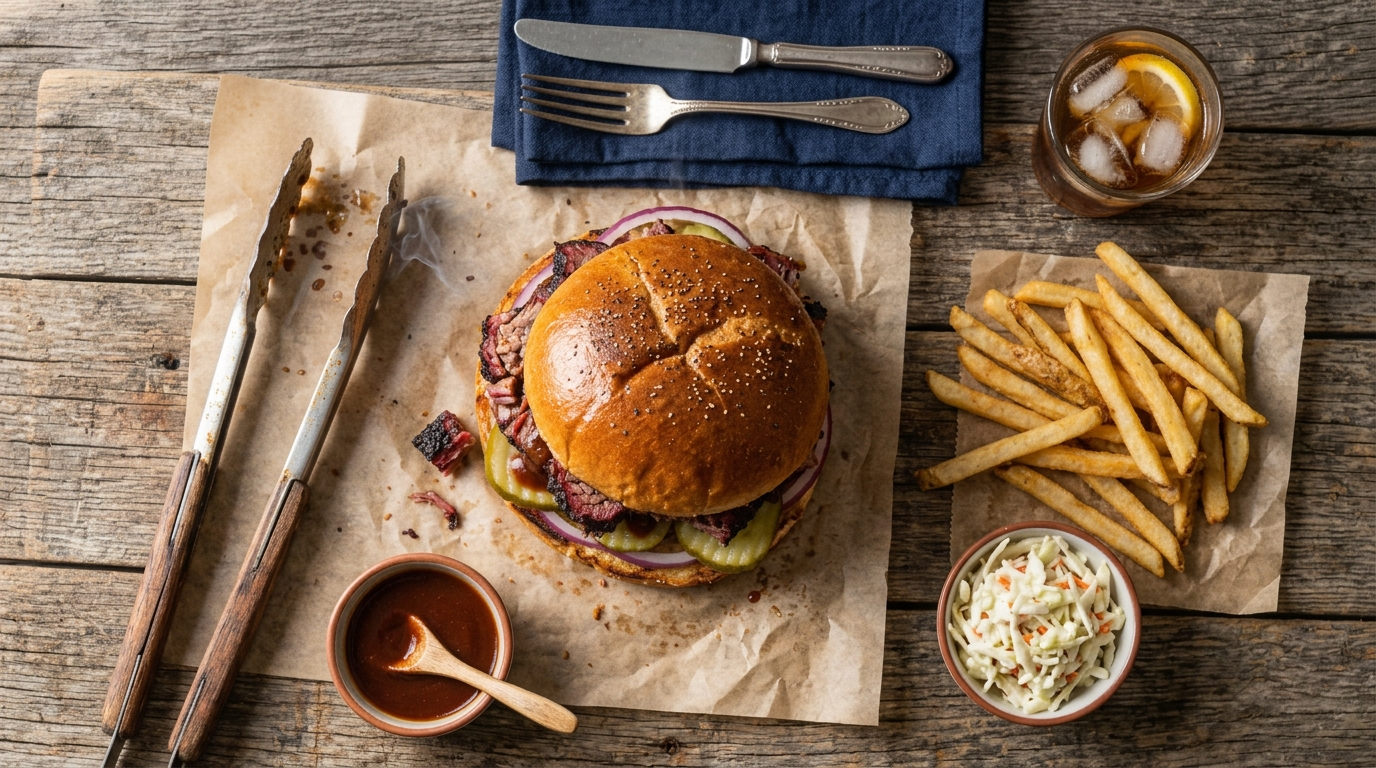
- Toast the buns directly over your grill grates or on a cast iron skillet. Butter each bun half with unsalted butter and place cut-side down over medium heat for 60 to 90 seconds until golden and lightly crisped. A toasted bun is essential - a soft untoasted bun will turn to mush under that juicy chopped beef in seconds. Build your sandwiches by piling a generous mound of chopped beef onto the bottom bun, drizzling with Texas BBQ sauce, topping with raw sliced onion and dill pickle chips, and pressing the top bun down firmly. Serve immediately with extra sauce on the side.
Nutrition
Calories: 680kcalCarbohydrates: 38gProtein: 52gFat: 32gFiber: 2gSugar: 9g
Tried this recipe?Let us know how it was!