
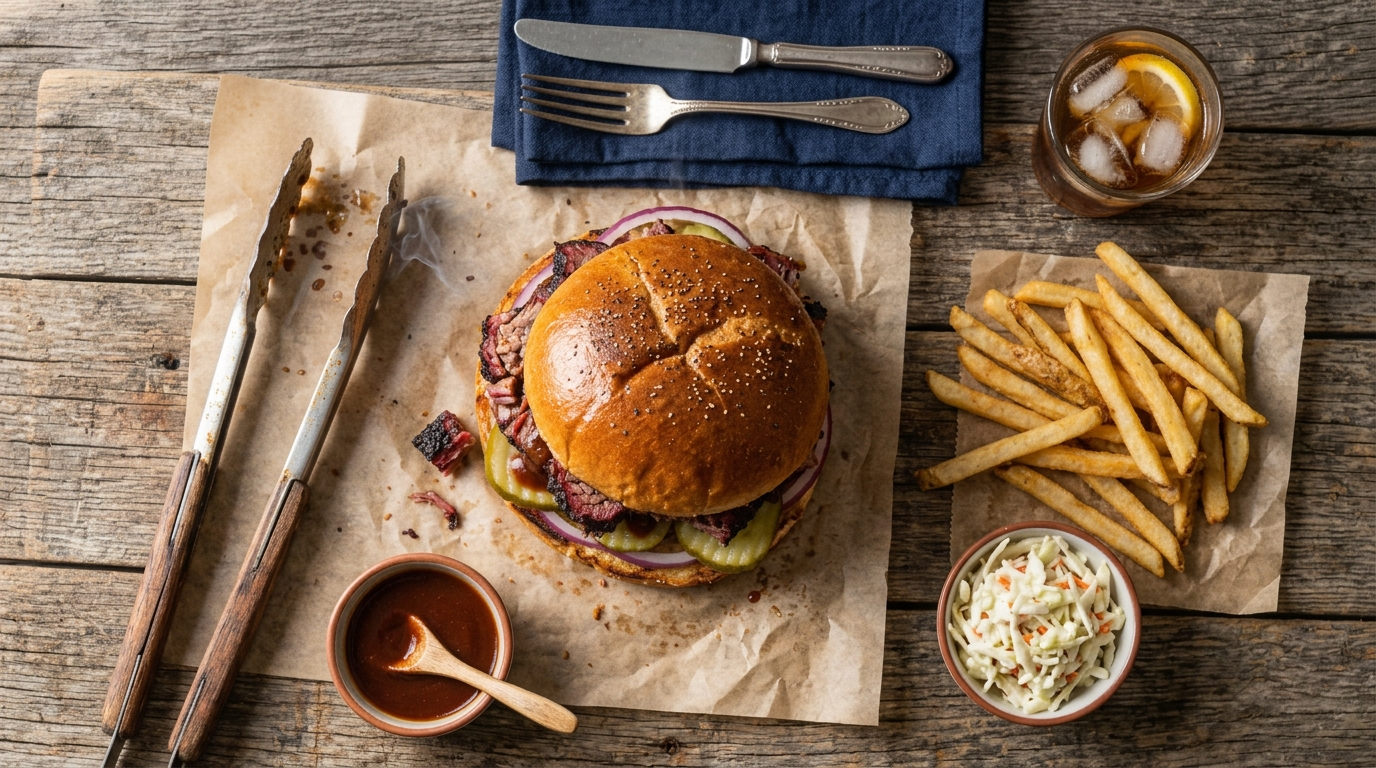
Texas Chopped Beef Sandwich Recipe: Smoky BBQ Perfection
Ingredients
Method
- Trim the brisket the night before your cook. Lay the cold brisket fat-side up on your cutting board and trim the hard fat cap down to about one quarter inch thick using a sharp boning knife. Remove any hard crusty fat nodes and the large deposit of hard fat between the flat and the point. Flip the brisket over and trim away any silver skin and thin flap meat on the bottom that will burn instead of bark. A properly trimmed brisket should look aerodynamic and uniform so smoke and heat can flow evenly around the whole surface.
- Season the brisket generously right after trimming. Coat the entire surface lightly with yellow mustard - this acts purely as a binder and you will not taste it after the long smoke. Mix your kosher salt, coarse black pepper, garlic powder, and smoked paprika together in a bowl at a roughly 50-50 salt-to-pepper ratio. Apply the rub heavily and evenly on all sides including the fat cap, the edges, and the underside. Do not be shy here - a thick even crust of salt and pepper is what builds that legendary Texas bark. Wrap loosely in plastic wrap and refrigerate overnight for at least 8 hours.
- About 90 minutes before your target start time, pull the brisket from the refrigerator and let it come toward room temperature. Fire up your smoker and bring it to a steady 225 to 250 degrees Fahrenheit using your charcoal base and post oak or hickory wood chunks. You want a clean thin blue smoke coming from your exhaust vent - not thick billowy white smoke which carries bitter creosote. Give your smoker a full 30 to 45 minutes to stabilize before you put any meat on.
- Place the brisket on the smoker fat-side up with the thicker point end toward your heat source. Close the lid and let the smoke do its work. For the first 4 to 5 hours do not open the smoker unless you need to adjust your fire or add wood. You are looking to build bark and allow the smoke ring to develop during this critical open-smoke phase. Maintain your smoker temp between 225 and 250 degrees Fahrenheit throughout. Add one or two wood chunks every 45 to 60 minutes to maintain a steady clean smoke.
- Monitor the internal temp of the brisket flat with your leave-in probe. Around 150 to 165 degrees Fahrenheit the brisket will hit the stall - a frustrating plateau where evaporative cooling keeps the temp flat for hours. This is completely normal and is exactly when you wrap. Pull the brisket off the smoker and place it on a large sheet of pink butcher paper. Wrap it tightly but not so tight you crush the bark - you want a snug butcher-paper bundle that still breathes slightly. Return it to the smoker fat-side up.
- Continue smoking the wrapped brisket until the internal temp of the flat reaches 200 to 205 degrees Fahrenheit. At 200 degrees start probing with your instant read thermometer in multiple spots across the flat. When the probe slides into the thickest part of the flat with zero resistance - like pushing into room temperature butter - the brisket is done regardless of what the numbers say. This probe tenderness test is the real signal. The point will always run a few degrees hotter than the flat so focus your probing on the flat.
- Rest the meat - and this step is absolutely mandatory. Do not skip it. Pull the wrapped brisket off the smoker and place it in an empty cooler lined with old towels. Close the cooler lid and let it rest for a minimum of 1 hour and ideally 2 hours. This rest allows the collagen that converted to gelatin during the cook to redistribute back through the muscle fibers. Cutting too early means all those incredible juices flood out onto your cutting board instead of staying inside the meat where they belong.
- After the rest, unwrap the brisket over your cutting board to capture every drop of juice. Separate the point from the flat by slicing along the fat seam that runs between them at an angle. The point is the fattier thicker end and will be used primarily for chopped beef due to its incredible marbling. Slice the flat against the grain first, then transfer both the flat slices and the entire point to your cutting board.
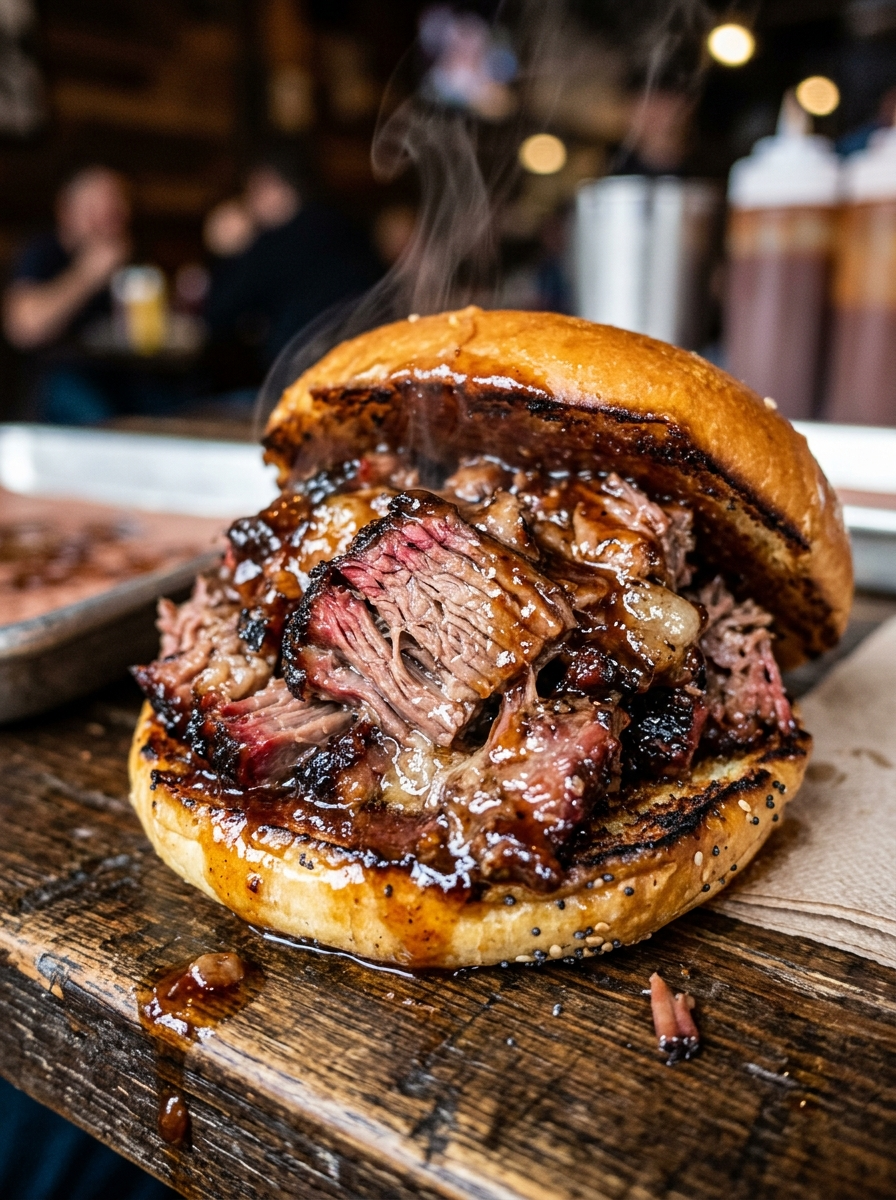
- Chop the brisket using two large chef knives or a heavy cleaver in a rhythmic rocking motion. You want a coarse uneven chop - not a fine grind and not huge chunks. Aim for roughly half-inch to one-inch irregular pieces that still show off that deep mahogany bark and vivid smoke ring in every piece. As you chop, drizzle a few tablespoons of the reserved brisket drippings from the butcher paper back over the chopped meat and toss it through. This is liquid gold and adds incredible richness to every bite.
- Toast the buns directly over your grill grates or on a cast iron skillet. Butter each bun half with unsalted butter and place cut-side down over medium heat for 60 to 90 seconds until golden and lightly crisped. A toasted bun is essential - a soft untoasted bun will turn to mush under that juicy chopped beef in seconds. Build your sandwiches by piling a generous mound of chopped beef onto the bottom bun, drizzling with Texas BBQ sauce, topping with raw sliced onion and dill pickle chips, and pressing the top bun down firmly. Serve immediately with extra sauce on the side.
Nutrition
This Texas chopped beef sandwich recipe is the real deal – built on a full packer brisket smoked low and slow over post oak wood until the bark turns almost black and the internal temp creeps up to 203 degrees Fahrenheit for melt-in-your-mouth pull-apart tenderness. This is not a weeknight shortcut recipe. This is a commitment to the craft of Texas BBQ, and every single hour of that smoke is worth it when you slice into that brisket and start chopping.
The chopped beef sandwich is a hallmark of Central Texas BBQ joints, and it exists because pitmasters knew that the trimmings, end pieces, and less-than-perfect slices of brisket deserved a second life. Pile that peppery, smoke-kissed chopped beef onto a pillowy white bun, splash on a spoonful of tangy BBQ sauce, and you have something that rivals any plate at a legendary Hill Country smokehouse. We are talking about a smoke ring so deep and a bark so thick that each bite hits every single note.
We will walk you through trimming a full 12 to 14 pound packer brisket, building a two-zone fire, managing your smoker between 225 and 250 degrees Fahrenheit for the entire cook, wrapping in butcher paper at the stall, resting the meat for a full hour before chopping, and building the ultimate sandwich. Whether you are firing up a stick burner, a ceramic kamado, or a pellet grill, this guide has you covered from fire-up to first bite.
Texas Chopped Beef Sandwich Recipe: Smoky BBQ Perfection
This Texas chopped beef sandwich recipe delivers everything you love about Lone Star BBQ – deeply smoky brisket with a peppery bark, piled high on a toasted bun with tangy sauce. Low and slow is the only way to go, so fire up the pit and get after it today.
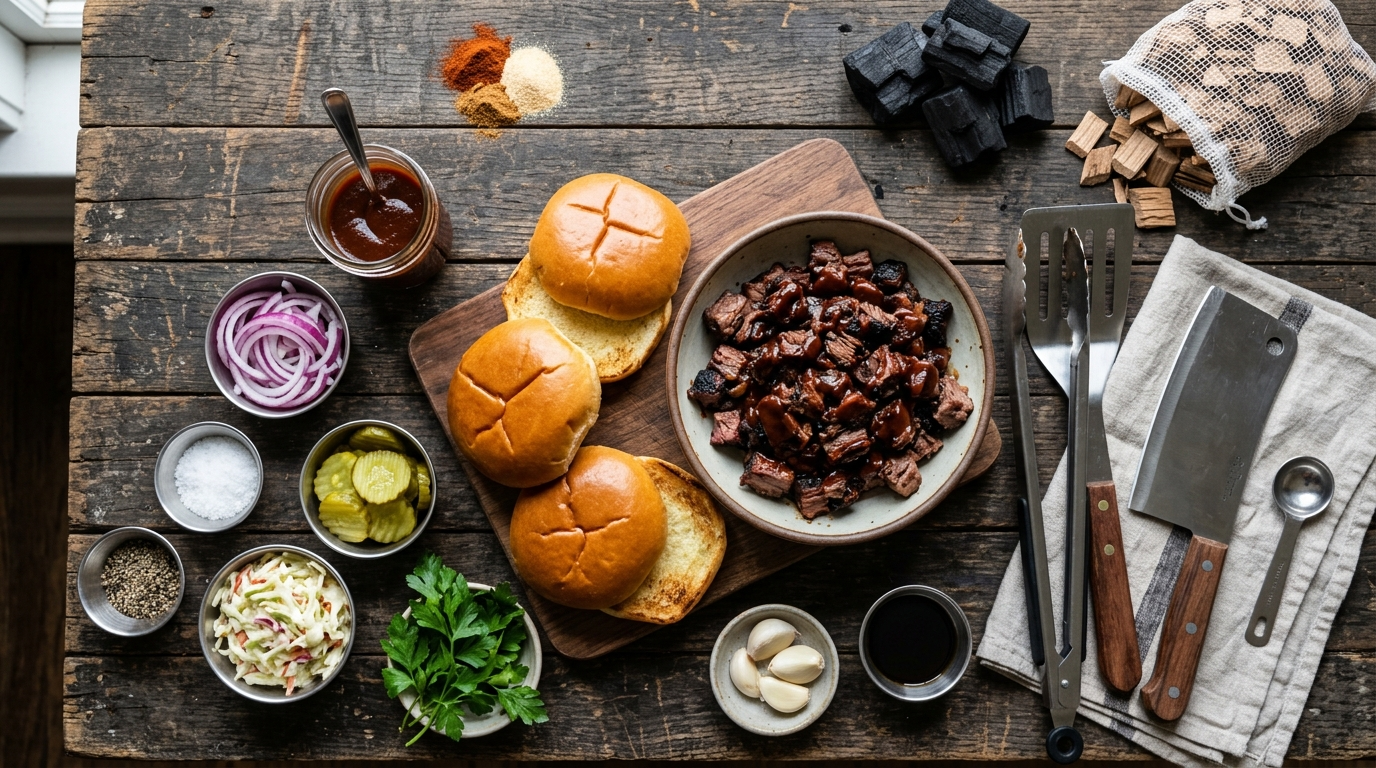
Ingredients
| AMOUNT | INGREDIENT | NOTES |
|---|---|---|
| 1 whole | packer brisket (12 to 14 lbs) | USDA Choice or Prime grade, full flat and point included |
| 4 tablespoons | kosher salt | coarse, for the Texas-style rub |
| 4 tablespoons | coarse black pepper | freshly cracked, 16 mesh if available |
| 1 tablespoon | garlic powder | optional but highly recommended |
| 1 tablespoon | smoked paprika | optional for extra color and depth |
| 2 tablespoons | yellow mustard | used as binder for the rub |
| 6 large | post oak or hickory wood chunks | soaking not required for wood chunks |
| 8 whole | brioche or white hamburger buns | sturdy enough to hold the juicy chopped beef |
| 1 cup | Texas-style BBQ sauce | tomato and vinegar based, thin consistency preferred |
| 1 large | yellow onion | thinly sliced raw for topping |
| 4 whole | dill pickles | sliced thin, classic Texas BBQ sandwich topping |
| 2 tablespoons | unsalted butter | for toasting the buns on the grill |
Instructions
Nutrition (per serving)
The BBQ Story Behind This Recipe
The chopped beef sandwich has deep roots in the Central Texas BBQ tradition that stretches back to the German and Czech butcher shops of the mid-1800s. Immigrant meat market owners in towns like Lockhart, Luling, and Taylor began smoking leftover beef cuts over post oak wood as a way to preserve and sell meat before refrigeration was widely available. Customers would buy the smoked beef by the pound right off the butcher block, eating it on butcher paper with crackers and onion. Over time, those scraps and trimmings from brisket and clod roasts got piled onto bread, and the chopped beef sandwich was born as a true working-class Texas staple.
By the mid-20th century, iconic Texas BBQ institutions like Smitty’s Market and Black’s BBQ in Lockhart had elevated the chopped beef sandwich into something legendary. The philosophy stayed the same – low and slow over hardwood, heavy salt and pepper seasoning, no fuss, no fancy sauces required. The smoke does the heavy lifting. Today the Texas chopped beef sandwich is celebrated at BBQ competitions, food festivals, and backyard pits all across the country, but the soul of it remains firmly planted in that Central Texas Hill Country tradition of letting great beef and great smoke speak for themselves.
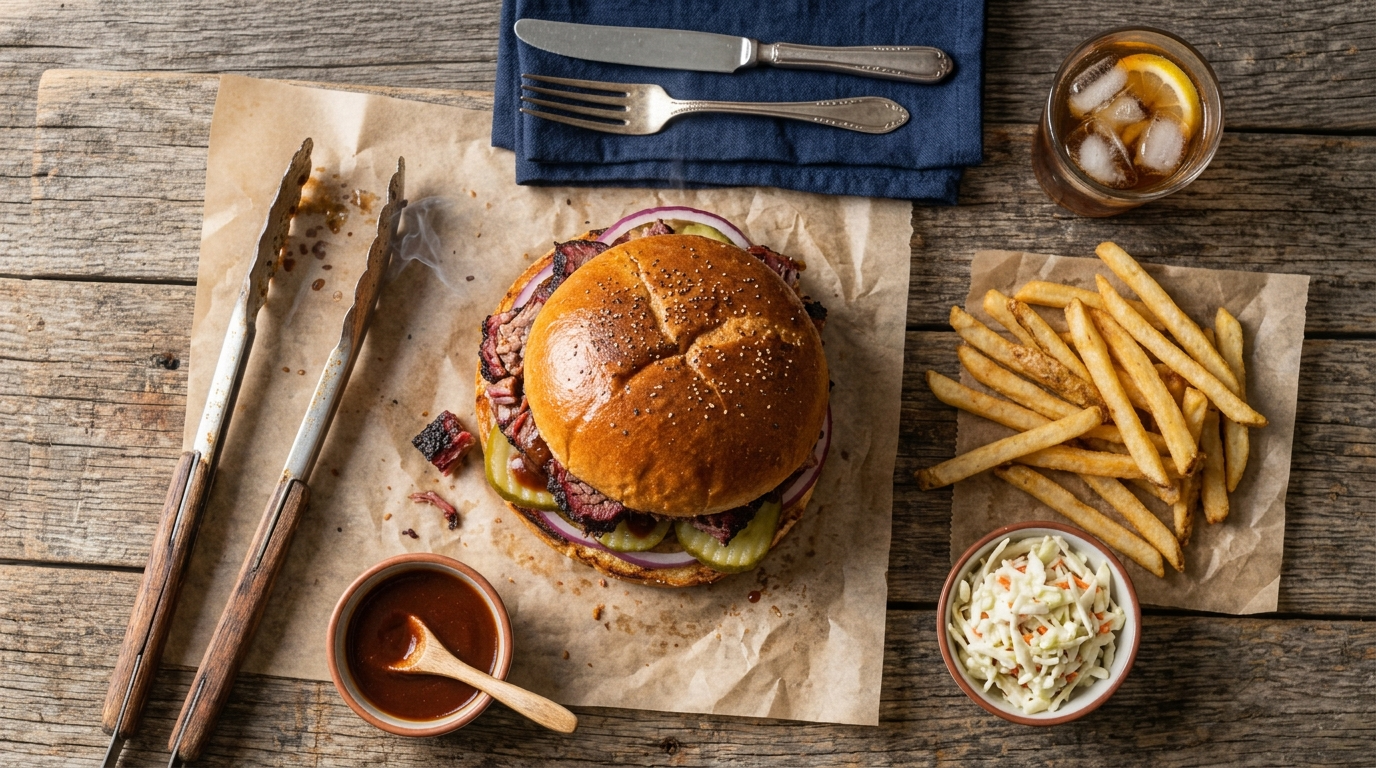
Hot Off the Grill
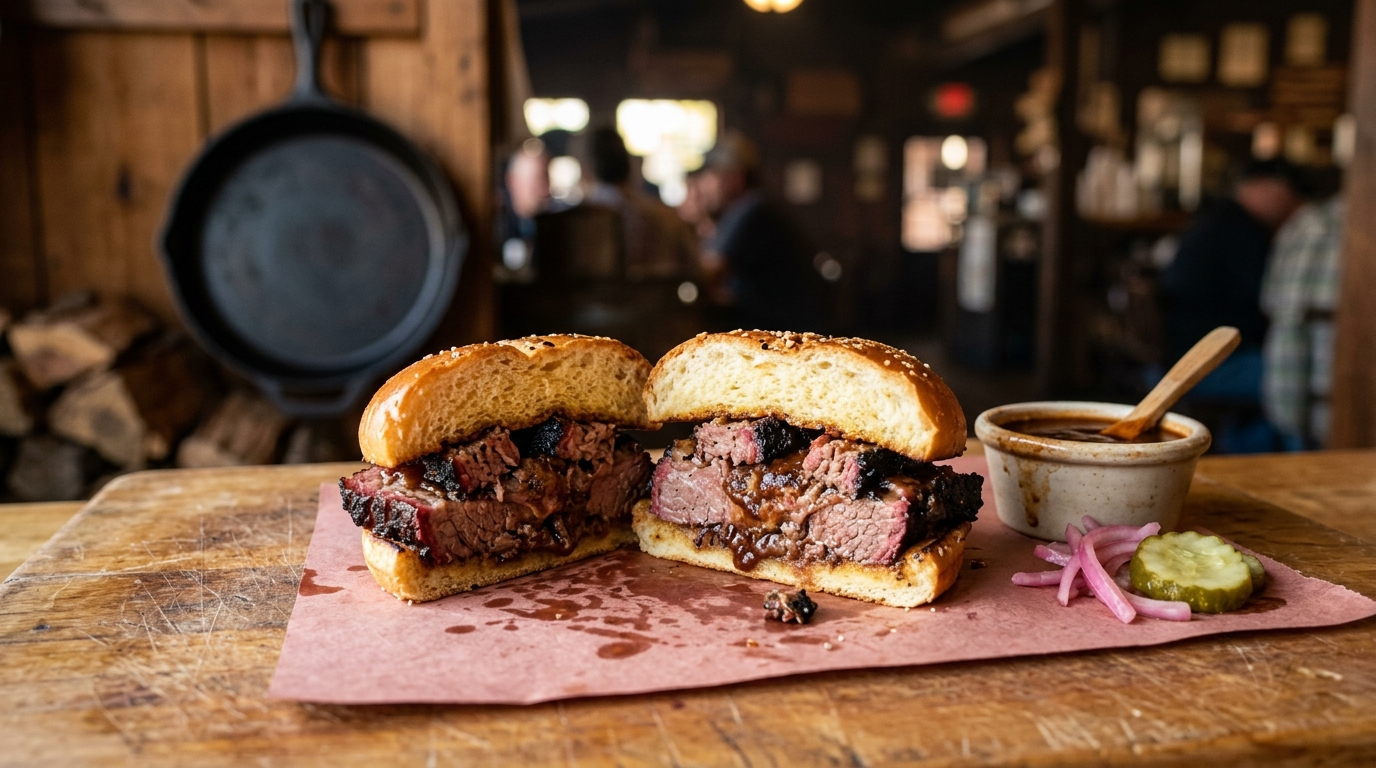
A Closer Look
Pitmaster Tips for Best Results
- Buy USDA Prime grade brisket if your budget allows – the extra intramuscular fat marbling throughout the point is what makes chopped beef extraordinarily juicy and rich after the long low and slow smoke.
- Keep your smoker temp between 225 and 250 degrees Fahrenheit for the entire cook and resist the urge to crank the heat to speed things up – a 14 pound brisket typically takes 12 to 16 hours total and patience is the most important ingredient.
- The bark is everything in a Texas chopped beef sandwich – if your bark looks pale or thin after the first 4 hours, make sure you are running clean thin blue smoke and not running at too low a temperature below 225 degrees Fahrenheit.
- Do not throw away the burnt ends – the cubed and recrisped point pieces known as burnt ends are arguably the best part of the whole brisket cook and make an incredible addition to the chopped beef sandwich or served as a standalone snack.
- If you end up with leftover chopped beef, store it in an airtight container with a splash of beef broth to keep it moist, and reheat gently in a covered skillet over low heat – it makes incredible breakfast hash the next morning piled over fried eggs.
🔧 Pitmaster Equipment
Offset Smoker or Charcoal Smoker: An offset stick burner or charcoal smoker running post oak or hickory wood chunks delivers the authentic Texas smoke flavor and bark development this recipe demands.
Instant Read Thermometer: Hitting that 203 degree Fahrenheit internal temp is non-negotiable for chopped beef. A reliable instant read thermometer like a Thermapen is essential for probing the flat and the point.
Leave-In Probe Thermometer: Monitor internal temp passively throughout the long cook without opening the smoker lid and losing valuable heat and smoke.
Pink Butcher Paper: Wrapping the brisket in uncoated pink butcher paper at the stall helps push through without steaming the bark soft the way foil can.
Meat Cleavers or Heavy Chopping Knives: A sharp heavy cleaver or two large chef knives make quick work of chopping that tender brisket into the perfect coarse chop for sandwiches.
Long Tongs and Heat Resistant Gloves: Keep your hands safe while managing the fire, adjusting wood, and maneuvering a 14 pound brisket over high heat.
Large Cutting Board: You need serious real estate to rest and chop a full packer brisket – a large hardwood or plastic cutting board with a juice groove keeps the mess contained.
🔥 Variations
Pellet Grill Version: Set your pellet grill to 225 degrees Fahrenheit using hickory or a Texas blend pellet. Follow every step identically – the pellet grill excels at maintaining steady temps over a long cook. You may get slightly less bark development than an offset smoker so consider leaving the brisket unwrapped for an extra 30 to 45 minutes after the stall to build additional crust before wrapping.
Gas Grill Version: Set up your gas grill for indirect heat by lighting only the outer burners and leaving the center burners off. Place a smoker box loaded with soaked post oak or hickory chips over one of the lit burners. Target a grill temp of 250 degrees Fahrenheit and replenish your smoker box with fresh wood chips every 45 minutes. A full packer brisket on a gas grill will take the same time as an offset – do not rush the process.
Chuck Roast Shortcut Version: If you do not have time for a full brisket cook, substitute two 3 to 4 pound chuck roasts seasoned the same way and smoked at 250 degrees Fahrenheit until they reach an internal temp of 205 degrees Fahrenheit. Chuck roast gets equally tender and pulls apart beautifully for chopped beef sandwiches in roughly 8 to 10 hours instead of 14 to 16.
Spicy Texas Version: Add one tablespoon of cayenne pepper and one tablespoon of chipotle powder to your salt-and-pepper rub for a serious heat-forward bark. Top the finished sandwich with sliced pickled jalapenos and a drizzle of hot sauce mixed into your BBQ sauce for a sandwich that brings the fire from the first bite to the last.
❓ Pitmaster FAQ
What internal temperature should a brisket reach for chopped beef?
Target an internal temperature of 200 to 205 degrees Fahrenheit in the thickest part of the flat, but more importantly probe for tenderness. When your instant read thermometer slides into the flat with zero resistance – like probing room temperature butter – the brisket is done. Temperature is a guide but probe tenderness is the real signal for chopped beef readiness.
Can I use a gas grill instead of a smoker for this recipe?
Yes, absolutely. Set up your gas grill for indirect heat with only the outer burners lit and target 250 degrees Fahrenheit. Place a loaded smoker box with post oak or hickory chips over a lit burner and replenish it every 45 minutes. You will get genuine smoke flavor and a solid bark, though an offset smoker running real wood will always produce the most authentic Central Texas result.
How long does it take to smoke a full packer brisket?
Plan on 12 to 16 hours at 225 to 250 degrees Fahrenheit for a 12 to 14 pound packer brisket, plus a mandatory 1 to 2 hour rest after pulling it off the smoker. The general guideline is 1 to 1.5 hours per pound but always cook to probe tenderness rather than a fixed time since every brisket and every smoker behaves differently.
What cut of beef is best for a Texas chopped beef sandwich?
A full packer brisket is the gold standard and most authentic choice, with the fatty point end contributing the majority of the chopped beef due to its incredible marbling. Chuck roast is an excellent and faster alternative that yields equally tender and juicy chopped beef. Avoid lean cuts like eye of round or sirloin as they will dry out during the long low and slow smoke required for proper tenderness.
Do I have to wrap the brisket in butcher paper?
You do not have to but it is strongly recommended. Wrapping in pink uncoated butcher paper during the stall helps push the brisket through the temperature plateau faster while still allowing the bark to breathe and stay relatively firm. Foil wrapping works too but tends to steam the bark soft. Leaving it completely unwrapped the entire cook produces a very thick hard bark but extends your total cook time significantly.
What type of wood is best for Texas style smoked brisket?
Post oak is the traditional and most authentic choice for Central Texas BBQ – it produces a medium smoke with a slightly sweet earthy quality that complements beef perfectly without overpowering it. Hickory is a stronger alternative that delivers a classic deep BBQ smoke flavor. Avoid lighter woods like apple or cherry for brisket as they do not provide enough smoke intensity for a 12 to 16 hour cook.