Ancho Chile Beef Rub Recipe for Bold BBQ Flavor
Ingredients
Method
- Start by making your ancho chile rub. Combine the ancho chile powder, kosher salt, coarsely ground black pepper, smoked paprika, garlic powder, onion powder, ground cumin, dark brown sugar, dried oregano, cayenne pepper, ground coriander, and cinnamon in a medium mixing bowl. Whisk everything together thoroughly until the blend is uniform in color and texture, no streaks of individual spices remaining. Take a moment to smell this blend and you will already understand why this rub is going to do serious work on your beef.
- If you are working with a brisket flat, trim the fat cap down to approximately 1/4-inch thickness. You want enough fat to baste the meat through a long smoke but not so much that the rub cannot penetrate. For ribeye steaks, pat them completely dry with paper towels. Moisture is the enemy of good bark formation, so take your time here and get the surface of that beef as dry as possible before any seasoning touches it.
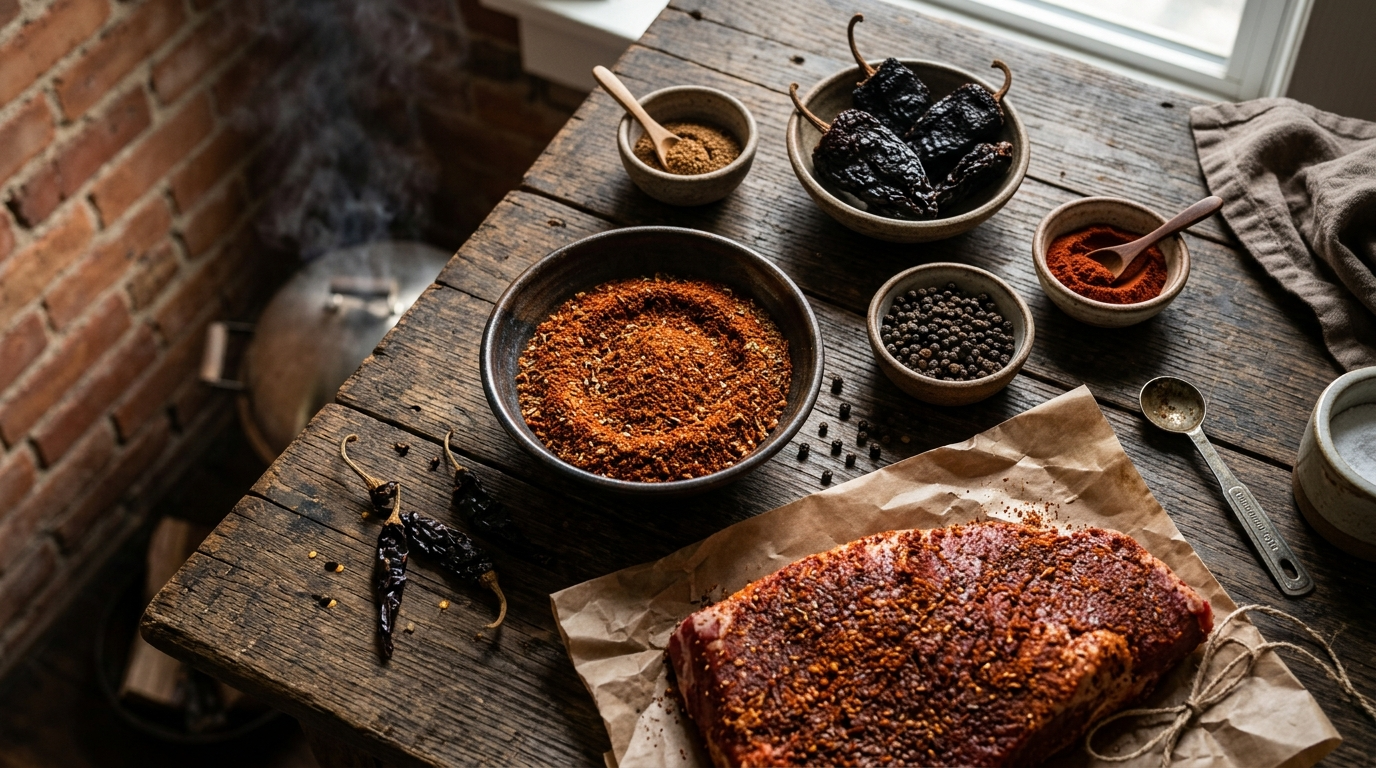
- Apply the ancho chile beef rub generously to all exposed surfaces of your beef. For brisket, use approximately 2 tablespoons of rub per pound of meat. Press the rub firmly into the surface with the heel of your hand rather than just sprinkling it on. You want it adhered, not floating on top. Every crack, crevice, and edge of that brisket needs coverage. For ribeye steaks, coat both sides and the edges with a firm, even layer.
- Once the beef is coated, wrap it tightly in plastic wrap or butcher paper and place it in the refrigerator. For steaks, a minimum rest of 1 hour is acceptable but 4 hours is better. For brisket, go overnight, anywhere from 8 to 12 hours. This dry brine period allows the salt in the rub to draw out a small amount of surface moisture, which then dissolves the salt and gets reabsorbed into the meat, seasoning it from within and improving the final texture of the bark dramatically.
- When you are ready to cook, fire up your smoker or grill to your target temperature. For brisket, dial in your smoker at 225 to 250 degrees Fahrenheit using post oak, hickory, or mesquite wood for fuel and smoke. For ribeye steaks on a charcoal grill, build a two-zone fire with a hot side screaming at 450 to 500 degrees Fahrenheit and a cooler indirect side for temperature control. Let your cooker stabilize at the target temp for at least 20 to 30 minutes before any meat goes on.
- For brisket: place the rubbed brisket fat side up on the smoker grate and close the lid. Do not open it for the first 3 hours. You are building your smoke ring during this early window and every time you lift the lid you lose precious smoke time. After 3 hours, check the color of the bark. You are looking for a deep mahogany exterior with the ancho chile creating an almost chocolate-colored crust. Spritz with a 50/50 mix of beef broth and apple cider vinegar every 90 minutes from this point forward.
- For ribeye steaks: remove the steaks from the refrigerator 30 minutes before cooking to take the chill off. Place the steaks on the hot side of your two-zone charcoal fire and sear for 2 to 3 minutes per side without moving them. You want to hear a hard, aggressive sizzle the moment that beef hits the grate. After searing both sides, move the steaks to the indirect side and cook to your desired internal temp: 125 degrees Fahrenheit for rare, 130 to 135 degrees for medium-rare, or 140 degrees for medium.
- Monitor the internal temp of your brisket throughout the cook. When the internal temp hits approximately 165 degrees Fahrenheit, the brisket will likely enter the stall, where evaporative cooling temporarily stops the internal temp from rising. This is normal. At this point, wrap the brisket tightly in unwaxed butcher paper to push through the stall while preserving your bark. Return it to the smoker and continue cooking until the internal temp reaches 200 to 205 degrees Fahrenheit and a probe or thermometer slides into the thickest part with zero resistance, like pushing into warm butter.
- Rest the meat before you cut into it. This step is non-negotiable. For brisket, rest it wrapped in butcher paper inside a dry cooler with towels for a minimum of 1 hour and up to 4 hours. The internal temp will continue to rise a few degrees during this carry-over period, and the juices will redistribute throughout the muscle fibers. For ribeye steaks, rest them on a wire rack over a sheet pan for 5 to 10 minutes tented loosely with foil. Cut too early and you lose everything.
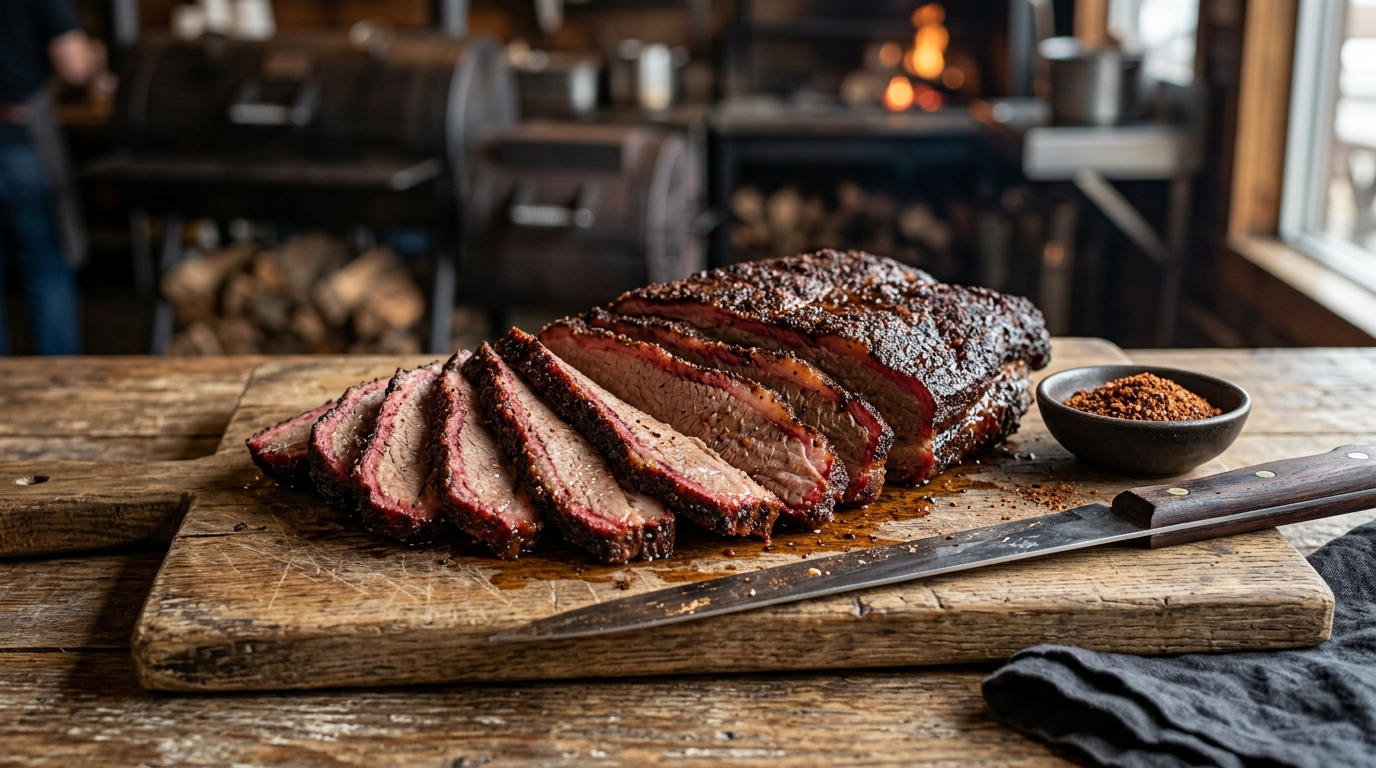
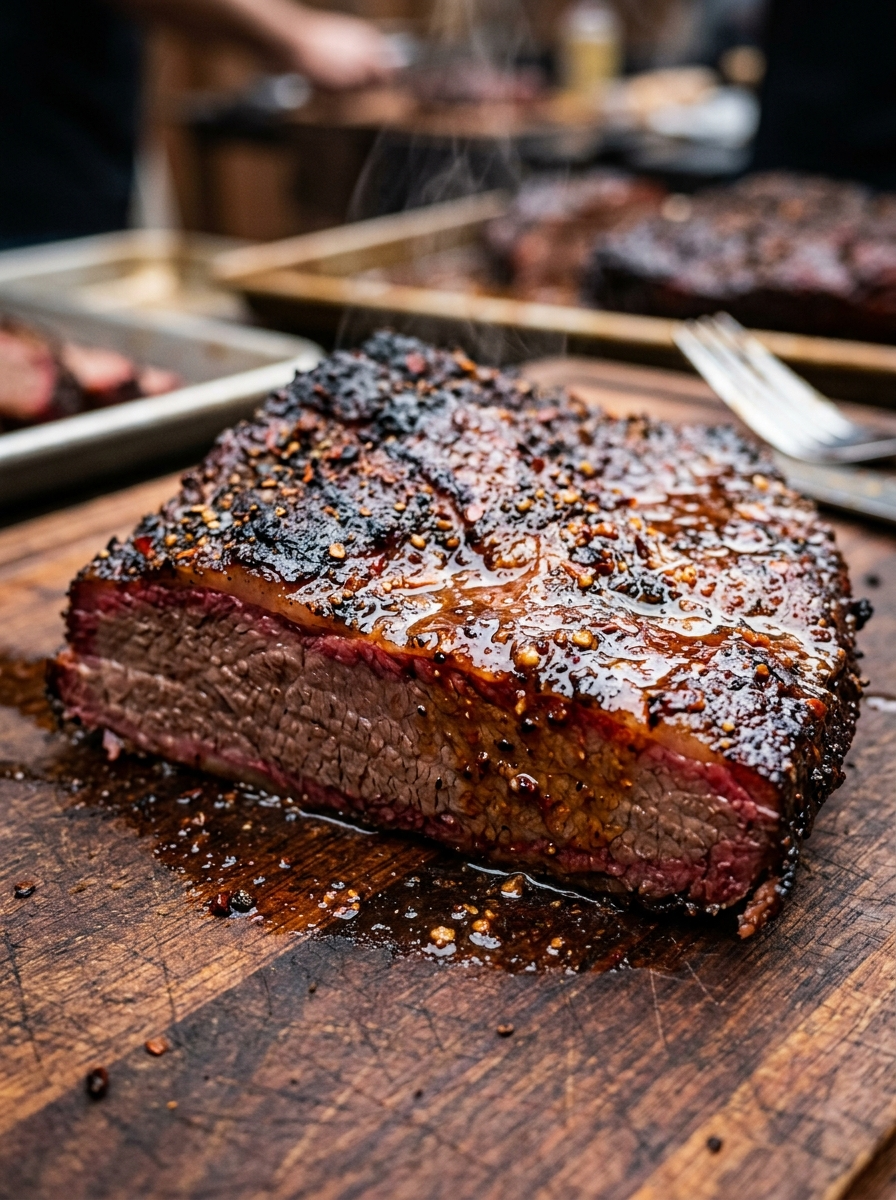
- Slice your brisket against the grain with a long slicing knife in cuts approximately 1/4-inch thick. Look for that beautiful smoke ring, a pink band of color just below the bark that tells the whole story of your cook. Serve the sliced beef on a butcher paper-lined tray with your favorite BBQ sides. For ribeye steaks, slice them away from the bone if bone-in, or serve whole with a pat of compound butter melting over that ancho chile crust. Appreciate what you have created, because this right here is the real deal.
Nutrition
This ancho chile beef rub recipe is the secret weapon every serious pitmaster needs in their arsenal, delivering a complex, smoky depth that store-bought blends simply cannot touch. Ancho chiles are dried poblano peppers with a rich, raisin-like sweetness and mild heat that sits right around 1,000 to 2,000 Scoville units, making them the perfect base for a beef rub that builds incredible flavor without overpowering the meat. When you press this blend into a well-marbled brisket or a thick-cut ribeye and let it work overnight, you are setting yourself up for BBQ greatness.
The magic of this rub goes far beyond heat. The ancho chile powder works in concert with smoked paprika, garlic, and a touch of brown sugar to create a bark that comes out of the smoker looking like midnight and tasting like a campfire dream. At low and slow temperatures between 225 and 250 degrees Fahrenheit, the sugars in this rub caramelize slowly over the first few hours, locking in a lacquer-like crust that seals moisture and creates that gorgeous smoke ring pitmaster legends are made of. You are not just seasoning meat here, you are building an experience from the outside in.
Whether you are dialing in a 12-hour brisket smoke, searing a tomahawk steak over ripping hot charcoal, or doing a weekend pork-free beef back rib session, this rub adapts beautifully to any cooking method or cut. We recommend applying it generously, at least 2 tablespoons per pound of beef, wrapping the seasoned meat in butcher paper, and letting it rest in the refrigerator for a minimum of 4 hours, though overnight is the move if you want maximum penetration and flavor. Trust the process, respect the fire, and this ancho chile beef rub will reward you every single time.
Ancho Chile Beef Rub Recipe for Bold BBQ Flavor
This ancho chile beef rub recipe delivers deep, earthy heat with layers of smoky complexity that transform any cut of beef into a backyard legend. From brisket to ribeye, this bold blend builds a jaw-dropping bark that will have your neighbors asking questions. Fire up the grill today.
Ingredients
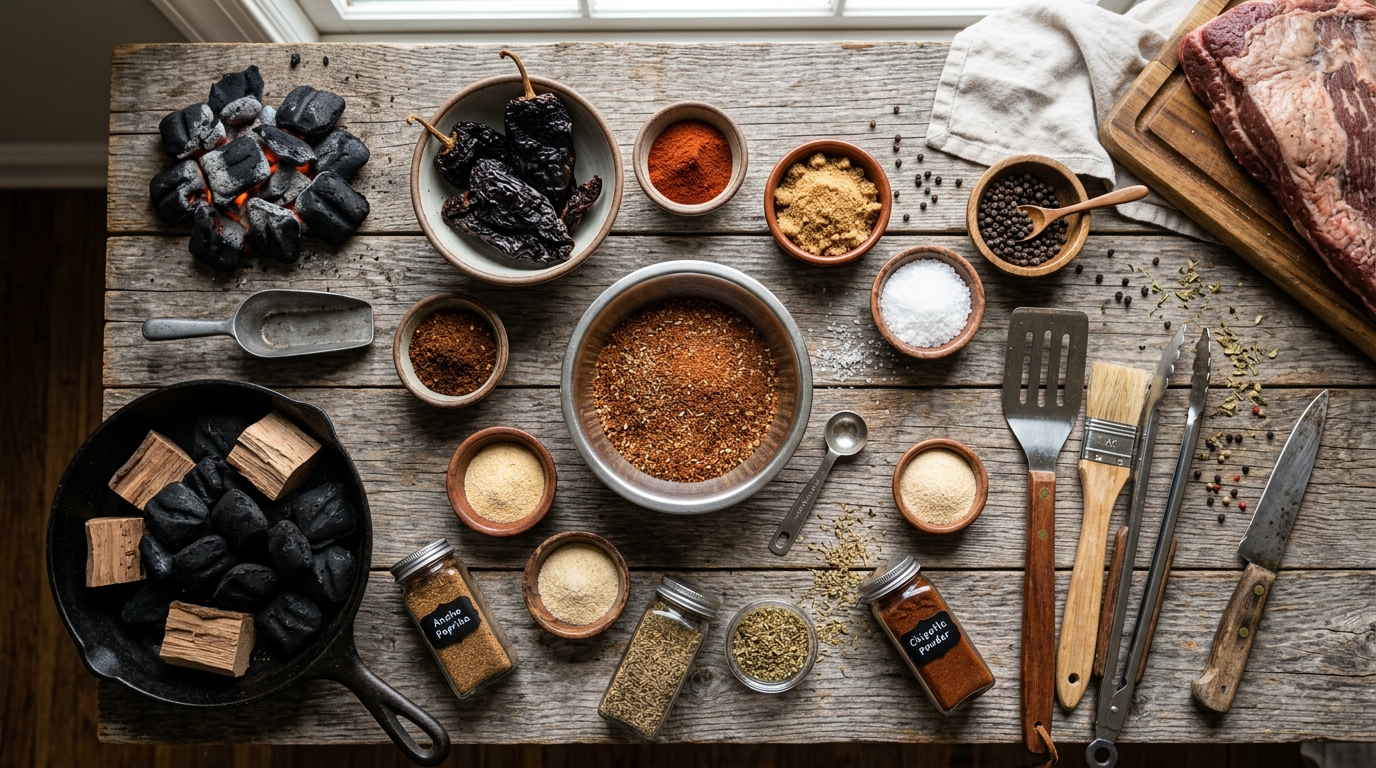
| AMOUNT | INGREDIENT | NOTES |
|---|---|---|
| 3 tablespoons | ancho chile powder | use freshly ground dried ancho chiles for best flavor depth |
| 2 tablespoons | kosher salt | coarse kosher salt adheres better than table salt |
| 1 tablespoon | coarsely ground black pepper | freshly cracked from whole peppercorns is strongly preferred |
| 1 tablespoon | smoked paprika | Spanish smoked paprika adds another layer of wood-smoke character |
| 2 teaspoons | garlic powder | not garlic salt, use pure garlic powder |
| 2 teaspoons | onion powder | adds savory base notes that complement the beef |
| 1 teaspoon | ground cumin | toasting whole cumin seeds first then grinding them elevates the flavor significantly |
| 1 teaspoon | dark brown sugar | packed, helps with caramelization and bark formation at low and slow temps |
| 1 teaspoon | dried oregano | Mexican oregano preferred for its earthier citrus-forward character |
| 1/2 teaspoon | cayenne pepper | adjust up or down based on your heat preference |
| 1/2 teaspoon | ground coriander | adds a bright floral note that balances the earthiness of the ancho |
| 1/4 teaspoon | ground cinnamon | just a whisper of cinnamon deepens the chocolate-raisin notes in the ancho chile |
| 3 to 4 lbs | beef brisket flat or ribeye steaks | brisket for low and slow smoking, ribeye for hot and fast grilling |
Instructions
Nutrition (per serving)
The BBQ Story Behind This Recipe
Ancho chile peppers have been a cornerstone of Mexican and Southwestern cooking for centuries, prized by indigenous cultures throughout Mesoamerica long before European contact. The practice of drying poblano peppers into anchos dates back to ancient culinary traditions in what is now central Mexico, where cooks discovered that drying concentrates the natural sugars and earthiness of the pepper into something far more complex than its fresh counterpart. When ranching and cattle culture spread into Texas and the American Southwest in the 1800s, Mexican spice traditions collided head-on with open-fire beef cookery, and the marriage that resulted laid the groundwork for what we now recognize as Texas-style BBQ rubs.
The tradition of rubbing beef with chile-heavy spice blends is deeply embedded in the culture of Texas BBQ, where pitmasters from San Antonio to the Hill Country have long used dried chiles as a foundational building block alongside salt and black pepper. Legendary BBQ joints along the Texas BBQ trail have passed down family rub recipes for generations, many of which feature ancho or guajillo chiles as a secret edge. At GrillMasterHQ we see this ancho chile beef rub as a direct descendant of that proud tradition, modernized with a few additional layers of flavor but rooted in the same fire-and-chile philosophy that has made Texas-style smoked beef famous across the entire world.
Hot Off the Grill
A Closer Look
Pitmaster Tips for Best Results
- For the deepest ancho chile flavor, buy whole dried ancho chiles, toast them in a dry skillet over medium heat for 60 to 90 seconds per side until fragrant, remove the seeds and stems, then grind them in a spice grinder. Freshly ground ancho powder has a complexity that pre-packaged powder cannot replicate.
- Do not skip the overnight rest in the refrigerator. The salt in this rub needs time to work as a dry brine, pulling moisture out and then reabsorbing it back into the meat seasoned with all those bold ancho chile spices. This step alone makes a noticeable difference in moisture and flavor depth, especially on thicker cuts like brisket.
- Keep your smoker temperature steady at 225 to 250 degrees Fahrenheit for the entire low and slow cook. Temperature spikes above 275 degrees Fahrenheit can cause the brown sugar in this rub to burn and turn bitter rather than caramelize into that gorgeous sweet bark you are chasing.
- Post oak wood pairs exceptionally well with this ancho chile beef rub because its medium smoke intensity lets the chile and spice flavors stay prominent rather than being overwhelmed by an aggressive smoke. Hickory is a strong second choice. Avoid lighter fruit woods like apple or cherry on beef with this rub, as the smoke flavor will get lost.
- If you are applying this rub to beef ribs or short ribs, increase the ancho chile powder to 4 tablespoons and add an extra 1/2 teaspoon of cayenne. The richer, fattier nature of bone-in beef cuts can handle and benefit from a more aggressive spice profile, and the fat rendering during the cook will help distribute those flavors throughout the meat.
🔧 Pitmaster Equipment
Charcoal Smoker or Offset Smoker: Delivers the authentic wood smoke environment needed to fully activate the ancho chile flavors and build a proper bark at low and slow temps.
Instant Read Thermometer: Critical for monitoring internal temp on beef cuts so you pull the meat at the exact right moment, whether that is 200 to 205 degrees for brisket or 130 degrees for a medium-rare steak.
Long Tongs or Heat-Resistant Gloves: Keep your hands and forearms safe while managing live fire, repositioning meat on the grate, and wrapping during the stall.
Spice Grinder or Mortar and Pestle: Freshly ground whole dried ancho chiles produce a noticeably more vibrant and aromatic rub compared to pre-ground powder that has been sitting on a shelf.
Rimmed Baking Sheet or Sheet Pan: Provides a clean flat surface to apply and press the rub into the beef evenly before it goes into the refrigerator or onto the smoker.
Butcher Paper or Plastic Wrap: Used to wrap the seasoned beef during the overnight rest in the refrigerator, locking in moisture and allowing the rub to fully adhere to the surface of the meat.
🔥 Variations
Coffee-Ancho Beef Rub: Add 1 tablespoon of finely ground espresso or dark roast coffee to the base rub recipe. Coffee amplifies the bitter-chocolate notes naturally present in ancho chiles and creates an extraordinary bark on smoked brisket. Use the same temps and techniques as the base recipe with this upgraded blend.
Pellet Grill Version: Set your pellet grill to 225 degrees Fahrenheit using a bold pellet like hickory or mesquite blend. Apply the ancho chile rub the night before, let it rest in the refrigerator, and follow the same cook, wrap, and rest steps as the charcoal smoker method. Pellet grills run clean and consistent, making it easier to maintain steady temps throughout a long brisket cook.
Gas Grill Version: Set up your gas grill for two-zone indirect cooking by turning on one side to medium-high and leaving the other side off. Place a smoker box filled with soaked hickory chips directly over the lit burner. Apply the ancho chile rub to your steaks or beef cuts, cook over indirect heat at 300 to 325 degrees Fahrenheit, and finish with a quick sear over the hot side to build some crust and char on the exterior.
Ancho Chile Short Rib Rub: Use this exact rub on bone-in beef short ribs, increasing the total rub quantity since short ribs have more surface area per pound than a brisket flat. Smoke the short ribs at 250 degrees Fahrenheit for 6 to 8 hours, wrapping in butcher paper at the 165 degree internal temp mark. Pull them when they probe tender at around 200 to 205 degrees and rest for 45 minutes before serving.
Spicy Ancho Rub Version: For those who want serious heat alongside the earthy ancho flavor, increase the cayenne to 1 full teaspoon and add 1/2 teaspoon of chipotle powder and 1/2 teaspoon of crushed red pepper flakes to the base recipe. This hotter version works beautifully on beef back ribs and flanken-style short ribs cooked hot and fast over direct charcoal.
❓ Pitmaster FAQ
What internal temperature should beef brisket reach when using this rub?
For smoked brisket, you are looking for an internal temp of 200 to 205 degrees Fahrenheit measured in the thickest part of the flat. More important than hitting a specific number is the probe test: your instant read thermometer or a toothpick should slide into the meat with zero resistance, like pushing through warm softened butter. Always rest the brisket for at least 1 hour after pulling it from the smoker.
Can ancho chile powder be substituted with something else?
You can substitute with a combination of regular chili powder and smoked paprika in a 2 to 1 ratio if ancho powder is unavailable, but the flavor profile will be noticeably different. Ancho chile has a unique dried-fruit, chocolate, and earthy sweetness that regular chili powder blends do not replicate. Guajillo chile powder is the closest true substitute and makes an excellent alternative in this recipe.
How long should I let this rub sit on the beef before cooking?
The minimum is 1 hour for steaks and 4 hours for larger cuts like brisket. The sweet spot for maximum flavor penetration and moisture retention from the dry brine effect is an overnight rest of 8 to 12 hours in the refrigerator. If you are in a time crunch, even 30 minutes is better than zero resting time, but plan ahead whenever possible for best results.
Can I use this ancho chile rub on other proteins besides beef?
Absolutely. This rub works brilliantly on lamb chops, venison, and even thick-cut pork shoulder, where the earthiness of the ancho chile complements the rich fatty meat. Scale back the salt slightly when using it on poultry since chicken and turkey can over-salt more quickly than beef. It also makes a great seasoning for smoked beef sausage and burger patties before they go on the grill.
How long does this rub last in storage?
Stored in an airtight glass jar or sealed spice container away from direct heat and sunlight, this ancho chile beef rub will stay fresh and potent for up to 3 months. After that, the volatile aromatic compounds in the chile and spices begin to fade and the rub loses its punch. Make a fresh batch every 8 to 12 weeks if you use it regularly, and always smell the rub before applying it to confirm the spices are still vibrant and alive.
Can I use a gas grill instead of a charcoal smoker for this recipe?
Yes, a gas grill works well especially for steaks and thinner beef cuts. Set up two-zone indirect heat by running one or two burners and leaving the others off. Add a smoker box loaded with soaked hickory or mesquite chips directly over a lit burner to generate smoke. For larger cuts like brisket on a gas grill, maintain a consistent 275 to 300 degree Fahrenheit temperature over indirect heat and be patient, it will take longer than on a dedicated smoker but the ancho chile rub will still build excellent flavor and color.