
Grilled Mahi Mahi Tacos Recipe - Bold Fire-Kissed Flavor
Ingredients
Method
- Fire up the grill about 30 minutes before you cook. For charcoal, you want a full chimney of lit coals spread into a two-zone setup - high direct heat on one side sitting around 450 to 500 degrees Fahrenheit, and an indirect zone on the other side in case you need it. For gas, preheat all burners to high for 10 to 15 minutes then dial back to medium-high to hold 450 degrees. A hot, clean grate is non-negotiable for fish - use your grill brush to scrub it clean, then oil the grates thoroughly with a folded paper towel soaked in vegetable oil held by your long tongs. Do this two or three times until the grates are slick and seasoned.
- While the grill is heating up, make your chipotle crema and slaw. In a small bowl, whisk together the mayonnaise, sour cream, minced chipotle pepper, adobo sauce, 1 tablespoon of lime juice, and a pinch of salt. Taste it and adjust - it should be smoky, tangy, and have a gentle heat. Cover and refrigerate until serving. For the slaw, toss the shredded green and red cabbage with cilantro, the remaining 1 tablespoon of lime juice, honey, and a pinch of salt. Let it sit and soften slightly while the fish cooks.
- Pat your mahi mahi fillets completely dry with paper towels - and do not skip this step. Moisture is the enemy of a good sear and beautiful grill marks. Any surface moisture will steam the fish instead of searing it, and you will lose that incredible crust. Once dry, brush both sides generously with olive oil so the rub has something to adhere to.
- In a small bowl, combine the smoked paprika, cumin, garlic powder, onion powder, cayenne, kosher salt, black pepper, and brown sugar. Stir it together until evenly blended. This is your mahi rub - it is simple but it punches way above its weight on the grill. Apply it evenly on all sides of each fillet, pressing gently so it adheres. You want a visible, even coat - this rub is going to form a light bark on the surface of the fish as it hits the hot grate.
- Place the seasoned mahi mahi fillets directly over the hot zone of your grill. Do not move them for 3 to 4 minutes. This is where most people go wrong - they panic and try to move the fish too early, and it tears apart. The fish will naturally release from the grates when it has built up enough crust. Watch for the flesh to turn opaque about halfway up the side of the fillet, and you will see the edges start to flake slightly. That is your visual cue that it is ready to flip.
- Using your fish spatula, carefully slide under each fillet and flip it in one confident, deliberate motion. Grill the second side for another 3 to 4 minutes. Now pull out your instant read thermometer and probe the thickest part of the fillet - you are looking for an internal temp of 137 degrees Fahrenheit. The USDA recommends 145 degrees for fish, but mahi mahi carries over a few degrees as it rests, and 137 off the grill lands you right in that perfect flaky-but-moist zone. Pull the fillets off the grill and let them rest on a clean plate for 2 minutes before breaking them up for the tacos.
- While the fish is resting, warm your corn tortillas directly on the grill grates over the same direct heat zone for about 30 to 45 seconds per side. You want them to pick up a few light char spots and become pliable, not brittle. Stack them in a clean kitchen towel to keep them warm and steamy while you assemble.
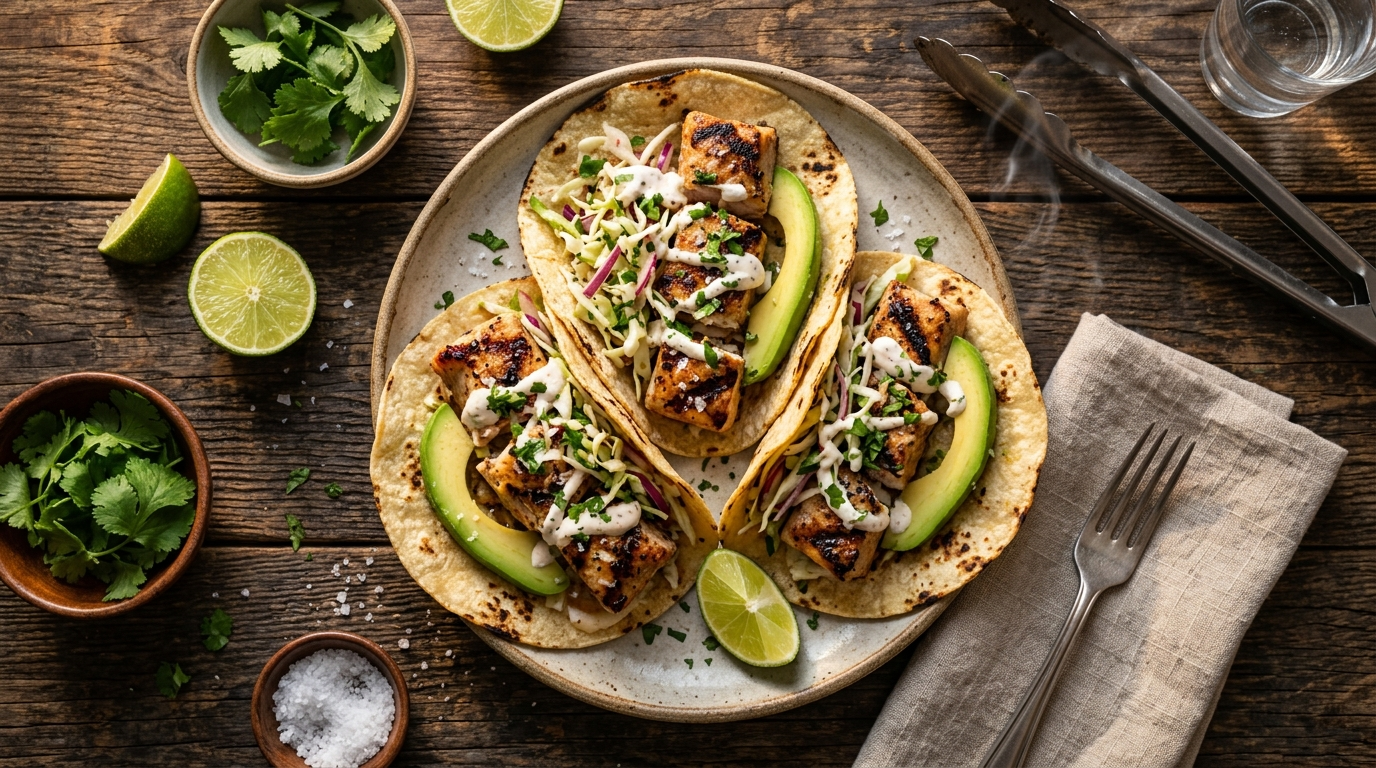
- Break the rested mahi mahi into large, rustic chunks - do not over-shred it. You want big, satisfying pieces of that fire-kissed fish in every bite. Build each taco with two warm corn tortillas (doubled up for structural integrity), a generous layer of chipotle slaw, a few chunks of grilled mahi mahi, sliced or smashed avocado, a drizzle of chipotle crema, pickled red onions if using, extra fresh cilantro, and a squeeze of fresh lime juice right before serving. Eat them immediately while the fish is still warm and the tortillas are soft.
Nutrition
This grilled mahi mahi tacos recipe is the kind of backyard showstopper that makes your neighbors wander over and ask what smells so incredible. We are talking thick, meaty fillets of mahi mahi hitting a screaming-hot 450-degree grate, developing those perfect caramelized grill marks in just 3 to 4 minutes per side, while the inside stays flaky, juicy, and absolutely packed with flavor. This is not your average fish taco from a food truck – this is live-fire cooking at its finest, and once you taste the difference, you will never go back.
Mahi mahi is one of the most underrated proteins you can throw over direct heat. It is dense enough to handle the fire without falling apart, and its mild, slightly sweet flavor takes on smoke and char like a champ. We season it with a bold dry rub built around smoked paprika, cumin, garlic powder, and a kiss of cayenne – the same backbone flavors I use on my competition brisket rubs, scaled down for a delicate fish that only needs about 8 minutes total on the grill. The internal temp you are chasing here is 137 degrees Fahrenheit, which gives you perfectly cooked, moist fish every single time.
The build is equally important. Warm corn tortillas, a crisp chipotle lime slaw, fresh avocado, and a drizzle of smoky crema turn these tacos into something truly special. Every component is designed to complement that fire-kissed fish without overshadowing it. We are going to walk you through every step – from setting up your fire correctly to the final assembly – so even if you have never grilled fish before, you will nail this recipe on the very first cook.
Grilled Mahi Mahi Tacos Recipe – Bold Fire-Kissed Flavor
This grilled mahi mahi tacos recipe delivers bold, fire-kissed fish with beautiful char marks, wrapped in warm tortillas with cool, crunchy slaw. The grill does the heavy lifting, locking in moisture and adding that irresistible smoky depth. Fire up the grill tonight and elevate taco Tuesday forever.
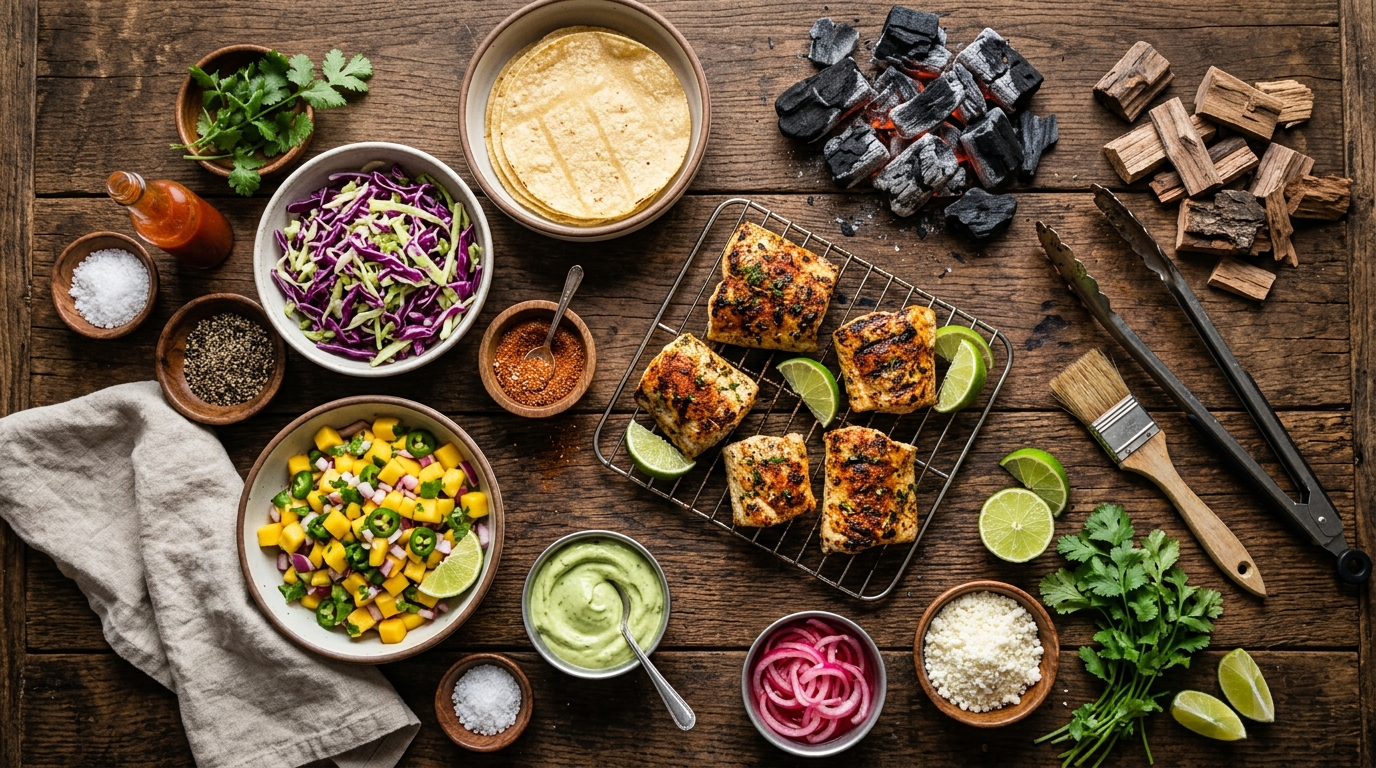
Ingredients
| AMOUNT | INGREDIENT | NOTES |
|---|---|---|
| 2 lbs | mahi mahi fillets | about 6 to 8 oz per fillet, skin removed, patted completely dry |
| 2 tablespoons | olive oil | for coating the fillets before seasoning |
| 1.5 teaspoons | smoked paprika | the backbone of the dry rub |
| 1 teaspoon | ground cumin | adds earthy warmth to the rub |
| 1 teaspoon | garlic powder | use fresh garlic powder for best punch |
| 0.5 teaspoon | onion powder | |
| 0.5 teaspoon | cayenne pepper | adjust up or down based on your heat preference |
| 1 teaspoon | kosher salt | do not use table salt |
| 0.5 teaspoon | black pepper | freshly cracked is best |
| 0.5 teaspoon | brown sugar | helps build a light bark and balances the heat |
| 8 pieces | corn tortillas | 6-inch size, warmed directly on the grill |
| 2 cups | green cabbage | finely shredded for the slaw base |
| 0.5 cup | red cabbage | adds color and crunch to the slaw |
| 0.25 cup | fresh cilantro | roughly chopped, plus more for garnish |
| 3 tablespoons | mayonnaise | base for the chipotle crema |
| 2 tablespoons | sour cream | mixed with mayo for the smoky crema |
| 1 piece | chipotle pepper in adobo sauce | finely minced, use 2 for more heat |
| 1 teaspoon | adobo sauce | from the chipotle can for extra smoky depth |
| 2 tablespoons | fresh lime juice | divided between slaw and crema |
| 1 teaspoon | honey | balances the acidity in the slaw dressing |
| 2 pieces | ripe avocados | sliced or roughly mashed with lime salt and cilantro |
| 1 piece | lime | cut into wedges for serving |
| 0.25 cup | pickled red onions | optional but highly recommended for brightness |
Instructions
Nutrition (per serving)
The BBQ Story Behind This Recipe
Fish tacos have deep roots in the coastal communities of Baja California, Mexico, where fishermen would grill or fry the fresh catch of the day and wrap it in a simple corn tortilla with whatever toppings were on hand. The tradition spread north into California in the 1980s, and by the time it hit the broader American food scene, the fish taco had become a coastal staple celebrated from San Diego to Miami. Mahi mahi, also known as dorado or dolphinfish, became a natural fit for this format thanks to its wide availability along both Atlantic and Pacific coastlines and its bold, meaty texture that holds up beautifully to high-heat cooking.
From a BBQ and grilling perspective, putting mahi mahi over live fire is a relatively modern evolution of the fish taco tradition, but it fits perfectly into the pitmaster mindset. Where Baja cooks traditionally relied on hot oil or a simple comal, American grill enthusiasts recognized early on that the Maillard reaction happening on a 450-degree grate produces layers of flavor that no frying pan can match. The char, the caramelization, the faint hint of smoke from hardwood charcoal or a few chunks of fruitwood – all of it elevates a humble taco into something worthy of a backyard cookoff. At GrillMasterHQ, we honor both the cultural roots and the fire-forward innovation that makes this dish a modern grilling classic.
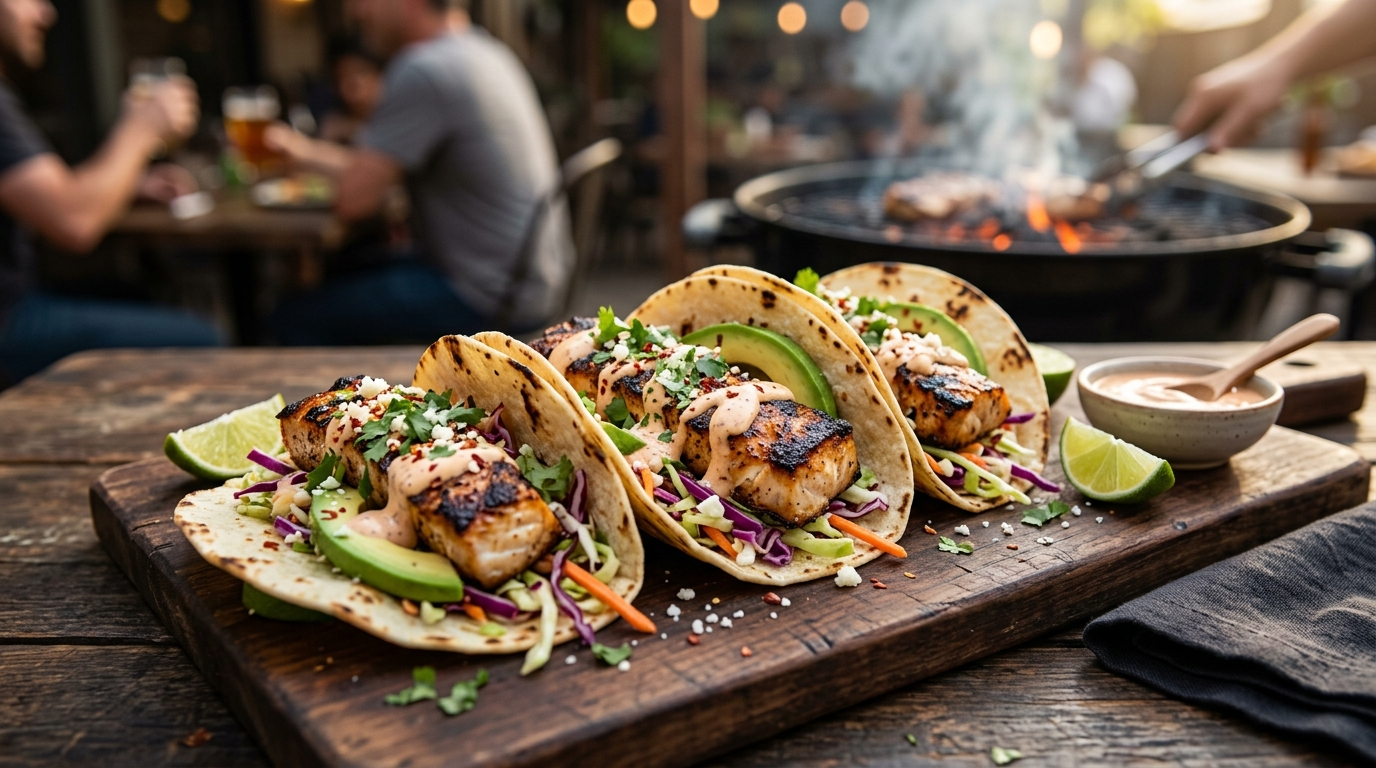
Hot Off the Grill
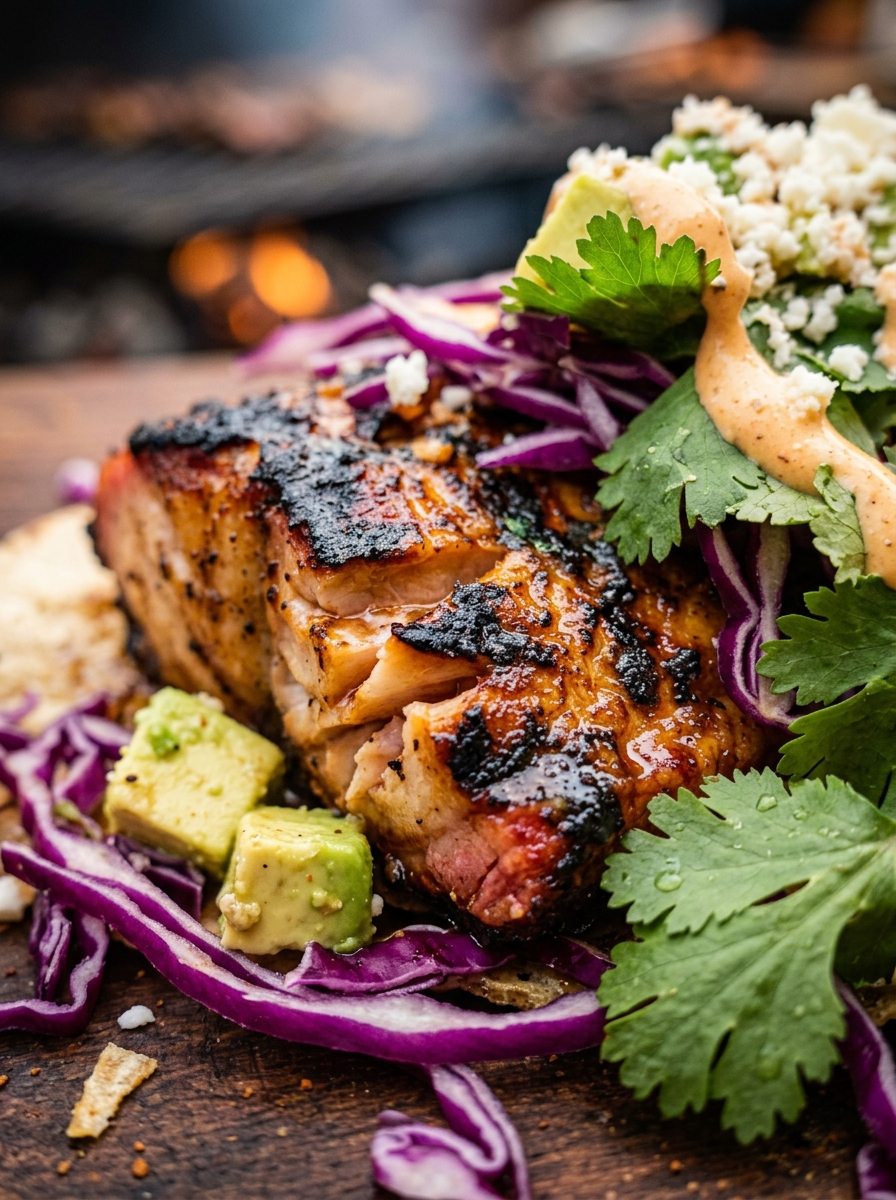
A Closer Look
Pitmaster Tips for Best Results
- Dry your fish completely before oiling and seasoning. Surface moisture is the number one reason grilled fish sticks to the grate and steams instead of searing. Paper towels, patience, and a dry surface equal perfect grill marks every time.
- Oil the grates, not just the fish. Use a vegetable oil-soaked paper towel held by long tongs to wipe the hot grates two or three times before laying the fish down. This combined with oiling the fish itself creates a nearly non-stick surface at high heat.
- Do not rush the flip. Set a timer for 3 minutes and walk away. The fish releases naturally when the crust has formed. If it feels like it is pulling and tearing when you try to flip it, give it another 30 to 60 seconds and try again.
- Chase 137 degrees Fahrenheit internal temp for mahi mahi. It carries over to the USDA-recommended 145 degrees during the 2-minute rest and you get perfectly moist, flaky fish instead of dry, rubbery fillets that spent too much time over the fire.
- Add a chunk of fruitwood – apple or cherry works great – to your charcoal coals about 5 minutes before the fish goes on. The light smoke from fruitwood complements the mild sweetness of mahi mahi without overpowering it, giving you that extra layer of flavor that separates a backyard cook from a pitmaster.
🔧 Pitmaster Equipment
Charcoal Grill or Gas Grill: A charcoal grill burning at 450 degrees gives the best char and subtle smoke flavor, but a gas grill with a smoker box works great too.
Instant Read Thermometer: Critical for hitting the perfect 137-degree internal temp so your mahi mahi is cooked through but still moist and flaky.
Long Tongs: Keep your hands safe while managing the fire and flipping the delicate fish fillets without breaking them apart.
Fish Spatula: A thin, flexible fish spatula slides cleanly under mahi mahi fillets and helps you flip them without losing that beautiful crust.
Grill Brush: A clean, well-oiled grate is essential for preventing fish from sticking and tearing when you flip.
Cast Iron Skillet or Comal: Perfect for warming your corn tortillas directly on the grill grate alongside the fish for that authentic charred edge.
🔥 Variations
Pellet Grill Version: Set your pellet grill to 450 degrees using a fruitwood pellet like apple or cherry. Let it come fully up to temp and stabilize, then follow the exact same steps. The pellet grill will add a consistent, mild smoke flavor to the fish during its short cook time that is absolutely incredible.
Gas Grill Version: Preheat all burners to high, then reduce to medium-high to hold 450 degrees. Add a smoker box filled with soaked apple wood chips to one of the burners to get smoke into the cook. Follow the same steps and you will get excellent char and a hint of smoke flavor even without charcoal.
Blackened Mahi Mahi Tacos: Double the cayenne and add 1 teaspoon of dried thyme and dried oregano to the rub for a classic blackened Cajun profile. Cast iron on the grill grate is perfect for this style – get a cast iron skillet ripping hot over direct flame and sear the fillets for 2 to 3 minutes per side in a little butter and oil for an intense, darkened crust.
Tropical Mango Salsa Version: Swap the chipotle slaw for a fresh mango salsa made with diced mango, red onion, jalapeno, lime juice, and cilantro. The sweetness of ripe mango against the smoky fire-kissed fish creates a Caribbean-inspired flavor combination that is absolutely stunning in summer.
Smoked Mahi Mahi Tacos: Set your smoker to 225 degrees using alder or cherry wood and smoke the seasoned fillets low and slow for 45 to 60 minutes until the internal temp hits 137 degrees. You will not get grill marks but you will get incredible smoke penetration and a delicate smoke ring around the edges of each fillet – absolutely worth it for a special occasion.
❓ Pitmaster FAQ
What internal temperature should mahi mahi reach on the grill?
Pull your mahi mahi off the grill at 137 degrees Fahrenheit. It will carry over to the USDA-recommended 145 degrees during the 2-minute rest. Always use an instant read thermometer probed into the thickest part of the fillet to confirm the temp before pulling it off the fire.
Can I use a gas grill instead of charcoal for this recipe?
Absolutely. Preheat your gas grill to medium-high heat to hold around 450 degrees, add a smoker box with wood chips for some smoke flavor, and follow the exact same steps. You will get excellent grill marks and great flavor – the key is getting that grate hot enough before the fish ever touches it.
How do I keep mahi mahi from sticking to the grill grates?
Three things prevent sticking every time. First, make sure your grates are scrubbed clean and preheated fully. Second, oil the grates with a vegetable oil-soaked paper towel two or three times using long tongs right before the fish goes on. Third, oil the fish itself. And finally, do not try to flip too early – the fish releases naturally when the crust has formed.
What is the best fish to substitute if I cannot find mahi mahi?
Swordfish, halibut, and grouper are all excellent substitutes because they share that dense, meaty texture that holds up on a hot grill without falling through the grates. Tilapia and cod will also work but are more delicate, so handle them carefully during the flip and consider using a grill basket or foil boat for extra insurance.
Can I prep any of these taco components ahead of time?
Yes. The chipotle crema keeps well in the refrigerator for up to 5 days in a sealed container. The slaw can be made up to 24 hours ahead – it will soften slightly which is actually great for tacos. The dry rub can be mixed weeks in advance. The only thing you want to cook fresh is the mahi mahi itself, as grilled fish does not reheat well and is always best eaten immediately off the grill.
How thick should my mahi mahi fillets be for the grill?
Aim for fillets that are at least 1-inch thick. Thinner fillets cook too fast over high heat and can dry out or fall apart before you get proper grill marks. If your fillets are thin, consider using a grill basket or grilling them on a piece of oiled foil to make the cook more manageable.