
Mesquite wood smoking tips are the secret weapon behind some of the most legendary BBQ ever pulled off a pit, and if you are ready to unlock that bold, earthy, unmistakable smoke flavor, you have come to the right place. Mesquite burns hot and fast compared to other smoking woods, reaching combustion temps that can push past 1000 degrees Fahrenheit if you are not careful, so understanding how to control your fire is everything. Used correctly at a steady smoker temp of 225 to 250 degrees Fahrenheit, mesquite transforms a brisket, rack of ribs, or whole chicken into something that tastes like it rolled straight out of a West Texas pit.
The key with mesquite is respect. This wood produces a thick, pungent smoke that is two to three times more intense than milder fruitwoods like apple or cherry. That means a little goes a long way. Most seasoned pitmasters blend mesquite with a neutral hardwood like oak or pecan to dial in the smoke without crossing the line into bitter territory. A common ratio is one part mesquite to two parts oak, giving you that signature punch while keeping the flavor profile clean and balanced on long cooks of six hours or more.
Whether you are working a traditional offset smoker, a kettle grill, or a modern pellet rig, mesquite wood can absolutely be part of your arsenal. You just need to manage your wood load, monitor your internal temp with a reliable thermometer, and let the low and slow process do its magic. By the end of this guide, you will know exactly how to select your mesquite, prep your fire, pair it with the right proteins, and pull off competition-worthy BBQ right in your own backyard.
Mesquite Wood Smoking Tips for Bold BBQ Flavor
Mesquite wood smoking delivers the boldest, most iconic BBQ flavor in the game. Learn how to harness that intense smoke without overpowering your meat. From wood selection to perfect internal temp, this guide gives you every tool to fire up the grill today.
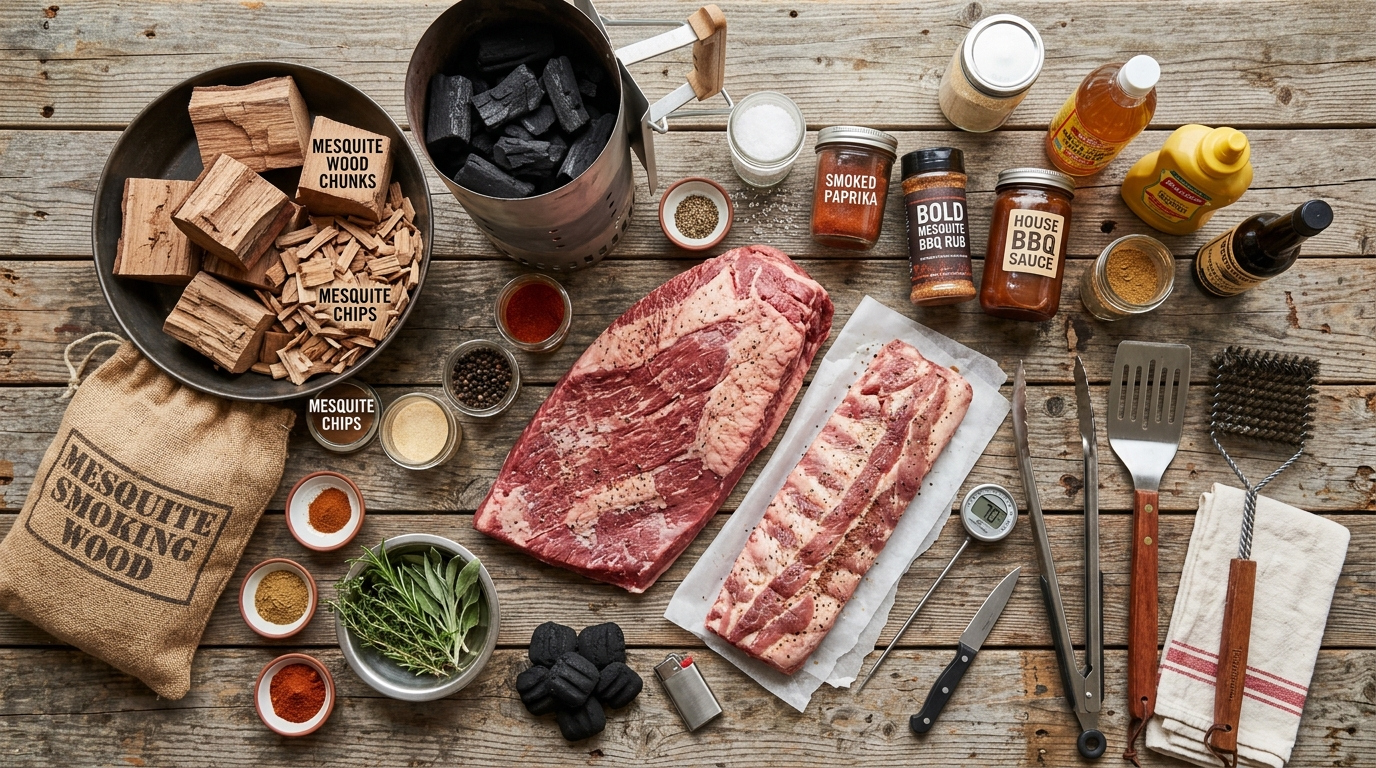
Ingredients
| AMOUNT | INGREDIENT | NOTES |
|---|---|---|
| 4 lbs | beef brisket flat | choice or prime grade, fat cap trimmed to one quarter inch thickness |
| 3 chunks | mesquite wood | fist-sized chunks, not chips, for a sustained 4 to 6 hour smoke |
| 4 chunks | post oak wood | blended with mesquite at a 2-to-1 oak-to-mesquite ratio to balance intensity |
| 2 tablespoons | coarse kosher salt | use one half tablespoon per pound of meat for proper seasoning penetration |
| 2 tablespoons | coarse black pepper | fresh cracked, 16-mesh preferred for authentic Texas bark formation |
| 1 tablespoon | garlic powder | optional third ingredient for a classic SPG rub |
| 1 tablespoon | neutral cooking oil | to bind the rub and help bark development |
| 2 cups | water or apple cider vinegar | for the drip pan beneath the brisket to maintain smoker humidity |
Instructions
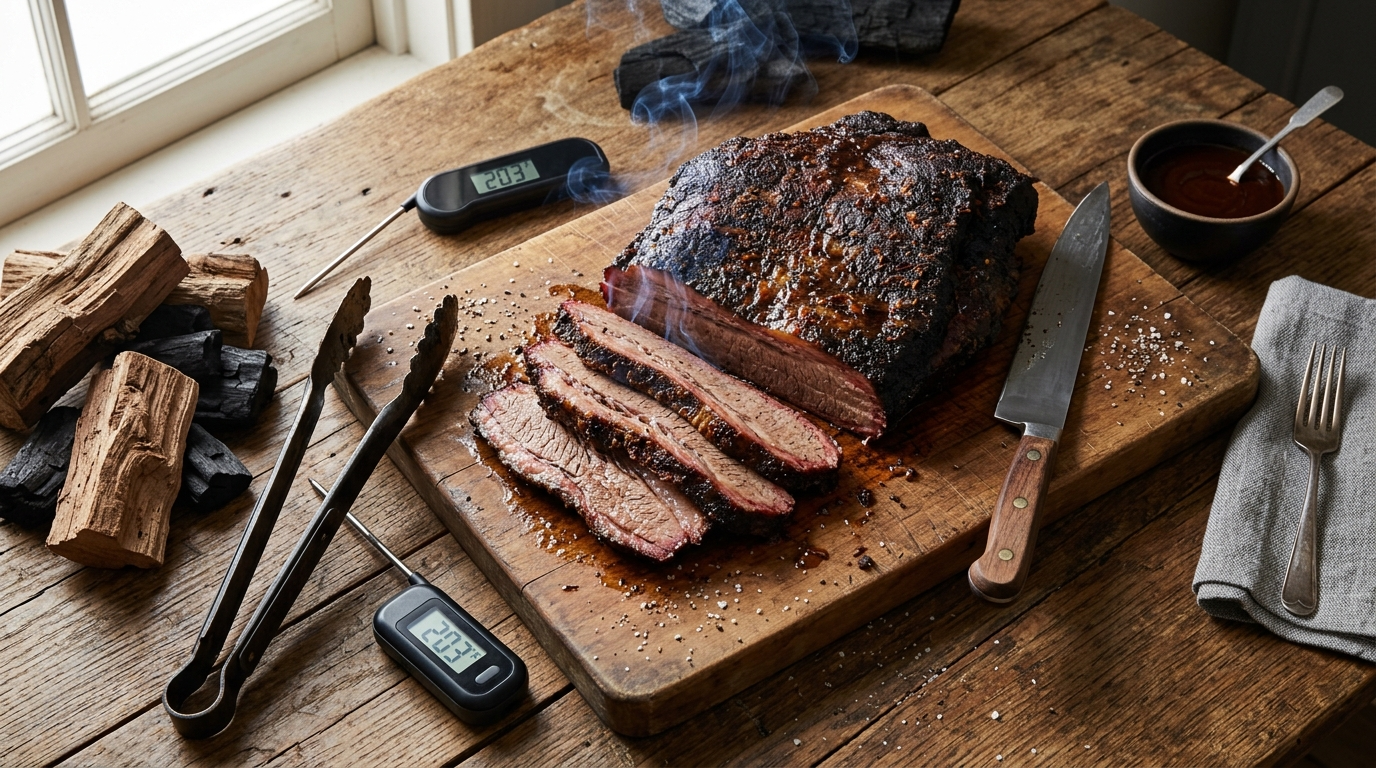
Nutrition (per serving)
The BBQ Story Behind This Recipe
Mesquite wood smoking is deeply rooted in the culinary traditions of the American Southwest and Northern Mexico, where mesquite trees grow wild and abundant across millions of acres of desert scrubland. Indigenous peoples of the region, including the Apache and Comanche, were among the first to use mesquite as a cooking fuel, relying on its intense heat and aromatic smoke to cook game meat over open fires. As cattle ranching expanded through Texas in the 1800s, cowboy cooks known as chuckwagon cooks adopted mesquite as their primary fuel source simply because it was everywhere and it burned hot enough to cook large cuts fast after long days on the trail.
The tradition of mesquite smoking became most formalized in Texas BBQ culture, particularly in the western and central regions of the state where oak transitions to mesquite as the dominant hardwood. Legendary pit towns like Llano and Lockhart built their reputations partly on the distinctive smoke character that mesquite imparts to beef brisket and beef ribs. Over time, the technique spread beyond Texas borders, influencing the BBQ scenes of New Mexico, Arizona, and northern Mexico where grilling over live mesquite coals remains a point of deep cultural pride. Today, mesquite wood and mesquite-flavored products are sold across the country, but nothing replicates the experience of burning real mesquite logs in a proper pit smoker.
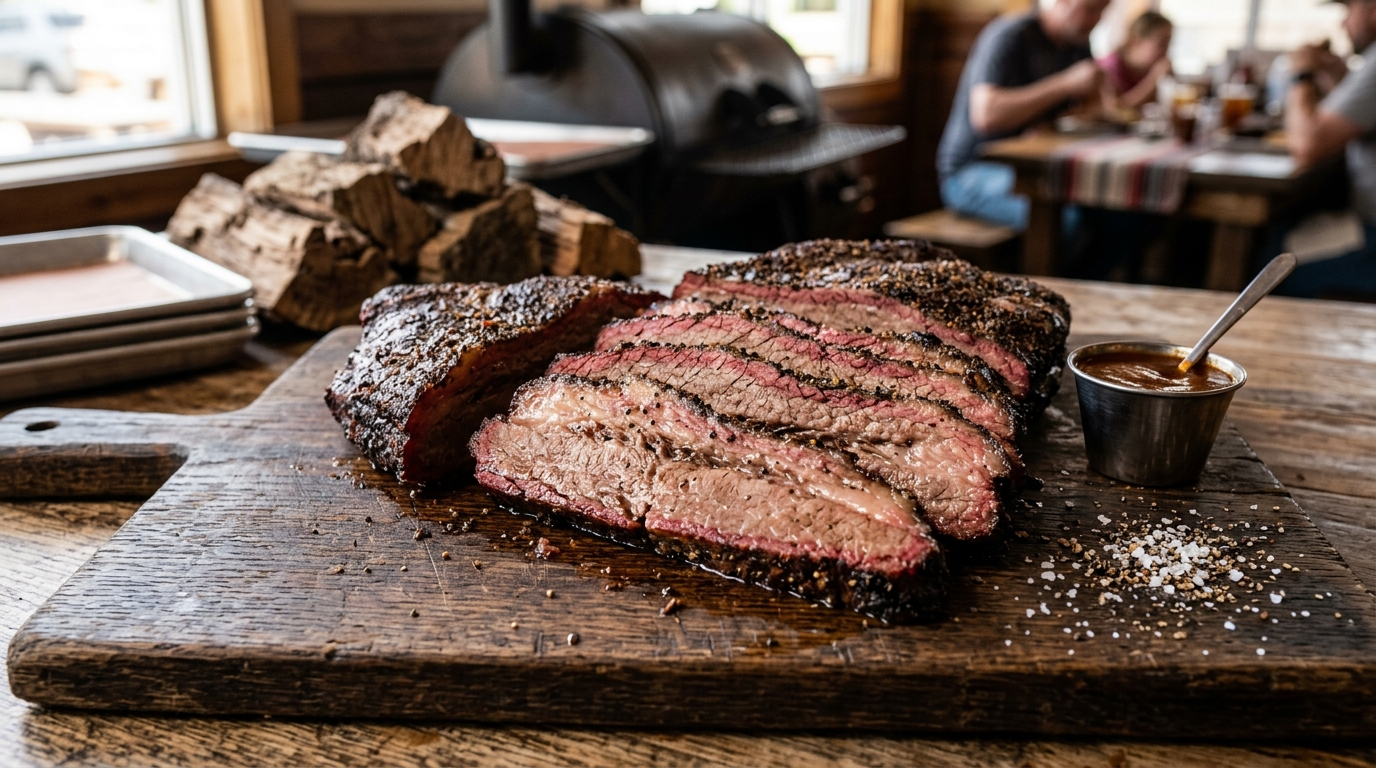
Hot Off the Grill
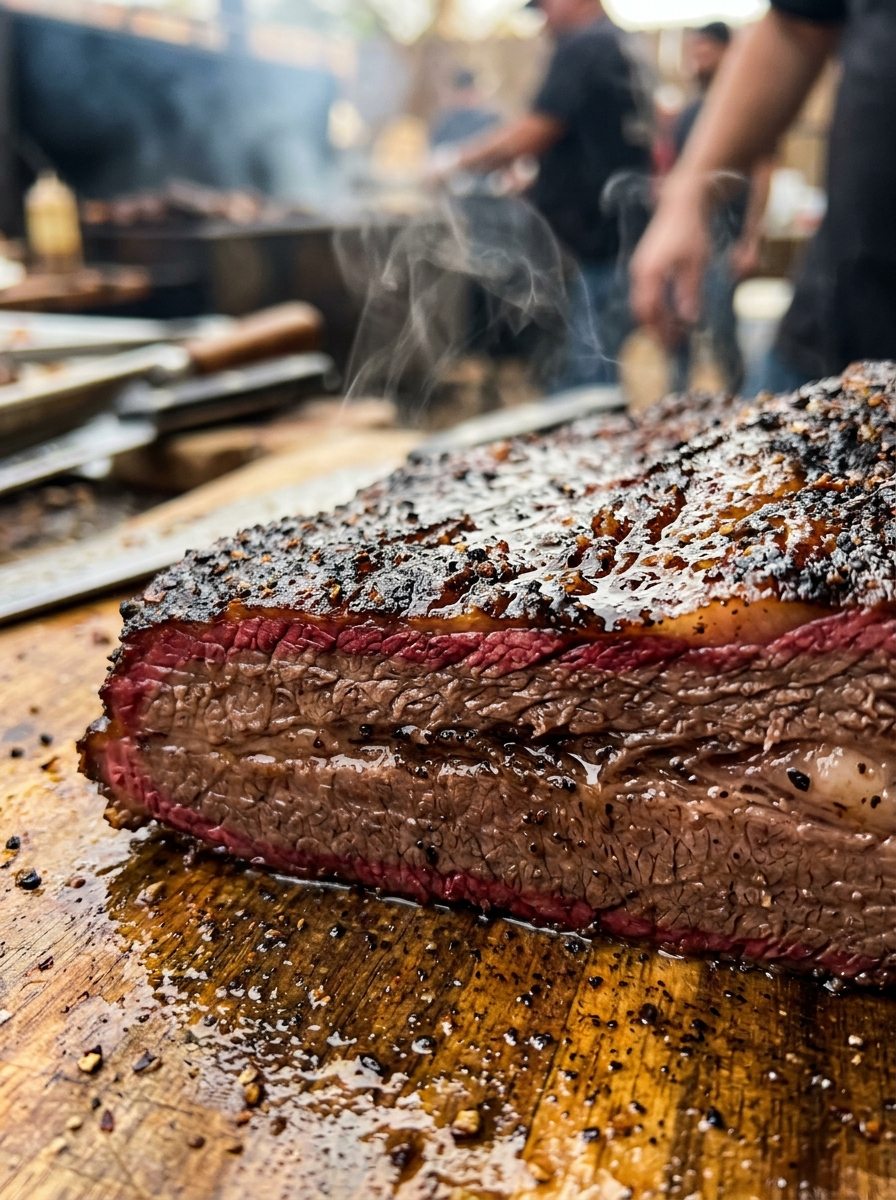
A Closer Look
Pitmaster Tips for Best Results
- Always blend mesquite with a neutral hardwood like post oak or hickory at a 2-to-1 ratio on cooks longer than 3 hours. Pure mesquite smoke for extended periods results in a bitter, almost medicinal flavor that overpowers the meat rather than complementing it.
- Chase thin blue smoke, never thick white smoke. If your smoker is billowing white clouds, your wood is smoldering rather than burning cleanly. Open the intake vents to increase airflow and let the fire breathe until the smoke thins out to that faint blue wisp that means clean combustion.
- Keep your smoker temp in the 225 to 250 degrees Fahrenheit window and use a thermometer mounted at grate level, not the dome thermometer that came with your unit. Dome thermometers often read 20 to 50 degrees Fahrenheit hotter than actual grate temperature where your meat is sitting.
- Mesquite wood chunks work significantly better than chips for long low and slow cooks. Chunks the size of your fist burn for 45 to 60 minutes each, while chips burn out in 10 to 15 minutes and require constant reloading. Save the chips for quick cooks of 30 minutes or less on a kettle or gas grill.
- The stall is real and mesquite will not speed it up. Most large cuts like brisket and pork shoulder hit a stall between 155 and 170 degrees Fahrenheit where the internal temp stops rising for 1 to 3 hours due to evaporative cooling. Do not panic and crank your heat. Stay patient, hold your temp steady, and let the low and slow process push through it naturally or use the wrap method to power through.
🔧 Pitmaster Equipment
Offset Smoker or Kettle Grill: The ideal setup for mesquite wood smoking, giving you precise firebox control and proper airflow to manage mesquite’s intense combustion rate.
Instant Read Thermometer: Mesquite heat can spike unexpectedly so monitoring both your smoker chamber temp and meat internal temp is non-negotiable for perfect results.
Long Tongs and Heat Resistant Gloves: Mesquite burns hot and produces live embers, so long tongs and gloves rated to at least 932 degrees Fahrenheit keep you safe at the fire.
Chimney Starter: Get your charcoal base fire going cleanly before adding mesquite chunks so you are never cooking over raw unlit wood that produces bitter acrid smoke.
Wireless Dual Probe Thermometer: Monitor your smoker ambient temp and meat internal temp simultaneously without lifting the lid and losing precious smoke and heat.
Drip Pan with Water: Placing a water pan in the smoker adds humidity that softens mesquite smoke slightly and helps develop a beautiful bark on large cuts.
Butcher Paper or Foil: Wrapping your meat mid-cook is the Texas Crutch method that locks in moisture once the bark has fully set, especially useful with mesquite-smoked brisket.
🔥 Variations
Pellet Grill Version: Load your pellet hopper with a blend of mesquite and oak pellets mixed together, or use a dedicated mesquite blend pellet product. Set your pellet grill to 225 degrees Fahrenheit and follow the exact same steps. Pellet grills produce a lighter smoke profile than stick burners so you can lean more heavily toward the mesquite side of your blend, up to 50 percent, without overwhelming the meat. The bark development will be slightly softer but still excellent.
Gas Grill Version: Soak one cup of mesquite wood chips in water for 30 minutes, then drain them and load them into a cast iron smoker box or a foil pouch with holes poked in the top. Place the smoker box directly over one burner set to high until smoke begins, then reduce that burner to low and set up indirect heat on the opposite side. Maintain a chamber temp of 225 to 250 degrees Fahrenheit and refresh your wood chips every 45 minutes. You will get a lighter mesquite character but still a genuinely smoky result.
Chicken and Poultry Version: For chicken, turkey, or game birds, use far less mesquite, no more than one small chunk per cook. Poultry absorbs smoke extremely aggressively and mesquite on chicken can turn bitter fast. A single small mesquite chunk mixed with two apple or cherry chunks gives you a beautifully balanced sweet and earthy smoke profile. Cook bone-in chicken thighs at 275 degrees Fahrenheit to an internal temp of 175 degrees Fahrenheit for the best combination of smoke ring, crispy skin, and juicy meat.
Mesquite Smoked Beef Ribs Version: Beef back ribs or beef plate short ribs are born for mesquite smoke. Trim the silver skin membrane from the back of the ribs and apply a heavy coat of salt, pepper, and garlic rub. Smoke at 250 degrees Fahrenheit using a 50-50 mesquite and oak blend for 6 to 8 hours until the internal temp hits 200 to 205 degrees Fahrenheit and the bones are starting to pull away. No wrap needed on beef ribs. Let the bark build uninterrupted and you will end up with ribs that look like they came out of a professional competition pit.
❓ Pitmaster FAQ
What internal temperature should mesquite smoked brisket reach?
Target an internal temp of 200 to 205 degrees Fahrenheit for brisket, but the real test is probe tenderness. When your thermometer probe slides into the thickest part of the flat with zero resistance, like pushing into softened butter, the brisket is ready regardless of the exact number. Always use a calibrated instant read or wireless probe thermometer and never rely on time alone.
Can I use mesquite wood for smoking pork?
Yes, but use it sparingly with pork. Pork absorbs smoke more aggressively than beef and mesquite is already one of the most intense smoking woods available. For pork ribs, shoulder, or tenderloin, blend one part mesquite with three parts fruitwood like apple or cherry. This gives you a subtle earthy depth without the bitterness that comes from heavy mesquite exposure on longer pork cooks.
What is the difference between mesquite wood chips and mesquite chunks?
Mesquite wood chips are thin and small, burning out completely in 10 to 15 minutes. They are ideal for quick cooks under 30 minutes on gas grills with a smoker box. Mesquite chunks are fist-sized pieces of wood that burn steadily for 45 to 60 minutes and are the correct choice for any low and slow cook in an offset smoker, kettle, or kamado grill. Using chips on a long cook means constant reloading and inconsistent smoke output.
Why does my mesquite smoked meat taste bitter?
Bitterness from mesquite smoke almost always comes from one of three causes. First, you are using too much mesquite without blending it with a neutral wood. Second, your fire is smoldering and producing thick white smoke rather than burning cleanly with thin blue smoke. Third, you loaded green or unseasoned mesquite wood that has not fully dried. Always use properly seasoned dry mesquite, blend it with oak or another neutral hardwood, and chase clean blue smoke by managing your airflow and not overloading your firebox.
How long should I rest mesquite smoked brisket before slicing?
Rest the meat for a minimum of 60 minutes and ideally 90 to 120 minutes for a full brisket. Wrap it in butcher paper or foil and place it in a towel-lined cooler to hold temperature during the rest. This resting period is not optional. It is when the muscle fibers relax and the internal juices redistribute throughout the entire cut. Slicing immediately after pulling from the smoker results in dry, tough brisket because all the moisture runs out onto the board before you can eat it.