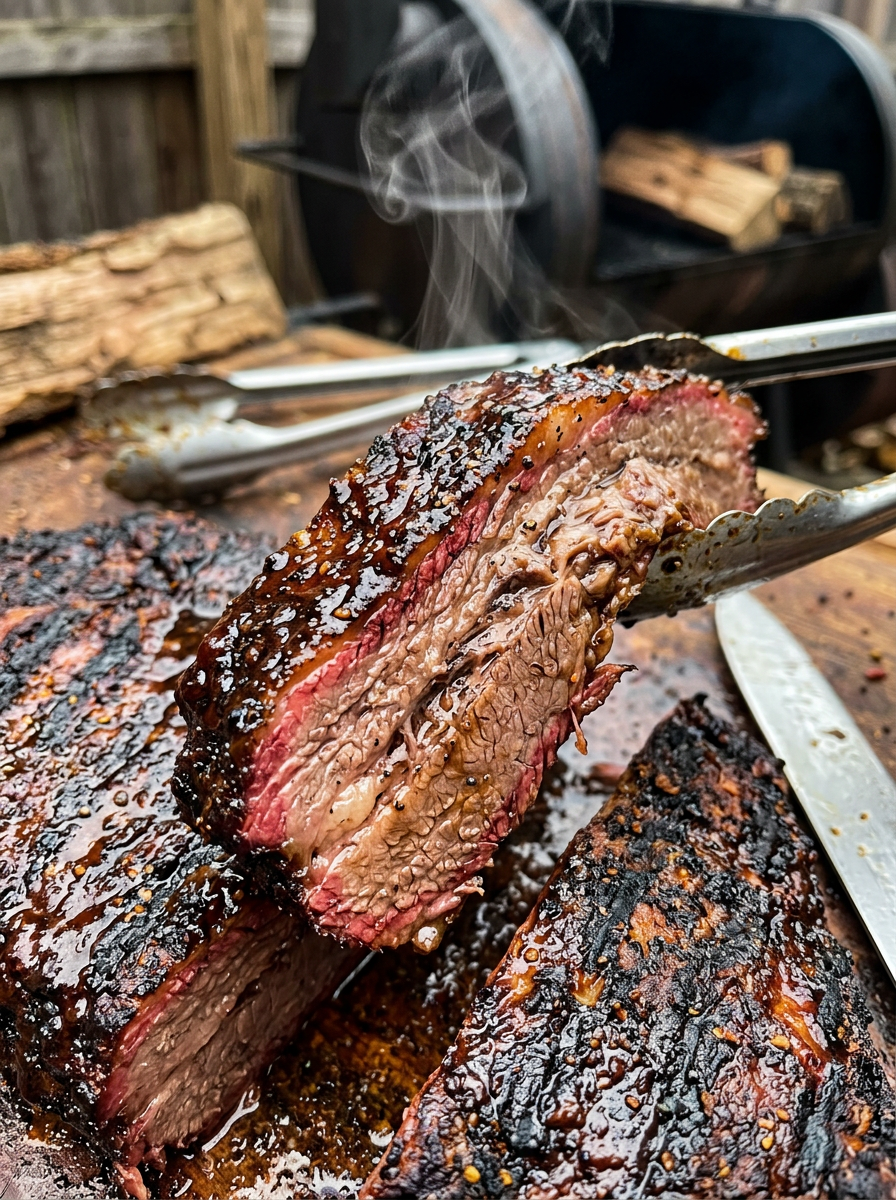
This overnight brisket smoke guide is the blueprint every backyard pitmaster needs to produce competition-worthy beef brisket right in their own driveway. Brisket is the ultimate test of patience and fire craft, demanding a steady hold between 225 and 250 degrees Fahrenheit for anywhere from 12 to 16 hours depending on the size of your packer cut. When you commit to that overnight journey, you are rewarded with a deep mahogany bark, a vivid pink smoke ring that runs a quarter inch deep into the meat, and slices so tender they nearly fall apart under the weight of the knife.
The secret that separates legendary pitmasters from weekend grillers is understanding that brisket does not care about your schedule. A full packer brisket weighing 14 to 16 pounds will stall hard around 160 to 170 degrees Fahrenheit, sometimes for two to four hours, as moisture evaporates from the surface and cools the meat. Most beginners panic and crank the heat, which ruins everything. Experienced pitmasters know to push through that stall with confidence, optionally wrapping in butcher paper around 165 degrees to power through without sacrificing bark integrity. That wrap technique, often called the Texas Crutch, is your best friend during the long overnight haul.
Getting set up before midnight is the move that separates good brisket from great brisket. You want your fire established, your wood chunks loaded, and your smoker holding a rock-solid 250 degrees before that brisket ever touches the grate. Oak and post oak are the gold standard for Texas-style beef brisket, delivering a clean, medium-strength smoke that builds flavor over 12-plus hours without turning bitter. Set up a remote dual-probe thermometer, one probe in the flat of the brisket and one monitoring your pit temp, and you can sleep a few hours while your smoker does the heavy lifting.
Overnight Brisket Smoke Guide: Pitmaster Secrets
This overnight brisket smoke guide reveals every pitmaster secret you need to pull off a jaw-dropping low and slow cook. From fire management to that perfect bark, we cover every step so you can fire up the smoker with total confidence tonight.
Ingredients
| AMOUNT | INGREDIENT | NOTES |
|---|---|---|
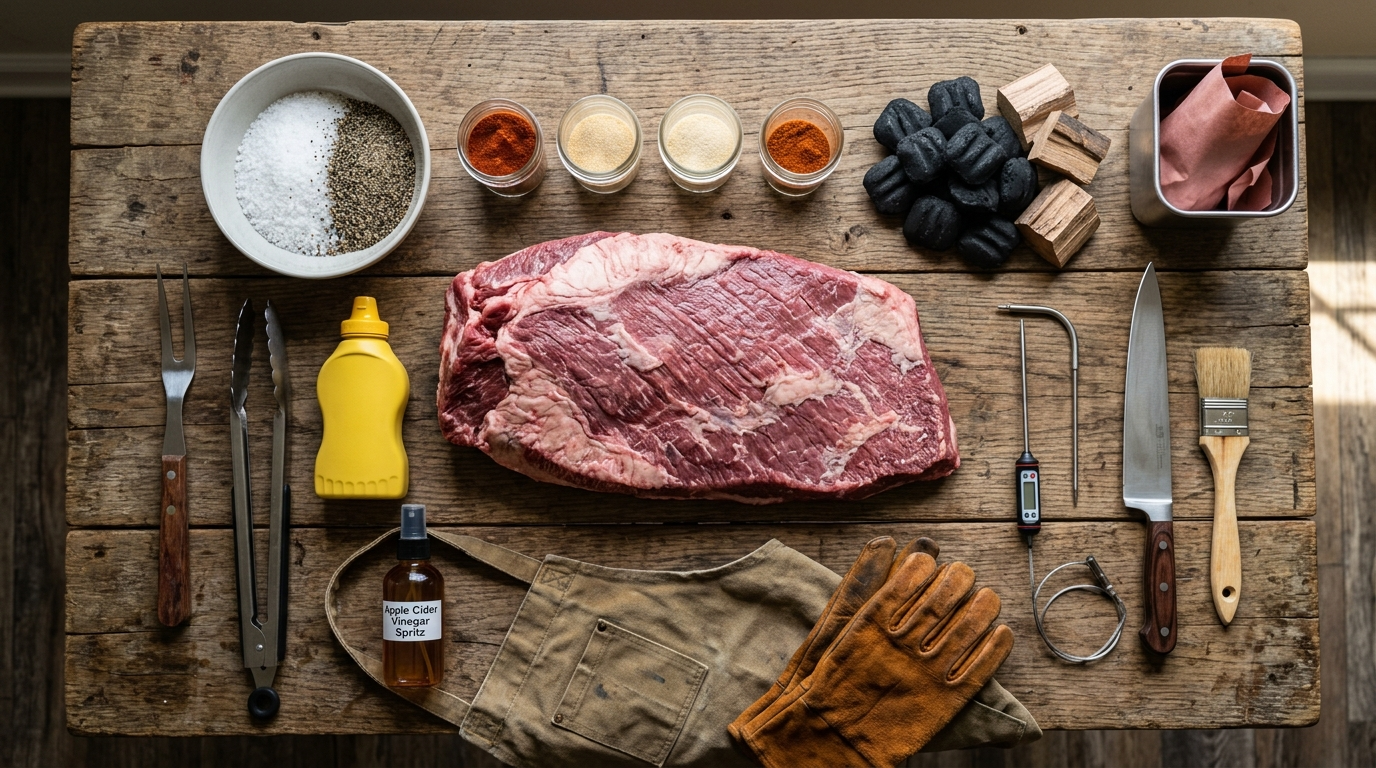
| 1 whole packer | beef brisket (14 to 16 lbs) | choose USDA Choice or Prime grade with a thick, even fat cap for best results |
| 1/3 cup | coarse kosher salt | Diamond Crystal brand preferred by most competition pitmasters |
| 1/3 cup | coarse black pepper (16-mesh) | freshly cracked for the most authentic Central Texas bark |
| 2 tablespoons | garlic powder | optional but adds subtle depth to the bark |
| 1 tablespoon | smoked paprika | optional, adds color to the rub and bark layer |
| 1 tablespoon | onion powder | optional for added savory complexity |
| 6 to 8 large chunks | post oak or white oak wood | fist-sized chunks, not chips, for a sustained smoke over 12-plus hours |
| 1 large bag | hardwood lump charcoal | at least 20 lbs to fuel an overnight cook, briquettes work as a budget alternative |
| 2 sheets | unlined pink butcher paper | cut to approximately 4 feet each for wrapping, do not use foil as a first choice |
| 2 tablespoons | yellow mustard or plain beef tallow | used as a binder to help the rub adhere to the meat surface |
Instructions
Nutrition (per serving)
The BBQ Story Behind This Recipe
Brisket smoking in America traces its roots back to Central Texas in the late 1800s, where Czech and German immigrant butchers smoked unsold cuts of beef over post oak to preserve the meat and feed the working class. Meat markets in towns like Lockhart, Luling, and Taylor became legendary over generations, serving smoked brisket on butcher paper with no sauce, no sides, and absolutely no apology. That no-frills tradition became the foundation of what the world now recognizes as Texas-style BBQ, and brisket became the undisputed king of the smoke pit. The simplicity of salt, pepper, smoke, and fire transformed the cheapest, toughest cut on the steer into the most coveted plate in American barbecue.
Overnight smoking as a dedicated technique became popularized as competitive BBQ circuits expanded across the South and Midwest throughout the 1970s and 1980s. Teams competing in events like the American Royal in Kansas City and the Houston Livestock Show and Rodeo quickly realized that rushing a brisket was a guaranteed path to a tough, dry result. The overnight cook became standard practice, giving the connective tissue and intramuscular fat the time they need to fully render and transform a tough working muscle into something extraordinary. Today the overnight brisket smoke is a rite of passage for any serious pitmaster, a meditative process that connects modern grillers to a century-old tradition of patience, fire, and craft.
Hot Off the Grill
A Closer Look
Pitmaster Tips for Best Results
- Always buy a full packer brisket (both the flat and the point attached) rather than just a flat. The point muscle is rich in intramuscular fat and keeps the flat moist during the long overnight smoke. A flat-only brisket dries out far more easily over 12-plus hours.
- Keep a spray bottle filled with equal parts apple cider vinegar and water near your smoker. Every two hours after the first four hours, give the exposed bark surface a light spritz to keep moisture on the surface and encourage better bark development without washing off your rub.
- Never let your fire go out during the overnight cook. Set a repeating alarm on your phone every 60 to 90 minutes so you can check and reload fuel and wood before the temp drops. A single cold soak where the pit drops below 200 degrees can add unpredictable hours to your cook and compromise the final texture.
- The grain direction of the flat and the grain direction of the point run in different directions on a packer brisket. Before you start cooking, take a photo of the raw brisket with the grain lines visible so you know exactly how to slice each muscle correctly after the cook when everything looks different.
- When your brisket is resting in the cooler, add two or three old clean towels or thick kitchen rags around the wrapped brisket to increase insulation. This keeps the internal temp above 150 degrees for two to three hours without any external heat source, giving you a flexible serving window on the back end of your overnight cook.
🔧 Pitmaster Equipment
Offset Smoker or Kettle Smoker: An offset smoker provides the best airflow and wood-fired heat for a true overnight low and slow brisket cook with authentic smoke flavor.
Dual-Probe Remote Thermometer: Absolutely essential for monitoring both pit temperature and internal meat temp throughout the night without opening the lid.
Long Heavy-Duty Tongs: Keep your hands safe when positioning a 14 to 16 pound brisket on the grate and managing hot wood chunks in the firebox.
Butcher Paper (Unlined Pink): Used for the Texas Crutch wrap at the stall point around 165 degrees, helping push through without softening your hard-earned bark.
Chimney Starter: Gets your charcoal lit fast and clean without lighter fluid, which can impart off-flavors to your meat during a long smoke.
Insulated Cooler (Large): Used to rest the finished brisket for one to two hours, holding it at serving temp and letting the juices redistribute fully.
Sharp Brisket Slicing Knife: A long slender blade allows clean slices against the grain, which is critical to tender, pull-apart brisket slices.
Heat-Resistant Gloves: Protect your hands when wrapping a hot brisket in butcher paper mid-cook or moving the meat at the end of the overnight session.
🔥 Variations
Pellet Grill Overnight Version: Set your pellet grill to 250 degrees using a competition blend or pure post oak pellets. Load the hopper completely before bed and enable the high-temp alarm on your controller. The process follows every step of this overnight brisket smoke guide identically, though pellet grills tend to produce a lighter smoke ring due to the cleaner burn. Some pitmasters add a smoke tube loaded with wood pellets placed on the grate for added smoke density during the first four hours.
Texas Hill Country Style: Skip all spices except salt and coarse black pepper in a 50-50 ratio. This is the purest form of Central Texas brisket, where the only flavors come from the beef itself, the salt-and-pepper bark, and the post oak smoke. Use only post oak or white oak wood with zero fruit wood blending. Serve with no sauce at all. If the brisket needs sauce, the cook is not yet ready to call themselves a pitmaster.
Kansas City Sweet Bark Version: Add two tablespoons of brown sugar and one teaspoon of cayenne pepper to the rub blend. During the last 30 minutes of the cook, brush on a thin layer of Kansas City-style molasses BBQ sauce and return the unwrapped brisket to the smoker to set the glaze. This creates a sweet, sticky, lacquered bark with a gentle heat that plays beautifully against the deep beef flavor.
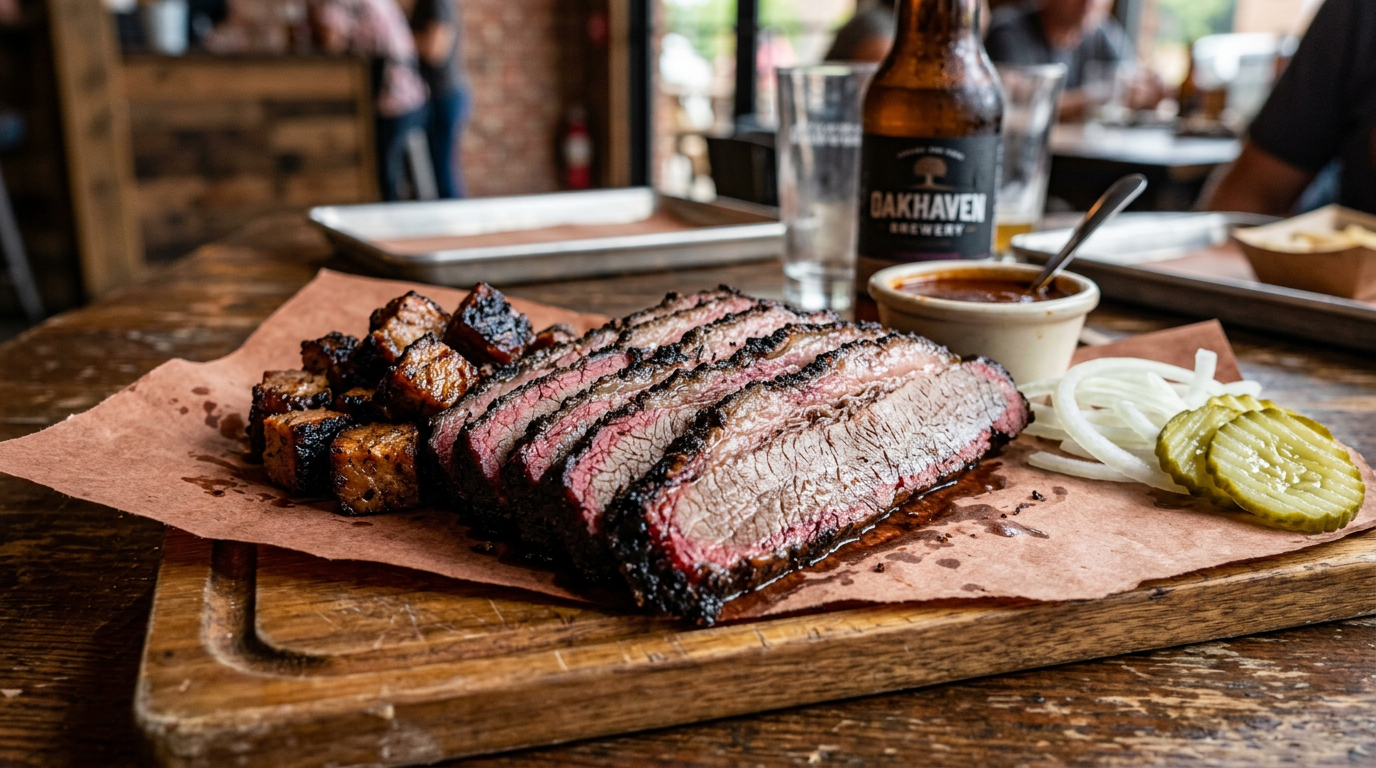
Whole Brisket Burnt Ends Finish: After slicing the flat for serving, cube the entire point muscle into one-and-a-half-inch cubes and place them in a cast iron skillet or aluminum half pan. Toss with two tablespoons of butter, three tablespoons of your favorite BBQ sauce, and one tablespoon of honey. Return the pan to the smoker at 275 degrees for 45 minutes to one hour, stirring once halfway through, until the cubes are caramelized and nearly falling apart. These burnt ends are the reward every pitmaster lives for at the end of a long overnight cook.
❓ Pitmaster FAQ
What is the best internal temperature to pull a brisket off the smoker?
The target internal temp for brisket is 200 to 205 degrees Fahrenheit in the thickest part of the flat, but the real test is the probe test. Slide your instant-read thermometer into the flat with zero pressure applied. When it glides in with no resistance at all, like pushing into soft butter, your brisket is done regardless of what the number says. Some briskets pass the probe test at 198 degrees and some stubborn cuts need 207 degrees, so always trust feel over number alone.
Can I start the brisket the next morning instead of overnight?
You can, but you lose the key advantages of the overnight smoke. A 14 to 16 pound packer brisket needs 12 to 16 hours at 250 degrees plus a two-hour rest, meaning a morning start often pushes your meal into late night. The overnight cook aligns your longest sleep window with the most hands-off phase of the smoke, typically hours four through eight, making it far more manageable and comfortable for the pitmaster.
Should I wrap the brisket in foil or butcher paper?
Pink unlined butcher paper is the preferred choice for most pitmasters following an authentic overnight brisket smoke guide. Foil traps all moisture and steam tightly, which can soften and even steam away the bark you worked all night to build. Butcher paper allows a small amount of vapor to escape, preserving bark texture while still speeding the brisket through the stall. If you do not have butcher paper, foil is still a valid option, just be prepared for a softer outer bark.
How do I keep my smoker at a steady temperature all night?
Start with a full, well-established fire before adding the brisket. Use large lump charcoal chunks or high-quality briquettes that burn longer and more consistently. Set a repeating phone alarm every 60 to 90 minutes to check and reload fuel. Keep all your vents in the same position unless the temp drifts more than 15 degrees from your target. Making small, gradual vent adjustments is far more effective than dramatic changes that cause overshooting in either direction.
How long should I rest the brisket after pulling it from the smoker?
A minimum of one full hour is required, and two hours is strongly recommended. Wrap the brisket in butcher paper and place it inside a large insulated cooler with the lid closed and no ice. This holds the internal temp safely above 150 degrees while allowing the muscle fibers to fully relax and the rendered gelatin to redistribute through the meat. Cutting into a brisket that has not rested properly results in all those precious juices flooding onto your cutting board instead of staying in every slice.
What wood is best for an overnight brisket smoke?
Post oak is the traditional and most widely respected choice for Texas-style beef brisket. It delivers a medium-strength, clean smoke with an earthy, slightly sweet character that complements beef without overwhelming it over a 12-plus hour cook. White oak is an excellent substitute. Hickory works but can turn bitter over a very long smoke, so use it sparingly if at all. Avoid mesquite for overnight cooks as its intense, pungent smoke becomes acrid and bitter at long exposure times.