
This grilled jerk chicken recipe is the kind of cook that stops neighbors in their tracks the moment that marinade hits the hot grates and that intoxicating aroma of allspice, scotch bonnets, and charred skin rolls across the yard. We are talking about a two-zone fire running around 375 degrees Fahrenheit on the indirect side, bone-in skin-on thighs soaking in a 12-hour marinade, and a final sear over screaming hot coals that locks in every last bit of that bold Jamaican flavor. This is not a weeknight shortcut recipe. This is a weekend ritual.
Jerk chicken done right is all about patience and layers. The marinade does the heavy lifting overnight, driving scotch bonnet heat, warm allspice, fresh thyme, and savory soy deep into the meat. Then the grill does its job, building a gorgeous caramelized bark on the outside while the inside slowly climbs to a safe internal temp of 165 degrees Fahrenheit. You are not just cooking chicken. You are building flavor from the inside out, and every stage of this cook matters from the first marinade ingredient to the final two-minute rest off the fire.
At GrillMasterHQ we have tested this cook on charcoal kettles, offset smokers, ceramic kamados, and gas rigs with smoker boxes, and the verdict is always the same: the grilled jerk chicken recipe with live charcoal and a handful of allspice wood chips wins every single time. The smoke ring you will see when you slice into a thigh is proof that you did something right. So gather your ingredients, fire up the grill, and let us walk you through every step of one of the greatest chicken cooks in the world.
Grilled Jerk Chicken Recipe: Bold Jamaican Flavors
This grilled jerk chicken recipe delivers authentic Jamaican heat, smoky char, and deep spice penetration that store-bought marinades can never touch. With the right technique and a live fire, you will have the most flavorful bird of your life. Fire up the grill and taste the difference today.
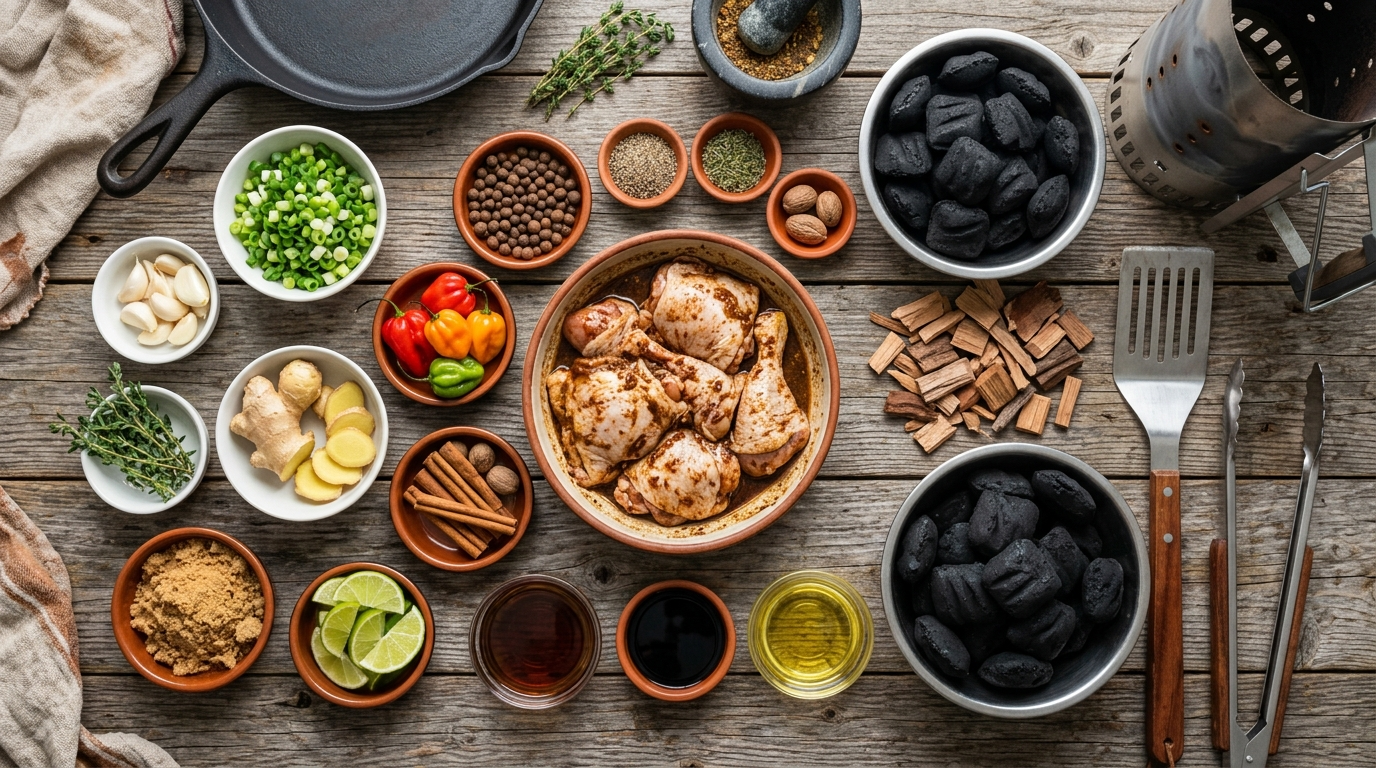
Ingredients
| AMOUNT | INGREDIENT | NOTES |
|---|---|---|
| 3.5 lbs | bone-in skin-on chicken thighs | approximately 6 to 8 pieces, trim excess fat but keep skin on for protection and flavor |
| 4 whole | scotch bonnet peppers | seeds removed for medium heat, keep seeds in for serious fire lovers |
| 6 cloves | fresh garlic | roughly chopped |
| 1 inch | fresh ginger root | peeled and roughly chopped |
| 6 whole | green onions | roughly chopped, white and green parts both used |
| 2 tablespoons | ground allspice | fresh ground from whole berries if possible for maximum flavor |
| 1 tablespoon | dried thyme | or 2 tablespoons fresh thyme leaves |
| 1 tablespoon | brown sugar | dark brown for deeper molasses flavor |
| 2 tablespoons | low sodium soy sauce | adds umami and salt balance to the marinade |
| 2 tablespoons | fresh lime juice | roughly 2 limes, also use zest for extra brightness |
| 2 tablespoons | neutral cooking oil | vegetable or avocado oil to help marinade adhere |
| 1 teaspoon | ground cinnamon | adds warmth and depth to the spice profile |
| 0.5 teaspoon | ground nutmeg | freshly grated if possible |
| 1 teaspoon | black pepper | freshly cracked |
| 1 teaspoon | kosher salt | the soy sauce adds saltiness so start here and adjust |
| 0.25 cup | dried allspice berries | to toss directly onto coals for authentic pimento smoke |
| 1 whole | lime | sliced into wedges for serving |
| 4 sprigs | fresh thyme | for garnish at plating |
Instructions
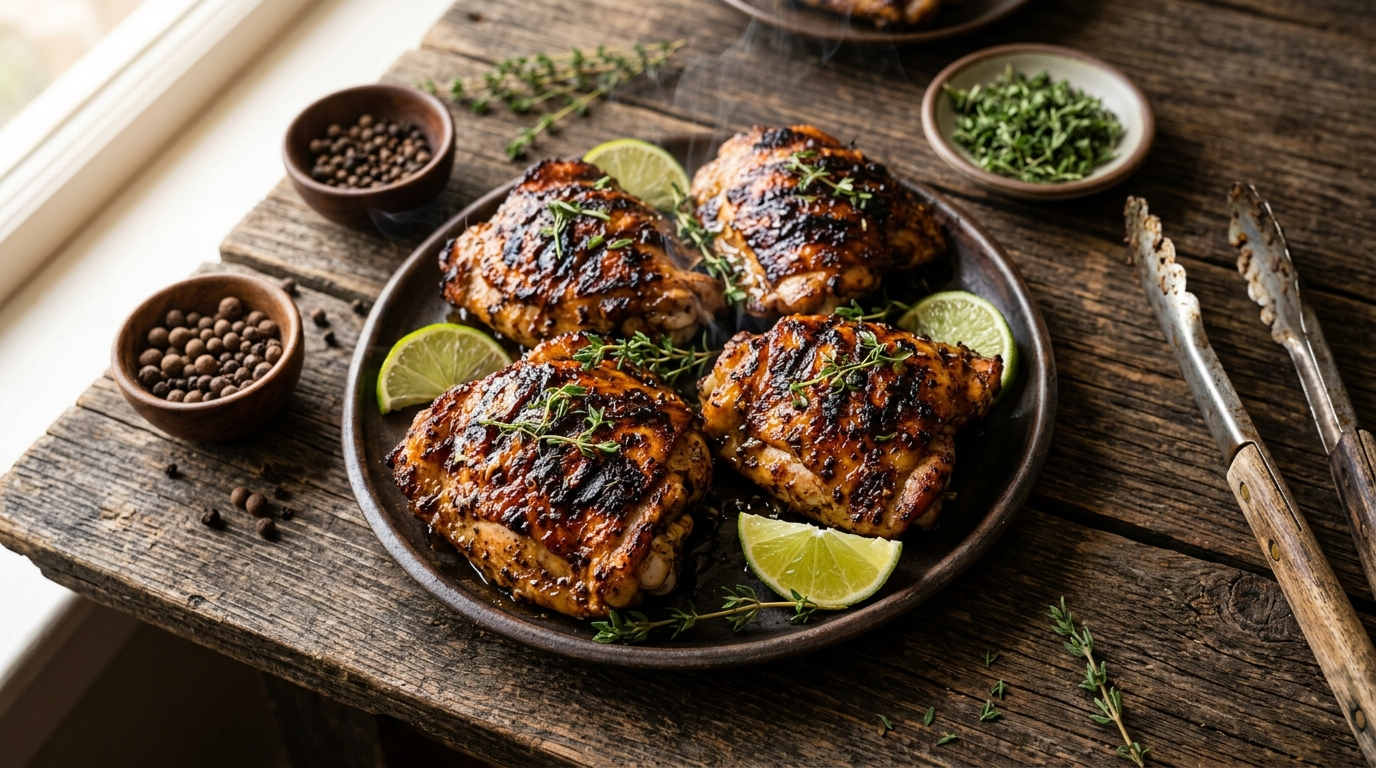
Nutrition (per serving)
The BBQ Story Behind This Recipe
Jerk cooking traces its roots back to the Maroon people of Jamaica, the African descendants who escaped British colonial slavery and took refuge in the Blue Mountains during the 17th and 18th centuries. To survive and preserve their catches of wild boar and fowl in the tropical heat, they developed a method of heavily seasoning meat with native allspice berries, scotch bonnet peppers, and wild herbs before slow-cooking it over pimento wood fires dug into the earth. This was not just seasoning. It was survival cooking, and the technique they developed became one of the most distinctive and beloved BBQ traditions on the planet. The word jerk itself is believed to derive from the Spanish word charqui, meaning dried or preserved meat, which evolved through Jamaican dialect into the cooking method we know today.
By the 20th century jerk chicken had moved from the mountain camps of the Maroons to the roadside jerk stands of Boston Bay in Portland Parish, Jamaica, which is still widely considered the birthplace of modern jerk cooking as the world knows it. Vendors cook over open pits filled with pimento wood, a critical flavor component that is almost impossible to fully replicate outside of the island. When jerk chicken crossed into the United States, the Caribbean, the United Kingdom, and beyond through Jamaican diaspora communities, backyard pitmasters adapted the recipe to available equipment, swapping pimento wood for allspice berries tossed directly onto charcoal. The spirit of the cook, bold heat, deep smoke, and complex spice, survived the journey perfectly intact.
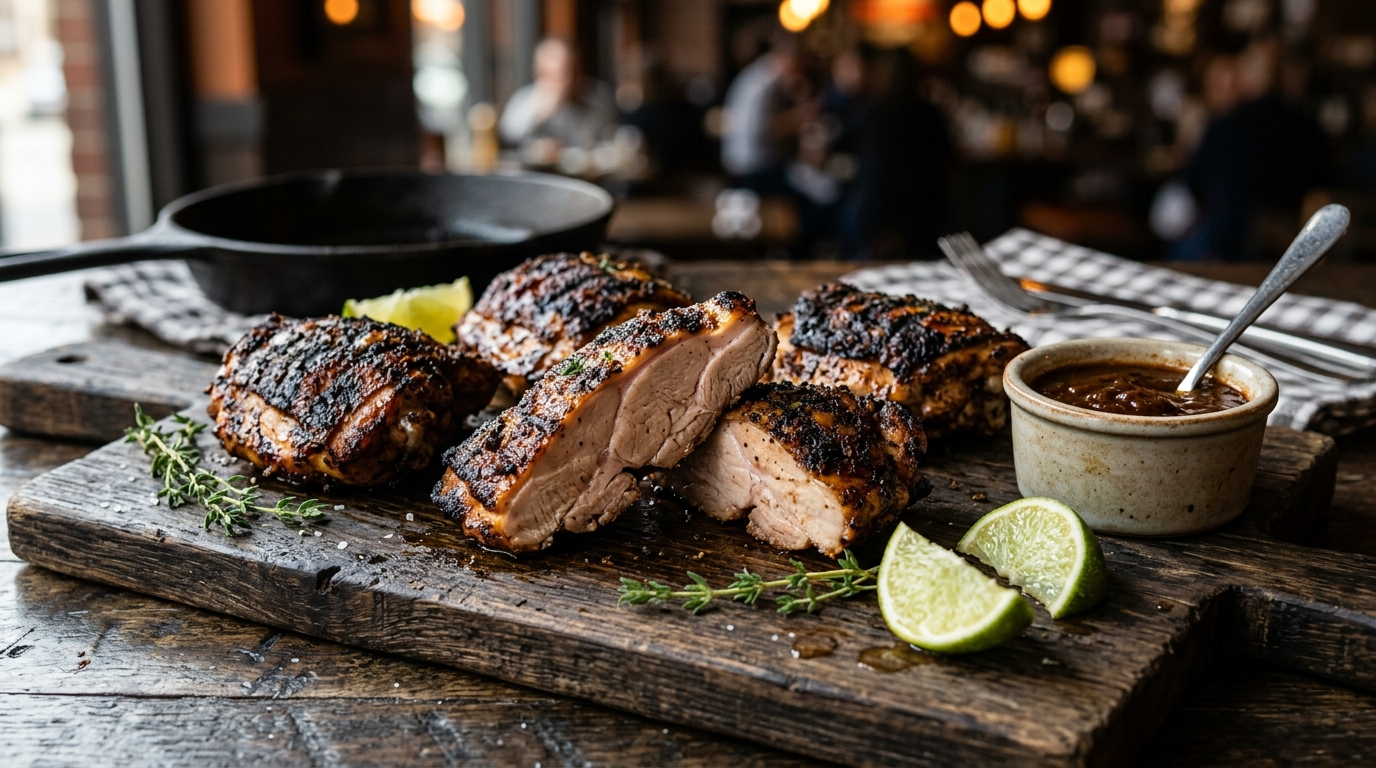
Hot Off the Grill
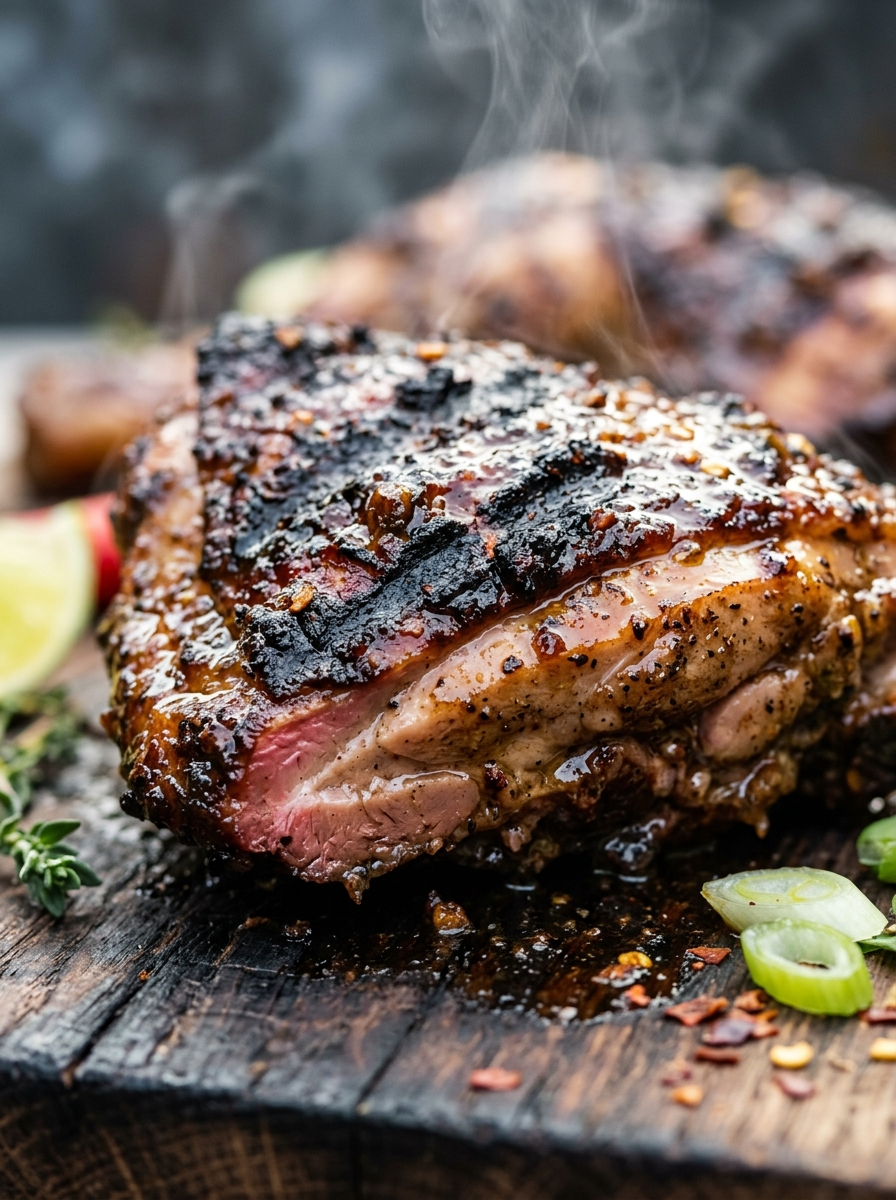
A Closer Look
Pitmaster Tips for Best Results
- Do not rush the marinade. Eight hours is the floor and 24 hours is the ceiling. Scoring the meat down to the bone is what separates surface-seasoned chicken from deeply flavored jerk that tastes like Jamaica with every single bite.
- If you cannot find scotch bonnet peppers, habaneros are the closest substitute in terms of heat level and fruity flavor profile. Serrano peppers will work in a pinch but you will lose some of that distinctive Caribbean heat character.
- Tossing whole dried allspice berries directly onto your lit charcoal is the single most authentic pimento smoke trick you can use without flying to Jamaica. Do two additions, one at the start of the indirect cook and one right before the sear, for a full smoke impact.
- When moving chicken from indirect to direct for the final sear, have a spray bottle of water nearby to manage flare-ups from the sugar-heavy marinade. A quick controlled spritz calms the fire without dropping your overall grill temp.
- Rest the meat for a full 5 minutes after pulling from the grill. Cutting into jerk chicken immediately causes all those carefully built juices to run straight out onto the cutting board. Five minutes of patience on the rest equals dramatically more moisture in every bite.
🔧 Pitmaster Equipment
Charcoal Kettle Grill or Kamado: Live charcoal produces the authentic heat and smoke environment that makes jerk chicken bark and caramelization happen the way it should.
Instant Read Thermometer: Do not guess on chicken. Pull your thighs at exactly 165 degrees Fahrenheit internal temp to guarantee safety and maximum juiciness.
Long Tongs (16-inch minimum): Jerk chicken gets moved between hot and cool zones frequently. Long tongs keep your hands and forearms away from the direct fire.
Large Zip-Lock Bags or Glass Baking Dish: You need a non-reactive vessel to marinate the chicken overnight. Zip-lock bags coat every surface evenly and save space in the fridge.
Blender or Food Processor: The jerk marinade needs to be fully blended into a smooth paste that adheres to the chicken and penetrates the meat deeply.
Chunk of Allspice Wood or Dried Allspice Berries: Tossing allspice berries directly onto hot coals adds the signature pimento smoke that is the backbone of authentic jerk flavor.
Basting Brush or Mop: Basting the chicken during the indirect cook phase builds layers of caramelized glaze and keeps the surface from drying out.
🔥 Variations
Pellet Grill Version: Set your pellet grill to 375 degrees Fahrenheit and use hickory or cherry pellets for a complementary smoke profile. Follow the same indirect cook time of 30 to 35 minutes then crank the grill to its highest sear setting, typically 500 degrees Fahrenheit or higher, for the final skin-down char. You will not get the allspice berry smoke directly on coals but the pellet smoke plus the jerk marinade still produces a spectacular result.
Gas Grill Version: Set up a two-zone cook on your gas grill by lighting only the burners on one side. Target 375 degrees Fahrenheit on the indirect side with the lid closed. Place a smoker box loaded with allspice wood chips or a mix of hickory and apple chips over the lit burners. Cook the chicken indirect for 35 minutes until it hits 150 degrees Fahrenheit internally, then move to the direct burners for a 3 to 5 minute skin-side sear to build that caramelized bark before pulling at 165 degrees Fahrenheit.
Jerk Chicken Drumsticks Version: Drumsticks are an excellent and budget-friendly alternative to thighs for this cook. They marinate beautifully and the bone-in format keeps the meat moist through the full cook. Reduce the indirect cook time to 25 minutes as drumsticks are smaller than thighs. Follow the same internal temp target of 165 degrees Fahrenheit and apply the same sear method for great bark development on all sides.
Jerk Chicken Breast Version: Boneless skinless chicken breasts can work with this marinade but they require more care on the grill to avoid drying out. Pound breasts to an even 1-inch thickness before marinating for more even cooking. Use the two-zone setup and cook indirect at 350 degrees Fahrenheit until internal temp hits 155 degrees Fahrenheit, then sear 2 minutes per side. Pull at 160 degrees Fahrenheit and rest as carryover heat will bring you to the safe 165 degrees Fahrenheit target.
❓ Pitmaster FAQ
What internal temperature should grilled jerk chicken reach?
Your grilled jerk chicken thighs must hit 165 degrees Fahrenheit internal temperature in the thickest part of the meat away from the bone. Use an instant read thermometer every single time. Bone-in thighs are forgiving and actually stay juicy at 165 degrees Fahrenheit and even a few degrees beyond, unlike breast meat.
Can I use a gas grill for this grilled jerk chicken recipe?
Absolutely yes. Set up a two-zone indirect cook at 375 degrees Fahrenheit and load a smoker box with allspice wood chips or hickory chips. The smoker box over a lit burner will give you real smoke flavor throughout the cook. Finish with a direct sear over the lit burners to build your bark. The result is genuinely excellent jerk chicken off a gas rig.
How long should I marinate jerk chicken?
A minimum of 8 hours is required for the scotch bonnet heat and allspice to penetrate the scored meat. Twelve hours hits the sweet spot of flavor without the acid from the lime juice starting to break down the protein too aggressively. Twenty-four hours delivers the deepest possible flavor and is worth planning for on a weekend cook.
How spicy is this grilled jerk chicken recipe?
With 4 scotch bonnet peppers and seeds removed this recipe lands at a solid medium-hot heat level that is assertive but not punishing. If you want to dial it back, use 2 scotch bonnets or substitute 2 habaneros. If you want to turn the heat all the way up, keep the seeds in all 4 scotch bonnets and accept the consequences with pride.
What wood should I use for smoking jerk chicken?
Allspice wood or pimento wood is the most authentic choice and can sometimes be found at specialty BBQ retailers online. In its absence, tossing dried whole allspice berries directly onto your charcoal produces a remarkably close smoke profile. For wood chips in a smoker box on a gas or pellet grill, hickory or cherry are both solid complementary choices that do not overpower the bold spice marinade.
What should I serve with grilled jerk chicken?
Classic sides include rice and peas which is actually red kidney beans cooked in coconut milk, fried sweet plantains, grilled corn, coleslaw, and a simple green salad with lime vinaigrette. Festival bread, a sweet fried dough popular in Jamaica, is also a traditional accompaniment and a welcome contrast to the heat of the jerk marinade.