
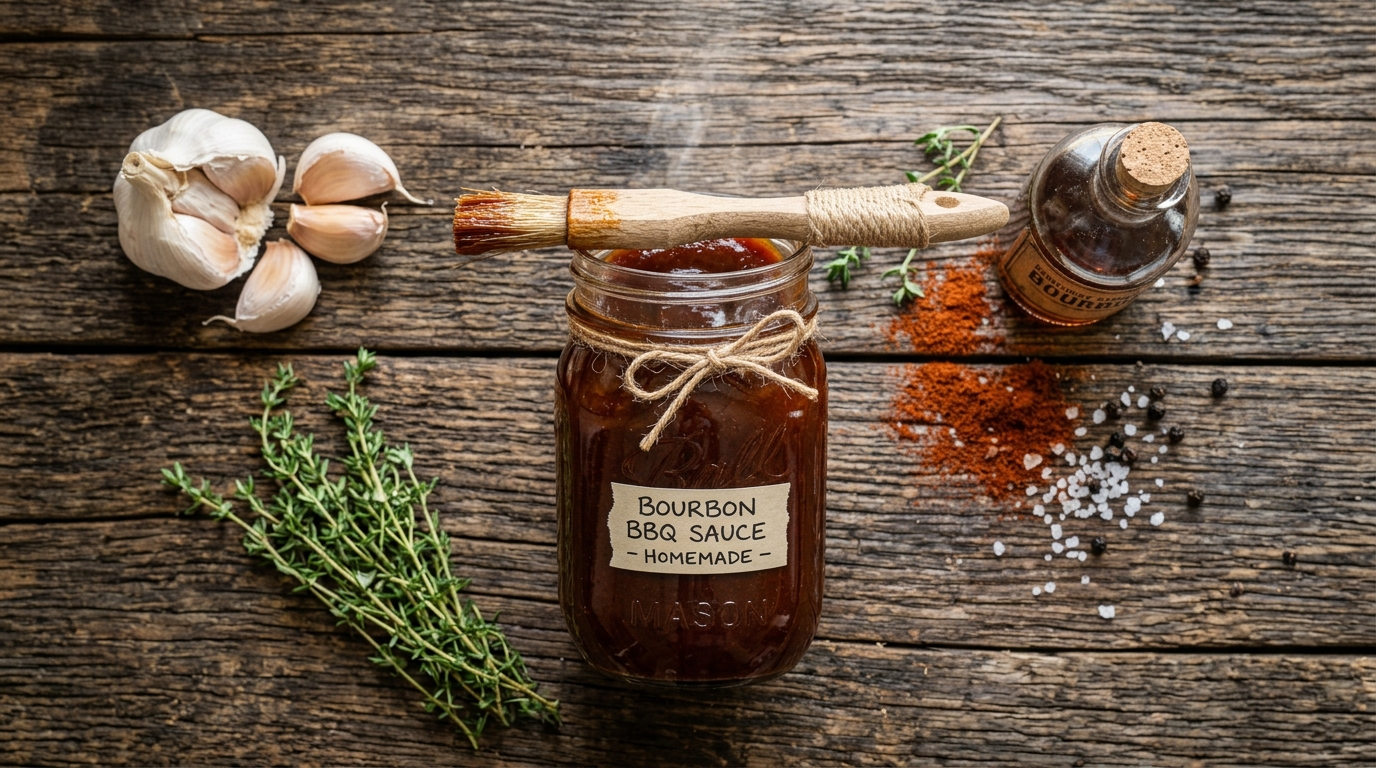
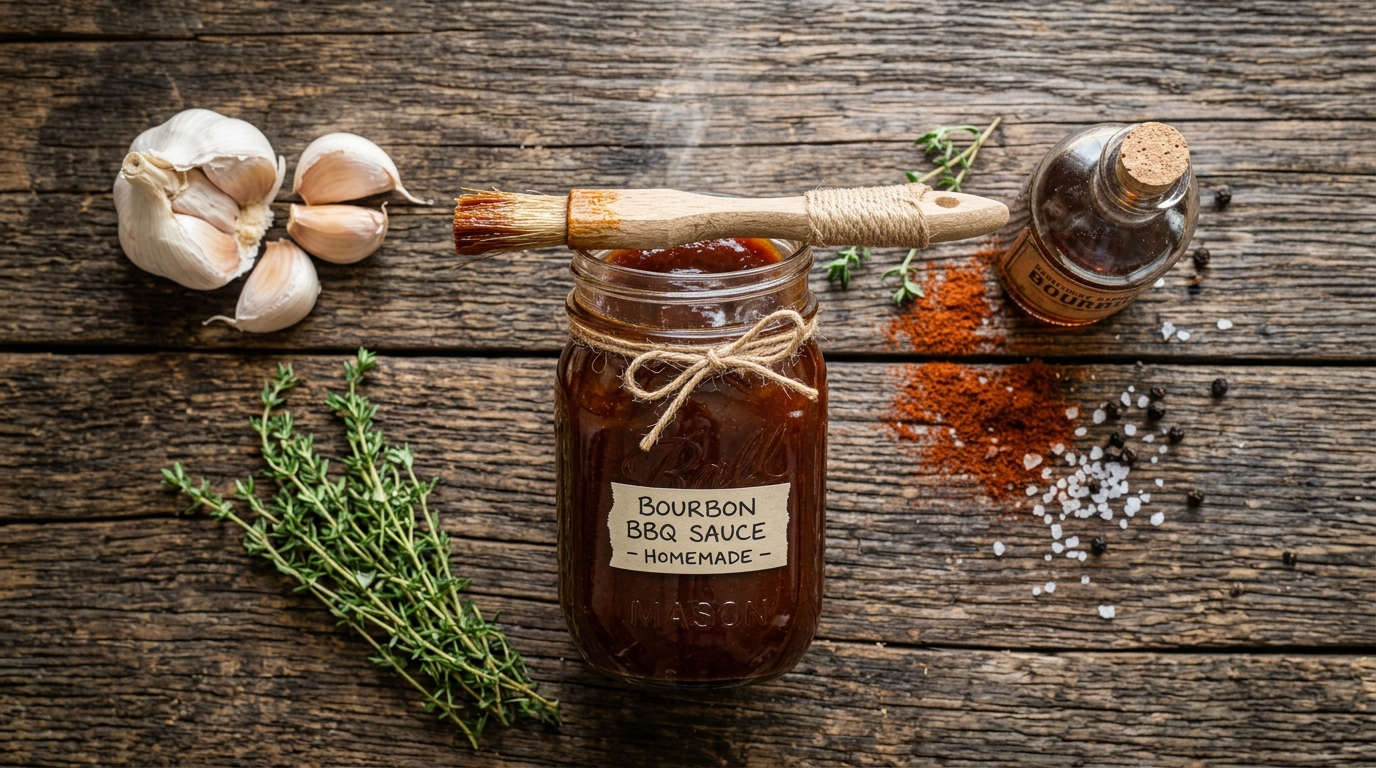
Bourbon BBQ Sauce Recipe: Bold, Smoky & Irresistible
Ingredients
Method
- Set your burner to medium-low and melt the butter in a heavy-bottom 3-quart or 4-quart saucepan. Once it foams and the foam starts to subside, add your finely diced onion. You are looking for a slow, patient sweat here, not a hard sear. Stir every couple of minutes and let the onion go translucent and just barely golden at the edges, about 8 to 10 minutes. This low and slow start builds the natural sweetness that forms the backbone of the entire sauce. Do not rush this step.
- Add the minced garlic and stir it into the softened onion. Cook for another 90 seconds until fragrant, stirring constantly so the garlic does not brown or turn bitter. You want the garlic to bloom in the butter alongside the onion, releasing its oils and flavor without any harsh raw edge remaining.
- With the burner still on medium-low, carefully pour in the 2 ounces of bourbon. Stand back slightly as you pour because the steam will rise fast. Use your wooden spoon to scrape up any fond stuck to the bottom of the pan. Let the bourbon cook for 2 to 3 minutes, stirring frequently, until the sharp alcohol smell softens and you start to smell the caramel and vanilla notes of the spirit emerging. This is the foundation of everything great about this sauce.
- Add the tomato paste and stir it directly into the onion and bourbon mixture. Let it cook for 1 minute, pressing it around the pan to caramelize slightly. This step deepens the tomato flavor and adds color. Then add the ketchup, apple cider vinegar, dark brown sugar, Worcestershire sauce, and honey. Stir everything together until fully combined and the sugar starts to dissolve.
- Season the sauce with smoked paprika, dry mustard powder, onion powder, black pepper, cayenne pepper, and kosher salt. Stir well to incorporate all the spices evenly. Taste the raw sauce at this point and note the sharpness of the vinegar and the heat from the cayenne. Both will mellow significantly during the simmer, so trust the process.
- Bring the sauce up to a gentle simmer over medium heat, stirring frequently. Once you see small bubbles breaking across the surface, reduce the heat back to low. Let the sauce cook uncovered, stirring every 3 to 4 minutes, for 25 to 30 minutes. You are watching for it to thicken to a glossy, slightly syrupy consistency that coats the back of a spoon and holds a line when you drag your finger through it. The color will deepen from bright red to a rich mahogany during this time.
- Once the sauce has reached your desired consistency, pull it off the heat. At this point you can use it as a chunky, rustic sauce or blend it smooth. For a smooth, restaurant-quality finish, carefully transfer the hot sauce to a blender or use an immersion blender directly in the pot and blend for 30 to 45 seconds until silky. If blending in a standard blender, remove the center cap from the lid and cover with a folded kitchen towel to allow steam to escape and avoid pressure buildup.
- Taste the finished sauce and adjust seasoning. Add a pinch more salt if it needs lift, a splash more apple cider vinegar if you want more tang, or another teaspoon of brown sugar if you want more sweetness. If you are using liquid smoke and not cooking over live fire, stir it in now. The sauce is ready to use immediately at this point and is fantastic when warm.
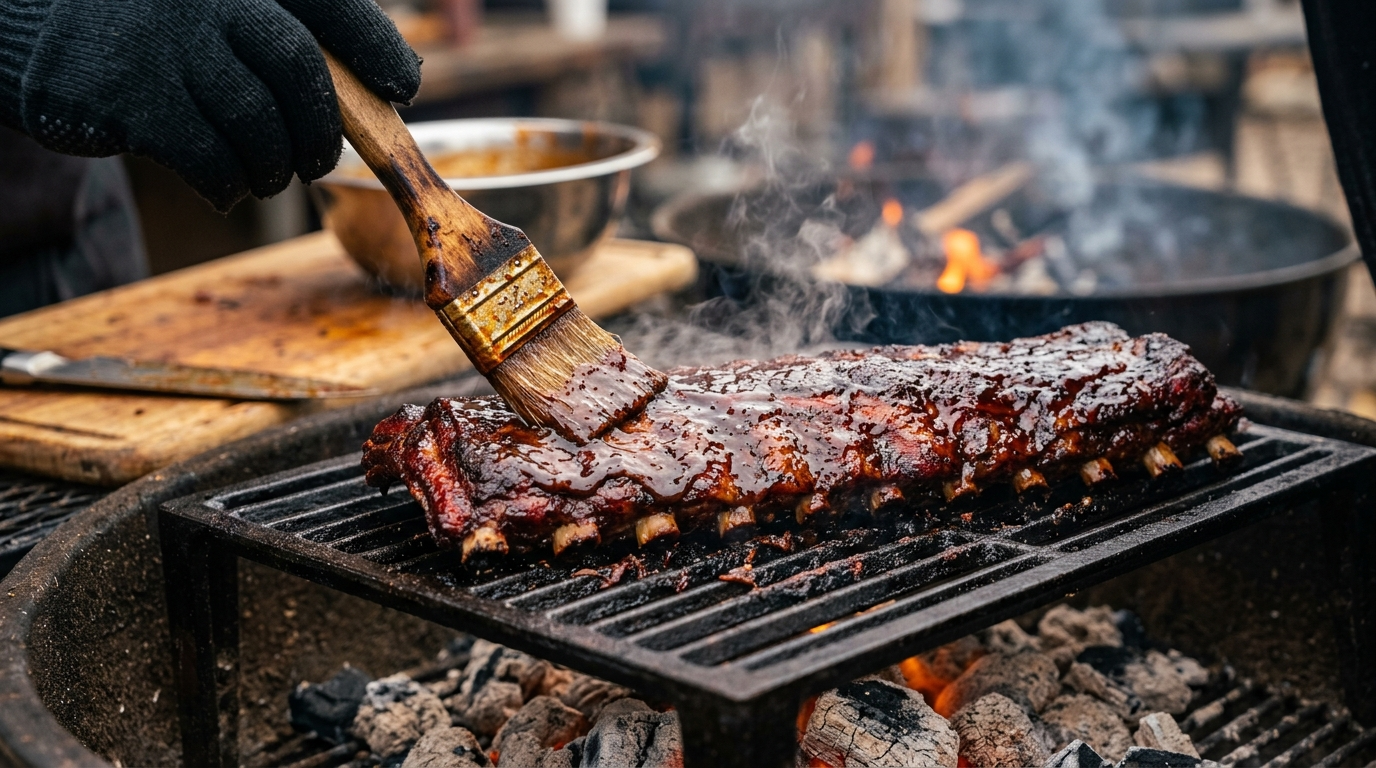
- To use as a grilling glaze, fire up your grill to medium-high heat around 375 to 400 degrees. Cook your protein through to the appropriate internal temp first before introducing sauce. For chicken thighs, pull them when the internal temp hits 165 degrees. For ribs, wait until they bend and the bark has fully set before mopping with sauce in the final 20 to 30 minutes of the cook. Apply the sauce in two or three thin layers, allowing each layer to set and caramelize on the grate before adding the next. This builds a beautiful lacquered finish.
- Remove excess sauce from the grill and rest the meat for at least 5 to 10 minutes before slicing or serving. During this time, the sauce will set into a glossy, sticky glaze that clings to every bite. Transfer leftover sauce to clean glass mason jars and store in the refrigerator for up to three weeks. The flavor actually improves after 24 hours as everything melds together.
Nutrition
This bourbon bbq sauce recipe is the kind of thing that makes neighbors lean over the fence and ask what smells so good. Built on a foundation of real Kentucky bourbon, fire-roasted tomatoes, brown sugar, and a hit of smoked paprika, this sauce hits every note you want: sweet up front, smoky in the middle, and a low slow burn that lingers just long enough to remind you why you fired up the grill in the first place. We are talking about a sauce complex enough to hold its own against a 12-hour smoked brisket but approachable enough to slather on a rack of ribs you threw on at 225 degrees on a Saturday afternoon.
The magic in this recipe comes from a two-stage build. You start by sweating aromatics low and slow in a heavy saucepan, which coaxes out the natural sweetness of onion and garlic before the liquids ever hit the pot. Then you deglaze with two ounces of good bourbon and let the alcohol cook off for about 3 minutes before layering in your tomato base, apple cider vinegar, Worcestershire, and spices. The whole thing simmers uncovered for 25 to 30 minutes until it tightens up to a glossy, spoon-coating consistency that clings to bark like it was born there.
Whether you are mopping it onto spare ribs during the last 45 minutes of a low and slow smoke session or using it as a finishing glaze right before you pull chicken thighs off the grate at an internal temp of 165 degrees, this sauce does exactly what great BBQ sauce should do: it amplifies the meat without covering it up. We always recommend making a double batch because this stuff disappears fast, and it keeps beautifully in the fridge for up to three weeks.
Bourbon BBQ Sauce Recipe: Bold, Smoky & Irresistible
This bourbon bbq sauce recipe delivers deep, smoky sweetness with a kick of heat that transforms any cut off the grill into something legendary. Built from real pitmaster technique and pantry staples, it is the sauce your backyard has been waiting for. Fire up the grill today and taste the difference.
Ingredients
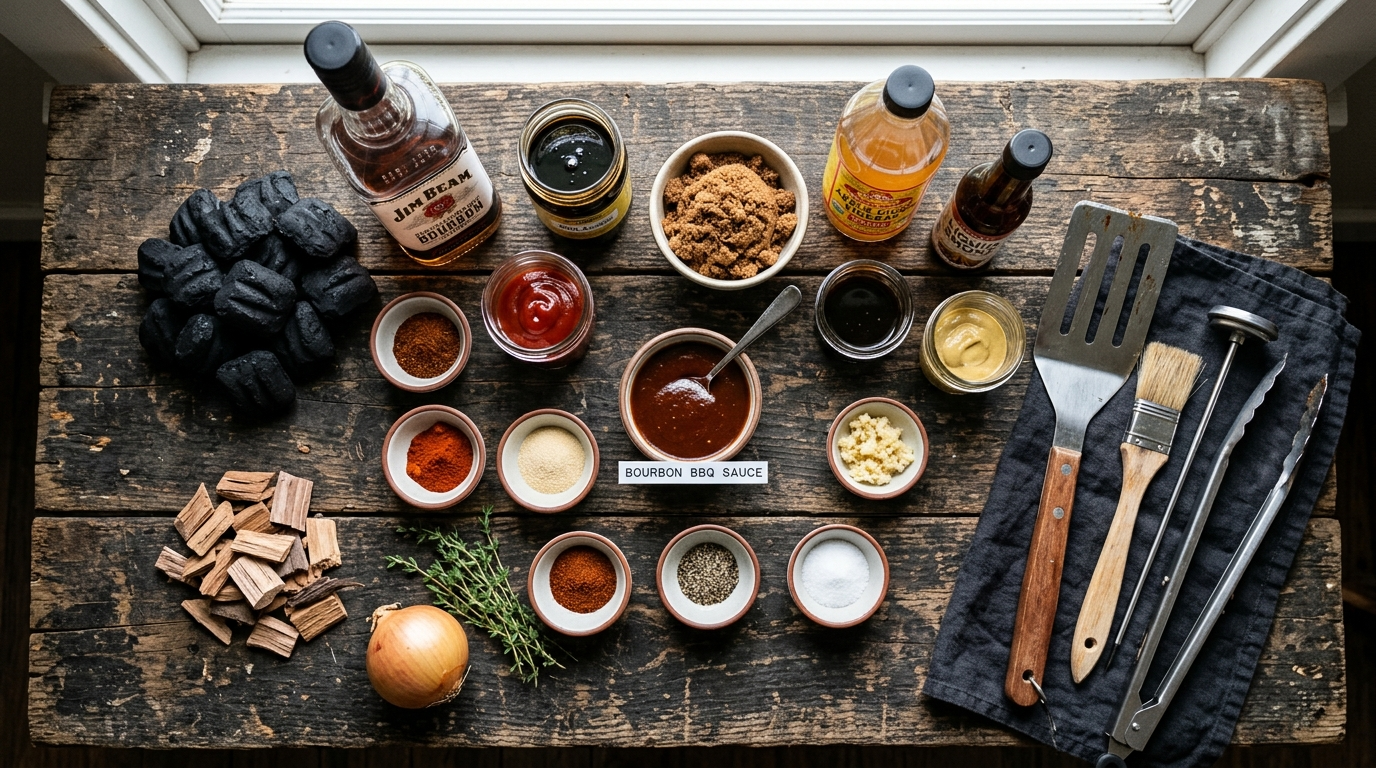
| AMOUNT | INGREDIENT | NOTES |
|---|---|---|
| 2 tablespoons | unsalted butter | the fat base for sweating aromatics low and slow |
| 1 medium | yellow onion | finely diced, about 1 cup |
| 4 cloves | garlic | minced fresh, not jarred |
| 2 ounces | Kentucky bourbon | use something you would actually drink, nothing cheap |
| 1.5 cups | ketchup | full-fat, avoid low-sugar varieties |
| 0.5 cup | apple cider vinegar | raw unfiltered for best flavor depth |
| 0.5 cup | dark brown sugar | packed, adds molasses depth |
| 3 tablespoons | Worcestershire sauce | the backbone of savory umami in this sauce |
| 2 tablespoons | honey | raw wildflower honey preferred |
| 1 tablespoon | smoked paprika | Spanish smoked paprika for maximum smoke character |
| 1 teaspoon | ground mustard powder | dry mustard adds subtle tang and emulsification |
| 1 teaspoon | black pepper | freshly cracked |
| 0.5 teaspoon | cayenne pepper | increase to 1 teaspoon if you want real heat |
| 0.5 teaspoon | kosher salt | adjust to taste at the end |
| 0.5 teaspoon | onion powder | layered on top of the fresh onion for depth |
| 1 tablespoon | tomato paste | adds body and concentrated tomato flavor |
| 1 teaspoon | liquid smoke | optional, only use if not cooking over live fire |
Instructions
Nutrition (per serving)
The BBQ Story Behind This Recipe
Bourbon and barbecue have been running together in the American South since at least the early 1800s, when distilleries in Kentucky and Tennessee were producing whiskey faster than the region could drink it straight. Pitmasters in those states started incorporating the spirit into their mops, glazes, and finishing sauces, drawn to the way its caramel and vanilla oak notes played against the char and smoke of hardwood-fired pits. The tradition spread through the mid-Atlantic and into the Carolinas, blending with vinegar-forward sauces and tomato-based Kansas City styles to create the kind of regional hybrid this recipe represents: bold enough to honor its bourbon roots, balanced enough to work on anything you put over fire.
Kansas City is widely credited with popularizing the thick, sweet, tomato-based BBQ sauce format that most Americans picture when they hear the word sauce, and bourbon was always a natural addition to that tradition. Competition pitmasters on the circuit started building bourbon into their secret weapons through the 1980s and 1990s, and by the time the craft cocktail and craft BBQ movements collided in the 2000s, bourbon bbq sauce had become a staple across restaurants, backyard pits, and grocery store shelves nationwide. What we are making here strips it back to first principles: real ingredients, real fire, and real time, the same way the old pitmasters did it.
Hot Off the Grill
A Closer Look
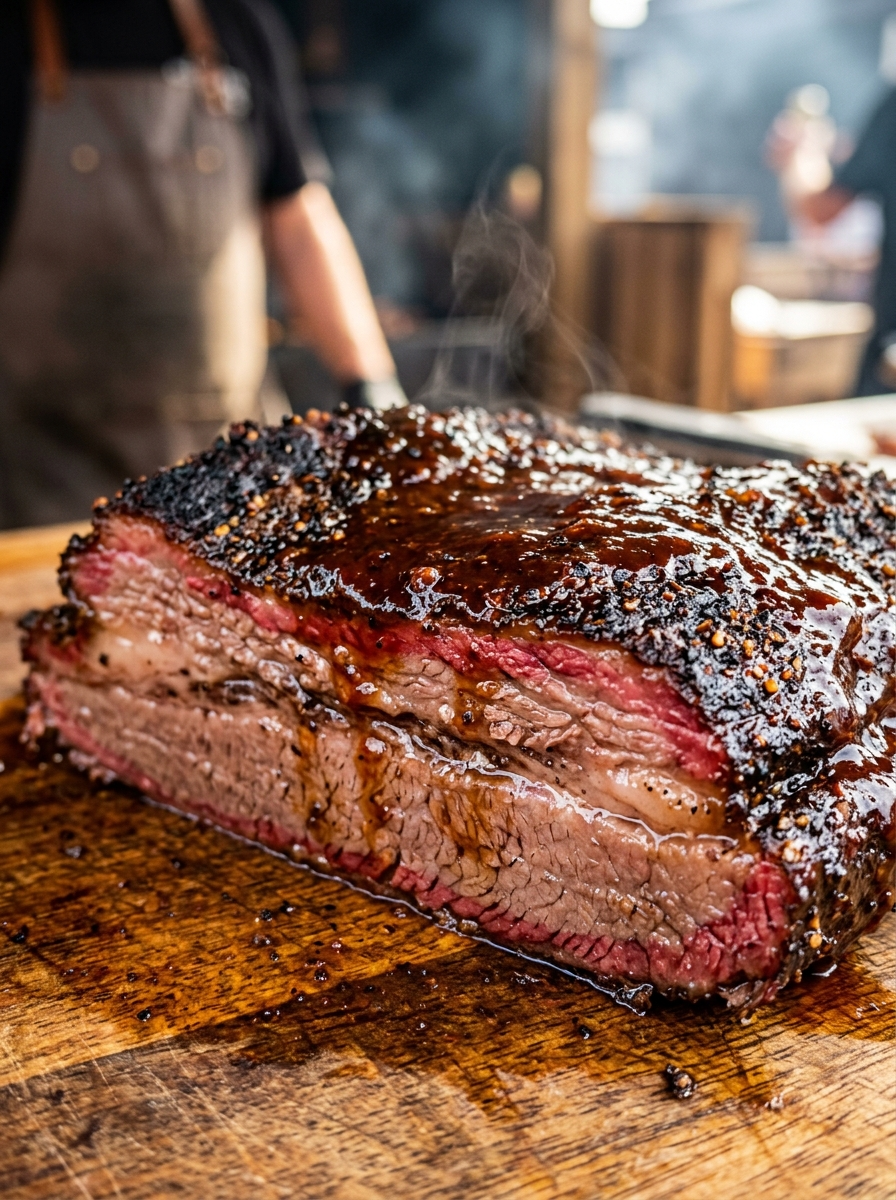
Pitmaster Tips for Best Results
- Always build the sauce on low heat during the first two stages. Burning the onion or garlic will give the entire batch a bitter undertone that no amount of sugar can fix. Patience in those first 10 minutes pays off in the final product.
- Use a bourbon you actually enjoy drinking. The alcohol cooks off but the flavor compounds stay behind. A quality mid-shelf bourbon like Bulleit, Makers Mark, or Wild Turkey 101 will give you noticeably better results than the cheapest bottle on the shelf.
- When glazing on the grill, apply sauce only during the last 20 to 30 minutes of cook time. Adding sauce too early causes the sugars to burn and go bitter before the meat is done. Always confirm internal temp first, then start layering the glaze.
- If you want a spicier sauce, add a finely minced chipotle pepper in adobo sauce along with the other aromatics. It adds smoky heat with depth rather than just raw fire, and pairs beautifully with the bourbon notes.
- This sauce doubles and triples beautifully. Make a big batch and store in sterilized mason jars. It makes an incredible homemade gift for fellow grill enthusiasts and keeps in the fridge for three weeks or in the freezer for up to six months without losing quality.
🔧 Pitmaster Equipment
Heavy-Bottom Saucepan: A 3-quart or 4-quart heavy-bottom pan distributes heat evenly and prevents scorching as the sauce reduces and the sugars concentrate.
Wooden Spoon or Heat-Resistant Silicone Spatula: Essential for constant stirring during the simmer phase to keep the bottom from burning and to scrape up all the fond from deglazing with bourbon.
Immersion Blender or Standard Blender: After simmering, a quick blend creates that smooth, glossy restaurant-quality consistency that coats the back of a spoon perfectly.
Fine Mesh Strainer: Optional but recommended if you want a silky smooth sauce free of any onion or garlic solids.
Glass Mason Jars: Perfect for storing and gifting the sauce. The wide mouth makes it easy to pour and the seal keeps freshness locked in for up to three weeks in the fridge.
Instant Read Thermometer: When using this sauce as a glaze on the grill, knowing your internal temp ensures the meat is done before you start layering on sauce during the final minutes of cook time.
🔥 Variations
Spicy Chipotle Bourbon Version: Add one or two finely minced chipotle peppers in adobo sauce during the aromatics stage alongside the garlic. The smoky dried chili heat layers perfectly with the bourbon caramel notes and pushes the sauce into competition-worthy territory. Great on brisket and burnt ends.
Honey Peach Bourbon Version: Replace the ketchup base with 1 cup of peach preserves and reduce the brown sugar to 2 tablespoons. The stone fruit sweetness pairs with bourbon in a way that is outstanding on smoked chicken and pork tenderloin. Add a pinch of cinnamon and nutmeg for extra warmth.
Smoky Mustard Bourbon Version: Swap half the ketchup for whole grain Dijon mustard and increase the apple cider vinegar by 2 tablespoons for a Carolina-influenced sauce with bourbon backbone. This version is incredible on pulled pork and smoked sausage and leans more tangy than sweet.
Pellet Grill Glaze Version: Set your pellet grill to 275 degrees using hickory or cherry pellets. The sweet smoke from cherry wood pairs beautifully with the bourbon sauce. Apply the glaze in the final 30 minutes of your cook and let the convection airflow help set each layer into a beautiful lacquered bark.
Gas Grill Version: Use a two-zone indirect heat setup on your gas grill with one side on and one side off. Place a smoker box with soaked hickory chips over the active burner. Cook your protein on the indirect side and glaze with the bourbon sauce during the final 20 minutes for a great result without a dedicated smoker.
❓ Pitmaster FAQ
What bourbon works best in this sauce?
A mid-shelf Kentucky straight bourbon with strong caramel and vanilla notes works best. Bulleit, Makers Mark, Wild Turkey 101, and Woodford Reserve all perform excellently. The bourbon flavor survives the cooking process so use something you would be happy drinking. Avoid anything labeled bourbon-style or blended whiskey.
Can I make this sauce without alcohol?
Yes. Replace the bourbon with 2 ounces of strong brewed black coffee plus 1 teaspoon of vanilla extract and 1 teaspoon of molasses. You will lose some of that caramel bourbon depth but the coffee adds its own complexity and the molasses replaces the dark sugar notes. It is a genuinely excellent alcohol-free version.
How do I get the sauce to stick to ribs on the grill?
The key is applying sauce only after the bark has fully set and you are in the final 20 to 30 minutes of your cook. Brush on a thin layer, close the lid for 8 to 10 minutes to let it tack up, then apply another layer. Two or three thin layers build a far better glaze than one thick coat that just burns and drips off.
How long does homemade bourbon bbq sauce last?
Stored in a clean sealed glass jar in the refrigerator, this sauce keeps for up to three weeks. For longer storage, freeze it in airtight containers for up to six months. The flavor actually improves after the first 24 hours in the fridge as the ingredients meld together, so making it a day ahead is a great strategy.
Is the alcohol fully cooked out of the sauce?
After a full 25 to 30 minute simmer following the initial 3-minute deglaze cook, the vast majority of the alcohol has evaporated. However, trace amounts may remain. If you are serving to children, pregnant individuals, or anyone who avoids alcohol entirely, use the coffee and vanilla substitute described in the alcohol-free variation above.
What internal temp should meat reach before I apply bourbon bbq sauce glaze?
Always cook your protein to a safe internal temperature before adding sauce as a glaze. Chicken must reach 165 degrees. Pork ribs and pulled pork should hit 195 to 205 degrees for proper tenderness. Brisket targets 200 to 205 degrees. Confirm with an instant read thermometer before starting your glaze layers.