
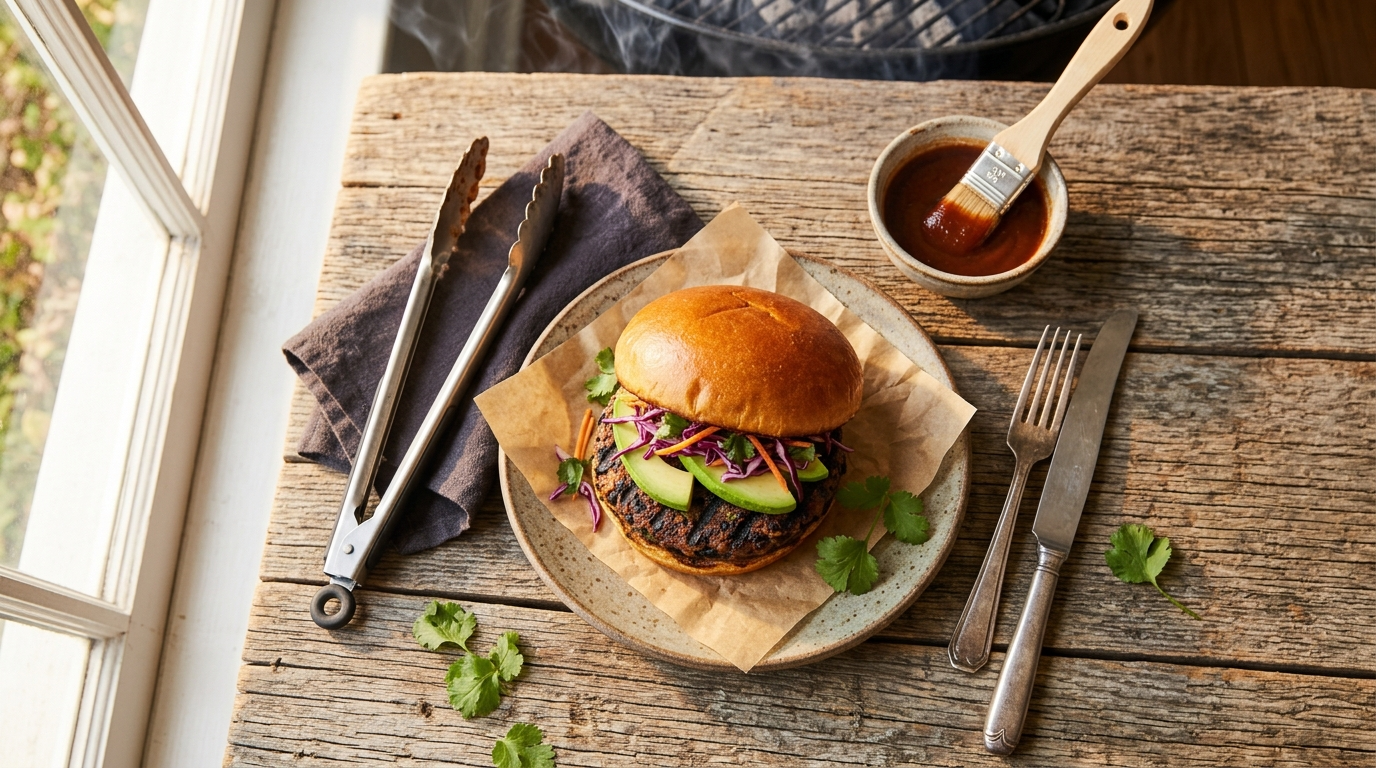
Grilled Black Bean Burger Recipe That Holds the Grate
Ingredients
Method
- Start by building your grill for medium-direct heat. For a charcoal grill, load a full chimney of lump charcoal and let it run until the coals are ashed over and glowing orange, about 20 to 25 minutes. Arrange the coals in an even layer across two thirds of the grill floor so you have a cooler zone to slide patties if needed. Target a grate temperature of 375 to 400 degrees Fahrenheit. For a gas grill, preheat all burners on medium for 10 to 15 minutes then turn one burner to low to create that same indirect zone. Brush and scrape the grates until they are clean - this step is non-negotiable for veggie patties.
- While the grill heats, spread your drained and rinsed black beans on a clean kitchen towel or several layers of paper towels. Pat them thoroughly dry and let them air out for 10 minutes. Moisture hiding inside those beans will destroy your patty structure over the fire. Do not rush this step. Dry beans are the foundation of a grilled black bean burger that holds together when it counts.
- Place the dried black beans in a large mixing bowl. Using a potato masher or a large fork, mash about 75 percent of the beans until you have a thick, chunky paste. You want some whole beans remaining for texture - do not go all the way to a smooth paste or you will lose that satisfying bite. The mixture should hold its shape when pressed between your fingers.
- Add the corn, red onion, minced garlic, smoked paprika, cumin, chipotle chili powder, garlic powder, onion powder, salt, black pepper, Worcestershire sauce, and tomato paste to the mashed beans. Fold everything together using a spatula or your hands until evenly combined. Taste the mixture at this point and adjust seasoning if needed. Now add the beaten eggs and panko breadcrumbs. Fold again until the mixture comes together into a thick, scoopable mass that holds its shape. If it feels too wet, add an extra tablespoon or two of panko.
- Divide the mixture into four equal portions, roughly 6 oz each. Shape each portion into a round patty about 4 inches wide and three-quarters of an inch thick. Make a slight indent in the center of each patty with your thumb - this prevents the patty from puffing up and doming on the grill. Place the formed patties on a wire rack set over a baking sheet, cover loosely with plastic wrap, and refrigerate for a minimum of 30 minutes. One hour is even better. Cold, firm patties survive the grill. Warm, soft patties do not.
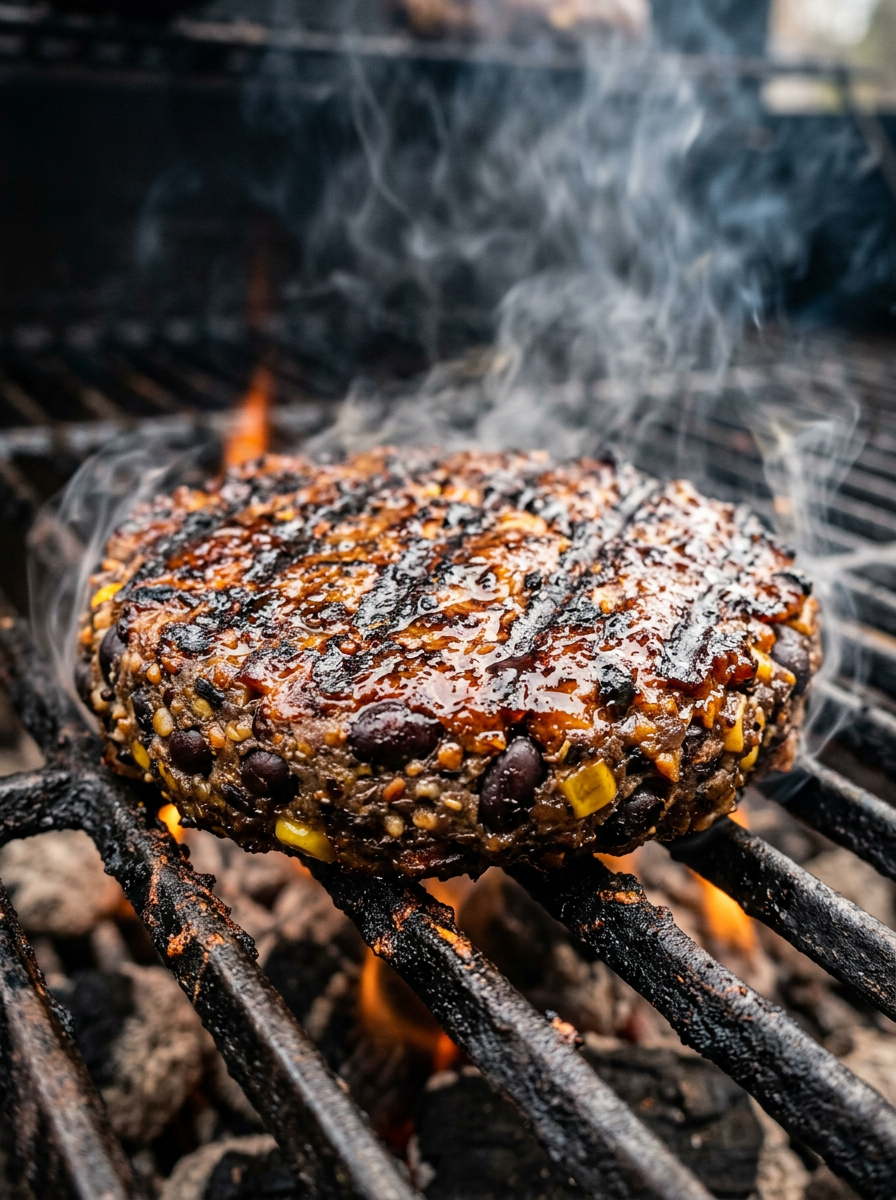
- When the grill is at temp and your patties have chilled, pull them from the refrigerator. Brush both sides of each patty generously with neutral oil - avocado or canola. This creates a barrier between the patty and the grates that allows the crust to develop and release cleanly. Do not skip the oil. Place the patties directly over the hot zone of the grill and resist the urge to move them. Close the lid and cook for 4 to 5 minutes without touching.
- After 4 to 5 minutes you should see the sides of the patty beginning to look set and slightly darkened around the edges. Slide your fish spatula under the patty with a confident, deliberate motion - no hesitation. Flip once. If the patty sticks even slightly, give it another 30 to 60 seconds and try again. A patty that is ready to flip will release naturally from the grates. Cook the second side for another 4 minutes with the lid closed.
- If adding cheese, place a slice on top of each patty during the final 60 seconds of cook time and close the lid to trap heat for a perfect melt. Meanwhile slide your burger buns cut-side down onto the grill over the cooler zone for 45 to 60 seconds until they are toasted and show light grill marks. Toasted buns are a structural requirement for this build - they hold up to the weight of the patty and toppings without going soggy.
- Remove the patties from the grill and let them rest on a clean plate or cutting board for 2 to 3 minutes. Yes, we rest the veggie patty just like we rest the meat - it gives the internal structure time to set so the patty stays together when you bite into it. While the patties rest, spread chipotle mayo or smoky aioli on both halves of each toasted bun.
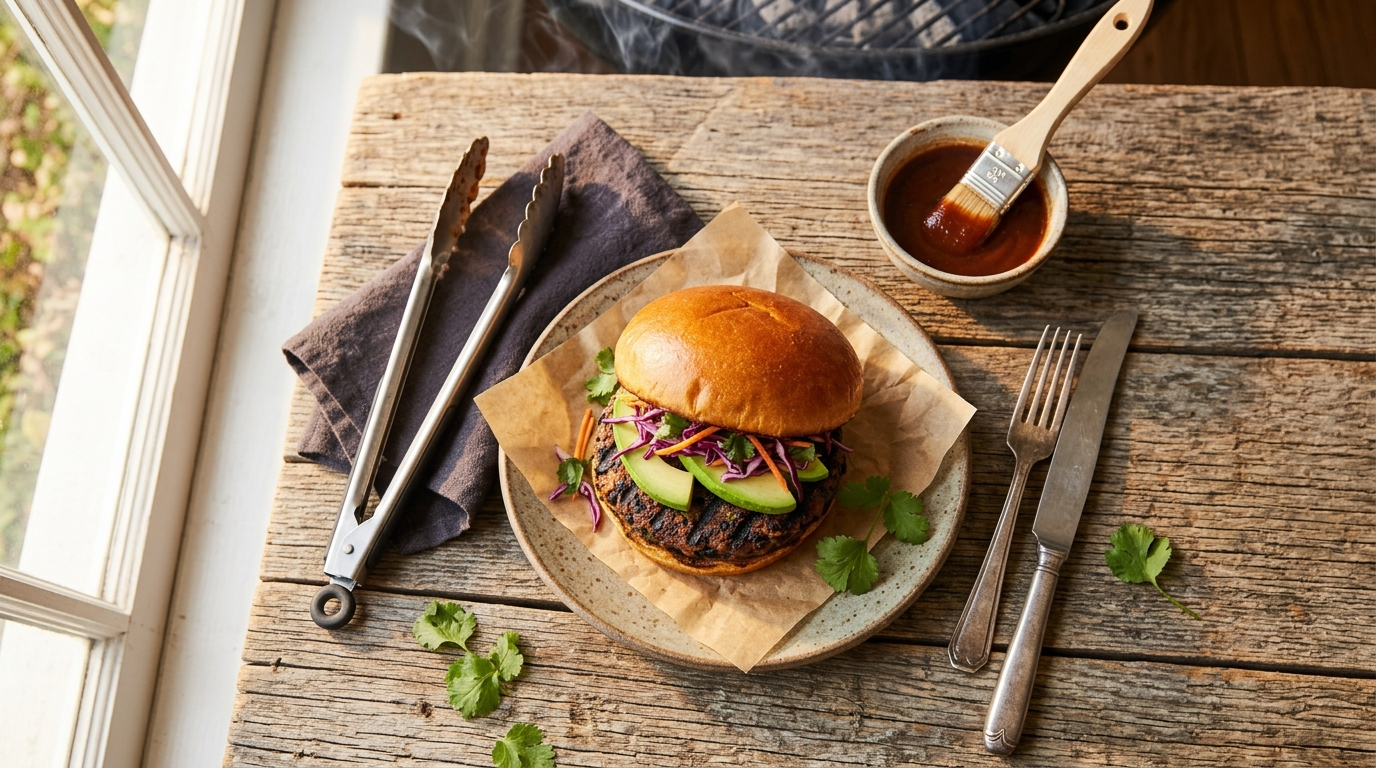
- Build your burgers by placing the patty on the bottom bun, then layering on sliced avocado, shredded purple cabbage, and any additional toppings you like - pickled jalapenos, sliced tomato, or a fried egg all work beautifully here. Cap with the top bun and serve immediately alongside grilled corn, seasoned fries, or a crisp slaw. Serve hot while those grill marks are still fresh and that crust is still crackling.
Nutrition
This grilled black bean burger recipe is proof that the grill is for everyone who loves serious flavor, not just carnivores. Built with a base of smashed black beans, roasted corn, and a bold spice blend, these patties develop a real crust on the grates when you handle the fire right. We are talking visible grill marks, a firm bark-like exterior, and a center that stays tender without turning to mush – all achieved with proper heat management and a little patience.
The secret to a black bean burger that survives the grill comes down to two things: moisture control and binding. Too wet and the patty falls apart before it ever hits the grates. Too dry and you end up with a dense puck that nobody wants. We solve this by roasting off excess moisture, using a combination of egg and breadcrumbs as our binder, and chilling the patties for at least 30 minutes before they ever see fire. Then we cook them over medium-direct heat at around 375 to 400 degrees Fahrenheit, giving each side about 4 to 5 minutes to build that beautiful crust.
At GrillMasterHQ we take every recipe seriously whether it is a 12-hour brisket or a veggie burger that needs to hold its shape over live fire. Fire up the grill with confidence because this is the kind of recipe that converts skeptics. Guests will be reaching for seconds before the coals even start to die down.
Grilled Black Bean Burger Recipe That Holds the Grate
This grilled black bean burger recipe delivers serious char, bold spice, and a hearty patty built to handle real fire. No flimsy freezer patties here – just honest ingredients and pitmaster technique. Fire up the grill because meatless never tasted this good.
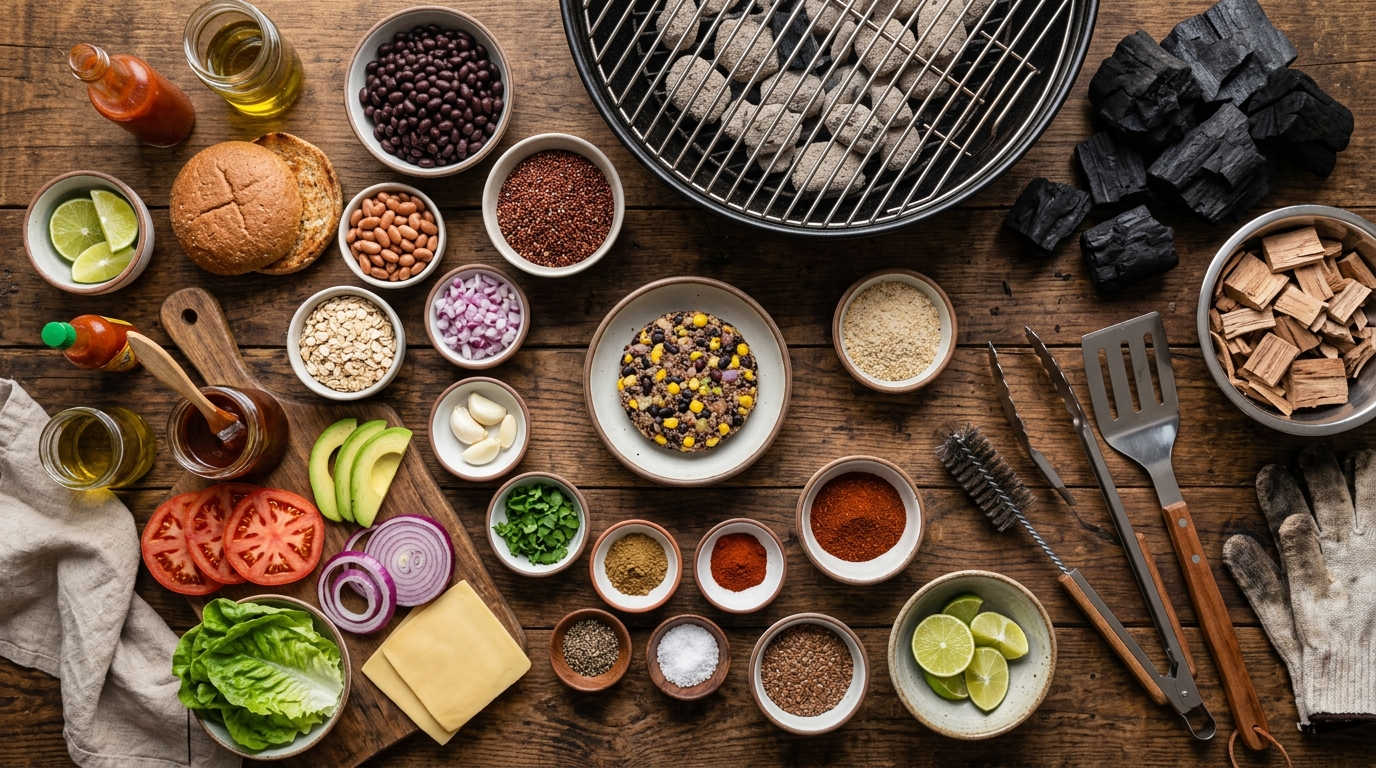
Ingredients
| AMOUNT | INGREDIENT | NOTES |
|---|---|---|
| 2 cans (15 oz each) | black beans | drained, rinsed, and patted completely dry – moisture is the enemy here |
| 1 cup | frozen corn kernels | thawed and patted dry, or fire-roasted corn for extra smokiness |
| 1 cup | panko breadcrumbs | plain, not seasoned – these are your primary binder and texture builder |
| 2 large | eggs | beaten – holds everything together over the open fire |
| 1 cup | finely diced red onion | small dice so it cooks through and does not create weak spots in the patty |
| 3 cloves | garlic | minced fine |
| 1 tablespoon | smoked paprika | Spanish smoked paprika gives the best color and BBQ character |
| 1 teaspoon | ground cumin | earthy backbone to the spice blend |
| 1 teaspoon | chipotle chili powder | for heat and smokiness – reduce to half teaspoon for a milder patty |
| 1 teaspoon | garlic powder | layered with fresh garlic for depth |
| 1 teaspoon | onion powder | rounds out the savory profile |
| 1 teaspoon | kosher salt | do not skip – proper seasoning makes the difference between bland and bold |
| 1 teaspoon | black pepper | freshly cracked preferred |
| 2 tablespoons | Worcestershire sauce | use a vegan Worcestershire if keeping the recipe fully plant-based |
| 2 tablespoons | tomato paste | adds umami depth and helps with binding |
| 2 tablespoons | neutral oil | avocado or canola oil for brushing the patties before grilling |
| 4 brioche or pretzel | burger buns | toasted on the grill – sturdy enough to hold a serious patty |
| 4 slices | pepper jack or sharp cheddar cheese | optional – melts beautifully over the patty in the last 60 seconds |
| 1 whole | avocado | sliced fresh for topping – the richness complements the spiced patty perfectly |
| 1 cup | shredded purple cabbage | adds crunch and color contrast |
| 4 tablespoons | chipotle mayo or smoky aioli | spread on both bun halves for a BBQ-forward finish |
Instructions
Nutrition (per serving)
The BBQ Story Behind This Recipe
Veggie burgers as a concept have been around since the early 1980s when British nutritionist Gregory Sams introduced the VegeBurger to health food stores in the UK. The idea crossed the Atlantic quickly and by the late 1980s plant-based patties were showing up in American diners and backyards alike. For a long time though, grilling them was considered nearly impossible – they were too fragile for live fire and most recipes relied on the stovetop or oven. It took the creativity of backyard pitmasters and competitive grillers to start treating veggie patties with the same care and technique as beef – controlling heat zones, managing moisture, and building real flavor through the Maillard reaction.
The black bean burger specifically became a staple of American BBQ culture as the plant-based movement collided with the grilling world in the 2000s. Restaurants across the American Southwest started featuring black bean patties on their menus, drawing on the rich culinary tradition of beans as a protein centerpiece in Mexican and Tex-Mex cooking. Backyard grill masters picked up the trend and started experimenting with smoked paprika, chipotle, cumin, and fire-roasted corn to give these patties the kind of bold, smoky character that belongs on a grill. Today a well-made grilled black bean burger holds its own at any cookout, earning respect right alongside the briskets and ribs.
Hot Off the Grill
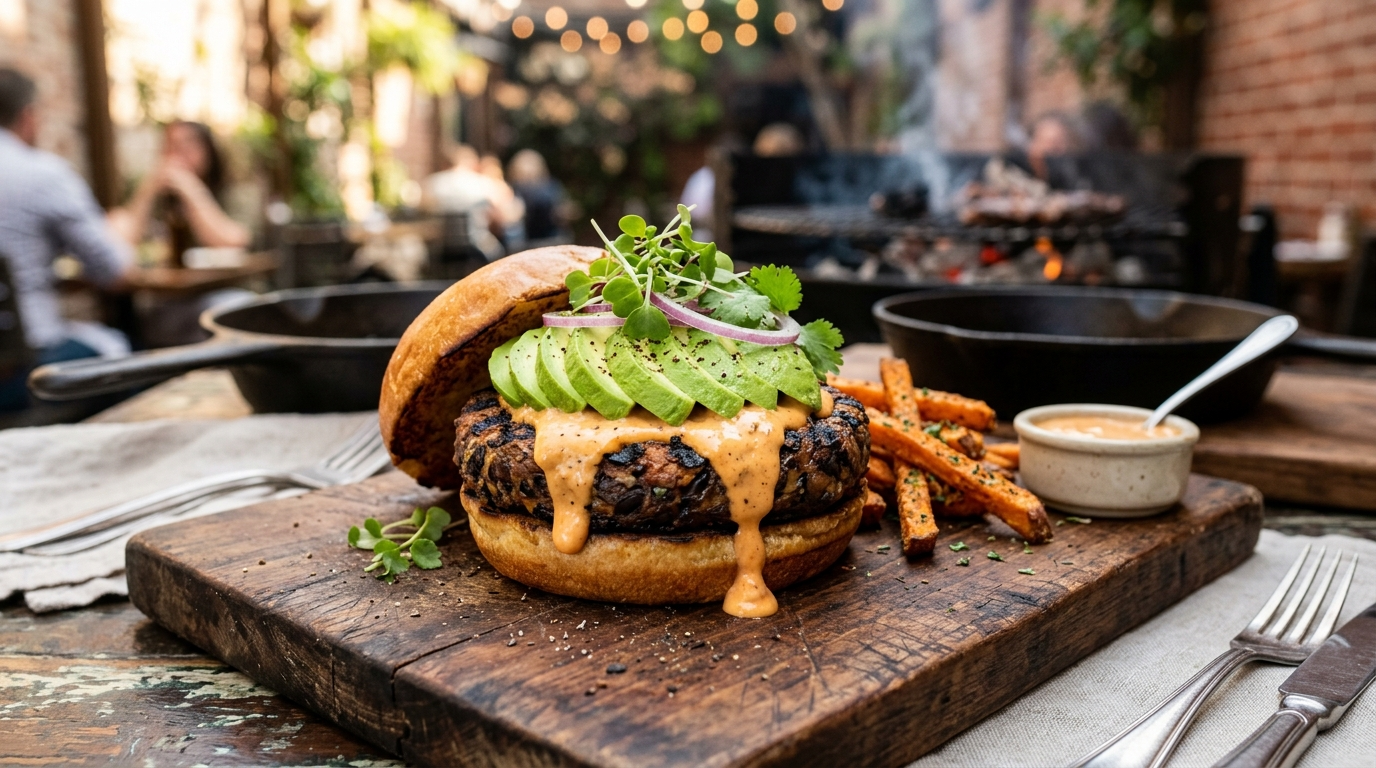
A Closer Look
Pitmaster Tips for Best Results
- Chill time is non-negotiable – do not skip the 30 to 60 minute refrigeration step. Cold patties at 38 to 40 degrees Fahrenheit hold their shape dramatically better over live fire than room-temperature ones. If you have time, form the patties the night before and let them chill overnight.
- Keep your grate temperature in the 375 to 400 degree Fahrenheit range. Too hot above 425 degrees and the exterior chars before the interior sets. Too cool below 350 degrees and the patty steams instead of crusts. Use an instant read thermometer held near the grate surface to dial in your temp.
- Flip only once. Every time you poke, press, or flip a veggie patty you risk breaking it apart. Commit to one flip at the halfway point and keep the lid closed between checks to maintain even cooking heat and capture any ambient smoke from the charcoal.
- For extra smokiness without a full smoker setup, toss a small chunk of cherry wood or a foil pouch of soaked hickory chips directly onto your charcoal just before placing the patties. The smoke that rolls out in the first 5 minutes adds a subtle but real smoke character to the crust of the burger.
- Make a double batch of patties and freeze the extras individually wrapped in plastic. Frozen black bean patties go straight from freezer to grill over medium heat – no thawing required. Cook for 6 to 7 minutes per side from frozen and they come out just as good as fresh.
🔧 Pitmaster Equipment
Charcoal Grill or Gas Grill: Essential for achieving real grill marks, a proper crust, and that open-fire character you cannot replicate indoors.
Instant Read Thermometer: While black bean burgers are fully plant-based, checking the grate surface temperature ensures you are cooking at the right 375 to 400 degree range for proper crust development.
Long Tongs: Keep your hands safely away from the fire and give you control when flipping delicate veggie patties without breaking them.
Fish Spatula or Wide Metal Spatula: The thin, flexible edge slides cleanly under the patty without tearing. This is your most important tool for grilled veggie burgers.
Baking Sheet with Wire Rack: Used to rest and chill the formed patties in the refrigerator before grilling so they firm up and hold their shape over the fire.
Grill Brush: Clean grates are critical for veggie burgers – any debris causes sticking and torn patties. Scrub those grates before you cook.
Mixing Bowl (Large): Gives you enough room to fold together all the ingredients without overworking the mixture, which keeps the texture from turning gummy.
🔥 Variations
Pellet Grill Version: Set your pellet grill to 400 degrees Fahrenheit and let it fully preheat for 15 minutes. Use a hickory, mesquite, or cherry pellet blend for the best flavor profile with these spiced black bean patties. Place the chilled patties directly on clean grates and follow the same 4 to 5 minute per side timeline. The consistent temperature of a pellet grill makes this one of the most forgiving methods for veggie burgers.
Smoker Version: Set your offset or kettle smoker to 275 degrees Fahrenheit using cherry or apple wood for a milder smoke that does not overpower the bean flavor. Place the patties on the grates and smoke for 20 to 25 minutes until the exterior is set and firm. Then crank the heat or move to a direct fire zone for a final 2 minutes per side to build the crust. This low and slow approach then sear technique gives you the most developed flavor of any method.
Spicy Chipotle Version: Double the chipotle chili powder and add one finely minced chipotle pepper in adobo sauce directly into the patty mixture along with one teaspoon of adobo sauce. Top with a habanero pepper jack melt and pickled jalapenos for a burger that brings serious fire. Not for the heat-shy.
Southwest Style Version: Add a quarter cup of finely diced fire-roasted green chiles and a quarter cup of crumbled cotija cheese into the patty mixture. Top the finished burger with a spoonful of fresh pico de gallo, sliced avocado, and a drizzle of crema. This build leans fully into the Tex-Mex roots of black bean cooking.
Vegan Version: Replace the two eggs with two flax eggs – one tablespoon of ground flaxseed mixed with three tablespoons of water per egg, allowed to gel for 5 minutes before use. Use vegan Worcestershire sauce and skip the cheese entirely or use your favorite plant-based cheese slice. The flax egg binds surprisingly well and the patties hold up beautifully on the grill.
❓ Pitmaster FAQ
Why does my black bean burger fall apart on the grill?
The most common culprit is moisture. Your beans need to be completely dry before mashing and the finished mixture should feel firm and tacky, not wet or sticky. Make sure you are chilling the patties for at least 30 minutes before grilling and that your grates are clean and well-oiled. Also, flip only once – premature flipping is the number one cause of crumbled veggie patties on the grill.
Can I make these patties ahead of time?
Absolutely, and we actually recommend it. Form the patties up to 24 hours in advance and store them covered on a wire rack in the refrigerator. The extra chill time firms them up even more. You can also freeze them individually wrapped for up to 3 months and cook straight from frozen over medium heat, adding 2 extra minutes per side.
What temperature should my grill be for black bean burgers?
Target 375 to 400 degrees Fahrenheit at the grate level. This is the sweet spot that lets the exterior develop a proper crust without burning while giving the interior enough time to heat through and set. Use a surface thermometer or hold your hand 5 inches from the grates – at the correct temp you will only be able to hold it there for about 3 to 4 seconds.
Can I use a gas grill instead of charcoal?
Yes – gas works great for this recipe. Preheat all burners on medium for 10 to 15 minutes to reach 375 to 400 degrees then keep one burner on low as a safety zone. To get some smoke character without charcoal, add a smoker box loaded with soaked hickory or mesquite chips over the active burner and wait for it to start smoking before placing the patties.
How do I get good grill marks on a veggie burger?
Start with a very clean, well-oiled grate and oil the patties themselves on both sides. Place the patties over direct heat and do not move them for the full 4 to 5 minutes. Resist every instinct to shift or peek. The crust needs uninterrupted contact with the hot grates to develop those marks. If your grates are clean and your temp is right, the patty will release naturally when it is ready to flip.
Is this recipe gluten-free?
As written, no – the panko breadcrumbs contain gluten. To make it gluten-free, substitute certified gluten-free oat flour or gluten-free breadcrumbs in the same quantity. The texture will be slightly denser but the patties will still hold together on the grill and deliver great flavor. Also verify that your Worcestershire sauce is gluten-free, as some brands contain malt vinegar.