
Grilled Halloumi Recipe with Vegetables - BBQ Perfection
Ingredients
Method
- Fire up your grill and get it running hot - you want 450-500°F in your direct heat zone. Clean the grates thoroughly and oil them well to prevent sticking. While the grill preheats, pat the halloumi slabs completely dry with paper towels - any surface moisture will prevent proper searing and create steam instead of the bark we are after.
- Prepare your vegetables by brushing all pieces with olive oil and seasoning with minced garlic, oregano, salt, and pepper. The oil coating is critical for preventing sticking and helps conduct heat for even cooking. Do not oil the halloumi - it has enough natural fat content and additional oil will cause flare-ups.
- Start with the vegetables since they take longer than the cheese. Place the eggplant and onion wedges over direct heat first - they need 4-5 minutes per side. Add the bell pepper strips after 2 minutes, and the zucchini planks last since they cook fastest. You want good grill marks and slight char on all vegetables.
- Once vegetables are nearly done, place the halloumi slabs directly over the hottest part of your grill. This is where timing becomes critical - halloumi needs exactly 2-3 minutes per side. You will hear it sizzle immediately and see the edges start to bubble. Resist the urge to move it around - let it develop that golden bark.
- Flip the halloumi when you see golden-brown grill marks and the edges have firmed up. The second side cooks slightly faster, usually 2 minutes max. The internal temperature should reach about 140°F - hot enough to be creamy but not so hot that it melts through the grates. Remove immediately and let rest for 2 minutes.
- Arrange the grilled vegetables on a serving platter and top with the halloumi slabs. Drizzle with fresh lemon juice and garnish with chopped parsley. Serve immediately while the cheese is still warm and has that perfect contrast between crispy exterior and creamy center.
Nutrition
This grilled halloumi recipe transforms simple cheese and vegetables into a smoky Mediterranean feast that showcases the true power of high-heat grilling. As a pitmaster who has spent countless hours perfecting proteins over live fire, I can tell you that grilling cheese requires the same attention to temperature control and timing as any premium cut of meat. The key is getting your grill screaming hot – we are talking 450-500°F direct heat – to create that beautiful golden bark on the halloumi while keeping the interior creamy and molten.
Unlike low and slow barbecue, this recipe is all about fast and furious grilling over direct heat. The halloumi needs just 2-3 minutes per side to develop those coveted grill marks, while the vegetables get that perfect char-to-tender ratio that separates good grilling from great grilling. The beauty of this dish lies in the contrast – crispy, caramelized exteriors giving way to creamy cheese and perfectly cooked vegetables.
What sets this grilled halloumi recipe apart from stovetop versions is the unmistakable flavor that only comes from cooking over real fire. The high heat creates a Maillard reaction on the cheese surface that adds depth and complexity you simply cannot achieve indoors. Fire up your grill and get ready to experience halloumi the way it was meant to be cooked.
Grilled Halloumi Recipe with Vegetables – BBQ Perfection
This grilled halloumi recipe delivers perfectly charred cheese with smoky vegetables in just 20 minutes. The high-heat searing creates an incredible contrast between crispy exterior and creamy interior that will have your guests begging for more. Fire up your grill tonight for this Mediterranean masterpiece.
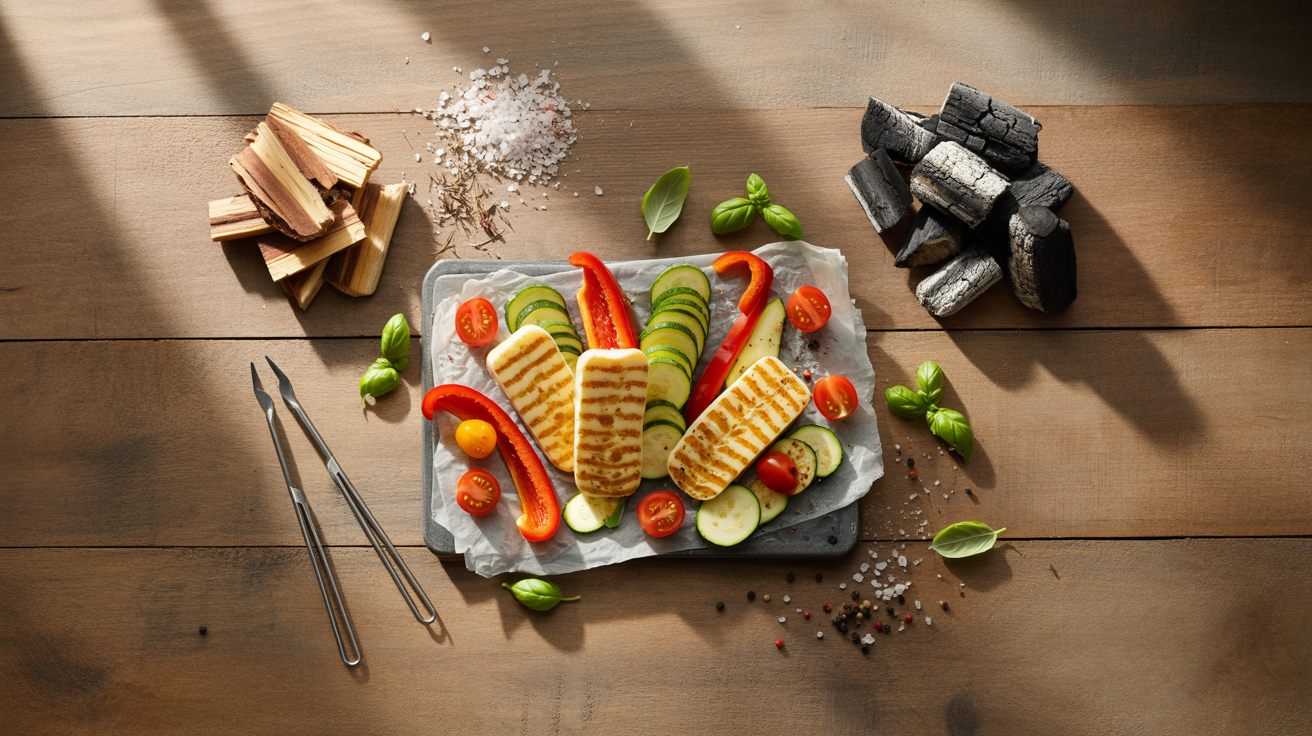
Ingredients
| AMOUNT | INGREDIENT | NOTES |
|---|---|---|
| 8 oz | halloumi cheese | cut into 1/2-inch thick slabs |
| 1 large | zucchini | sliced lengthwise into 1/4-inch planks |
| 1 large | red bell pepper | cut into wide strips |
| 1 medium | eggplant | sliced into 1/2-inch rounds |
| 1 large | red onion | cut into thick wedges |
| 3 tablespoons | extra virgin olive oil | for brushing vegetables |
| 2 cloves | garlic | minced |
| 1 teaspoon | dried oregano | Mediterranean preferred |
| 1/2 teaspoon | kosher salt | for vegetables only |
| 1/4 teaspoon | black pepper | freshly cracked |
| 2 tablespoons | fresh lemon juice | for finishing |
| 2 tablespoons | fresh parsley | chopped for garnish |
Instructions
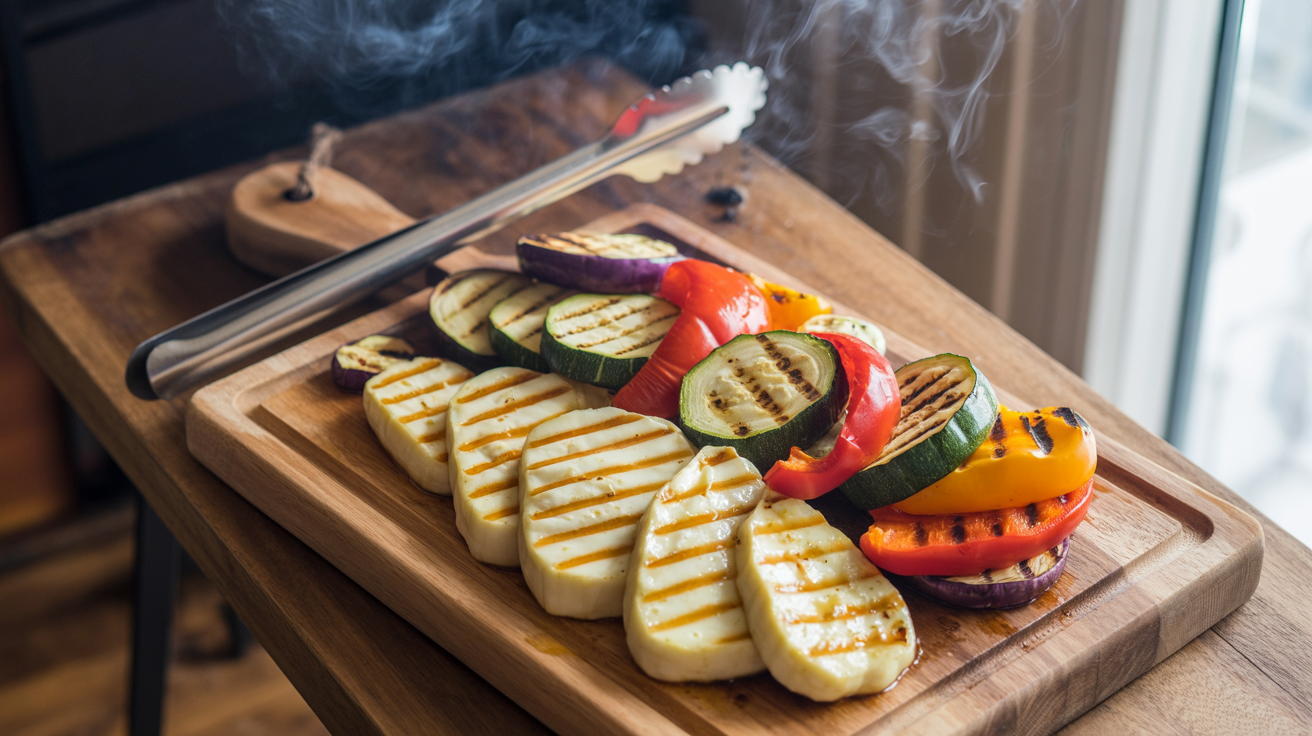
Nutrition (per serving)
The BBQ Story Behind This Recipe
Halloumi cheese has been a cornerstone of Cypriot cuisine for over a thousand years, traditionally made by shepherds who needed a cheese that could withstand the Mediterranean heat without melting completely. The unique properties of halloumi – its high melting point and ability to hold its shape under intense heat – make it the perfect candidate for grilling. Cypriot families have been cooking halloumi over open flames for generations, understanding long before modern pitmasters that high heat and quick cooking times produce the best results.
While halloumi grilling may not have the deep American BBQ roots of brisket or ribs, the principles remain the same – respect the fire, control your heat zones, and never walk away from the grill. Mediterranean grilling traditions emphasize simplicity and allowing the natural flavors of quality ingredients to shine through the kiss of smoke and char. This approach aligns perfectly with barbecue philosophy: great ingredients plus proper fire management equals outstanding results every time.
Hot Off the Grill
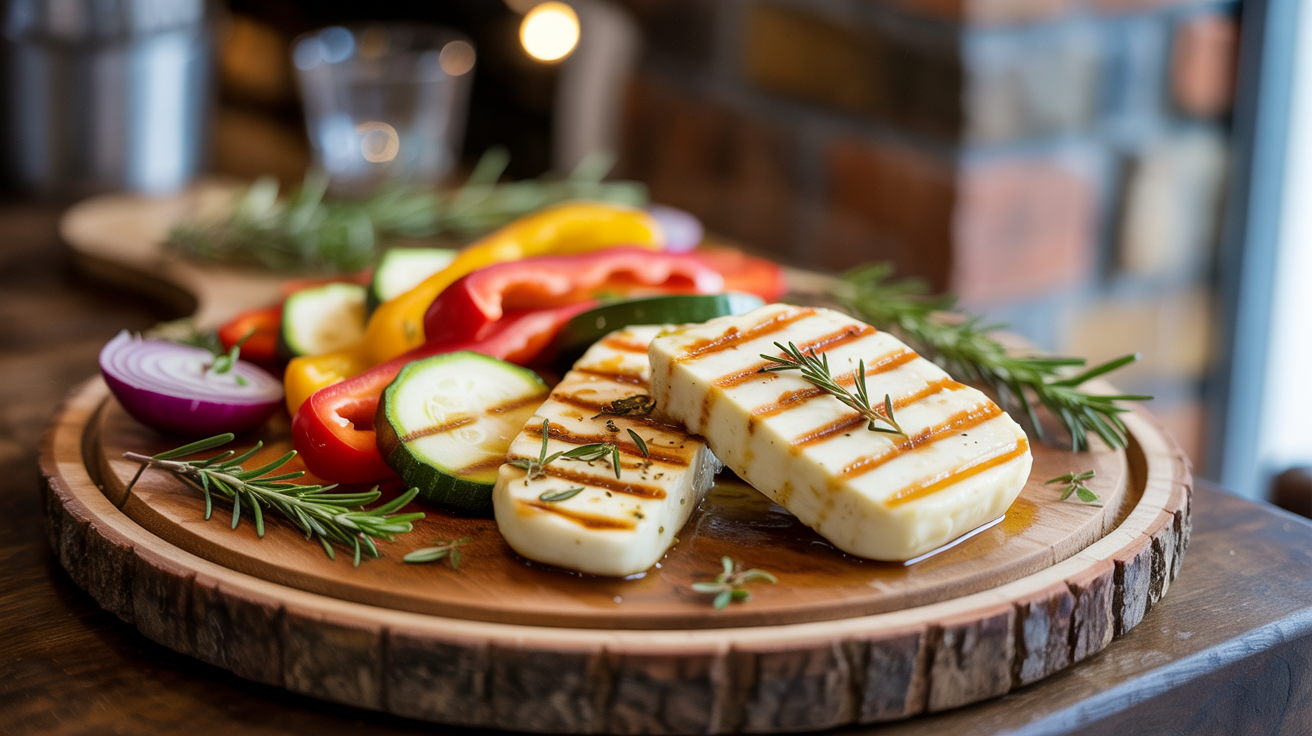
A Closer Look
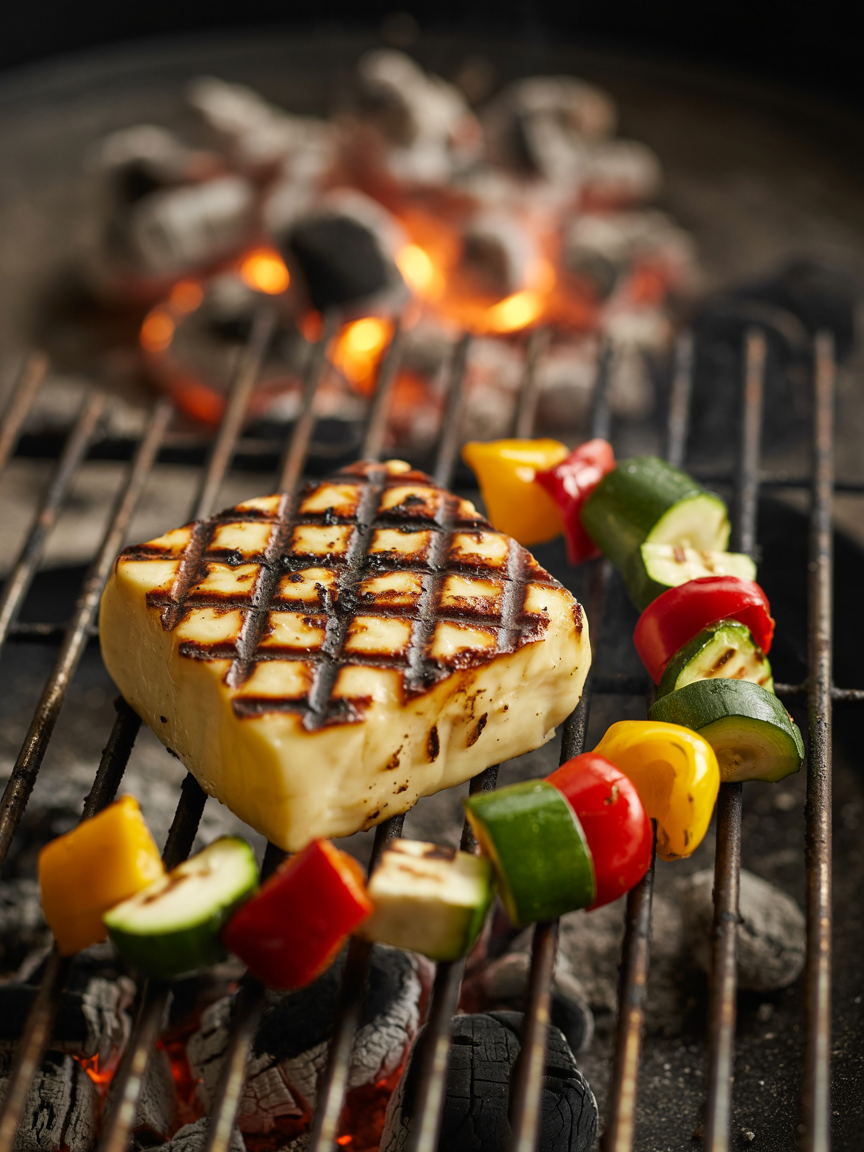
Pitmaster Tips for Best Results
- Keep your grill temperature between 450-500°F – too hot and the outside burns before the inside warms, too cool and you will not get proper grill marks
- Never press down on the halloumi with your spatula – this squeezes out the creamy interior and can cause it to break apart on the grates
- Pat halloumi completely dry before grilling and do not oil it – the natural fats in the cheese are sufficient and extra oil causes dangerous flare-ups
- Use the two-zone method if your vegetables are cooking too fast – move them to indirect heat while finishing the cheese over direct flame
- Serve immediately after grilling – halloumi firms up quickly as it cools and loses that perfect creamy texture we are working to achieve
🔧 Pitmaster Equipment
Charcoal or Gas Grill: Essential for achieving the high direct heat needed to properly sear halloumi without overcooking.
Long-Handled Spatula: Critical for safely flipping delicate cheese without it sticking to the grates or falling through.
Grill Basket or Perforated Pan: Keeps smaller vegetable pieces from falling through grates while still getting direct fire contact.
Instant Read Thermometer: Monitor grill temperature to maintain the 450-500°F zone needed for proper searing.
🔥 Variations
Pellet Grill Version: Set your pellet grill to high heat (450-500°F) and use direct grilling mode. The consistent temperature control makes this even easier – just watch your timing on the cheese.
Gas Grill Version: Preheat all burners to high and use the center of the grates for the hottest zone. Keep one burner on medium-low for a cooler zone if vegetables cook too quickly.
Cedar Plank Style: Soak a cedar plank for 2 hours then grill the halloumi on the plank for subtle smoke flavor. Increase cooking time to 4-5 minutes per side.
❓ Pitmaster FAQ
Why does my halloumi stick to the grill grates?
Clean and oil your grates thoroughly, ensure the grill is properly preheated to 450-500°F, and never move the cheese until proper grill marks form – usually 2-3 minutes per side.
Can I prepare the vegetables ahead of time?
Yes, you can cut and season vegetables up to 4 hours ahead, but brush with oil just before grilling to prevent them from drying out.
What if my halloumi melts through the grates?
Your grill temperature is too high or you are cooking too long. Keep temperature at 450°F maximum and limit cooking to 2-3 minutes per side.
How do I know when the halloumi is done?
Look for golden-brown grill marks and slightly firm edges. The internal temperature should reach about 140°F and the cheese should give slightly when pressed but hold its shape.