
How to Get a Smoke Ring on Brisket: Pitmaster Guide
Ingredients
Method
- Pull your brisket straight from the refrigerator and do not let it come to room temperature. This is one of the most counterintuitive moves in BBQ, but a cold brisket takes longer to climb through the critical smoke absorption window below 140 degrees Fahrenheit, giving you more time to develop that deep smoke ring. Trim the fat cap down to roughly a quarter inch - enough to baste the meat during the cook but not so thick it blocks smoke penetration on the fat side.
- Mix your rub in a bowl: four tablespoons of coarse kosher salt, four tablespoons of coarse black pepper, one tablespoon of celery salt, one tablespoon of garlic powder, and one teaspoon of onion powder. The celery salt is your secret weapon here - it contains natural nitrates that chemically react with the smoke to deepen and enhance the smoke ring. Apply the rub generously on all sides, pressing it into the meat surface. Do not apply any oil or binder - you want a dry surface to encourage bark formation and smoke adhesion.
- Fire up the grill or smoker and get it stabilized at 225 to 250 degrees Fahrenheit before you ever put the brisket on. For an offset smoker, build your fire in the firebox with lump charcoal as your base and add wood chunks every 45 minutes to an hour. You are chasing thin blue smoke - if you see thick white or gray billowing smoke coming out of your exhaust vent, wait until it clears. Dirty smoke produces bitter off-flavors and actually inhibits ring development.
- Place the brisket on the grate fat side up, positioning it in the zone of indirect heat away from the direct fire. If your smoker has a hot spot near the firebox, position the point end toward the heat since it is thicker and can handle more direct exposure. Insert your wireless probe thermometer into the thickest part of the flat, avoiding any pockets of fat. Close the lid and resist the urge to open it for at least ninety minutes.
- For the first three hours, your only job is fire management. Keep your smoker temperature rock steady between 225 and 250 degrees Fahrenheit and add wood chunks as needed to maintain that thin blue smoke. This is when virtually all of your smoke ring development is happening. The nitrogen dioxide in the smoke is penetrating the surface and reacting with the myoglobin. Every time you open the lid you lose heat and smoke, so stay disciplined and trust the process.
- Around the three to four hour mark, check the color of your bark. You want a deep mahogany crust developing on the surface - this is the Maillard reaction doing its work. The brisket will likely stall somewhere between 155 and 170 degrees Fahrenheit internal temp, which is where moisture evaporation from the surface keeps the internal temp from rising. This is completely normal and can last two to four hours. Do not panic and crank up the heat.
- When the bark is set and dark - typically around the 165 degree internal temp mark - wrap the brisket in two layers of pink butcher paper with a few pats of beef tallow or butter tucked inside the wrap. Pink butcher paper is preferred over aluminum foil because it still allows some vapor exchange, which means your bark stays more intact and the smoke ring you built in those first hours is preserved. Return the wrapped brisket to the smoker.
- Continue cooking the wrapped brisket until the internal temp reaches 200 to 205 degrees Fahrenheit. At this point, probe the thickest part of the flat with a toothpick or skewer - it should slide in and out with almost no resistance, feeling like it is going through softened butter. This probe tenderness test is more important than hitting any specific number, because every brisket is different. Some are done at 200, some need to go to 210.
- Once the brisket is probe tender, remove it from the smoker and rest the meat for a minimum of one hour - and ideally two to three hours - before slicing. Wrap the still-paper-wrapped brisket in a thick towel and place it in a dry cooler to hold temperature. This resting period is not optional. The muscle fibers need time to relax and reabsorb their juices, and if you cut into it too early you will lose half your moisture onto the cutting board and the smoke ring will look dull and washed out.
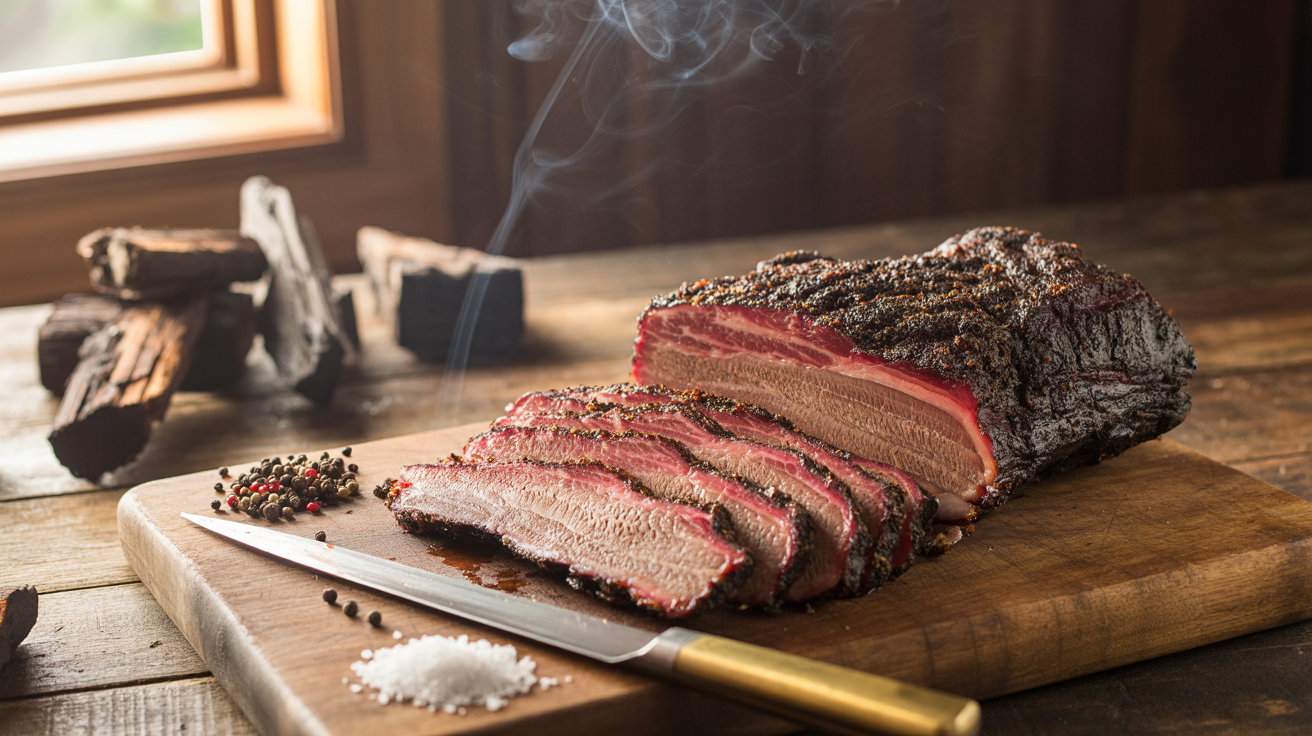
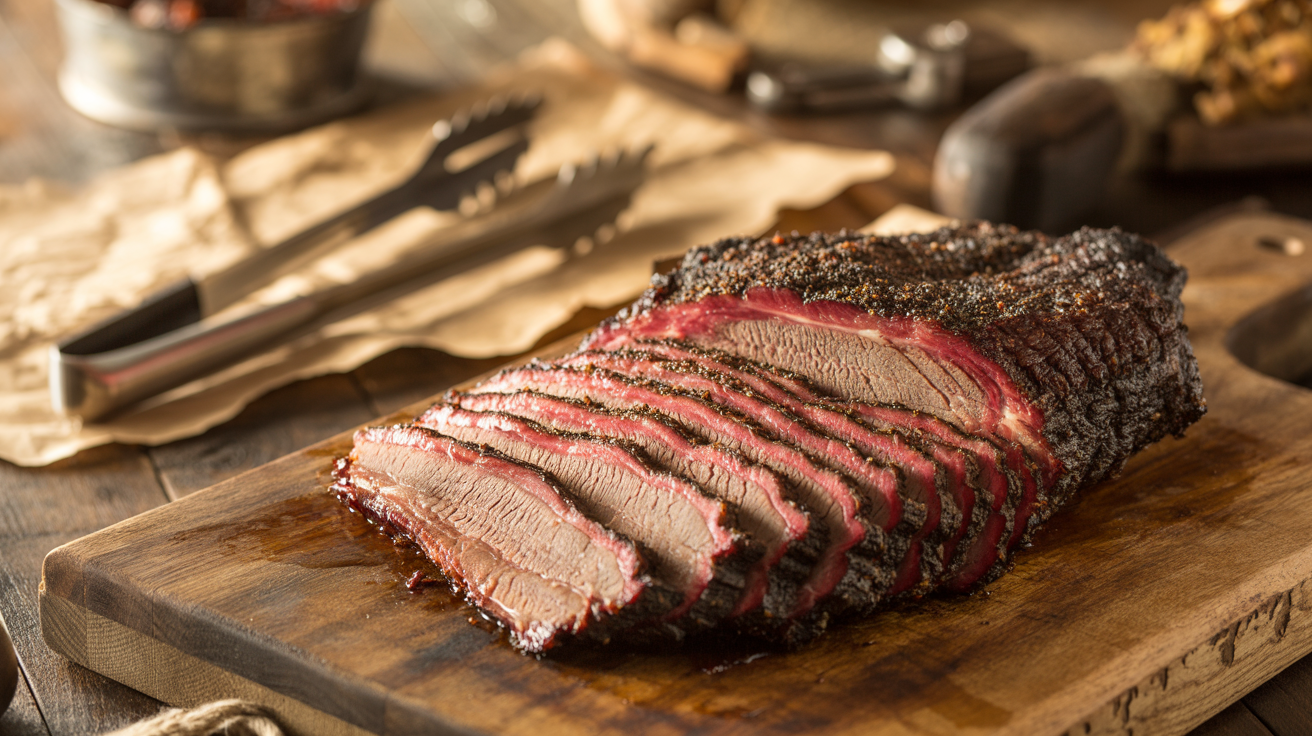
- Unwrap the brisket on a large cutting board and make your first cut right through the middle of the flat. This is the moment of truth - you will see your smoke ring in full cross-section. A great smoke ring will be deep pink or red and extend a quarter inch to half an inch beneath the bark all the way around the slice. Slice against the grain at roughly a half inch thickness for the flat, and rotate the point ninety degrees before slicing it separately. Fan the slices out on the board so that smoke ring shows, and get ready to hear some serious compliments.
Nutrition
Learning how to get a smoke ring on brisket is the rite of passage every serious pitmaster has to go through, and once you crack the code, you will never look at a plain gray slice of beef the same way again. That gorgeous band of deep pink running just beneath the bark is not just eye candy – it is proof that your fire management, wood selection, and low and slow cooking technique all came together in perfect harmony. We are talking about a chemical reaction between the nitrogen dioxide in your smoke and the myoglobin in the meat, and when conditions are right, you get that stunning ring that goes half an inch deep or more.
The magic happens in a very specific temperature window. Your brisket needs to absorb as much smoke as possible before the internal temp climbs above 140 degrees Fahrenheit, because once that myoglobin denatures past that point, the pink ring stops developing. That means your fire management in the first two to three hours is absolutely critical. Keep your smoker dialed in between 225 and 250 degrees Fahrenheit, maintain a clean thin blue smoke rather than billowing white smoke, and make sure that cold brisket hits the grate straight from the fridge to buy yourself as much time as possible in that smoke-absorption sweet spot.
At GrillMasterHQ, we have smoked hundreds of briskets chasing that perfect ring, and we are here to give you every tip, trick, and pitmaster secret we know. From choosing the right wood species to prepping your rub with nitrate-rich ingredients that chemically boost your smoke ring, this guide covers it all. Whether you are running a classic offset smoker, a kamado, or a pellet grill, the principles are the same. Follow these steps and you will be slicing into a brisket with a smoke ring so deep and vivid that people will be pulling out their phones before the first slice even hits the cutting board.
How to Get a Smoke Ring on Brisket: Pitmaster Guide
A deep, vivid smoke ring on brisket is the ultimate badge of honor for any pitmaster. Learn the science, the wood choices, and the low and slow techniques that produce that iconic pink ring every single time. Fire up the smoker today and earn your stripes.
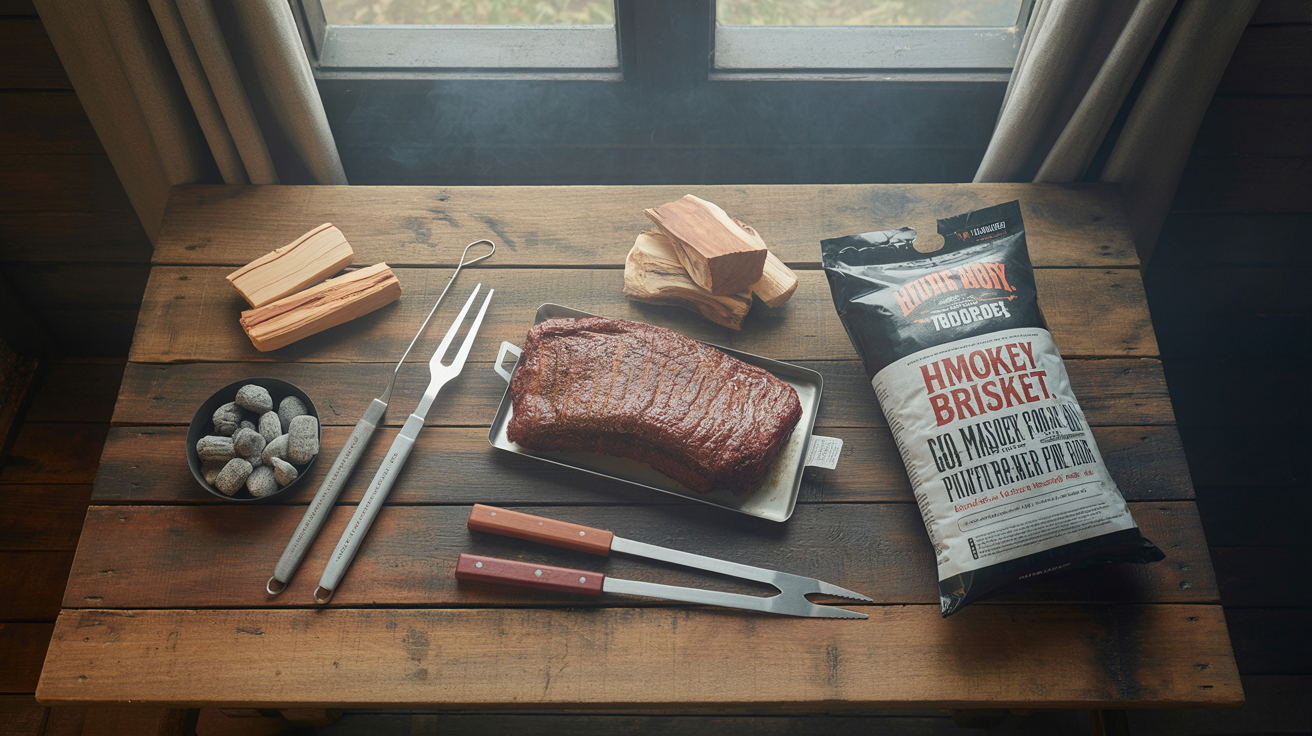
Ingredients
| AMOUNT | INGREDIENT | NOTES |
|---|---|---|
| 12 lbs | whole packer brisket | USDA Choice or Prime grade with full fat cap intact |
| 4 tablespoons | coarse kosher salt | Morton brand or similar coarse grain |
| 4 tablespoons | coarse black pepper | 16-mesh or coarsely ground for proper bark formation |
| 1 tablespoon | celery salt | nitrate-rich ingredient that chemically boosts smoke ring development |
| 1 tablespoon | garlic powder | not garlic salt |
| 1 teaspoon | onion powder | optional but adds depth to the bark |
| 6 lbs | post oak wood chunks | or hickory chunks – avoid mesquite for long cooks |
| 1 large bag | hardwood lump charcoal | Fogo or Jealous Devil recommended for long burn time |
| 1 cup | beef tallow or unsalted butter | for wrapping stage – adds moisture and richness |
Instructions
Nutrition (per serving)
The BBQ Story Behind This Recipe
The smoke ring has deep roots in American BBQ tradition, stretching back to the pit culture of the South where whole animals and massive cuts of beef were cooked low and slow over hardwood coals for community gatherings, church socials, and cattle drive camps. In Central Texas, the smoke ring became synonymous with quality at legendary joints like the old German-influenced meat markets of Lockhart and Luling, where butchers-turned-pitmasters were cooking brisket over post oak for twelve to sixteen hours at a time. The pink ring was a natural byproduct of that process, and over generations it became the visual shorthand for a properly smoked piece of meat. Customers learned to look for it before they ever took a bite, and pitmasters wore it like a trophy.
As competitive BBQ circuits grew through the 1980s and 1990s with organizations like the Kansas City Barbecue Society setting judging standards, the smoke ring took on even greater cultural weight. Competitors began engineering their cooks specifically to maximize the ring – cold meat starts, specific wood combinations, even curing salts in rubs – because a deep pink ring signaled mastery to judges and spectators alike. Regional styles developed their own smoke ring lore: Texas pitmasters favored post oak for its clean combustion, while Carolina pitmasters leaned on hickory, and the pitmasters of Kansas City blended fruit woods with hickory for a sweeter, lighter smoke profile. Today the smoke ring sits at the intersection of science, tradition, and craft, and chasing it connects every backyard griller to a lineage of American BBQ that goes back generations.
Hot Off the Grill
A Closer Look
Pitmaster Tips for Best Results
- Always start with a cold brisket straight from the refrigerator – never let it sit out to warm up before smoking. The colder the meat, the longer it stays below 140 degrees Fahrenheit, and that extended window is exactly when your smoke ring is being built. An extra 30 to 45 minutes of cold smoke absorption can add an extra quarter inch of ring depth.
- Use wood species that produce high levels of nitrogen dioxide for maximum smoke ring development. Post oak is the gold standard in Texas BBQ, but hickory, cherry, and apple are all excellent choices. Avoid mesquite for long brisket cooks – it burns too hot and produces harsh compounds during extended low and slow sessions that can make the meat bitter.
- Add celery salt or celery seed to your rub every single time. Celery naturally contains sodium nitrate, which when introduced to the meat surface interacts with combustion gases in the smoke to chemically deepen the smoke ring. This is a legal and widely used technique among competition pitmasters that can make a noticeable difference in ring depth.
- Chase thin blue smoke, not billowing white smoke. White smoke is full of incomplete combustion particles that coat the meat surface, block further smoke penetration, and produce bitter off-flavors. If your smoke looks white or gray coming out of the exhaust vent, open your intake dampers slightly to introduce more oxygen and let your fire burn cleaner before putting any meat on the grate.
- Never wrap your brisket in aluminum foil if a deep smoke ring is your goal – use pink unwaxed butcher paper instead. Foil creates a steam environment that can actually cause the smoke ring to fade or wash out because of the trapped moisture. Butcher paper allows controlled vapor release while still speeding you through the stall, preserving both your bark texture and the vivid color of the ring you worked so hard to develop.
🔧 Pitmaster Equipment
Offset Smoker or Kamado Grill: An offset smoker or kamado gives you the best control over combustion quality and airflow, which are the two biggest factors in producing a deep, even smoke ring.
Instant Read Thermometer: You need to monitor your brisket internal temp closely and pull it at the right moment. A reliable instant read thermometer like the Thermapen is non-negotiable for precision BBQ.
Wireless Probe Thermometer: A dual-probe wireless thermometer lets you monitor both the grate temperature and the brisket internal temp simultaneously without opening the lid and losing heat.
Long Tongs and Heat Resistant Gloves: Managing large cuts of beef at high heat requires serious hand protection and long-reach tools to keep you safe while positioning the brisket on the grate.
Chimney Starter: A chimney starter gets your charcoal lit cleanly and quickly without lighter fluid, which can produce dirty smoke that ruins your smoke ring and flavor.
Water Pan: A water pan beneath the brisket adds moisture to the cooking environment and helps maintain a steady, humid heat that encourages better smoke penetration into the meat surface.
Pink Butcher Paper: Wrapping your brisket in pink butcher paper rather than foil allows some continued smoke contact and bark development while still pushing through the dreaded stall phase.
Sharp Brisket Slicing Knife: A long, sharp slicing knife lets you cut clean, consistent slices that show off your smoke ring to its full dramatic effect without tearing the meat.
🔥 Variations
Pellet Grill Smoke Ring Version: Set your pellet grill to its lowest temperature setting – typically 180 to 200 degrees Fahrenheit – for the first two hours to maximize smoke output during the critical ring development window. Use a high-quality hickory or post oak pellet blend and consider adding a smoke tube filled with extra pellets to supplement the smoke production. After two hours, bump the temp up to 250 degrees Fahrenheit and follow the same steps for bark development, wrapping, and resting. Pellet grills can absolutely produce a solid smoke ring with the right technique and patience.
Offset Smoker Traditional Texas Version: This is the purist method and the one most likely to produce a competition-quality smoke ring. Build your fire exclusively with post oak splits and lump charcoal, manage your intake and exhaust dampers to maintain 225 to 250 degrees Fahrenheit, and add pre-split wood every 45 to 60 minutes throughout the cook. Skip any wrapping entirely if you want maximum bark and smoke penetration – this is the Aaron Franklin method and the result is a dark, peppery bark over a vivid ring that speaks for itself. Plan for a 12 to 16 hour cook on a full packer brisket at this temp range.
Kamado Grill Smoke Ring Version: Set up your kamado for indirect cooking with a heat deflector plate installed and the temperature stabilized at 225 to 250 degrees Fahrenheit. Add three to four fist-sized chunks of post oak or hickory directly to the lump charcoal before lighting, then add one additional chunk every hour through the gaps in the top vent. Kamados hold heat exceptionally well and are very efficient with fuel, but they can run dry on smoke faster than offset smokers, so be proactive about adding wood. The tight, humidity-retaining environment of a kamado often produces beautiful, deep smoke rings because of the moist cooking atmosphere.
Competition Style Smoke Ring Version: Serious competition pitmasters sometimes use a light application of curing salt – specifically Prague Powder Number 1 used at an extremely small ratio – mixed into the rub to chemically guarantee a dramatic smoke ring regardless of cooking conditions. This technique is controversial among purists but is used by teams chasing trophies. An easier competition-legal alternative is to spray the brisket surface with a mixture of beef broth and Worcestershire sauce during the first two hours of the cook, which introduces additional nitrate compounds that enhance ring development without any curing salt required.
❓ Pitmaster FAQ
What causes the smoke ring on a brisket?
The smoke ring is caused by a chemical reaction between nitrogen dioxide in the wood smoke and myoglobin in the beef muscle tissue. When nitrogen dioxide from combustion gases dissolves on the moist surface of the meat, it forms nitrous acid, which then reacts with the myoglobin protein and locks it into a pink or red color. This reaction only occurs while the meat surface is moist and the internal temp is below approximately 140 degrees Fahrenheit, which is why low and slow cooking in the early stages is essential for a deep ring.
Does a bigger smoke ring mean better flavor?
Not necessarily – the smoke ring is primarily a visual indicator and does not directly correspond to smoke flavor intensity. You can have a deeply flavored brisket with a shallow ring, or a visually impressive ring with mild smoke flavor depending on your wood choice and fire management. That said, the conditions that produce a great smoke ring – clean combustion, steady low temp, and a cold start – also tend to produce excellent overall BBQ flavor, so the ring is a reliable proxy for technique quality even if the two are not perfectly correlated.
Why did my brisket not get a smoke ring?
The most common reasons a smoke ring does not develop are letting the meat warm to room temperature before smoking, cooking at too high a temperature which rushes the meat through the absorption window, using dirty white smoke instead of clean thin blue smoke, or using a gas grill without added wood smoke. Electric smokers without actual wood combustion also struggle to produce true smoke rings because they do not generate nitrogen dioxide the same way wood or charcoal combustion does.
How deep should a smoke ring be?
A respectable smoke ring runs at least a quarter inch deep beneath the bark. A competition-quality smoke ring will often extend three-eighths to half an inch or even deeper on a well-managed cook. The color should be a vivid deep pink or red, clearly distinct from the gray interior of the cooked meat. Anything less than an eighth of an inch is considered minimal, and no ring at all is generally seen as a sign of technique issues in the cooking process.
Does wrapping in foil destroy the smoke ring?
Wrapping in aluminum foil does not destroy a smoke ring that has already formed, but the steam environment created inside a tight foil wrap can cause some fading or softening of the ring color compared to leaving it unwrapped. Pink butcher paper is the preferred choice because it allows controlled moisture transfer without trapping steam, which helps preserve the vivid color of your smoke ring through the wrapping stage and into the final rest.
What internal temp should brisket reach before resting?
Your brisket needs to reach an internal temp of 200 to 205 degrees Fahrenheit and pass the probe tenderness test before you take it off the smoker. The probe test means a toothpick or skewer slides into the thickest part of the flat with zero resistance, like going into room temperature butter. After pulling from the smoker, rest the meat for a minimum of one hour and ideally two to three hours wrapped in butcher paper and a thick towel inside a dry cooler to allow juices to redistribute before slicing.