
The juicy brisket secrets tips you are about to read are the same principles that separate a dry, disappointing slab of beef from a competition-worthy centerpiece that has guests lined up for seconds before you even set down the carving knife. Brisket is one of the most unforgiving cuts of meat on the planet – it is loaded with tough collagen, thick fat deposits, and dense muscle fibers that will punish any pitmaster who rushes the process or ignores the fundamentals. Master the low and slow method, keep your smoker locked in between 225 degrees Fahrenheit and 250 degrees Fahrenheit, and you will be rewarded with meat so tender it practically falls apart under the slightest pressure.
Brisket success starts long before you ever fire up the grill. The trim, the rub, the wood selection, the moisture management – every single decision you make in the preparation phase has a direct impact on what comes off that smoker 12 to 16 hours later. A whole packer brisket typically weighs between 12 and 18 pounds, and at roughly one to one and a half hours of cook time per pound at 225 degrees Fahrenheit, you are committing to a serious cook. That is not a Saturday afternoon project – that is a full day devotion to the craft, and every minute of it is worth the effort when you slice into that perfectly rendered flat with a deep mahogany bark on the outside.
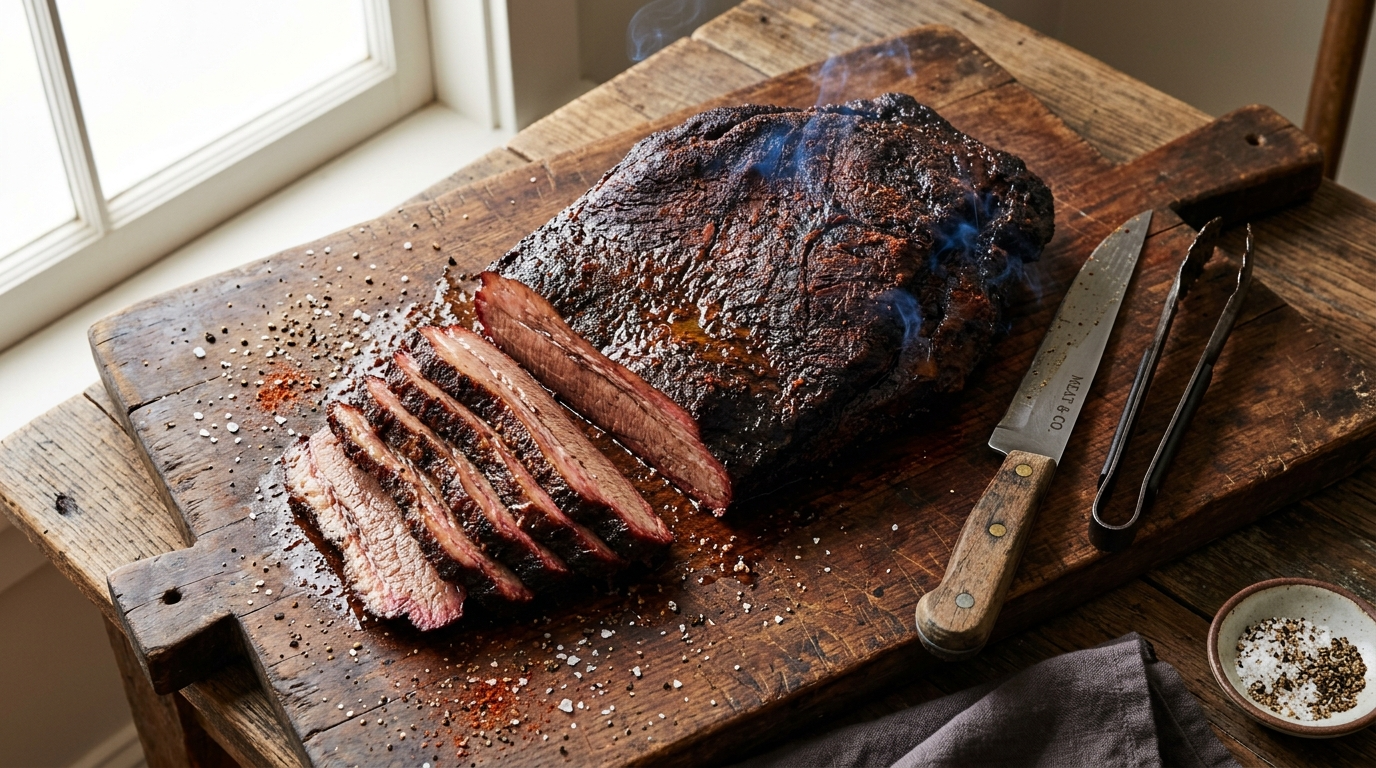
One of the most overlooked juicy brisket secrets tips is the rest. After you pull that brisket off the smoker at an internal temp of around 203 degrees Fahrenheit, you absolutely must rest the meat for a minimum of one hour – and two hours is even better. Wrap it tight in butcher paper or foil, place it in a dry cooler, and let those muscle fibers relax and reabsorb all the incredible juices that have been working their way through the meat for hours. Skip the rest and you will watch every drop of moisture you worked so hard to build pour straight out onto the cutting board the moment you make your first slice. Be patient. The brisket will reward you for it.
Juicy Brisket Secrets Tips From a Real Pitmaster
Unlock the real juicy brisket secrets tips that competition pitmasters use every single cook. From trimming the fat cap to nailing the perfect bark and smoke ring, this guide covers every technique. Fire up the smoker today and make brisket that will silence the whole table.
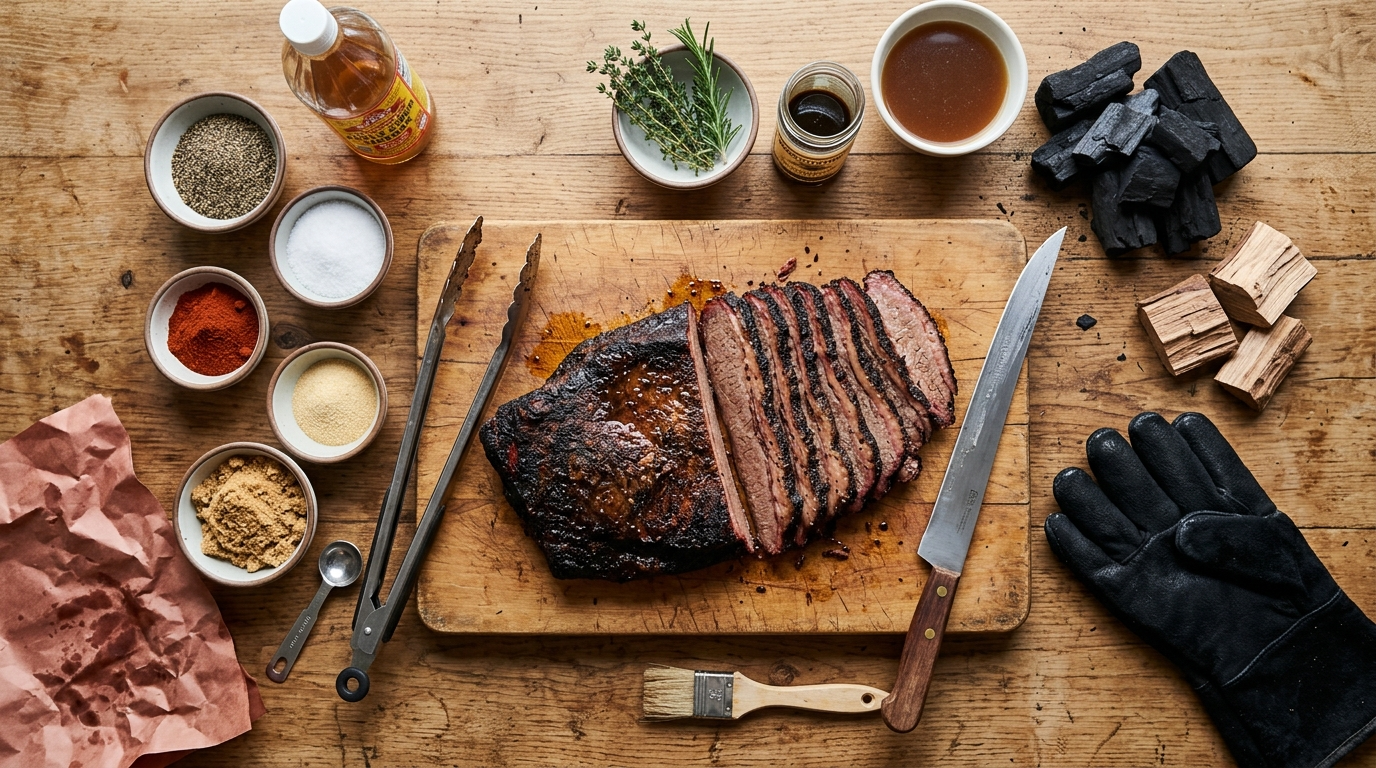
Ingredients
| AMOUNT | INGREDIENT | NOTES |
|---|---|---|
| 1 whole packer | beef brisket | 12 to 14 pounds, USDA Choice or Prime grade for best fat marbling and moisture retention |
| 1/2 cup | coarse kosher salt | Diamond Crystal preferred – the base of every great Texas-style brisket rub |
| 1/2 cup | coarse black pepper | freshly cracked 16-mesh black pepper for proper bark texture and bite |
| 2 tablespoons | garlic powder | optional addition to the classic salt and pepper base rub |
| 1 tablespoon | smoked paprika | adds a touch of color and depth to the bark without overpowering the beef |
| 1 tablespoon | onion powder | rounds out the rub and complements the beefy flavor profile |
| 1 teaspoon | cayenne pepper | optional for a subtle heat layer in the bark – adjust to your preference |
| 4 to 6 chunks | post oak wood | or hickory wood chunks for a slightly bolder smoke flavor – avoid lighter fluid-soaked products |
| 1 cup | beef tallow or unsalted butter | used for the Texas crutch wrap during the stall for extra moisture and richness |
| 1 cup | apple cider vinegar | mixed with water in a spray bottle for spritzing the bark during the cook |
Instructions
Nutrition (per serving)
The BBQ Story Behind This Recipe
Brisket has deep roots in Texas BBQ culture, tracing back to the cattle drives and meatpacking traditions of Central Texas in the mid-1800s. German and Czech immigrant butchers who settled in towns like Lockhart, Luling, and Taylor would smoke the tougher, less desirable cuts of beef – including brisket – over post oak wood as a way to preserve meat and feed working-class communities. Over generations, that practical necessity evolved into an art form, and today the smoked brisket of Central Texas is widely recognized as one of the most iconic dishes in all of American BBQ culture. Joints like Kreuz Market and Smitty is in Lockhart built their entire reputations on simple salt and pepper rubs and long post oak smokes that let the beef do all the talking.
Beyond Texas, brisket has found a place of reverence across multiple BBQ traditions throughout the United States. Kansas City pitmasters developed their own approach, finishing brisket with rich, molasses-heavy sauces and achieving a softer, saucier bark than the dry Texas style. In the American South, brisket sometimes shares the smoker with pork shoulders and ribs, picking up layers of mixed wood smoke from hickory and fruit woods. Jewish culinary traditions also have a long history with brisket, slow-braised in ovens with aromatics for holidays and celebrations. No matter which regional tradition you explore, the core truth about brisket remains the same across all of them – this cut demands time, patience, and low heat to unlock its full potential.
Hot Off the Grill
A Closer Look
Pitmaster Tips for Best Results
- Always cook a full packer brisket rather than just a flat when possible – the point muscle provides the fat and collagen that bastes the flat throughout the long cook and is nearly impossible to dry out.
- Keep a spray bottle with a 50/50 mix of apple cider vinegar and water nearby and spritz every 60 to 90 minutes after the first three hours to promote bark development and keep the surface from drying out before the crust is fully set.
- If your smoker temperature spikes above 275 degrees Fahrenheit for any extended period, you risk drying out the thin flat before the collagen in the point fully renders – consistency between 225 and 250 degrees Fahrenheit is the single most important variable in your cook.
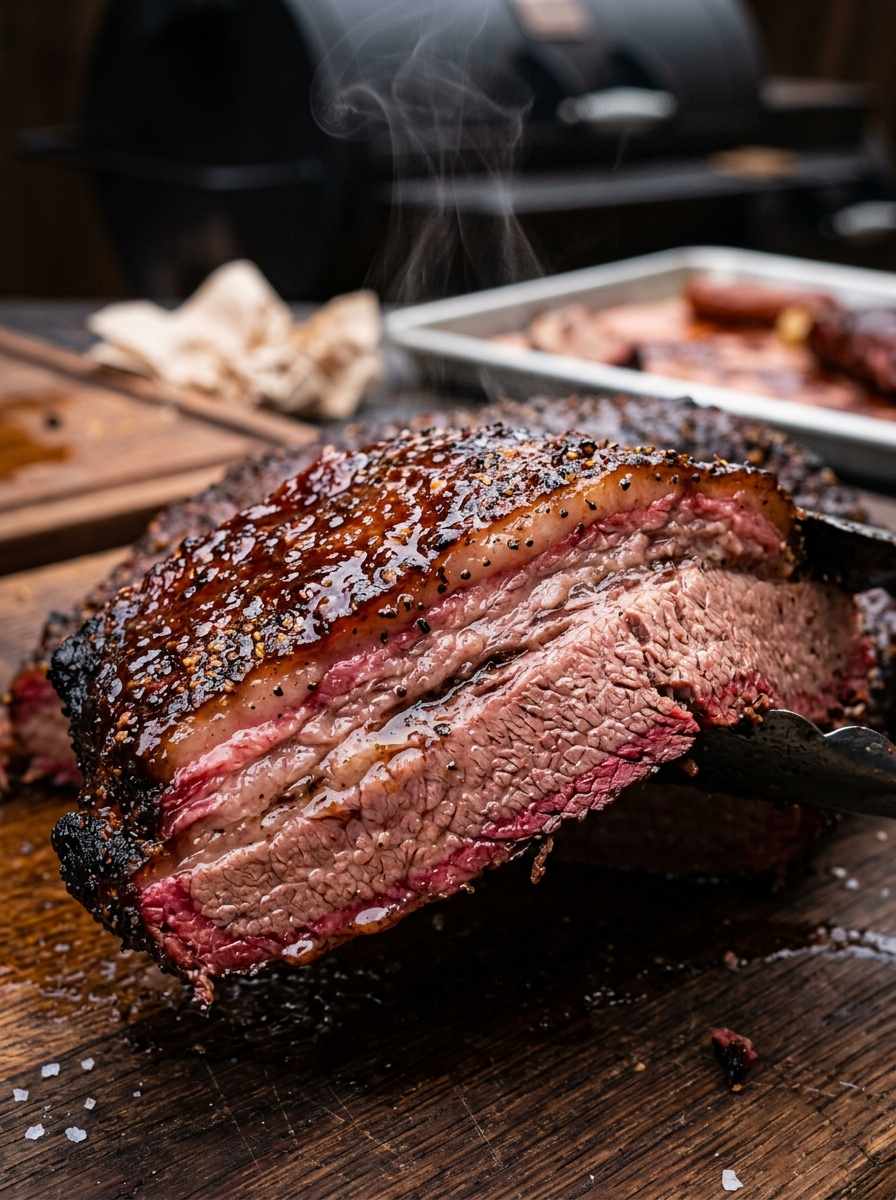
- Always slice brisket against the grain – the flat and the point run in different directions, so after separating them, find the grain in each muscle individually before you start slicing to ensure maximum tenderness in every slice.
- Let the bark guide you visually – by the six-hour mark you want a deep mahogany color and a firm dry exterior that does not smear when you touch it lightly. If the bark still looks soft or wet after six hours, increase your smoker temp by 15 to 20 degrees Fahrenheit and hold off on spritzing for the next hour.
🔧 Pitmaster Equipment
Offset Smoker or Kamado Grill: Provides the indirect heat and live fire smoke environment needed for authentic low and slow brisket with proper bark development.
Instant Read Thermometer: Absolutely critical for monitoring internal temp throughout the cook and confirming the brisket has reached the 200 to 205 degree Fahrenheit probe-tender zone.
Wireless Leave-In Probe Thermometer: Lets you monitor internal temp remotely without lifting the lid and losing precious heat and smoke during the long cook.
Sharp Boning or Fillet Knife: Essential for properly trimming the fat cap down to one-quarter inch before the cook so the rub adheres and the bark forms correctly.
Long Tongs and Heat Resistant Gloves: Keep your hands safe when managing the fire, adding wood, and handling a heavy hot brisket after the long cook.
Butcher Paper or Heavy Duty Foil: Used to wrap the brisket during the stall phase and again during the rest to lock in moisture and preserve bark texture.
Dry Cooler or Cambro Container: Creates an insulated resting environment so the brisket can rest the meat properly for one to two hours before slicing.
Large Cutting Board with Juice Groove: Gives you a stable surface for slicing and catches the incredible rendered juices that run out during carving.
🔥 Variations
Pellet Grill Brisket Version: Set your pellet grill to 225 degrees Fahrenheit and use competition blend or post oak pellets for the closest flavor to a stick burner. Follow every step exactly as written. Pellet grills run clean and consistent, which makes them outstanding for long brisket cooks. Add a smoke tube loaded with pellets during the first four hours to boost your smoke ring and bark development beyond what the pellet grill alone produces.
Kansas City Style Brisket: Follow the same low and slow smoke process but use a rub that includes brown sugar, paprika, chili powder, and cumin alongside your salt and pepper base. In the final hour of the cook, unwrap the brisket and brush on a thick layer of molasses-heavy Kansas City style BBQ sauce. Return it unwrapped to the smoker at 275 degrees Fahrenheit to let the sauce set into a sticky, caramelized glaze before resting and slicing.
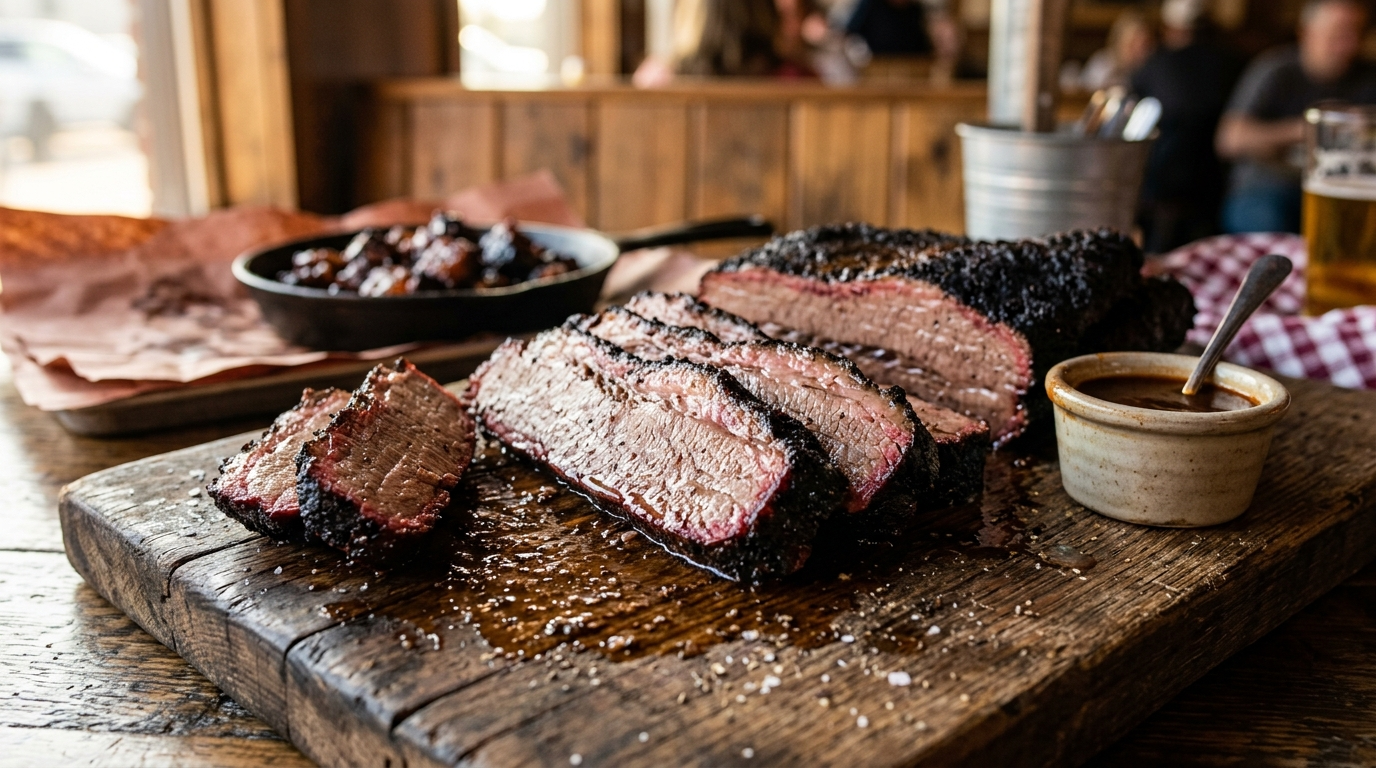
Smoked Brisket Burnt Ends: After separating the point from the flat at slicing time, cube the point into one-and-a-half inch pieces. Toss the cubes in BBQ sauce and a light dusting of your original rub, then place them in a cast iron skillet or foil pan. Return the pan to the smoker at 275 degrees Fahrenheit for one additional hour until the burnt ends are caramelized, sticky, and glazed on all sides. These are arguably the best bite in all of BBQ.
Overnight Low and Slow Brisket: Fire up the grill or smoker at 10pm and set your temperature to a stable 225 degrees Fahrenheit. Load enough fuel for a 12 to 14 hour burn, place your seasoned brisket on, and insert your wireless thermometer. Let the smoker do all the work overnight. By 10am to noon the next day your brisket should be approaching probe tender. This method works exceptionally well on insulated kamado grills and pellet grills that can hold temperature for extended periods without constant attention.
❓ Pitmaster FAQ
What internal temperature should brisket reach to be done?
The target internal temp for a finished brisket is between 200 degrees Fahrenheit and 205 degrees Fahrenheit measured in the thickest part of the flat. However, do not rely on temperature alone – always use the probe tender test by inserting your thermometer into multiple spots across the brisket. When it slides in with zero resistance like pushing into soft butter, the brisket is done regardless of what the thermometer reads exactly.
Why did my brisket stall and how long does it last?
The stall is a completely normal phase typically occurring between 155 degrees Fahrenheit and 170 degrees Fahrenheit where evaporative cooling from moisture leaving the surface slows or halts the rise in internal temp. It can last anywhere from one to six hours depending on the size of your brisket and your smoker temperature. Wrapping the brisket in butcher paper or foil at the stall and raising your smoker temp to 275 degrees Fahrenheit is the most effective way to power through it without sacrificing bark quality.
Should I cook brisket fat side up or fat side down?
Fat side up is the traditional Texas method and is generally recommended for offset smokers where heat comes from the firebox side. The fat cap renders down over the surface of the meat throughout the cook, self-basting the brisket and protecting the flat from drying out. On a vertical smoker or pellet grill where heat comes from below, fat side down creates a barrier between the heat source and the lean flat muscle which helps prevent the bottom from overcooking.
How long should I rest a brisket before slicing?
Rest the meat for a minimum of one hour and ideally two full hours for a whole packer brisket. Wrap it tightly in butcher paper, place it in a dry cooler with towels, and close the lid. The internal temp will remain food safe above 145 degrees Fahrenheit for well over two hours in an insulated environment. This resting phase is non-negotiable – it allows muscle fibers to relax and reabsorb moisture, which is the difference between a dry brisket and a juicy one that pools with juice when you slice it.
What wood is best for smoking brisket?
Post oak is the gold standard for Texas-style brisket and produces a clean, medium-intensity smoke that enhances beef without overpowering it. Hickory is a great alternative with a bolder, bacon-like smoke profile that works well with the beef-forward flavor of brisket. Fruit woods like apple or cherry add a subtle sweetness and help deepen the mahogany color of the bark. Avoid mesquite for a full low and slow brisket cook – its intense smoke can turn bitter over a 12 to 16 hour session.
Can I make brisket on a gas grill?
Yes, you can produce a solid smoked brisket on a gas grill with the right setup. Light only one or two burners and place the brisket on the unlit side for true indirect heat. Set your grill temperature to 225 to 250 degrees Fahrenheit using the lit burner controls. Place a smoker box filled with soaked wood chips like post oak or hickory directly over a lit burner, and replace the chips every 45 to 60 minutes during the first four hours of the cook to build your smoke ring. The result will not be identical to a stick burner but it will be far better than no smoke at all.