
Smoked Whole Chicken Recipe - Juicy BBQ Perfection
Ingredients
Method
- Dry brine the chicken the night before or at least 4 hours ahead. Pat the whole bird completely dry with paper towels - moisture is the enemy of bark. Sprinkle kosher salt generously over every surface of the chicken including inside the cavity. Place uncovered on a wire rack set over a sheet pan and refrigerate overnight. This dry brine seasons the meat deep down and helps the skin dry out so it crisps beautifully in the smoker.
- Mix your dry rub by combining smoked paprika, garlic powder, onion powder, black pepper, dried thyme, brown sugar, and cayenne in a small bowl. When you are ready to cook, pull the chicken out of the refrigerator 30 to 45 minutes before it hits the smoker - this takes the chill off and promotes more even cooking throughout the bird.
- Coat the entire chicken with a thin layer of olive oil or yellow mustard as your binder. Do not skip this step - the binder gives the rub something to grip. Apply the dry rub generously all over the outside of the bird, including the back and underneath the wing tips. Work some rub gently under the skin over the breast meat for deeper flavor penetration. Tie the legs together with butcher twine for a more even cook profile.
- Fire up the smoker and bring it to a steady 225 to 250 degrees F. Use a two-zone setup if you are on a kettle grill - push all your lit coals to one side and place the chicken on the opposite side over a drip pan. Add 2 to 3 wood chunks directly to your coals or firebox. Apple and cherry wood are our top picks for chicken because they produce a mild, slightly sweet smoke that complements poultry without turning the meat bitter.
- Place the chicken breast-side up on the smoker grate over indirect heat. Insert your probe thermometer into the thickest part of the thigh, making sure it does not touch the bone. Close the lid and let the smoke do its work. Resist the urge to open the lid more than necessary - every peek drops the temperature and adds time to your cook. The goal during this phase is clean, thin blue smoke, not thick white billowing clouds.
- Smoke the chicken at 225 to 250 degrees F for approximately 3 to 4 hours for a 4 to 5 lb bird. You are looking for the internal temp to reach 155 to 160 degrees F before moving to the next step. During this time you should see a beautiful amber color developing on the skin and the beginning of a firm bark forming on the surface. Add wood chunks as needed to maintain steady smoke throughout the first 2 hours of the cook.
- When the internal temp of the thigh reaches 155 degrees F, mix your melted butter with apple juice and baste the entire bird generously. This finishing baste adds a gorgeous glossy mahogany color to the skin and gives it one last boost of moisture. At this point you can also bump your smoker temp up to 275 to 300 degrees F to help crisp up the skin in the final 20 to 30 minutes. Keep a close eye on your thermometer.
- Pull the chicken off the smoker when the instant-read thermometer registers 165 degrees F in the thickest part of the thigh without touching bone. Check the breast as well - it should be at or above 160 degrees F. Transfer the bird to a wire rack or cutting board and tent loosely with aluminum foil. Rest the meat for at least 15 to 20 minutes before carving. This resting step is non-negotiable - it lets the juices redistribute throughout the meat so every bite is incredibly moist.
- After resting, remove the butcher twine and carve the chicken. Start by removing the legs and thighs, then separate the wings, and finally slice the breast meat away from the carcass. You should see a beautiful pinkish smoke ring just beneath the skin - that is your badge of honor as a pitmaster. Serve immediately with your favorite BBQ sides and do not be surprised when everyone reaches for seconds.
Nutrition
This smoked whole chicken recipe is the kind of backyard BBQ moment that turns casual grillers into full-blown pitmasters overnight. We are talking about a bird that spends hours bathing in fragrant hardwood smoke at a controlled 225 to 250 degrees F, building a gorgeous mahogany bark on the outside while staying fall-off-the-bone juicy on the inside. When that instant-read thermometer hits 165 degrees F in the thickest part of the thigh, you will know you have done something truly special.
The secret to nailing a smoked whole chicken comes down to three things: a solid dry rub, proper smoke wood selection, and patience. We like to use a combination of apple and cherry wood chunks for a mild, slightly sweet smoke profile that complements chicken beautifully without overpowering it. Hickory works too if you want something bolder. The whole process takes roughly 3 to 4 hours depending on the size of your bird and how well you are managing your fire, but every single minute is worth it.
Whether you are firing up a classic offset smoker, a kettle grill set up for indirect heat, or a ceramic kamado, this recipe will walk you through every step with the detail of a seasoned pitmaster. We will cover the dry brine, the rub, the smoke wood, the target temps, and exactly how long to rest the meat before you carve into that beauty. Get ready to serve the best chicken you have ever pulled off a smoker.
Smoked Whole Chicken Recipe – Juicy BBQ Perfection
This smoked whole chicken recipe delivers impossibly juicy meat wrapped in a mahogany bark that will have your neighbors peeking over the fence. Low and slow smoking at 225 to 250 degrees F transforms a simple bird into a BBQ masterpiece. Fire up the smoker today and taste the difference real wood smoke makes.
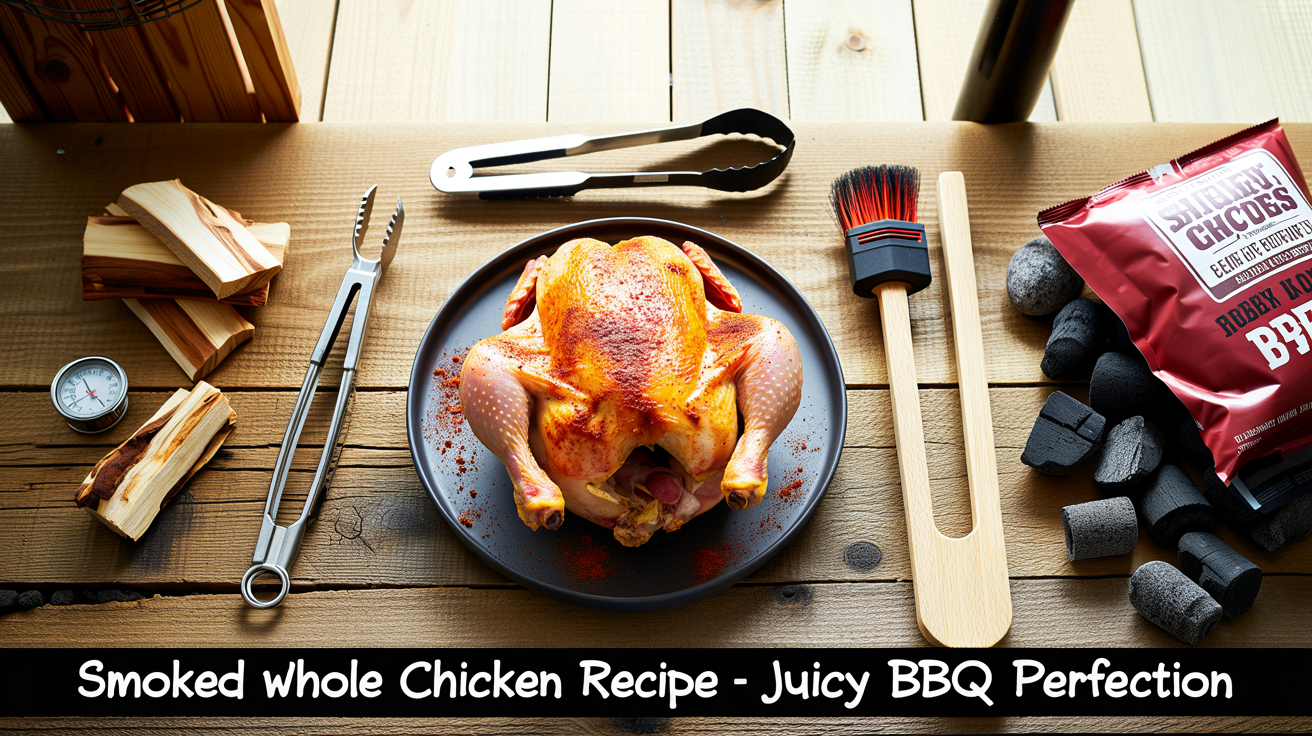
Ingredients
| AMOUNT | INGREDIENT | NOTES |
|---|---|---|
| 1 whole | chicken | 4 to 5 lbs, giblets removed, patted completely dry |
| 2 tablespoons | olive oil or yellow mustard | acts as a binder for the dry rub |
| 2 tablespoons | kosher salt | for dry brine and rub base |
| 1 tablespoon | coarse black pepper | freshly ground for best flavor |
| 1 tablespoon | smoked paprika | adds deep color and smoky depth |
| 1 tablespoon | garlic powder | do not use garlic salt – it will over-salt the bird |
| 1 teaspoon | onion powder | rounds out the savory rub profile |
| 1 teaspoon | dried thyme | optional but adds herbal complexity |
| 1 teaspoon | cayenne pepper | adjust to your heat preference |
| 1 tablespoon | brown sugar | helps build bark and adds subtle sweetness |
| 4 chunks | apple or cherry wood chunks | soaking is optional – we prefer dry chunks for cleaner smoke |
| 4 tablespoons | unsalted butter | melted, for basting in the final 30 minutes |
| 2 tablespoons | apple juice or apple cider vinegar | mixed with butter for the finishing baste |
Instructions
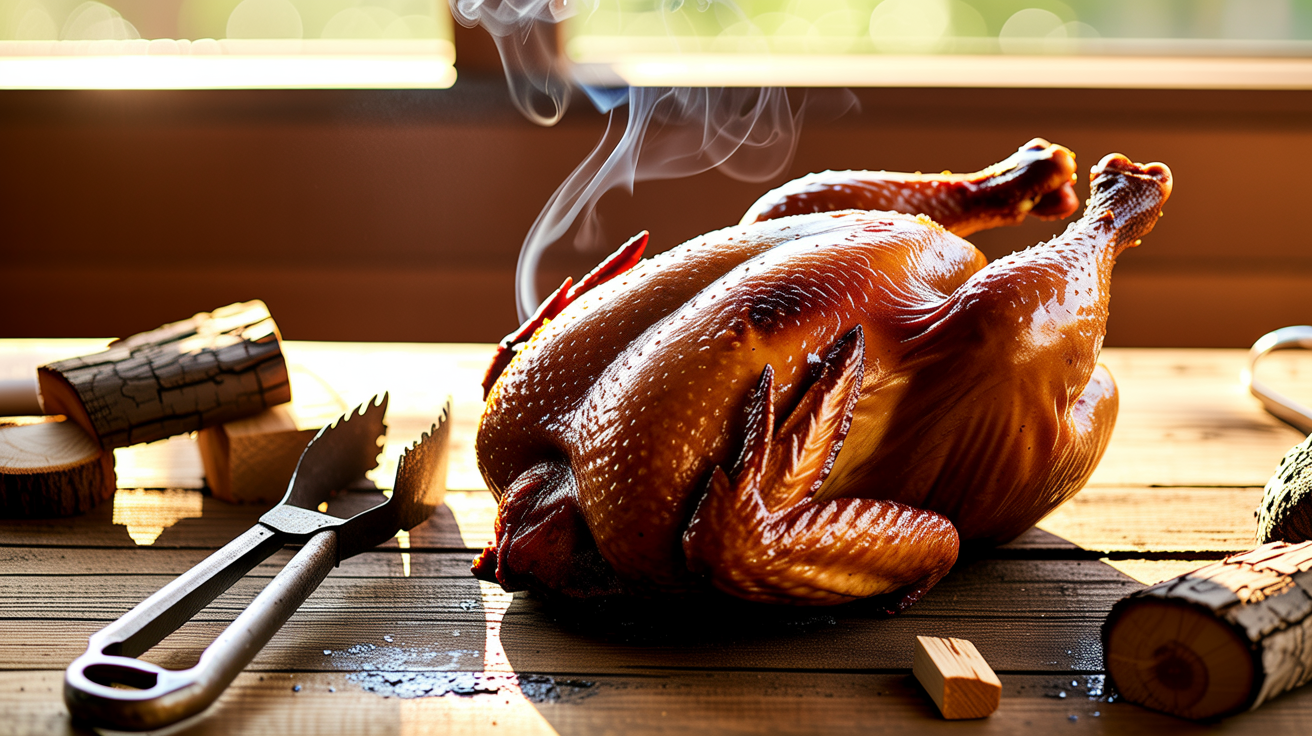
Nutrition (per serving)
The BBQ Story Behind This Recipe
Whole bird smoking has deep roots in American BBQ culture, stretching back centuries to when Indigenous peoples of North America used slow wood-fire cooking techniques to preserve and flavor game and poultry. As European settlers adopted and adapted these methods, regional BBQ traditions began to take shape across the South, the Carolinas, Texas, and the Midwest. Chicken, being affordable and widely available, became a staple of community cookouts, church gatherings, and backyard celebrations long before gas grills ever entered the picture. The low and slow approach was not just about flavor in those early days – it was about making tough, lean cuts of meat tender and safe to eat over a wood fire with no thermometers and no shortcuts.
In the competitive BBQ world of today, smoked whole chicken has earned its place alongside brisket and pork shoulder as a true test of a pitmaster’s skill. Championship BBQ circuits like the Kansas City Barbeque Society judge chicken on appearance, taste, and texture, pushing competitors to develop elaborate injection brines, precision rub blends, and smoke management techniques that have elevated backyard bird cooking into a genuine art form. The smoke ring – that iconic pink halo just beneath the surface of the skin – became a badge of honor among serious smokers, signaling that real wood smoke penetrated deep into the meat. Today that tradition lives on in every backyard where someone takes the time to fire up the smoker, skip the shortcut rotisserie, and let a whole chicken go low and slow the way it was meant to be cooked.
Hot Off the Grill
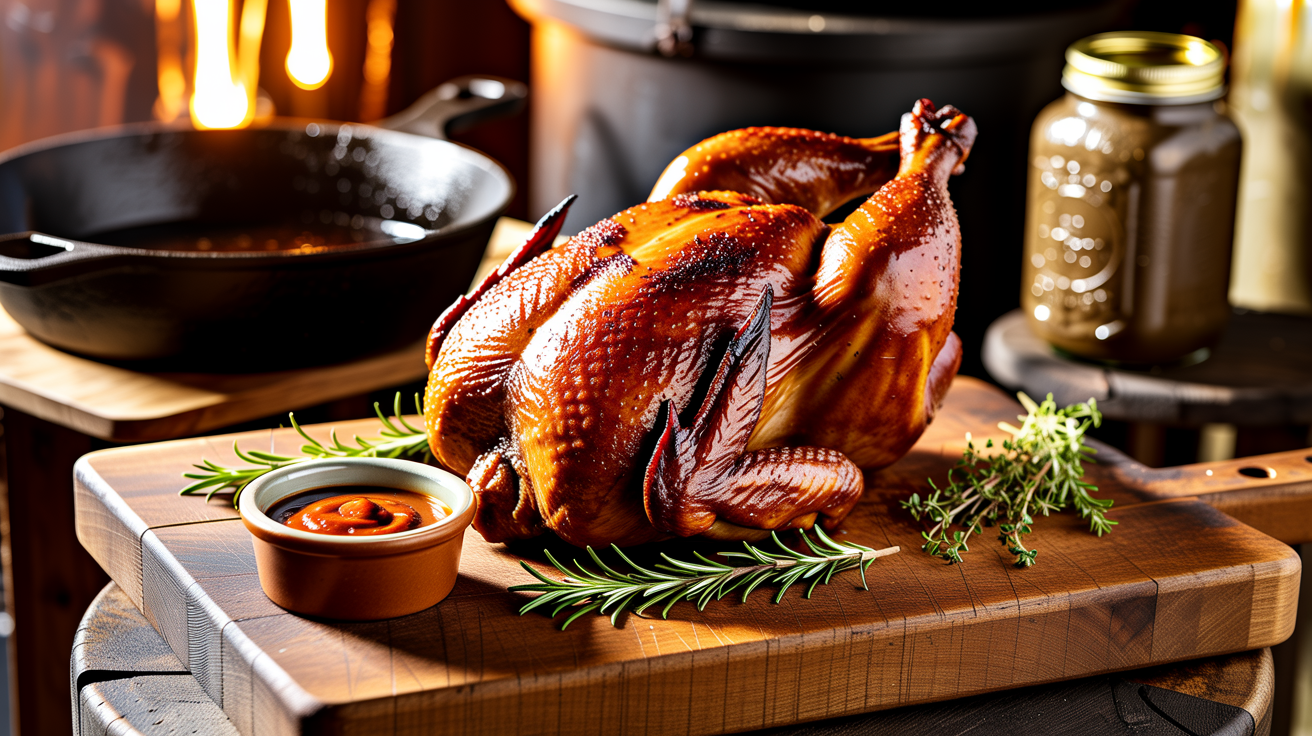
A Closer Look
Pitmaster Tips for Best Results
- Spatchcock the chicken by removing the backbone with kitchen shears before smoking if you want to cut your cook time down to about 2 to 2.5 hours – the flattened bird cooks faster and more evenly at the same 225 to 250 degrees F target.
- Do not skip the dry brine – at least 4 hours in the fridge uncovered, and overnight is even better. The salt draws out moisture and then reabsorbs it back into the meat, seasoning deep down and helping you achieve that crackling, paper-thin skin every pitmaster wants.
- Maintain your smoker temp as consistently as possible – wild temperature swings between 200 and 300 degrees F will stress the meat and give you uneven results. Invest in a quality thermometer for your smoker grate, not just the built-in lid thermometer which can be off by 50 degrees F or more.
- If your skin is not getting crispy enough by the end of the smoke, crank your smoker or finish the bird in a 425 degree F oven for 10 to 15 minutes. This high heat blast renders the remaining fat under the skin and gives you that satisfying crisp without drying out the meat.
- Always rest the meat before carving – a minimum of 15 minutes for a whole chicken, and 20 to 25 minutes is even better. Carving too early means all those beautiful juices run out onto the cutting board instead of staying in the meat where they belong.
🔧 Pitmaster Equipment
Charcoal Smoker or Offset Smoker: Provides the authentic hardwood smoke environment needed to build proper bark and a true smoke ring on the chicken.
Instant Read Thermometer: Absolutely critical for confirming the thickest part of the thigh hits 165 degrees F without overcooking the breast meat.
Long Tongs: Keep your hands safe when placing the bird over indirect heat and managing hot coals or wood chunks in the firebox.
Wireless Probe Thermometer: Lets you monitor the internal temp of the chicken continuously without lifting the lid and losing precious smoke and heat.
Chimney Starter: Gets your charcoal lit fast and evenly without lighter fluid, which can leave off-flavors in your smoke.
Aluminum Drip Pan: Catches dripping juices beneath the bird during the cook, preventing flare-ups and keeping your smoker clean.
Basting Brush or Silicone Mop: Used for applying a light butter or apple juice baste during the final stage of the cook to boost color and moisture.
Wire Cooling Rack: Lets the chicken rest properly after the cook so juices redistribute evenly before carving.
🔥 Variations
Pellet Grill Version: Set your pellet grill to 225 degrees F and load the hopper with apple, cherry, or competition blend pellets. Follow the exact same steps including the dry brine and rub. Pellet grills run very clean smoke so you may want to use a smoke tube with extra pellets for the first 2 hours to get a more pronounced smoke ring and deeper smoke flavor on the finished bird.
Gas Grill Version: Set up your gas grill for indirect heat by turning on only one or two burners and placing the chicken over the unlit side. Add a smoker box filled with soaked apple or cherry wood chips over one of the lit burners to generate smoke. Maintain a temp of around 325 to 350 degrees F, which runs hotter than a dedicated smoker, so your cook time will be closer to 1.5 to 2 hours. Use your instant-read thermometer and pull at 165 degrees F.
Beer Can Chicken Style: Open a can of your favorite beer or apple juice and drink or pour out about half. Add a few garlic cloves, fresh thyme sprigs, and a teaspoon of rub into the can. Slide the cavity of the seasoned and rubbed chicken down over the can so the bird stands upright on the smoker. This position cooks the bird very evenly and the liquid steams from the inside adding extra moisture – smoke at 250 degrees F until 165 degrees F internal.
Alabama White Sauce Variation: Swap out the butter baste in the final stage for Alabama white sauce – a mayonnaise and apple cider vinegar based sauce that is tangy, creamy, and absolutely addictive on smoked chicken. Apply it during the last 15 minutes of the cook and serve extra on the side. This is a classic North Alabama BBQ tradition that pairs perfectly with the mild fruit wood smoke profile.
Spicy Chipotle Rub Version: Replace the smoked paprika and cayenne in the standard rub with 1 tablespoon of chipotle chili powder and 1 teaspoon of ancho chili powder for a smoky, earthy heat that builds beautifully over the long smoke. Add 1 teaspoon of cumin and a pinch of cinnamon to the rub for a Southwestern BBQ flavor profile. Finish with a squeeze of fresh lime juice right before carving.
❓ Pitmaster FAQ
What internal temperature should smoked whole chicken reach?
The USDA recommends cooking whole chicken to a minimum internal temperature of 165 degrees F measured in the thickest part of the thigh without touching the bone. We recommend pulling the bird at 160 to 162 degrees F and letting carryover heat during the rest period bring it up to the safe 165 degrees F mark. Always verify with a quality instant-read thermometer – color alone is not a reliable indicator when smoking because the smoke ring can make properly cooked meat look pink.
How long does it take to smoke a whole chicken?
A 4 to 5 lb whole chicken typically takes 3 to 4 hours in a smoker running at 225 to 250 degrees F. Variables like outside air temperature, how often you open the lid, and the exact size of your bird will affect total cook time. Always cook to internal temperature rather than time – your thermometer is your most reliable guide. If you spatchcock the bird, expect the cook time to drop to around 2 to 2.5 hours.
What wood is best for smoking chicken?
Apple and cherry wood are the top choices for smoking whole chicken because they produce a mild, slightly sweet smoke that complements poultry without overwhelming it. Pecan is another excellent option with a slightly nuttier profile. Hickory can be used but use it sparingly – it is a strong smoke wood and can turn bitter or overpower the natural flavor of the chicken if you use too much. Avoid mesquite for long cooks with chicken as it can produce a harsh, acrid flavor.
Why is my smoked chicken skin rubbery instead of crispy?
Rubbery skin is one of the most common complaints with smoked chicken and it almost always comes down to too much surface moisture and not enough heat to render the fat under the skin. The fix starts with a proper dry brine – leave the chicken uncovered in the refrigerator for at least 4 hours and ideally overnight. During the cook, bump your smoker temp up to 275 to 300 degrees F in the final 20 to 30 minutes, or finish the bird in a 425 degree F oven for 10 to 15 minutes to blast the skin crispy.
Can I use a gas grill to make smoked whole chicken?
Absolutely – you can absolutely get great smoked chicken on a gas grill with a couple of adjustments. Set up your grill for indirect heat by turning on only one side and placing the chicken over the unlit side. Add a smoker box loaded with wood chips like apple or cherry over one of the lit burners. The temp will run hotter than a dedicated smoker, around 325 to 350 degrees F, so plan on a cook time of 1.5 to 2 hours and monitor the internal temp closely with your instant-read thermometer.
Should I brine my chicken before smoking?
Yes – brining makes a significant difference in the final juiciness of your smoked chicken. You have two options: a wet brine where you submerge the bird in a saltwater solution for 4 to 12 hours, or a dry brine where you coat the bird generously in kosher salt and refrigerate it uncovered for 4 to 24 hours. We prefer the dry brine method because it seasons the meat deeply, draws out and reabsorbs surface moisture, and helps the skin dry out for better bark formation during the smoke.
Do I need to rest the chicken after smoking?
Resting the meat is absolutely non-negotiable and one of the most important steps in the entire process. After pulling your chicken off the smoker, tent it loosely with aluminum foil and let it rest on a wire rack for at least 15 to 20 minutes before carving. During the cook, the heat drives the juices toward the center of the meat. Resting gives those juices time to redistribute throughout the entire bird, so every single bite stays moist and flavorful instead of running out onto your cutting board the moment you slice into it.