
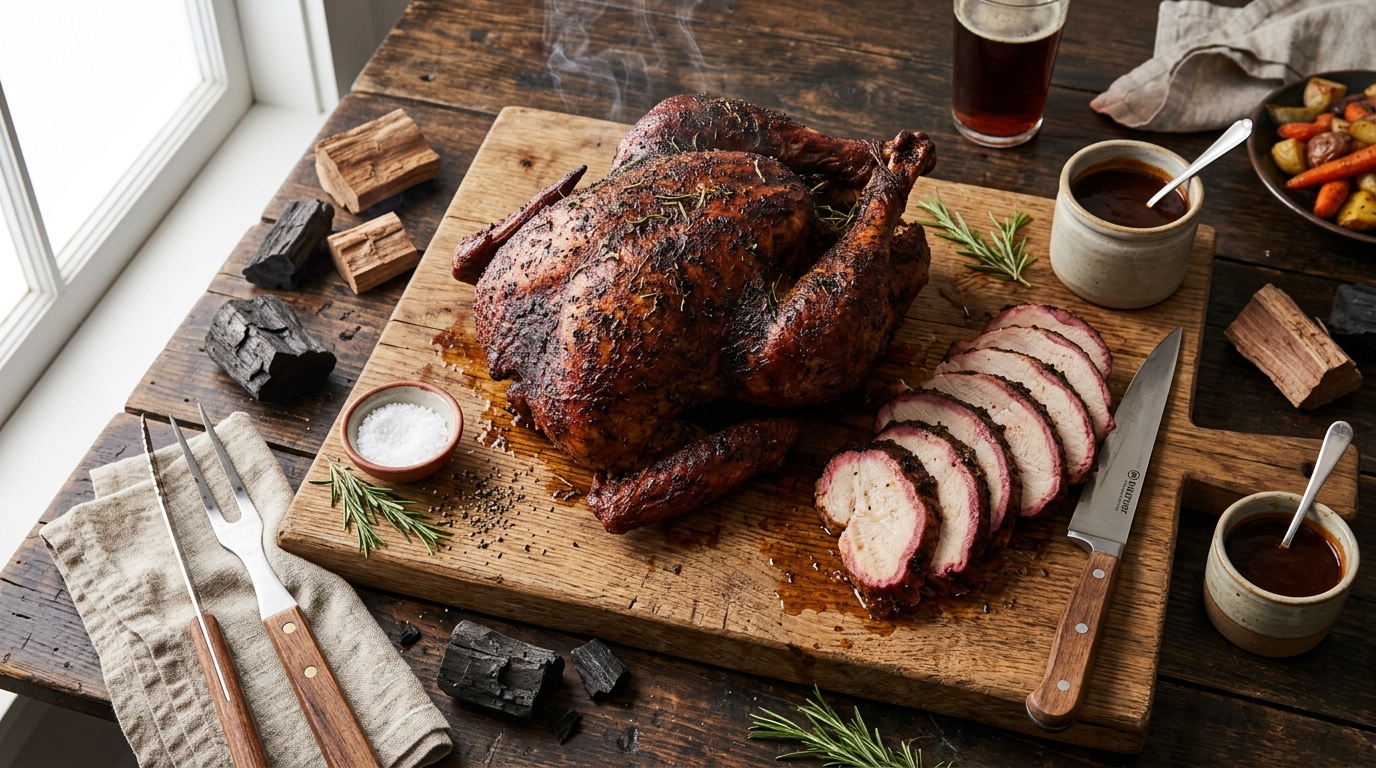
Smoked Whole Turkey Recipe - Perfect BBQ Bird Every Time
Ingredients
Method
- DRY BRINE THE TURKEY - 24 TO 48 HOURS BEFORE THE COOK: Pat the turkey completely dry inside and out with paper towels. This step is non-negotiable - moisture is the enemy of great bark and crispy skin. Measure out 3 tablespoons of kosher salt and sprinkle it evenly all over the exterior of the bird, then get some under the skin over the breast meat using your fingers to create a pocket. Season the cavity lightly with salt as well. Place the bird uncovered on a wire rack set over a sheet pan and refrigerate for a minimum of 24 hours and ideally 48 hours. That open-air fridge time dries out the skin surface even further and lets the salt work deep into the muscle fibers. You will see the surface turn slightly tacky by the time you are ready to cook - that is exactly what you want for rub adhesion.
- MAKE THE RUB AND SEASON THE BIRD - 1 HOUR BEFORE THE COOK: Pull the turkey from the refrigerator 45 minutes to 1 hour before cooking to take the chill off the exterior. In a small bowl, combine the smoked paprika, brown sugar, garlic powder, onion powder, black pepper, cayenne, dried thyme, and dried rosemary. Mix thoroughly until evenly blended. Take your softened butter and work it under the skin directly onto the breast meat in an even layer - this is your insurance policy against dry breast meat during the long cook. Brush the entire exterior of the bird with olive oil, then apply the spice rub generously all over, pressing it firmly into the skin so it adheres. Load the cavity with the halved onion, halved lemon, smashed garlic cloves, and fresh thyme sprigs. These will not heavily flavor the meat but they do add aromatic steam from the inside during the cook.
- FIRE UP THE SMOKER AND DIAL IN YOUR TEMPERATURE: Now it is time to fire up the grill. Your target cooking temperature is a steady 250 degrees Fahrenheit measured at grate level - not lid level, which can read 25 to 30 degrees hotter. Get your charcoal lit using a chimney starter and let the coals ash over completely before loading them into the firebox or snake configuration. Add your hardwood chunks - apple or cherry wood gives a beautiful mild sweetness that complements turkey without overpowering it, while hickory delivers a bolder, more assertive smoke profile. Once your smoker is holding steady at 250 degrees for at least 15 minutes with clean, thin blue smoke - not thick white billowing smoke - you are ready to cook. Place a drip pan filled with 1 cup of apple juice and enough water to cover the bottom under the grate where the turkey will sit.
- PLACE THE TURKEY AND BEGIN THE LOW AND SLOW COOK: Position your turkey breast-side up on the roasting rack directly over the drip pan. Insert your wireless probe thermometer into the thickest part of the thigh without touching the bone - this is where you will be monitoring internal temp throughout the entire cook. Close the lid and let the low and slow magic begin. Do not open that lid for the first 2 hours - every time you peek you lose 15 minutes of cook time and precious smoke. The turkey will start picking up color within the first 90 minutes and you should begin to see the exterior darkening to a warm amber shade. At the 2-hour mark, check your fire, add more charcoal if needed to maintain 250 degrees, and add one or two additional wood chunks if the smoke has died down.
- BASTE AND MONITOR THROUGH THE MIDPOINT: Starting at the 2-hour mark and repeating every 90 minutes, brush the turkey lightly with warm apple juice or melted butter to help the skin develop that gorgeous deep mahogany color without burning the sugars in the rub. Keep your smoker temperature in the 245 to 260 degree range throughout - small fluctuations are normal and acceptable. For a 14-pound turkey cooking at 250 degrees, you are looking at roughly 6.5 to 7 hours total cook time, which works out to about 30 minutes per pound. If the skin is getting very dark before the internal temp climbs, you can loosely tent the breast with a piece of aluminum foil to slow the browning while the thigh continues cooking. Watch that breast temp too - you want it to land around 160 degrees while the thigh reaches 165 degrees.
- THE STALL AND PUSHING THROUGH: Around the 4-hour mark or when the internal temp hits somewhere between 145 and 155 degrees, you may hit the stall - a frustrating plateau where the temperature seems to stop rising for an extended period. This is completely normal and is caused by evaporative cooling as moisture works its way out of the meat. Do not panic and do not crank your temperature. Stay the course, keep the lid closed, and trust the process. If you are in a serious time crunch, you can bump your smoker temp up to 275 degrees at this stage to push through the stall, which is a legitimate pitmaster technique that will not hurt the final product. The turkey will start climbing again, we promise.
- CHECK INTERNAL TEMP AND NAIL THE PULL TEMPERATURE: When your wireless probe reads 160 degrees Fahrenheit in the thigh, grab your instant read thermometer and verify in multiple spots - the other thigh, the breast at its thickest point, and the joint where the thigh meets the body. You are looking for 165 degrees Fahrenheit as the minimum safe internal temp per USDA guidelines, but pulling the bird at 160 to 162 degrees and letting carryover cooking handle the rest during the rest period is a technique pitmasters use to avoid any risk of the breast going dry. The skin should be a deep reddish-brown mahogany color with a visible bark forming on the thighs and drumsticks. If the skin looks pale or soft in spots, crank the smoker to 325 degrees for the final 20 to 30 minutes to crisp everything up before pulling.
- REST THE MEAT - DO NOT SKIP THIS STEP: Transfer the turkey to a large cutting board and tent loosely with aluminum foil. Rest the meat for a minimum of 30 minutes before carving - 45 minutes is even better for a bird this size. This rest period is not optional. It allows the muscle fibers to relax and reabsorb the juices that have been pushed toward the center of the bird during cooking. Carve a rested turkey and you get clean, juicy slices. Carve a turkey straight off the smoker and you get a flood of juice on the cutting board and dry meat on the platter. Use this time to pour yourself something cold and let people admire the bird while you collect the drippings from the pan for gravy.
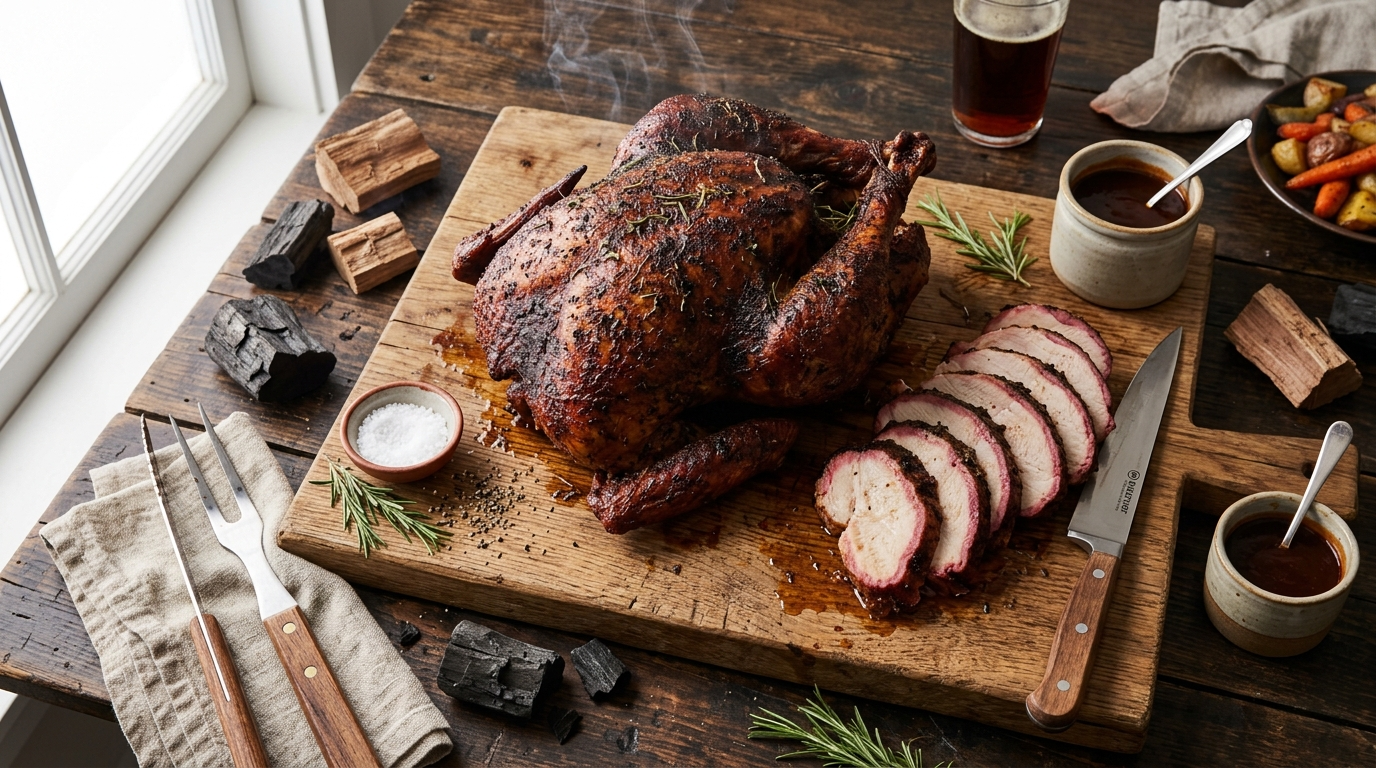
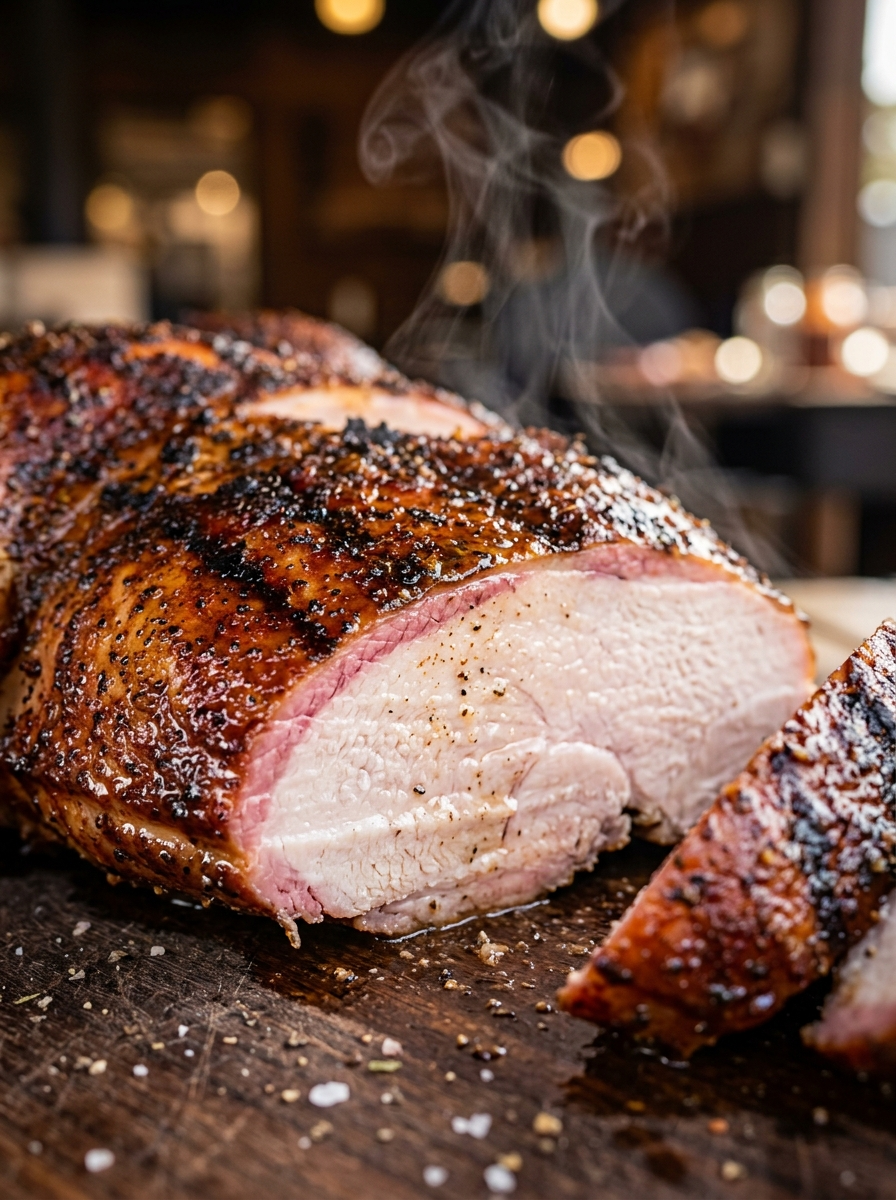
- CARVE AND SERVE: Start by removing the legs and thighs as a single piece by cutting through the joint, then separate the drumstick from the thigh. Slice the thigh meat away from the bone in long cuts. For the breast, run your knife along the breastbone and remove each breast half as a single lobe, then slice across the grain into half-inch pieces. Arrange everything on a large platter or wooden board, fanning the sliced breast meat and surrounding it with the whole drumsticks. The smoke ring - that pink band just beneath the surface of the skin - is your badge of honor as a pitmaster. Show it off proudly. Serve immediately with pan dripping gravy, roasted vegetables, and whatever sides your crowd demands.
Nutrition
A proper smoked whole turkey recipe is the crown jewel of any pitmaster repertoire, delivering layers of smoke flavor, crackling mahogany skin, and meat so juicy it will silence the entire table before anyone even reaches for a fork. We are talking about a bird kissed by real hardwood smoke at a steady 225 to 275 degrees Fahrenheit for anywhere from 6 to 8 hours depending on size, resulting in a smoke ring you can brag about and bark that snaps when you slice into it. This is not your oven-roasted aunt’s turkey – this is the real deal, cooked the way nature and fire intended.
The secret to nailing this cook every single time starts long before you fire up the grill. A proper dry brine applied 24 to 48 hours in advance draws moisture into the muscle fibers and seasons the meat all the way to the bone. Then comes the spice rub – a bold blend of kosher salt, smoked paprika, garlic, and brown sugar that forms that gorgeous bark during the low and slow cook. We are targeting an internal temp of 165 degrees Fahrenheit in the thickest part of the thigh, but pulling at 160 and letting carryover heat do the rest during the rest period is a trick every seasoned pitmaster knows by heart.
Whether you are cooking for Thanksgiving, a weekend cookout, or just because you feel like feeding a crowd something spectacular, this smoked whole turkey is a showstopper. Plan on roughly 30 to 45 minutes per pound at 250 degrees Fahrenheit, so a 14-pound bird will take close to 7 hours. That low and slow timeline is what builds the smoke ring, renders the fat under the skin, and produces meat that carves clean and glistens. Patience is the secret ingredient here – and a cold drink while you tend the fire never hurts either.
Smoked Whole Turkey Recipe – Perfect BBQ Bird Every Time
This smoked whole turkey recipe delivers a jaw-dropping bird with mahogany skin, a deep smoke ring, and impossibly juicy meat from breast to thigh. Using low and slow heat and real wood smoke, you will never want to cook turkey any other way. Fire up the smoker today and own the holiday table.
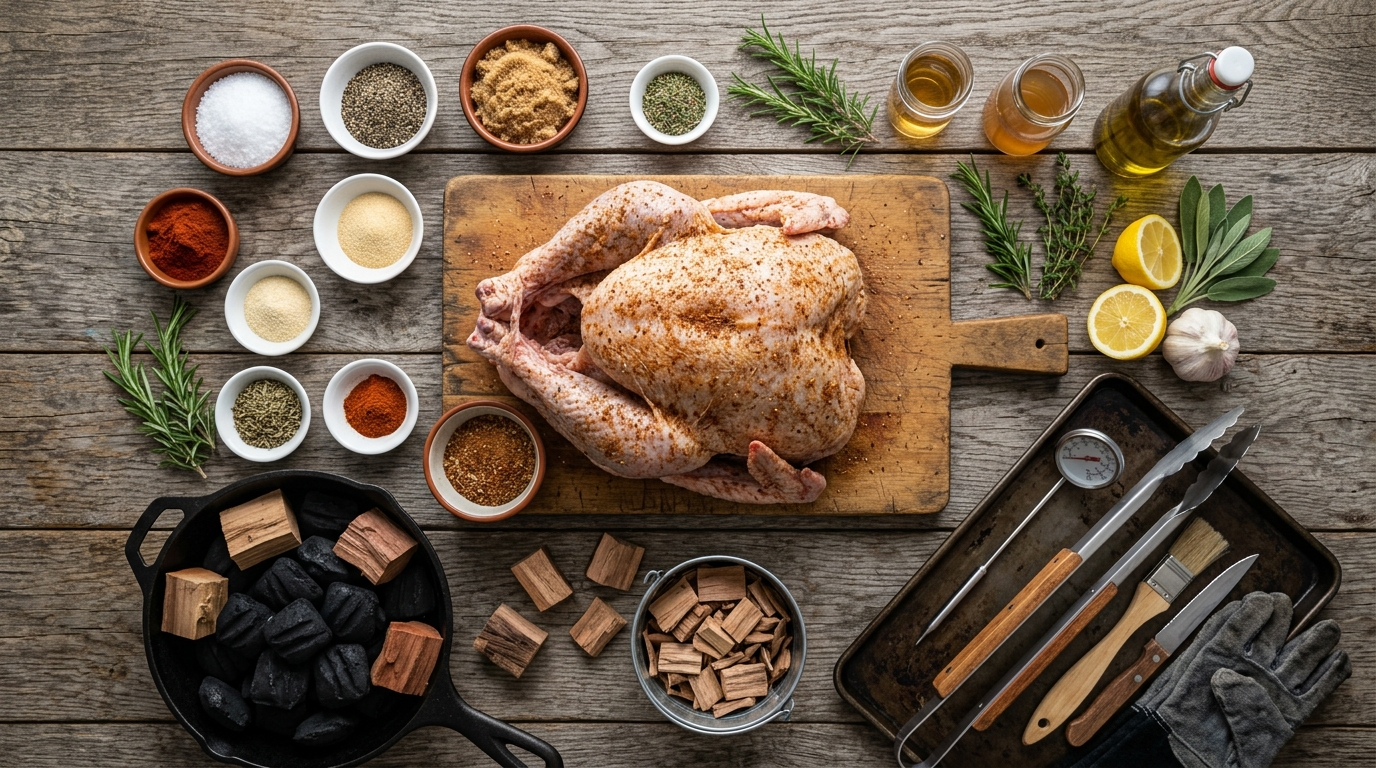
Ingredients
| AMOUNT | INGREDIENT | NOTES |
|---|---|---|
| 1 whole | turkey | 12 to 15 pounds, fresh or fully thawed, giblets and neck removed |
| 3 tablespoons | kosher salt | for dry brine, use Diamond Crystal brand for best results |
| 2 tablespoons | smoked paprika | adds deep color and smoky baseline flavor to the rub |
| 2 tablespoons | dark brown sugar | packed, helps build bark and balances the savory rub |
| 1 tablespoon | garlic powder | not garlic salt – you are already controlling sodium with the brine |
| 1 tablespoon | onion powder | rounds out the savory backbone of the rub |
| 2 teaspoons | black pepper | freshly ground for best bite and aroma |
| 1 teaspoon | cayenne pepper | optional but recommended for background heat |
| 1 teaspoon | dried thyme | classic poultry herb that complements smoke beautifully |
| 1 teaspoon | dried rosemary | crumbled fine before adding to the rub blend |
| 4 tablespoons | unsalted butter | softened, for rubbing under the skin directly onto the breast meat |
| 2 tablespoons | olive oil | for coating the exterior skin before applying the rub |
| 1 whole | yellow onion | halved, for the cavity along with aromatics |
| 1 whole | lemon | halved, placed inside the cavity for aromatic steam |
| 4 cloves | garlic | smashed, placed inside the cavity |
| 4 sprigs | fresh thyme | for the cavity to perfume the interior of the bird |
| 4 chunks | hardwood smoking chunks | apple, cherry, or hickory – NOT chips, use full chunks for long cooks |
| 1 cup | apple juice | for the drip pan and optional basting every 90 minutes |
Instructions
Nutrition (per serving)
The BBQ Story Behind This Recipe
Turkey has been a centerpiece of American cooking for centuries, but the tradition of smoking whole birds over hardwood is deeply rooted in the BBQ cultures of the American South and Southwest. Long before pellet grills and digital thermometers, pitmasters in Texas, Tennessee, and the Carolinas were hanging whole turkeys and large cuts over smoldering hickory and oak pits for hours, relying on nothing but instinct, touch, and the color of the smoke to know when the cook was right. Thanksgiving turkey took on a whole new meaning in these communities, where the smoker was just as important as the oven and the results were incomparably better.
Over time, smoking whole turkey became a competitive BBQ circuit staple, with regional variations emerging based on wood choice, brine recipes, and finishing techniques. Texas pitmasters favor post oak and a simple salt-and-pepper rub to let the bird speak for itself, while Tennessee cooks might reach for hickory and a butter-heavy injection to keep the breast meat from drying out during long cooks. Today, the smoked whole turkey has earned its place far beyond the holiday table – it is a year-round celebration of fire, smoke, and the low and slow philosophy that defines great American BBQ.
Hot Off the Grill
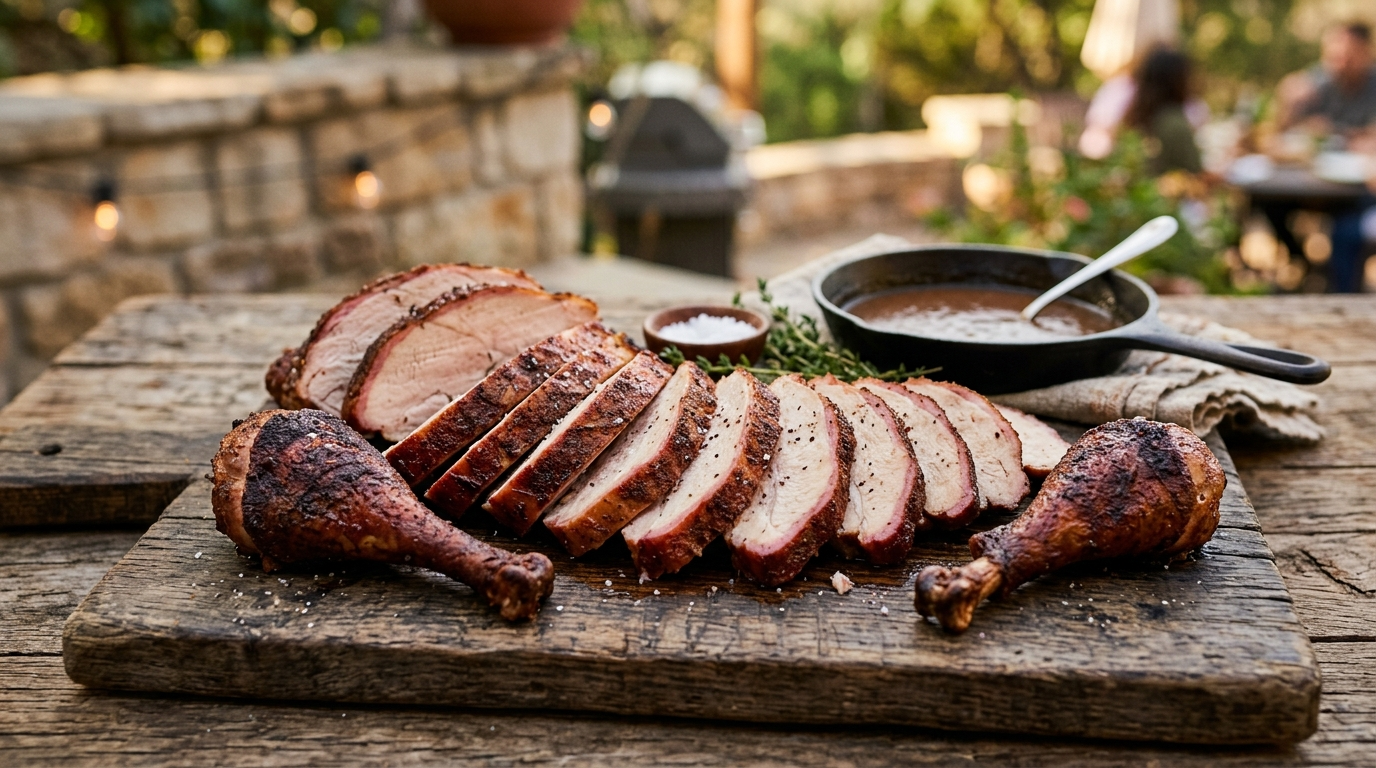
A Closer Look
Pitmaster Tips for Best Results
- Always spatchcock as an option for faster cooks – removing the backbone and flattening the bird cuts cook time nearly in half and gives you more skin surface exposed to smoke. A 14-pound spatchcocked turkey can finish in 3.5 to 4 hours at 275 degrees versus 7 hours whole.
- Wood selection matters enormously with poultry. Apple and cherry wood produce mild, sweet smoke that complements turkey without overwhelming it – ideal for first-timers. Hickory is bolder and gives a more assertive BBQ flavor. Avoid mesquite entirely for long poultry cooks as it turns bitter.
- Never stuff a smoked whole turkey with traditional bread stuffing. The stuffing will not reach a safe internal temp of 165 degrees before the outer meat overcooks. Use the aromatic cavity method described in this recipe – onion, citrus, and herbs – for flavor without food safety concerns.
- The dry brine is the single most important step in this recipe. A 48-hour dry brine with kosher salt seasons deeply, draws moisture in, and creates a tacky skin surface that accepts smoke and bark formation far better than a wet-brined or unbrined bird. Do not skip it or rush it.
- If you are cooking for Thanksgiving and need the oven for sides, keep the turkey warm in the smoker at 150 degrees for up to 2 hours after it is fully cooked. Loosely tent with foil, keep the drip pan filled, and it will hold beautifully without drying out.
🔧 Pitmaster Equipment
Offset Smoker or Kettle Grill: Provides the authentic hardwood smoke environment needed for proper bark development and a true smoke ring on your whole turkey.
Instant Read Thermometer: Absolutely critical for hitting the safe internal temp of 165 degrees Fahrenheit in the thigh without overcooking the breast meat.
Wireless Probe Thermometer: Lets you monitor internal temp without opening the lid and losing precious heat and smoke during the long cook.
Large Roasting Rack or V-Rack: Elevates the turkey so hot smoke circulates completely around the bird for even cooking and crispy skin on all sides.
Drip Pan: Catches turkey drippings to prevent flare-ups and lets you collect incredible pan drippings for gravy or basting.
Long Tongs and Heat Resistant Gloves: Keep your hands safe while managing the fire, adding wood chunks, and maneuvering a hot 14-pound bird around the smoker.
Basting Brush or Mop: Used to apply melted butter or apple juice every 90 minutes to help develop deep mahogany color and keep the skin from drying out.
Large Cutting Board: You need a full 18-inch or larger surface to rest and carve a whole turkey without losing all those precious juices.
🔥 Variations
Pellet Grill Version: Set your pellet grill to 250 degrees Fahrenheit and load up with apple, cherry, or competition blend pellets. Follow every step of the recipe exactly as written – the dry brine, the rub, the cavity aromatics, and the rest period all apply. Pellet grills run very consistently which makes hitting that 250-degree target easy, but know that they produce lighter smoke than offset smokers. You can boost the smoke output by using a smoke tube filled with pellets placed in the cooking chamber for the first 3 hours of the cook.
Gas Grill Version: Set up your gas grill for two-zone indirect cooking by lighting only the outer burners and leaving the center burners off. Place a smoker box filled with soaked apple or cherry wood chips over one of the lit burners. Target a grill temperature of 250 to 275 degrees Fahrenheit with the lid closed. Place the turkey over the unlit center burners on a roasting rack above a drip pan. Replenish the smoker box with fresh chips every 45 minutes for the first 3 hours to maximize smoke penetration before the bark seals.
Butter Injection Version: For the juiciest possible breast meat, use a meat injector to inject a mixture of 4 tablespoons melted butter, 2 tablespoons apple juice, 1 teaspoon garlic powder, and half a teaspoon of kosher salt deep into the breast in a grid pattern before applying the rub. Inject the thighs as well. This technique, popular in competition BBQ circles, guarantees the breast meat stays succulent even at the 7-hour mark and adds another layer of rich flavor from the inside out.
Cajun Smoked Turkey Version: Swap the standard rub for a bold Cajun blend using 2 tablespoons each of smoked paprika, garlic powder, and onion powder, plus 1 tablespoon each of cayenne, dried oregano, and dried thyme, with a teaspoon of white pepper. Inject the bird aggressively with a butter and hot sauce mixture before applying the rub. Use pecan wood chunks for smoking – a classic Louisiana choice that pairs perfectly with the bold Cajun spice profile. This version is a guaranteed conversation starter at any cookout.
❓ Pitmaster FAQ
What internal temperature should a smoked whole turkey reach?
The USDA recommends a minimum internal temp of 165 degrees Fahrenheit measured in the thickest part of the thigh without touching bone. Most experienced pitmasters pull the bird at 160 to 162 degrees and let carryover cooking during the rest period bring it to the safe zone, which helps prevent the breast from drying out. Always verify with an instant read thermometer in multiple locations including both thighs and the deepest part of the breast.
How long does it take to smoke a whole turkey?
At 250 degrees Fahrenheit, plan on approximately 30 to 35 minutes per pound. A 12-pound turkey will take roughly 6 to 6.5 hours, a 14-pound bird around 7 hours, and a 16-pound turkey can approach 8 to 8.5 hours. These are estimates – always cook to internal temp, not time. Variables like outside air temperature, wind, and how well your smoker holds heat can all affect your timeline significantly.
Do I need to brine a turkey before smoking it?
You do not technically have to brine, but you absolutely should. A 24 to 48-hour dry brine with kosher salt is the single biggest thing you can do to improve your smoked turkey. It seasons the meat deeply, creates a drier skin surface that develops superior bark, and helps retain moisture during the long cook. A wet brine works too but adds extra steps and makes the skin harder to crisp up. Dry brine is the pitmaster preferred method.
What wood is best for smoking whole turkey?
Apple and cherry wood are the top choices for turkey because they produce mild, sweet smoke that complements poultry without overwhelming it. Pecan is another excellent option with a slightly nuttier profile. Hickory delivers bold flavor but use it in moderation – a single chunk combined with apple or cherry gives great depth without bitterness. Avoid mesquite completely for long poultry cooks as it turns acrid and overpowering over the 6 to 8 hour cook time.
Why is my smoked turkey skin rubbery instead of crispy?
Rubbery skin is almost always caused by too much moisture on the skin surface going into the cook. Make sure you are doing the 24 to 48-hour uncovered dry brine in the refrigerator – that open-air time is critical for drying the skin out. Avoid wet brining if crispy skin is a priority. Also make sure your smoker is running clean thin blue smoke, not thick white smoke, which deposits moisture. If the skin is still soft near the end of the cook, crank the smoker to 325 to 350 degrees Fahrenheit for the final 20 to 30 minutes to render and crisp the skin.
Can I use a gas grill instead of a charcoal smoker?
Yes, absolutely – a gas grill with two-zone indirect setup and a smoker box works well for smoked whole turkey. Light only the outer burners, keep the center burners off, place the turkey over the unlit zone, and add a smoker box filled with apple or cherry wood chips over one of the lit burners. Replenish the chips every 45 minutes for the first 3 hours. You will not get quite as deep a smoke ring as you would from an offset smoker, but the flavor will still be significantly better than oven roasting.