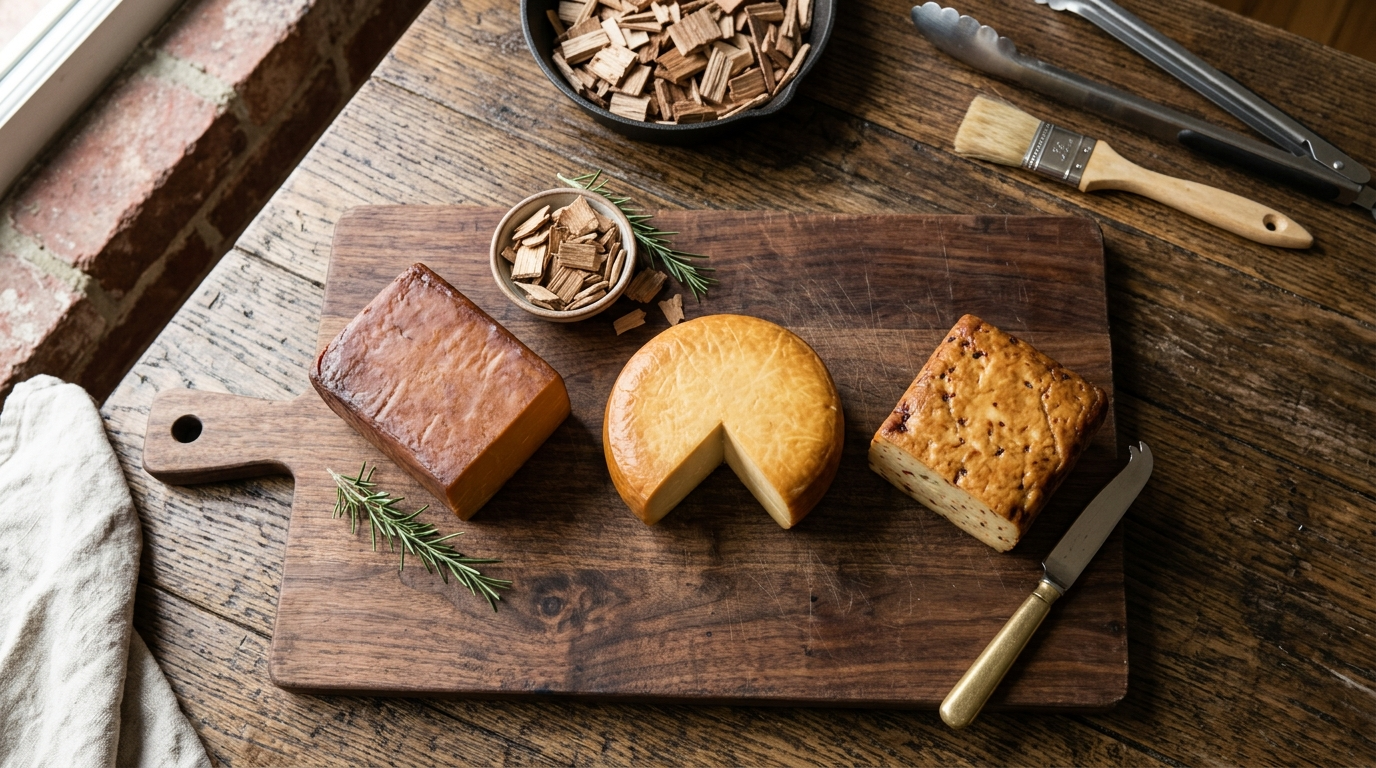
Ingredients
Method
- Pull your cheese blocks out of the refrigerator and set them on a wire cooling rack at room temperature for 1 to 2 hours before smoking. This step is critical - cold cheese pulled straight from the fridge will develop heavy condensation inside the smoker, which causes the smoke to stick unevenly and can create a bitter, acrid flavor on the surface. You want the cheese to come up to room temperature so moisture forms evenly and smoke adheres properly across the entire surface.
- Set up your smoker for cold smoking. The target ambient temperature inside the smoker is between 68 and 90 degrees Fahrenheit - never above 90 or you risk melting the cheese. On a kettle grill, this means no charcoal fire at all. Load your A-MAZE-N pellet tube or maze smoker with a blend of apple and cherry wood pellets, light one end with a torch, and let it catch for about 10 minutes before blowing out the flame. The pellets will smolder and produce a steady stream of clean, cool smoke for 2 to 4 hours. On an offset smoker, use a very small fire of mild wood chunks far from the cooking chamber to produce smoke without excess heat.
- If you are smoking on a warm day and your ambient smoker temp is creeping above 80 degrees Fahrenheit, place a foil pan filled with ice cubes on the lower grate directly below where your cheese will sit. This acts as a heat sink and keeps the environment cool enough for cold smoking. Check the ice every 45 minutes and replenish as needed. Temperature management is everything with cold smoked cheese - treat it like you would treat fire management during a long brisket cook.
- Place your cheese blocks directly on the wire cooling rack inside the smoker, making sure the blocks are not touching each other. You want at least 1 inch of clearance on all sides so smoke can circulate freely around every surface. Position the rack in the area of the smoker with the most consistent airflow but the least direct exposure to any heat source. Close the lid and let the low and slow smoke work its magic.
- Smoke the cheese for 2 hours for a lighter, more subtle smoke flavor, or up to 4 hours for a bold, assertive smoke profile. During the smoke, resist the urge to open the lid too frequently - every time you open the smoker you lose smoke and risk temperature spikes. Check the setup every 45 to 60 minutes to monitor your pellet tube, replenish ice if needed, and verify your ambient temp with an instant read thermometer held at grate level near the cheese.
- After the first hour of smoking, use long tongs to flip each block of cheese over to ensure even smoke penetration on all sides. The surface of the cheese should be developing a light golden to amber color on the side that was facing up - this is your visual cue that the smoke is doing exactly what it is supposed to do. Rotate the blocks 90 degrees as well so any edge facing a pellet tube gets equal exposure.
- At the end of your smoke session, remove the cheese from the smoker and examine each block. The surface should have taken on a beautiful amber to light brown color - similar to a bark on a slow-smoked brisket but far more delicate. The cheese itself will still feel firm and cool to the touch. Do not be tempted to taste it right now - the flavor is raw and harsh right off the smoker and needs time to develop.
- Wrap each block of smoked cheese loosely in butcher paper or unwaxed parchment paper. Do not use plastic wrap for the first 24 hours - the cheese needs to breathe and off-gas some of that initial harsh smoke. Place the wrapped blocks in the refrigerator and let them rest for a minimum of 24 hours. Forty-eight hours is even better. After the rest period, you can transfer the cheese to an airtight container or vacuum-seal bag for longer storage. The flavor will continue to improve and mellow for up to 2 weeks in the refrigerator.
Nutrition
Calories: 110kcalCarbohydrates: 1gProtein: 7gFat: 9g
Tried this recipe?Let us know how it was!