
Skirt Steak Chimichurri Recipe: Bold Grilled Flavor
Ingredients
Method
- Start by making your chimichurri at least 30 minutes before you fire up the grill - this is non-negotiable. Add the parsley, oregano, chopped garlic, and red pepper flakes to a food processor and pulse 8 to 10 times until finely chopped but not pureed. You want texture, not paste. Transfer to a bowl, stir in the red wine vinegar, extra virgin olive oil, salt, and pepper. Taste and adjust seasoning. Cover and let it sit at room temperature so the flavors can marry. The longer it sits the better it gets.
- Pull your skirt steak out of the refrigerator 30 to 45 minutes before cooking. This allows the meat to come up closer to room temperature which promotes more even cooking across the thin cut. Pat the steak completely dry with paper towels - moisture is the enemy of a great sear. Dry surface equals better crust, full stop.
- Coat both sides of the steak lightly with olive oil, then season generously with kosher salt, cracked black pepper, garlic powder, and smoked paprika. Press the seasoning into the surface with your hands. You want full coverage on every inch of that steak. Let it rest on a wire rack while your grill heats up.
- Fire up the grill. For charcoal, use a chimney starter and light a full chimney of lump charcoal. Once the coals are fully ashed over and glowing orange, dump them into the firebox and spread them in an even layer under the grate for direct heat. Cover the grill and let the grate preheat for 5 minutes. You are targeting 500 to 600 degrees Fahrenheit at the grate level. Hold your hand 2 inches above the grate - if you cannot hold it there for more than 1 second, you are at the right temp. That is the heat you need.
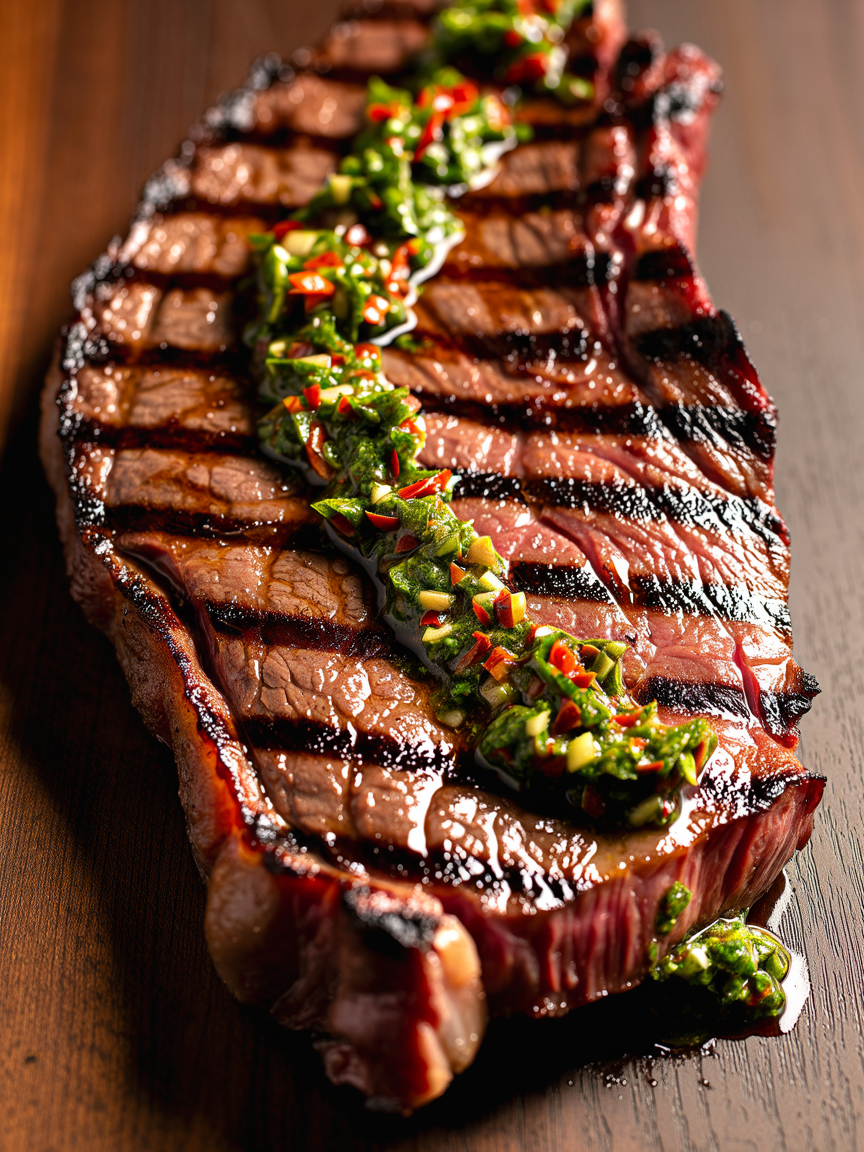
- Lay the skirt steak directly over the hot coals. Do not touch it for the first 3 to 4 minutes. You are listening for a constant aggressive sizzle - if it goes quiet, your grill has lost heat and you need to add more coals or move to a hotter zone. After 3 to 4 minutes, check for a deep mahogany crust with slight char developing on the edges. That is your visual cue to flip.
- Flip the steak and cook for another 3 to 4 minutes on the second side. Skirt steak is thin so it cooks fast. Start checking your internal temp after the first 2 minutes on the second side. You are shooting for 125 to 130 degrees Fahrenheit for medium-rare, knowing it will climb another 5 degrees while resting. If you want medium, pull at 135 degrees. Do not go past 140 degrees or you will lose the tenderness that makes this cut special.
- Pull the steak off the grill and transfer it immediately to your cutting board. This is critical - rest the meat for at least 5 to 8 minutes before cutting. Cutting too early sends all those juices running out onto the board instead of staying in the meat. Tent loosely with foil to hold some heat but leave the ends open so the crust does not steam and go soft.
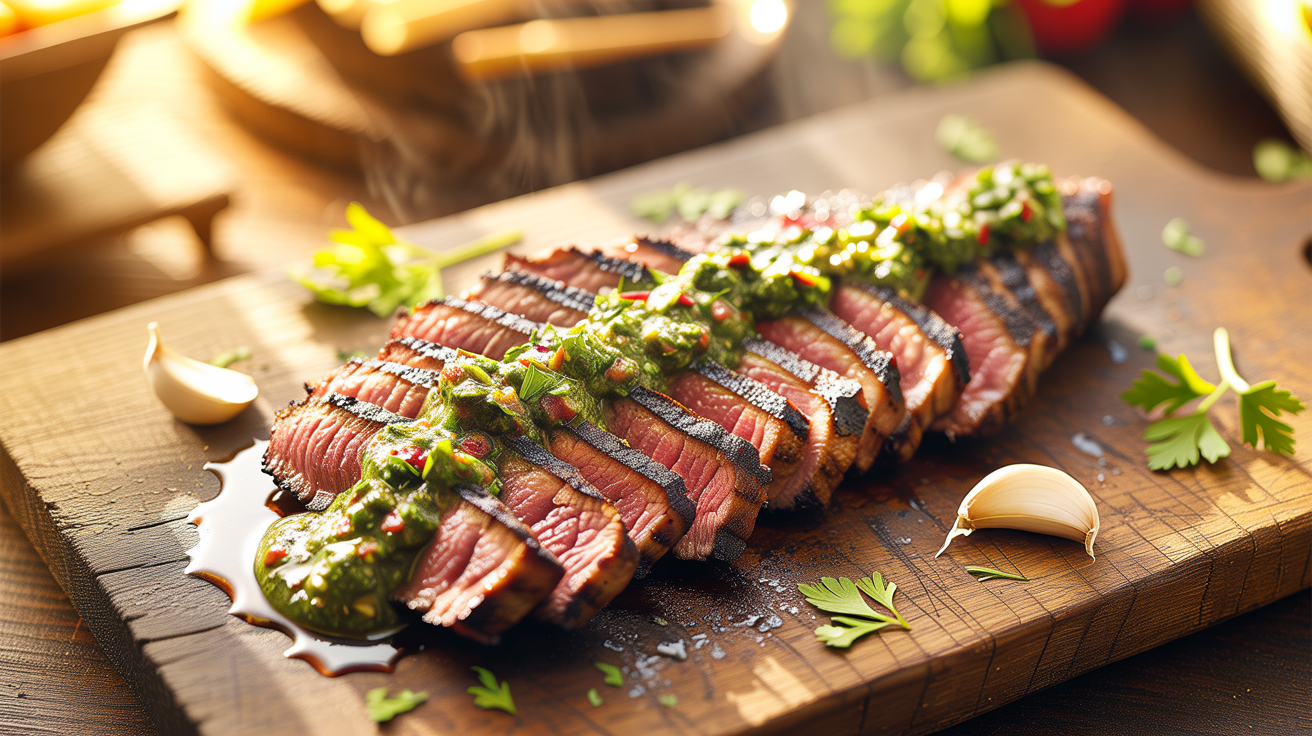
- After resting, identify the grain direction of the skirt steak - the muscle fibers run lengthwise and they are very visible. You must slice against the grain, cutting perpendicular to those fibers at a slight bias angle. Aim for slices about a quarter-inch thick. This is the single most important step for tenderness. Skirt steak sliced with the grain will be chewy and tough. Against the grain it will be butter-tender.
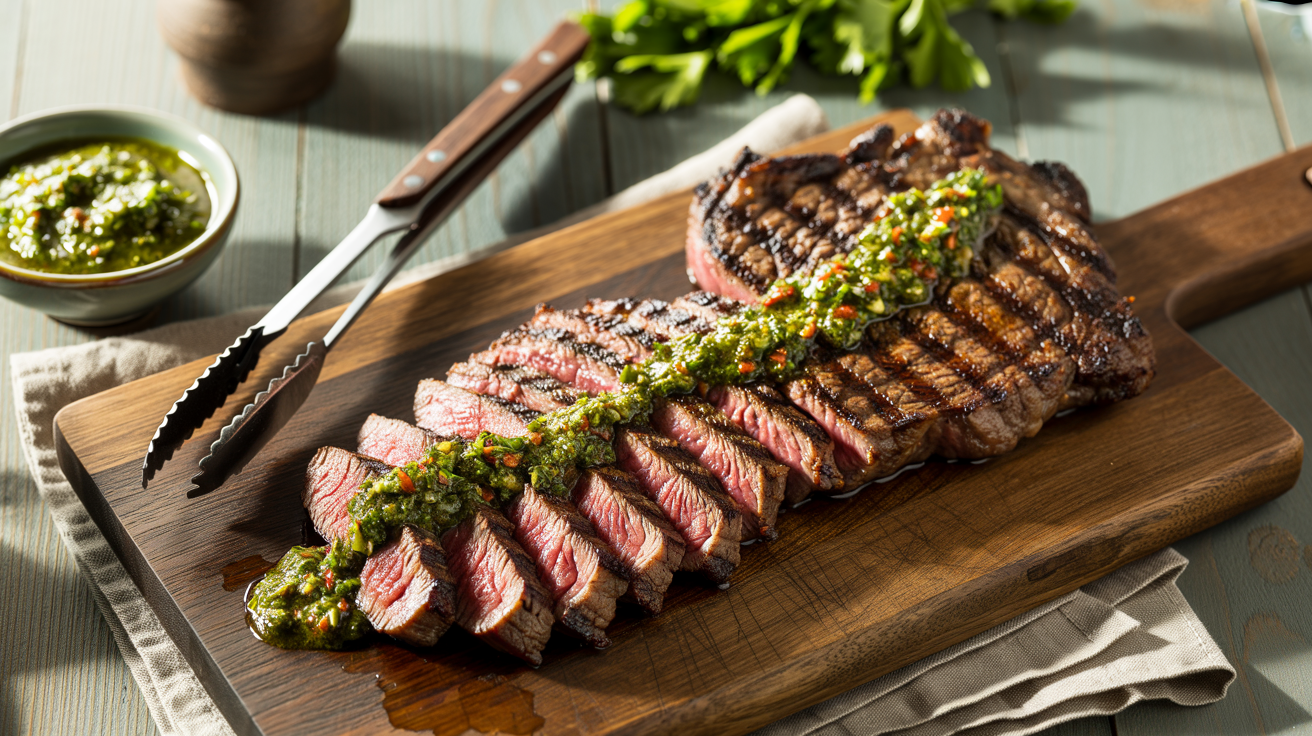
- Arrange the sliced steak on a serving platter or wooden board. Spoon a generous amount of chimichurri directly over the top and serve the rest on the side. The bright green herb sauce against the dark char of the steak is one of the most beautiful things you will ever plate off a grill. Serve immediately while the steak is still warm and the chimichurri is fresh and vibrant.
Nutrition
This skirt steak chimichurri recipe is the kind of backyard cook that turns a Tuesday night into something worth talking about. Skirt steak is one of the most underrated cuts on the entire animal – it is packed with deep beefy flavor, has a loose open grain that soaks up marinades like a sponge, and cooks fast over high heat, usually hitting your target internal temp of 130 to 135 degrees Fahrenheit for medium-rare in just 4 to 6 minutes per side. Pair that with a punchy, garlicky chimichurri and you have got a plate that punches way above its weight class.
At GrillMasterHQ we are all about using fire the right way, and this cook is all about high heat and confidence. We are talking a screaming hot charcoal grill at 500 to 600 degrees Fahrenheit over direct heat. No low and slow here – this is a sprint, not a marathon. You want that crust to form fast, locking in the juices before the interior overcooks. The visual cue you are chasing is a deep mahogany sear with slight charring on the edges. That is where the flavor lives.
The chimichurri sauce is the real secret weapon in this recipe. Made with fresh flat-leaf parsley, oregano, garlic, red wine vinegar, and good olive oil, it comes together in about 10 minutes and transforms the entire dish. You can spoon it over right before serving or use it as a finishing marinade after the steak rests. Either way, the brightness of that herb sauce against the smoky char of the steak is a combination that never gets old. Let us break down exactly how to nail this cook from fire to plate.
Skirt Steak Chimichurri Recipe: Bold Grilled Flavor
This skirt steak chimichurri recipe delivers insane char, tender beef, and a vibrant herb sauce that hits every note. With the right fire and a quick technique, you get steakhouse results in your own backyard. Fire up the grill and make tonight legendary.
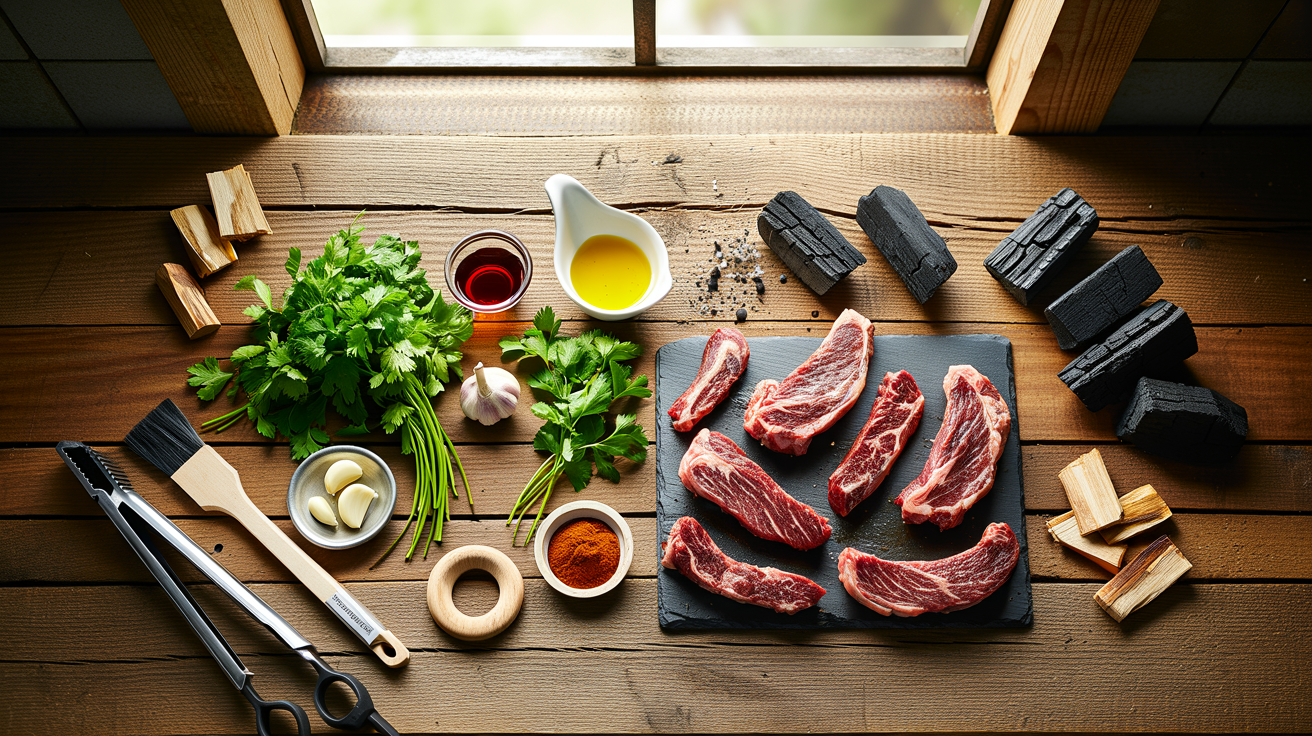
Ingredients
| AMOUNT | INGREDIENT | NOTES |
|---|---|---|
| 2 lbs | skirt steak | outside skirt preferred, trimmed of excess fat and silver skin |
| 2 tablespoons | olive oil | for coating the steak before grilling |
| 1.5 teaspoons | kosher salt | coarse, for seasoning the steak |
| 1 teaspoon | black pepper | freshly cracked |
| 1 teaspoon | garlic powder | optional but adds depth to the crust |
| 0.5 teaspoon | smoked paprika | adds a subtle smoky note to the rub |
| 1 cup | fresh flat-leaf parsley | tightly packed, stems removed |
| 0.25 cup | fresh oregano leaves | or 1 tablespoon dried oregano in a pinch |
| 4 cloves | garlic | for the chimichurri, roughly chopped |
| 0.5 teaspoon | red pepper flakes | adjust to your heat preference |
| 3 tablespoons | red wine vinegar | the backbone of the chimichurri acid profile |
| 0.5 cup | extra virgin olive oil | good quality, for the chimichurri |
| 0.5 teaspoon | kosher salt | for seasoning the chimichurri |
| 0.25 teaspoon | black pepper | freshly cracked, for the chimichurri |
Instructions
Nutrition (per serving)
The BBQ Story Behind This Recipe
Chimichurri has deep roots in the open-fire cooking traditions of Argentina and Uruguay, where asado – the South American art of wood-fire grilling – is practically a religious practice. The sauce itself is believed to have originated with Argentine gauchos, the cowboys of the Pampas, who would cook massive cuts of beef over open wood fires and dress them with a simple mixture of herbs, vinegar, and oil. Some food historians trace the name back to Basque immigrant influences in the 19th century, while others point to British settlers. Whatever the origin, chimichurri became the defining condiment of South American live-fire cooking and eventually spread around the globe.
Skirt steak has its own rich grilling heritage in North America, particularly in Tex-Mex culture where it has been the backbone of fajitas since at least the 1930s. Ranch workers in the Rio Grande Valley were among the first to popularize the cut, grilling it over mesquite wood and serving it sliced thin across the grain. When you combine the South American tradition of chimichurri with the bold Tex-Mex tradition of grilled skirt steak, you get a fusion that feels completely natural – two live-fire cultures meeting over a shared love of great beef and open flame.
Hot Off the Grill
A Closer Look
Pitmaster Tips for Best Results
- Salt the steak at least 40 minutes before grilling or go overnight in the refrigerator. Salting right before grilling pulls moisture to the surface before it can be reabsorbed, which can soften your crust. Give the salt time to do its work and pull back into the meat.
- Outside skirt steak is the superior cut over inside skirt when you can find it. Outside skirt is thicker, more uniform in shape, and has a more intense beefy flavor. Ask your butcher specifically for outside skirt – many stores default to inside skirt without being asked.
- If your skirt steak is longer than your grill grate, do not be afraid to cut it into two or three manageable sections before grilling. Smaller sections are easier to handle over high heat and you get more caramelized edge surface area, which means more flavor.
- Never skip resting the meat. Five to eight minutes at minimum after pulling the steak from the grill at 125 to 130 degrees internal temp. The fibers relax, the juices redistribute, and the carryover cooking brings you right to that perfect medium-rare target. Patience at this stage is what separates a good cook from a great one.
- Make extra chimichurri. It keeps in the refrigerator for up to one week in a sealed jar and is incredible as a dressing for roasted vegetables, a sauce for grilled chicken, a dip for crusty bread, or even stirred into scrambled eggs the next morning. You will not regret having extra.
🔧 Pitmaster Equipment
Charcoal Grill: A charcoal grill is the gold standard for this cook. You need 500 to 600 degrees Fahrenheit of direct radiant heat to get that proper crust and char on the skirt steak.
Instant Read Thermometer: Skirt steak cooks fast and the window between perfect medium-rare at 130 degrees and overcooked is narrow. An instant read thermometer keeps you on target every single time.
Long Tongs: Skirt steak is thin and cooks over ripping hot fire. Long tongs keep your hands safe and give you control when flipping and moving the steak around the grate.
Sharp Boning or Slicing Knife: Slicing skirt steak correctly against the grain is just as important as cooking it right. A sharp knife makes clean cuts and keeps the juices in the meat where they belong.
Cutting Board with Juice Groove: Skirt steak releases a lot of flavorful juice when you rest it and slice it. A board with a juice groove keeps your workspace clean and lets you collect that liquid gold.
Small Mixing Bowl and Whisk: For whisking together the chimichurri. You want everything fully emulsified so the sauce coats every slice of steak evenly.
🔥 Variations
Pellet Grill Version: Set your pellet grill to its highest temperature setting, typically 450 to 500 degrees Fahrenheit, and let the grates fully preheat for at least 15 minutes. Use a mesquite or hickory pellet blend for the boldest smoke flavor to complement the beef. Follow all the same steps for seasoning and resting. The sear will not be quite as intense as charcoal but you will still get excellent grill marks and a solid crust.
Gas Grill Version: Crank all burners to maximum high and preheat the grill with the lid closed for 15 minutes. Clean and oil the grates right before cooking. Place the steak directly over the hottest burner and follow the same timing and internal temp targets. To add smoke flavor, use a smoker box filled with soaked mesquite wood chips placed directly over a burner. It will not replicate charcoal but it closes the gap significantly.
Reverse Sear Skirt Steak: Set up a two-zone fire with coals on one side only. Place the steak on the cool side at around 225 degrees and let the internal temp climb slowly to 110 degrees, then transfer directly to the hot side for a 90-second blast on each side to build the crust. This method gives you edge-to-edge perfect doneness on thicker cuts of skirt steak and is worth trying if you have a thicker outside skirt.
Marinated Version: Combine the juice of one lime, two tablespoons of soy sauce, two tablespoons of olive oil, three cloves of minced garlic, and one teaspoon of cumin. Marinate the skirt steak in this mixture for 2 to 4 hours in the refrigerator before grilling. Pat dry before cooking. The soy sauce adds a deep umami note and helps build an even darker crust over the fire.
❓ Pitmaster FAQ
What internal temperature should skirt steak reach?
For medium-rare, pull skirt steak at 125 to 130 degrees Fahrenheit and let carryover cooking bring it to 130 to 135 during the rest. For medium, pull at 135 degrees. Do not go above 145 degrees or the steak becomes chewy and loses the tenderness that makes the cut great. Always use an instant read thermometer – guessing on thin cuts like skirt steak will get you in trouble.
Can I use a gas grill for this skirt steak chimichurri recipe?
Absolutely. Crank all burners to maximum high and preheat the grill for 15 minutes with the lid closed. The key is getting as much heat as possible at the grate level. Add a smoker box with mesquite chips if you want to bring in some smoke flavor. Follow the same timing and temp targets as the charcoal version and you will get a great result.
How do I slice skirt steak correctly?
Always slice skirt steak against the grain at a slight bias angle. The grain runs lengthwise along the cut and is very visible as parallel muscle fibers. Cut perpendicular to those fibers in slices about a quarter-inch thick. Cutting against the grain shortens the muscle fibers and dramatically reduces chewiness. This is the single most important technique step in the entire recipe.
How long does chimichurri last in the refrigerator?
Properly stored chimichurri in a sealed glass jar or airtight container will last 5 to 7 days in the refrigerator. The olive oil may solidify when chilled – just pull it out 15 to 20 minutes before serving and give it a good stir. The flavor actually deepens and improves after the first day as the garlic and herbs continue to infuse the oil.
What cut of beef can I substitute for skirt steak?
Flank steak is the closest substitute and works beautifully with chimichurri. It is slightly thicker and less intensely flavored but responds well to high heat grilling and must also be sliced against the grain. Hanger steak is another excellent option with even more concentrated beefy flavor. Add 2 to 3 minutes of cook time per side for flank or hanger due to the increased thickness.
Should I marinate skirt steak before grilling?
You do not have to. Skirt steak has enough natural flavor and a loose open grain that responds well to a simple salt, pepper, and spice rub. That said, a 2 to 4 hour marinade with acid like lime juice or red wine vinegar, oil, and aromatics can add another flavor layer and help tenderize the cut slightly. Do not marinate longer than 4 hours or the acid can start to break down the surface texture of the meat.