
Smoked Meatloaf Recipe on the Pellet Grill
Ingredients
Method
- Fire up the pellet grill and set it to 225 degrees Fahrenheit. Allow it to preheat fully with the lid closed for at least 15 minutes. Load your hopper with hickory or cherry wood pellets - hickory delivers that classic bold BBQ smoke while cherry gives a slightly sweeter profile and helps the bark develop a gorgeous deep red color. You want the grill stabilized at temp before the meatloaf goes on.
- While the grill comes up to temp, make your panade by combining the plain breadcrumbs and whole milk in a small bowl. Stir them together and let the mixture sit for 5 minutes until the breadcrumbs fully absorb the milk. This step is non-negotiable - it is the secret weapon that keeps your smoked meatloaf from drying out over the long cook.
- In a large mixing bowl, combine the ground beef, ground pork, soaked breadcrumb panade, lightly beaten eggs, grated onion, minced garlic, Worcestershire sauce, yellow mustard, smoked paprika, garlic powder, onion powder, kosher salt, black pepper, and cayenne if using. Mix everything together with your hands until just combined. Do not overwork the meat - overmixing develops too much protein structure and results in a dense, tough loaf. Mix until you no longer see streaks of individual ingredients, then stop.
- Turn the meat mixture out onto a clean work surface or a large sheet of parchment paper. Shape it into a free-form loaf approximately 9-inch long, 5-inch wide, and 3-inch tall. A free-form loaf rather than a loaf pan is essential for smoked meatloaf because it allows smoke to hit all four sides and the top, maximizing bark development and smoke penetration. Place the shaped loaf on a wire cooling rack set over a rimmed baking sheet or aluminum drip pan.
- Make the BBQ glaze by whisking together your favorite BBQ sauce, brown sugar, and apple cider vinegar in a small bowl until the sugar dissolves. Set aside half of this glaze for serving - you never want to cross-contaminate a sauce that touches raw meat with your finishing sauce.
- Place the wire rack with the meatloaf directly onto the pellet grill grates. Close the lid and let it smoke undisturbed at 225 degrees Fahrenheit for 2.5 to 3 hours. Resist the urge to open the lid repeatedly - every time you peek, you lose heat and smoke. At the 2-hour mark you should start seeing a deep bark forming on the outside and the first signs of a smoke ring developing just beneath the surface. The internal temp at this point should be somewhere around 130 to 140 degrees Fahrenheit.
- Once the internal temp hits 140 degrees Fahrenheit, crank the pellet grill up to 325 degrees Fahrenheit. Apply the first generous coat of your BBQ glaze all over the top and sides of the meatloaf using a silicone basting brush. Close the lid and let it cook for another 15 minutes.
- After 15 minutes, apply a second coat of the BBQ glaze. The sugar in the glaze is starting to caramelize now and you will see it develop a sticky, lacquered finish. Close the lid and continue cooking for another 10 to 15 minutes, checking the internal temp with your instant read thermometer inserted into the thickest center part of the loaf. You are looking for a final internal temp of 160 degrees Fahrenheit to ensure the meatloaf is fully cooked through and safe to eat.
- Once the internal temp reads 160 degrees Fahrenheit, remove the meatloaf from the pellet grill and let it rest on the wire rack for a full 10 to 15 minutes before slicing. Resting the meat is critical - it allows the juices that have been driven toward the center during cooking to redistribute evenly throughout the loaf. Cut into it too soon and all those juices run out onto the cutting board. After the rest, slice it into thick 1-inch slices and serve with the reserved BBQ glaze on the side.
Nutrition
This smoked meatloaf recipe is the ultimate proof that the pellet grill can turn even the most humble comfort food into a showstopping BBQ centerpiece. Forget the oven version your grandmother made in a loaf pan – when you cook meatloaf low and slow at 225 degrees Fahrenheit on a pellet grill with hickory or cherry wood pellets, something truly magical happens. The fat renders slowly, the moisture stays locked inside, and the outside develops a deep, mahogany bark that will have your guests wondering what your secret is.
The smoke ring alone is worth firing up the grill. That pink band just beneath the surface tells everyone at the table that this is real BBQ, built with patience and wood smoke. We are talking about a full two and a half to three hours of smoking time at low temp before you crank the heat to 325 degrees Fahrenheit to set the glaze and push that internal temp to a safe and perfect 160 degrees Fahrenheit. The result is a meatloaf that is smoky, juicy, slightly caramelized on top, and slices like a dream after a proper rest.
Whether you are feeding a weeknight crowd or impressing guests at your next backyard cookout, this smoked meatloaf recipe belongs in your pitmaster rotation. We are using a blend of ground beef and ground pork for the ultimate fat-to-meat ratio, a homemade BBQ glaze that caramelizes beautifully, and a seasoning blend that complements the smoke without overpowering it. Get your pellet grill dialed in, grab your instant read thermometer, and let us get to work.
Smoked Meatloaf Recipe on the Pellet Grill
This smoked meatloaf recipe transforms a backyard classic into a low and slow BBQ masterpiece. With a gorgeous bark, deep smoke ring, and juicy center, every slice delivers bold pellet grill flavor. Fire up the grill because tonight dinner gets legendary.
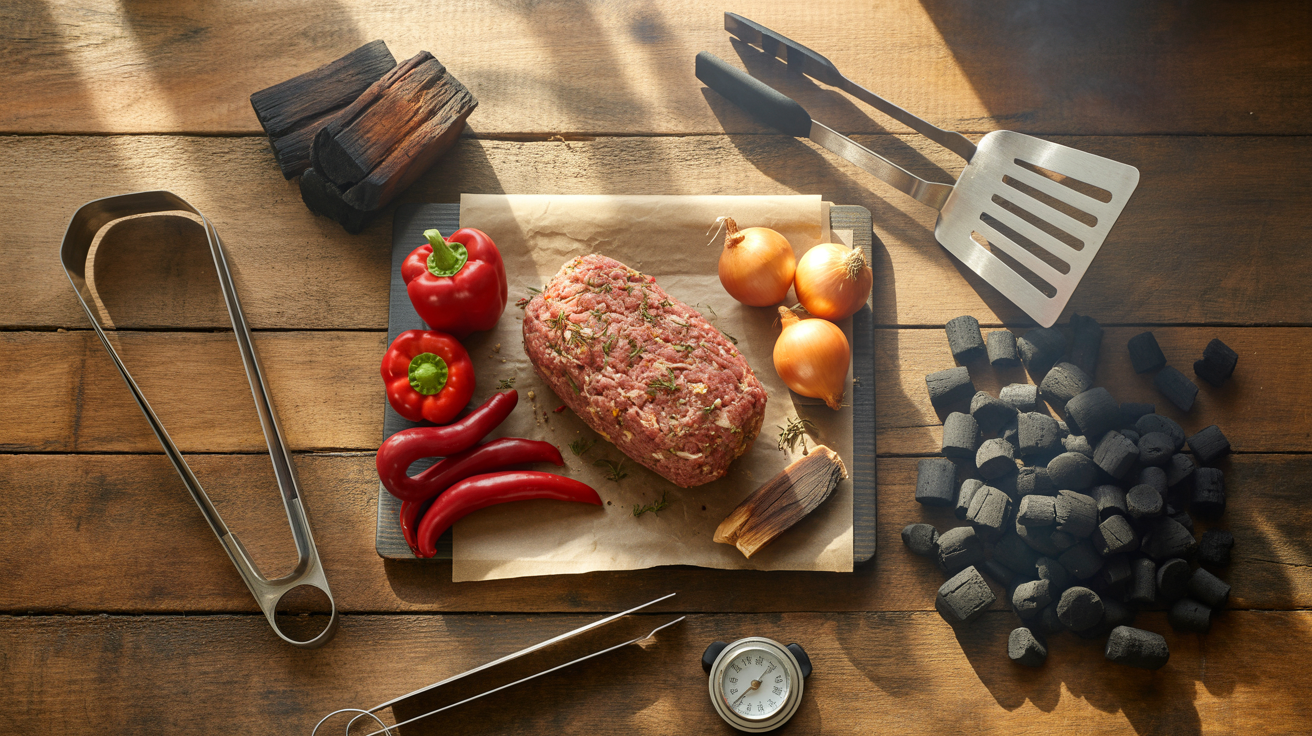
Ingredients
| AMOUNT | INGREDIENT | NOTES |
|---|---|---|
| 1.5 lbs | ground beef 80/20 | the fat content keeps the loaf moist through the long smoke |
| 0.5 lbs | ground pork | adds richness and a slightly sweeter flavor profile |
| 1 cup | plain breadcrumbs | acts as a binder and helps retain moisture |
| 0.5 cup | whole milk | soak the breadcrumbs in milk before mixing for a panade that keeps the loaf tender |
| 2 large | eggs | lightly beaten to bind the mixture together |
| 1 medium | yellow onion | finely grated or minced so it dissolves into the meat mixture |
| 4 cloves | garlic | minced fine |
| 2 tablespoons | Worcestershire sauce | adds deep umami and savory depth |
| 2 tablespoons | yellow mustard | adds a subtle tang that complements the smoke |
| 1 teaspoon | smoked paprika | reinforces the smoke flavor from the inside out |
| 1 teaspoon | garlic powder | |
| 1 teaspoon | onion powder | |
| 1 teaspoon | kosher salt | |
| 0.5 teaspoon | black pepper | freshly cracked |
| 0.5 teaspoon | cayenne pepper | optional for a little heat |
| 0.75 cup | your favorite BBQ sauce | for the glaze – a smoky or hickory style works best |
| 2 tablespoons | brown sugar | mixed into the glaze for caramelization |
| 1 tablespoon | apple cider vinegar | balances the sweetness in the glaze |
| hickory or cherry wood pellets | for the pellet grill | hickory gives a bold smoke, cherry adds a mild sweetness and beautiful color |
Instructions
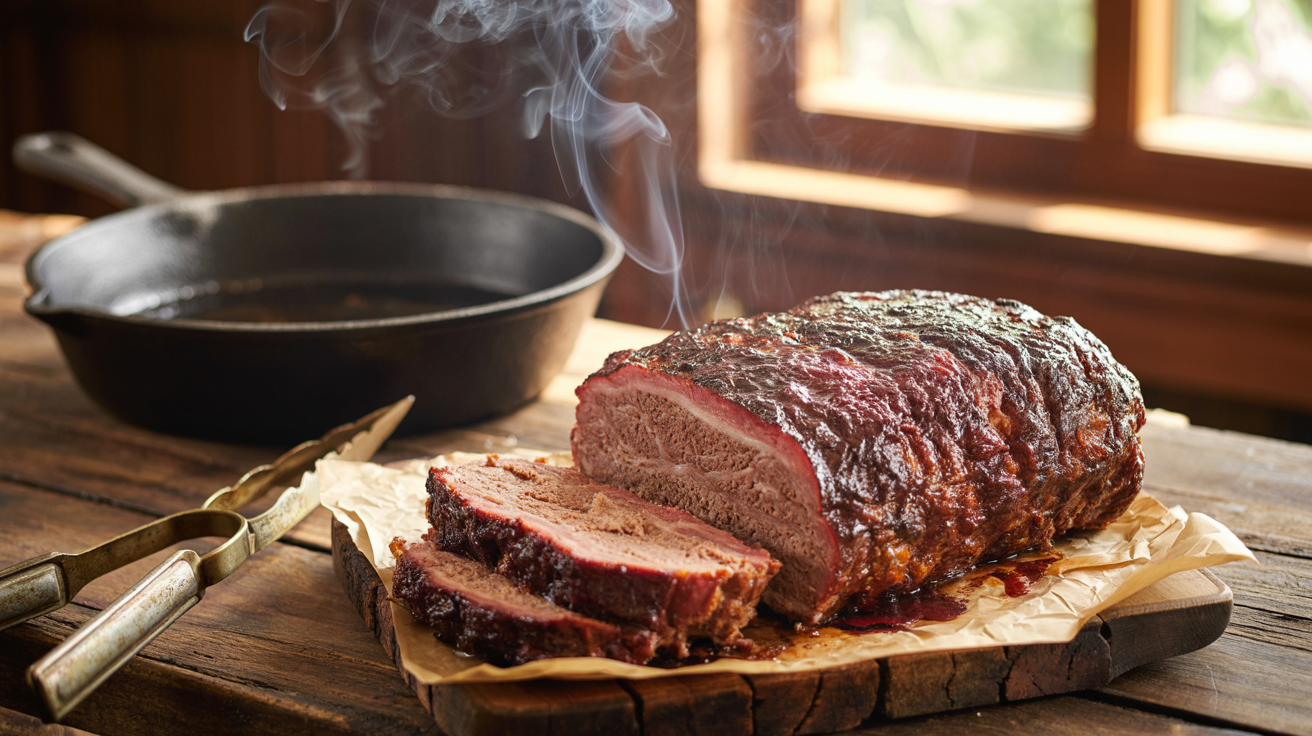
Nutrition (per serving)
The BBQ Story Behind This Recipe
Meatloaf has been a staple of American home cooking since the late 19th century, born out of practical necessity and a desire to stretch ground meat as far as possible with simple binders like bread and eggs. By the time the Great Depression hit, meatloaf became a symbol of resourceful American cooking – economical, filling, and endlessly adaptable. Regional variations popped up from coast to coast, with Southern cooks leaning into spice and smoke, Midwestern cooks favoring a sweet ketchup glaze, and Northeastern versions often incorporating Italian herbs and cheeses. It was always a humble dish, but one made with genuine care and love.
The leap from oven-baked to pit-smoked meatloaf is a relatively modern BBQ tradition, but it has exploded in popularity over the last decade alongside the rise of pellet grill culture. Competition BBQ pitmasters started experimenting with smoked meatloaf as a crowd-pleaser side event at backyard cookoffs, and it did not take long for the technique to spread across grilling forums and BBQ blogs. What makes the pellet grill version so special is the precision it offers – consistent low heat, controlled airflow, and the ability to dial in your exact smoke profile with flavored wood pellets. Today, smoked meatloaf is a proud member of the BBQ canon, sitting right alongside brisket and pulled pork as a low and slow classic worth mastering.
Hot Off the Grill
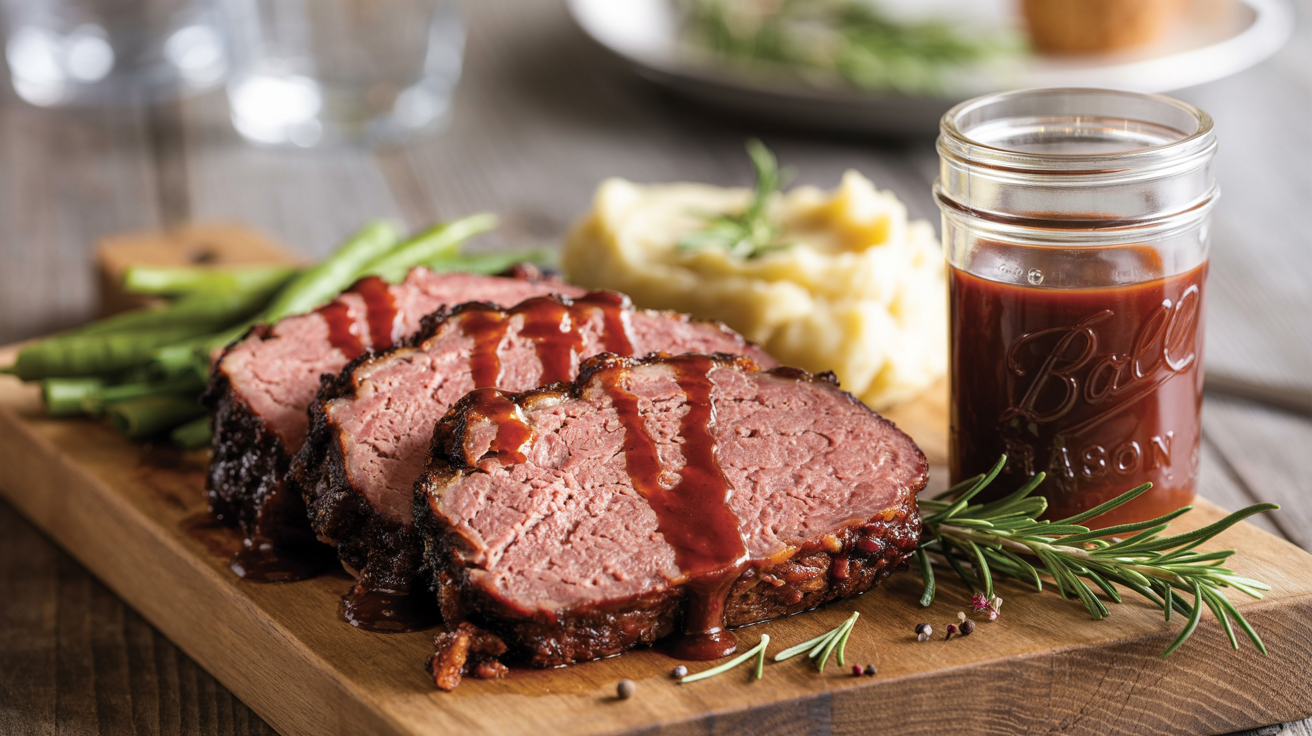
A Closer Look
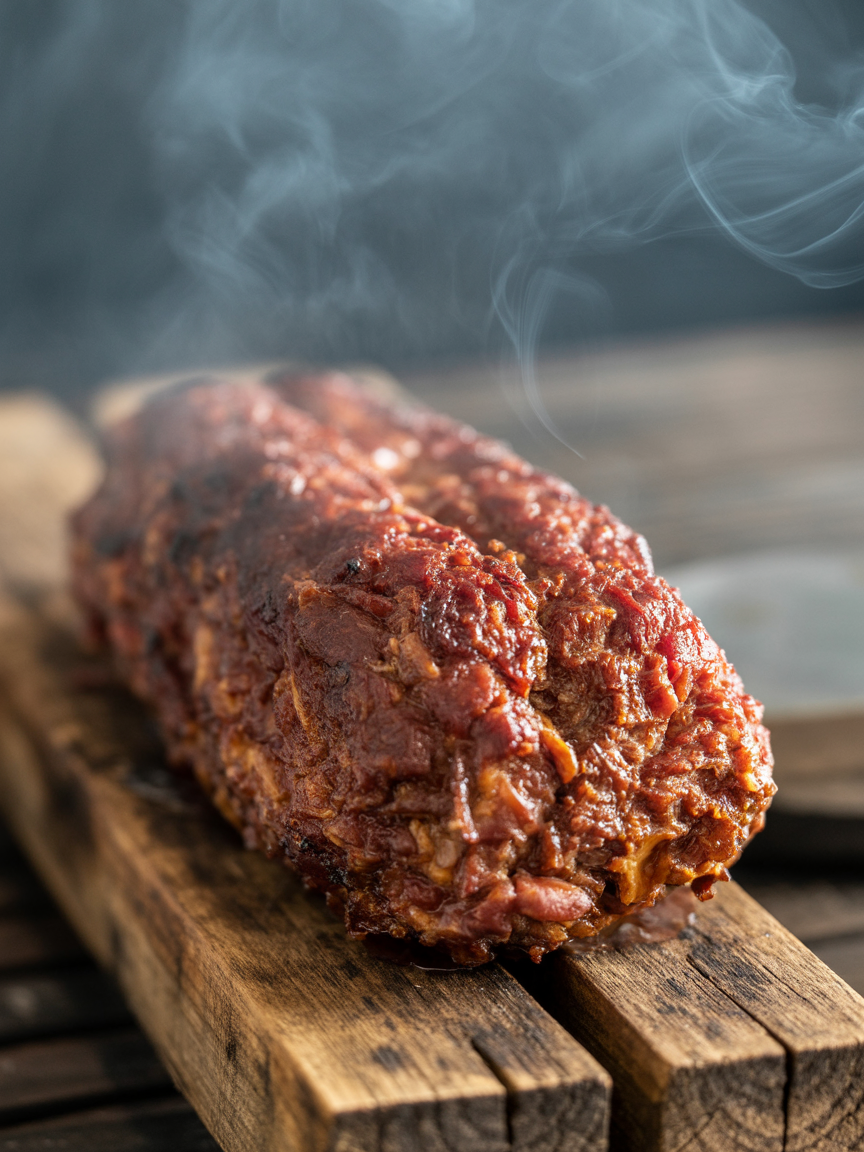
Pitmaster Tips for Best Results
- Do not skip the panade step – soaking breadcrumbs in milk before mixing them into the meat creates a moisture reservoir inside the loaf that prevents it from drying out during the long 225 degree smoke. This single step is the difference between a juicy smoked meatloaf and a dry one.
- Always use a free-form loaf shape instead of a loaf pan on the smoker. A loaf pan blocks smoke from reaching the sides and bottom of the meat, costing you bark and flavor. The free-form shape gives you maximum smoke surface area and allows fat to render and drip away cleanly.
- Chill your shaped meatloaf in the refrigerator uncovered for 30 to 60 minutes before it goes on the grill. This helps the loaf hold its shape during the early stages of the cook when the proteins are still loose, preventing it from spreading out too much on the rack.
- Use a blend of 80/20 ground beef and ground pork for the best fat-to-protein ratio. Pure lean ground beef will dry out over a 3-hour smoke. The pork fat keeps things rich and moist and adds a subtly different flavor note that pairs beautifully with hickory smoke.
- Let the internal temp be your guide, not the clock. Cooking times can vary based on grill performance, outdoor temperature, wind, and the exact shape and density of your loaf. Always pull at 160 degrees Fahrenheit internal temp confirmed with a reliable instant read thermometer – do not guess.
🔧 Pitmaster Equipment
Pellet Grill or Smoker: Provides consistent low and slow heat with controlled wood smoke for the perfect bark and smoke ring.
Instant Read Thermometer: Critical for confirming the internal temp hits a safe 160 degrees Fahrenheit at the center of the loaf.
Wire Cooling Rack: Elevating the meatloaf on a rack allows smoke to circulate all the way around for even bark development on all sides.
Rimmed Baking Sheet or Aluminum Drip Pan: Placed beneath the wire rack to catch drippings and prevent flare-ups or grill grate messes.
Large Mixing Bowl: Gives you enough room to mix the meatloaf ingredients thoroughly without overworking the meat.
Silicone Basting Brush: Essential for applying the BBQ glaze in even layers during the final stage of the cook.
Heat-Resistant Gloves: Protect your hands when adjusting the rack, moving the drip pan, or handling anything near the hot grill grates.
🔥 Variations
BBQ Bacon Wrapped Smoked Meatloaf: Lay out a weave of thin-sliced bacon on a sheet of parchment paper, place the shaped meatloaf in the center, and wrap the bacon tightly around the outside before placing it on the grill. The bacon bastes the loaf in fat throughout the cook, adds extra smoky flavor, and creates an incredible crispy outer shell. Apply the glaze over the bacon during the final high-heat stage for a sticky, caramelized finish.
Smoked Cheeseburger Meatloaf: Add a layer of shredded sharp cheddar cheese and diced dill pickles to the center of the meatloaf mixture before shaping, folding the meat around the filling like a stuffed roll. Mix a tablespoon of yellow mustard and a tablespoon of ketchup into the meat mixture itself for that classic cheeseburger flavor profile. Top with the standard BBQ glaze and finish with a handful of shredded cheddar during the last 10 minutes on the grill.
Pellet Grill Spicy Southwest Meatloaf: Swap the Worcestershire and yellow mustard for a tablespoon of chipotle in adobo sauce, a teaspoon of cumin, and a diced roasted jalapeno. Mix in half a cup of pepper jack cheese directly into the meat mixture. Use mesquite pellets instead of hickory for a more assertive smoke, and swap the BBQ glaze for a chipotle-honey sauce made from equal parts honey, your favorite hot sauce, and a squeeze of lime juice.
Gas Grill Version: Set up your gas grill for indirect heat by turning on the burners on one side only and targeting a temperature of 225 to 250 degrees Fahrenheit with the lid closed. Place a smoker box filled with hickory or cherry wood chips over the lit burner to generate smoke. Place the meatloaf on the cool side of the grill away from the direct heat and follow the same steps and target temps as the pellet grill version. Expect a slightly less pronounced smoke ring but still excellent bark and flavor.
❓ Pitmaster FAQ
What internal temperature should smoked meatloaf reach?
Smoked meatloaf made with ground beef and ground pork should reach an internal temperature of 160 degrees Fahrenheit at the thickest center point. Always verify this with a reliable instant read thermometer rather than relying solely on cook time. The USDA recommends 160 degrees Fahrenheit for all ground meat products to ensure food safety.
How long does it take to smoke a meatloaf at 225 degrees Fahrenheit?
A standard 2-pound meatloaf takes approximately 2.5 to 3 hours at 225 degrees Fahrenheit to reach an internal temp of around 140 to 145 degrees Fahrenheit. You then raise the grill temp to 325 degrees Fahrenheit and cook for an additional 25 to 30 minutes to set the glaze and bring the internal temp to the target 160 degrees Fahrenheit. Total cook time runs about 3 to 3.5 hours from the time you fire up the grill.
What wood pellets are best for smoked meatloaf?
Hickory is the classic choice for smoked meatloaf – it delivers a bold, traditional BBQ smoke flavor that pairs beautifully with beef and pork. Cherry wood pellets are an excellent alternative or blend option, producing a milder, slightly sweet smoke and contributing to the beautiful deep red color of the bark. Avoid very heavy woods like mesquite for this cook as they can overpower the flavor of the meat over a 3-hour smoke.
Can I make smoked meatloaf ahead of time?
Absolutely. You can mix and shape the meatloaf up to 24 hours ahead of time and keep it wrapped tightly in plastic wrap in the refrigerator until you are ready to fire up the grill. In fact, a cold meatloaf straight from the fridge holds its shape better during the early stages of the cook. Leftover smoked meatloaf also reheats beautifully – slice it and warm individual pieces in a covered skillet over medium-low heat with a splash of beef broth to keep the moisture in.
Why is my smoked meatloaf falling apart?
A meatloaf that falls apart on the grill usually means one of three things: not enough binder, overhandling while the meat is still raw and warm, or cutting into it too soon after pulling it off the grill. Make sure you include both eggs and the breadcrumb-milk panade in your mixture, chill the shaped loaf in the refrigerator for 30 to 60 minutes before it goes on the grill, and always rest the meat for a full 10 to 15 minutes before slicing.
Should I use a loaf pan for smoked meatloaf?
No – skip the loaf pan when smoking meatloaf. A loaf pan prevents smoke from reaching the sides and bottom of the meat, blocking the bark from developing and limiting smoke penetration. Always shape your smoked meatloaf as a free-form loaf and elevate it on a wire rack over a drip pan. This allows smoke to circulate completely around the loaf and gives you maximum bark development on all sides.