Smoked Beef Short Ribs Recipe: Low and Slow Perfection
Ingredients
Method
- Fire up your smoker and get it stabilized at 225 degrees Fahrenheit before the ribs go on. Use a full chimney of lighted charcoal as your heat base and add two to three fist-sized chunks of oak wood to your firebox or coal bed. Allow the smoker to run at temperature for at least 20 to 30 minutes until the smoke coming out of the exhaust vent is thin and blue-gray rather than thick and white. White billowing smoke is bitter smoke and it will ruin your bark - patience here pays off big later.
- While the smoker comes up to temp, prepare your beef short ribs. Remove them from the packaging and pat completely dry with paper towels - moisture is the enemy of bark formation. Lay the rack meat-side up on your cutting board. Using your sharp boning knife, trim the top fat cap down to about one-quarter inch thickness. You want some fat for basting the meat during the cook, but thick hard fat will not render fully and will block the rub from penetrating. Also remove the silverskin membrane from the back of the bones if present by sliding the knife under it and peeling it away.
- Apply your binder. Rub a thin, even coat of beef tallow or yellow mustard across all surfaces of the ribs - top, bottom, and sides. The binder does not add significant flavor, but it gives your dry rub something to grip onto. You are looking for full, even coverage with no missed spots.
- Mix your dry rub by combining the coarse black pepper, kosher salt, garlic powder, onion powder, smoked paprika, and cayenne pepper in a small bowl. This is a Texas-forward seasoning blend that lets the beef do the talking. Apply the rub generously to all surfaces, pressing it gently into the meat with your hands. Do not rub it in aggressively - just press and pat so it stays on the surface where it will form your bark. Season all sides including the bone side and the edges. Let the seasoned ribs sit at room temperature for 30 minutes while your smoker finishes stabilizing.
- Place the ribs bone-side down on the smoker grate, positioning them away from direct heat if you are using an offset smoker. Insert your leave-in probe thermometer into the thickest part of the meat on the largest rib, making sure the probe is not touching bone. Close the lid and let the smoke work. For the first 3 hours, do not open the smoker. This initial stage is where your smoke ring forms - the myoglobin in the meat reacts with the smoke gases to create that beautiful pink ring, and every time you open the lid you interrupt that process.
- After the first 3 hours, do your first check. Open the smoker quickly and assess the bark formation. You are looking for a dark mahogany crust forming on the surface. Give the ribs a light spritz with your apple cider vinegar and water mixture. Going forward, spritz every 60 to 90 minutes. Add a fresh wood chunk to your firebox if the smoke has died down. Keep your smoker locked in at 225 to 250 degrees Fahrenheit throughout the cook - if the temp spikes above 275 degrees Fahrenheit for extended periods you will tighten the muscle fibers and the ribs will end up tough rather than tender.
- Around hours 5 to 7, your beef short ribs will hit the stall - an infuriating but completely normal plateau where the internal temp stops climbing and sits stubbornly between 155 and 170 degrees Fahrenheit. This happens as evaporative cooling from moisture leaving the meat perfectly offsets the heat going in. You have two choices at this point. Option one is to power through by maintaining temp and letting the stall break on its own, which takes 1 to 2 additional hours. Option two is the Texas Crutch - wrap the ribs tightly in two layers of unlined butcher paper, which retains heat and moisture and pushes the ribs through the stall faster while keeping the bark from getting soggy the way foil would. Either method works - the wrap just saves time.
- Continue cooking until the internal temp reads between 200 and 205 degrees Fahrenheit. At this range the collagen has fully converted to gelatin and the meat will feel probe-tender - meaning when you push the thermometer probe into the meat between the bones, it should slide in with almost no resistance, like pushing into warm butter. Do not pull the ribs off based on time alone - always cook to internal temp and feel. Depending on the size of your rack, the total cook time will be anywhere from 8 to 10 hours at 225 degrees Fahrenheit.
- When the ribs hit 200 to 205 degrees Fahrenheit and pass the probe-tenderness test, pull them off the smoker. If they were wrapped in butcher paper, leave them wrapped. If they were unwrapped, wrap them now in butcher paper and then wrap that in a couple of old towels. Place the wrapped ribs in a dry cooler with no ice and let them rest the meat for a minimum of 1 hour, and up to 2 hours. Resting is not optional - it allows the juices that have been driven to the center of the meat by heat to redistribute throughout every fiber, resulting in a juicy, evenly tender bite from edge to edge. Skipping the rest means dry, disappointing ribs.
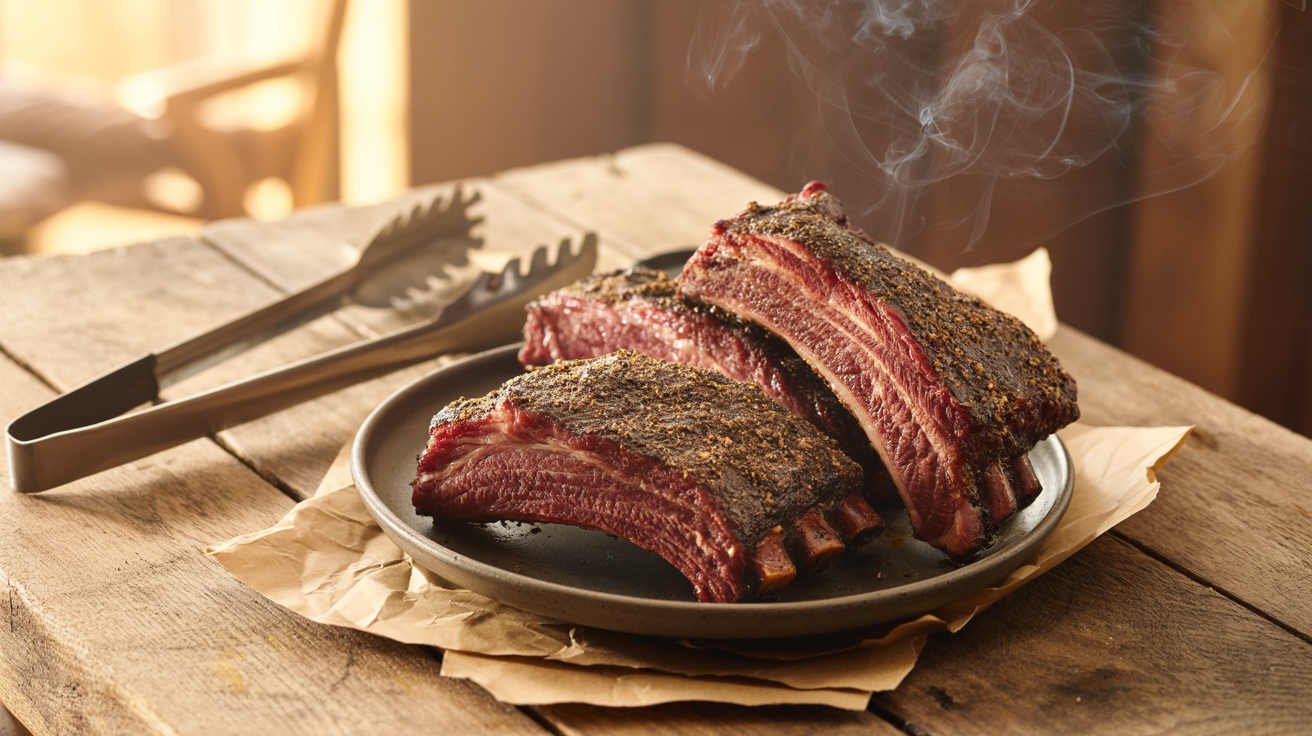
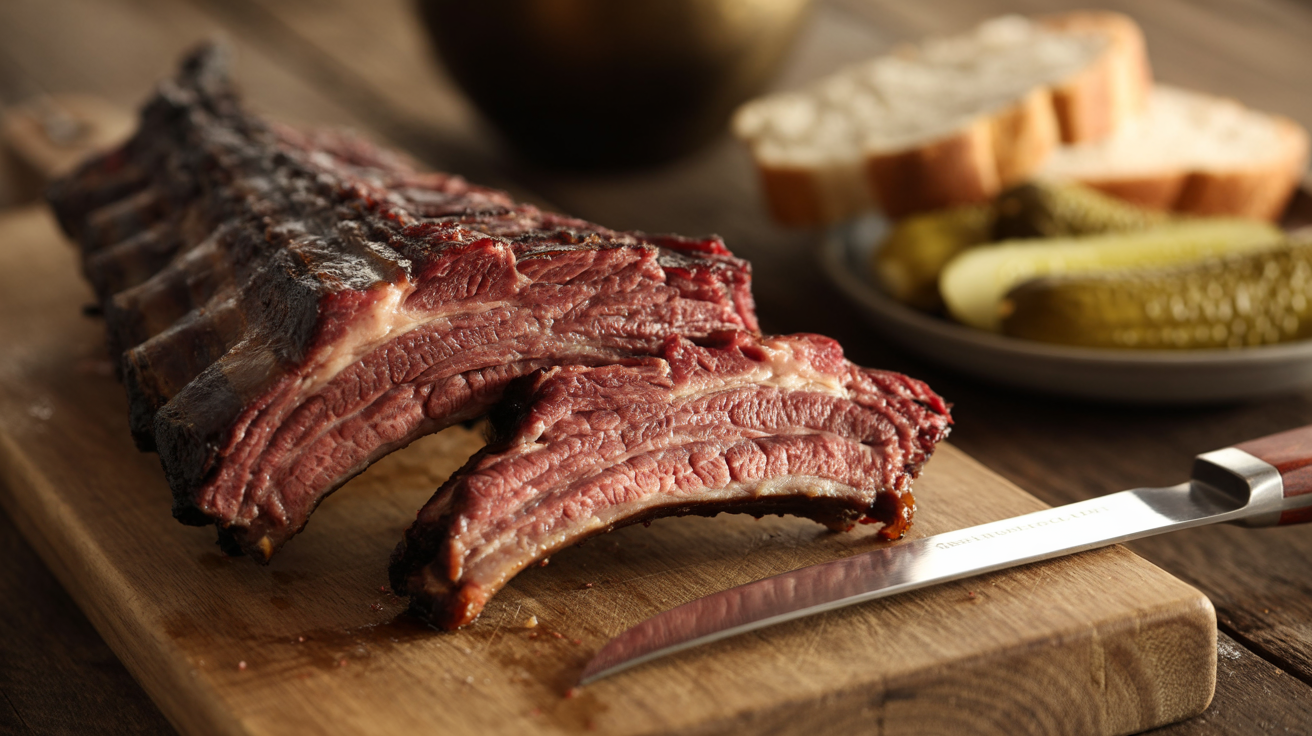
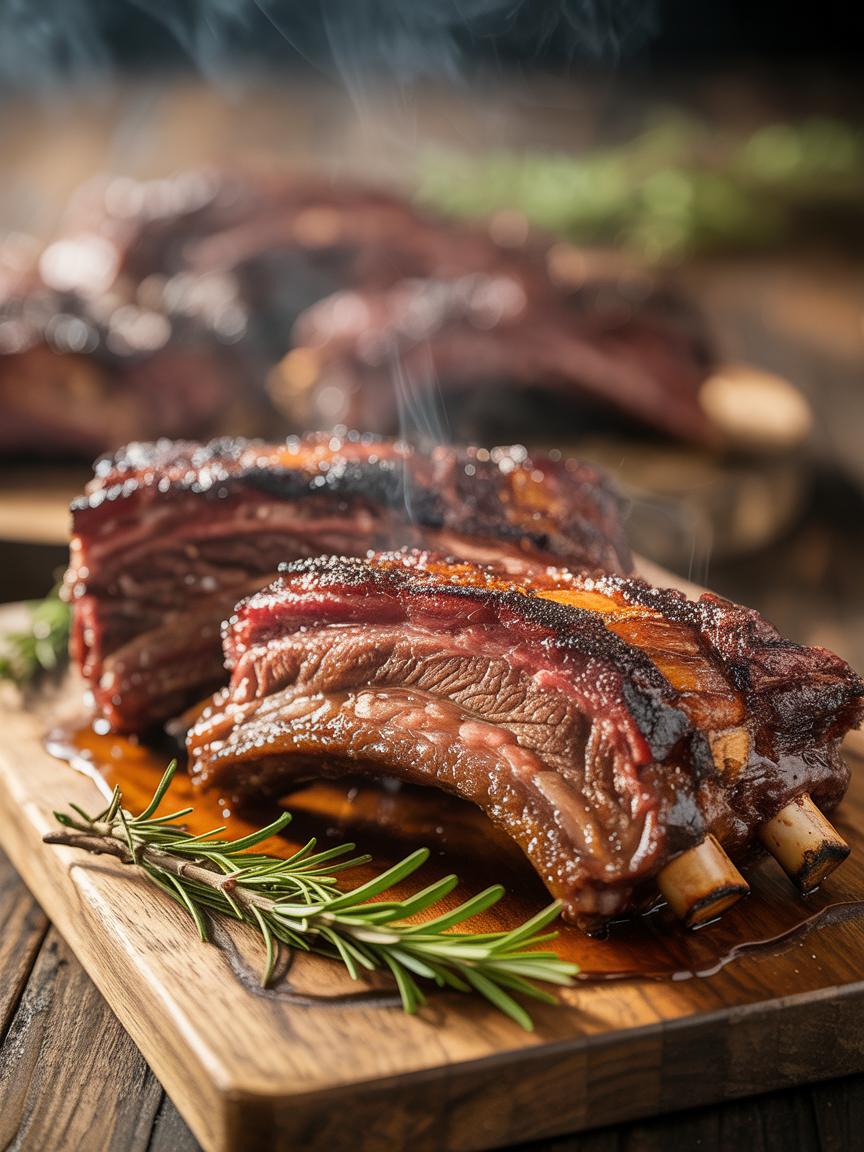
- After the rest, unwrap the ribs on a cutting board and take a moment to appreciate the work. The bark should be deep, almost black in spots, with a firm crackling crust. Slice between the bones to separate individual ribs and serve immediately. A proper slice will reveal a thick smoke ring running at least a quarter inch deep into the meat, and the meat itself should be dark, glossy, and pull cleanly but with a little resistance from the bone. Serve with simple sides - pickles, white bread, and a cold drink - or go all out with your favorite BBQ accompaniments.
Nutrition
This smoked beef short ribs recipe is the crown jewel of backyard BBQ, delivering rich, beefy flavor wrapped in a crackling bark with a smoke ring that runs deep and red through every slice. We are talking plate short ribs cooked at 225 degrees Fahrenheit for anywhere between 8 and 10 hours over seasoned oak wood, building layers of smoky complexity that no oven or pressure cooker can ever replicate. If you have been searching for the one recipe that will make your neighbors stop mid-sentence and ask what that incredible smell is, this is it.
Beef short ribs are one of those cuts that reward patience above everything else. The secret is collagen – and these ribs are loaded with it. At low temperatures over a long cook, that tough connective tissue slowly breaks down into silky gelatin, basting the meat from the inside out and creating that signature pull-apart texture that makes a grown pitmaster tear up with pride. Push the heat too high and too fast, and you end up with tough, chewy meat that missed its moment. Respect the process, hold your temperature steady, and the ribs will reward you.
At GrillMasterHQ we have smoked hundreds of racks of beef short ribs across charcoal pits, offset smokers, pellet grills, and everything in between. The technique we are sharing today has been tested, refined, and battle-hardened over years of competition BBQ and backyard cookouts. We will walk you through trimming the fat, building a killer dry rub, managing your fire, reading your bark, and nailing the internal temp so every single cook comes out dialed in. Get your pit ready and your patience sharp – this one is worth every minute.
Smoked Beef Short Ribs Recipe: Low and Slow Perfection
This smoked beef short ribs recipe delivers fall-off-the-bone tenderness with a thick, peppery bark and deep smoke ring that will stop everyone in their tracks. Cooked low and slow over oak wood for hours, these ribs are pure BBQ royalty. Fire up the grill today and taste the difference.
Ingredients
| AMOUNT | INGREDIENT | NOTES |
|---|---|---|
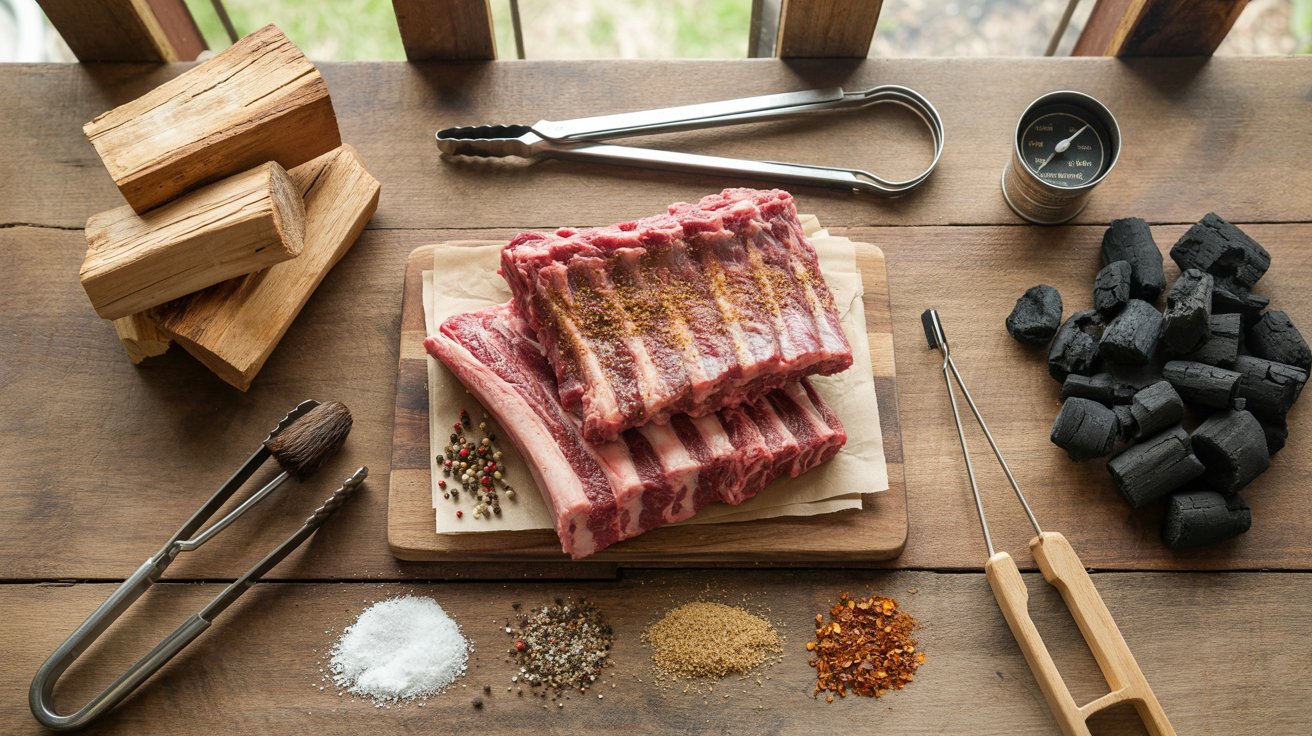
| 6 lbs | beef plate short ribs | bone-in, 3 to 4 bones per rack, also sold as dino ribs – look for heavy marbling and a thick meat cap at least 2 to 3 inches thick |
| 3 tablespoons | coarse ground black pepper | freshly ground, 16-mesh grind is ideal for Texas-style bark |
| 2 tablespoons | kosher salt | Diamond Crystal brand preferred for even seasoning |
| 1 tablespoon | garlic powder | not garlic salt |
| 1 tablespoon | onion powder | for depth in the bark |
| 1 teaspoon | smoked paprika | adds color and subtle sweetness to the bark |
| 1 teaspoon | cayenne pepper | optional for heat – adjust to your preference |
| 2 tablespoons | beef tallow or yellow mustard | used as a binder to help the rub adhere to the meat surface |
| 4 to 6 chunks | oak wood or post oak wood chunks | fist-sized chunks for sustained smoke production – hickory or pecan work well as alternatives |
| 1 cup | apple cider vinegar | mixed 50-50 with water in a spray bottle for spritzing during the cook |
Instructions
Nutrition (per serving)
The BBQ Story Behind This Recipe
Beef short ribs have deep roots in Texas BBQ culture, where cattle country tradition and no-nonsense cooking philosophy built the foundation for some of the greatest smoked meat on the planet. Central Texas pitmasters, heavily influenced by German and Czech butcher traditions brought over by 19th century immigrants, favored simple seasonings – usually just coarse black pepper and kosher salt – letting the quality of the beef and the discipline of the smoke do all the talking. The famous Central Texas BBQ joints like those found along the Lockhart and Luling corridor became pilgrimage destinations for meat lovers, and plate beef short ribs became as iconic as brisket on those smoke-stained butcher paper trays.
Beyond Texas, beef short ribs hold a respected place across global BBQ and braising traditions. Korean galbi, slow-braised European short ribs, and Argentine asado all honor this cut in their own way, recognizing that the combination of heavy bone, generous fat cap, and marbled meat creates something special when heat and time are applied correctly. In the American BBQ renaissance of the last two decades, beef short ribs exploded in popularity as pitmasters discovered that a properly smoked plate rib could rival brisket in both flavor and spectacle – a single bone-in rib can weigh over a pound and stands tall like a trophy on the cutting board. That moment when you slice through a perfectly rested short rib and the meat slowly folds open has become one of the defining images of modern BBQ culture.
Hot Off the Grill
A Closer Look
Pitmaster Tips for Best Results
- Buy plate short ribs, not chuck short ribs – plate ribs are the big dino bones with a thick meat cap of 2 to 3 inches and are the correct cut for this recipe. Chuck short ribs are smaller and better suited for braising. Ask your butcher specifically for beef plate short ribs, USDA Choice or Prime grade if your budget allows.
- Hold your smoker temperature steady between 225 and 250 degrees Fahrenheit the entire cook. Temperature spikes above 275 degrees Fahrenheit for extended periods will seize the muscle fibers before the collagen has time to render, resulting in tough meat. Consistent low heat is the entire game with this cut.
- Do not rush the bark. The bark on smoked beef short ribs should feel hard and dry to the touch before you consider wrapping. If it still feels soft or tacky when you press it at hour 5, give it more time naked on the smoker before reaching for the butcher paper. A fully formed bark is what holds the moisture inside and gives you that incredible crust on every bite.
- Use a leave-in probe thermometer and stop checking the lid every hour. Every time you open the smoker you lose 15 to 20 minutes of heat recovery time and interrupt smoke ring formation. Trust your thermometer and only open the lid when it is time to spritz or assess bark formation.
- Rest your ribs longer than you think you need to. A full 1 to 2 hour rest in a wrapped cooler is not excessive – it is essential. The internal temp will actually continue to rise 5 to 10 degrees Fahrenheit during the first 15 minutes of the rest (called carryover cooking), and then the redistribution of juices happens slowly over the remaining time. Ribs rested for 90 minutes are noticeably juicier and more tender than ribs rested for 20 minutes.
🔧 Pitmaster Equipment
Offset Smoker or Charcoal Smoker: Provides the authentic wood smoke environment needed for building a deep smoke ring and proper bark on beef short ribs over an 8 to 10 hour cook.
Instant Read Thermometer: Critical for monitoring internal temp throughout the cook and confirming the ribs have hit the target range of 200 to 205 degrees Fahrenheit for full collagen breakdown.
Leave-In Probe Thermometer: Allows you to monitor internal temp without opening the smoker lid and losing precious heat and smoke during the long cook.
Long Tongs or Heat-Resistant Gloves: Keeps your hands safe while managing the fire, adjusting wood, and repositioning heavy racks of beef short ribs on the grate.
Butcher Paper (Unlined): Used for the optional Texas crutch wrap at the stall, allowing the bark to breathe and stay firm while pushing through the temperature plateau.
Sharp Boning Knife: Essential for trimming excess hard fat from the fat cap before the cook so the rub can fully adhere and the bark can form properly.
Spray Bottle: Filled with beef tallow, apple cider vinegar, or water for spritzing the ribs every 60 to 90 minutes to keep the bark moist and promote smoke adhesion.
🔥 Variations
Pellet Grill Version: Set your pellet grill to 225 degrees Fahrenheit using oak, hickory, or pecan pellets and follow the exact same steps. Pellet grills are excellent for this cook because they maintain temperature automatically, making it easier to hold the 225 to 250 degree Fahrenheit range without constant attention. For maximum smoke output, use the smoke or super smoke setting for the first 3 hours before switching to your target temp setting.
Gas Grill Indirect Version: Set up your gas grill for two-zone indirect heat by lighting only one side of the burners and targeting 225 to 250 degrees Fahrenheit on the cool side. Place a smoker box filled with soaked oak or hickory wood chips directly over a lit burner. Place the ribs on the unlit side and cook with the lid closed, refilling the smoker box with fresh chips every 45 to 60 minutes. The cook time remains the same – expect 8 to 10 hours for full collagen breakdown.
Korean-Inspired Marinade Version: Instead of the Texas dry rub, marinate the short ribs overnight in a blend of soy sauce, sesame oil, brown sugar, grated Asian pear, garlic, and ginger. Pat them dry before smoking and apply a light dusting of coarse black pepper before they go on the pit. The sugar in the marinade will caramelize into a gorgeous lacquered bark and complement the smoke beautifully. Follow the same smoking temperature and time guidelines for this variation.
Competition-Style Coffee Rub Version: Add 1 tablespoon of finely ground dark roast coffee and 1 tablespoon of brown sugar to the base dry rub for a competition-style profile. The coffee deepens the bark color to an almost black crust and adds an earthy, roasted bitterness that contrasts beautifully with the rich beef fat. The sugar helps bark formation and adds a subtle sweet note on the finish. Do not increase the cook temperature to compensate for the sugar – stay at 225 degrees Fahrenheit to prevent burning.
❓ Pitmaster FAQ
What internal temperature should smoked beef short ribs reach?
Smoked beef short ribs need to reach an internal temperature between 200 and 205 degrees Fahrenheit for the collagen to fully break down into gelatin. Unlike steaks where you cook to doneness at lower temps, short ribs require this higher internal temp for the connective tissue to render and the meat to become fall-apart tender. Always verify with an instant read thermometer inserted into the thickest part of the meat away from the bone.
How long does it take to smoke beef short ribs at 225 degrees Fahrenheit?
At 225 degrees Fahrenheit, bone-in beef plate short ribs typically take between 8 and 10 hours to reach the target internal temp of 200 to 205 degrees Fahrenheit. Variables like the thickness of the meat cap, the specific smoker being used, and ambient outdoor temperature can all affect total cook time. Always cook to internal temp and probe tenderness rather than relying on time alone.
Do I need to wrap beef short ribs during the cook?
Wrapping is optional but helpful. When the ribs hit the stall (typically between 155 and 170 degrees Fahrenheit internal temp), wrapping them in two layers of unlined butcher paper will push them through the stall faster and retain moisture without softening the bark the way aluminum foil would. If you prefer a firmer, thicker bark and have the time, you can power through the stall without wrapping – the end result will have a slightly drier but more pronounced crust.
What type of wood is best for smoking beef short ribs?
Oak, specifically post oak, is the classic Texas choice for smoked beef short ribs and pairs perfectly with the rich, beefy flavor of the cut. Hickory is another excellent option that delivers a stronger, more assertive smoke flavor. Pecan offers a milder, slightly sweeter profile. Avoid fruit woods like apple or cherry as standalone options for this cut – their smoke is too mild to stand up to the bold flavor of beef plate ribs, though a small amount of cherry can be added alongside oak for color enhancement.
Can I smoke beef short ribs the day before and reheat them?
Absolutely – smoked beef short ribs actually reheat extremely well. After the cook and rest period, wrap the individual ribs tightly in butcher paper and then plastic wrap, and refrigerate overnight. To reheat, place the still-wrapped ribs in a 275 degree Fahrenheit oven for 45 to 60 minutes until warmed through. You can also reheat in your smoker at 250 degrees Fahrenheit for about 45 minutes. The collagen that set during cooling will re-melt during reheating and the ribs will be just as juicy as day one.
Why did my beef short ribs come out tough?
Tough smoked beef short ribs are almost always a result of not cooking to a high enough internal temperature, or cooking at too high a temperature for too short a time. The collagen in short ribs needs sustained time at temperatures above 180 degrees Fahrenheit to convert to gelatin – pulling them off at 185 degrees Fahrenheit when they look done on the outside will result in chewy, tight meat. Always target 200 to 205 degrees Fahrenheit internal temp and use the probe-tenderness test to confirm they are ready before pulling them off the smoker.