
Grilled Pork Belly Recipe: Crispy, Smoky Perfection
Ingredients
Method
- Score the fat cap and season the pork belly the night before the cook. Using a sharp knife, cut a crosshatch pattern into the fat cap about a quarter inch deep - do not cut into the meat. This opens up the fat so it renders beautifully and allows the rub to penetrate. Pat the entire slab completely dry with paper towels. In a small bowl combine brown sugar, smoked paprika, kosher salt, black pepper, garlic powder, onion powder, cayenne, and dry mustard and mix thoroughly until uniform.
- Apply the mustard binder and dry rub all over the pork belly. Coat the entire surface - all four sides and both ends - with a thin even layer of yellow mustard. This acts as a glue for your rub and will not make the final product taste like mustard. Immediately after the mustard coat, apply your dry rub generously on all sides, pressing it in firmly so it adheres. Wrap tightly in plastic wrap or place in a zip-close bag and refrigerate overnight, or for a minimum of 4 hours. This dry brine step is not optional - it draws moisture in, seasons deep, and sets you up for a killer bark.
- Fire up the grill or smoker and set up for two-zone indirect heat. If using a kettle grill, bank your lit charcoal to one side and leave the other side empty. If using an offset smoker, build your fire in the firebox as normal. Add your cherry or apple wood chunks directly on the coals or in the firebox. Target an ambient cooking temperature of 250 to 275 degrees Fahrenheit at grate level. This is your low and slow zone where the magic happens. Allow the grill or smoker to come up to temperature and stabilize for 15 minutes before adding the meat.
- Place the pork belly fat cap side up on the indirect heat zone of the grill or on the smoker grate. Do not place it over direct fire at this stage. Close the lid immediately and let the smoke and heat go to work. You are looking for thin blue smoke, not billowing white smoke - white smoke will make the meat bitter. Maintain your 250 to 275 degree Fahrenheit cooking temperature by adjusting vents on a charcoal grill or managing your firebox on an offset. Resist the urge to open the lid for the first 90 minutes.
- Spritz the pork belly starting at the 90-minute mark. Open the grill and spray a light coating of your apple juice and water mixture over the entire surface of the pork belly. You are not drenching it - just a light mist to keep the exterior from drying out and to encourage bark development. Close the lid and repeat this spritz every 45 minutes throughout the cook. You will notice the color deepening from pink to amber to a rich mahogany as the rub caramelizes and the bark builds.
- Monitor the internal temp throughout the cook and target 200 to 205 degrees Fahrenheit. Insert your instant read thermometer into the thickest part of the meat, avoiding the fat layer. At 250 to 275 degrees Fahrenheit your 3-pound slab will likely take 3.5 to 4.5 hours to reach this target, but always cook to temp not to time. When the probe slides in and out of the meat with almost no resistance - what pitmasters call butter-probe-tender - you are ready for the sear phase.
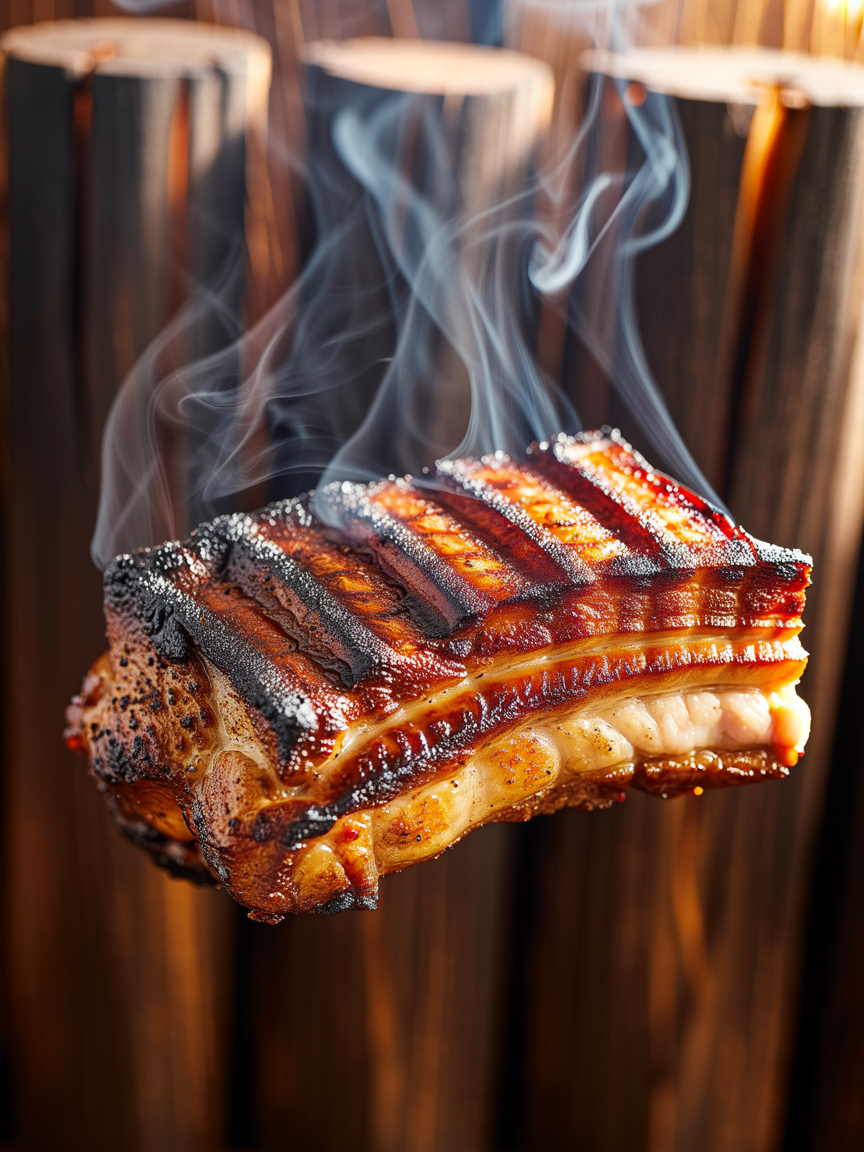
- Sear the fat cap over direct high heat to finish the crispy skin. Once your pork belly has hit 200 to 205 degrees Fahrenheit internally, crank up or stoke your fire to create a blazing hot direct heat zone. If on a kettle grill, add a chimney of fresh hot coals to the pile. Place the pork belly fat cap side down directly over the flames. Watch it closely - you want a deep caramelized sear on that fat cap, which should take 3 to 5 minutes. The fat will crackle, blister, and turn a deep golden brown. Do not walk away during this step. Flip and sear the meat side for 2 additional minutes to add char and color.
- Rest the meat before slicing - this step is non-negotiable. Remove the pork belly from the grill and place it on a clean wire rack or cutting board. Tent loosely with aluminum foil and allow it to rest for a minimum of 20 minutes, or up to 30 minutes for a thicker slab. Resting allows the juices that have been driven to the center of the meat by heat to redistribute back throughout every bite. Cut it too early and those precious juices run all over your cutting board instead of staying in the meat where they belong.
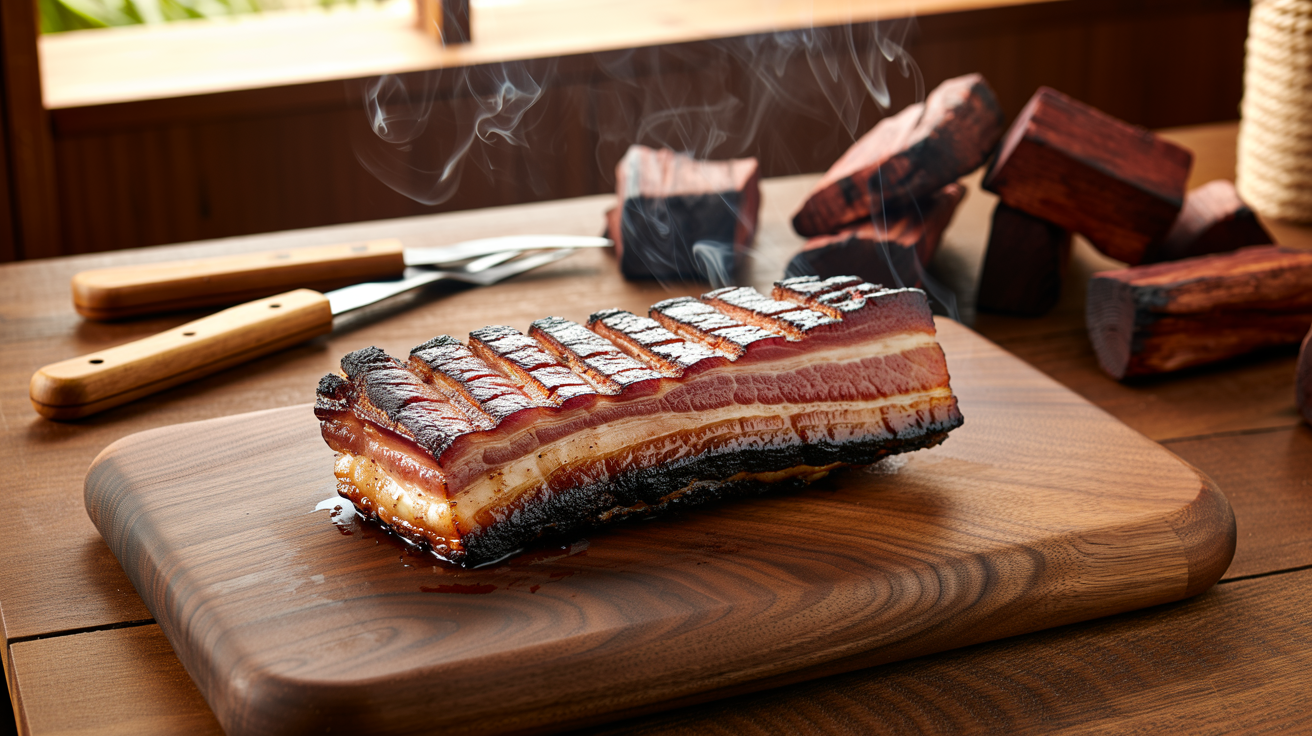
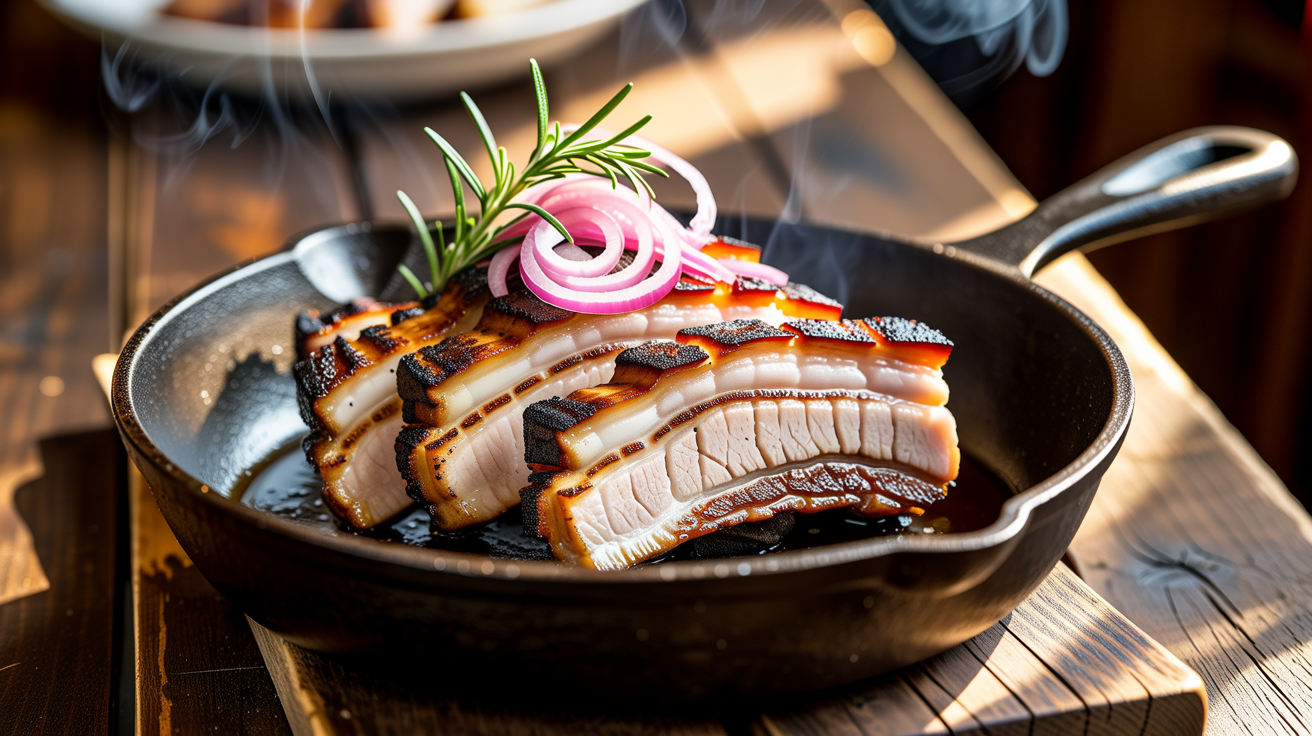
- Slice and serve your grilled pork belly. Using your sharpest slicing knife, cut the pork belly crosswise into slices about three-quarters of an inch thick. You will see the smoke ring - that pink layer just beneath the bark - which is the visual proof of your low and slow craft. Each slice should have a shatteringly crispy fat cap on top, a deep smoky bark on the exterior, and a tender, juicy interior. Serve immediately with your favorite BBQ sauce, pickled vegetables, or simply on its own. The meat speaks for itself.
Nutrition
This grilled pork belly recipe is the kind of cook that separates backyard grillers from true pitmasters – layering live fire technique, patience, and bold seasoning to produce a slab of meat so rich and satisfying it will become your most requested cookout dish. We are talking about a thick cut of pork belly hit with a punchy dry rub, cooked low and slow over indirect heat to build a deep mahogany bark, then finished over screaming hot direct fire to shatter that fat cap into pure crispy glory. This is not a quick weeknight cook – this is an event.
Pork belly thrives in the 250 to 275 degree Fahrenheit range for the low and slow phase. At this temperature the thick ribbons of intramuscular fat have time to render down slowly, basting the meat from the inside out while the exterior dries and darkens into that signature bark you see in competition BBQ. We are targeting an internal temp of 200 to 205 degrees Fahrenheit before we move to the sear, which ensures the collagen has fully broken down and the meat is probe-tender. Rush this process and you get chewy, greasy pork belly. Respect the time and you get something transcendent.
At GrillMasterHQ we have cooked pork belly on everything from offset smokers and ceramic kamados to kettle grills and pellet rigs, and the method in this recipe works across all of them. The secret weapons are a bold brown sugar and smoked paprika rub, a two-zone fire setup, and one non-negotiable rule – always rest the meat before you slice. Follow these steps and you will produce grilled pork belly with a bark that crackles, a smoke ring that runs deep, and layers so tender they practically melt before they hit the board.
Grilled Pork Belly Recipe: Crispy, Smoky Perfection
This grilled pork belly recipe delivers impossibly crispy skin, a deep smoky bark, and tender melt-in-your-mouth layers of fat and meat. Low and slow cooking over live fire transforms this humble cut into pure BBQ gold. Fire up the grill today and taste the difference.
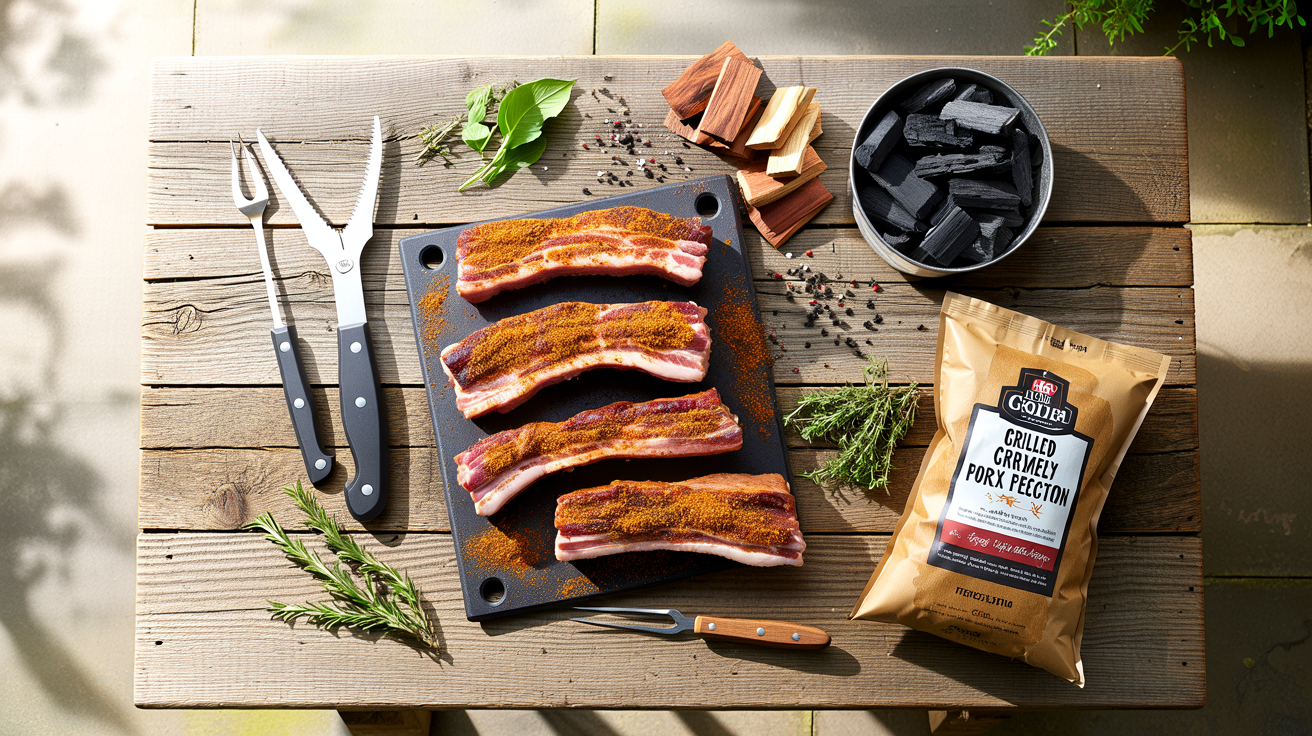
Ingredients
| AMOUNT | INGREDIENT | NOTES |
|---|---|---|
| 3 lbs | skin-on pork belly slab | ask your butcher for a single flat slab, skin scored in a crosshatch pattern |
| 3 tablespoons | brown sugar | light or dark both work, dark adds deeper molasses notes |
| 2 tablespoons | smoked paprika | do not substitute regular paprika – smoked is essential |
| 1 tablespoon | kosher salt | coarse kosher salt, not table salt |
| 1 tablespoon | black pepper | freshly cracked coarse black pepper for best flavor |
| 1 teaspoon | garlic powder | granulated garlic also works well here |
| 1 teaspoon | onion powder | adds savory depth to the rub |
| 1 teaspoon | cayenne pepper | reduce to half a teaspoon for a milder profile |
| 1 teaspoon | dry mustard powder | helps the rub bind and adds a subtle tang |
| 2 tablespoons | yellow mustard | used as a binder coat before applying the dry rub |
| 0.5 cup | apple juice | for the spritz bottle, mix with equal parts water or apple cider vinegar |
| 2 chunks | cherry or apple wood chunks | for smoke – chunks work better than chips for a long cook |
Instructions
Nutrition (per serving)
The BBQ Story Behind This Recipe
Pork belly has been a cornerstone of cooking cultures across the globe for thousands of years, but in the American BBQ tradition it took a while to find its rightful throne. For decades in the United States, pork belly was primarily reserved for curing into bacon or slow braising in Asian-inspired preparations. It was the explosion of Korean BBQ culture – specifically samgyeopsal, the beloved grilled pork belly dish cooked tableside over charcoal – that introduced millions of American diners to the idea of cooking pork belly directly over live fire. That influence rippled through the food world and landed squarely in the pits of BBQ joints from Texas to Tennessee.
In the competitive BBQ circuit, pork belly truly came into its own in the 2010s when it began appearing as a featured category at major cook-offs. Pitmasters who had spent careers perfecting brisket and pork ribs turned their attention to this gloriously fatty cut and applied every low and slow principle they knew. The result was a new American BBQ icon – smoke-kissed, bark-crusted, and devastatingly rich. Today grilled and smoked pork belly sits proudly alongside brisket and pulled pork in the pantheon of great American BBQ, celebrated at backyard cookouts and championship pits alike.
Hot Off the Grill
A Closer Look
Pitmaster Tips for Best Results
- Always score the fat cap before applying your rub – a crosshatch pattern cut about a quarter inch deep allows fat to render faster and lets seasoning penetrate beyond just the surface for a more flavorful bite every time.
- If your bark is forming too quickly and threatening to burn before the internal temp hits 200 degrees Fahrenheit, wrap the pork belly tightly in butcher paper at the 160 to 165 degree Fahrenheit mark – this is the pork belly version of the Texas Crutch and will push you through the stall without steaming out your bark the way foil does.
- Cherry wood is the go-to smoke wood for pork belly because its mild, slightly sweet smoke complements the richness of the fat without overpowering it – apple wood is a close second, and a 50/50 blend of both is a pitmaster favorite for competition-level flavor.
- The stall is real with pork belly – around 160 to 170 degrees Fahrenheit internal temp, evaporative cooling will cause your temp to plateau and can last 30 to 60 minutes, so do not panic and crank up the heat. Trust the process, maintain your cooking temp, and the internal temp will start climbing again.
- For maximum crispiness on the fat cap during the final sear, pat the fat cap completely dry with paper towels immediately before it goes over direct fire – any surface moisture will steam the fat instead of crisping it, and you want that crackling shattering texture, not a chewy or rubbery exterior.
🔧 Pitmaster Equipment
Charcoal Grill or Offset Smoker: A two-zone charcoal setup or offset smoker gives you the indirect heat and real wood smoke needed to build authentic bark and a proper smoke ring on pork belly.
Instant Read Thermometer: Absolutely critical for nailing the 200 to 205 degree Fahrenheit internal temp target before the sear phase – do not guess on this cut.
Long Tongs and Heat-Resistant Gloves: Pork belly is heavy, slippery with fat, and needs to go over screaming hot direct fire – protect your hands and keep control of the slab.
Wire Rack Set Inside a Sheet Pan: Elevates the pork belly during the low and slow phase to allow airflow underneath and catches rendered fat drippings cleanly.
Basting Brush or Spray Bottle: Used to apply apple juice or cider vinegar spritz during the cook to keep the surface moist and help the bark develop without burning.
Sharp Slicing Knife or Butcher Knife: A sharp blade is essential for clean slices through the crispy fat cap without tearing or crushing the tender meat beneath.
🔥 Variations
Asian-Style Grilled Pork Belly: Swap the dry rub for a marinade of soy sauce, sesame oil, fresh ginger, garlic, brown sugar, and gochujang. Marinate overnight and grill over direct medium-high heat in thinner slices Korean BBQ style, flipping every 2 to 3 minutes until caramelized and slightly charred. Serve with rice, lettuce wraps, and kimchi.
Pellet Grill Version: Set your pellet grill to 250 degrees Fahrenheit using cherry or apple pellets and follow the exact same low and slow method. When the internal temp hits 200 degrees Fahrenheit, crank the pellet grill up to its highest setting – usually 500 degrees Fahrenheit or higher – and sear the fat cap directly on the grates for 3 to 4 minutes to get that crispy finish.
Gas Grill Version: Set up two-zone indirect heat on your gas grill by lighting only one side of the burners. Place a smoker box filled with soaked cherry wood chips over the lit burner side and allow it to start smoking before adding the meat to the unlit side. Maintain 250 to 275 degrees Fahrenheit lid temperature throughout the cook and finish with a direct sear over the lit burner on high.
Maple Bourbon Glazed Pork Belly: Follow the base recipe through the low and slow phase, then during the final 30 minutes of the cook brush the pork belly with a glaze made from 3 tablespoons of real maple syrup, 2 tablespoons of bourbon, 1 tablespoon of soy sauce, and a pinch of cayenne. Apply the glaze every 10 minutes until lacquered and glossy, then finish with the fat cap sear for a sweet and smoky caramelized crust.
Pork Belly Burnt Ends: After the low and slow phase at 200 to 205 degrees Fahrenheit internal temp, skip the sear and instead cube the pork belly into 1.5-inch cubes. Toss the cubes in your favorite BBQ sauce mixed with a tablespoon of brown sugar and a pat of butter. Place them back on the grill in a disposable aluminum pan over indirect heat at 275 degrees Fahrenheit for an additional 45 to 60 minutes until they are glossy, saucy, and candied into smoky little flavor bombs.
❓ Pitmaster FAQ
What internal temperature should grilled pork belly reach?
For this low and slow grilled pork belly recipe you are targeting 200 to 205 degrees Fahrenheit internal temperature before the final sear. This is higher than the USDA minimum safe temperature of 145 degrees Fahrenheit for whole pork, but at this higher temp the thick fat layers and connective tissue have fully rendered and broken down, giving you that signature melt-in-your-mouth texture. Use a reliable instant read thermometer and confirm the probe slides in with little to no resistance before moving to the sear.
Can I use a gas grill instead of a charcoal grill or smoker?
Absolutely – a gas grill works great for this grilled pork belly recipe as long as you set it up for two-zone indirect cooking and add real smoke. Light only one side of your burners and place a cast iron smoker box filled with cherry or apple wood chips over the lit side. Let the chips start smoking before adding the pork belly to the unlit side. Maintain a lid temperature of 250 to 275 degrees Fahrenheit throughout the cook and finish with a direct sear over the lit burner cranked to high.
Do I need skin-on pork belly for this recipe?
Skin-on pork belly is strongly recommended for this recipe because the skin transforms into the crackling, crispy layer that makes grilled pork belly so spectacular. If you can only find skinless pork belly, the recipe still works beautifully – you will still get incredible bark and rendered fat on the fat cap side – but you will miss the shatteringly crispy skin element. Ask your local butcher for skin-on slabs as they can often source them even if the grocery store case does not carry them.
How do I know when the bark is set on my pork belly?
A properly set bark on grilled pork belly will look deep mahogany to almost black in color, will feel firm and slightly dry to a light touch rather than wet or tacky, and will not smear when you gently press on it. If the rub still feels sticky or comes off on your finger when you touch it, the bark has not fully set yet – give it more time. Do not spritz a bark that is not yet set, as moisture will prevent it from firming up. Once it is firm and dark, you are building the kind of crust that cracks when you slice through it.
How long does grilled pork belly take to cook?
At 250 to 275 degrees Fahrenheit indirect heat, a 3-pound skin-on pork belly slab typically takes 3.5 to 4.5 hours to reach the target internal temperature of 200 to 205 degrees Fahrenheit, followed by a 3 to 5 minute direct sear and a 20 to 30 minute rest. Total active cook time is generally 4 to 5 hours plus the overnight dry brine. Always cook to internal temperature, not to time – thickness, fat content, and cooking conditions all affect timing, and a reliable instant read thermometer is your most important tool.
What is the best wood to use when smoking pork belly?
Cherry wood is the top choice for grilled and smoked pork belly because its mild, slightly sweet smoke pairs beautifully with the rich fatty cut without overwhelming it. Apple wood is an excellent alternative, and a blend of half cherry and half apple is a pitmaster-approved combination. Avoid heavy smoke woods like mesquite or pure hickory for a long pork belly cook as they can turn bitter on a fatty cut over several hours. If you want a bolder smoke profile, try one cherry chunk and one small hickory chunk together.