
Smoked Pulled Pork Recipe: Low and Slow Perfection
Ingredients
Method
- The night before your cook, prepare the pork shoulder by trimming the fat cap down to about one-quarter inch thickness. You want some fat left on there to render and baste the meat during the long cook, but you do not want a thick slab that will prevent the rub from penetrating. Pat the entire surface of the pork dry with paper towels. Moisture on the surface will steam instead of building bark, and we are here for bark.
- Mix your dry rub by combining the brown sugar, smoked paprika, kosher salt, black pepper, garlic powder, onion powder, cayenne, and dried mustard powder in a bowl. Give it a good stir until everything is evenly distributed. Coat the entire pork shoulder with a thin layer of yellow mustard, making sure to get into every crevice and around the bone area. The mustard acts as a binder and will cook off completely, so do not let the smell alarm you.
- Apply the dry rub generously to every surface of the mustard-coated pork shoulder. Press the rub firmly into the meat with your hands rather than just sprinkling it on. You want it to adhere and start working overnight. Wrap the seasoned pork tightly in plastic wrap and refrigerate it for at least 8 hours, or overnight up to 24 hours. This dry brine process pulls moisture to the surface and then reabsorbs it with the seasoning for deeper flavor penetration.
- On cook day, pull the pork shoulder out of the refrigerator about one hour before you plan to put it on the smoker. This takes the chill off slightly and helps the meat accept smoke more efficiently. Meanwhile, fire up the grill or smoker and bring it to a stable 225 to 250 degrees Fahrenheit. This is non-negotiable. Too hot and you rush the collagen breakdown; too cool and you will be cooking for 20 hours. Use a reliable lid thermometer or a separate probe to verify your grate-level temperature, not just the dome temperature.
- Add your wood chunks to the fire. For pulled pork, hickory delivers bold smoke while apple wood gives a sweeter, milder profile. A combination of both is a winning move. You want thin blue smoke rolling out of your smoker, not thick white billowing smoke. Thick white smoke is acrid and bitter and will ruin your bark. If you see thick white smoke, open your vents, add less wood, and wait for it to thin out and turn blue before you put the meat on.
- Place the pork shoulder fat cap up on the smoker grate, away from direct heat. Insert your leave-in probe thermometer into the thickest part of the meat, making sure it is not touching the bone. Bone contact will give you a false high reading. Close the lid and commit. Do not open the smoker for the first 3 hours. Every time you lift the lid you lose heat, extend your cook time, and interrupt smoke absorption.
- After the first 3 hours, begin your spritz routine. Mix the apple juice and apple cider vinegar 50-50 in a spray bottle. Open the smoker quickly and give the entire surface of the pork shoulder a light spritz. Do not soak it, just mist it. Close the lid and spritz every 45 minutes to an hour from this point forward. The spritz helps build color on the bark, keeps the surface from drying out completely, and adds a subtle sweet and tangy layer of flavor as it caramelizes.
- Monitor your internal temp throughout the cook. Around 160 to 165 degrees Fahrenheit internal temp, you will hit the stall. The temperature will appear to stop rising or may even drop slightly. This is completely normal and happens because the meat is sweating moisture which evaporates and cools the surface. The stall can last anywhere from 1 to 4 hours. Hold your smoker temperature steady and do not open the lid constantly to check. Trust your probe thermometer.
- When the bark is dark mahogany and well set, usually around the 6 to 8 hour mark and around 165 degrees internal temp, it is time to wrap. Pull the pork shoulder off the smoker and wrap it tightly in two layers of heavy duty aluminum foil or a double layer of pink butcher paper. Butcher paper allows more breathability and keeps the bark slightly crispier, while foil creates a tighter steam environment that speeds up the cook. Both are legitimate. Return the wrapped pork to the smoker.
- Continue cooking the wrapped pork until the internal temp reaches 200 to 205 degrees Fahrenheit. At this point, probe the meat in multiple spots. What you are looking for is probe tenderness, meaning the thermometer probe slides in with almost zero resistance, like inserting it into warm butter. If you feel any resistance at all, close it back up and give it another 30 to 45 minutes. The difference between 198 and 203 degrees can be the difference between decent pulled pork and life-changing pulled pork.
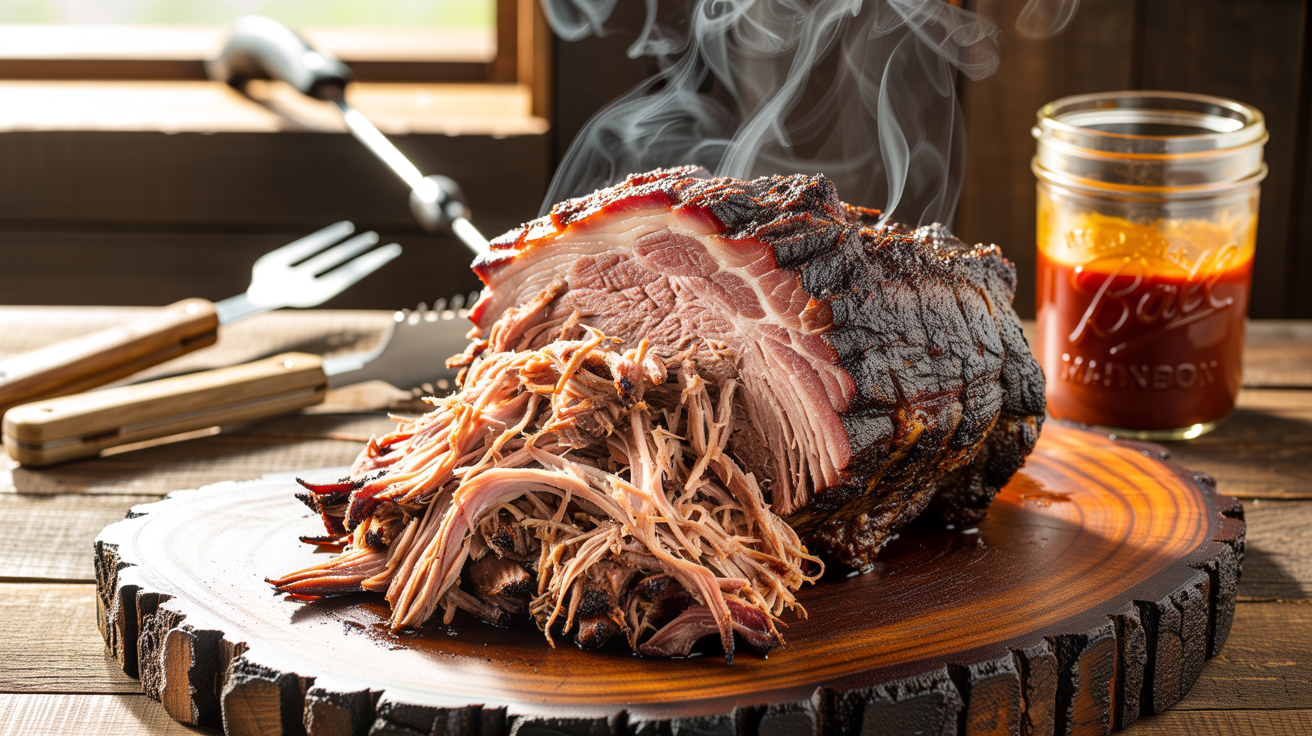
- Once the pork hits probe-tender perfection, remove it from the smoker. Do not skip this next step: rest the meat. Leave the pork wrapped and place it in a dry empty cooler with no ice. Close the lid. Let it rest for a minimum of 1 hour and up to 4 hours. This resting period allows the juices to redistribute throughout the meat and the collagen that dissolved into gelatin to set up slightly, giving you moist, rich, pullable pork rather than dry stringy meat. This is the most underrated step in the entire cook.
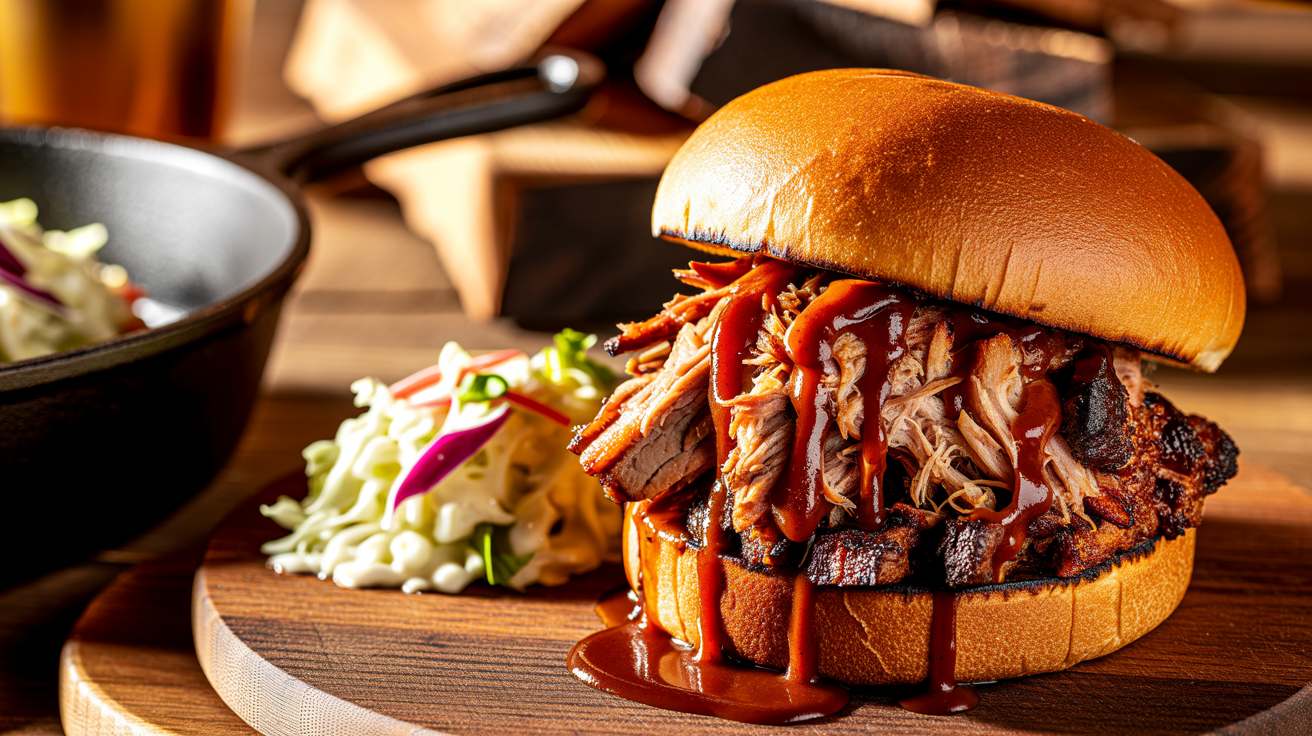
- After the rest, unwrap the pork shoulder over a large cutting board, saving all the juices that have collected in the foil. Remove the bone, which should slide out cleanly with almost no effort. Begin pulling the meat apart using two forks, bear claws, or just your hands if it has cooled enough to handle. Discard large pockets of fat as you go. Pour the reserved juices back over the pulled pork and toss gently to combine. Taste for seasoning and add a pinch of salt or a splash of vinegar if needed. Serve immediately on toasted brioche buns with BBQ sauce on the side.
Nutrition
This smoked pulled pork recipe is the crown jewel of backyard BBQ, built on patience, smoke, and a pork shoulder that transforms over 12 to 14 hours into something truly legendary. We are talking about a deep ruby smoke ring just below the surface, a bark so dark and crusty it almost looks burnt but tastes like pure smoky heaven, and meat so tender it pulls apart with nothing more than your fingertips. If you have never committed to a full low and slow cook, this is the recipe that will convert you into a true believer.
The magic happens at 225 to 250 degrees Fahrenheit, where collagen in the pork shoulder slowly breaks down into gelatin over many hours, basting the meat from the inside out. You will hit what pitmasters call the stall around 160 to 165 degrees internal temp, where the meat sweats and seems to stop cooking for what feels like forever. Do not panic and do not crank up the heat. Trust the process, hold your temperature, and let time do the heavy lifting. That stall is where the bark sets and the flavor deepens.
Whether you are running a offset stick burner, a kettle-style charcoal smoker, a ceramic kamado, or a drum smoker, the principles here stay the same. Get your wood right, get your temperature dialed in, and give yourself a full day to do this properly. We recommend starting your cook the night before a big gathering so you can wrap, rest the meat, and serve at peak tenderness. This smoked pulled pork recipe has fed competition crowds, church potlucks, and everything in between, and it will absolutely steal the show at your next cookout.
Smoked Pulled Pork Recipe: Low and Slow Perfection
This smoked pulled pork recipe delivers fall-apart tender meat with a deep mahogany bark and a smoke ring that will make your guests drop their jaws. Cooked low and slow over wood smoke for hours, this is the kind of BBQ that turns a backyard into a legend. Fire up the smoker today.
Ingredients
| AMOUNT | INGREDIENT | NOTES |
|---|---|---|
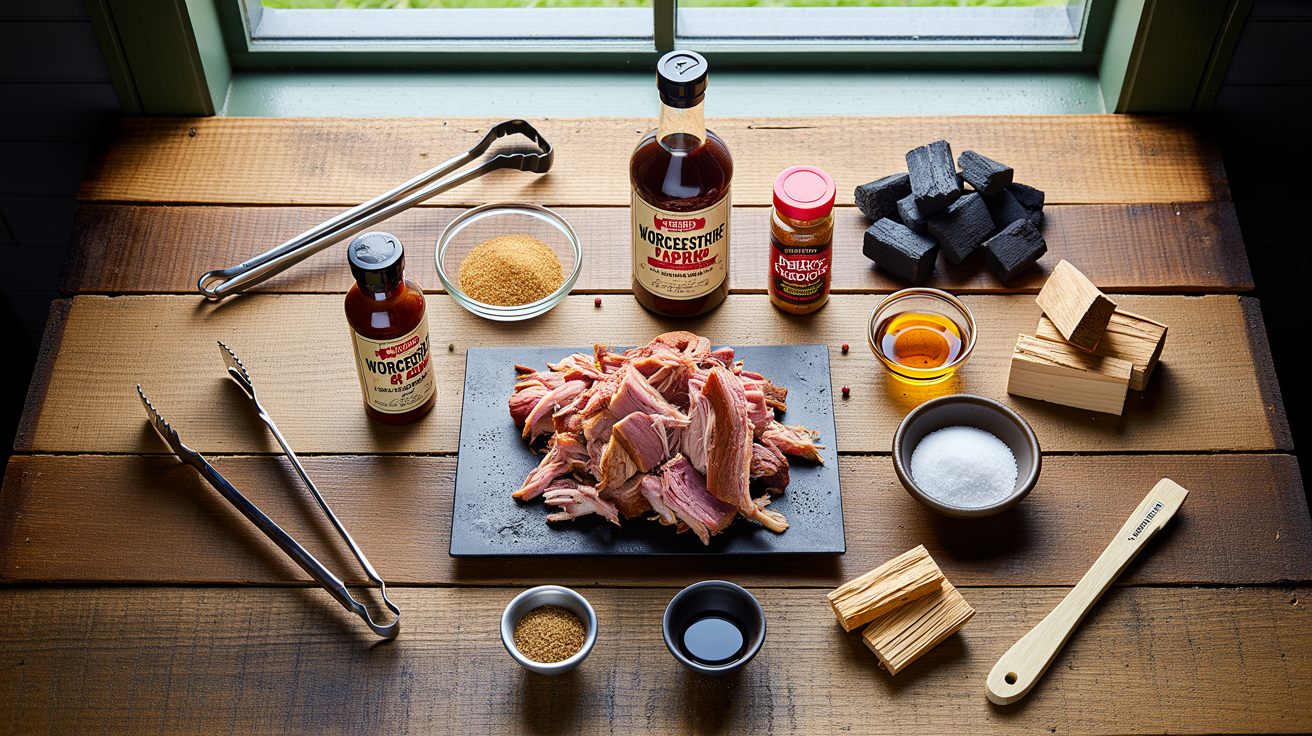
| 8 lbs | bone-in pork shoulder (pork butt) | Boston butt cut preferred, fat cap trimmed to about one-quarter inch |
| 3 tablespoons | yellow mustard | used as a binder to help the rub stick, does not affect flavor after cooking |
| 3 tablespoons | brown sugar | packed, light or dark both work |
| 2 tablespoons | smoked paprika | adds color and deep smoky undertone to the bark |
| 2 tablespoons | kosher salt | coarse grind preferred for building bark texture |
| 1 tablespoon | black pepper | freshly cracked for best flavor |
| 1 tablespoon | garlic powder | not garlic salt |
| 1 tablespoon | onion powder | |
| 1 teaspoon | cayenne pepper | adjust up or down based on your heat preference |
| 1 teaspoon | dried mustard powder | adds a subtle tangy backbone to the rub |
| 1 cup | apple juice | for the spritz bottle, mixed 50-50 with apple cider vinegar |
| 1 cup | apple cider vinegar | for the spritz bottle mixed with apple juice |
| 4 chunks | hickory or apple wood chunks | fist-sized chunks, not chips, for long smoke sessions |
| 8 each | brioche hamburger buns | for serving, lightly toasted |
| 1 cup | your favorite BBQ sauce | served on the side, not mixed in, so guests can choose their own adventure |
Instructions
Nutrition (per serving)
The BBQ Story Behind This Recipe
Pulled pork is deeply rooted in the American South, where whole hogs and pork shoulders have been slow-cooked over open pits since before the United States was even a country. The tradition traces back to Indigenous cooking methods and was later shaped by African and Caribbean influences brought by enslaved people who became the backbone of Southern BBQ culture. Pitmasters in the Carolinas, Tennessee, and Georgia spent generations perfecting the art of managing fire, smoke, and time, turning tough, inexpensive cuts of pork into something extraordinary. To this day, pulled pork is considered the heart of Southern BBQ identity, with regional debates over sauce style and wood choice running hotter than the coals themselves.
The two dominant schools of pulled pork thought are Eastern Carolina and Western Carolina, and do not make the mistake of mixing them up in the wrong company. Eastern Carolina purists swear by a thin, tangy vinegar-based sauce with no tomato in sight, while the Lexington or Piedmont style of Western Carolina introduces ketchup and a touch of sweetness into the mix. Meanwhile, Tennessee and Georgia pitmasters bring their own spice rub traditions and wood preferences to the table. Memphis adds a dry rub culture that rivals the wet sauce tradition, and Texas pitmaster influence has pushed brisket-style technique into pork cooking in recent years. No matter which regional flag you fly, the foundation is the same: low and slow smoke cooking that nobody in a hurry has any business attempting.
Hot Off the Grill
A Closer Look
Pitmaster Tips for Best Results
- Always cook pork shoulder to 200 to 205 degrees Fahrenheit internal temp and check for probe tenderness rather than relying on time alone. A bone-in pork butt can take anywhere from 1.5 to 2 hours per pound at 225 degrees, so plan accordingly and build in buffer time.
- Do not skip the overnight dry brine with the rub applied. This single step dramatically improves bark formation and flavor depth. The salt draws moisture out and reabsorbs back in with the seasoning for a more seasoned interior.
- Keep a consistent smoker temperature between 225 and 250 degrees Fahrenheit for the entire cook. Avoid temperature swings by managing your airflow carefully and adding fuel before your fire dies down rather than playing catch-up with a cold firebox.
- Spritz with apple juice and apple cider vinegar every 45 to 60 minutes after the first 3 hours, but keep your lid-open time to under 30 seconds each time. Every minute the lid is open adds real time to your cook and disrupts your smoke environment.
- Rest the meat wrapped in a dry cooler for at least 1 hour but do not be afraid to go up to 4 hours for a large pork shoulder. The meat will stay well above 140 degrees the entire time and will actually be more tender and juicy after a long rest than right off the smoker.
🔧 Pitmaster Equipment
Offset Smoker or Charcoal Smoker: Delivers authentic smoke flavor and gives you real fire management control for a true low and slow cook.
Instant Read Thermometer: Absolutely critical for monitoring internal temp through the stall and knowing when you hit the magic 200 to 205 degree pull point.
Leave-In Probe Thermometer: Lets you monitor internal temp continuously without lifting the lid and losing heat every time you get curious.
Large Cutting Board: You need a full-size surface to pull and shred a whole pork shoulder without making a mess.
Heavy Duty Aluminum Foil or Butcher Paper: Used to wrap the pork shoulder during the stall to power through and lock in moisture and bark.
Long Tongs or Heat-Resistant Gloves: Keep your hands safe while managing the fire, repositioning the meat, and handling a scorching hot wrapped pork shoulder.
Spray Bottle: Filled with apple juice or apple cider vinegar for spritzing the bark every hour to build color and keep the surface from drying out.
Cooler or Cambro Container: Used to rest the meat after the cook, holding temperature for up to 4 hours so you can serve at the perfect moment.
🔥 Variations
Pellet Grill Version: Set your pellet grill to 225 degrees Fahrenheit and load the hopper with hickory, apple, or competition blend pellets. Follow the exact same steps for rub, spritz, wrap, and rest. Pellet grills are incredibly consistent at holding temperature, making this the most set-it-and-monitor-it approach for beginners. Expect similar cook times and an excellent smoke ring, though the bark may be slightly softer than a stick burner result.
Gas Grill Version: Set up your gas grill for indirect heat by lighting only one or two burners on one side and placing the pork shoulder on the unlit side. Use a smoker box filled with hickory or apple wood chips, soaked for 30 minutes and drained, placed directly over a lit burner. Keep the lid closed and maintain 225 to 250 degrees Fahrenheit by adjusting the lit burners. Replenish wood chips every 45 minutes for the first 4 to 5 hours. Results will be slightly lighter on smoke but still delicious.
Carolina Vinegar Style: Skip the brown sugar in the rub and go heavy on the pepper and cayenne for an Eastern Carolina profile. After pulling, skip the BBQ sauce entirely and instead toss the meat with a mixture of one cup apple cider vinegar, one teaspoon red pepper flakes, one tablespoon sugar, and salt to taste. This tangy, no-sauce style is as authentic as BBQ gets in the eastern part of the Carolinas.
Overnight Smoke Method: Start your cook at 10 PM the night before your event and run the smoker at 225 degrees Fahrenheit overnight. By morning, you will likely be close to or through the stall. Wrap the pork, finish the cook, and then rest it in the cooler until your guests arrive. This is how competition teams and BBQ restaurants manage large volumes and it results in some of the most deeply smoked pulled pork you will ever taste.
Spicy Chipotle Rub Variation: Swap the smoked paprika for chipotle powder and add one teaspoon of ground cumin and one teaspoon of dried oregano to the rub. After pulling, mix a chipotle pepper in adobo sauce into your BBQ sauce for a smoky, spicy heat that plays beautifully against the sweet pork fat. Serve on warm flour tortillas instead of buns for a Tex-Mex pulled pork taco situation that absolutely slaps.
❓ Pitmaster FAQ
What internal temperature should smoked pulled pork reach?
You want to cook smoked pulled pork to an internal temp of 200 to 205 degrees Fahrenheit, well above the USDA safe minimum of 145 degrees for pork. At 145 degrees the pork is safe to eat but the collagen has not fully broken down into gelatin yet. That breakdown only happens up around 200 degrees, which is what gives you that fall-apart tender texture. Always verify with an instant read thermometer and check for probe tenderness in multiple spots.
Why is my pork shoulder stalling at 160 to 165 degrees and not rising?
That is the stall, and it is completely normal. It happens because the surface of the meat evaporates moisture, which cools the pork just as fast as the smoker is heating it. This evaporative cooling effect can hold your internal temp flat for 1 to 4 hours. Do not raise the smoker temperature. Instead, wait it out or wrap the pork tightly in foil or butcher paper to push through the stall faster. This is where patience separates the pitmasters from the impatient.
Can I make smoked pulled pork the day before?
Absolutely, and many pitmasters actually prefer it. Cook the pork, pull it, and refrigerate it in an airtight container with the reserved cooking juices poured over the top. The next day, reheat it low and slow in a covered pan in the oven at 300 degrees Fahrenheit with a splash of apple juice or chicken broth to keep it moist. It reheats beautifully and some people swear the flavor is even better on day two after the smoke flavor has had time to mellow and penetrate fully.
Should I use bone-in or boneless pork shoulder?
Bone-in is the pitmaster recommendation every time. The bone conducts heat through the center of the meat and contributes collagen and flavor to the final product. A bone-in Boston butt will also give you a clear visual cue when the cook is done: the bone will wiggle and pull free cleanly. Boneless pork shoulder cooks a bit faster and is easier to slice and pull, but you sacrifice some of that deep flavor that only comes from cooking meat on the bone.
What wood is best for smoked pulled pork?
Hickory is the classic choice for pulled pork, delivering bold, traditional BBQ smoke flavor. Apple wood is milder and sweeter, great for people who want a less intense smoke profile. A 50-50 combination of hickory and apple is a crowd-pleasing sweet spot that most pitmasters swear by. Avoid mesquite for a long low and slow cook like this as it can turn bitter over many hours. Pecan is another excellent option that sits between hickory and apple in terms of smoke intensity.
How long does it take to smoke a pork shoulder?
At 225 to 250 degrees Fahrenheit, plan on approximately 1.5 to 2 hours per pound of bone-in pork shoulder. An 8-pound bone-in pork butt will typically take 12 to 14 hours total. Variables like smoker type, outside temperature, wind, humidity, and how often you open the lid all affect cook time. Always cook to internal temp and probe tenderness rather than relying on time alone. Build in extra buffer time because pulled pork can rest in a cooler for hours without any quality loss.