This smoked lamb shoulder recipe is the crown jewel of any serious pitmaster repertoire, delivering layers of bold smoke flavor, a thick crusty bark, and meat so tender it practically falls off the bone with the gentlest nudge. We are talking about a long, patient cook at 225 to 250 degrees Fahrenheit, where the collagen breaks down slowly over 8 to 10 hours and transforms a tough, well-marbled cut into something truly extraordinary. This is not a weeknight quick fix. This is a weekend ritual, a labor of love, and every single minute is worth it.
Lamb shoulder is one of the most forgiving and rewarding cuts you can throw in a smoker. Unlike a rack of lamb that demands precise timing and a gentle touch, the shoulder is built for punishment. It thrives under hours of steady smoke and heat, soaking up flavor from wood like a sponge and developing a bark that crackles when you pull it apart. We use a bold dry rub packed with earthy spices that complement the natural gaminess of the lamb without overpowering it, and we pair it with cherry or hickory wood for a smoke profile that is rich, slightly sweet, and deeply complex.
Whether you are running a offset smoker, a kettle grill set up for indirect heat, or a ceramic kamado cooker, the process is the same. Build your fire, get your temp dialed in at 225 degrees Fahrenheit, apply your rub generously, and let time do the heavy lifting. Plan for the stall around 160 to 165 degrees Fahrenheit internal temp, wrap if needed, and do not skip the rest. That final rest period is where the magic locks in and every bite becomes something you will be talking about for years.
Smoked Lamb Shoulder Recipe: Low and Slow BBQ Perfection
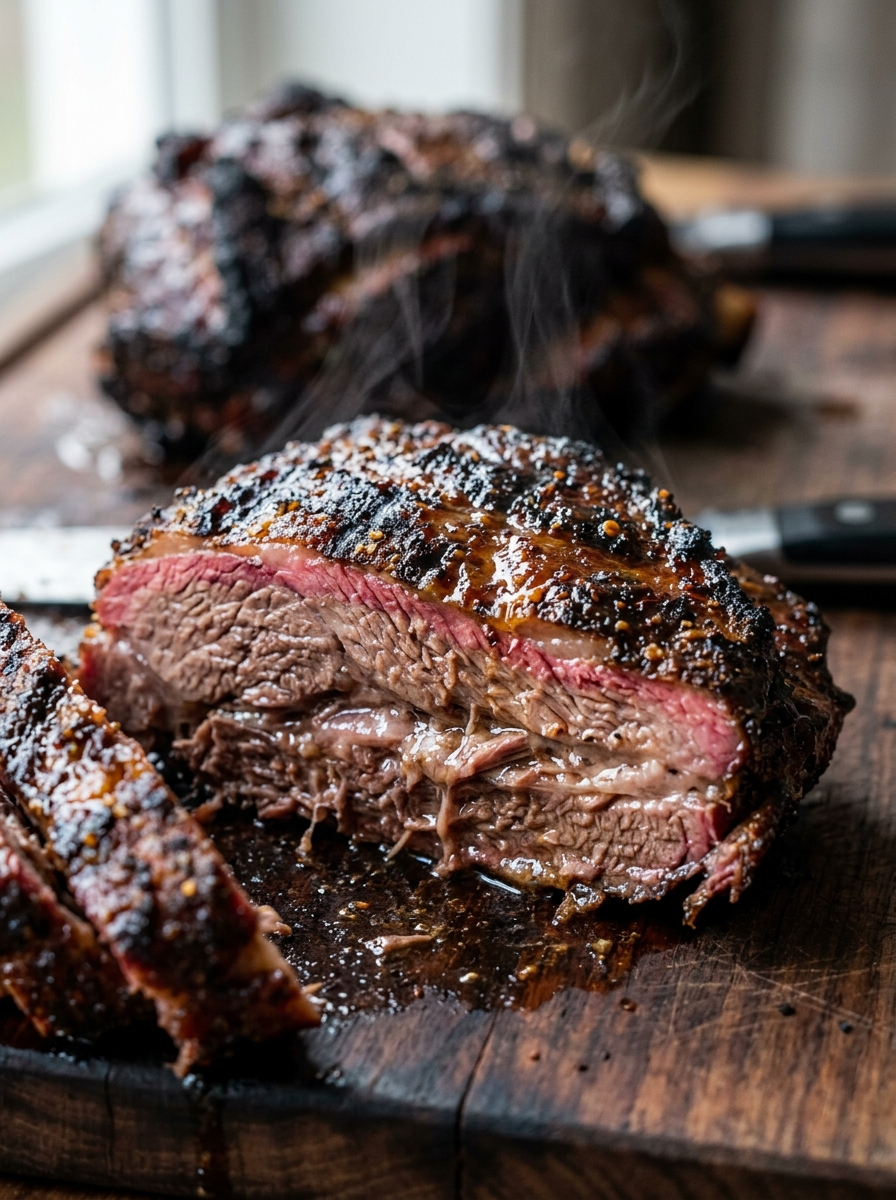
This smoked lamb shoulder recipe delivers melt-in-your-mouth pulled meat with a deep mahogany bark and a beautiful smoke ring. Cooked low and slow over fragrant hardwood, this is the kind of cook that turns a backyard into a BBQ legend. Fire up the smoker today and taste the difference.
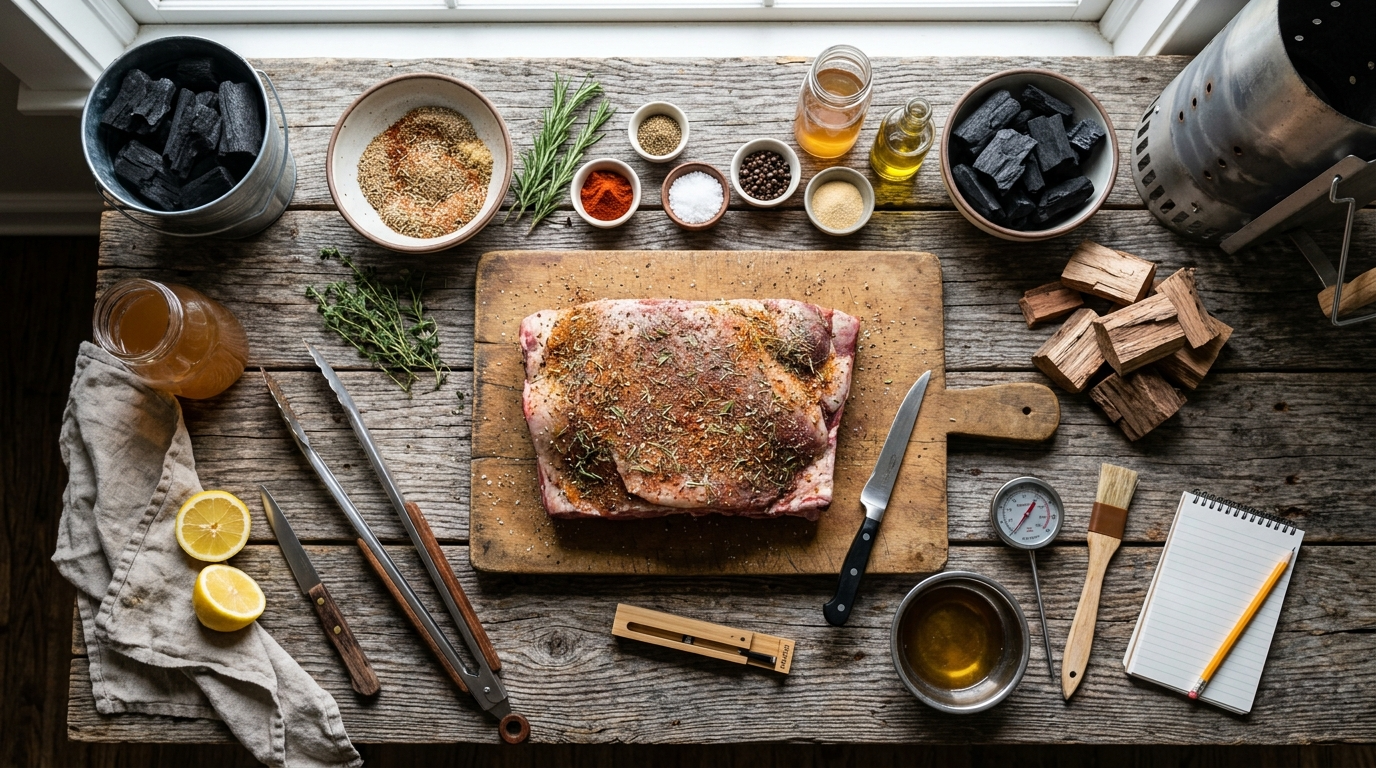
Ingredients
| AMOUNT | INGREDIENT | NOTES |
|---|---|---|
| 1 | bone-in lamb shoulder | 6 to 8 lbs, fat cap trimmed to about one-quarter inch |
| 3 tablespoons | coarse kosher salt | for the dry brine and rub base |
| 2 tablespoons | coarse black pepper | freshly cracked for the boldest flavor |
| 2 tablespoons | smoked paprika | adds color and a deep smoky backbone to the bark |
| 1 tablespoon | garlic powder | not garlic salt |
| 1 tablespoon | onion powder | balances the savory spice profile |
| 2 teaspoons | ground cumin | complements the natural earthiness of lamb beautifully |
| 2 teaspoons | dried rosemary | crush it between your fingers before applying to release the oils |
| 1 teaspoon | dried oregano | adds a Mediterranean herbaceous note |
| 1 teaspoon | cayenne pepper | adjust up or down to your heat preference |
| 2 tablespoons | brown sugar | light brown sugar helps the bark caramelize and build that mahogany crust |
| 2 tablespoons | yellow mustard | used as a binder, the flavor cooks off completely during the smoke |
| 1 cup | apple juice | for the spritz bottle, mixed 50-50 with apple cider vinegar |
| 1 cup | apple cider vinegar | mixed with apple juice for spritzing |
| 4 chunks | cherry wood or hickory wood chunks | fist-sized chunks, not chips, for a longer cleaner burn in the smoker |
Instructions
Nutrition (per serving)
The BBQ Story Behind This Recipe
Slow-cooked lamb has deep roots across cultures worldwide, from the whole-roasted lamb of Greek Easter celebrations to the slow-braised shoulders of North African tagines and the fire-pit lamb of Middle Eastern mezze traditions. In the American BBQ canon, lamb has always played a supporting role to the dominant pork and beef traditions of the South, but pitmasters in regions like Kentucky have long known the secret of slow-smoked mutton and lamb, particularly around Owensboro where mutton BBQ with a vinegar-forward black dip sauce is a point of serious local pride. That tradition stretches back over a century and represents some of the oldest continuous BBQ culture in the United States.
In more recent decades, the craft BBQ movement has brought lamb shoulder into the spotlight as adventurous pitmasters began exploring cuts and proteins outside the traditional brisket-and-ribs comfort zone. The influence of Australian and New Zealand BBQ culture, where lamb is king and whole shoulders are smoked and pulled like American pork butt, has been a significant force in shaping how American pitmasters approach the cut today. Wood choices have evolved too, with fruit woods and Mediterranean-inspired herb rubs finding their way into the smoke. Today, smoked lamb shoulder sits proudly alongside brisket and pork butt as a centerpiece cook worthy of any serious competition or backyard feast.
Hot Off the Grill
A Closer Look
Pitmaster Tips for Best Results
- Do not skip the overnight dry brine. Salting 12 to 24 hours in advance draws moisture out and then back in, seasoning the lamb deep into the muscle and setting up the surface for a dramatically better bark during the smoke.
- Keep your smoker temperature consistent between 225 and 250 degrees Fahrenheit throughout the entire cook. Wild temperature swings are the enemy of a good bark and even cooking. Invest in a quality dual-probe thermometer that monitors both the grate temp and the meat temp simultaneously.
- Cherry wood is a top choice for lamb because its mild sweetness complements the natural richness of the meat without overpowering it. Hickory adds a bolder more assertive smoke. Avoid mesquite for a long cook like this as it can turn bitter over 8 to 10 hours.
- The stall is real and it will test your patience. Trust the process, keep the lid closed, and do not crank up the heat past 275 degrees Fahrenheit even if you are getting frustrated. If you wrapped the shoulder and it still seems to be moving slowly, verify your leave-in probe is not touching bone, which reads falsely high.
- When probing for doneness, use the feel method alongside the thermometer reading. The probe or thermometer should slide into the thickest part of the shoulder with almost zero resistance, like pushing it into warm softened butter. If you feel any resistance at all, give it another 30 minutes and check again.
🔧 Pitmaster Equipment
Offset Smoker or Charcoal Smoker: Provides the consistent low and slow heat and authentic wood smoke flavor that makes this recipe shine over 8 to 10 hours.
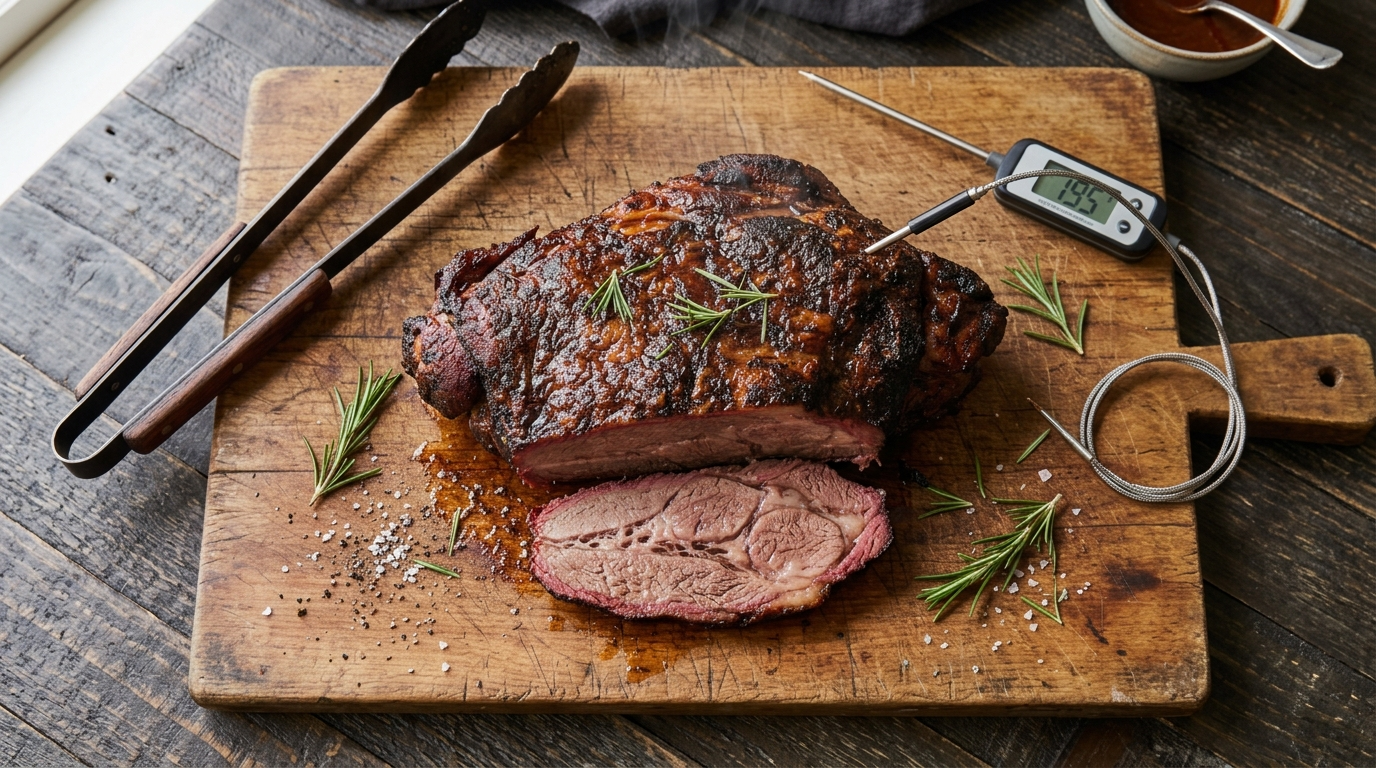
Instant Read Thermometer: Absolutely critical for monitoring internal temp through the stall and hitting the target pull temp of 195 to 203 degrees Fahrenheit.
Leave-In Probe Thermometer: Lets you monitor the internal temp of the shoulder continuously without opening the smoker and losing precious heat and smoke.
Long Tongs and Heat-Resistant Gloves: Keep your hands safe when managing the fire, repositioning the meat, and handling the wrapped shoulder during the cook.
Butcher Paper or Aluminum Foil: Used to wrap the shoulder during the stall to push through the plateau and lock in moisture for a juicier final product.
Spray Bottle: Fill it with apple juice or apple cider vinegar for spritzing the bark every 90 minutes to keep the surface moist and build color.
Cutting Board with Juice Groove: A large sturdy board with a groove catches all those precious juices when you pull and shred the rested lamb shoulder.
🔥 Variations
Pellet Grill Version: Set your pellet grill to 225 degrees Fahrenheit and use cherry, hickory, or a competition blend pellet for maximum smoke flavor. Follow all the same steps including the overnight dry brine, rub application, spritzing schedule, and wrapping at the stall. Some pellet grills produce lighter smoke at lower temps, so consider using a smoke tube filled with pellets placed directly on the grate alongside the lamb shoulder to boost smoke output during the first three to four hours of the cook.
Gas Grill Version: Set up your gas grill for two-zone indirect cooking by lighting only one or two burners on one side and keeping the other side off. Target 225 to 250 degrees Fahrenheit on the indirect side where the lamb will sit. Place a smoker box loaded with soaked cherry or hickory wood chips over the lit burner to generate smoke. Refill the smoker box every 45 to 60 minutes as the chips burn out. The cook time and all other steps remain exactly the same as the standard recipe.
Mediterranean Herb Crusted Variation: Swap the dry rub for a paste made from fresh rosemary, fresh thyme, lemon zest, minced garlic, olive oil, salt, and black pepper. Press it generously all over the lamb shoulder and smoke at the same temp using apple wood chunks for a lighter more aromatic smoke profile that highlights the herbaceous Mediterranean flavors. Serve with tzatziki, warm flatbread, and a cucumber tomato salad for a stunning feast.
Spiced North African Style Variation: Replace the standard rub with a ras el hanout inspired blend featuring warm spices like cinnamon, coriander, ginger, turmeric, cardamom, cumin, and a pinch of clove alongside the salt and pepper. Use the same smoking method with cherry wood. When pulling the meat, finish with a drizzle of harissa thinned with olive oil and a handful of fresh cilantro and chopped preserved lemon for a deeply aromatic and boldly spiced pulled lamb that is unlike anything else you will taste off a smoker.
❓ Pitmaster FAQ
What internal temperature should smoked lamb shoulder reach?
For fall-apart pulled lamb shoulder, you want to hit an internal temp of 195 to 203 degrees Fahrenheit. This is higher than the USDA safe minimum of 145 degrees Fahrenheit for lamb, but at this temperature range the tough connective tissue and collagen have fully broken down into gelatin, giving you that melt-in-your-mouth texture that makes smoked lamb shoulder so special. Always verify with a quality instant read thermometer inserted into the thickest part away from the bone.
How long does it take to smoke a lamb shoulder?
At 225 to 250 degrees Fahrenheit, plan on roughly 1.5 hours per pound as a general guideline. A 6 to 8 pound bone-in lamb shoulder will typically take 8 to 12 hours total including the stall. Always cook to internal temp rather than time, and build in a minimum 90-minute rest period after the cook. Start early and remember that a lamb shoulder that is done early and resting in a cooler is always better than one that is rushed at high heat.
What is the best wood for smoking lamb?
Cherry wood is a top recommendation for smoked lamb shoulder because its mild and slightly sweet smoke complements the rich natural flavor of the meat without overwhelming it. Hickory is a great choice for a bolder more assertive smoke profile. Apple wood is another excellent option for a subtle sweetness. Avoid mesquite for long cooks of 8 or more hours as it can produce an overly bitter flavor at extended exposure. A blend of cherry and hickory gives you the best of both worlds.
Should I wrap the lamb shoulder during the smoke?
Wrapping during the stall is optional but highly recommended for most cooks. When the internal temp plateaus between 155 and 165 degrees Fahrenheit, wrapping tightly in butcher paper or aluminum foil helps push through the stall faster by trapping heat and moisture. Butcher paper is preferred over foil because it breathes slightly, preserving more bark texture on the outside of the shoulder. If you want maximum bark development and do not mind a longer total cook time, you can power through the stall without wrapping.
Can I make smoked lamb shoulder ahead of time?
Absolutely. Smoked lamb shoulder actually reheats beautifully, making it perfect for feeding a crowd. After pulling and shredding, store the meat in an airtight container with all the juices from the wrap. Refrigerate for up to four days or freeze for up to three months. To reheat, place the meat and juices in a covered pan in a 300 degree Fahrenheit oven until warmed through, or reheat low and slow in a covered cast iron pan on the stovetop with a splash of apple juice or beef broth to keep it moist.
What should I serve with smoked lamb shoulder?
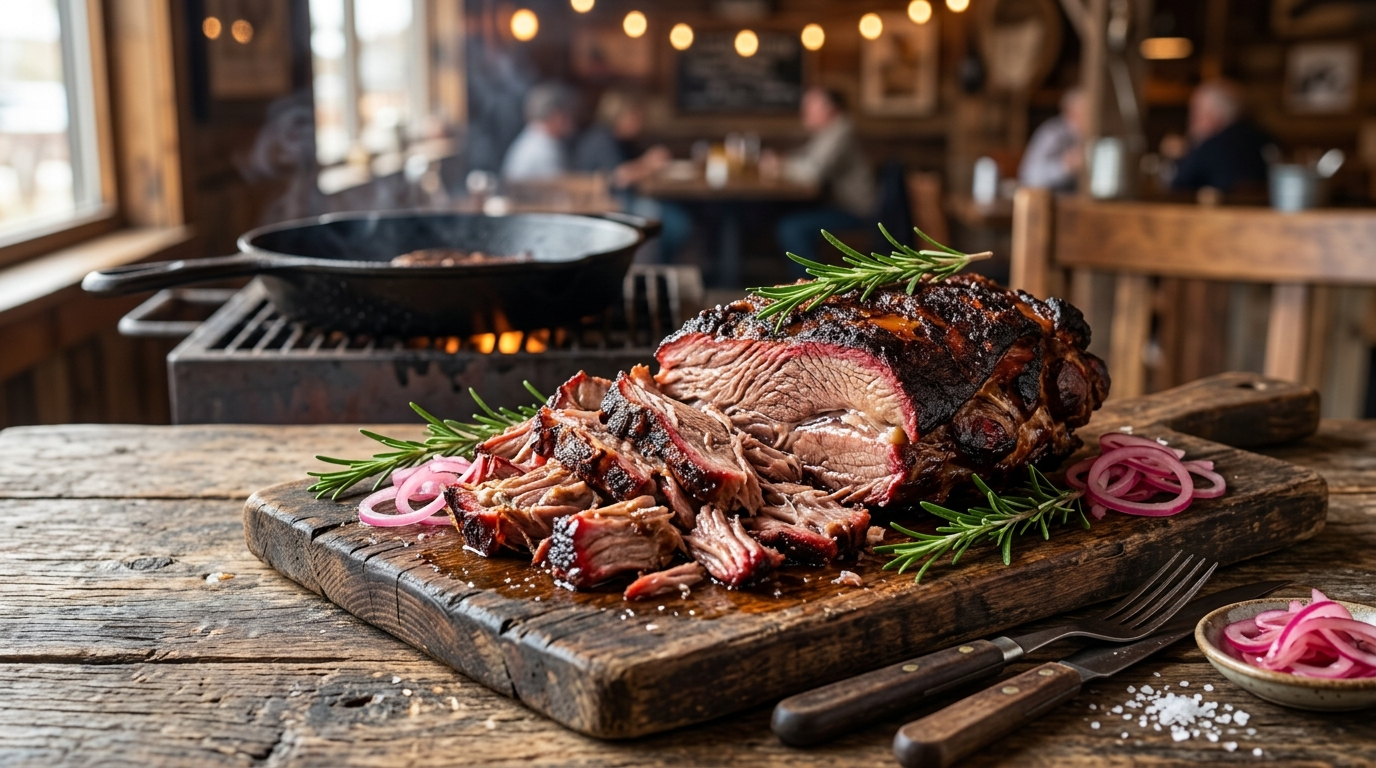
Smoked lamb shoulder pairs beautifully with a wide range of sides. Classic BBQ accompaniments like coleslaw, baked beans, and cornbread work wonderfully. For a more Mediterranean spin, serve with warm flatbread, tzatziki, roasted vegetables, and a bright herb salad. Pickled red onions are a fantastic topping that cuts through the richness of the meat. For a proper Sunday feast presentation, serve the whole shoulder on a large wooden board surrounded by fresh herbs, roasted garlic, and your favorite dipping sauces.