
Grilled Buffalo Chicken Wings Recipe - Crispy and Bold
Ingredients
Method
- Dry the wings thoroughly 24 hours ahead if possible. Pat every wing with paper towels until there is zero visible moisture on the surface. Lay them uncovered on a wire rack set inside a sheet pan and refrigerate uncovered overnight. This air-drying step is the single biggest factor in achieving crackling skin on the grill. If you are short on time, at minimum dry them for one hour in the fridge before cooking.
- Mix your dry rub in a small bowl by combining the baking powder, kosher salt, black pepper, garlic powder, smoked paprika, onion powder, and cayenne. The baking powder raises the pH of the skin which accelerates the Maillard reaction and makes the skin blister and crisp far more aggressively than a plain salt rub alone.
- Remove the wings from the fridge and toss them in a large bowl with the dry rub mixture until every piece is coated evenly. Make sure to get the rub under any loose skin flaps and into the joints. Let the seasoned wings sit at room temperature for 30 minutes while you build your fire.
- Fire up the grill using your chimney starter. Fill the chimney with charcoal and let it get fully ashed over, which takes about 15 to 20 minutes. Once the coals are glowing orange and covered in gray ash, dump them to one side of the grill creating a two-zone setup with a hot direct zone and a cooler indirect zone. Your grill grate temperature on the indirect side should settle around 300 to 325 degrees Fahrenheit. Adjust the vents to dial in the heat.
- Place the seasoned wings on the indirect heat side of the grill, skin side up. Close the lid and let them cook low and slow for 25 to 30 minutes. You want the fat to render slowly during this phase without the skin burning. Check the grill every 10 minutes and rotate the wing positions if you notice any hot spots developing.
- After 25 to 30 minutes on indirect heat, flip the wings skin side down and continue cooking on the indirect side for another 10 to 12 minutes. The skin should be pulling tight and starting to show some golden color. At this point, use your instant read thermometer to check the internal temp in the thickest part of a drumette - you are looking for 155 to 160 degrees Fahrenheit, knowing you still have the searing step ahead.
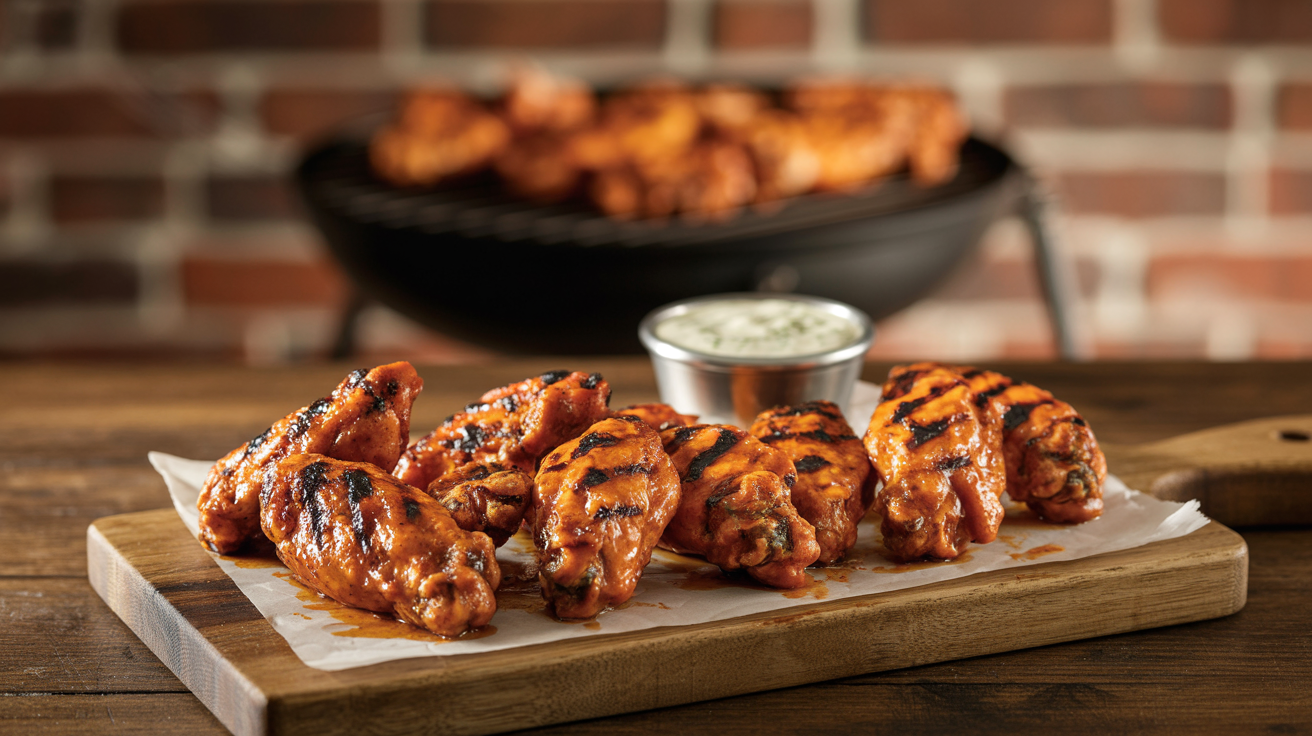
- Now comes the finishing blast. Move all the wings directly over the hot coals in a single layer. Grill them on direct high heat for 3 to 4 minutes per side, watching closely for flare-ups from the rendering fat. You want deep char marks, blistering skin, and real color. The wings will tell you when they are ready to flip - they release from the grates cleanly when a good sear has formed. Hit them with a baste of buffalo sauce during the last 2 minutes on direct heat for a caramelized lacquer.
- While the wings finish on direct heat, build your buffalo sauce. Melt the butter in a small saucepan over medium low heat or directly on the grill. Once melted, whisk in the Frank's RedHot, apple cider vinegar, garlic powder, Worcestershire sauce, and a pinch of salt. Keep the sauce warm but do not let it boil or the butter will break. Taste it and adjust the heat or tang level to your preference.
- Pull the wings when the internal temp reads 165 degrees Fahrenheit at the thickest point. Place them on a wire rack for 3 to 4 minutes to rest the meat and let the juices settle. Do not skip this rest even though it is a short one - it makes a real difference in how the meat eats.
- Transfer the rested wings to your large mixing bowl and pour the warm buffalo sauce over them all at once. Toss aggressively with tongs until every wing is completely coated and the sauce has started to cling and tighten from the residual heat of the wings. Plate them on a board or platter with celery sticks and your choice of blue cheese or ranch dipping sauce on the side. Serve immediately while the skin is still crackling.
Nutrition
This grilled buffalo chicken wings recipe is the only wing method you will ever need once you taste what live fire does to a chicken wing. We are talking crackly, blistered skin with deep char marks, juicy meat that pulls clean off the bone, and a glossy buffalo sauce that locks onto every ridge and crevice. Forget the deep fryer – the grill is where wings reach their full potential.
The secret is a two-zone fire and patience. We start the wings on indirect heat around 300 to 325 degrees Fahrenheit to render the fat and cook the meat through without burning the skin. Then we crank them over direct high heat at the end – a technique pitmasters call the finishing blast – to blister the skin into pure crispy perfection. The whole cook runs about 45 to 55 minutes and the results will make every other wing method feel like a shortcut.
Buffalo sauce is non-negotiable here. We build ours from a base of Frank’s RedHot and real butter, balanced with a touch of garlic powder and a splash of apple cider vinegar for brightness. Toss the wings the moment they come off the grill while they are still piping hot so the sauce reduces slightly on contact and creates that sticky lacquered coating you see at the best wing joints. Rest the meat for just 3 to 4 minutes before serving so the juices redistribute but the skin stays crackling crisp.
Grilled Buffalo Chicken Wings Recipe – Crispy and Bold
This grilled buffalo chicken wings recipe delivers everything you want – crispy skin with real char marks, deep smoky flavor, and a bold tangy buffalo sauce that clings to every bite. Skip the fryer and fire up the grill today for wings that will own any game day spread.
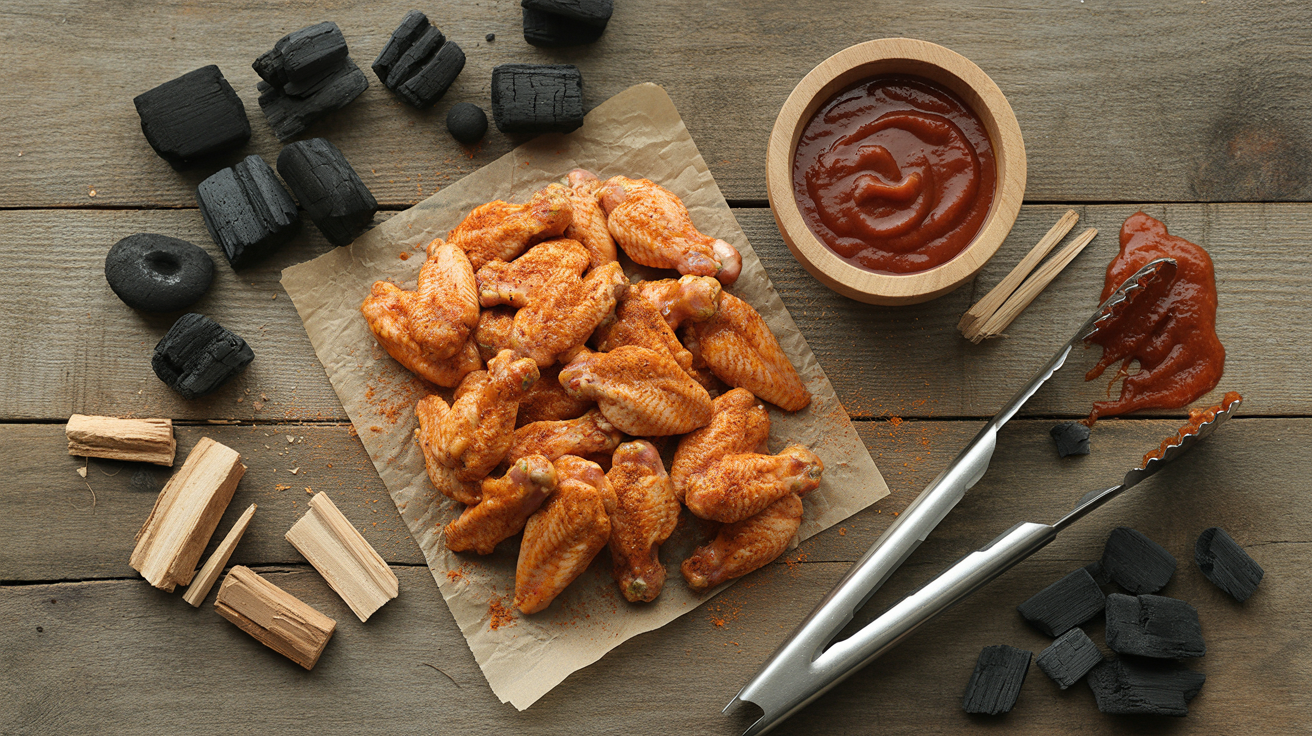
Ingredients
| AMOUNT | INGREDIENT | NOTES |
|---|---|---|
| 3 lbs | chicken wings | split into flats and drumettes, tips removed, patted completely dry |
| 2 tablespoons | baking powder | aluminum-free, the secret to crackling crispy skin on the grill |
| 1 tablespoon | kosher salt | coarse grind for even seasoning |
| 1 teaspoon | black pepper | freshly cracked |
| 1 teaspoon | garlic powder | for the dry rub base |
| 1 teaspoon | smoked paprika | adds color and a subtle smoke layer to the rub |
| 1 teaspoon | onion powder | rounds out the savory base of the rub |
| 0.5 teaspoon | cayenne pepper | optional in the rub for extra heat built from the inside out |
| 0.75 cup | Frank’s RedHot Original Cayenne Pepper Sauce | the authentic base of any proper buffalo sauce |
| 4 tablespoons | unsalted butter | cut into cubes and melted, do not use margarine |
| 1 tablespoon | apple cider vinegar | brightens the sauce and cuts through the richness |
| 0.5 teaspoon | garlic powder | for the buffalo sauce, separate from the rub |
| 0.5 teaspoon | Worcestershire sauce | adds umami depth to the buffalo sauce |
| 1 pinch | kosher salt | taste and adjust the sauce before tossing |
| 1 serving | blue cheese or ranch dressing | for dipping, this is non-negotiable on a proper wing plate |
| 4 stalks | celery | cut into sticks for serving alongside the wings |
Instructions
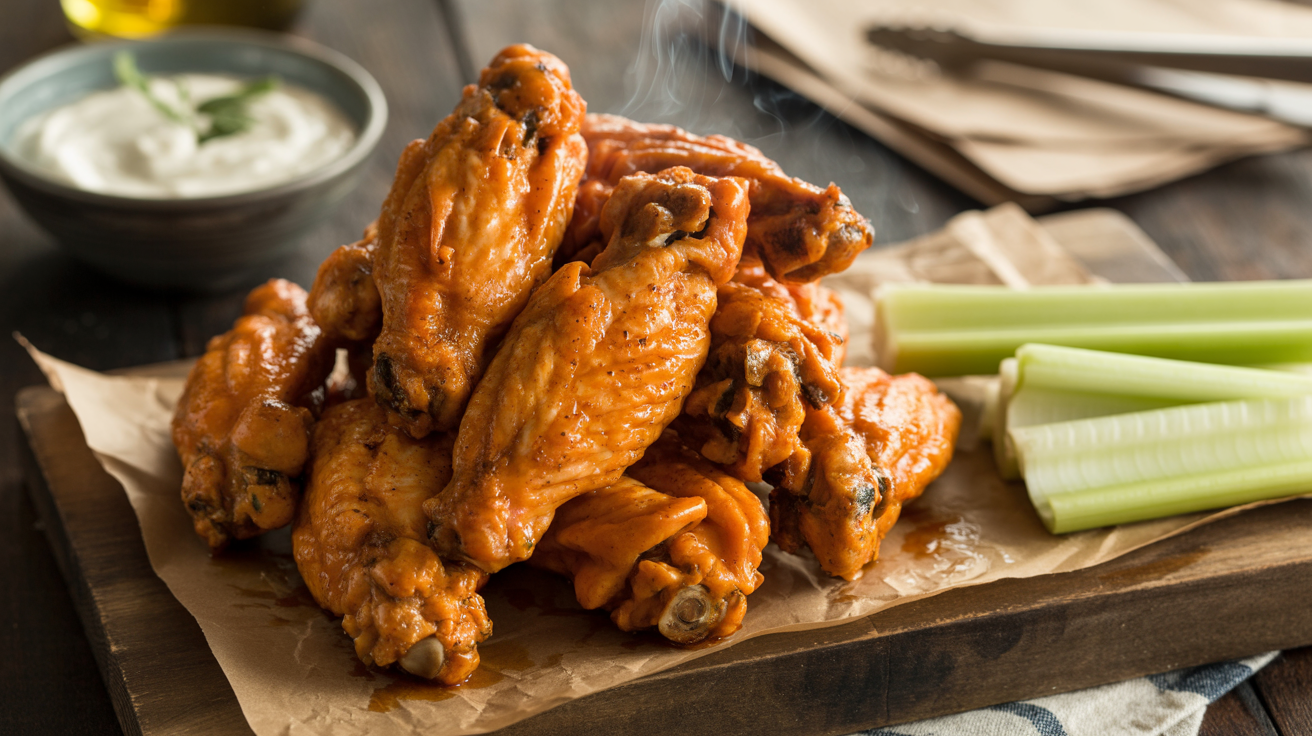
Nutrition (per serving)
The BBQ Story Behind This Recipe
Buffalo chicken wings have one of the most well-documented origin stories in American food history. On October 30, 1964, Teressa Bellissimo at the Anchor Bar in Buffalo, New York fried up a batch of chicken wings on a whim, tossed them in a cayenne hot sauce and butter mixture, and served them with celery and blue cheese. What started as a late-night snack for her sons friends became a regional obsession within years and a national phenomenon by the 1980s. Buffalo, New York takes its wing heritage so seriously that the city hosts the National Buffalo Wing Festival each year attracting tens of thousands of wing lovers from across the country.
While the original Anchor Bar recipe was built around a deep fryer, the BBQ and grilling community claimed the buffalo wing as its own over the decades that followed. Competitive BBQ circuits began featuring wing categories at major cook-offs by the late 1990s, and pitmasters quickly discovered that smoke and char elevated the already addictive flavor profile to something truly extraordinary. Grilling adds a dimension no fryer can replicate – the Maillard reaction from live fire creates complex savory notes that complement the tangy butter sauce in a way that has made grilled buffalo wings a staple at backyard cookouts, tailgates, and BBQ competitions from Texas to Tennessee.
Hot Off the Grill
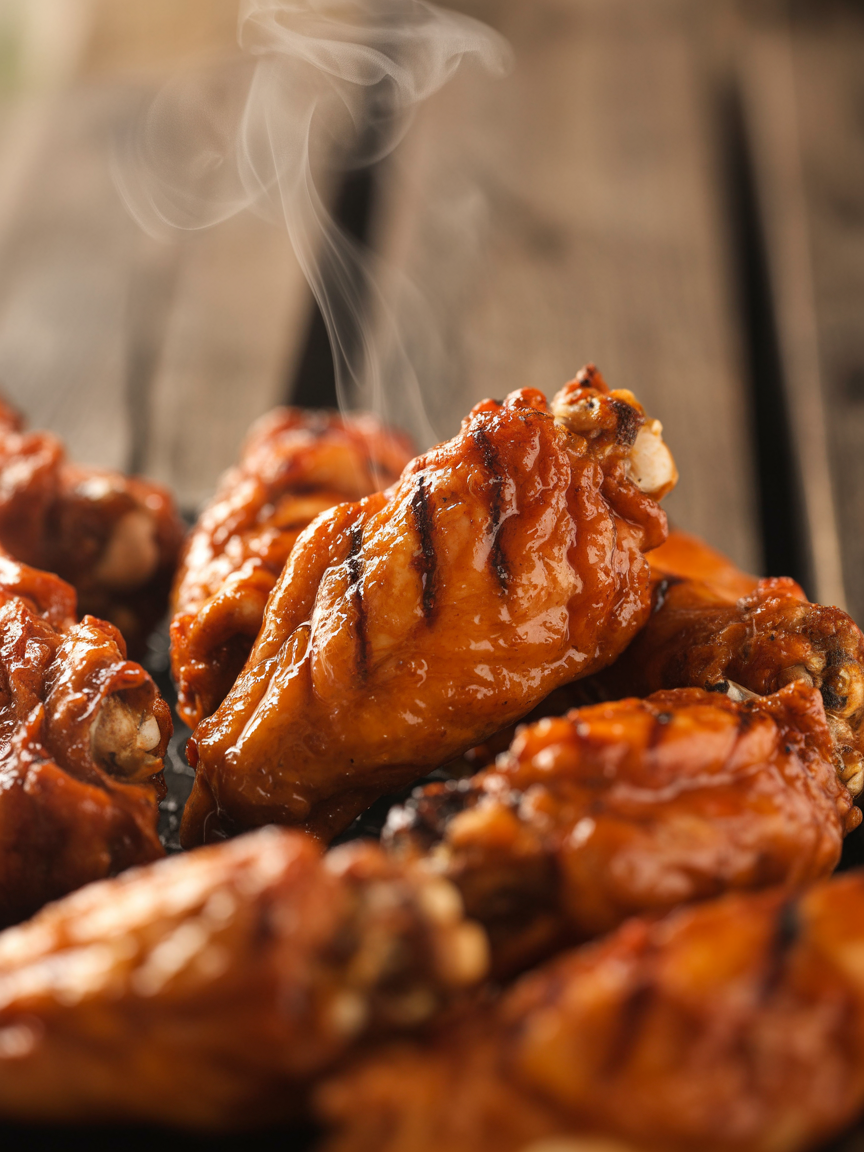
A Closer Look
Pitmaster Tips for Best Results
- Never skip the overnight dry brine in the fridge. Uncovered wings lose surface moisture which is the enemy of crispy skin. This single step separates good grilled wings from unforgettable ones.
- Keep your grill lid closed during the indirect heat phase as much as possible. Every time you lift the lid you drop the temp by 25 to 50 degrees and extend your cook time. Trust the process and resist peeking.
- If you want a smokier wing without a dedicated smoker, add a small chunk of hickory or cherry wood directly to the coals just before placing the wings on the indirect side. Cherry wood pairs especially well with the tangy buffalo sauce.
- Sauce the wings the moment they come off the grill while they are hottest. The heat from the wings gently reduces the sauce on contact and creates a stickier more intense coating than saucing cooled wings ever will.
- For competition-level crunch, double-coat the wings. Toss in sauce, rest on the rack for 2 minutes, then toss in a second round of warm sauce right before plating. The layered coating creates a deeply flavored caramelized shell that is hard to beat.
🔧 Pitmaster Equipment
Charcoal Grill with Lid: A lidded charcoal grill is the gold standard for wings because it allows precise two-zone fire control and traps smoke for authentic flavor.
Instant Read Thermometer: Critical for confirming the internal temp hits 165 degrees Fahrenheit at the thickest part of the wing for safe and perfectly cooked meat.
Long Tongs: Keep your hands safe from the live fire while flipping wings and moving them between heat zones with precision.
Large Mixing Bowl: You need a big bowl to toss all the wings in buffalo sauce at once so every piece gets fully coated in a single pass.
Basting Brush: Used for applying an extra layer of buffalo sauce during the final minutes on the grill for a deeper lacquered finish.
Wire Rack and Sheet Pan: Resting the wings on a wire rack after grilling keeps air circulating around the skin so it stays crispy instead of steaming itself soft.
Chimney Starter: Lights charcoal faster and more evenly than lighter fluid and keeps your wings free of chemical off-flavors.
🔥 Variations
Smoked Buffalo Wings: Set your offset smoker or kamado to 275 degrees Fahrenheit and smoke the wings over hickory or pecan wood for 60 to 75 minutes until the internal temp hits 160 degrees Fahrenheit. You will see a faint smoke ring develop near the bone. Finish them over direct high heat for 4 to 5 minutes to crisp the skin before tossing in buffalo sauce. The smoke depth in these wings is absolutely unreal.
Pellet Grill Version: Set your pellet grill to 300 degrees Fahrenheit using a hickory or competition blend pellet. Cook the wings on the upper rack for 35 to 40 minutes then crank the temp to 425 degrees Fahrenheit for the final 10 to 12 minutes to blast the skin crispy. Toss in buffalo sauce the moment they come off the grates.
Gas Grill Version: Set up a two-zone fire on your gas grill by lighting the burners on one side and leaving the other side off. Target 325 degrees Fahrenheit on the indirect side. Place a smoker box filled with soaked hickory chips over the lit burners to generate smoke. Cook using the same indirect then direct method as the charcoal version for excellent results.
Honey Garlic Buffalo Variation: Add 2 tablespoons of honey and 3 minced garlic cloves to your buffalo sauce while it warms. The honey adds a caramelizing sweetness that chars beautifully during the finishing blast over direct heat and creates a sweet heat profile that makes these wings completely addictive.
Dry Rub Buffalo Wings: Skip the sauce toss entirely and double down on the dry rub by adding 1 tablespoon of cayenne and 1 teaspoon of ancho chili powder to the original rub blend. The result is a spicy deeply seasoned wing bark with no sauce needed – pure smoke and spice from the fire.
❓ Pitmaster FAQ
What internal temperature should grilled chicken wings reach?
Chicken wings must reach an internal temperature of 165 degrees Fahrenheit at the thickest part of the meat measured with an instant read thermometer. Insert the probe into the drumette away from the bone for the most accurate reading. For wings, many pitmasters actually prefer pulling them a touch higher around 175 to 185 degrees because the extra collagen breakdown at higher temps makes the meat even more tender and the skin renders more completely.
Why are my grilled wings not crispy?
Lack of crispiness almost always traces back to surface moisture on the skin. Make sure you are patting wings completely dry before seasoning and ideally air-drying them uncovered in the fridge overnight. The baking powder in the rub also plays a critical role – do not substitute cornstarch or skip it. Finally, make sure you are finishing the wings on direct high heat for that final blister.
Can I use a gas grill instead of charcoal?
Absolutely. Set up a two-zone fire on your gas grill by lighting one side and leaving the other off. Place a smoker box with soaked hickory or cherry wood chips over the lit burners to generate smoke. Cook the wings on the unlit side at around 325 degrees Fahrenheit using the indirect method then move them over the lit burners for the final crisping blast. The results are very solid even without charcoal.
How far in advance can I prep the wings?
You can dry brine and season the wings up to 24 hours in advance and keep them uncovered on a rack in the fridge. The longer they sit the better the skin dries out. You can also make the buffalo sauce up to 3 days ahead and store it in a sealed jar in the refrigerator – just reheat gently and whisk before using.
What wood works best for smoking chicken wings?
Cherry wood is the top choice for chicken wings because it is mild, slightly sweet, and produces a beautiful mahogany color on the skin. Hickory adds a more assertive smoke flavor that pairs boldly with the tangy buffalo sauce. Apple wood is another great mild option if you want a subtle smoke that does not overpower the hot sauce. Avoid mesquite for wings – it is too aggressive for such a quick cook and can turn bitter.
How do I keep the wings crispy after saucing?
Serve immediately after tossing in sauce. The longer wings sit in sauce the more the moisture softens the skin. If you need to hold them for any reason, keep the wings unsauced on a wire rack in a 200 degree oven and only toss them in sauce right before serving. Never cover hot wings with foil or they will steam themselves into a soft disappointing mess.