
Tomahawk Steak Recipe: Reverse Seared to Perfection
Ingredients
Method
- Dry brine the tomahawk 12 to 24 hours ahead of cook time. Pat the steak completely dry with paper towels, then season generously on all sides with kosher salt only at this stage. Place it uncovered on a wire rack set over a sheet pan and let it rest in the refrigerator overnight. This dry brine process draws moisture to the surface, which then reabsorbs into the meat along with the salt, seasoning the steak deep into the muscle and helping develop a better bark and crust later on. Do not skip this step on a cut this thick.
- About 45 minutes before you are ready to cook, pull the tomahawk out of the refrigerator and let it come up toward room temperature on the counter. Mix together the black pepper, garlic powder, onion powder, smoked paprika, and cayenne in a small bowl. Apply this rub liberally to all sides of the steak, pressing it firmly into the surface so it adheres. The salt from the dry brine is already working in the meat, so this layer is purely about building that incredible bark and flavor crust.
- Fire up the grill for a two-zone indirect setup. For charcoal, bank your lit coals to one side of the grill and leave the other side completely empty. Your target temperature for the indirect zone is a steady 225 to 250 degrees Fahrenheit. Add your wood chunk directly on top of the lit coals at this point. You want a thin blue smoke rolling out of the vents, not a thick white billowing smoke. Thick white smoke will make the steak taste bitter. Dial in your vents to hold that 225 to 250 degree range before you place the meat.
- Place the tomahawk on the indirect side of the grill, bone side facing toward the heat source. Insert your thermometer probe into the thickest part of the eye of the steak, away from the bone. Close the lid and let it cook low and slow with minimal peeking. Every time you lift the lid you lose heat and smoke. Let the smoke do its work. You should start to see a beautiful smoke ring forming around the exterior of the meat within the first 30 minutes.
- Monitor the internal temp closely as it climbs. This low-and-slow phase will take approximately 45 minutes to 75 minutes depending on the thickness of your steak and your grill temperature. You are pulling the tomahawk off the indirect heat when the internal temp reaches 115 to 120 degrees Fahrenheit for a target of medium-rare, or 125 degrees if you prefer medium. Once you hit that target temp, pull the steak off the grill and tent it loosely with foil while you prepare for the sear.
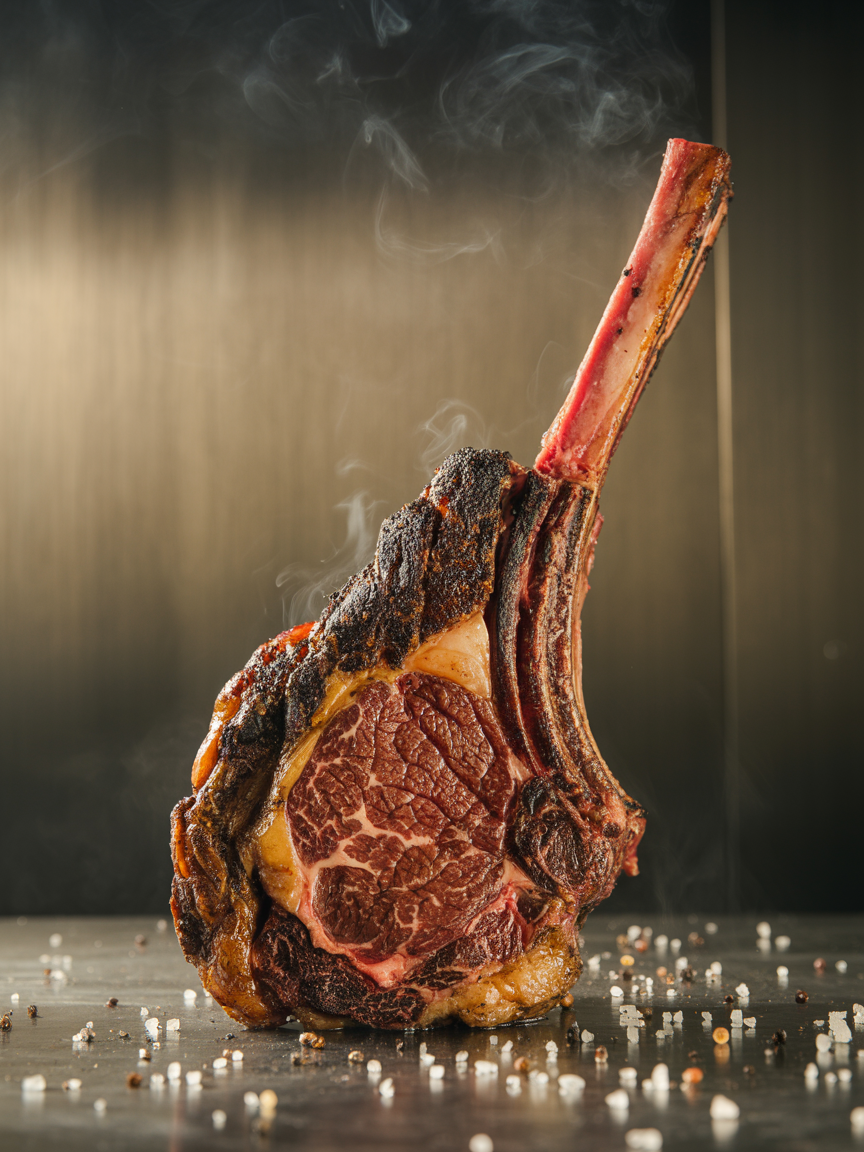
- Now it is time to build your sear station. Open all the vents on your charcoal grill completely and add a full chimney of freshly lit charcoal on top of your existing coals. Let the grill rip up to 600 to 700 degrees Fahrenheit before you sear. If you are using a cast iron skillet, place it on the grill grates over the direct heat during this time so it gets screaming hot along with the grill. This high heat is what creates the Maillard reaction and builds that deep mahogany crust that makes a reverse seared tomahawk so extraordinary.
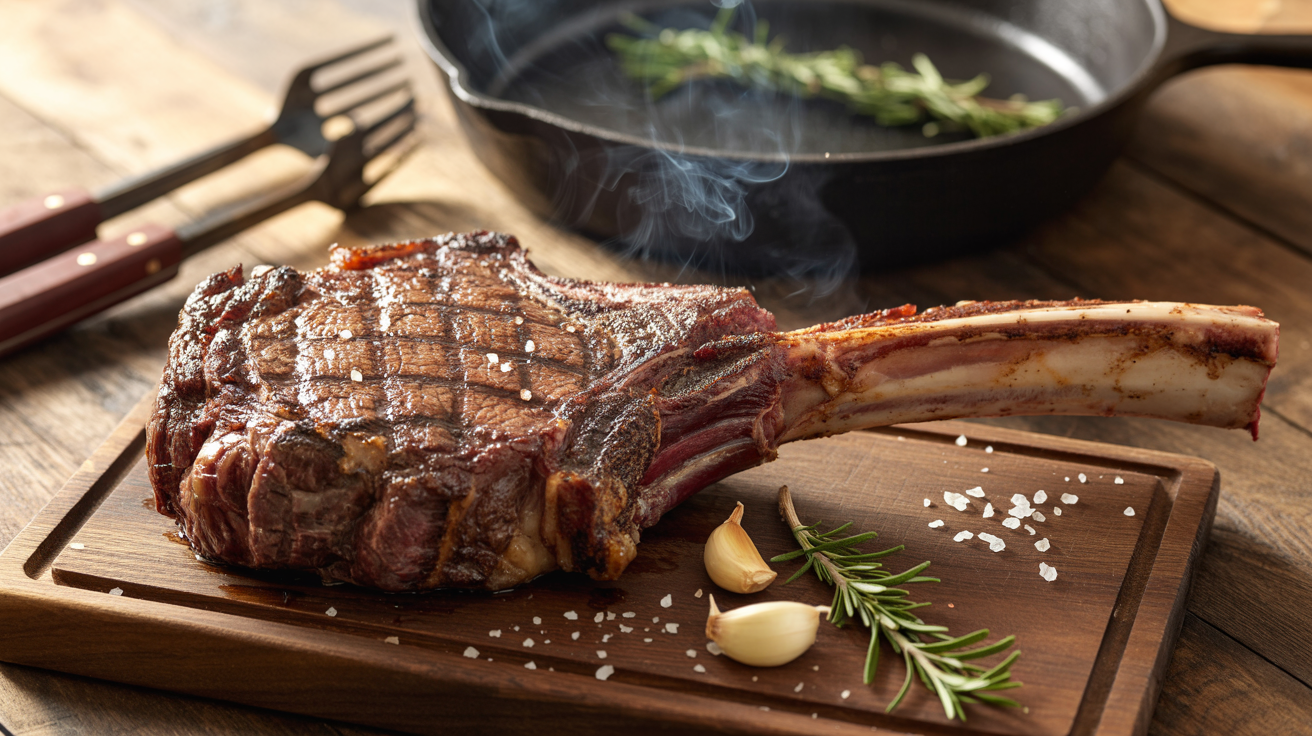
- In a small saucepan or directly in a cast iron skillet on the grill, melt the butter with the smashed garlic cloves and rosemary sprigs. Let the butter brown slightly and the garlic become fragrant. This basting butter will be your secret weapon during the sear, adding richness, color, and incredible aroma to the crust. Keep it warm and close by your sear station.
- Place the tomahawk directly over the hottest part of the fire. Sear for 60 to 90 seconds per side without moving it. Resist the urge to poke or press it down. Let the heat do the work. After flipping, spoon the garlic rosemary butter generously over the top of the steak while the bottom sears. Repeat on all sides including the edges by standing the steak on its side using your tongs to hold it in place. You are looking for a deep, dark, even mahogany crust across the entire surface of the meat. This searing phase should take no more than 4 to 6 minutes total.
- Pull the tomahawk off the direct heat and check the final internal temp. For medium-rare you want to land at 130 to 135 degrees Fahrenheit. For medium, pull it at 140 degrees. Remember that the internal temp will continue to rise 3 to 5 degrees as the steak rests, so factor that carryover cooking into your pull temp. Do not cut into the steak yet no matter how tempted you are.
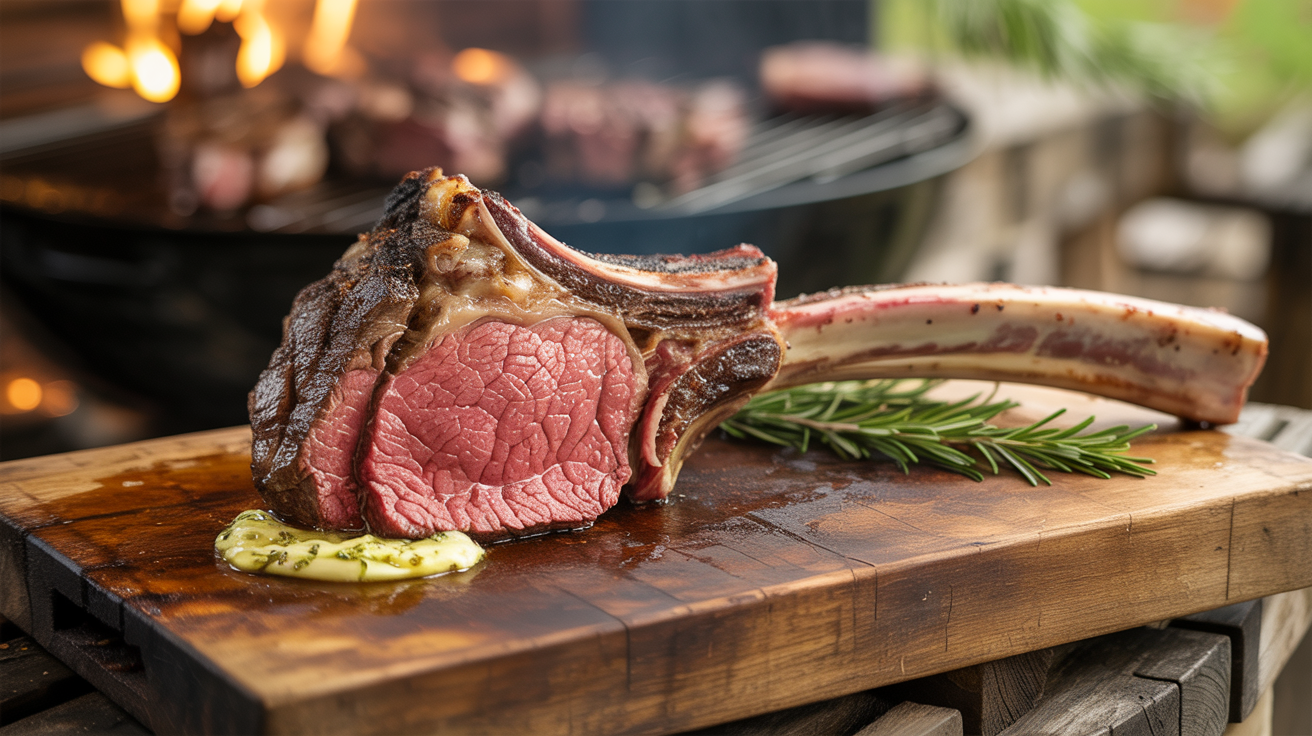
- Rest the meat uncovered on a wire rack for a minimum of 10 minutes. Do not tent it with foil during the rest or you will steam the crust you worked so hard to build. The juices need this time to redistribute through the muscle fibers. After resting, slice against the grain, starting from the eye of the steak outward. Present it on a wooden cutting board with the full tomahawk bone intact for maximum visual impact. Finish with a pinch of flaky sea salt right before serving and watch your guests lose their minds.
Nutrition
This tomahawk steak recipe is the crown jewel of backyard BBQ, and once you master the reverse sear method, you will never cook a thick-cut steak any other way. We are talking about a 2 to 2.5-inch thick bone-in ribeye that gets treated low and slow at 225 degrees Fahrenheit until it hits an internal temp of 120 degrees, then gets finished over screaming hot direct heat to build that legendary crust. The result is a steak that is perfectly pink from edge to edge with a caramelized bark so good it will stop your guests dead in their tracks.
The reverse sear flips the traditional cook-then-rest method on its head, and for good reason. By starting your tomahawk in indirect heat with a kiss of smoke, you develop incredible depth of flavor all the way through the meat before you ever let it touch the flames. When that internal temp climbs slowly and evenly, you avoid the dreaded overcooked gray band around the edges. Then when you hit it with 700-degree direct heat for 60 to 90 seconds per side, the Maillard reaction kicks into overdrive and creates a crust that crackles when you cut into it.
Plan on a total cook time of about 90 minutes to 2 hours depending on the thickness of your tomahawk, and do not skip the 10-minute rest at the end. Resting the meat is non-negotiable because it allows the juices to redistribute throughout that massive cut. Grab a cold drink, fire up the grill, and get ready to cook the most impressive steak of your life.
Tomahawk Steak Recipe: Reverse Seared to Perfection
This tomahawk steak recipe delivers a show-stopping, bone-in ribeye with a deep smoky bark and a perfectly seared crust using the reverse sear method. Low and slow heat followed by a ripping hot finish means edge-to-edge perfection every single time. Fire up the grill and make tonight legendary.
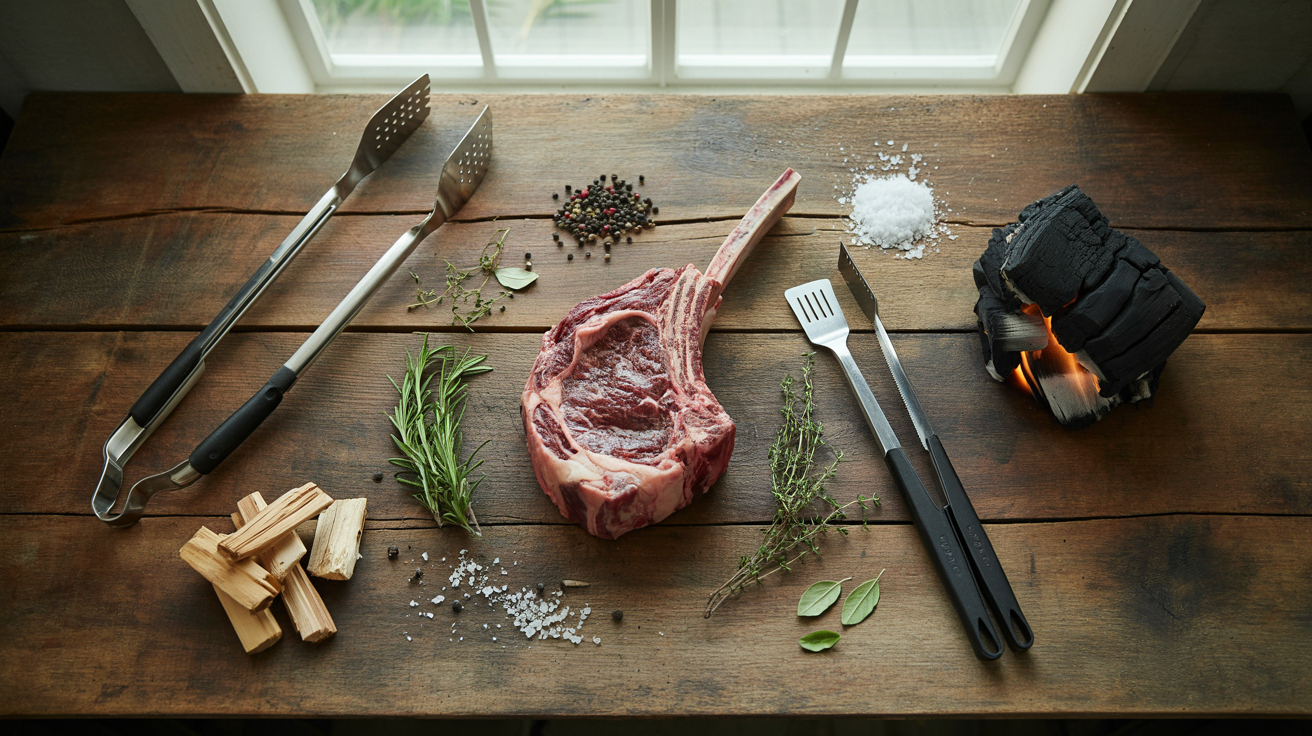
Ingredients
| AMOUNT | INGREDIENT | NOTES |
|---|---|---|
| 1 whole | tomahawk ribeye steak | 2 to 2.5 inches thick, approximately 2.5 to 3 lbs, bone-in |
| 2 tablespoons | kosher salt | coarse ground, for dry brine and seasoning |
| 1 tablespoon | coarse black pepper | freshly cracked for best bark development |
| 1 teaspoon | garlic powder | not garlic salt |
| 1 teaspoon | onion powder | |
| 1 teaspoon | smoked paprika | adds color and a hint of smokiness to the bark |
| 0.5 teaspoon | cayenne pepper | optional, adjust to your heat preference |
| 2 tablespoons | unsalted butter | high quality, for basting during the sear |
| 3 cloves | fresh garlic | smashed, for basting |
| 2 sprigs | fresh rosemary | for basting butter |
| 1 chunk | post oak or hickory wood | approximately fist-sized, for smoke during the low-and-slow phase |
Instructions
Nutrition (per serving)
The BBQ Story Behind This Recipe
The tomahawk steak is a long-bone ribeye, trimmed so that the full rib bone extends 12 to 16 inches from the eye of the meat, giving it that unmistakable axe-like silhouette that has made it the trophy cut of steakhouses and backyard pitmasters alike. The cut comes from the rib section, specifically ribs 6 through 12, and carries with it the same rich marbling and robust beef flavor that has made the ribeye the undisputed king of steakhouse menus for over a century. Its dramatic presentation has roots in the fine dining culture of American chophouses, where butchers began leaving the long bone intact as a theatrical flourish that signaled both quality and indulgence.
The reverse sear technique itself is a more modern innovation in the BBQ and grilling world, popularized in the early 2000s by food scientists and pitmaster circles who were obsessed with achieving consistent doneness across thick cuts of meat. Traditional high-heat-first methods worked beautifully for thinner steaks, but on a 2-plus-inch tomahawk, they created uneven cooking from edge to center. Pitmasters started borrowing principles from low-and-slow BBQ tradition and applying them to steak cookery, and the reverse sear was born. Today it is considered the gold standard technique for thick steaks among serious grillers, blending the patience of the smoker with the fire mastery of the live-fire grill.
Hot Off the Grill
A Closer Look
Pitmaster Tips for Best Results
- Always dry brine your tomahawk at least 12 hours in advance and up to 48 hours. The longer the dry brine, the deeper the seasoning penetrates and the better the bark you will develop during the low-and-slow phase. Salt is your best friend on a thick cut like this.
- Pull the steak from the indirect heat 10 degrees below your final target internal temp. Carryover cooking during the rest and sear phases will bring it up to your desired doneness. Most people overcook expensive steaks by not accounting for this rise. Trust the thermometer, not the clock.
- Your sear temperature matters more than almost anything else in this recipe. If your grill is not at 600 degrees minimum before you sear, you will steam the steak rather than crust it. Take the extra 10 minutes to let the grill fully rip before placing the meat over direct heat.
- Post oak is the classic wood pairing for beef and gives you that traditional Texas BBQ smoke ring and deep earthy flavor. Cherry wood adds a touch of sweetness and a gorgeous reddish hue to the bark. Hickory is bold and assertive. Use one chunk only, not multiple, or you risk overpowering the natural beef flavor.
- Let the tomahawk bone work for you during the sear. The long bone acts as a natural handle, letting you stand the steak on its edge and sear the sides without awkward balancing acts. A pair of sturdy long tongs gripping the bone gives you full control over a notoriously tricky cut to maneuver.
🔧 Pitmaster Equipment
Charcoal Grill or Offset Smoker: Charcoal delivers the authentic smoke flavor and high searing temps you need for a proper reverse sear on a tomahawk. An offset smoker works perfectly for the low-and-slow phase.
Instant Read Thermometer: Hitting the exact internal temp at each stage is critical. A quality instant read thermometer takes the guesswork out and ensures you never overcook this expensive cut.
Long Tongs or Heat-Resistant Gloves: The long bone on a tomahawk makes it awkward to maneuver over high heat. Long tongs or gloves keep your hands safe while you manage the fire.
Chunk of Hardwood or Wood Chips: A chunk of post oak, hickory, or cherry wood on the coals adds that signature smoke ring and deep flavor that separates a great tomahawk from an unforgettable one.
Wire Cooling Rack and Sheet Pan: Elevating the steak on a rack over a sheet pan during the low-and-slow phase promotes even airflow all around the meat and makes oven-to-grill transfers clean and easy.
Cast Iron Skillet (optional): If your grill grates are not ripping hot enough for a proper sear, a screaming hot cast iron skillet placed directly on the grill grates will give you an unbeatable restaurant-quality crust.
🔥 Variations
Pellet Grill Version: Set your pellet grill to 225 degrees Fahrenheit and follow the same low-and-slow steps using your favorite beef-friendly pellets like oak, hickory, or a competition blend. When it is time to sear, crank your pellet grill to its highest temp setting or use the open-flame broiler insert if your model has one. Alternatively, transfer the steak to a cast iron skillet on a separate high-heat burner or second grill for the final sear to ensure you get enough crust-building heat.
Gas Grill Version: Set up a two-zone configuration by turning on burners on one side only and leaving the other side off. Preheat the indirect zone to 225 to 250 degrees Fahrenheit and place a smoker box filled with soaked hickory or oak chips on the lit burner side. Follow the same low-and-slow process until you hit 115 to 120 degrees internal temp, then crank all burners to maximum and sear directly over the flame for 60 to 90 seconds per side to build your crust.
Reverse Sear Oven and Cast Iron Method: No grill, no problem. Season and dry brine the steak the same way, then place it on a wire rack over a sheet pan in an oven set to 250 degrees Fahrenheit. Roast low and slow until the internal temp hits 115 degrees, approximately 60 to 75 minutes. Pull it out and let it rest for 5 minutes while you heat a cast iron skillet over your highest burner flame until it is screaming hot. Add butter, garlic, and rosemary, then sear the tomahawk 60 to 90 seconds per side, basting constantly. You will not get a smoke ring, but the crust will be outstanding.
Coffee and Ancho Rub Version: Swap out the standard rub for a bold coffee-ancho blend made from 1 tablespoon finely ground dark roast coffee, 1 tablespoon ancho chili powder, 1 teaspoon smoked paprika, 1 teaspoon garlic powder, and 1 teaspoon coarse black pepper. This rub creates an extraordinary dark bark with complex earthy bitterness that pairs beautifully with the rich marbling of a tomahawk ribeye. Follow all the same reverse sear steps with this rub applied the same way.
❓ Pitmaster FAQ
What internal temperature should a tomahawk steak reach for medium-rare?
Pull the tomahawk off the indirect heat when it hits 115 to 120 degrees Fahrenheit, then sear it over high direct heat. After searing and resting, the final internal temp should land at 130 to 135 degrees Fahrenheit for a perfect medium-rare. Always verify with an instant read thermometer inserted into the thickest part of the eye, away from the bone.
How long does it take to reverse sear a tomahawk steak?
Plan on 45 to 75 minutes for the low-and-slow indirect phase at 225 to 250 degrees Fahrenheit, followed by 4 to 6 minutes of high-heat searing, plus a 10-minute rest. Total active cook time is typically 60 to 90 minutes depending on the thickness of your steak and how well you hold your grill temperature.
Can I reverse sear a tomahawk steak on a gas grill?
Absolutely. Set up a two-zone indirect heat configuration by lighting only half the burners and targeting 225 to 250 degrees on the cool side. Add a smoker box loaded with oak or hickory chips to get smoke flavor. Follow the same low-and-slow steps, then crank all burners to maximum when it is time to sear. The crust will not be quite as intense as charcoal but you will still get excellent results.
Do I need to dry brine a tomahawk steak before cooking?
You do not have to, but you absolutely should. Dry brining for 12 to 24 hours with kosher salt draws moisture to the surface, which then reabsorbs into the meat carrying the salt with it. This seasons the steak deep into the muscle, helps denature surface proteins for a better crust, and improves overall moisture retention during the cook. On a 2.5-inch thick steak, it makes a noticeable difference in flavor and bark quality.
Why is my tomahawk steak crust not dark enough?
The most common reason for a weak crust is insufficient searing temperature. You need your grill or cast iron at a minimum of 600 degrees Fahrenheit before searing. If your grill is not reaching that temp, add a fresh chimney of fully lit coals before the sear phase and open all vents completely. Patting the surface of the steak dry before the sear also helps eliminate surface moisture that would cause steaming instead of browning.
How much does a tomahawk steak typically weigh and how many people does it serve?
A tomahawk ribeye typically weighs between 2 and 3.5 pounds including the bone, with the actual edible meat portion weighing approximately 1.5 to 2.5 pounds. A standard tomahawk comfortably serves 2 to 3 people as a main course. The dramatic presentation makes it ideal for sharing and slicing tableside, which is half the reason to cook one in the first place.