
Smoked Beef Brisket Recipe: Low and Slow BBQ Perfection
Ingredients
Method
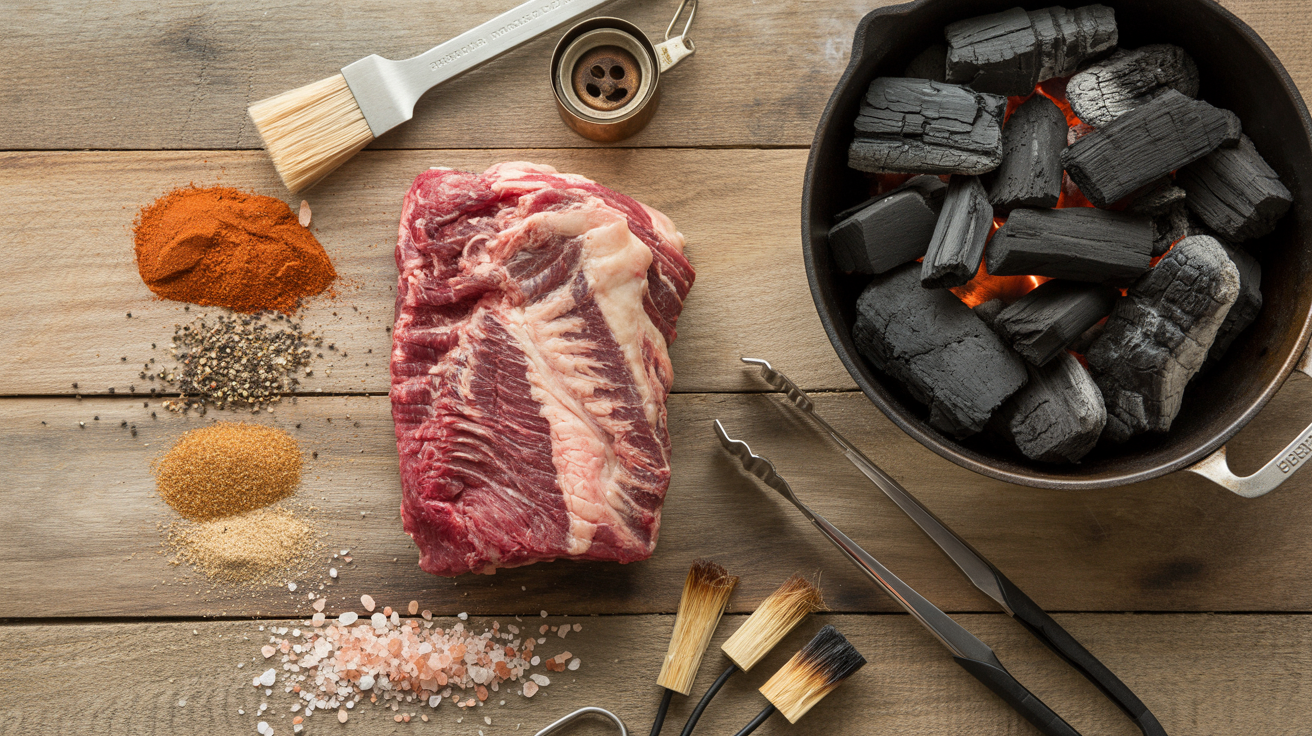
- Trim the brisket the night before your cook. Lay the cold brisket fat-side up on a large cutting board. Using a sharp boning knife, trim the hard fat cap down to approximately 1/4 inch thickness. Remove any silver skin and large hard fat deposits that will not render during the cook. Flip the brisket over and trim any thin sections of meat on the flat to prevent them from drying out. A well-trimmed brisket gives you even cooking and a more uniform bark. Aim to remove 1 to 2 pounds of hard fat and silver skin from a 14-pound packer.
- Apply the rub generously. Coat the entire brisket with a thin, even layer of yellow mustard - this acts as a binder to hold the rub in place and does not affect the flavor once cooked. Mix your kosher salt, coarse black pepper, garlic powder, onion powder, smoked paprika, and cayenne in a bowl. Apply the rub aggressively on all sides of the brisket, pressing it into the meat with your hands. Do not be shy - this is a massive cut of beef and it needs a bold coating to develop that iconic bark. Wrap the seasoned brisket loosely in plastic wrap and refrigerate overnight or for a minimum of 4 hours.
- Remove the brisket from the refrigerator 1 hour before cooking to allow it to come closer to room temperature. This helps promote more even cooking throughout the thick flat and point. While the brisket rests on the counter, fire up the grill or smoker to a target temperature of 225 to 250 degrees F. Set up for indirect heat and add your oak wood chunks to the fire or wood box. You want thin, blue smoke - not thick, billowing white smoke which can make the meat taste bitter. Allow the smoker to stabilize at 225 degrees F before loading the brisket.
- Place the brisket fat-side up on the smoker grates over indirect heat with the point facing toward the heat source. Insert your leave-in probe thermometer into the thickest part of the flat, avoiding any fat seams. Close the lid and let the smoke and low heat do the work. Maintain a consistent temperature between 225 and 250 degrees F throughout the cook by managing your fuel and air vents. Avoid opening the smoker unnecessarily - every time you lift the lid you lose heat and precious smoke.
- Monitor the cook and expect the stall. Around the 5 to 7 hour mark when the internal temp reaches approximately 150 to 165 degrees F, the brisket will hit the stall. This is a completely normal phenomenon where evaporative cooling stops the internal temp from rising for several hours. Do not panic and do not crank up the heat. This is where patience separates good BBQ from great BBQ. You can power through the stall by waiting it out, or you can wrap at this point to push through more efficiently.
- Wrap the brisket in pink butcher paper when the internal temp hits 165 degrees F and you have developed a deep mahogany bark that holds firm when you press it with your finger. Pull the brisket from the smoker, place it in the center of a large sheet of pink butcher paper, and wrap it tightly like a burrito - folding the sides in first and then rolling. Return the wrapped brisket to the smoker with the seam side down. Insert your probe back through the paper and continue cooking.
- Continue cooking the wrapped brisket at 225 to 250 degrees F until the internal temp reaches 200 to 205 degrees F. At this point, begin checking for probe tenderness by inserting your thermometer or a thin skewer into the thickest part of the flat - it should slide in with zero resistance, like going into warm butter. The point will always probe softer than the flat, so the flat is your guide. Most full packer briskets reach this stage after 12 to 16 hours total, but cook to feel and not just to time.
- Rest the meat properly - this step is non-negotiable. Once the brisket probes tender and reaches 203 degrees F, pull it from the smoker and let it rest. For a brisket this size, rest the meat still wrapped in butcher paper for a minimum of 1 hour, and ideally 2 to 4 hours. For an extended rest, place the wrapped brisket in an empty cooler with no ice - this is called a faux cambro. Layer towels around it to retain heat. The rest allows the juices to redistribute throughout the meat and the internal temp to equalize from the point to the flat.
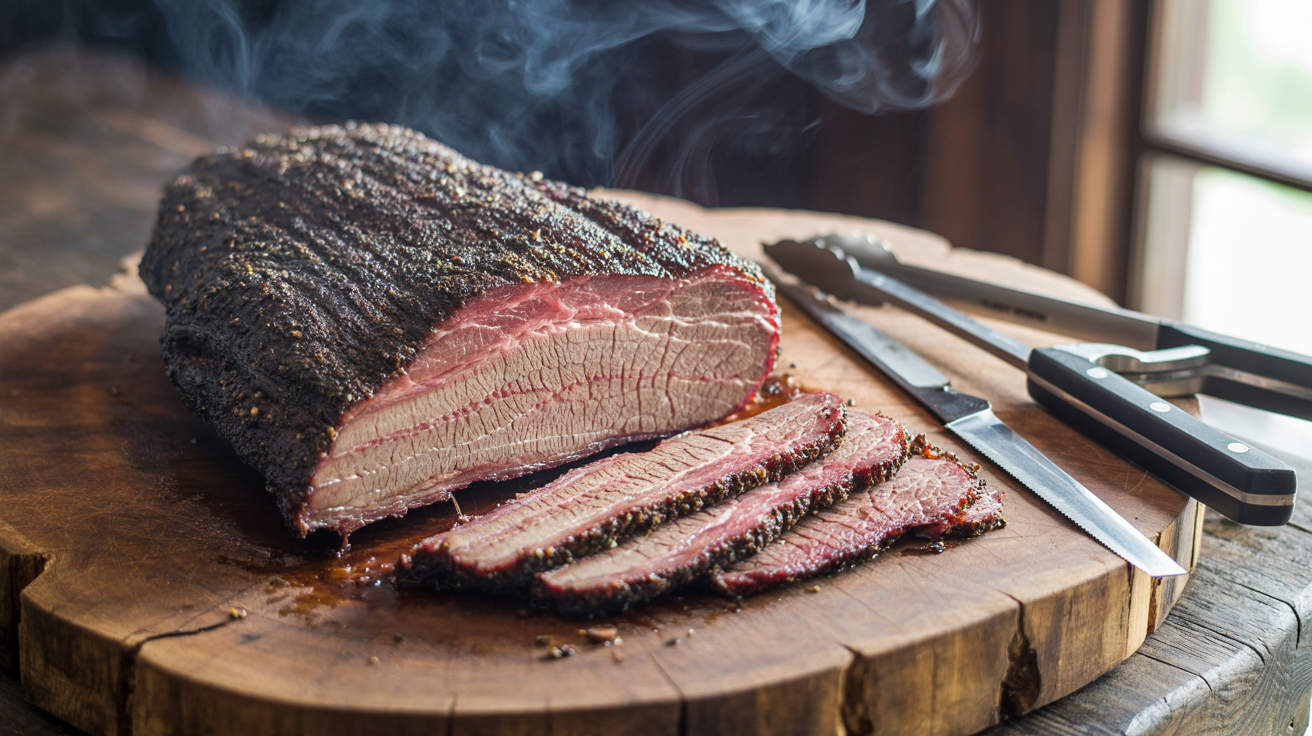
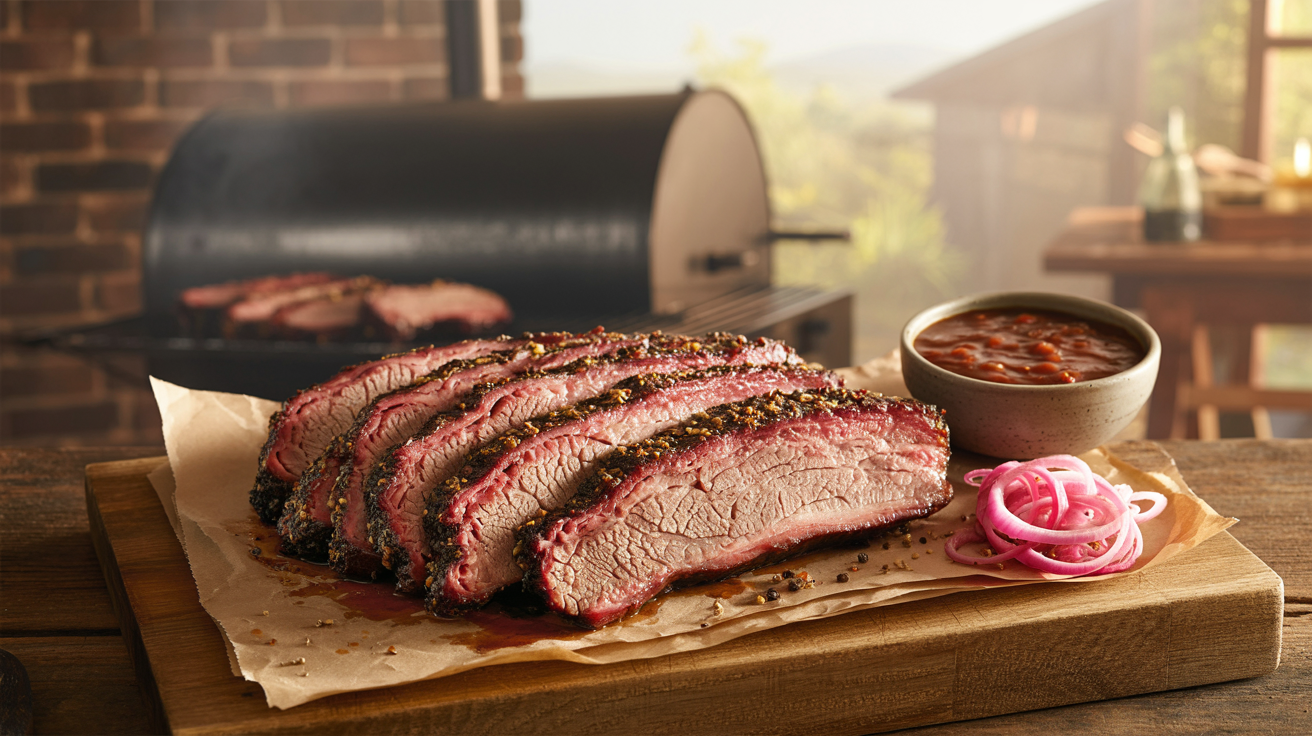
- Slice the brisket correctly and serve immediately. Unwrap the rested brisket on a large cutting board and save any accumulated juices in the butcher paper - those are liquid gold. Separate the flat from the point by cutting along the fat seam that divides them. Slice the flat against the grain into pencil-thick slices, approximately 1/4 inch. The point can be cubed into burnt ends or sliced against its own grain at an angle. Lay the slices out on a serving platter, drizzle with the reserved juices, and serve immediately with your favorite BBQ sides.
Nutrition
This smoked beef brisket recipe is the gold standard of backyard BBQ and the one cook every serious pitmaster needs in their arsenal. We are talking about a full packer brisket seasoned with a bold Texas-style rub, kissed with oak smoke for 12 to 16 hours at a steady 225 degrees F, and pulled at a perfect internal temp of 203 degrees F until it reaches that legendary probe-tender feel. This is not a fast cook and it is not supposed to be. The low and slow process is what separates a truly world-class brisket from anything you will ever find in a grocery store deli case.
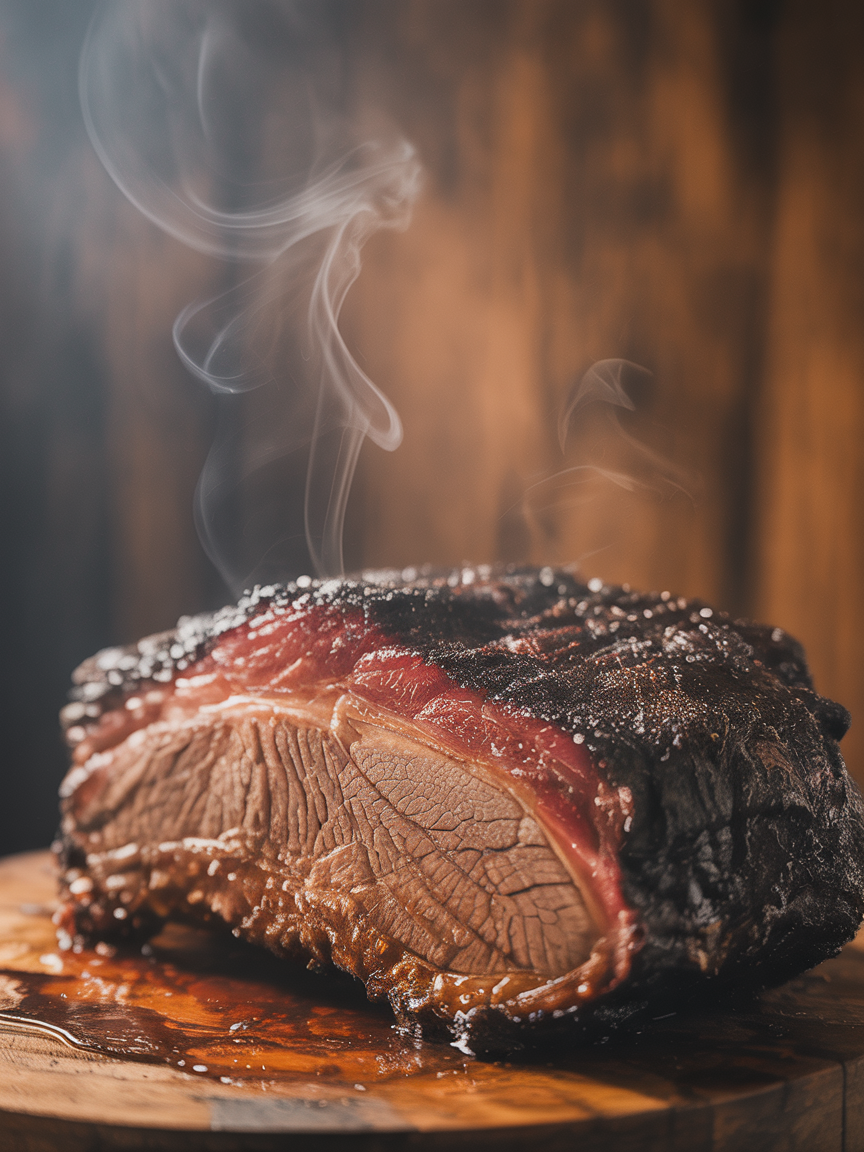
Brisket is one of the most unforgiving cuts of beef you can put in a smoker, but it is also one of the most rewarding. The flat and the point work together to give you slices that are juicy, rich, and packed with beefy flavor. When you nail the bark on the outside and reveal that beautiful pink smoke ring when you slice into it for the first time, you will understand why pitmasters obsess over this cut. The collagen in the muscle breaks down slowly over hours, transforming a tough working muscle into something impossibly silky and tender.
At GrillMasterHQ, we have fired up the grill and smoked more briskets than we can count. We have dialed in every variable – the trim, the rub, the wood choice, the stall management, the wrap timing, and the rest period. What you are about to read is the complete, no-shortcuts smoked beef brisket recipe that will have your neighbors lined up at the fence every weekend. Follow the steps, trust the process, and get ready to serve the best brisket of your life.
Smoked Beef Brisket Recipe: Low and Slow BBQ Perfection
This smoked beef brisket recipe delivers fall-apart tender meat with a deep mahogany bark and a jaw-dropping smoke ring every single time. Cooked low and slow over oak wood at 225 degrees F, this is the crown jewel of backyard BBQ. Fire up the smoker today and earn your pitmaster stripes.
Ingredients
| AMOUNT | INGREDIENT | NOTES |
|---|---|---|
| 12-14 lbs | whole packer beef brisket | USDA Choice or Prime grade, flat and point intact |
| 1/2 cup | coarse kosher salt | Diamond Crystal recommended for even coverage |
| 1/2 cup | coarse black pepper | freshly cracked, 16-mesh grind is ideal for bark formation |
| 2 tablespoons | garlic powder | optional addition to the base rub |
| 2 tablespoons | onion powder | optional addition to the base rub |
| 1 tablespoon | smoked paprika | adds color and depth to the bark |
| 1 tablespoon | cayenne pepper | optional, for a touch of heat |
| 2 tablespoons | yellow mustard | used as a binder so the rub adheres to the meat |
| 6-8 chunks | oak or post oak wood | chunks preferred over chips for a long smoke – hickory or mesquite work as alternatives |
| 1 sheet | pink butcher paper | approximately 36-40 inches for wrapping – foil can be substituted |
Instructions
Nutrition (per serving)
The BBQ Story Behind This Recipe
Beef brisket has deep roots in Texas BBQ culture, tracing back to the mid-1800s when German and Czech butchers settled in Central Texas and began slow-cooking the tougher, cheaper cuts of beef over post oak wood. Places like Lockhart, Luling, and Taylor became legendary barbecue towns where brisket was smoked in massive offset pits and sold by the pound wrapped in butcher paper. The Central Texas style – salt, pepper, smoke, and time – became the blueprint that every serious pitmaster still references today. It was humble, working-class food that became something far greater than the sum of its parts.
Over the decades, brisket moved beyond the lone star state and became the defining protein of American BBQ competition culture. Pitmasters from Kansas City to the Carolinas developed their own takes on the cut, adding regional spice blends, different wood varieties like hickory and mesquite, and techniques like the Texas crutch – wrapping in butcher paper or foil to push through the stall. Today, a perfectly smoked brisket is considered the ultimate test of any pitmaster worth their salt. From backyard enthusiasts to championship BBQ circuits, mastering the brisket is a rite of passage and a badge of honor in the world of live-fire cooking.
Hot Off the Grill
A Closer Look
Pitmaster Tips for Best Results
- Always buy USDA Choice or Prime grade brisket for the best marbling and moisture retention. Select grade briskets can turn out dry and tough even with a perfect cook because they simply do not have enough intramuscular fat to sustain 12-plus hours of heat.
- Maintain a consistent smoker temperature between 225 and 250 degrees F throughout the entire cook. Wild temperature swings above 275 degrees F will cause the brisket flat to dry out before the collagen in the point has time to fully break down. Consistency is the key to a moist, tender result.
- Use oak, post oak, or hickory wood for brisket. These hardwoods burn clean and deliver the classic BBQ smoke flavor without the harshness that mesquite can introduce during a long cook. Aim for thin blue smoke at all times – if your smoke is white and billowing, open the exhaust vent more and reduce the fuel until it clears.
- Do not slice your brisket until right before you serve it. Once a brisket is sliced it begins to lose moisture rapidly. If you need to hold it for a party or gathering, keep it whole and wrapped in the cooler until the last possible moment, then slice to order for the best texture and juiciness.
- The grain of the flat and the grain of the point run in different directions, so slicing correctly requires attention. Many new pitmasters slice the whole brisket in one direction and end up with chewy, stringy slices from the point. Separate the two muscles at the fat seam and slice each one against its own grain for consistently tender results across the entire brisket.
🔧 Pitmaster Equipment
Offset Smoker or Pellet Grill: An offset smoker gives you the most authentic wood-fired flavor and precise fire management for a long brisket cook. A pellet grill works beautifully as a set-it-and-monitor option.
Instant Read Thermometer: Hitting the exact internal temp of 203 degrees F is non-negotiable for brisket. A reliable instant read thermometer like the Thermapen is essential for checking doneness and probe tenderness.
Leave-In Probe Thermometer: A leave-in probe lets you monitor the internal temp of your brisket continuously without lifting the lid and losing precious heat and smoke.
Long Tongs or Heat-Resistant Gloves: A full packer brisket can weigh 12 to 16 pounds. Heavy-duty gloves and long tongs keep your hands safe when repositioning this massive cut of beef in a hot smoker.
Pink Butcher Paper: Wrapping your brisket in pink butcher paper during the stall helps push through without steaming the bark the way foil can. It is the Texas pitmaster method for a reason.
Sharp Brisket Slicing Knife: A long, thin slicing knife – at least 12 inches – is critical for cutting clean, even slices against the grain without shredding your perfectly smoked brisket.
Aluminum Drip Pan: Placed beneath the brisket to catch drippings and help regulate moisture in the cook chamber throughout the long smoke.
🔥 Variations
Pellet Grill Brisket: Set your pellet grill to 225 degrees F and load the hopper with oak, hickory, or competition blend pellets. Follow every step of the recipe exactly as written. The pellet grill offers incredible temperature consistency which makes it a fantastic option for overnight cooks. Consider starting the brisket at 180 degrees F for the first 3 hours on the super smoke setting to maximize smoke penetration before bumping to 225 degrees F for the remainder of the cook.
Texas Hot and Fast Brisket: If you are short on time, fire up the smoker to 300 to 325 degrees F and cook the brisket hot and fast. At this elevated temperature, a full packer brisket can be done in 6 to 8 hours. Wrap in butcher paper around the 4-hour mark when the bark is set and the internal temp reaches 165 degrees F. The result will not have quite the same depth of smoke ring as the low and slow method, but a hot and fast brisket done correctly is still outstanding and far more forgiving on your schedule.
Kansas City Style Brisket: Add a sweeter, bolder dimension to your brisket by incorporating brown sugar, smoked paprika, and a pinch of chili powder into your rub alongside the salt and pepper base. Finish the sliced brisket with a brush of thick, sweet Kansas City style BBQ sauce and return it to the smoker at 250 degrees F for 15 minutes to let the sauce set and caramelize. This sticky, sauced variation is a crowd-pleaser at backyard gatherings and a great entry point for guests who are new to Texas-style BBQ.
Burnt Ends: Once you have separated the point from the flat after the initial smoke, cube the point into 1.5-inch pieces and toss them in your favorite BBQ sauce and a sprinkle of brown sugar. Return the cubed point meat to the smoker unwrapped at 250 degrees F for an additional 90 minutes to 2 hours until the burnt ends are caramelized, sticky, and almost candy-like on the outside with a rich, beefy interior. Burnt ends are the reward for every pitmaster who smokes a whole packer brisket.
❓ Pitmaster FAQ
What internal temperature should smoked beef brisket reach?
The target internal temp for smoked beef brisket is 200 to 205 degrees F, with 203 degrees F being the sweet spot most pitmasters aim for. However, internal temp alone is not the complete picture. You must also check for probe tenderness – your thermometer or skewer should slide into the thickest part of the flat with zero resistance before you pull it from the smoker. Some briskets probe tender at 198 degrees F while others need to reach 207 degrees F, so always trust the feel over the number.
How long does it take to smoke a full packer brisket?
A full packer brisket weighing 12 to 14 pounds cooked low and slow at 225 degrees F typically takes 12 to 16 hours from start to finish before resting. The general rule of thumb is 1 to 1.5 hours per pound at 225 degrees F, but brisket does not follow a precise schedule. Variables like humidity, airflow, the specific cut of meat, and how well your smoker holds temperature all affect the timeline. Always plan for more time than you think you need and use a faux cambro rest to hold the brisket if it finishes early.
What is the stall and how do I handle it?
The stall is a phenomenon where the internal temp of the brisket stops rising and plateaus for several hours, typically between 150 and 165 degrees F. This happens because evaporative cooling on the surface of the meat counteracts the heat of the smoker. You have two options: power through by waiting it out with patience and a steady smoker temp, or wrap the brisket in pink butcher paper or foil at the beginning of the stall to push through it faster. The wrap method, known as the Texas crutch, is the most popular approach and helps maintain moisture while pushing through the stall in roughly half the time.
Fat side up or fat side down when smoking brisket?
This is one of the most debated topics in BBQ, and the honest answer is that it depends on your smoker setup. In an offset smoker where the primary heat source comes from the side and below, placing the brisket fat-side down acts as a heat shield protecting the flat from direct radiant heat. In a vertical smoker or kettle grill, fat-side up is preferred so the rendering fat bastes the meat as it cooks. At GrillMasterHQ, we recommend fat-side up on most backyard setups as the default approach for a juicy flat.
Can I smoke a brisket on a gas grill?
Yes, you can absolutely smoke a brisket on a gas grill with some setup work. Turn on only one or two burners on one side of the grill and place the brisket on the opposite side over indirect heat. Place a smoker box loaded with oak or hickory wood chips directly over a lit burner and replace the chips every 45 to 60 minutes to maintain smoke output. Keep the lid closed and the temperature at 225 to 250 degrees F using the burner knobs and the built-in lid thermometer. It will not be identical to an offset smoker, but you can produce a genuinely impressive smoked brisket on a gas grill with this method.
How long should I rest a smoked brisket before slicing?
Rest the meat for a minimum of 1 hour after pulling it from the smoker, and ideally 2 to 4 hours for a full packer brisket. Resting allows the muscle fibers to relax and reabsorb the juices that were pushed to the center during cooking. If you slice too soon, those juices will run out onto your cutting board and you will end up with dry slices. Keep the brisket wrapped in butcher paper and resting in a cooler lined with towels to maintain a safe temperature during a long hold. A properly rested brisket slices cleanly and is noticeably juicier than one cut immediately off the smoker.
What wood is best for smoking beef brisket?
Oak and post oak are the gold standard for smoked beef brisket, delivering the clean, bold smoke flavor that defines Central Texas BBQ. Hickory is a fantastic alternative with a slightly stronger, more robust smoke profile. Mesquite is a popular choice in West Texas but burns hot and can turn bitter during a long cook if you use too much, so use it sparingly or blend it with oak if you want that distinctive flavor. Cherry and pecan are excellent secondary woods to blend with oak for a slightly sweeter, more complex smoke character. Avoid softwoods like pine or cedar entirely as they produce resinous, toxic smoke.