BBQ Beef Ribs Recipe: Low and Slow Smoked Perfection
Ingredients
Method
- Fire up your smoker or grill and bring it to a stable temperature of 225 to 250 degrees Fahrenheit before the meat goes on. Use post oak, hickory, or pecan wood chunks for smoke. You want thin blue smoke coming out of your exhaust vent - not thick white billowing smoke, which will make the meat taste bitter. Let the fire settle and stabilize for at least 30 to 45 minutes before you even think about putting the ribs on.
- While your smoker is coming up to temp, prep your ribs. Remove the rack from the packaging and pat the surface completely dry with paper towels - moisture is the enemy of good bark formation. Flip the rack bone-side up and locate the thin membrane running along the back of the bones. Use a butter knife or your finger to get under the edge of the membrane near one end, grab it firmly with a paper towel for grip, and peel it off in one clean pull. This step is non-negotiable for proper smoke penetration.
- Trim any thick pockets of hard white fat from the top surface of the ribs using a sharp boning knife. You want to leave about a quarter-inch of fat cap intact so it bastes the meat during the long cook, but remove any thick slabs of fat that will not render down. Hard fat does not melt at 225 degrees the way intramuscular fat does - it just sits there and prevents your rub from contacting the meat.
- Apply your binder first - rub a thin layer of yellow mustard or melted beef tallow all over the surface of the ribs, top, bottom, and sides. This helps the rub adhere and adds a tiny bit of extra flavor. Now mix your rub ingredients together in a small bowl: kosher salt, cracked black pepper, garlic powder, smoked paprika, onion powder, and cayenne if using. Apply the rub generously and evenly on all surfaces, pressing it into the meat with your hand. Do not be shy here - these are thick cuts and they can handle a bold crust. Let the seasoned ribs sit at room temperature for 30 minutes before they go on the smoker.
- Place the ribs bone-side down on the smoker grate, meat-side up, as far from the firebox or heat source as possible for true indirect cooking. Close the lid and resist the urge to open it. Let the ribs cook undisturbed for the first 2 hours - this is when the surface is driest and most receptive to smoke absorption, which is when your smoke ring develops. At the 2-hour mark, take a peek to check color.
- Starting at the 2-hour mark, begin spritzing the ribs every 45 minutes to 1 hour with your apple cider vinegar and water mixture. Hold the spray bottle about 10 to 12 inches from the surface and apply a light, even mist - you are not trying to wash the rub off, just adding a little moisture to help the bark build up in layers rather than dry out. Continue cooking and spritzing until the ribs hit an internal temp of around 160 to 170 degrees Fahrenheit, which is typically around the 4 to 5 hour mark and is also where you will likely hit the stall.
- When the internal temp stops climbing and sits stubbornly at 160 to 170 degrees Fahrenheit, you have hit the stall - this is completely normal and it means evaporative cooling is keeping the meat temperature steady. You have two options: power through it and wait it out, which can add 1 to 2 hours to your cook, or use the Texas Crutch. To use the crutch, pull the ribs off the smoker, wrap them tightly in two layers of butcher paper or heavy-duty foil, and return them to the smoker. Butcher paper is preferred because it breathes slightly and preserves more of your bark compared to foil.
- Continue cooking the wrapped ribs until they reach an internal temp of 200 to 205 degrees Fahrenheit. Start probing at around the 6-hour total cook mark. The thermometer probe should slide into the thickest part of the meat between the bones with virtually zero resistance - like sliding into warm butter. Temperature is a guideline but feel is the final judge. If it still feels tight or resistant, give it another 30 minutes and probe again.
- Once your ribs hit 200 to 205 degrees Fahrenheit and that probe slides in like butter, pull them off the smoker and do not cut into them yet. This is critical: rest the meat properly. Leave the ribs wrapped and place them in a dry cooler lined with a few towels, or simply let them rest on a cutting board tented loosely with foil for a minimum of 45 minutes and ideally 1 hour. Resting allows the muscle fibers to relax and the juices to redistribute throughout the meat. Cut in too early and all those beautiful juices run out onto your cutting board instead of staying in the meat where they belong.
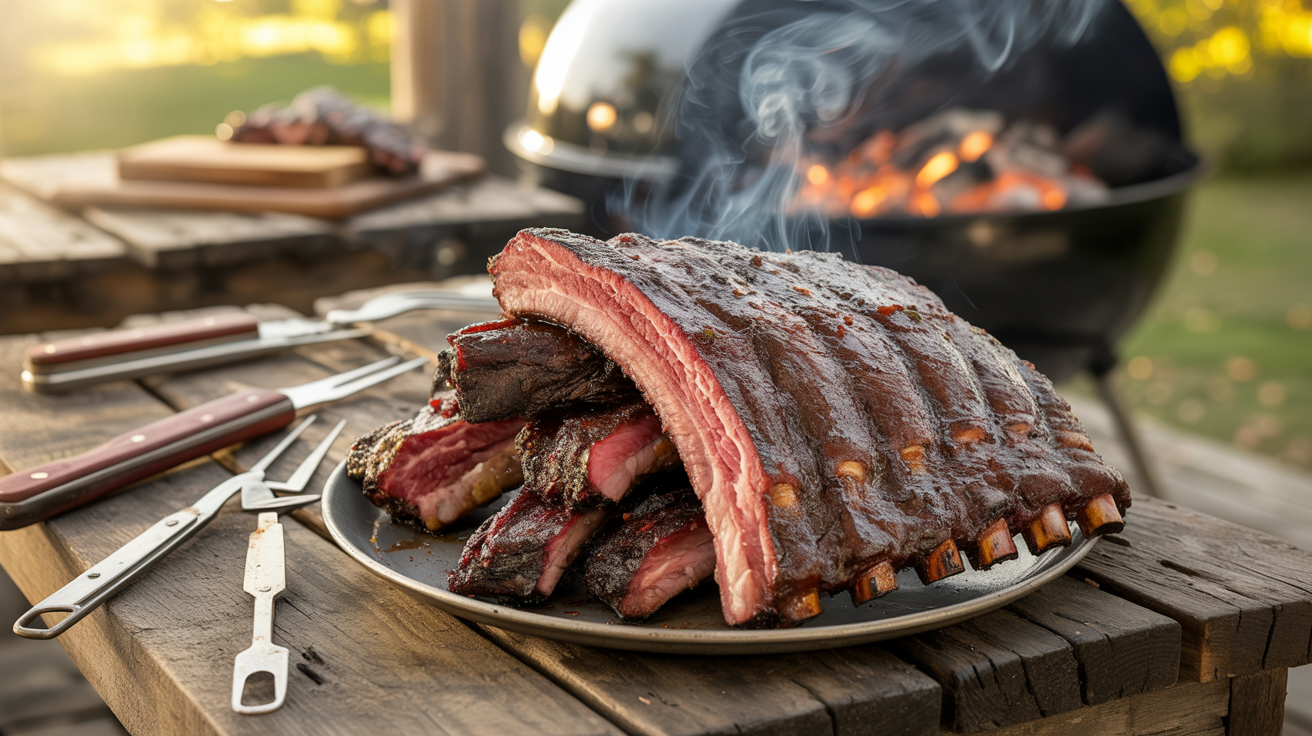
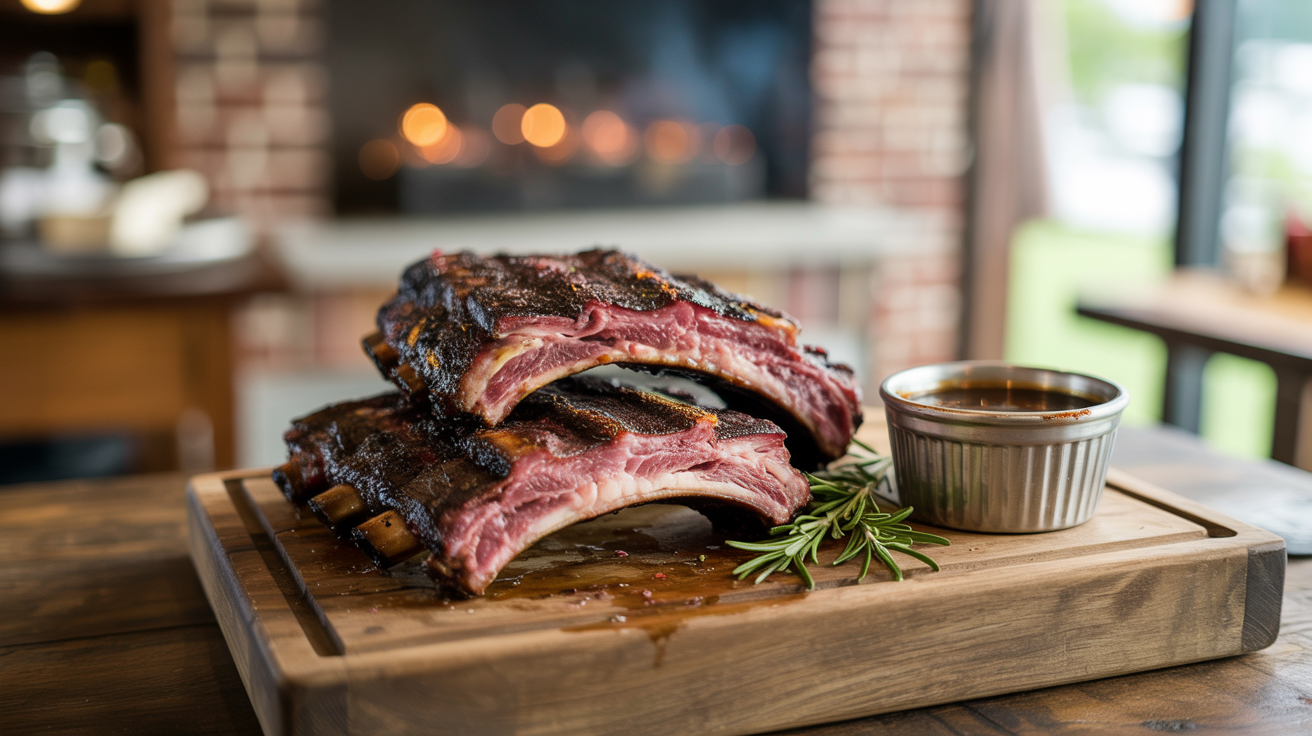
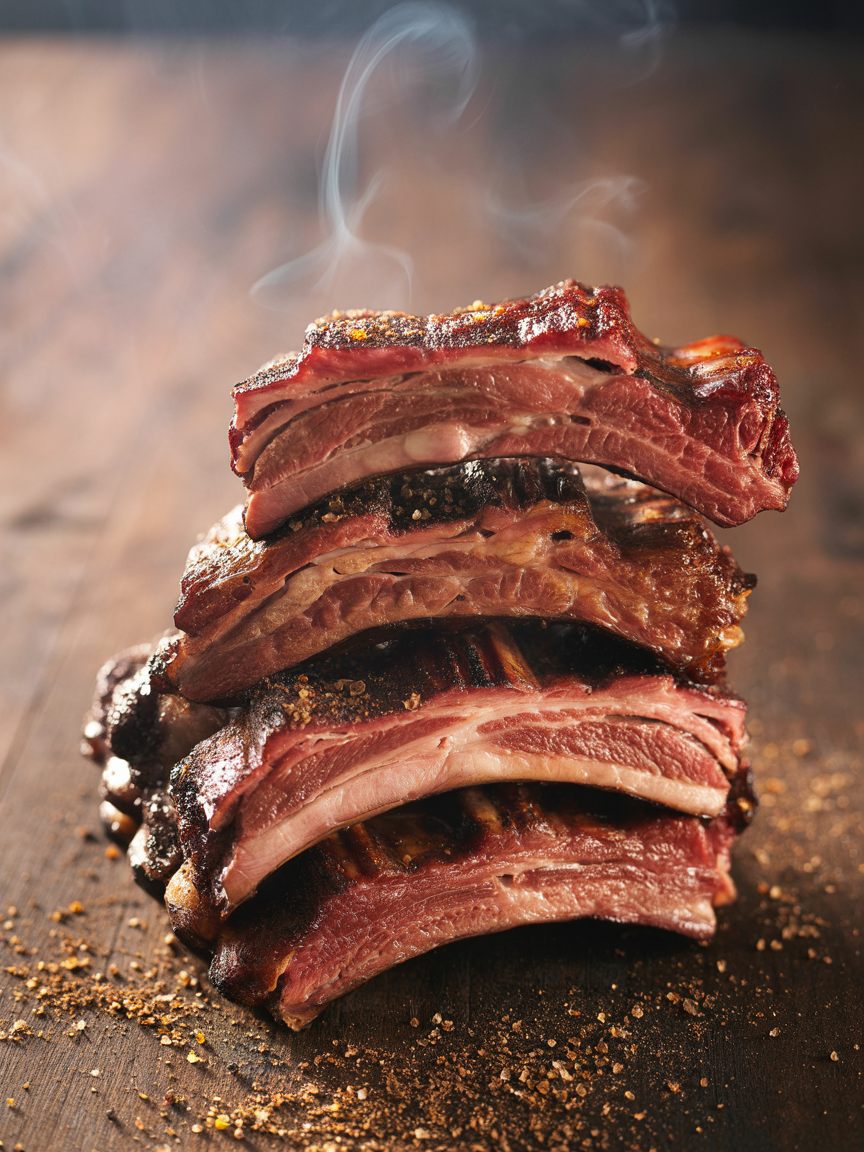
- After resting, unwrap the ribs and get ready to be amazed. You should see a dark mahogany bark on the outside and when you slice between the bones, a clear half-inch smoke ring glowing just beneath the surface. Slice individual ribs by cutting straight down between each bone with a sharp carving knife. Serve immediately with your favorite BBQ sauce on the side - though honestly, these ribs are so good they do not need a single drop of sauce.
Nutrition
This bbq beef ribs recipe is the gold standard for backyard pitmasters who refuse to settle for anything less than fall-off-the-bone perfection with a bark so dark and crusty it looks like it came straight out of a Texas roadhouse. We are talking about cooking these massive slabs of beef low and slow at 225 to 250 degrees Fahrenheit for anywhere from 6 to 8 hours until they hit that magic internal temp of 200 to 205 degrees Fahrenheit, where the collagen has fully broken down and every bite melts on your tongue.
Beef ribs are not chicken wings – they demand respect, patience, and a little know-how. The cut we are working with here is beef plate short ribs, sometimes called dino ribs, and they are the undisputed heavyweight champion of the BBQ world. Each bone can weigh over a pound on its own, and when you pull that first rib off the rack and see that half-inch smoke ring glowing pink beneath the bark, you will know every single minute of the cook was worth it.
Whether you are running a classic offset smoker, a kamado grill, or even a trusty kettle charcoal grill, the principles here stay the same: control your fire, maintain a clean smoke, and never rush the process. We will walk you through every step from trimming and seasoning to wrapping, probing, and how to rest the meat properly so all those incredible juices stay locked inside when you finally slice in.
BBQ Beef Ribs Recipe: Low and Slow Smoked Perfection
This bbq beef ribs recipe delivers fall-off-the-bone tenderness with a deep mahogany bark and a smoke ring that will make your neighbors jealous. Cooked low and slow to perfection using proven pitmaster techniques, these ribs are the real deal. Fire up the grill today and taste the difference.
Ingredients
| AMOUNT | INGREDIENT | NOTES |
|---|---|---|
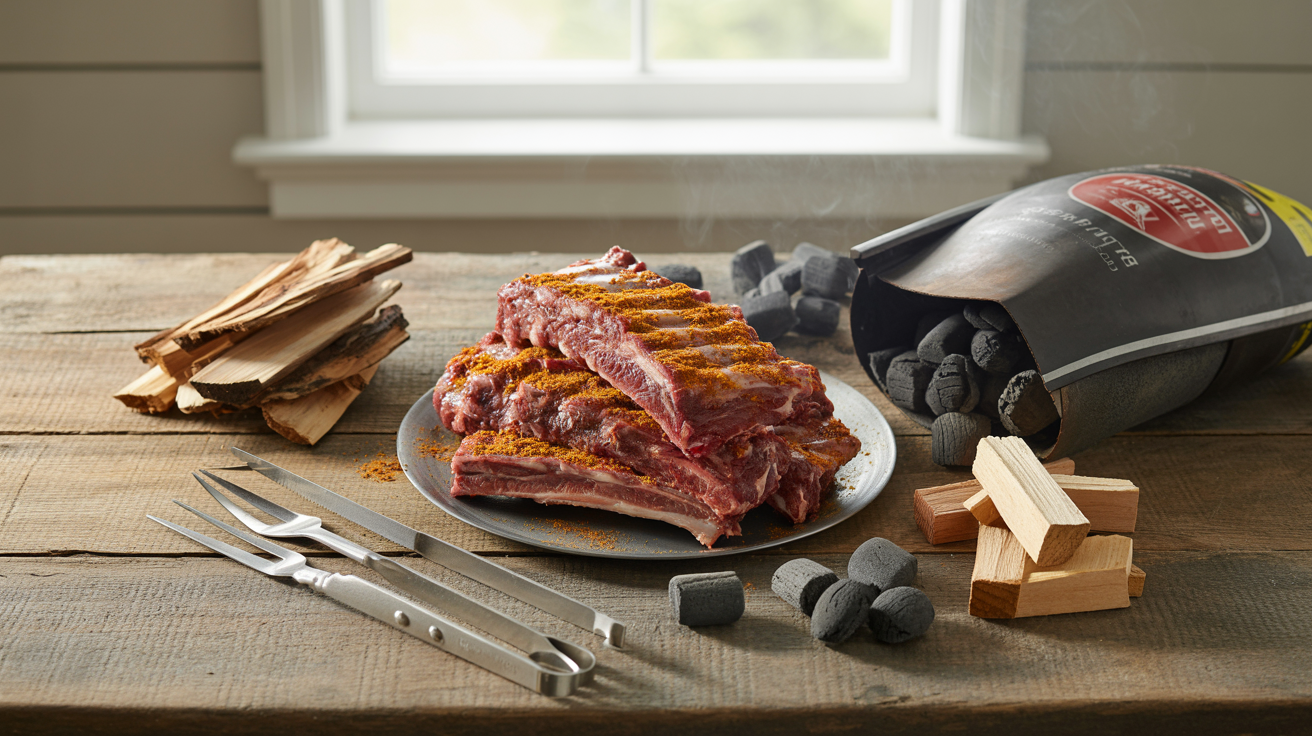
| 6 lbs | beef plate short ribs | 3 to 4 bones per rack, sometimes labeled dino ribs – look for good marbling and at least 1 inch of meat above the bone |
| 3 tablespoons | coarse kosher salt | the foundation of any great beef rub – do not use table salt |
| 2 tablespoons | coarse black pepper | freshly cracked for best flavor – this is the classic Central Texas two-ingredient rub base |
| 1 tablespoon | garlic powder | adds depth without overpowering the beef |
| 1 tablespoon | smoked paprika | enhances color and adds a subtle smokiness to the bark |
| 1 teaspoon | onion powder | rounds out the savory profile of the rub |
| 1 teaspoon | cayenne pepper | optional – adds a gentle back-end heat, adjust to your preference |
| 2 tablespoons | yellow mustard or beef tallow | used as a binder to help the rub adhere to the surface of the ribs |
| 4 chunks | post oak or hickory wood | for smoking – post oak is the classic Texas choice, hickory adds a bolder flavor |
| 0.5 cup | apple cider vinegar | mixed 50-50 with water in a spray bottle for spritzing during the cook |
Instructions
Nutrition (per serving)
The BBQ Story Behind This Recipe
Beef ribs have deep roots in Texas BBQ culture, where cattle ranching has been a way of life since the mid-1800s. The old school Texas pitmasters cooked what was available and affordable, and beef ribs – often overlooked by butchers in favor of prime cuts – were slow-cooked over post oak wood in massive offset smokers until they transformed into something extraordinary. Central Texas joints like Snow is BBQ in Lexington and Louie Mueller Barbecue in Taylor helped put beef ribs on the national map, turning what was once considered a second-class cut into one of the most sought-after dishes in American BBQ.
The tradition of low and slow cooking beef ribs is also tied to the broader African American pitmaster tradition across the South, where whole animals and overlooked cuts were cooked with skill, creativity, and community at the center of it all. Church cookouts, Juneteenth celebrations, and neighborhood block parties across Texas, the Carolinas, and the Mississippi Delta all share a deep connection to the fire, the smoke, and the ritual of feeding people something made with real care. When you fire up the grill and cook beef ribs today, you are tapping into a centuries-old tradition that is as much about culture and connection as it is about great food.
Hot Off the Grill
A Closer Look
Pitmaster Tips for Best Results
- Maintain your smoker temp in the 225 to 250 degree Fahrenheit range throughout the entire cook. Spikes above 275 degrees will tighten the muscle fibers and make the meat tough instead of tender – invest in a quality dual-probe thermometer to monitor both your grill temp and meat temp simultaneously without opening the lid.
- The smoke ring is purely cosmetic and does not affect flavor, but it does tell you that the smoke penetrated properly in the early stages of the cook. To maximize your smoke ring, start the ribs cold straight from the fridge – the cooler surface temp slows the development of a barrier on the outer layer and allows the nitric oxide from the smoke more time to penetrate the meat.
- If your bark feels soft or tacky when you go to wrap the ribs, give them another 30 to 45 minutes unwrapped before reaching for the butcher paper. A properly set bark should feel firm and dry to the touch – soft bark will steam and go mushy inside the wrap.
- Season your ribs at least 30 minutes before they go on and ideally the night before. An overnight dry brine in the fridge allows the salt to penetrate deep into the muscle, drawing out moisture initially and then pulling it back in as a more flavorful, seasoned liquid. This results in more evenly seasoned and juicy meat from the inside out.
- Always probe the thickest part of the meat between the bones and avoid touching the bone itself, which runs much hotter than the surrounding meat and will give you a falsely high reading. If your readings vary between bones, take an average of three probe points and use that to judge doneness.
🔧 Pitmaster Equipment
Offset Smoker or Kamado Grill: The ideal setup for cooking beef ribs low and slow with consistent indirect heat and real wood smoke over a long cook.
Instant Read Thermometer: Critical for monitoring internal temp throughout the cook – you need to hit 200 to 205 degrees Fahrenheit for fully rendered collagen and tender meat.
Probe Thermometer with Leave-In Capability: Lets you monitor the internal temp continuously without opening the smoker and losing heat and smoke during the long cook.
Long Tongs or Heat-Resistant Gloves: Beef plate ribs are heavy and unwieldy – long tongs and good gloves keep your hands safe while managing the fire and repositioning the meat.
Butcher Paper or Heavy Duty Foil: Used for the optional Texas Crutch wrap at the stall, which helps push through the 160 to 170 degree plateau faster without steaming the bark too much.
Sharp Boning Knife: Essential for trimming excess hard fat from the top of the ribs before the cook so your rub can penetrate and your bark can form properly.
Spray Bottle: Filled with beef tallow, apple juice, or a 50-50 water and apple cider vinegar mix to spritz the ribs every hour and keep the surface moist for better bark development.
🔥 Variations
Pellet Grill Version: Set your pellet grill to 225 degrees Fahrenheit and load it with hickory, post oak, or competition blend pellets. Follow the exact same steps and timeline. Pellet grills tend to run cleaner and more consistent, so you may find the stall happens slightly faster. Probe at the 5-hour mark and monitor from there. The end result is nearly identical to an offset cook with a touch less smoke intensity.
Gas Grill Version: Set up your gas grill for indirect heat by turning on only the outer burners and leaving the center burners off. Place a smoker box filled with soaked hickory or post oak chips directly over one of the lit burners. Maintain a grill temp of 225 to 250 degrees Fahrenheit using your lid thermometer. You will need to refill the smoker box with fresh chips every 45 minutes for the first 3 hours to maintain smoke. Results will be slightly less smoky but still incredibly delicious.
Oven Finish Method: If weather does not cooperate, smoke the ribs for the first 3 hours on your smoker to build the bark and smoke ring, then transfer them wrapped in butcher paper to a 250 degree Fahrenheit oven to finish the cook. This hybrid method still delivers tremendous smoke flavor and a proper bark while giving you the controlled environment of an indoor oven for the long finishing phase.
Korean-Inspired BBQ Beef Ribs: Replace the Texas-style dry rub with a marinade of soy sauce, sesame oil, brown sugar, grated Asian pear, minced garlic, and fresh ginger. Marinate overnight in the fridge, then cook low and slow using the same method. The sugars in the marinade will caramelize into a stunning lacquered bark with bold umami and sweetness that is absolutely addictive.
❓ Pitmaster FAQ
What internal temperature should beef plate ribs reach when done?
Beef plate short ribs need to reach an internal temp of 200 to 205 degrees Fahrenheit for the collagen to fully convert to gelatin and the meat to become tender. Unlike steaks, these are not safe or enjoyable at medium rare – the connective tissue requires the full low and slow cook to break down properly. Always use an instant read or leave-in probe thermometer and verify doneness both by temperature and by the feel of the probe sliding in.
How long does it take to smoke beef ribs low and slow?
At 225 to 250 degrees Fahrenheit, beef plate short ribs typically take 6 to 8 hours to reach proper doneness. The exact time varies based on the size of the rack, the consistency of your smoker temp, and how long the stall lasts. Always cook to internal temp and probe feel rather than watching the clock alone – the clock is just a rough guide.
Can I use beef back ribs instead of beef plate ribs?
Yes, but understand they are a very different cut. Beef back ribs are what is left after the ribeye roast is removed from the bones, so most of the meat sits between and underneath the bones rather than on top. They cook faster – typically 4 to 5 hours at 225 degrees – and have less meat per bone. They are still delicious but do not have the massive meaty caps that make plate ribs so spectacular.
Do I need to remove the membrane from beef ribs?
Absolutely yes. The membrane on the bone side of the rack is a thick silverskin that does not break down during cooking. If you leave it on, it creates a barrier that prevents smoke and seasoning from penetrating the underside of the meat, and it becomes a chewy, unpleasant texture on the finished product. Use a paper towel to grip it and pull it off before seasoning – it takes 30 seconds and makes a real difference.
What wood is best for smoking beef ribs?
Post oak is the classic Central Texas choice and delivers a medium-strength smoke that complements beef beautifully without overwhelming it. Hickory is a bolder option that pairs extremely well with beef and is widely available. Pecan is a slightly sweeter middle ground. Avoid fruit woods like apple or cherry for beef ribs – they are too mild and more suited to pork and poultry. Whatever you choose, use chunks rather than chips for a long low and slow cook so they smolder slowly rather than burning up quickly.
Should I wrap my beef ribs during the cook?
Wrapping is optional but recommended if you want to guarantee tenderness and push through the stall more efficiently. Butcher paper is preferred over foil for beef ribs because it allows a small amount of moisture to escape, which helps preserve the bark better than foil does. If you are aiming for the absolute hardest, darkest bark possible, you can skip the wrap entirely and just cook through the stall – it will add time but the bark will be extraordinary.