
Smoked Ham Recipe: Perfect Low and Slow on the Grill
Ingredients
Method
- Remove the ham from the refrigerator 60 minutes before you plan to cook. Letting the meat come closer to room temperature helps it cook more evenly and absorb smoke better right from the start. While it rests on the counter, fire up the grill or smoker and target a steady temperature of 225 to 250 degrees Fahrenheit. Set up your cooker for indirect heat, meaning the coals or heat source should be on one side and the ham will sit on the opposite side away from direct flame. Place your aluminum drip pan beneath where the ham will sit and fill it halfway with apple juice. This creates a humid environment in the cook chamber that keeps the surface of the ham moist and helps the smoke adhere.
- While the smoker is coming up to temp, score the surface of the ham in a diamond crosshatch pattern. Use a sharp knife to cut about a quarter inch deep through the fat cap, spacing the cuts roughly 1 inch apart. This serves two purposes: it allows the rub and smoke to penetrate deeper into the meat, and it creates those beautiful visual diamond patterns that open up as the ham cooks. If your ham has a thick fat cap, you can trim it down to about a quarter inch even before scoring. Do not remove all the fat because it bastes the meat as it renders down during the long cook.
- In a small bowl, combine the brown sugar, smoked paprika, garlic powder, onion powder, black pepper, kosher salt, cayenne pepper, and dry mustard powder. Mix well until fully combined. Coat the entire surface of the ham with a thin, even layer of yellow mustard, using your hands or a brush to get into all the crevices. The mustard acts as a binder and you will not taste it once the bark develops. Immediately press the dry rub onto every surface of the ham, patting it firmly so it adheres to the mustard. Be generous and make sure the scored cuts are seasoned as well. At this point your ham should look deeply colored and well-coated.
- Once the smoker is holding steady at 225 to 250 degrees Fahrenheit, add two to three of your apple or cherry wood chunks directly to the coals or wood box. Place the ham cut-side down on the grate over the drip pan, away from direct heat. Insert your probe thermometer into the thickest part of the ham, making sure it is not touching the bone as the bone conducts heat differently and will give you a false reading. Close the lid and let the smoke do its work. Resist the urge to open the lid for at least the first 90 minutes. Every time you lift the lid you lose heat and smoke, which extends your cook time.
- After the first 90 minutes, check your wood situation and add another chunk if the smoke has died down. At this point you can begin spritzing the ham every 45 to 60 minutes with apple juice using a spray bottle. A light mist is all you need. The spritz adds a tiny bit of moisture to the surface, which helps the bark develop and keeps things looking glossy. You are looking for the surface to gradually deepen in color from the rub stage to a rich mahogany. The bark is building when the surface looks dry to the touch between spritz sessions. Keep your smoker temperature steady in that 225 to 250 degree Fahrenheit range throughout.
- While the ham smokes, prepare your honey-mustard glaze. Combine the honey, Dijon mustard, brown sugar, apple cider vinegar, and ground cinnamon in a small saucepan over medium-low heat. Stir constantly for about 3 to 4 minutes until the sugar dissolves and the glaze just barely begins to simmer and thicken slightly. Remove from heat and set aside. This glaze is applied in the final stages of the cook, not early on. If you add a sugar-heavy glaze too early the sugars will burn before the ham finishes cooking, giving you a bitter rather than caramelized result.
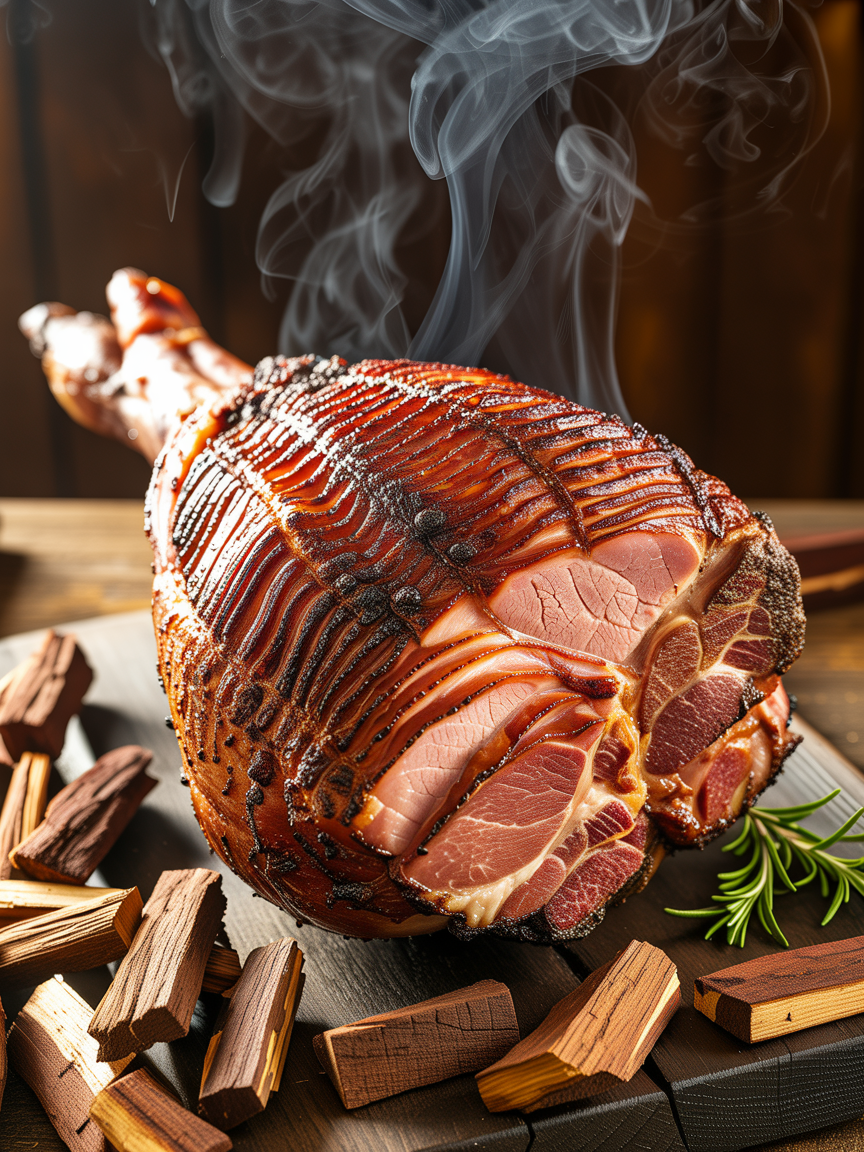
- When the internal temp of the ham reaches 120 to 125 degrees Fahrenheit on your probe thermometer, it is time to apply the first coat of glaze. Brush a generous layer of the honey-mustard glaze over every surface of the ham, working it into the scored cuts. Close the lid and let it cook for another 20 to 25 minutes. Then apply a second coat of glaze and repeat. You want to build up two to three layers of glaze during this final phase, each one caramelizing and setting before the next coat goes on. This is how you build that gorgeous, sticky, lacquered exterior that looks like it came out of a world-class smokehouse.
- Continue monitoring the internal temp closely during this final glaze phase. For a pre-cooked ham, pull it from the smoker when the internal temp hits 140 degrees Fahrenheit. For a fresh raw ham, the USDA safe internal temperature is 160 degrees Fahrenheit. The total cook time for a 7 to 8 pound ham at 225 to 250 degrees Fahrenheit will typically run 4 to 5 hours, but always cook to temp not to time. Every ham is different, every smoker runs differently, and your thermometer is your most reliable guide. When you hit the target temp and the surface has that beautiful dark mahogany color with a set, tacky glaze, your ham is done.
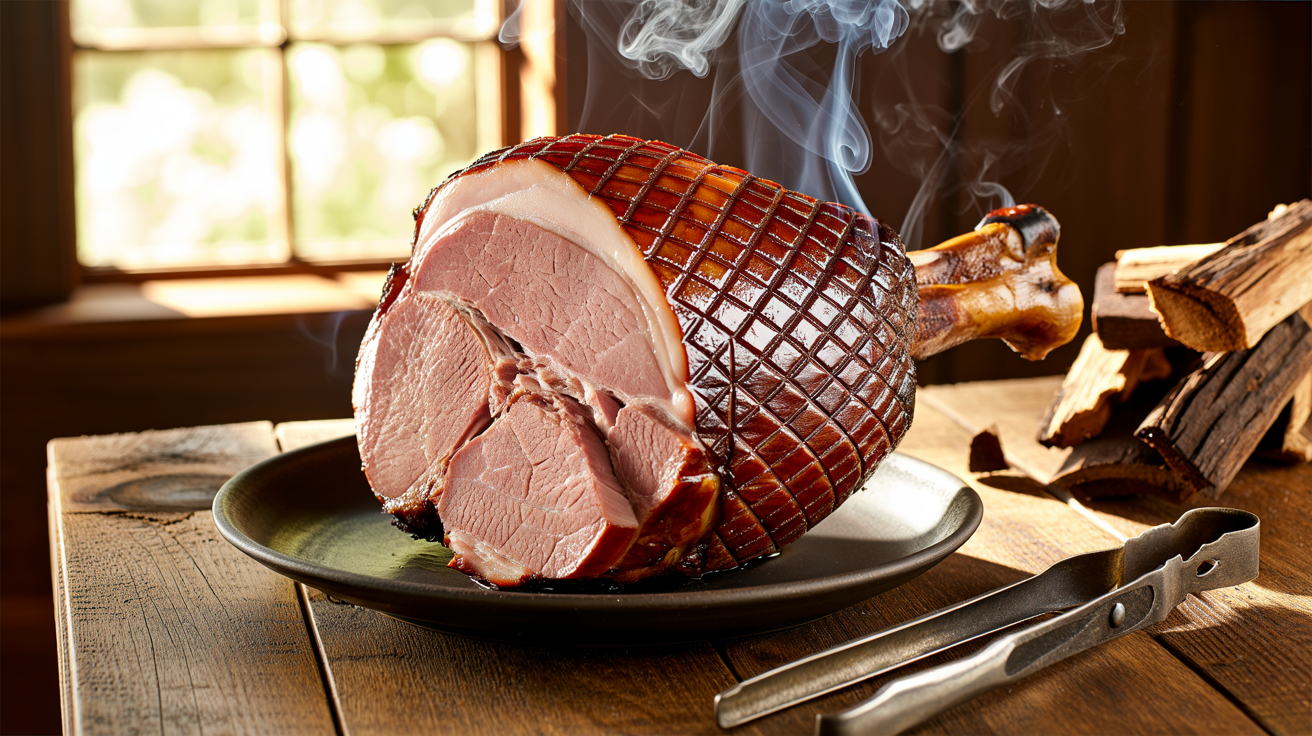
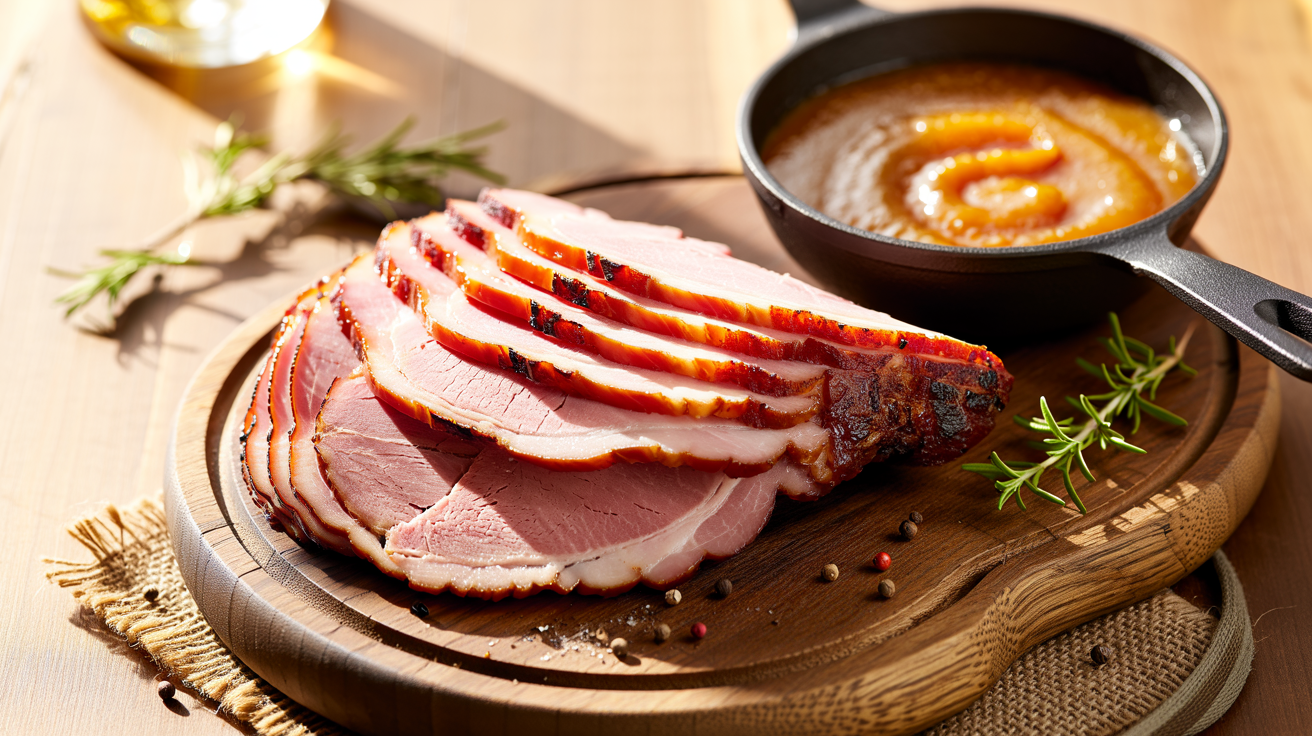
- Remove the ham from the smoker and place it on a large cutting board with a juice groove. Tent it loosely with aluminum foil and let it rest for at least 20 to 30 minutes before slicing. This resting period is non-negotiable. When you rest the meat, the muscle fibers relax and reabsorb the juices that have been pushed to the center during cooking. Cut into it too early and those juices run right off the board and onto your feet. After resting, slice along the bone and serve with any remaining warm glaze on the side for drizzling. Take a moment to admire that smoke ring just beneath the surface before the crowd descends.
Nutrition
A great smoked ham recipe is one of the most rewarding things you can pull off on the backyard smoker, and once you nail it, you will never go back to oven-baked ham again. We are talking about a bone-in half ham that spends hours bathing in wood smoke at a steady 225 to 250 degrees Fahrenheit, developing a sticky, lacquered bark on the outside while the interior stays tender, juicy, and packed with sweet, smoky flavor. Whether you are working with a pre-cooked ham that just needs a smoke bath or a raw fresh ham that goes the full journey, this method is going to produce something truly unforgettable.
The secret to this smoked ham recipe is patience and layering flavor at every stage. You start with a brown sugar and spice rub that clings to the surface of the ham and begins building that bark from the very first hour on the smoker. Then you add a honey-mustard glaze during the final hour that caramelizes into a deep, glossy coating that will have everyone hovering around the smoker before you even rest the meat. The smoke does the heavy lifting, but the technique is what separates a great smoked ham from an average one.
We are going to walk you through every step from prep to the final slice, including wood selection, internal temp targets, and the all-important resting period that locks in every drop of moisture. Plan on about 4 to 5 hours of cook time for a 7 to 8 pound bone-in half ham, with the internal temp climbing to a safe and perfect 140 degrees Fahrenheit for a pre-cooked ham or 160 degrees Fahrenheit for a fresh raw ham. Set aside the afternoon, fire up the grill, and get ready to impress.
Smoked Ham Recipe: Perfect Low and Slow on the Grill
This smoked ham recipe delivers a show-stopping centerpiece with deep mahogany bark, a gorgeous smoke ring, and impossibly juicy meat from the inside out. Using low and slow BBQ technique over real wood smoke, you get holiday-worthy results any day of the week. Fire up the grill and make it happen.
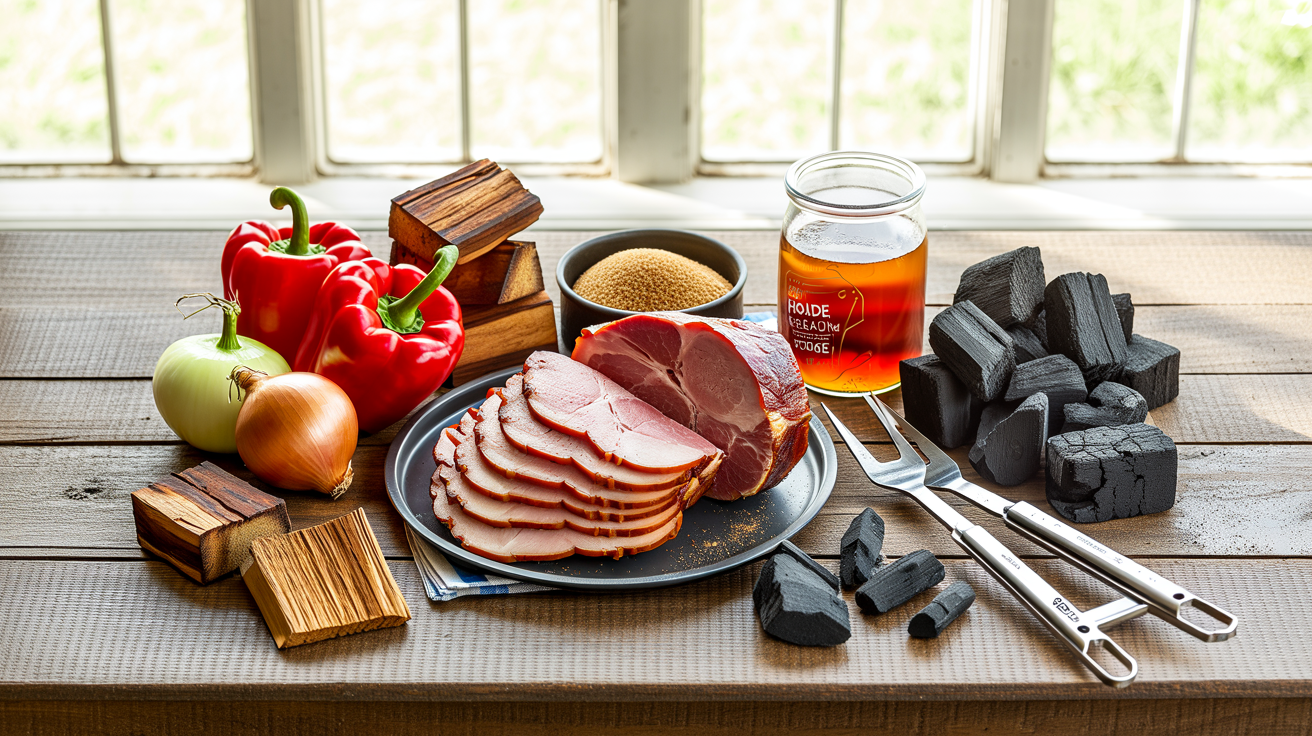
Ingredients
| AMOUNT | INGREDIENT | NOTES |
|---|---|---|
| 1 | bone-in half ham, pre-cooked or fresh, 7 to 8 pounds | bone-in delivers more flavor and holds up better during the long smoke |
| 3 tablespoons | yellow mustard | used as a binder to help the dry rub adhere to the surface |
| 3 tablespoons | brown sugar, packed | light or dark both work, dark gives a deeper molasses flavor |
| 1 tablespoon | smoked paprika | adds color and a subtle earthy smoke note to the bark |
| 1 tablespoon | garlic powder | |
| 1 teaspoon | onion powder | |
| 1 teaspoon | black pepper, coarsely ground | freshly ground is best for the bark |
| 1 teaspoon | kosher salt | reduce to half a teaspoon if using a pre-brined or heavily cured ham |
| half teaspoon | cayenne pepper | optional, adds a subtle heat that balances the sweetness |
| half teaspoon | dry mustard powder | |
| 4 large chunks | apple or cherry wood chunks | fruit woods pair beautifully with the sweetness of pork |
| half cup | apple juice or apple cider | used in the drip pan and for spritzing during the cook |
| half cup | honey | for the glaze |
| 2 tablespoons | Dijon mustard | for the glaze, adds sharpness to balance the honey |
| 2 tablespoons | brown sugar | for the glaze |
| 1 tablespoon | apple cider vinegar | for the glaze, adds a slight tang and helps the glaze set |
| 1 teaspoon | ground cinnamon | for the glaze, optional but adds a warm holiday note |
Instructions
Nutrition (per serving)
The BBQ Story Behind This Recipe
Ham has been a cornerstone of American BBQ and food culture for centuries, rooted in the Southern tradition of whole-hog cooking and pork preservation. Before refrigeration, smoking and curing pork was a survival technique that transformed necessity into culinary art. The smokehouse was a fixture on nearly every Southern farm, and the skill of producing a proper smoked ham was passed down through generations with the same reverence as a family heirloom. Regions like Virginia became famous worldwide for their dry-cured, hickory-smoked country hams, while the Carolinas and Tennessee developed their own distinct approaches to seasoning and smoke wood selection. These traditions laid the groundwork for everything we do at the backyard smoker today.
In modern BBQ culture, smoked ham has become a staple at holiday gatherings, tailgates, and weekend cookouts across the country. Competition pitmasters have elevated the craft by experimenting with injection brines, compound glazes, and specialty woods like apple and cherry that complement the natural sweetness of pork. The rise of pellet grills and offset smokers in the backyard BBQ scene has made it easier than ever for home cooks to achieve that professional smokehouse quality without a brick-and-mortar structure. Today a smoked ham on the grill carries on that deep American tradition while giving every pitmaster the chance to put their own signature on a timeless classic.
Hot Off the Grill
A Closer Look
Pitmaster Tips for Best Results
- Maintain a steady smoker temperature between 225 and 250 degrees Fahrenheit throughout the entire cook. Temperature spikes above 275 degrees Fahrenheit can cause the exterior glaze to burn and the fat to render too fast, leaving you with a dry result.
- Choose apple or cherry wood for smoking ham. Both fruit woods produce a mild, sweet smoke that complements pork beautifully without overpowering it. Hickory is a bold second option if you want a more classic Southern smokehouse flavor profile.
- Do not skip the resting period after pulling the ham off the smoker. A minimum of 20 minutes tented under foil allows the juices to redistribute and keeps every slice as moist as possible. Larger hams can rest up to 45 minutes without losing significant heat.
- If your pre-cooked ham has a plastic bone guard or any packaging inserts, remove them completely before placing it on the smoker. Check inside the bone cavity for any wrapping that might have been left from processing.
- For maximum smoke ring development, start with a cold ham straight from the refrigerator before applying your rub. The smoke adheres better to a cold, moist surface in the first hour of the cook, which is what drives that pink smoke ring deeper into the meat.
🔧 Pitmaster Equipment
Charcoal Grill or Offset Smoker: Provides the authentic wood smoke environment needed for proper bark development and a deep smoke ring on the ham.
Instant Read Thermometer: Critical for monitoring internal temp accurately and hitting the safe target of 140 degrees Fahrenheit for pre-cooked ham.
Probe Thermometer with Alarm: Lets you monitor the internal temp continuously without opening the lid and losing precious heat and smoke.
Large Basting Brush or Silicone Brush: Essential for applying the glaze evenly and building up that sticky, caramelized bark during the final hour.
Aluminum Drip Pan: Catches drippings during the cook and can hold apple juice or water to help maintain moisture in the cook chamber.
Long Tongs and Heat Resistant Gloves: Keep your hands safe while managing wood chunks, adjusting vents, and handling the hot ham at the end of the cook.
Cutting Board with Juice Groove: A large sturdy board with a groove catches all those flavorful juices when you rest the meat and begin slicing.
🔥 Variations
Pellet Grill Version: Set your pellet grill to 225 degrees Fahrenheit and load the hopper with apple or cherry pellets. Follow the exact same steps for the rub, smoke time, and glaze application. Pellet grills excel at holding steady temps for long cooks like this, making them an ideal tool for a smoked ham recipe. You may find the bark develops a little differently due to the cleaner burn of pellets compared to charcoal, but the flavor will be outstanding.
Gas Grill Version: Set up your gas grill for two-zone indirect cooking by leaving one or two burners off. Place a smoker box filled with soaked apple wood chips directly over a lit burner. Target a grill temperature of 225 to 250 degrees Fahrenheit with the lid closed. Place the ham over the unlit burners and follow the same steps. Replenish the wood chips every 45 to 60 minutes to maintain smoke throughout the cook.
Brown Sugar Bourbon Glaze Version: Swap out the standard honey-mustard glaze for a brown sugar bourbon version. Combine half a cup of brown sugar, 3 tablespoons of bourbon whiskey, 2 tablespoons of butter, 1 tablespoon of Dijon mustard, and a teaspoon of apple cider vinegar in a saucepan over medium heat. Stir until the sugar dissolves and the glaze thickens slightly. Apply during the final hour of the cook exactly as described. The bourbon caramelizes into a deep, complex glaze that pairs beautifully with the smoke.
Pineapple and Brown Sugar Version: For a classic sweet-and-savory take, press whole cloves into each diamond intersection on the scored fat cap before applying the rub. During the glaze phase, use a mixture of crushed pineapple juice, brown sugar, and a splash of soy sauce instead of the honey-mustard glaze. The pineapple sugars caramelize in a unique way over the smoke and the result is a deeply flavored, slightly tropical crust that is hard to stop eating.
❓ Pitmaster FAQ
What internal temperature should smoked ham reach?
For a pre-cooked or cured ham, which is the most common type sold in grocery stores, pull it from the smoker when the internal temp reaches 140 degrees Fahrenheit. This means it is fully heated through and food safe. For a fresh raw uncured ham, the USDA recommends cooking to an internal temp of 160 degrees Fahrenheit. Always use an instant read thermometer inserted into the thickest part of the meat, not touching the bone, for an accurate reading.
How long does it take to smoke a ham?
At a smoker temperature of 225 to 250 degrees Fahrenheit, plan on roughly 20 to 25 minutes per pound. A 7 to 8 pound bone-in half ham will typically take 4 to 5 hours to reach the target internal temp of 140 degrees Fahrenheit. Always cook to internal temp rather than to a fixed time, because every ham and every smoker is a little different. Your thermometer is your most reliable guide.
Do I need to score the ham before smoking?
Scoring is strongly recommended but not absolutely required. The diamond crosshatch pattern cut into the fat cap serves two important purposes. First, it allows the rub and smoke penetration to go deeper into the meat. Second, it creates visual presentation value as the cuts open up during cooking. If you skip scoring, apply the rub as thoroughly as possible and focus on getting seasoning into any natural seams or crevices in the ham.
What is the best wood for smoking ham?
Apple and cherry are the top choices for a smoked ham recipe. Both fruit woods produce a mild, sweet smoke that enhances the natural sweetness of cured pork without overpowering it. Hickory is a strong second option and produces a more classic Southern smokehouse flavor. Avoid very strong woods like mesquite for ham, as the bold smoke can become bitter over a long cook time. Pecan is another excellent middle-ground option with a slightly nutty character.
Can I smoke a frozen ham?
No. Never place a frozen or partially frozen ham on the smoker. A frozen ham will spend too much time in the temperature danger zone between 40 and 140 degrees Fahrenheit as it thaws and heats, which creates food safety risks. Always fully thaw your ham in the refrigerator before smoking. A 7 to 8 pound ham will take approximately 2 to 3 days to fully thaw in the refrigerator. Plan accordingly so the ham is completely thawed and ready to go on cook day.
Should I wrap the ham in foil during the cook?
For a smoked ham recipe focused on bark development and smoke penetration, you generally do not need to wrap in foil during the cook. Ham has enough natural fat and moisture to stay juicy through a 4 to 5 hour smoke. Some pitmasters wrap in foil for the final 30 minutes if the bark is getting very dark, but this is optional. Unlike brisket or pork shoulder, ham does not require the Texas crutch method. Just maintain your steady smoker temp and keep up with the spritz every 45 to 60 minutes.