
Carne Asada Recipe: Perfect Grilled Skirt Steak
Ingredients
Method
- Build your marinade first. In a large bowl, whisk together the lime juice, orange juice, avocado oil, minced garlic, soy sauce, cumin, smoked paprika, ancho chili powder, oregano, black pepper, salt, and red pepper flakes if using. Stir in the chopped cilantro and sliced jalapeno. The marinade should smell bold and bright. Taste it - it should have a sharp citrus bite with a warm, savory backbone. Adjust salt or citrus to your preference.
- Prepare the skirt steak. If your skirt steak is longer than 10 to 12 inches, cut it into manageable pieces so it fits flat on the grill. Lightly score the surface of the meat with shallow diagonal cuts about half an inch apart, which helps the marinade penetrate deeper into the muscle fibers. Place the steak in a large zip-top bag or baking dish and pour the marinade over it, making sure every surface is well coated.
- Marinate the steak. Seal the bag or cover the dish and refrigerate for a minimum of 2 hours, but ideally 6 to 12 hours overnight. Do not marinate longer than 24 hours or the citrus acids will start to break the texture down too aggressively and you will end up with a mushy exterior. About 30 minutes before you are ready to grill, pull the steak out of the refrigerator and let it come toward room temperature on the counter. Cold steak on a hot grill leads to uneven cooking.
- Fire up the grill. For authentic carne asada, you want a two-zone charcoal setup with a serious hot side. Fill a chimney starter to the brim with lump charcoal or briquettes and let them ash over until they are glowing orange, about 15 to 20 minutes. Dump all the coals on one side of the grill and position your grates. You are targeting a surface temperature of 500 to 600 degrees Fahrenheit on the hot side. Hold your hand about 6 inches above the grate - you should only be able to keep it there for about 1 second. That is the kind of fire carne asada demands.
- Prepare the grates. Once your grill is ripping hot, scrub the grates clean with a wire grill brush. Then, using long tongs, grab a folded paper towel soaked in avocado oil and wipe the grates down quickly. This prevents sticking and helps you get those picture-perfect grill marks. The grates need to be as hot as possible before the steak goes on.
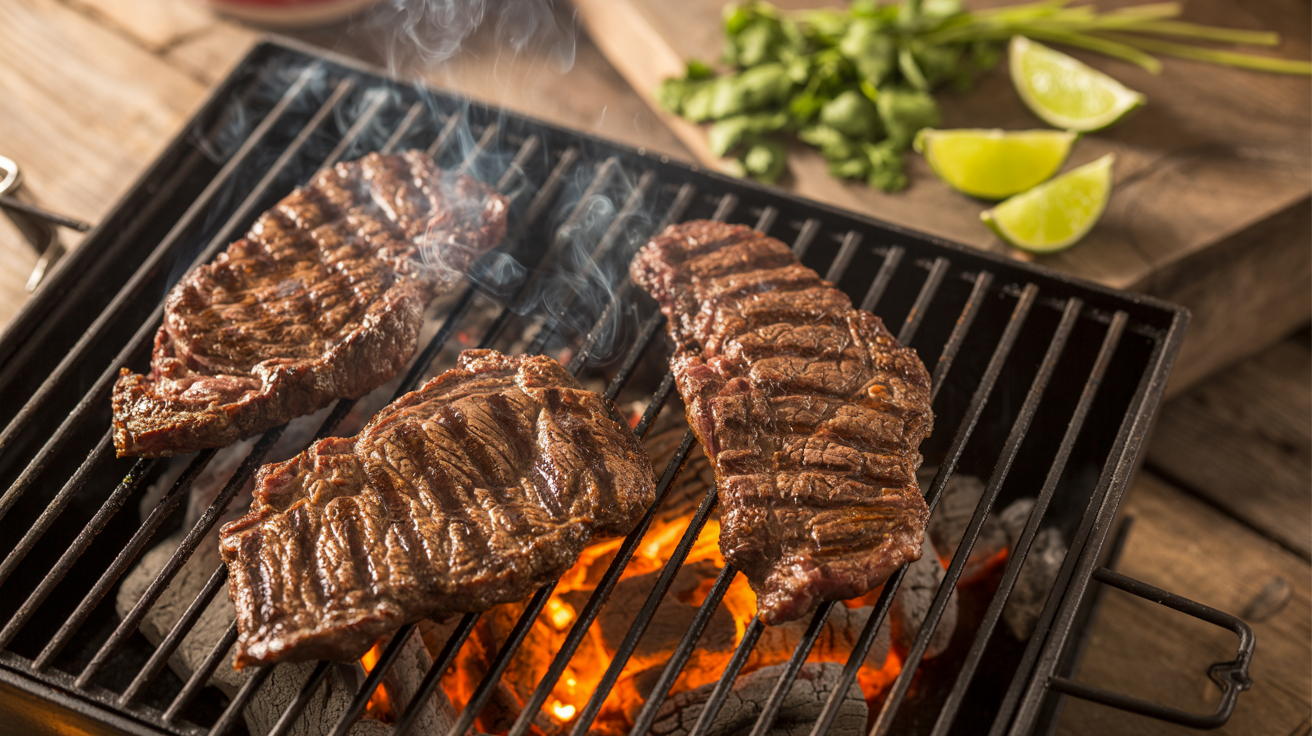
- Grill the steak. Remove the skirt steak from the marinade and shake off the excess - you do not want dripping marinade causing flare-ups, though some char from dripping is part of the magic. Lay the steak flat on the hottest part of the grill and do not move it for 3 to 4 minutes. You should hear a loud, aggressive sizzle the moment it hits the grates. Resist the urge to poke or move it. You are building a crust. After 3 to 4 minutes, flip the steak using long tongs and grill the second side for another 3 to 4 minutes.
- Check the internal temp. After flipping, start checking the internal temperature with your instant read thermometer. For medium-rare, you are pulling this steak at 125 to 130 degrees Fahrenheit, knowing it will carry over cook during the rest. For medium, pull at 135 degrees Fahrenheit. Skirt steak is best served no higher than medium - anything beyond that and you are losing the tenderness and juiciness that makes carne asada worth making.
- Rest the meat. This step is non-negotiable. Transfer the grilled skirt steak to a clean cutting board with a juice groove and tent it loosely with foil. Let it rest the meat for at least 5 minutes. During this time, the internal temp will rise another 5 degrees and the muscle fibers will relax, redistributing all those juices back through the steak. If you cut into it right off the grill, all those precious juices end up on your cutting board instead of in your mouth.
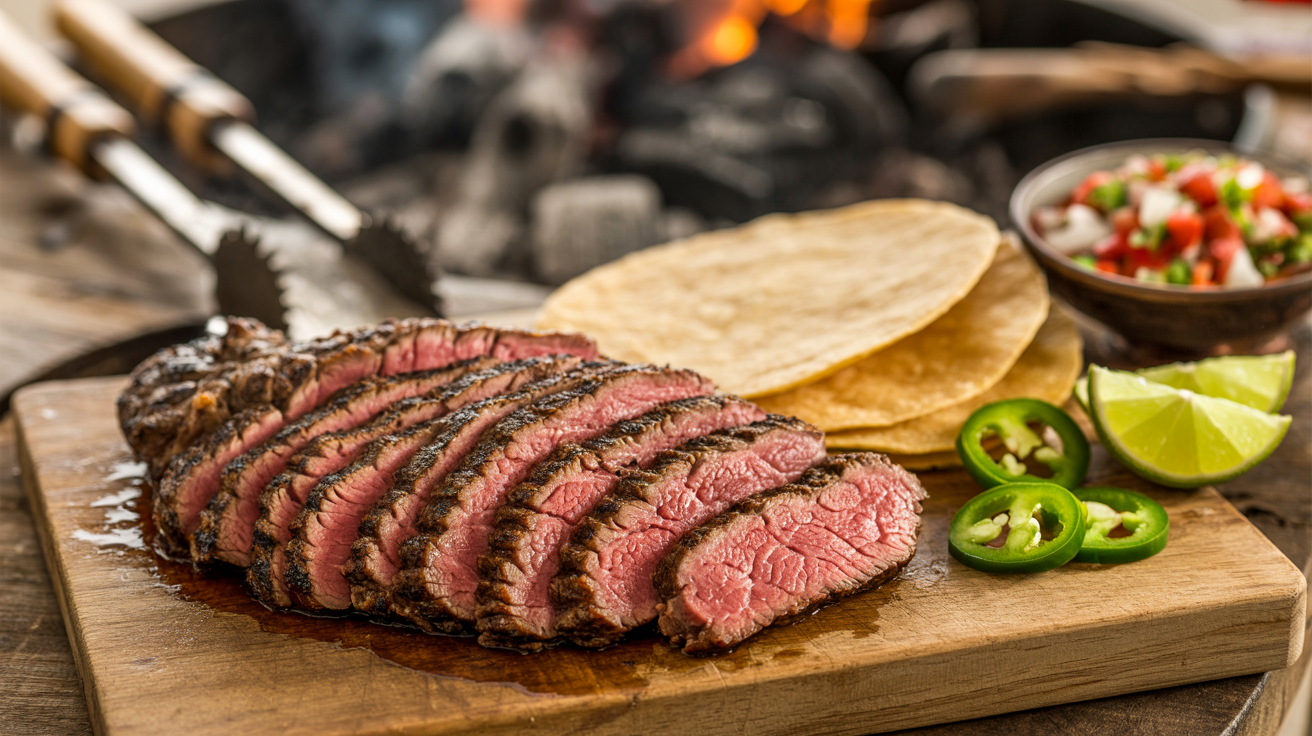
- Slice and serve. Here is where most people go wrong with skirt steak: you must slice against the grain. Skirt steak has very long, visible muscle fibers running lengthwise. If you slice with the grain, each bite will be tough and chewy. Look at the direction of the fibers, turn the steak 90 degrees, and slice on a slight diagonal into thin strips about a quarter inch thick. Finish with a pinch of flaky sea salt over the sliced meat and a squeeze of fresh lime juice. Serve immediately while the meat is still steaming hot.
Nutrition
This carne asada recipe is the kind of cook that reminds you exactly why you fell in love with grilling in the first place. We are talking thinly sliced skirt steak, soaked overnight in a punchy citrus-garlic marinade, then thrown over screaming hot charcoal at 500 to 600 degrees Fahrenheit until you get that deep, caramelized crust and smoky char that no cast iron pan can ever replicate. The whole cook takes under 15 minutes once that fire is roaring, but the flavor payoff is massive.
The secret to truly great carne asada is twofold: a marinade that works hard and a fire that works harder. You want acidity from fresh lime and orange juice to break down the muscle fibers in the skirt steak, plenty of garlic and cilantro for that signature aroma, and a touch of oil to help the meat make full contact with the grill grates. Once that steak hits a properly preheated grate, you are looking at 3 to 4 minutes per side for medium-rare, targeting an internal temp right around 130 degrees Fahrenheit before you rest the meat.
At GrillMasterHQ, we do not cut corners on the fire or the flavor. Skirt steak is a working muscle cut, which means it has incredible beefy depth when treated right, but it will turn into shoe leather if you overcook it or skip the rest. We are going to walk you through every step of the process, from building your fire to slicing against the grain, so you end up with carne asada that could compete with the best taqueria in town. Grab your tongs and let us get to work.
Carne Asada Recipe: Perfect Grilled Skirt Steak
This carne asada recipe delivers blazing hot grill marks, a bold citrus-garlic marinade, and tender skirt steak with serious char. Whether you are feeding a crowd or just craving something fire-kissed and flavorful, this is your sign to fire up the grill today.
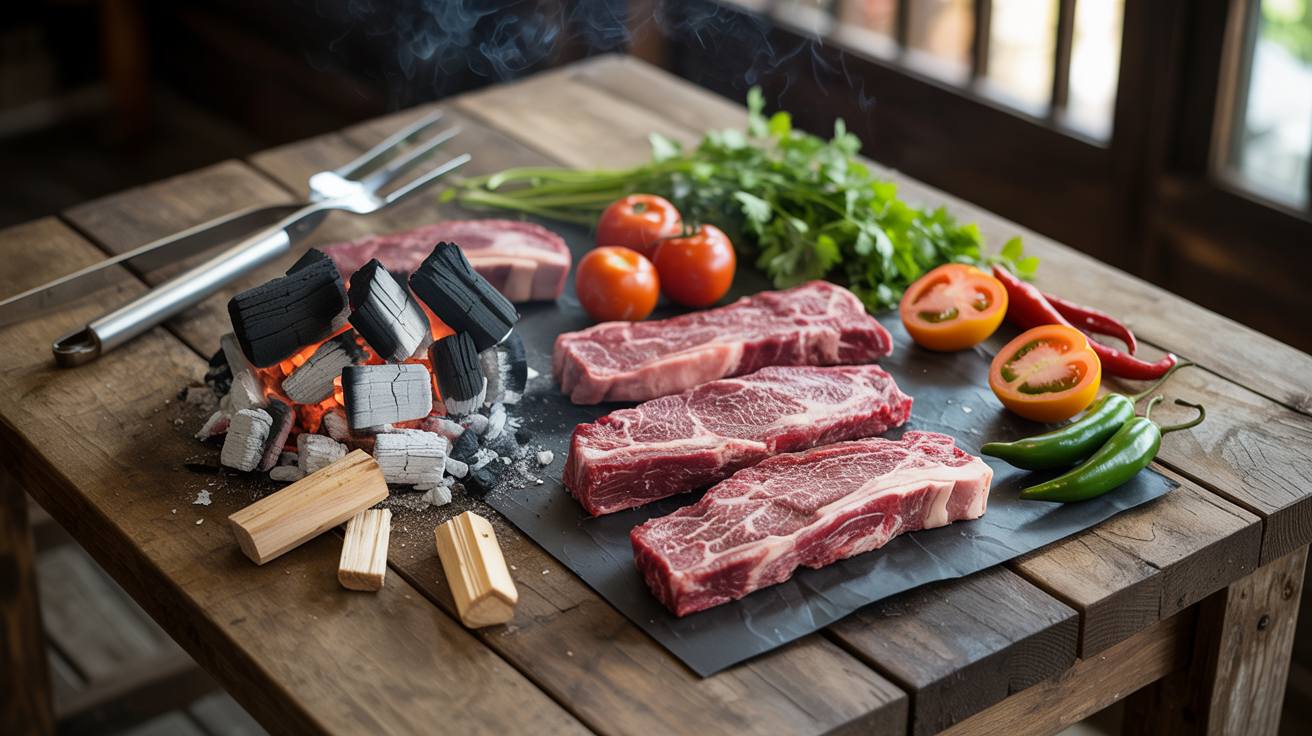
Ingredients
| AMOUNT | INGREDIENT | NOTES |
|---|---|---|
| 2 lbs | skirt steak | outside skirt preferred, trimmed of excess fat but not all of it |
| 1/3 cup | fresh lime juice | about 3 to 4 limes, freshly squeezed only |
| 1/4 cup | fresh orange juice | adds sweetness and helps tenderize the meat |
| 1/4 cup | avocado oil or vegetable oil | high smoke point is important for this high-heat cook |
| 5 cloves | garlic | minced or pressed |
| 1 cup | fresh cilantro | stems and leaves, roughly chopped |
| 1 tablespoon | soy sauce | adds umami depth and helps with browning |
| 1 teaspoon | cumin | ground |
| 1 teaspoon | smoked paprika | adds color and a subtle smoky backbone |
| 1 teaspoon | ancho chili powder | or regular chili powder for mild heat |
| 1/2 teaspoon | dried oregano | Mexican oregano preferred if available |
| 1/2 teaspoon | black pepper | freshly ground |
| 1 teaspoon | kosher salt | for the marinade, plus more for finishing |
| 1/2 teaspoon | crushed red pepper flakes | optional, for heat lovers |
| 1 whole | jalapeno | thinly sliced and added to the marinade for extra kick, optional |
Instructions
Nutrition (per serving)
The BBQ Story Behind This Recipe
Carne asada, which literally translates to grilled meat in Spanish, has deep roots in the northern Mexican states of Sonora, Chihuahua, and Nuevo Leon, where open-fire beef cookery has been a cultural cornerstone for centuries. Cattle ranching culture in these regions gave birth to a tradition of grilling beef over mesquite wood or charcoal, and the practice crossed the border into the American Southwest long before food trucks and taco bars made it a mainstream staple. The marinade itself varies by family and region, but the common thread is always citrus, garlic, and fire, a holy trinity that has fueled weekend gatherings and backyard celebrations for generations.
In the United States, carne asada became a beloved fixture in California, Texas, and Arizona BBQ culture, where it sits right alongside brisket and ribs as a legitimate backyard hero. Street tacos and carne asada fries put it on the map for a new generation of grill lovers, and today pitmasters across the country have adopted the technique into their regular rotation. While purists might argue about whether mesquite charcoal is mandatory or whether flap meat beats skirt steak, the truth is that the soul of this dish has always been the same: great beef, bold seasoning, and the honest heat of a real fire.
Hot Off the Grill
A Closer Look
Pitmaster Tips for Best Results
- Do not skip the overnight marinade. Two hours will get you flavor but 8 to 12 hours gets the citrus and garlic fully into the muscle fibers. The difference in depth of flavor is significant and worth planning ahead.
- Outside skirt steak is superior to inside skirt for this recipe. Outside skirt is thicker, more uniform, and has better fat marbling. Ask your butcher specifically for outside skirt steak if you can find it.
- Your fire has to be screaming hot. If you do not hear an immediate and aggressive sizzle the second that steak hits the grate, your grill is not hot enough. Pull the steak back, close the lid, and wait another 5 minutes before trying again.
- Always slice against the grain. Skirt steak is a highly fibrous cut and slicing with the grain makes it chewy. Cut perpendicular to those visible muscle fibers at a slight diagonal for maximum tenderness in every bite.
- Add a small chunk of mesquite wood to your charcoal for a more authentic regional flavor. Mesquite burns hot and fast and pairs perfectly with the bold citrus-garlic marinade. Just a fist-sized chunk is all you need for this quick cook.
🔧 Pitmaster Equipment
Charcoal Grill: High direct heat from charcoal is the gold standard for achieving authentic char and smoky flavor on carne asada. A chimney starter gets your coals going fast.
Instant Read Thermometer: Skirt steak cooks fast. An instant read thermometer keeps you from overshooting that perfect 130 degree Fahrenheit internal temp for medium-rare.
Long Tongs: You are working over very high heat, so long tongs keep your hands safe while you manage the fire and flip the steak quickly.
Large Zip-Top Bag or Baking Dish: Essential for marinating the steak evenly so every inch of the meat gets coated in that citrus-garlic mixture overnight.
Sharp Boning or Slicing Knife: Skirt steak must be sliced thin and against the grain. A sharp knife makes clean cuts and keeps the texture tender and not chewy.
Wire Grill Brush: Clean grates mean better sear marks and no sticking. Brush those grates hot before you lay down the meat.
Cutting Board with a Juice Groove: When you rest the meat, those juices need somewhere to go. A board with a groove keeps your counter clean and preserves every drop of flavor.
🔥 Variations
Pellet Grill Version: Set your pellet grill to its highest sear setting or at least 500 degrees Fahrenheit. Mesquite or oak pellets work best here. Follow the same marinade and grilling steps, using the direct flame zone if your pellet grill has one. Cook times remain the same – 3 to 4 minutes per side – but always verify with an instant read thermometer targeting 130 degrees Fahrenheit for medium-rare.
Gas Grill Version: Crank all burners to maximum heat and let the grill preheat with the lid closed for at least 15 minutes before cooking. Add a smoker box loaded with mesquite or hickory chips near the heat source to get some smoke flavor into the meat. Follow the same cook time and internal temp targets. You may not get quite the same char, but the flavor of a well-marinated carne asada will still be outstanding.
Flap Meat (Flank or Arrachera) Version: Flap meat, sometimes sold as arrachera in Latin markets, is a popular alternative to skirt steak. It is slightly thicker and has even more marbling. Use the same marinade but extend your cook time slightly to 4 to 5 minutes per side and target the same internal temp of 130 degrees Fahrenheit. Slice thin against the grain just as you would with skirt steak.
Spicy Habanero Version: Add one whole habanero pepper, minced, to the marinade in place of the jalapeno and red pepper flakes. The fruity heat of the habanero pairs beautifully with the citrus base and creates a carne asada with a serious kick. This version is outstanding served with cooling avocado crema or fresh guacamole to balance the heat.
❓ Pitmaster FAQ
What internal temperature should carne asada reach?
For the best texture and juiciness, pull your skirt steak off the grill at 125 to 130 degrees Fahrenheit for medium-rare. The meat will carry over cook another 5 degrees while it rests the meat, landing you right at a perfect 130 to 135 degrees Fahrenheit. Anything above 145 degrees Fahrenheit and skirt steak starts to get tough and dry, so keep that instant read thermometer handy.
What cut of beef is best for carne asada?
Outside skirt steak is the traditional and most popular choice for carne asada. It has long, loose fibers that absorb marinade beautifully and develops incredible char over high heat. Flap meat and inside skirt steak are solid alternatives. Flank steak also works but is slightly leaner and a bit less forgiving if overcooked.
Can I use a gas grill instead of charcoal?
Absolutely. Preheat all burners on high for at least 15 minutes to get your grates as hot as possible. Add a smoker box with mesquite chips to get some of that authentic smoke flavor. The cook time and internal temp targets remain the same. You will get a great result, though charcoal still delivers the deepest char and most authentic flavor.
How long should I marinate carne asada?
A minimum of 2 hours is required, but the sweet spot is 6 to 12 hours in the refrigerator. Do not go past 24 hours because the citrus acids will over-tenderize the surface and create a mushy texture. If you are short on time, even 30 minutes is better than nothing, but plan ahead when you can for maximum flavor.
Why is my carne asada tough and chewy?
The two most common culprits are overcooking and slicing with the grain. Skirt steak should never be cooked past medium, and it must be sliced perpendicular to those visible muscle fibers. If you slice with the grain, every bite will be stringy and tough no matter how well you cooked it. Always find the direction of the fibers and cut against them at a slight diagonal angle.
What do I serve with carne asada?
The classics are warm corn tortillas, guacamole, fresh pico de gallo, grilled onions and peppers, and lime wedges for street tacos. Carne asada also goes great over cilantro-lime rice, loaded onto nachos, or served alongside grilled elotes and black beans for a full spread. A cold Mexican lager or a smoky mezcal margarita rounds out the experience perfectly.