How to Light Charcoal Without Lighter Fluid
Ingredients
Method
- Set up your charcoal grill by removing the cooking grate and opening all bottom vents fully. Full airflow is critical at this stage because fire needs oxygen to establish itself. If your grill has ash from a previous cook, dump it out now so airflow is not restricted from below.
- Fill your chimney starter to the top with charcoal. For a full kettle grill cook, you want a completely full chimney, which holds roughly 5 to 6 quarts of coals. For a smaller cook or a half-grill setup for indirect heat, fill it about halfway. Do not pack the coals down tightly - they need airflow between them to ignite evenly.
- Crumple 2 full sheets of newspaper into loose balls and stuff them into the bottom chamber of the chimney starter. Alternatively, place one natural paraffin fire starter cube on the charcoal grate of the grill and set the loaded chimney starter directly on top of it. Both methods work equally well and neither introduces any chemical taste to your food.
- Place the loaded chimney starter on the lower charcoal grate of your grill, not on the cooking surface. Light the newspaper or fire starter cube from multiple points using a long match or a butane lighter. You should see the flame catch immediately and begin climbing up through the coals within the first minute.
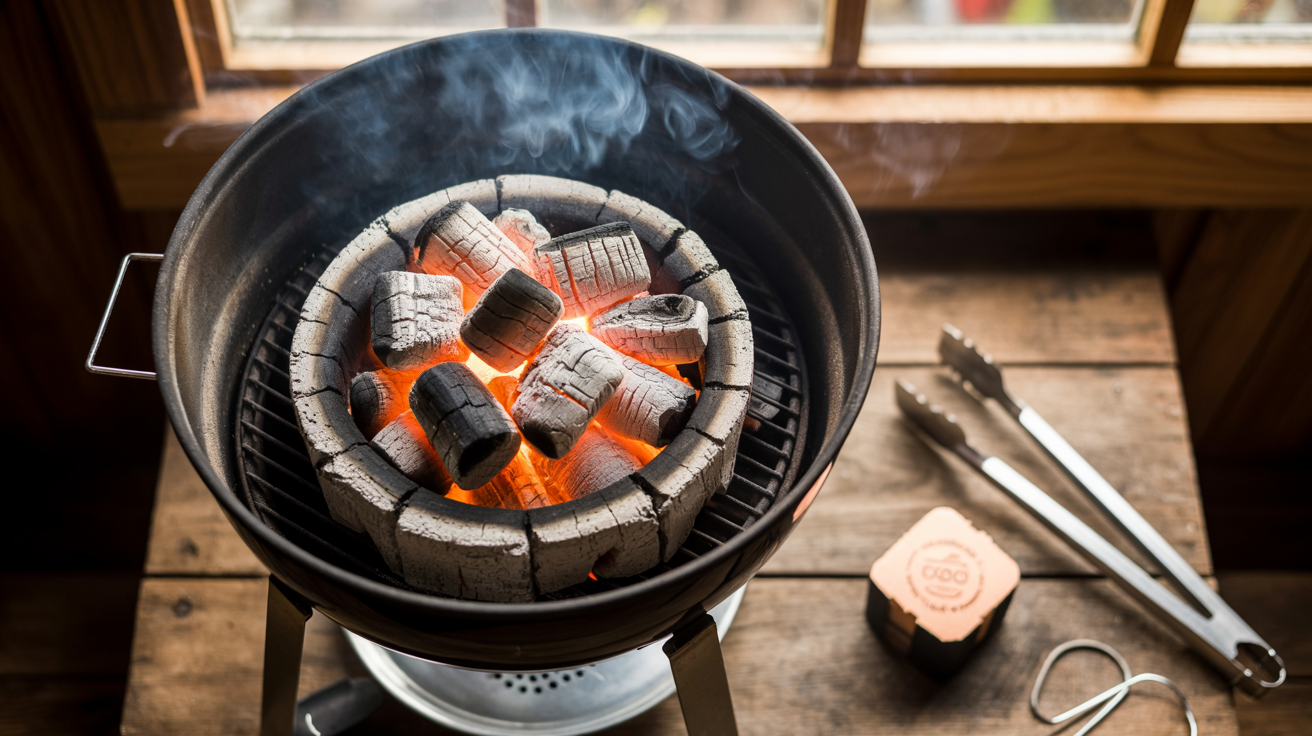
- Step back and let the chimney do its work. After 5 minutes you will see smoke billowing from the top of the chimney. After 10 to 12 minutes you will start to see the coals at the top of the chimney beginning to turn orange. After 15 to 20 minutes the coals at the top should be covered in a thin layer of grey ash and glowing bright orange. That is your signal that the coals are fully lit and ready to use.
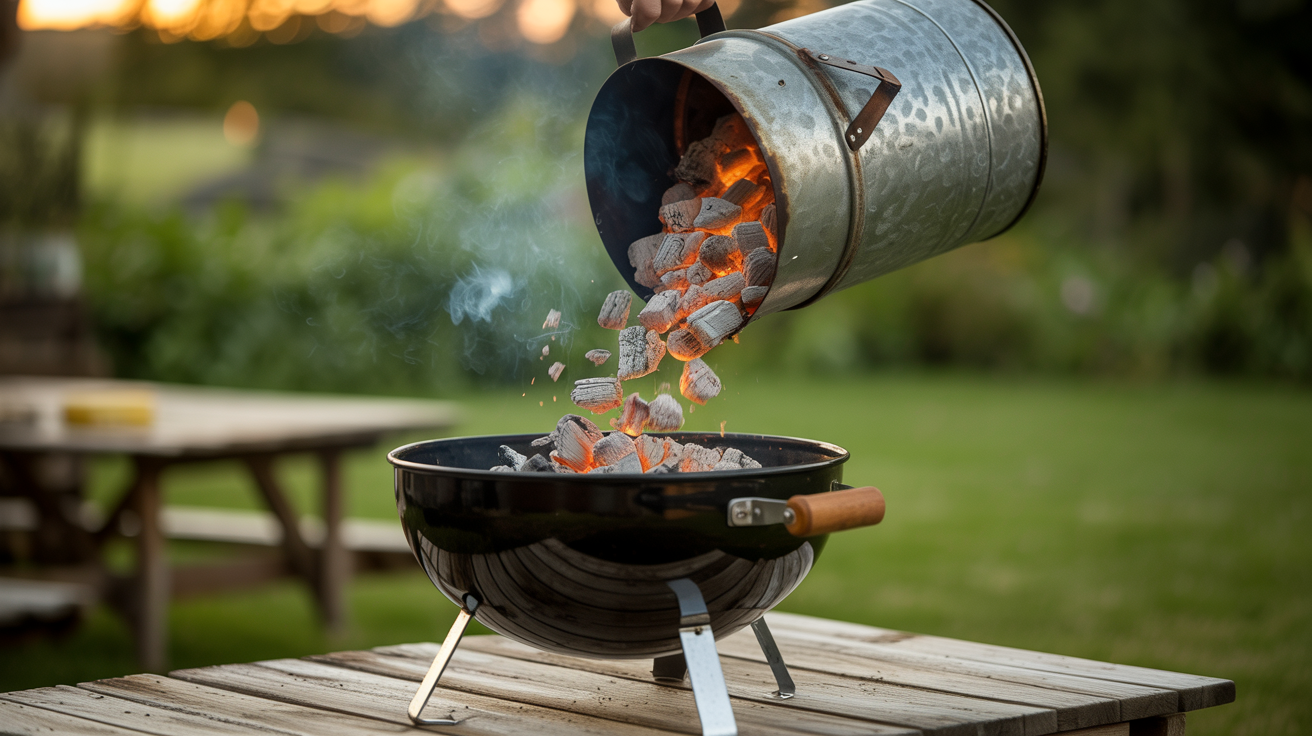
- Put on your heat-resistant gloves and grab the chimney starter by its handle. Carefully pour the hot coals into the grill. For direct heat grilling and searing, spread the coals evenly across the entire charcoal grate. For indirect heat cooking and low and slow BBQ, push the coals to one side of the grill and leave the other side empty - that is your cool zone where larger cuts will cook low and slow without burning.
- If you are adding wood for smoke flavor, place your hardwood chunks directly on top of the hot coals now. Do not soak your wood chunks - dry wood produces better, cleaner smoke. For wood chips, use a foil packet with holes poked in it or a cast iron smoker box placed directly on the coals.
- Place the cooking grate back on the grill and close the lid. Let the grill preheat for 5 minutes with the lid on before you add any food. For high-heat direct grilling, your grate temp should reach 450 to 550 degrees Fahrenheit. For low and slow indirect cooking, close the top and bottom vents to about one-quarter open and let the temp settle at 225 to 250 degrees Fahrenheit before adding your meat.
- Now you are ready to fire up the grill and cook. Add your food to the grate and manage your heat by adjusting the vents. Opening vents adds oxygen and raises temperature. Closing vents reduces oxygen and lowers temperature. The bottom vent controls airflow to the coals and has the biggest impact on heat. The top vent controls smoke and exhaust. Keep the top vent at least partially open at all times to prevent bitter smoke buildup.
- Monitor your cook using an instant read thermometer to check internal temp as you go. Whether you are going for a quick sear or a long low and slow smoke session, always cook to the correct internal temperature rather than relying on time alone. When your protein hits the target temp, pull it off the grill and rest the meat for at least 5 to 10 minutes before slicing so the juices redistribute throughout the cut.
Knowing how to light charcoal without lighter fluid is one of the most important skills any serious pitmaster can have in their arsenal. Lighter fluid might seem convenient, but that petroleum-based chemical can leave a foul taste on your food and ruins the clean smoke flavor you worked so hard to achieve. Once you ditch the can of fluid and master a proper charcoal fire, you will never look back.
The chimney starter method is the gold standard for getting charcoal lit fast, clean, and evenly. In about 15 to 20 minutes, you can have a full load of coals glowing at 500 to 600 degrees Fahrenheit, ready to sear a steak or set up for low and slow smoking at 225 to 250 degrees. No chemical smell, no off flavors, and no waiting for fluid to burn off before your food goes on the grate.
At GrillMasterHQ, we believe that great BBQ starts before the first piece of meat hits the grate. A proper charcoal fire built the right way gives you consistent heat zones, better smoke production, and the kind of control that separates backyard heroes from true pitmasters. Whether you are chasing a perfect smoke ring on a brisket or a blazing hot sear on a ribeye, it all starts with lighting your charcoal the right way.
How to Light Charcoal Without Lighter Fluid
Skip the chemicals and fire up the grill the right way. Learning how to light charcoal without lighter fluid gives you cleaner flavor, better heat control, and a more authentic BBQ experience. Grab your chimney starter and get ready to cook with real fire today.
Ingredients
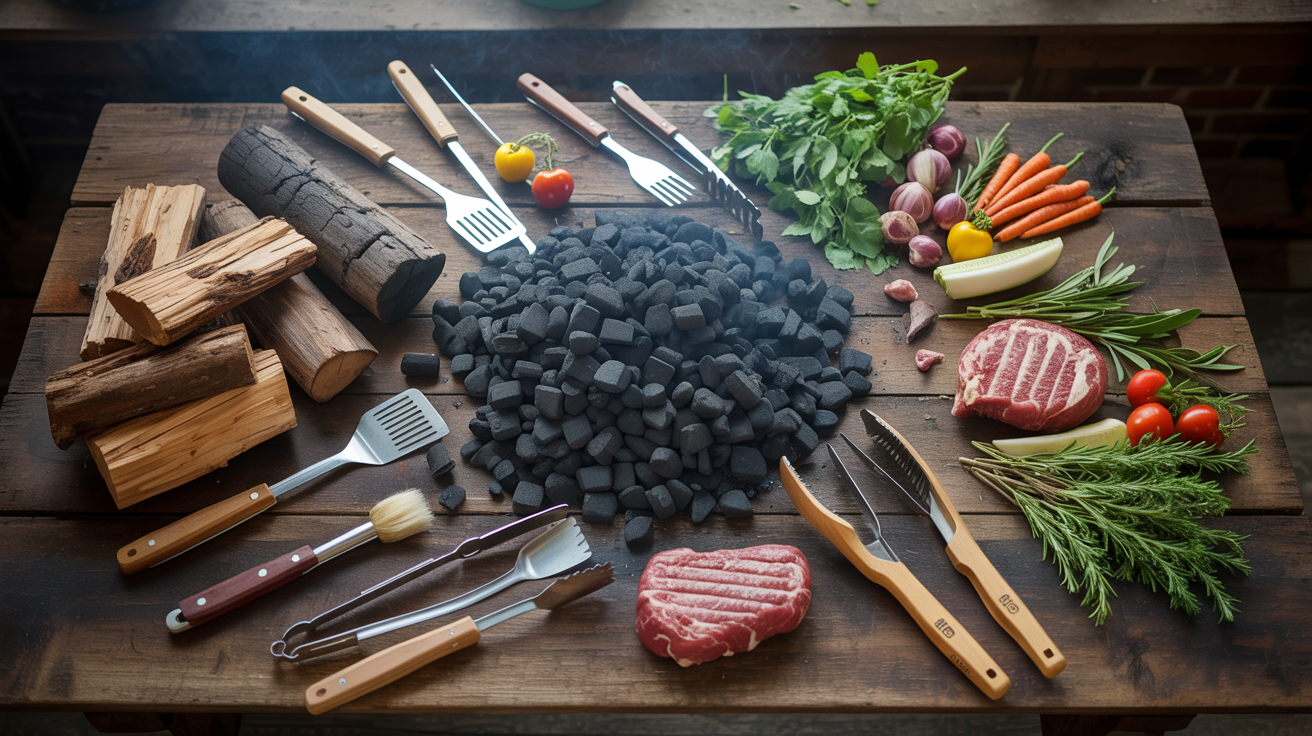
| AMOUNT | INGREDIENT | NOTES |
|---|---|---|
| 6 quarts | charcoal briquettes or hardwood lump charcoal | use natural hardwood lump for best smoke flavor, or quality briquettes for more consistent heat |
| 2 sheets | newspaper or 1 natural fire starter cube | crumpled newspaper works great, or use paraffin-based natural starter cubes as a cleaner option |
| 1 piece | hardwood chunk or wood chips | optional but highly recommended for smoke flavor – hickory, oak, apple, or cherry all work well |
Instructions
Nutrition (per serving)
The BBQ Story Behind This Recipe
Charcoal grilling has roots that stretch back thousands of years, long before petroleum products and pressurized cans of lighter fluid ever existed. Ancient civilizations across Africa, Asia, and the Americas cooked over wood coals using nothing more than dry tinder, kindling, and patience. The art of fire building was a survival skill and a culinary one, passed down through generations of cooks who understood that the quality of the fire determined the quality of the food. American BBQ culture inherited this wisdom through a long lineage of pitmasters who built their fires from the ground up, using hardwood lump charcoal or hand-made briquettes with nothing more than newspaper and a match.
Lighter fluid became popular in the mid-20th century as backyard grilling boomed in post-war America. Marketed as a convenient shortcut, it quickly became a staple in suburban garages across the country. But competitive BBQ pitmasters and serious grill enthusiasts never fully embraced it, knowing that chemical accelerants interfere with smoke flavor and produce inconsistent heat. The chimney starter, invented and popularized in the 1980s, gave home grillers a clean and fast alternative that the pros had always relied on. Today, the movement back to fluid-free fire starting is stronger than ever, driven by a new generation of BBQ lovers who care deeply about clean flavor, natural ingredients, and the craft of real fire management.
Hot Off the Grill
A Closer Look
Pitmaster Tips for Best Results
- Always light your chimney starter with the vents fully open. Restricted airflow is the number one reason chimneys take too long or fail to light completely. Full open vents from the start means faster, hotter ignition every time.
- Do not rush the chimney. Coals that are only partially lit will create temperature inconsistencies and can produce acrid, dirty smoke. Wait until at least 80 percent of the coals show grey ash on the surface before pouring them out, which takes about 15 to 20 minutes on a calm day.
- On windy days, shield your chimney starter from the wind during the first few minutes of lighting. A strong crosswind can blow out your newspaper flame before it has a chance to establish. Use your grill lid as a windbreak if needed.
- For low and slow cooks at 225 to 250 degrees, the minion method is a pitmaster favorite. Fill your grill with unlit coals, create a well in the center, and pour a half chimney of fully lit coals into that well. The lit coals slowly ignite the unlit ones over several hours, giving you a long and steady burn without adding more fuel.
- Lump hardwood charcoal lights faster than briquettes, burns hotter, and produces less ash. Briquettes burn more evenly and hold a consistent temperature longer, making them better for extended low and slow cooks. For the best of both worlds, mix lump and briquettes in a 50-50 ratio in your chimney.
🔧 Pitmaster Equipment
Chimney Starter: The single most important tool for lighting charcoal without lighter fluid. It uses airflow to ignite coals evenly in 15 to 20 minutes with nothing but newspaper or a fire starter cube.
Charcoal Grill or Kettle Grill: A quality charcoal grill with adjustable vents gives you full control over airflow, heat zones, and fire intensity throughout your cook.
Long Tongs: Keep your hands safely away from the fire when transferring hot coals from the chimney starter to the grill.
Heat-Resistant Gloves: Essential for handling a hot chimney starter safely when pouring coals. Do not skip this piece of safety equipment.
Natural Fire Starter Cubes or Newspaper: The fuel source that goes beneath the chimney starter to ignite your charcoal without any chemical accelerants.
Instant Read Thermometer: Critical for monitoring your grill temperature and hitting the correct internal temp on whatever protein you are cooking.
🔥 Variations
Electric Charcoal Starter Method: An electric charcoal starter is a metal loop that you bury in the coals and plug into an outlet. It heats the coals from the inside out with zero chemicals. Bury the coil in the center of your charcoal pile, plug it in for 8 to 10 minutes until coals are glowing, then unplug and remove it. Simple, clean, and effective for grillers who do not own a chimney starter.
Wax Fire Starter Cube Method: Natural wax or paraffin fire starter cubes are an excellent alternative to newspaper under your chimney. Place one cube on your charcoal grate, stack a pyramid of about 15 coals around and over it, light the cube, and let the pyramid ignite naturally. Once the top coals start to ash over after about 15 to 20 minutes, spread them out and add more coals on top. This method works well when you do not have a chimney starter available.
Looftlighter Electric Blower Method: A Looftlighter is a handheld electric wand that blows superheated air directly onto your coals to ignite them in under 60 seconds. Simply point it at your coal pile and hold it a half inch from the surface. Within 30 seconds you will see the coals glowing red. After 60 seconds, pull back and fan the coals from a distance to spread the fire. It is the fastest lighter-fluid-free method available and a serious pitmaster tool worth the investment.
❓ Pitmaster FAQ
How long does it take to light charcoal without lighter fluid?
Using a chimney starter, expect fully lit and ashed-over coals in 15 to 20 minutes on a calm day. Wind, humidity, and cold temperatures can add 5 to 10 minutes to that time. Do not rush it – partially lit coals produce dirty smoke and inconsistent heat. Patience at the fire-starting stage pays off during the entire cook.
Can I use any kind of newspaper to light my charcoal?
Regular black-and-white printed newspaper works great and is completely safe. Avoid using glossy magazine pages or heavily colored ink paper because they can produce toxic fumes when burned. Two loosely crumpled sheets of standard newspaper is all you need to light a full chimney starter every time.
What is the best charcoal to use without lighter fluid?
Hardwood lump charcoal is the pitmaster choice for flavor and fast lighting. It is made from real hardwood, burns hot and clean, and produces excellent smoke. Briquettes are more consistent and longer burning, making them ideal for extended low and slow cooks. Both work perfectly with a chimney starter and no lighter fluid required.
How do I control temperature on a charcoal grill?
Temperature control on a charcoal grill comes down to airflow and coal placement. Open vents raise temperature by feeding the fire more oxygen. Closed vents lower temperature by starving the fire of oxygen. For low and slow cooking at 225 to 250 degrees, keep both top and bottom vents about one-quarter open. For high heat searing at 450 to 550 degrees, open both vents fully and use a full load of lit coals.
Can I add more charcoal mid-cook without lighter fluid?
Yes, and you should pre-light additional coals in your chimney starter before adding them. Never add cold, unlit coals directly to a hot fire mid-cook because they produce thick, bitter white smoke that will ruin the flavor of your food. Always have a second half-load of coals lit and ready in a chimney before your fire needs topping off during long low and slow cooks.
Is charcoal lit without lighter fluid safe for food?
Yes, and it is actually safer and cleaner than using lighter fluid. Lighter fluid contains petroleum distillates that can leave residue on your cooking grate and impart a chemical taste to food, especially if the coals are not fully burned off before you start cooking. Newspaper, natural fire starter cubes, and wax starters contain no harmful chemicals and burn off completely before your coals are fully lit.