
Smoked Corned Beef Recipe: Bold BBQ Flavor
Ingredients
Method
- Start the desalting soak the night before or at minimum 4 hours before you plan to cook. Remove the corned beef from its packaging, discard the brine liquid, and rinse the brisket flat thoroughly under cold running water. Place it in a large container or pot, cover completely with cold fresh water, and refrigerate. Change the water once halfway through the soak. This step draws out excess salt from the cure so your finished product is flavorful but not punishingly salty. When you are ready to cook, remove the brisket, pat it completely dry with paper towels, and set it on a wire rack for 30 minutes to air-dry slightly at room temperature.
- Fire up your smoker and dial it in to a steady 225 degrees Fahrenheit before you do anything else with the meat. For fuel, use a hardwood charcoal base and add 2 to 3 fist-sized chunks of cherry or applewood directly onto the lit coals. These fruit woods produce a mild, slightly sweet smoke that complements the savory brine without bulldozing the natural flavor of the beef. If you are using a pellet grill, load it with apple or cherry pellets and set it to 225 degrees Fahrenheit. Give the smoker a full 20 to 30 minutes to stabilize before you open the cooking chamber.
- While the smoker comes up to temp, build your rub. In a small bowl combine the coarse black pepper, ground coriander, garlic powder, smoked paprika, onion powder, and cayenne if using. Mix well. Coat the entire surface of the dried brisket flat with a thin even layer of yellow mustard using your hands or a brush. The mustard acts as a binder and will cook off completely during the smoke, leaving no mustard flavor behind. Pat the spice rub generously over all surfaces of the brisket, pressing it firmly into the mustard layer to create a solid base for bark development. Do not be shy here. A good thick rub coat means a beautiful crust.
- Place the corned beef brisket fat side up directly on the smoker grates. Insert your leave-in probe thermometer into the thickest part of the flat, making sure the probe tip is centered in the meat and not touching any fat deposits. Close the lid and walk away. Resist the urge to open the lid for at least the first 2 hours. Every time you open that lid you are losing heat and smoke. Let the low and slow process work. You are aiming to build a solid bark on the exterior and allow the smoke to penetrate deep into the brined meat during this first phase of the cook.
- Monitor your smoker temperature using a reliable ambient thermometer. Keep it locked at 225 degrees Fahrenheit, adjusting your intake and exhaust vents as needed on a charcoal unit, or adjusting the controller on a pellet grill. At around the 2.5 hour mark, check the smoke output. You want a thin blue-gray smoke, not thick billowing white smoke. White smoke means incomplete combustion and will impart bitter flavors into your meat. Add a fresh wood chunk if your smoke output has dropped off significantly. The internal temp of the brisket should be climbing steadily through the 140 to 150 degree range at this point.
- When the internal temp hits 160 to 165 degrees Fahrenheit, you will likely hit the stall, that maddening plateau where evaporative cooling from the meat surface matches the rate of heat being absorbed and the temp appears to stop rising for an extended period. This is completely normal and is your cue to wrap. Pull the brisket off the grates and wrap it tightly in a double layer of pink butcher paper or heavy duty aluminum foil. Butcher paper allows a little breathability and helps preserve more bark texture than foil. Return the wrapped brisket to the smoker and reinsert your probe thermometer through the wrap.
- Continue smoking the wrapped brisket until the internal temp reaches 200 degrees Fahrenheit. At this point, mix together the whole grain Dijon mustard and brown sugar in a small bowl for the optional glaze. Unwrap the brisket carefully, brush a thin even layer of the glaze over the entire top surface and sides, and return it to the smoker unwrapped for a final 30 to 45 minutes. This final unwrapped phase lets the glaze caramelize and the bark firm back up after being wrapped. Pull the brisket when the internal temp reads 203 to 205 degrees Fahrenheit and a probe or skewer slides into the thickest part with almost zero resistance, like pushing into soft warm butter.
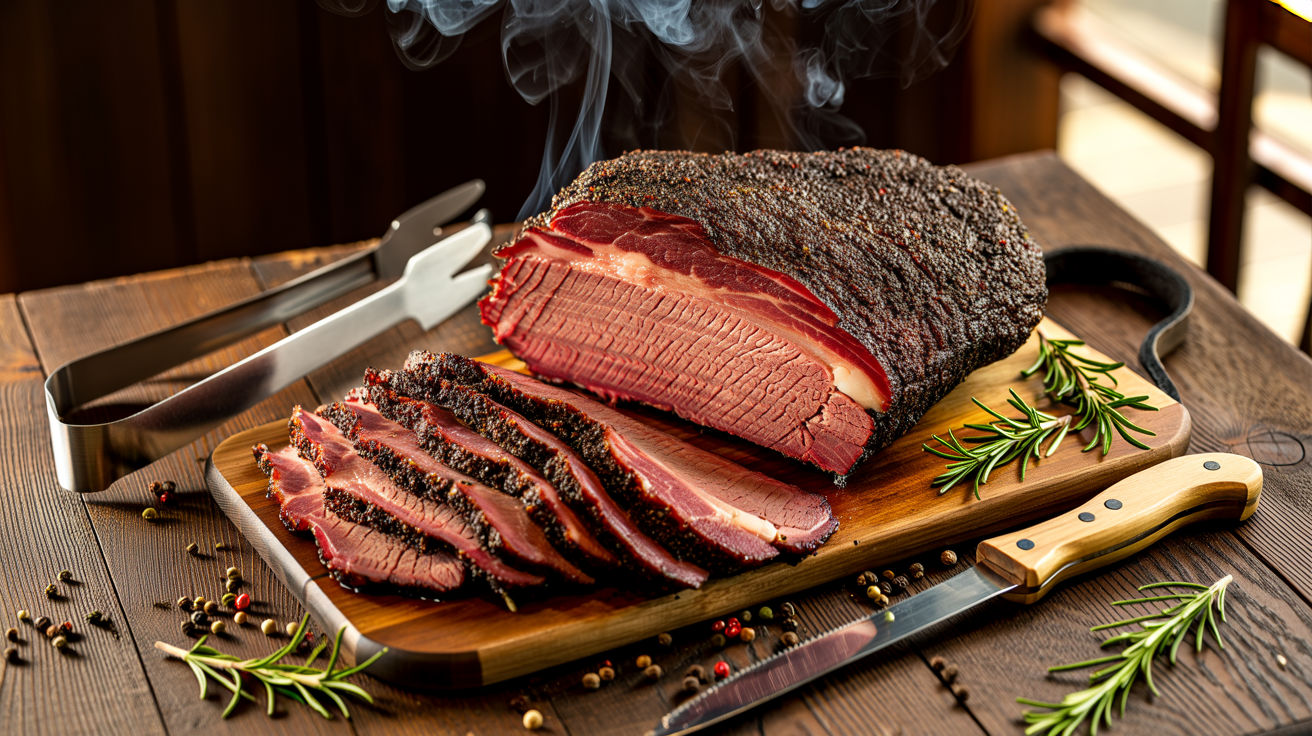
- Rest the meat. This step is non-negotiable. Wrap the finished brisket back in a fresh layer of butcher paper, then wrap that in a thick towel, and place it in an empty cooler for a minimum of 45 minutes and up to 2 hours. Resting the meat allows the muscle fibers to relax and the juices that were driven to the center during cooking to redistribute evenly throughout the slice. If you cut into it straight off the smoker you will lose a significant amount of that hard-earned moisture. When the rest is complete, unwrap and slice against the grain into pencil-thick slices using a sharp slicing knife. Look for that deep red smoke ring running through the first quarter-inch of the meat and a dark, peppery, caramelized bark on the exterior.
Nutrition
This smoked corned beef recipe is the boldest, most flavor-packed way to cook a corned beef brisket, turning a salt-cured supermarket staple into a BBQ showstopper that will have your neighbors climbing the fence. We are talking about running your smoker at a steady 225 degrees Fahrenheit for anywhere from 5 to 7 hours, building a deep mahogany bark on the outside while the interior slowly transforms into something impossibly tender and juicy. The brine already did half the seasoning work for you, so your job is to respect the process, trust the low and slow method, and let the smoke do the heavy lifting.
Most people boil corned beef and call it a day, and look, there is nothing wrong with that classic preparation. But when you introduce wood smoke into the equation, something magical happens. The salt-and-spice cure that already penetrated deep into the flat creates a natural flavor amplifier for smoke absorption, which means you get a smoke ring that runs deep and a bark packed with cracked coriander, black pepper, and that unmistakable sweet wood smoke character. We are pulling this beef off the smoker at an internal temp of 205 degrees Fahrenheit, then giving it a proper rest before slicing.
Whether you are cooking for a crowd on St. Patrick’s Day, meal prepping a week of insane sandwiches, or just looking for a reason to fire up the smoker on a slow weekend, this recipe delivers every single time. We recommend a flat cut corned beef in the 3 to 4 pound range for even cooking and maximum surface area for bark development. Pair it with a simple mustard glaze in the final hour and you have got a centerpiece that looks as incredible as it tastes.
Smoked Corned Beef Recipe: Bold BBQ Flavor
This smoked corned beef recipe transforms a humble brine-cured brisket flat into a BBQ masterpiece loaded with deep smoke flavor, a peppery bark, and a stunning smoke ring. Low and slow smoking takes this St. Patrick’s Day staple to championship pitmaster territory. Fire up the smoker today.
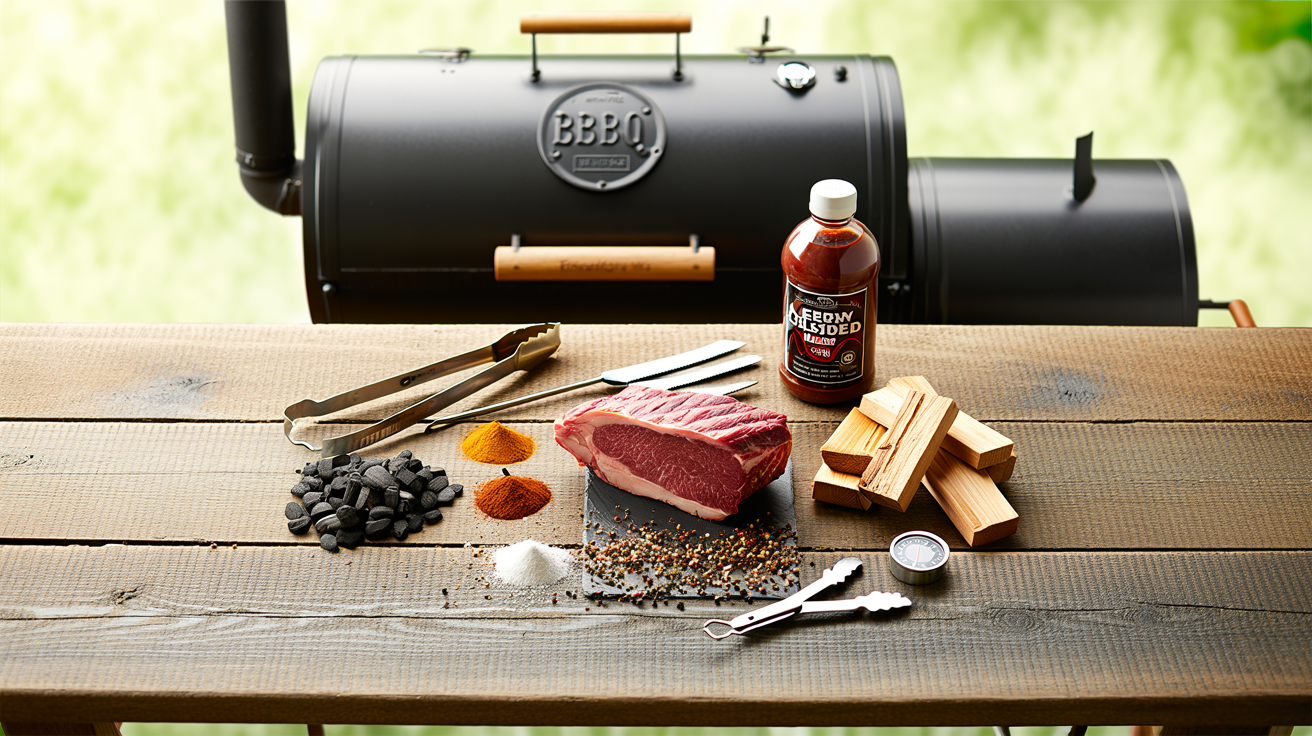
Ingredients
| AMOUNT | INGREDIENT | NOTES |
|---|---|---|
| 3.5 lbs | flat cut corned beef brisket | pre-packaged with spice packet included, rinsed well and patted dry |
| 2 tablespoons | coarse black pepper | freshly cracked for best bark development |
| 1 tablespoon | coarsely ground coriander | toasted lightly if you have time for deeper flavor |
| 1 tablespoon | garlic powder | not garlic salt since the brisket is already well-salted from the cure |
| 1 teaspoon | smoked paprika | adds color and a subtle sweetness to the bark |
| 1 teaspoon | onion powder | rounds out the savory spice profile |
| 0.5 teaspoon | cayenne pepper | optional but adds a welcome low-level heat that balances the brine |
| 2 tablespoons | yellow mustard | used as a binder for the rub to adhere to the surface of the meat |
| 3 chunks | cherry or applewood smoking wood | fist-sized chunks work best for a steady mild smoke that complements the brine without overpowering it |
| 2 tablespoons | whole grain Dijon mustard | for optional glaze in the final hour of the cook |
| 1 tablespoon | brown sugar | for optional glaze, helps caramelize the surface in the final stage |
Instructions
Nutrition (per serving)
The BBQ Story Behind This Recipe
Corned beef has deep roots in Irish-American immigrant culture, though the dish as most Americans know it owes more to New York City butcher shops in the late 1800s than to the Irish countryside. Irish immigrants settling in urban neighborhoods discovered that beef brisket, brined and cured with large-grain rock salt known historically as corns of salt, was an affordable and shelf-stable protein that fit naturally into their culinary traditions. The dish became a symbol of Irish-American identity, especially around St. Patrick’s Day celebrations, and its salty, deeply seasoned profile made it a beloved staple across generations of American households.
The BBQ and smoking angle on corned beef is a more recent tradition rooted in the American pitmaster culture of low and slow cooking that stretches from Texas to the Carolinas. Pitmasters began experimenting with smoking pre-cured brisket flats as a way to bridge two beloved American food traditions, the Jewish deli pastrami technique and the Southern BBQ ethos, with corned beef sitting right at that delicious crossroads. In fact, smoked corned beef and homemade pastrami are kissing cousins, separated only by a spice rub and a steam finish. Today, smoked corned beef has earned its own proud place on the BBQ competition circuit and in backyard smokers coast to coast.
Hot Off the Grill
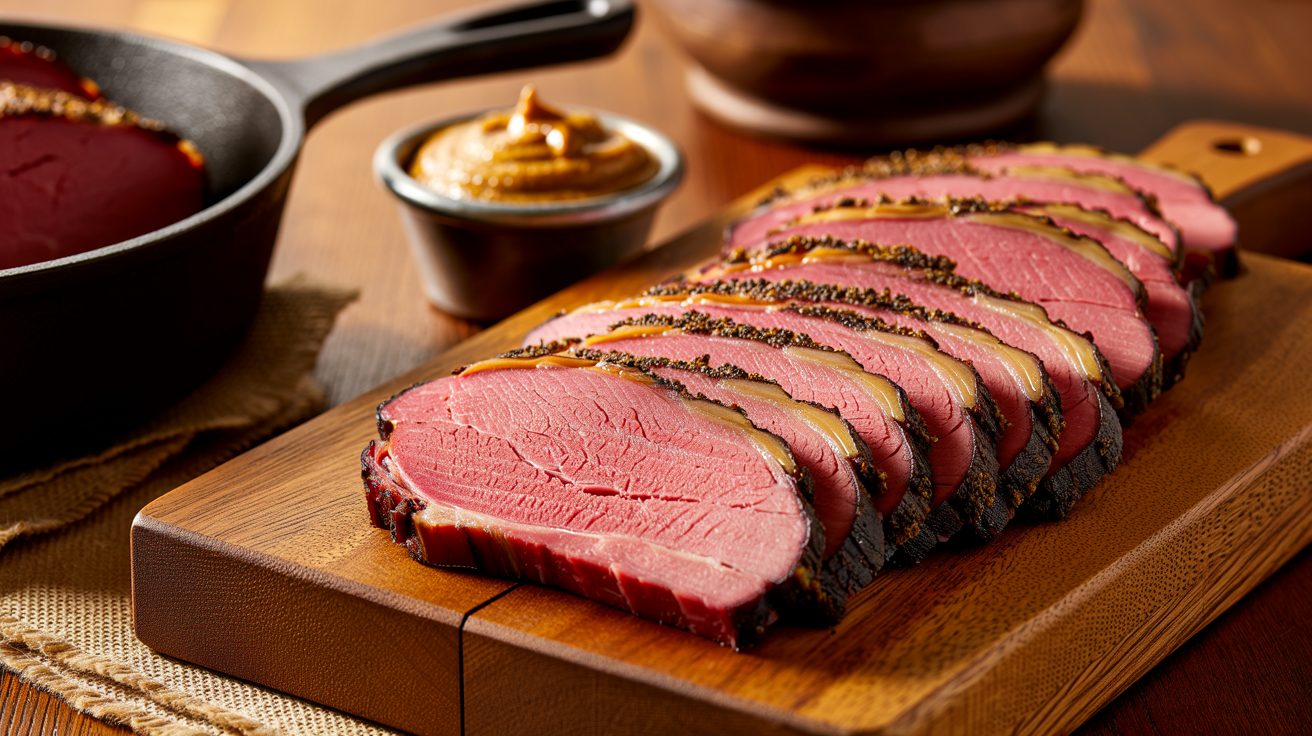
A Closer Look
Pitmaster Tips for Best Results
- Do not skip the desalting soak. Corned beef is cured in a heavy brine and without a 4 to 8 hour soak in fresh cold water, your finished smoked corned beef will be so salty it will be nearly inedible. Change the water at least once during the soak for best results.
- Keep your smoker temperature steady at 225 degrees Fahrenheit throughout the entire cook. Swings above 250 degrees Fahrenheit will dry out the exterior and rush the cook before the collagen inside has time to fully render, which is what gives you that silky, tender bite.
- Use fruit wood like cherry or apple for this cook. Hickory and mesquite are too aggressive for the already intense brined flavor of corned beef and will create a bitter, overwhelming smoke character. Cherry wood in particular adds a gorgeous deep red color to the smoke ring and bark.
- Always slice corned beef against the grain. The grain on a flat cut brisket runs in a fairly consistent direction and slicing across those muscle fibers rather than parallel to them cuts through the fibers for a tender bite instead of a chewy stringy one. Take a moment to identify the grain direction before you make your first cut.
- If your bark is not firming up properly in the final stage, bump your smoker temp up to 250 degrees Fahrenheit for the last 30 minutes after you apply the glaze. The extra heat helps caramelize the sugars in the glaze and drives off moisture from the bark surface to give you that satisfying crust.
🔧 Pitmaster Equipment
Offset Smoker or Kettle Grill: Provides the indirect heat and airflow needed for a true low and slow cook with consistent smoke exposure across the entire brisket flat.
Instant Read Thermometer: Critical for monitoring internal temp accurately. You are targeting 205 degrees Fahrenheit for probe-tender results and you cannot eyeball that.
Leave-In Probe Thermometer: Set it and monitor the internal temp remotely so you are not lifting the lid constantly and bleeding off heat and smoke.
Butcher Paper or Heavy Duty Foil: Used to wrap the corned beef during the stall phase around 160 to 165 degrees Fahrenheit to push through and retain moisture.
Long Tongs and Heat-Resistant Gloves: Keep your hands protected when managing wood chunks, adjusting vents, and handling the hot wrapped brisket.
Wire Cooling Rack over Sheet Pan: Allows airflow all around the brisket during the rest period so the bark stays intact and does not steam and soften on the bottom.
🔥 Variations
Smoked Corned Beef Pastrami Style: After the desalting soak, coat the brisket in a pastrami-style rub made with equal parts cracked black pepper and coriander, plus brown sugar and garlic powder. Smoke to 195 degrees Fahrenheit, then wrap tightly in foil with a splash of beef broth and steam in a 300 degree Fahrenheit oven or covered on the smoker for another 45 minutes. The steam finish makes the interior absurdly tender and closely replicates a classic New York deli pastrami.
Pellet Grill Version: Set your pellet grill to 225 degrees Fahrenheit using apple or cherry pellets. Follow the exact same steps as the main recipe. Pellet grills excel at holding steady temps for long cooks, making this one of the most beginner-friendly formats for this recipe. The smoke output on a pellet grill is more subtle so consider using a smoke tube filled with cherry pellets during the first 2 hours for a more pronounced smoke ring.
Gas Grill Version: Set up your gas grill for two-zone indirect cooking by lighting only one side of the burners and targeting a temperature of 225 to 250 degrees Fahrenheit on the indirect side. Place a smoker box filled with soaked cherry wood chips directly over a lit burner on the direct heat side. Position the corned beef on the indirect side, add wood chips every 45 minutes to maintain smoke, and follow the same internal temp targets. The smoke flavor will be lighter than an offset or charcoal setup but still deeply satisfying.
Corned Beef Hash the Next Day: Chop leftover smoked corned beef into half-inch cubes and cook in a cast iron skillet over high heat with diced potatoes, onion, and bell pepper until everything is deeply caramelized and crispy. The smoky, spiced corned beef turns a classic breakfast hash into something truly extraordinary. Top with a fried egg and a drizzle of hot sauce for a complete meal that makes you look forward to leftovers more than the original cook.
❓ Pitmaster FAQ
What internal temperature should smoked corned beef reach?
Target an internal temp of 203 to 205 degrees Fahrenheit for the best results. At this temperature the collagen in the flat cut has fully rendered into gelatin, giving you that characteristic silky, tender texture. Use an instant read thermometer to verify and also do a probe test by inserting a skewer or thermometer probe into the thickest part. It should slide in with almost zero resistance when the brisket is truly done.
Do I need to soak the corned beef before smoking?
Yes, and this is not optional if you want an enjoyable final product. Corned beef is packed in an extremely salty brine during the curing process. Without a 4 to 8 hour soak in fresh cold water before smoking, the finished product will be overwhelmingly salty. Change the water at least once during the soak and you will have a perfectly seasoned smoked corned beef that balances salt, spice, and smoke beautifully.
What wood is best for smoking corned beef?
Cherry and apple are the top choices for smoking corned beef. Both produce a mild, slightly sweet smoke that complements the savory, spiced brine without overwhelming it. Cherry wood also contributes a beautiful deep red color to the smoke ring and the bark exterior. Avoid hickory and mesquite for this cook as their bold, assertive smoke profiles clash with the already intense brined flavor of the meat.
How long does it take to smoke a corned beef brisket flat?
At 225 degrees Fahrenheit, plan on approximately 1.5 hours of cook time per pound of brisket flat. A 3 to 4 pound flat cut will typically take 5 to 7 hours total from the time it hits the smoker grates to when the probe reads 203 to 205 degrees Fahrenheit. That said, always cook to internal temp rather than time. Every brisket behaves a little differently depending on its thickness, fat content, and your specific smoker setup.
Can I use a point cut corned beef instead of a flat cut?
You can, and the point cut is actually fattier and more forgiving on the smoker than the flat. The additional fat marbling keeps the point cut moist throughout the long cook and produces an incredibly rich final product. The tradeoff is that the point cut has irregular thickness which can make slicing for presentation trickier. It is an excellent choice if you plan to chop the meat for sandwiches or hash rather than slicing it for a platter presentation.
What does the stall mean and how do I get through it?
The stall is a phase during the cook when the internal temperature of the brisket stops rising and plateaus, often for 1 to 2 hours, typically between 155 and 165 degrees Fahrenheit. This happens because moisture evaporating from the surface of the meat cools it at the same rate that heat is being absorbed. The fix is to wrap the brisket tightly in butcher paper or foil when it hits 160 degrees Fahrenheit. Wrapping stops the evaporative cooling effect and allows the internal temp to continue climbing toward your target of 205 degrees Fahrenheit.