
Picanha Steak Grilling Recipe: Brazilian BBQ at Home
Ingredients
Method
- Pull your picanha out of the refrigerator 45 to 60 minutes before cook time and set it on a clean sheet pan. Using a sharp knife, score the fat cap in a crosshatch pattern with cuts about one inch apart - go deep enough to reach almost to the meat but do not cut through into it. This scoring allows the fat to render evenly, prevents the cap from curling up during the cook, and lets that salt get down into every part of the crust you are building.
- Season aggressively. Hit the fat cap side with about half your coarse salt, pressing it firmly down into the scored cuts. Flip the steak and rub the meat side with a thin coat of avocado oil, then apply the remaining salt, all of the black pepper, and the garlic powder if you are using it. Let the seasoned picanha sit uncovered at room temperature for the full 45 minutes. You will see the salt pull a little moisture to the surface - that is exactly what you want for that crust.
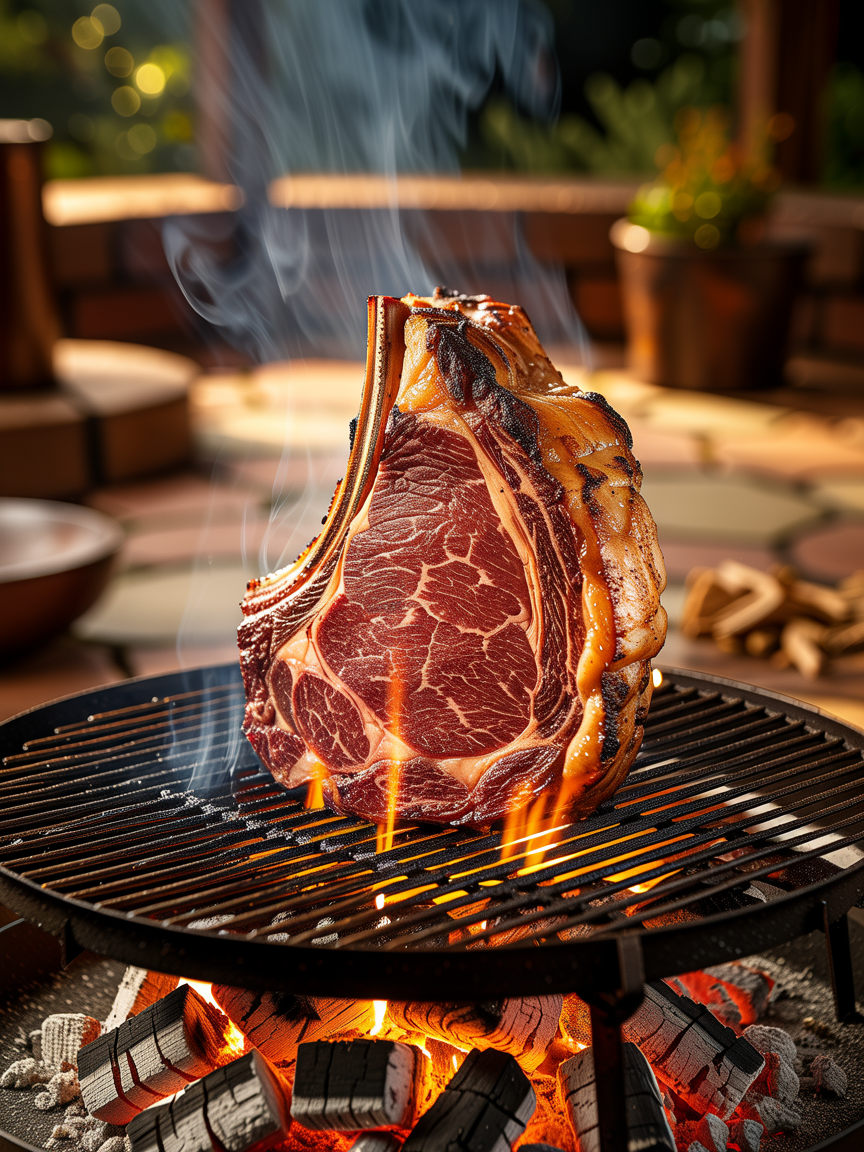
- Fire up the grill while the meat rests. Fill your chimney starter with high-quality hardwood charcoal - Brazilian hardwood charcoal is fantastic here if you can find it, but lump charcoal works great. Light the chimney and let it run until the coals are fully lit and glowing orange with a light ash coating, about 15 to 20 minutes. Dump the coals to one side of the kettle to create a two-zone fire. Your direct zone should be screaming hot - hold your hand five inches above the grate and you should only last one to two seconds. That is your searing zone sitting around 500 to 550 degrees Fahrenheit.
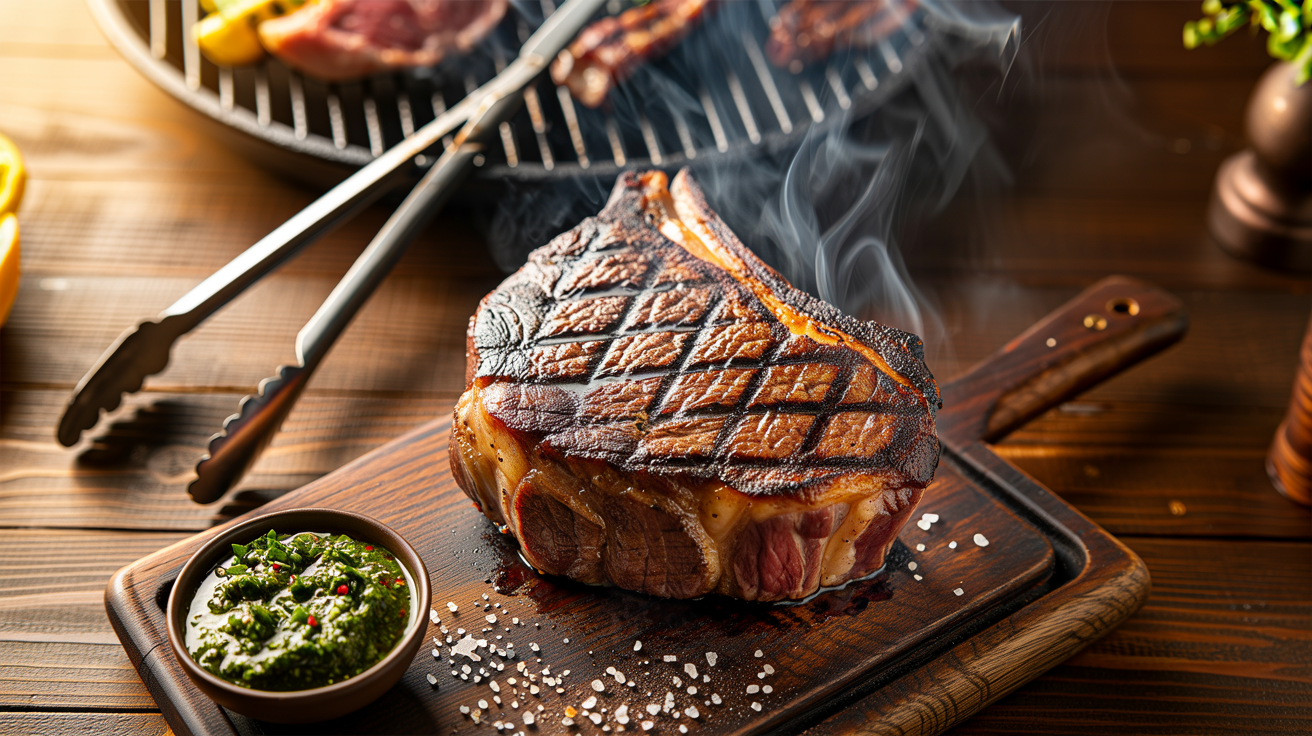
- Start fat-cap-side down over the direct heat. Place the picanha fat-cap-side down directly over the coals and do not touch it for 4 to 5 minutes. You are rendering that fat, crisping the outside of the cap, and building a gorgeous golden-brown crust. Keep an eye on flare-ups - the dripping fat will cause flames, and that is fine in small bursts, but if it turns into a full bonfire, slide the steak slightly toward the indirect zone for 30 seconds to calm things down, then return it.
- Sear the meat side. Flip the picanha using your long tongs and sear the meat side directly over the coals for another 3 to 4 minutes. You are looking for a deep mahogany-brown color across the entire surface. Do not press down on the meat - let the heat do the work. If you see areas that are not making contact with the grate, tilt and rotate the steak to ensure even color all the way across.
- Move to indirect heat to finish. After searing both sides, slide the picanha to the indirect zone of your grill with the fat cap facing up. Close the lid, crack the vents to maintain around 300 to 325 degrees Fahrenheit in the indirect zone, and let the steak cook low and slow to reach your target internal temp. Insert your instant read thermometer into the thickest part of the meat - not into the fat cap - and start checking at the 15-minute mark. Pull the steak at 125 degrees Fahrenheit for rare, 130 degrees Fahrenheit for medium-rare, or 135 degrees Fahrenheit for medium.
- While the steak finishes on indirect heat, make your chimichurri. Finely chop the fresh parsley and smashed garlic and combine them in a small bowl with the red wine vinegar, olive oil, red pepper flakes, and a pinch of salt and pepper. Stir well and let it sit so the flavors can come together. This bright, acidic sauce is the classic Brazilian complement to picanha and cuts right through the richness of that fat cap.
- Rest the meat - this step is non-negotiable. Pull the picanha at your target internal temp and transfer it to a clean cutting board or sheet pan. Tent it loosely with foil and rest the meat for at least 10 minutes, preferably 15. The internal temp will climb another 3 to 5 degrees during rest. This resting period allows the muscle fibers to relax and redistribute the juices evenly throughout the steak. Cut into it too early and you will lose half those juices onto your cutting board.
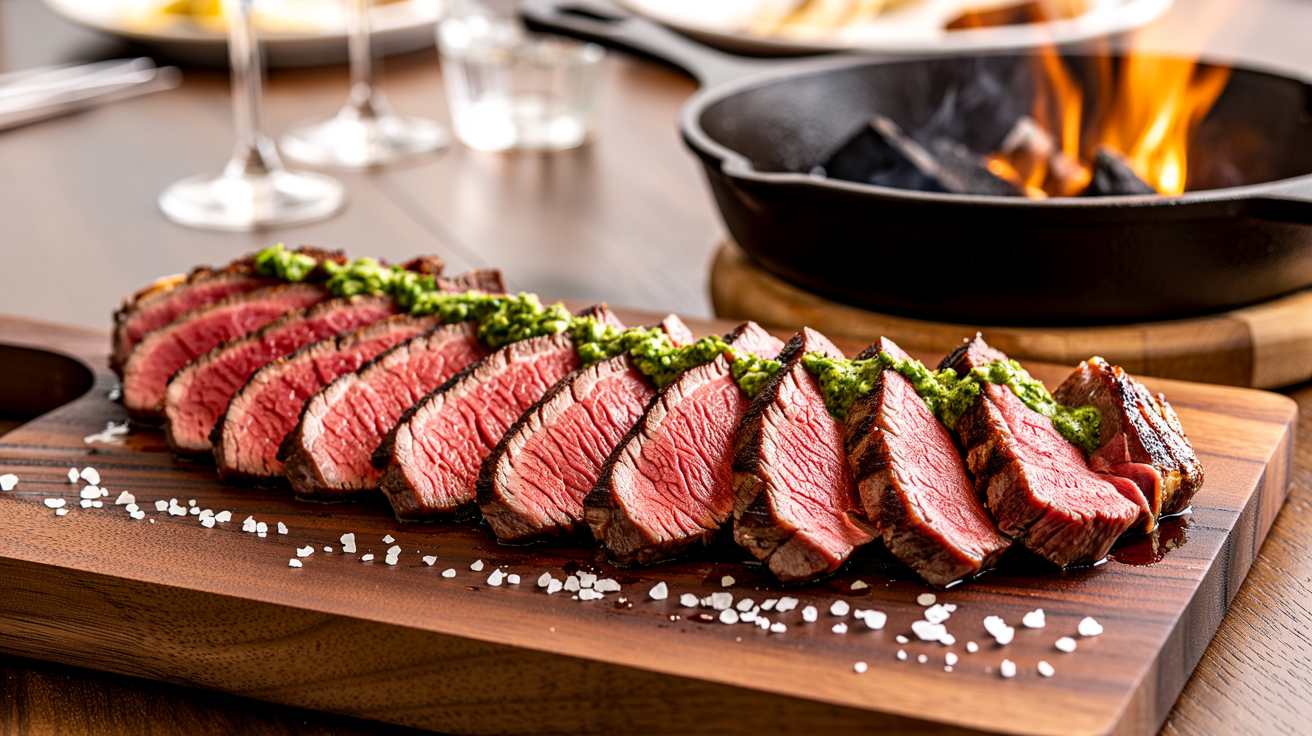
- Slice and serve. After resting, place the picanha fat-cap-side up on your cutting board. Slice it against the grain in pieces about half an inch to three-quarters of an inch thick. The grain on picanha runs in one direction across the rump cap, so orient your cuts perpendicular to those muscle fibers. Each slice should show a beautiful pink interior surrounded by a rendered, crispy fat cap edge. Arrange on a wooden board, drizzle with chimichurri, and get ready for compliments.
Nutrition
This picanha steak grilling recipe is your ticket to one of the most underrated yet absolutely legendary cuts of beef you can throw over a live fire. Known as the queen of Brazilian churrasco, picanha sits right at the top of the rump cap and comes loaded with a thick, gorgeous fat cap that bastes the meat from the outside in as it cooks. We are talking about a cut that rewards you with insane flavor and buttery tenderness when you treat it right – and treating it right means understanding your fire, your temps, and your timing.
Here at GrillMasterHQ, we do not mess around when it comes to premium beef over live fire. For this cook, you are going to want your grill ripping hot – we are talking 500 to 550 degrees Fahrenheit over direct charcoal for the initial sear, then pulling back to an indirect zone sitting around 300 to 325 degrees to finish the internal temp without scorching that beautiful fat cap. The whole cook runs about 25 to 35 minutes depending on steak thickness, and you will be pulling at an internal temp of 130 degrees Fahrenheit for a perfect medium-rare. That fat cap renders down, crisps up, and creates a crust so good you will be fighting your guests for the last slice.
The secret that most backyard grillers miss with picanha is the scoring and the salt. Score that fat cap in a crosshatch pattern down to – but not through – the meat, hit it heavy with coarse sea salt at least 45 minutes before it ever touches the grill, and let that seasoning do its work. You are building a salt crust that locks in moisture, draws out just enough surface water to promote that Maillard reaction browning we all live for, and seasons deep into every fiber. Get this right and you will never look at a ribeye the same way again.
Picanha Steak Grilling Recipe: Brazilian BBQ at Home
This picanha steak grilling recipe brings bold Brazilian churrasco flavor straight to your backyard. With a thick fat cap, coarse salt crust, and screaming hot fire, this cut delivers unreal juiciness and char. Fire up the grill because tonight is a special night.
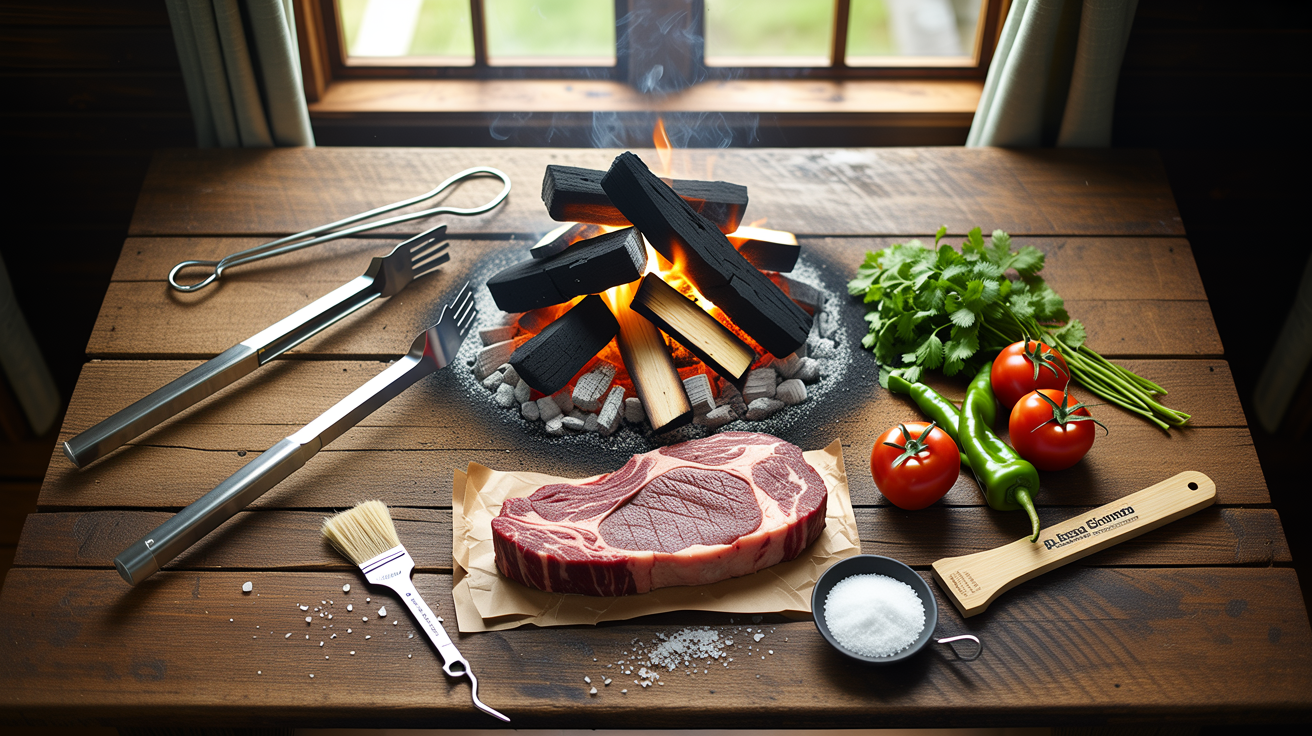
Ingredients
| AMOUNT | INGREDIENT | NOTES |
|---|---|---|
| 2.5 lbs | whole picanha roast (rump cap) | look for a piece with at least a half-inch fat cap intact – do not let the butcher trim it |
| 2 tablespoons | coarse sea salt or kosher salt | this is your primary seasoning – do not be shy with it |
| 1 tablespoon | coarse black pepper | freshly cracked, not pre-ground |
| 1 teaspoon | garlic powder | optional but adds depth to the crust |
| 1 tablespoon | neutral oil (avocado or canola) | for rubbing the meat side only – not the fat cap |
| 4 cloves | fresh garlic | smashed, for the optional chimichurri or compound butter finish |
| 0.5 cup | fresh flat-leaf parsley | for chimichurri garnish – optional but highly recommended |
| 3 tablespoons | red wine vinegar | for chimichurri – balances the richness of the fat cap |
| 0.25 cup | extra virgin olive oil | for chimichurri |
| 1 teaspoon | red pepper flakes | for chimichurri – adjust heat level to your preference |
Instructions
Nutrition (per serving)
The BBQ Story Behind This Recipe
Picanha is the crown jewel of Brazilian churrasco, the centuries-old tradition of cooking large cuts of meat over open wood fires that traces its roots to the gauchos of southern Brazil, Uruguay, and Argentina. These cattle-driving cowboys of the South American pampas would slaughter, season simply with coarse salt, and roast whole cuts over open flame pits after long days on the range. The result was a cooking culture built on respect for the animal, the fire, and the simplicity of salt and smoke. Picanha – known in the United States as the coulotte or rump cap – became the prized cut of these gauchos because of its exceptional fat cap and the rich, beefy flavor locked inside the sirloin primal it sits on top of.
Today, Brazilian churrascaria restaurants around the world have introduced millions of diners to this incredible cut, typically served sliced tableside from long curved skewers. But you do not need a full-service steakhouse experience to enjoy authentic picanha. The backyard pitmaster has every tool needed to replicate – and honestly improve upon – that churrascaria experience. Whether you are cooking over hardwood charcoal in the spirit of the original gauchos or running a modern offset smoker, the soul of this cook stays exactly the same: high heat, coarse salt, rendered fat, and respect for the fire.
Hot Off the Grill
A Closer Look
Pitmaster Tips for Best Results
- Never trim the fat cap before cooking – that fat is everything on a picanha. It renders down during the cook and self-bastes the meat, which is why this cut is so incredibly juicy. If your butcher has already trimmed it below a quarter inch, find a different cut or a different butcher.
- Salt early and go heavy. Coarse salt applied 45 to 60 minutes before the cook draws surface moisture out, dissolves back in, and seasons deep. If you cannot salt 45 minutes out, salt right before hitting the grill – the in-between window of 10 to 40 minutes can actually pull out moisture without enough time to reabsorb, which works against your crust.
- Use an instant read thermometer every single time on a cut this size and price. Visual cues and finger-poke tests are unreliable on a thick rump cap with uneven fat distribution. Hit 130 degrees Fahrenheit for medium-rare and you will be rewarded every time.
- If your grill runs hotter on one side, rotate the picanha 180 degrees halfway through the indirect heat phase to ensure even cooking. An uneven cook on a 2.5-lb roast can mean one end hits your target temp while the other is still 15 degrees behind.
- Slice right before serving, not in advance. Picanha holds heat well as a whole roast during rest, but once you slice it the heat escapes fast. Bring your guests to the cutting board rather than pre-slicing and plating ahead of time.
🔧 Pitmaster Equipment
Charcoal Kettle Grill or Kamado: Authentic charcoal heat gives you the high-temp searing zone and radiant heat that renders the fat cap perfectly and builds incredible crust.
Instant Read Thermometer: Critical for nailing that 130 degree Fahrenheit medium-rare internal temp without guessing – do not skip this tool on an expensive cut.
Long Tongs (16-inch minimum): Keep your hands safely away from a 550 degree fire while flipping and maneuvering the picanha over direct heat.
Sharp Boning or Carving Knife: A razor-sharp knife lets you score the fat cap cleanly and slice the finished steak against the grain for maximum tenderness.
Half Sheet Pan or Large Plate: You need a clean surface to rest the meat properly after pulling it off the grill – resting is not optional on a cut this size.
Chimney Starter: Gets your charcoal fully lit and ashed over in about 15 to 20 minutes without lighter fluid tainting the flavor of your beef.
🔥 Variations
Brazilian Skewer Style (Espeto): Fold the picanha into a C-shape with the fat cap on the outside and skewer it onto a long metal churrasco skewer. Rotate it over live charcoal flame, carving thin slices off the outside as the exterior chars and cooks. Reposition the remaining meat back over the fire and repeat until fully cooked through. This is the authentic rodizio method and it produces an incredible eating experience.
Pellet Grill Version: Set your pellet grill to 500 degrees Fahrenheit and sear the picanha fat-cap-down on the main grate for 5 minutes per side with the lid closed. Then drop the temperature to 300 degrees Fahrenheit and cook to your target internal temp. Use oak, hickory, or pecan pellets for a smoke profile that complements beef without overpowering it.
Offset Smoker Version: Run your offset at 275 degrees Fahrenheit with oak or post oak splits and smoke the whole picanha fat-cap-up for 1.5 to 2 hours until you hit an internal temp of 120 degrees Fahrenheit. Then sear it over a hot charcoal fire or directly over the firebox for 2 to 3 minutes per side to build the crust. You will get a smoke ring on beef this thick and the result is genuinely outstanding.
Gas Grill Version: Preheat all burners to high for 15 minutes, then turn off the center burners for indirect heat. Sear the picanha fat-cap-down over the active outer burners for 4 minutes per side, then move it to the center indirect zone with the lid closed. Add a smoker box loaded with soaked hickory chips near an active burner to introduce smoke flavor. Cook to your target internal temp of 130 degrees Fahrenheit and rest as instructed.
Garlic Butter Finish: Instead of chimichurri, melt 4 tablespoons of unsalted butter with 4 minced garlic cloves and a tablespoon of fresh thyme in a small saucepan. Pull the picanha at 125 degrees Fahrenheit, brush the garlic butter all over it, then return it to the hot direct fire for 60 seconds per side to caramelize the butter. Pull, rest, and slice for a rich, steakhouse-style finish.
❓ Pitmaster FAQ
What internal temperature should picanha steak reach?
For medium-rare, which is the ideal and most recommended doneness for picanha, pull the steak off the grill at 130 degrees Fahrenheit using an instant read thermometer inserted into the thickest part of the meat. It will carry over to about 133 to 135 degrees during the rest period. If you prefer medium, pull at 135 degrees Fahrenheit and rest to 138 to 140 degrees. Never go past medium on picanha – the muscle fibers tighten and you lose all that incredible juiciness.
Where can I buy picanha steak?
Picanha is increasingly available at specialty butcher shops, Brazilian meat markets, and high-end grocery stores. Ask your butcher for the coulotte or rump cap and specify that you want the fat cap left fully intact at no less than half an inch thick. You can also order it online from several quality beef suppliers who will ship it directly to your door. Avoid any pre-trimmed versions – the fat cap is the entire point of this cut.
Do I need to marinate picanha before grilling?
No, and honestly you should not. Picanha is flavorful enough on its own and a marinade can actually interfere with the fat cap crust you are building. Coarse salt and black pepper is the traditional Brazilian preparation, and it is all this cut needs. If you want to add garlic powder or smoked paprika to the rub, go ahead, but skip acidic liquid marinades on this one.
Can I cook picanha on a gas grill?
Absolutely. Preheat all burners to high for a full 15 minutes, sear fat-cap-down over direct heat for 4 to 5 minutes, flip and sear the meat side for 3 to 4 minutes, then move to indirect heat by turning off the center burners and finishing with the lid closed at around 300 degrees Fahrenheit. Add a smoker box with hickory or oak chips near an active burner to get some smoke character into the cook.
What is the difference between picanha and sirloin cap?
They are the same cut with different names. Picanha is the Brazilian and Portuguese name, while sirloin cap or coulotte is how it is typically labeled in American butcher shops. They both refer to the biceps femoris muscle sitting on top of the rump, covered by a thick fat cap. The Brazilian term has become widely recognized in the US as interest in churrasco-style cooking has grown, so many specialty butchers now label it as picanha directly.
How long should I rest the picanha steak after grilling?
Rest the meat for a minimum of 10 minutes, and 15 minutes is even better for a 2.5-lb roast. Tent it loosely with foil to hold some heat but do not wrap it tightly or you will steam the crust you worked hard to build. The resting period allows the carryover cooking to finish and the muscle fibers to relax so the juices redistribute evenly throughout the meat rather than running out when you slice it.