
Grilled Hanger Steak Recipe: Bold Flavor Every Time
Ingredients
Method
- Start by examining your hanger steak. If it came as a whole piece with the tough center sinew still running through it, use a sharp boning knife to cut along both sides of that white tendon and remove it completely. This gives you two long strips of steak that will cook evenly and slice beautifully. Pat both pieces completely dry with paper towels. Moisture is the enemy of a great crust, so take your time here.
- Build your marinade by whisking together the olive oil, minced garlic, soy sauce, Worcestershire sauce, red wine vinegar, smoked paprika, dried oregano, black pepper, kosher salt, and red pepper flakes in a small bowl until fully combined. The mixture should smell deeply savory and herbal. Place your steak pieces into a resealable bag or shallow dish and pour the marinade over them, turning to coat every surface. Seal it up and let it sit at room temperature for 30 minutes or in the refrigerator for up to 4 hours. Do not go much longer than 4 hours because the acid in the vinegar will begin to break down the texture of the meat.
- While the steak marinates, fire up the grill. If you are using charcoal, fill a chimney starter to the top and light it. Let it burn until all the coals are fully ashed over and glowing orange, about 15 minutes. Pour them out and spread them across two thirds of the grill bed to create a hot direct zone and a cooler indirect zone. You want the direct zone sitting at 450 to 500 degrees Fahrenheit when measured at grate level. If you are using a gas grill, preheat all burners on high for 10 to 15 minutes, then turn one burner down to low to create your indirect zone.
- Pull the steak out of the marinade and let any excess drip off. Do not wipe it clean because those bits of garlic and herbs are going to add incredible flavor and texture to your crust. Season both sides with a light additional pinch of kosher salt right before it goes on the grill. This last-minute salt hit reinforces the crust formation. Lay the steak down directly over the hot coals or the high-heat burners and do not touch it for 3 full minutes. You are listening for a strong sizzle and looking for the edges of the meat to start turning gray about a quarter inch up the side.
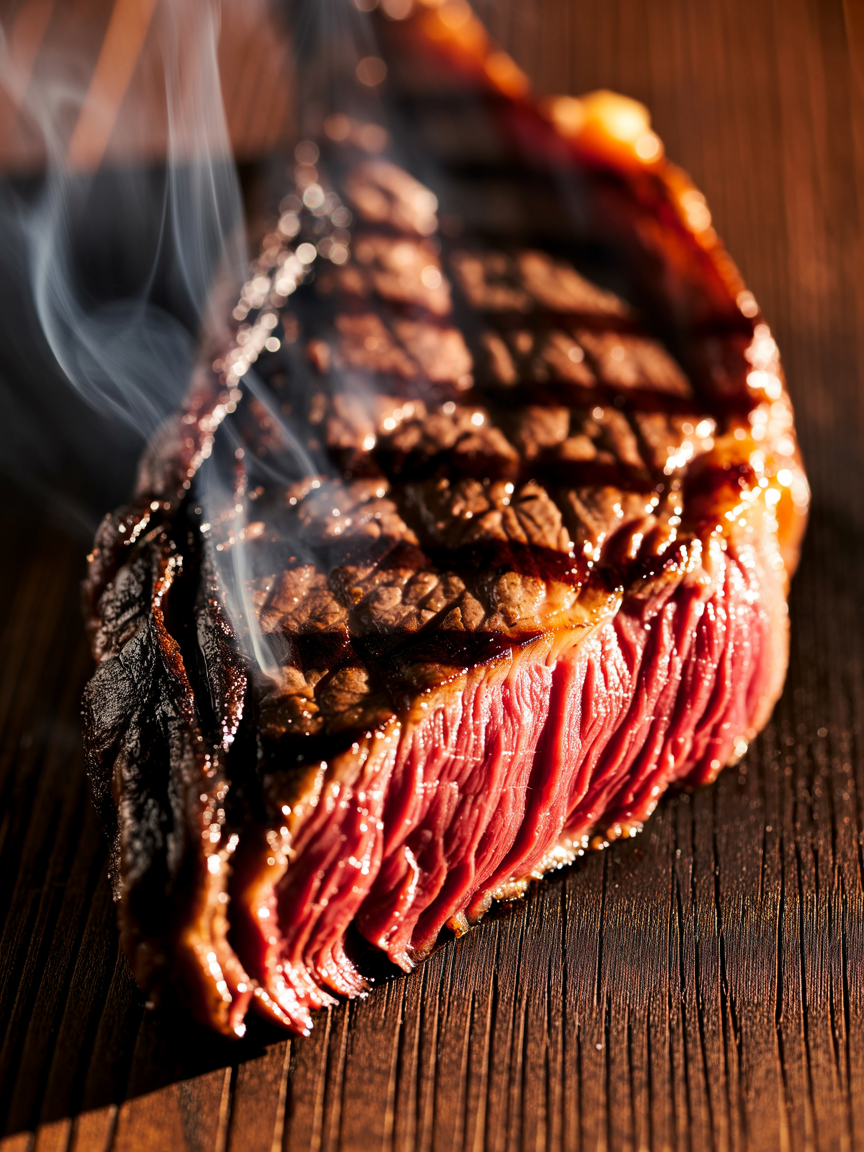
- Flip the steak after 3 minutes and check the first side. You want a deep mahogany crust with some darker spots at the edges, not black or ashy. Cook the second side for another 2 to 3 minutes. At this point you are looking to hit an internal temp of 125 to 130 degrees Fahrenheit for rare to medium-rare. Insert your instant read thermometer into the thickest part of the steak from the side, not the top, to get the most accurate reading. If you are not at temperature yet, move the steak to the cooler indirect zone and close the lid to let the ambient heat finish the job without burning the exterior.
- When your steak is about 5 degrees below your target temperature, add the tablespoon of unsalted butter directly on top of the steak and let it melt and cascade down the sides. This butter baste adds richness, helps carry the garlic and herb flavors from the crust deep into the meat, and gives the exterior a gorgeous sheen. Pull the steak off the grill at 130 degrees for medium-rare or 135 degrees for medium. Remember that carryover cooking will raise the internal temp another 3 to 5 degrees while it rests.
- Rest the meat on your cutting board with the juice groove for a minimum of 5 full minutes. Cover it loosely with foil if you like, but do not wrap it tight or you will steam away that beautiful crust you just worked hard to build. Resting allows the muscle fibers to relax and reabsorb the juices that have been pushed to the center during cooking. If you cut into it immediately, those juices run straight out onto your board and you lose all that flavor.
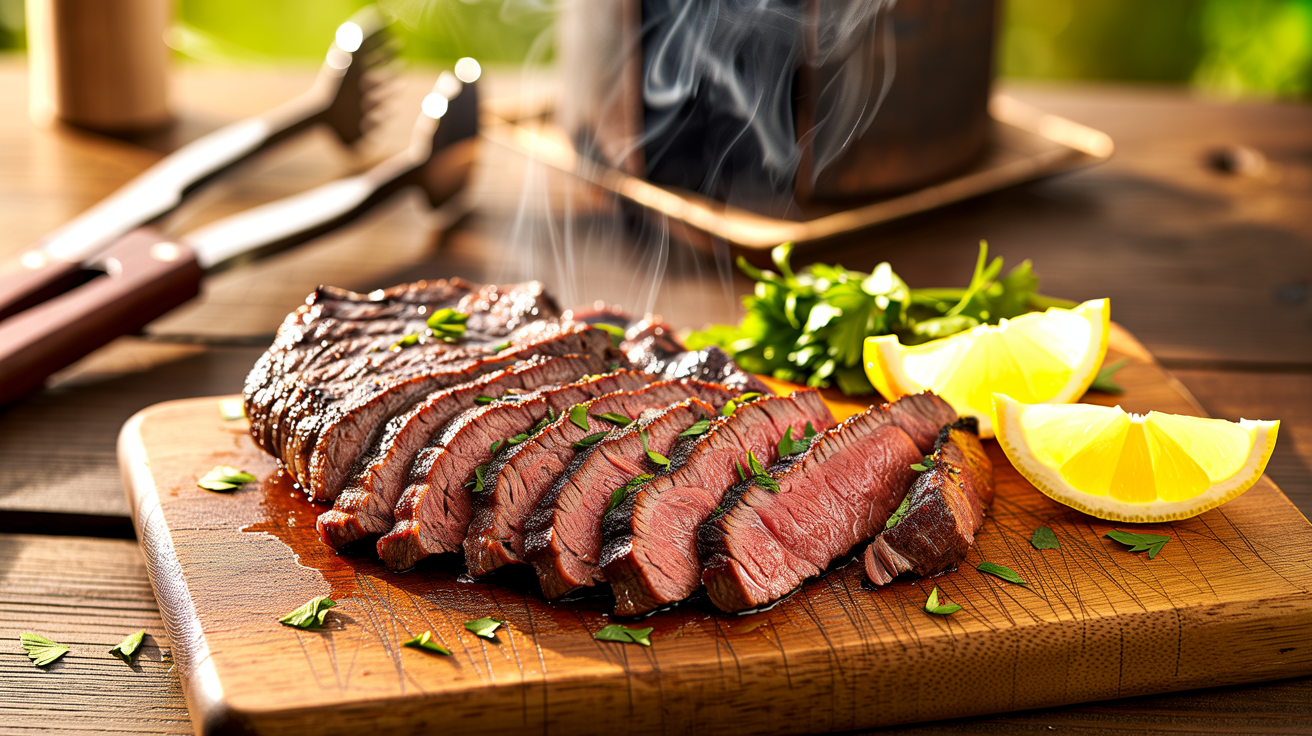
- Slice the rested hanger steak thin, about a quarter-inch thick, cutting perpendicular to the grain of the meat and at a slight angle for wider, more attractive slices. Hanger steak has a very pronounced grain and slicing against it is non-negotiable for tenderness. Fan the slices out on a warm serving platter or wooden board, scatter the fresh parsley over the top, finish with a pinch of flaky sea salt, and serve with lemon wedges on the side for brightness. Pour any accumulated board juices back over the meat before bringing it to the table.
Nutrition
This grilled hanger steak recipe is the secret weapon of every serious pitmaster who knows that the best cut on the animal does not always come from the most expensive section of the butcher case. Hanger steak hangs from the diaphragm muscle between the rib and the loin, and because it does almost no work during the life of the animal, it rewards you with extraordinary tenderness and a deep, beefy flavor that rivals ribeye at a fraction of the price. We are talking about a cut that butchers used to keep for themselves, and once you grill it right, you will understand exactly why.
The key to nailing this cook is high heat and speed. Unlike a brisket where you go low and slow for hours, hanger steak wants a screaming-hot direct fire around 450 to 500 degrees Fahrenheit and just 3 to 4 minutes per side to hit that sweet spot of 130 to 135 degrees internal temp for a perfect medium-rare. Go past 145 degrees and you will start losing that silky texture that makes this cut so special. Get your charcoal chimney roaring, build a two-zone fire, and be ready to move fast because this cook rewards the attentive pitmaster.
We are pairing this beauty with a punchy garlic and herb marinade that only needs 30 minutes to penetrate the grain of the meat and lay down serious flavor before it ever touches the grill grates. You will see a gorgeous crust develop in the first couple of minutes over the coals, a crust that locks in the juices and gives you that crackling bite before you hit the rosy, tender interior. Rest the meat for at least 5 minutes after pulling it off the fire, slice it thin against the grain at an angle, and you have got a plate that looks like it came out of a high-end steakhouse kitchen.
Grilled Hanger Steak Recipe: Bold Flavor Every Time
This grilled hanger steak recipe delivers butcher-secret flavor with a blazing hot sear, bold marinade, and perfect medium-rare finish. Hanger steak is the cut your steakhouse does not want you to know about. Fire up the grill tonight and taste the difference yourself.

Ingredients
| AMOUNT | INGREDIENT | NOTES |
|---|---|---|
| 2 lbs | hanger steak | trimmed of the center sinew if your butcher has not already done it |
| 3 tablespoons | olive oil | extra virgin for the marinade |
| 4 cloves | garlic | minced fine |
| 2 tablespoons | soy sauce | adds umami depth and helps build the crust |
| 1 tablespoon | Worcestershire sauce | for savory complexity |
| 1 tablespoon | red wine vinegar | brightens the marinade and tenderizes slightly |
| 1 teaspoon | smoked paprika | adds color and a hint of smoke |
| 1 teaspoon | dried oregano | crumbled between your fingers to release the oils |
| 1 teaspoon | black pepper | coarse ground for texture in the crust |
| 1 teaspoon | kosher salt | plus more for finishing |
| 0.5 teaspoon | red pepper flakes | optional for a little heat |
| 1 tablespoon | unsalted butter | for basting just before pulling off the grill |
| 2 tablespoons | fresh parsley | chopped fine for garnish |
| 1 whole | lemon | cut into wedges for serving |
Instructions
Nutrition (per serving)
The BBQ Story Behind This Recipe
Hanger steak has deep roots in the butcher shops and working-class bistros of France, where it is known as onglet and has been a staple on Parisian brasserie menus for centuries. French butchers prized this cut for its assertive, mineral-rich flavor and its generous texture, serving it simply prepared with shallot butter or a sharp Dijon pan sauce. Because there is only one hanger steak per animal, it was a cut that stayed close to home in the trade, rarely making it to commercial grocery shelves, which is how it earned the nickname the butcher cut across Europe and eventually in the United States.
In American BBQ culture, hanger steak began gaining serious traction in the 1990s and early 2000s as chefs and backyard pitmasters started pushing back against over-complicated cooks and rediscovering humble, flavorful cuts. Texas BBQ tradition, which has always celebrated the full animal from brisket to beef ribs, naturally embraced hanger steak as a quick-fire alternative to the long cooks the region is famous for. Today it sits proudly on the menus of craft BBQ joints from Austin to Brooklyn, marinated in everything from chimichurri to soy-ginger glazes, always cooked hot and fast over live fire the way the cut was always meant to be handled.
Hot Off the Grill
A Closer Look
Pitmaster Tips for Best Results
- Always ask your butcher to remove the center sinew before you buy the hanger steak. Most butchers will do this gladly, and it saves you the extra prep work at home. If they will not, use a sharp boning knife and take your time so you do not lose any of that precious meat.
- Do not cook hanger steak past medium, which is 145 degrees internal temp. Past that point the muscle fibers tighten up and the cut loses the silky tenderness that makes it special. Medium-rare at 130 to 135 degrees is the sweet spot that every pitmaster should be targeting with this cut.
- Pull your hanger steak out of the refrigerator at least 30 minutes before it goes on the grill to let it come closer to room temperature. A cold steak hitting a hot grill cooks unevenly, with the exterior overcooking before the interior comes up to temp. Tempering the meat gives you a more even cook from edge to edge.
- The marinade for this recipe does double duty as a flavor builder and a crust enhancer. The soy sauce and Worcestershire sauce are both high in glutamates that promote the Maillard reaction, meaning you get a better, deeper brown crust faster over high heat. Do not skip these two ingredients even if you are tempted to simplify the marinade.
- Always slice against the grain on hanger steak and never skip this step. The muscle fibers in hanger steak run in a very visible direction. Slicing with the grain leaves you with long, chewy strands of meat that are hard to eat. Slicing perpendicular to those fibers shortens them and gives you a tender, easy bite every time.
🔧 Pitmaster Equipment
Charcoal Grill or Gas Grill: High direct heat is essential for building that signature crust on hanger steak. Charcoal gives you better flavor, but a gas grill cranked to high works well too.
Instant Read Thermometer: Hanger steak has a narrow temperature window for perfection. An instant read thermometer is the only way to hit 130 to 135 degrees with confidence every single time.
Long Tongs: You will be working directly over a very hot fire. Long tongs keep your hands safe and give you precise control when flipping and repositioning the steak.
Chimney Starter: Gets your charcoal fully lit and ashed over in 15 minutes without lighter fluid, giving you clean heat and no chemical aftertaste on your meat.
Cutting Board with Juice Groove: When you rest and slice hanger steak, it releases a significant amount of flavorful juice. A board with a groove catches every drop so nothing goes to waste.
Resealable Gallon Zip Bag or Shallow Dish: Needed for marinating the steak evenly so every surface gets full contact with the marinade for maximum flavor penetration.
🔥 Variations
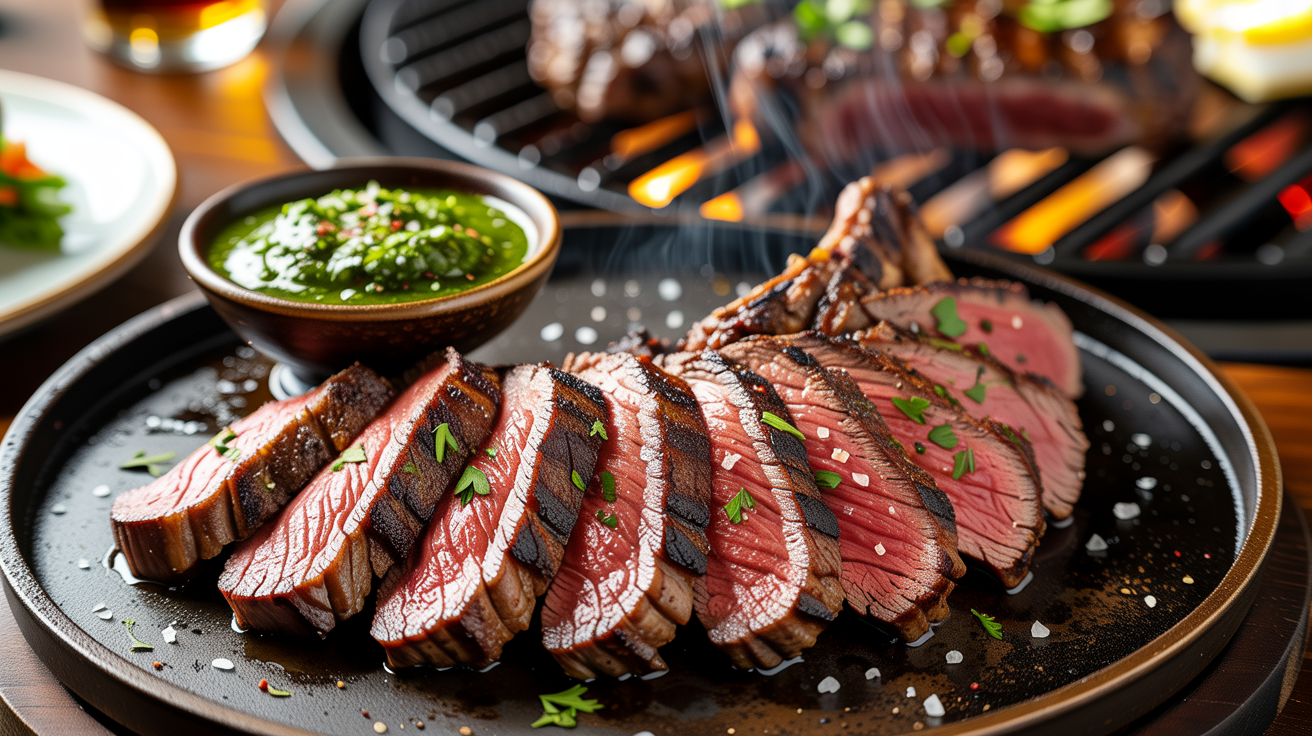
Chimichurri Hanger Steak: Skip the marinade herbs and instead serve the grilled hanger steak blanketed in a bright, garlicky chimichurri made from fresh parsley, cilantro, red wine vinegar, garlic, and olive oil. The acid in the chimichurri cuts through the rich beef flavor beautifully and the green sauce looks stunning against the dark crust.
Korean BBQ Style Hanger Steak: Swap the marinade for a mixture of soy sauce, sesame oil, brown sugar, grated Asian pear, minced garlic, and fresh ginger. The pear acts as a natural tenderizer and adds a subtle sweetness. Grill the same way and finish with sesame seeds and sliced scallions. Serve with steamed rice and kimchi for a full Korean BBQ experience.
Pellet Grill Version: Set your pellet grill to its highest sear setting or at least 450 degrees Fahrenheit and allow it to fully preheat for 15 minutes. Use hickory or oak pellets for a flavor that complements the bold beefy character of hanger steak. Follow all the same steps and timing as the charcoal method and use your instant read thermometer to confirm doneness.
Gas Grill Version: Preheat all burners on high for 15 minutes to get the grates as hot as possible. Keep one burner on low as your indirect zone. Add a smoker box filled with soaked oak or cherry wood chips over a high burner to introduce some smoke flavor before the steak goes on. Follow all the same steps, timing, and temperature targets as the main recipe.
Smoked and Seared Hanger Steak: For a reverse sear approach, set your smoker to 225 degrees Fahrenheit and smoke the hanger steak over oak or hickory until it hits an internal temp of 110 degrees, about 30 to 40 minutes. Then transfer it directly to a screaming-hot grill or cast iron skillet and sear for 90 seconds per side to build the crust. You will get a slight smoke ring and an incredibly even cook from edge to edge.
❓ Pitmaster FAQ
What internal temperature should grilled hanger steak reach?
For medium-rare, pull your hanger steak off the grill at 130 degrees Fahrenheit and let carryover cooking bring it up to 133 to 135 degrees during the rest. For medium, pull at 135 degrees and rest to 138 to 140 degrees. The USDA recommends a minimum of 145 degrees for whole muscle beef, so always cook to the doneness that works for your household. Do not go past medium with this cut or you will lose the tenderness that makes it worth grilling.
What is hanger steak and how is it different from flank or skirt steak?
Hanger steak comes from the diaphragm area of the cow, specifically hanging between the rib and the loin, which is where it gets its name. It is thicker than skirt steak and has a more robust, mineral-forward beef flavor than flank steak. Like both of those cuts, it must be sliced against the grain, but it tends to be more tender than either when cooked to medium-rare and is often described as having a slightly offal-adjacent depth that makes it incredibly satisfying.
Can I marinate hanger steak overnight?
You can marinate hanger steak in the refrigerator for up to 4 hours using this recipe. Going longer than that with an acid-based marinade like this one can start to break down the surface texture of the meat, giving it a slightly mushy exterior that will not crust as well on the grill. If you want to prep ahead, mix the marinade the night before and add the steak in the morning for a 4-hour soak before a dinner cook.
Why is hanger steak sometimes hard to find at the grocery store?
There is only one hanger steak per animal, which makes it a relatively rare cut compared to something like sirloin or ribeye where multiple portions come from a single animal. Many large grocery chains do not carry it because the supply is limited. Your best bet is to ask your local butcher shop directly, check at farmers market meat vendors, or look at specialty meat retailers online. Once you find a reliable source, buy extra and freeze it because this cut is absolutely worth seeking out.
Do I have to remove the center sinew from hanger steak?
Yes, removing the center sinew is strongly recommended. That tough connective tissue runs directly through the middle of a whole hanger steak and does not break down with quick high-heat cooking the way collagen does during a low and slow smoke. If you leave it in, you end up with an unpleasant chewy strip running through each bite. Ask your butcher to do it when you purchase the cut, or do it yourself at home with a sharp knife and a little patience.
How long should I rest grilled hanger steak before slicing?
Rest your grilled hanger steak for a minimum of 5 minutes after pulling it off the grill. If the steak is on the thicker side or you pulled it from a reverse sear, push that rest to 7 to 8 minutes. Resting allows the proteins in the meat to relax and reabsorb the internal juices that have been driven toward the center by the heat of the grill. If you slice too early, those juices pour straight out onto your cutting board instead of staying inside the meat where they belong.