
Smoked Pork Jowl Recipe: Low and Slow BBQ Perfection
Ingredients
Method
- Start by trimming your pork jowl if needed. You want a fat cap of about one-quarter inch thickness - enough to render down beautifully and baste the meat throughout the cook, but not so thick that it creates a rubbery layer. Using a sharp knife, score the fat cap in a crosshatch pattern, making cuts about one inch apart and slicing just deep enough to penetrate the fat without cutting into the meat below. This scoring allows the rub to penetrate deeper and gives the fat a better chance to render completely during the low and slow cook.
- Coat the entire surface of the pork jowl with a thin, even layer of yellow mustard. Do not worry about the mustard flavor - it cooks off completely and simply acts as an excellent binder that helps every granule of your dry rub stick to the surface of the meat. Make sure to work the mustard into those scored fat cap cuts as well.
- In a small mixing bowl, combine the brown sugar, smoked paprika, kosher salt, black pepper, garlic powder, onion powder, cayenne, and dried thyme. Mix thoroughly until evenly blended. This is your dry rub, and it is designed to build a bold, caramelized bark with just the right balance of sweet heat and savory depth. Apply the rub generously to all sides of the jowl, pressing it firmly into the meat and working it into every crevice and the scored fat cap cuts. Let the seasoned jowl rest at room temperature for 30 minutes while you prepare the smoker.
- Fire up the smoker and bring it to a steady 225 degrees Fahrenheit. Achieving temperature stability before you put the meat on is critical - a smoker that is climbing or dropping in temperature produces uneven results. Once you hit 225 degrees Fahrenheit and it has been holding steady for at least 15 minutes, add two to three fist-sized chunks of hickory or applewood directly to the coals or into the firebox. You are looking for thin blue smoke, not thick white billowing smoke. Thin blue smoke is clean and imparts that beautiful flavor. Thick white smoke can make your bark taste bitter.
- Place the pork jowl on the smoker grate fat cap side up. Positioning it fat cap up allows the rendering fat to naturally baste the meat as it drips down through the muscle fibers during the cook. Close the lid and let the smoker do its work. Resist the urge to open the lid during the first two hours - every peek adds time and disrupts your smoke environment. After the first two hours, check the color of the bark. You are looking for a deep reddish-brown mahogany color starting to form on the exterior.
- At the two-hour mark, begin spritzing the jowl with apple cider vinegar every 45 minutes to an hour. A light spritz adds a touch of moisture to the surface, prevents the bark from becoming too hard too early, and adds a subtle brightness to the finished flavor. Do not saturate the meat - a few pumps from a spray bottle is all you need. Continue cooking at 225 degrees Fahrenheit and monitor the internal temp using your instant read thermometer.
- Around the three to four hour mark, your jowl may hit a temperature stall somewhere between 155 and 170 degrees Fahrenheit. This is completely normal and happens as evaporative cooling slows down the internal temperature rise. You have two options: power through the stall by maintaining your temperature and giving it more time, or wrap the jowl tightly in butcher paper and return it to the smoker to push through the stall faster. Butcher paper allows some moisture to escape while still holding in enough heat to break through the stall, and it does a better job of preserving bark than aluminum foil.
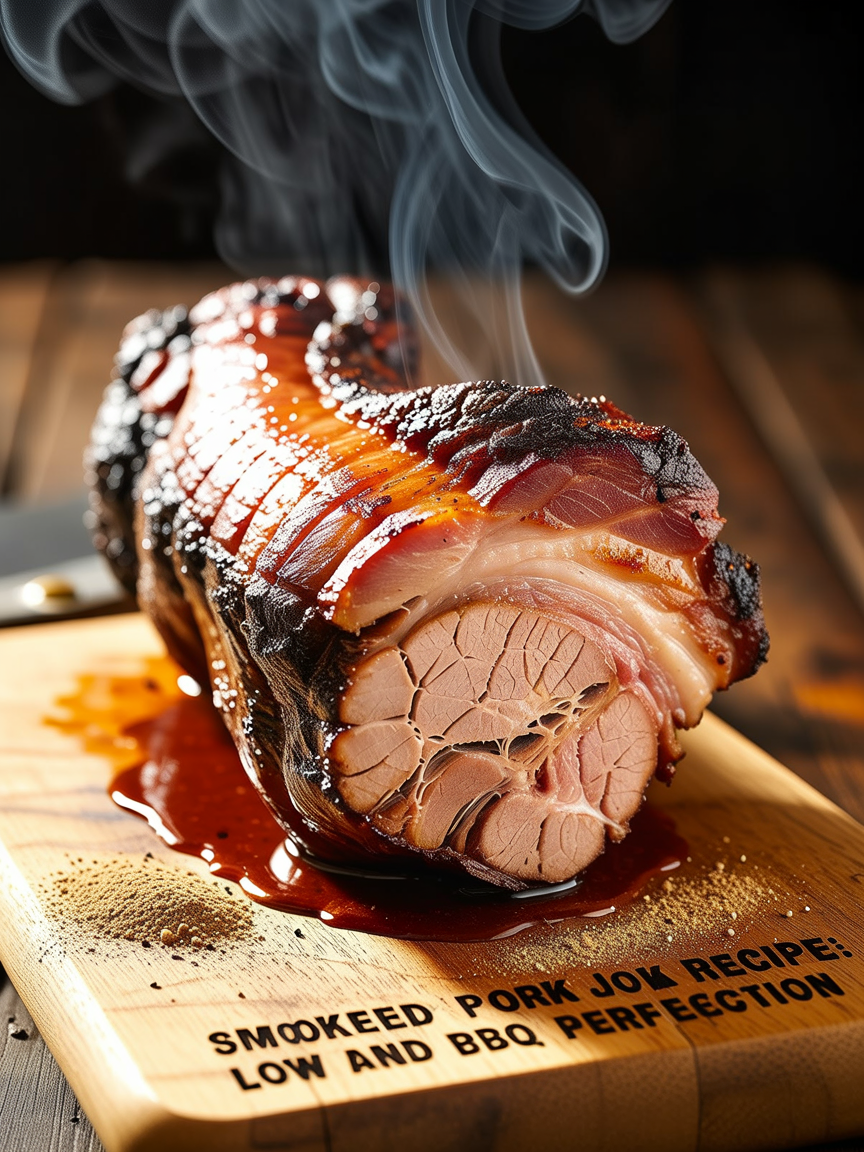
- Continue cooking until the internal temp of the thickest part of the jowl reaches between 195 and 203 degrees Fahrenheit. At this temperature range, the collagen in the meat has fully converted to gelatin, the fat has rendered down to a silky, melt-in-your-mouth consistency, and the bark has set into that deep, crackling exterior crust you have been working toward. Probe the meat in multiple spots - you want consistent readings throughout. Total cook time will typically run five to six hours at 225 degrees Fahrenheit for a three-pound jowl.
- Once the jowl hits your target internal temp, pull it off the smoker immediately. Do not skip this step: rest the meat for a minimum of 30 minutes, ideally 45 minutes, loosely tented with foil on a wire rack. Resting allows the juices that have been pushed toward the center of the meat during cooking to redistribute evenly throughout every slice. Cutting into it too early means all of those beautiful juices run right out onto your cutting board instead of staying where they belong - inside the meat.
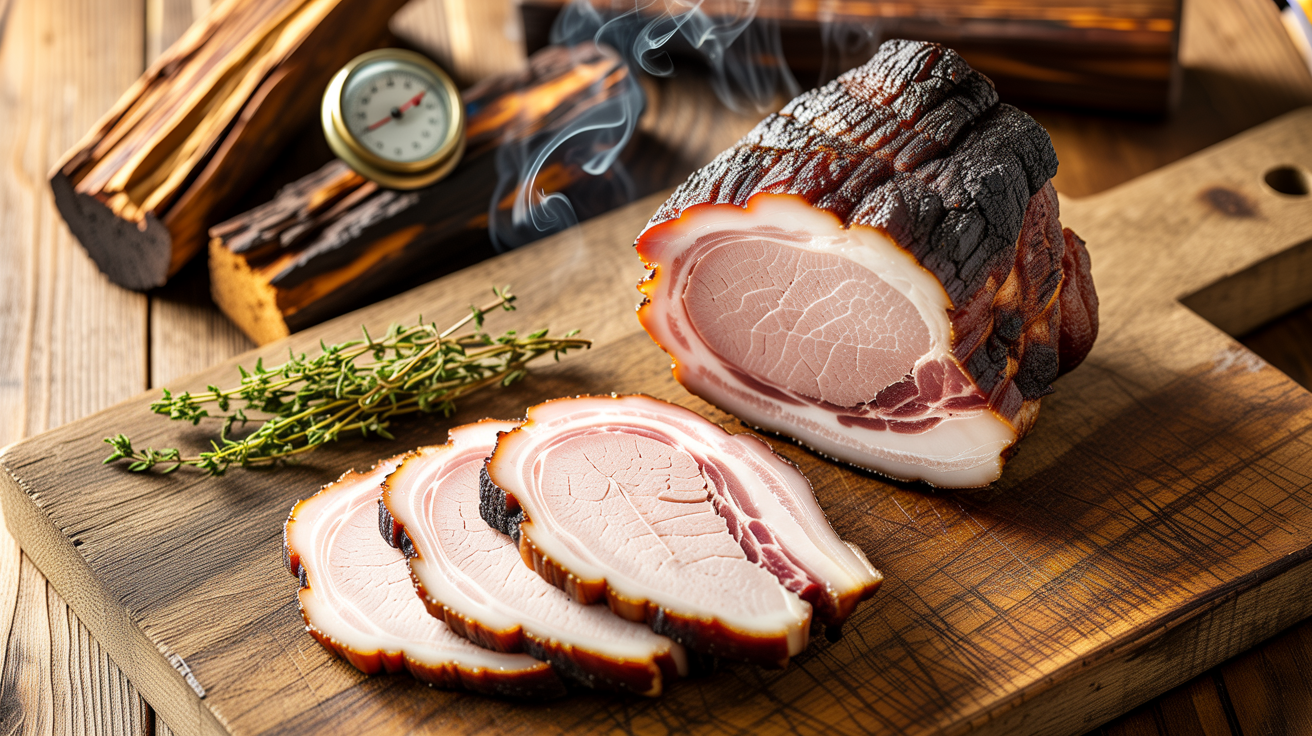
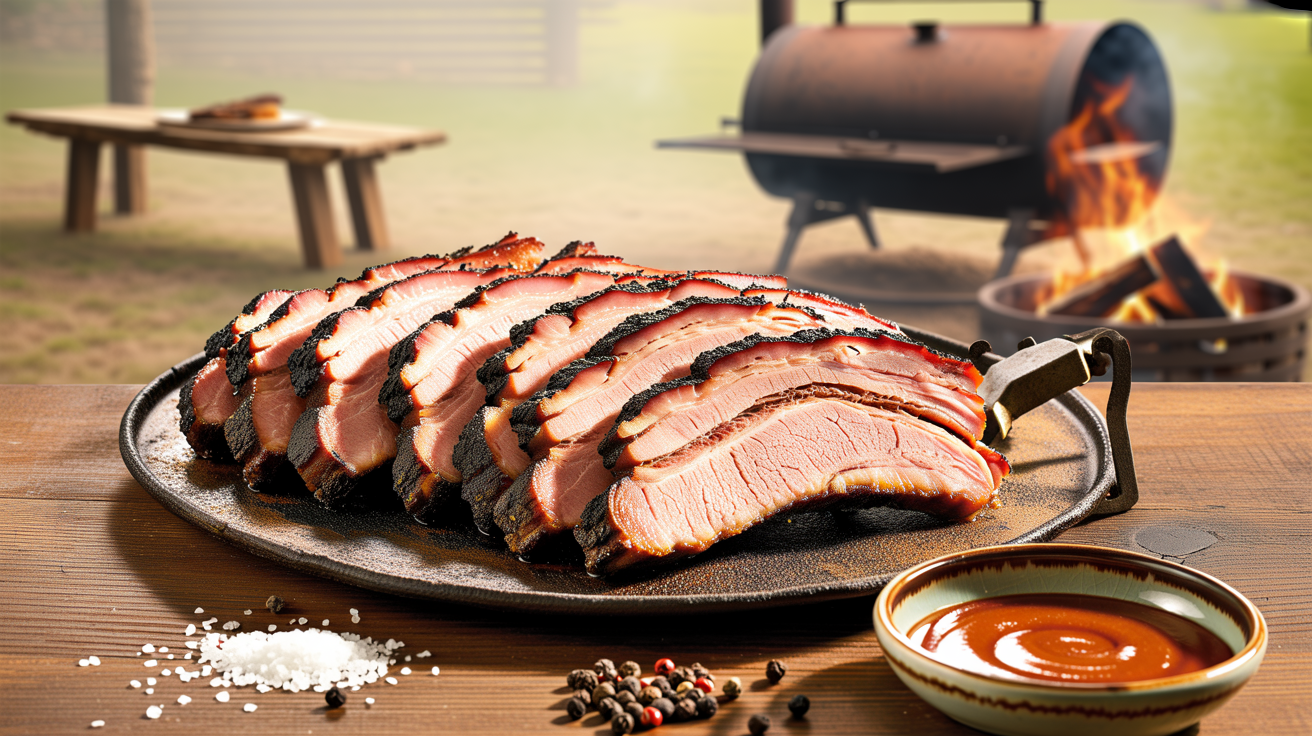
- After resting, slice the smoked pork jowl against the grain into slices about one-quarter to one-half inch thick. Look at that smoke ring - that deep pink layer just beneath the bark surface is the hallmark of a properly smoked piece of meat, and it tells everyone at your table that you put in the real work. Serve immediately and watch it disappear.
Nutrition
This smoked pork jowl recipe is the kind of low and slow project that will have your neighbors leaning over the fence asking what smells so incredible. Pork jowl is the cheek meat of the pig, a heavily marbled cut that sits right between the head and the shoulder, and when you give it the smoker treatment at 225 degrees Fahrenheit for five to six hours, it transforms into something absolutely magical. The fat renders down beautifully, the exterior builds a thick, crackling bark loaded with spice and smoke, and every single slice rewards you with a deep smoke ring that tells the whole story of the cook.
If you have been sleeping on pork jowl, now is the time to wake up. Most backyard pitmasters reach straight for pork belly when they want that luscious, fatty BBQ experience, but jowl meat has an even richer, more complex flavor profile thanks to the unique muscle structure of the cheek. It holds seasoning incredibly well, takes on smoke beautifully, and cooks up with a silky interior texture that makes it one of the most satisfying bites in all of BBQ. Best of all, pork jowl is typically much more affordable than pork belly, so you can feed a crowd without breaking the bank.
The key to nailing this smoked pork jowl recipe is patience and temperature discipline. We are going to fire up the smoker to a steady 225 degrees Fahrenheit and hold it there for the duration of the cook, using hickory or applewood chunks to build that classic Southern smoke flavor. We will score the fat cap, hit it with a bold dry rub, and let the smoke do the heavy lifting. Whether you are slicing it thin for sandwiches, dicing it for beans, or serving it as the centerpiece of your next BBQ spread, this recipe is going to become a permanent fixture in your pitmaster rotation.
Smoked Pork Jowl Recipe: Low and Slow BBQ Perfection
This smoked pork jowl recipe delivers melt-in-your-mouth results with a bold mahogany bark, deep smoke ring, and rich porky flavor that rivals any BBQ cut you have ever tasted. Low and slow smoking transforms this underrated cut into something truly extraordinary. Fire up the smoker today and taste the difference.
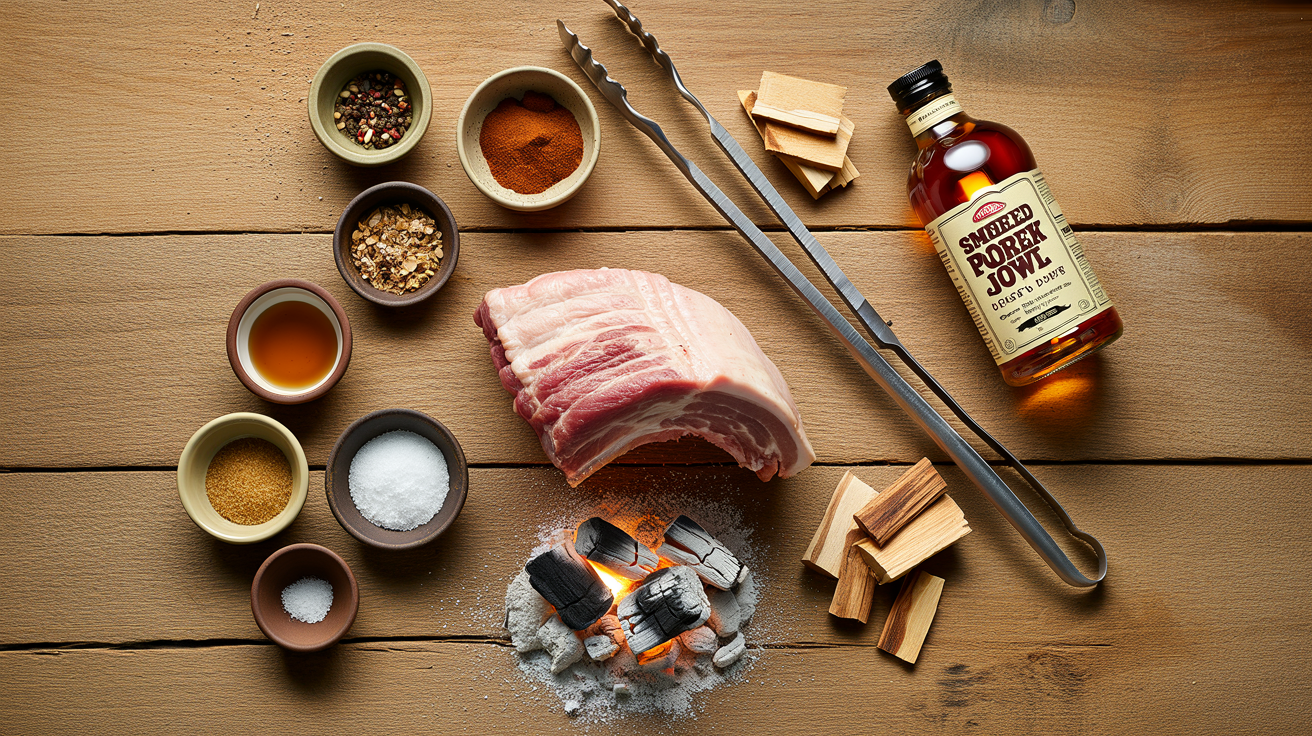
Ingredients
| AMOUNT | INGREDIENT | NOTES |
|---|---|---|
| 3 lbs | whole pork jowl | skin on or skin off both work, fat cap intact for best results |
| 2 tablespoons | yellow mustard | used as a binder to help the rub adhere |
| 2 tablespoons | brown sugar | packed, adds sweetness and helps build bark |
| 1 tablespoon | smoked paprika | for color and depth of flavor |
| 1 tablespoon | kosher salt | coarse grind preferred |
| 1 tablespoon | coarse black pepper | freshly cracked for best punch |
| 1 teaspoon | garlic powder | |
| 1 teaspoon | onion powder | |
| 1 teaspoon | cayenne pepper | adjust to your heat preference |
| 1 teaspoon | dried thyme | adds an earthy herbal note that pairs well with the smoke |
| 4 chunks | hickory or applewood smoking wood | fist-sized chunks, not chips, for a longer sustained smoke |
| 2 tablespoons | apple cider vinegar | for optional spritz during the cook |
Instructions
Nutrition (per serving)
The BBQ Story Behind This Recipe
Pork jowl has deep roots in Southern American foodways, where whole-hog butchery traditions meant that no part of the pig ever went to waste. For generations, rural communities across the Carolinas, Georgia, Tennessee, and beyond relied on smoked and cured jowl meat as a pantry staple. It was salt-cured and cold-smoked in smokehouses alongside hams and bacon slabs, then used throughout the year to season beans, greens, and stews with that irreplaceable smoky pork richness. In Italian culinary tradition, a cured version of this same cut known as guanciale became the cornerstone of iconic pasta dishes, a testament to just how universally prized this cut is across different food cultures.
In recent years, the barbecue community has rediscovered pork jowl not just as a seasoning ingredient but as a star cut in its own right. Regional BBQ joints across the South, particularly in the Appalachian foothills and the Mississippi Delta, have long smoked whole jowls as a specialty item, serving them sliced thick alongside pickled vegetables and white bread. As the craft BBQ movement has grown and pitmasters have pushed the boundaries of what belongs on the smoker, jowl has found a passionate new following among backyard cooks who love the idea of coaxing exceptional results from an underappreciated cut. Today it stands alongside pork belly burnt ends and smoked cheeks as one of those insider BBQ secrets that separates the truly curious pitmasters from the crowd.
Hot Off the Grill
A Closer Look
Pitmaster Tips for Best Results
- Source your pork jowl from a local butcher or specialty grocery store if possible. Butcher-sourced jowl tends to have a thicker, more even fat cap than pre-packaged supermarket cuts, which gives you better rendering and a more impressive finished product.
- For maximum bark development, season the jowl the night before and let it rest uncovered in the refrigerator overnight. The dry rub pulls surface moisture out of the meat and then reabsorbs it, creating a tacky pellicle that locks in smoke and produces a thicker, more cohesive bark during the cook.
- Keep your smoker temperature rock steady between 220 and 230 degrees Fahrenheit throughout the entire cook. Wild temperature swings above 250 degrees Fahrenheit will cause the exterior fat to render too quickly, potentially leaving the interior undercooked while the bark over-develops and turns bitter.
- If you want to add a glaze for the final 30 minutes of the cook, brush on a mixture of one part honey and one part your favorite hot sauce when the jowl hits 175 degrees Fahrenheit internally. Return it unwrapped to the smoker for the remainder of the cook and the glaze will set into a glossy, sticky, spicy-sweet lacquer over your bark.
- Leftover smoked pork jowl is arguably even better the next day. Dice it up and render it in a cast iron skillet to season a pot of white beans, use it as a topping for ramen or fried rice, layer it into a biscuit sandwich, or fold it into scrambled eggs. The smoke flavor deepens overnight and makes every application absolutely outstanding.
🔧 Pitmaster Equipment
Offset Smoker or Kamado Grill: Delivers authentic low and slow heat management and maximum smoke penetration for building a proper bark and smoke ring on pork jowl.
Instant Read Thermometer: Critical for monitoring the internal temp of the jowl and knowing exactly when it has reached the ideal 195 to 203 degrees Fahrenheit for full fat rendering.
Long Tongs or Heat Resistant Gloves: Keep your hands safe while managing the fire, repositioning the meat, and handling the jowl during and after the cook.
Wire Cooling Rack and Rimmed Baking Sheet: Elevates the jowl off a flat surface so air circulates evenly during the resting period, preserving your hard-earned bark.
Sharp Boning or Slicing Knife: A sharp blade is essential for scoring the fat cap cleanly before the cook and slicing the finished jowl into clean, beautiful portions.
Aluminum Foil or Butcher Paper: Used for the optional wrap stage to push through any stall and lock in moisture without sacrificing too much bark texture.
Wood Chunks – Hickory or Applewood: Hickory delivers bold Southern smoke flavor while applewood adds a slightly sweet, fruity note that pairs perfectly with pork jowl fat.
🔥 Variations
Pellet Grill Version: Set your pellet grill to 225 degrees Fahrenheit using hickory or competition blend pellets and follow the exact same steps as the main recipe. Pellet grills excel at maintaining steady low and slow temperatures, making them an ideal platform for this cook. For extra smoke penetration, use the super smoke mode if your grill has it during the first two hours of the cook.
Gas Grill Version: Set up your gas grill for indirect heat by lighting only one side of the burners and targeting 225 degrees Fahrenheit on the cool side. Fill a smoker box with soaked hickory wood chips and place it directly over the lit burner. Replenish the wood chips every 45 minutes to keep the smoke flowing. The cook will proceed identically to the main recipe, though temperature control requires more active monitoring on a gas grill.
Sweet and Spicy Glazed Jowl: Follow the main recipe through the cook but mix together one-quarter cup of maple syrup, two tablespoons of sriracha, and one tablespoon of apple cider vinegar as a finishing glaze. Brush it on during the final 30 minutes of the cook while the jowl is unwrapped. The sugars caramelize over the existing bark to create an extraordinary sweet heat lacquer that makes this version absolutely addictive as a standalone appetizer or slider filling.
Asian Inspired Smoked Jowl: Swap the dry rub for a blend of five spice powder, brown sugar, kosher salt, white pepper, and ground ginger. Use the mustard binder as usual. During the cook, spritz with a mix of soy sauce and rice wine vinegar instead of apple cider vinegar. Finish with a glaze of hoisin sauce, sesame oil, and honey in the final 30 minutes. Slice thin and serve over steamed rice with pickled cucumbers and sliced scallions for a fusion BBQ experience that is completely unforgettable.
❓ Pitmaster FAQ
What internal temperature should smoked pork jowl reach?
Unlike whole muscle pork cuts that only need to reach 145 degrees Fahrenheit for food safety, pork jowl benefits from being cooked to a higher internal temp of 195 to 203 degrees Fahrenheit. At this range, the abundant connective tissue and collagen have fully converted to gelatin, producing that melt-in-your-mouth texture. Use an instant read thermometer and probe in multiple spots to confirm even cooking throughout.
Where can I buy pork jowl?
Your best bet is a local butcher shop or a specialty grocery store with a full-service meat counter. Many Asian and Latin grocery stores carry pork jowl regularly as it is a staple cut in several culinary traditions. You can also ask your regular grocery store butcher to order it for you, or source it online through specialty meat retailers that ship directly to your door.
What does smoked pork jowl taste like?
Smoked pork jowl has an incredibly rich, deeply porky flavor that is more intense than pork belly, with a fat-to-meat ratio that delivers extraordinary succulence when cooked low and slow. The exterior bark brings bold spice, smoke, and a slight sweetness from caramelized rub ingredients, while the interior stays silky and almost buttery in texture. It is one of the most flavorful cuts you can put on a smoker.
Can I use pork jowl the same way as pork belly?
Absolutely. Smoked pork jowl can substitute for pork belly in virtually any application – sliced as a protein entree, diced for burnt ends, used to season beans and greens, layered into sandwiches or tacos, or served alongside eggs for a showstopping breakfast. Many pitmasters actually prefer jowl over pork belly for its more concentrated pork flavor and typically lower price point.
Do I need to remove the skin from pork jowl before smoking?
It depends on what you have access to and your preferred finished texture. Skin-on jowl can be smoked successfully, and the skin will tighten and develop a chewy, flavorful texture during the cook. If you want to render the skin crispy, consider finishing the jowl skin side down over direct high heat for a few minutes after it comes off the smoker. Skin-off jowl produces a more traditional bark all the way around and is easier to slice cleanly.
How do I store and reheat leftover smoked pork jowl?
Store leftover smoked pork jowl in an airtight container in the refrigerator for up to four days. For longer storage, vacuum seal and freeze for up to three months. To reheat, slice the jowl and place it in a skillet over medium heat to render and warm through, which refreshes the exterior texture beautifully. You can also reheat it wrapped in foil in a 300 degree Fahrenheit oven until it reaches an internal temp of 165 degrees Fahrenheit.