
Grilled Chorizo Recipe: Perfect BBQ Sausages Every Time
Ingredients
Method
- Fire up the grill about 30 minutes before you plan to cook. If you are using a charcoal grill, fill your chimney starter with a full load of lump charcoal or briquettes and light it. Once the coals are fully ashed over and glowing orange - typically 15 to 20 minutes - pour them into one side of your grill to create a two-zone fire. You want direct heat on one side running around 400 to 425 degrees Fahrenheit and an indirect zone on the other side sitting around 300 to 325 degrees Fahrenheit. Place your grill grate on, close the lid, and let the whole system heat up for 10 minutes.
- While the grill heats up, take your chorizo links out of the refrigerator and let them come toward room temperature for about 10 minutes. Cold sausages straight from the fridge will cook unevenly, leaving you with a scorched exterior and a raw center. While you wait, prep your vegetables by tossing the onion rings and halved poblanos in a light drizzle of olive oil, a pinch of smoked paprika, and a little kosher salt. Set them aside.
- Once your grill is up to temp, clean the grates thoroughly with your grill brush or scraper, then fold a paper towel soaked in olive oil and use your tongs to wipe down the grates. Clean and lightly oiled grates are the single most important step in preventing those casings from sticking and tearing. Do not skip this.
- Using a toothpick or a thin skewer, prick each chorizo link three or four times on each side. These small punctures give expanding steam and fat a controlled exit point, dramatically reducing the chance of casings splitting violently under pressure. Some pitmaster purists avoid pricking entirely to preserve maximum juiciness - and that is valid - but for beginners, a light pricking gives you much better results over high heat.
- Place the chorizo links over the indirect heat zone of the grill. Close the lid and let them cook low and slow for 12 to 15 minutes, turning once halfway through using your long tongs. You are looking for the internal temp to climb steadily toward 145 to 150 degrees Fahrenheit before you move to the direct heat zone. The casings should be starting to take on a light golden color but should not have any serious browning yet at this stage.
- While the chorizo is on indirect heat, lay your onion rings and halved poblanos directly over the hot coals. Grill the vegetables for 4 to 5 minutes per side until they develop beautiful char marks and soften slightly. The onions should be slightly translucent at the edges and the poblanos should have blackened skin that peels easily. Pull them off and set aside tented loosely with foil to keep warm.
- Once your chorizo links hit an internal temp of 145 to 150 degrees Fahrenheit, it is time to move them over the direct heat zone for the finishing sear. Place each link directly over the hot coals and do not touch them for 90 seconds. You will hear the sizzle intensify and see the casings start to blister and develop deep char marks. Roll them a quarter turn using your tongs and repeat on all four sides - approximately 90 seconds per side - until you have beautiful grill marks all the way around and the internal temp reaches a safe 160 degrees Fahrenheit.
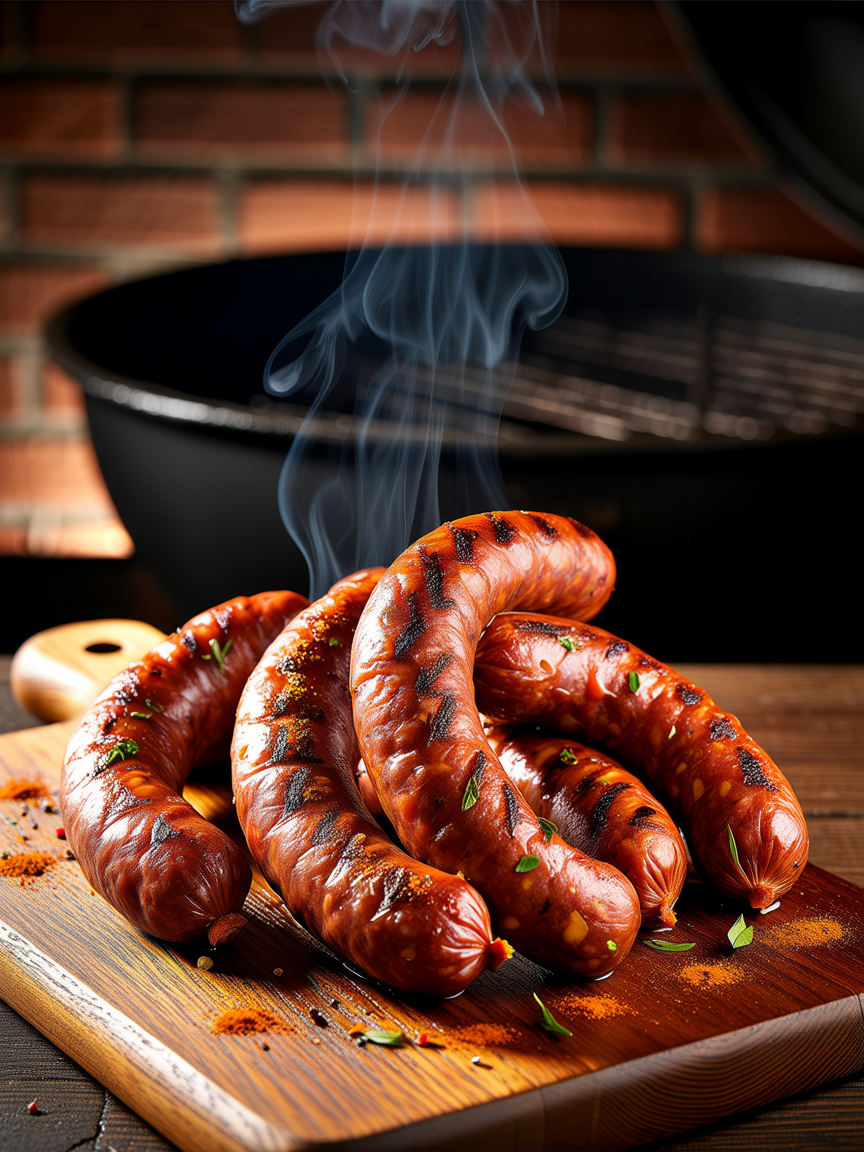
- Pull the chorizo off the grill and let it rest the meat on a cutting board or warm plate for 3 to 5 minutes before serving. This rest period is critical - it allows the juices that have been pushed to the center of the sausage by the heat to redistribute back through the entire link. Cut into a sausage before it rests and you will see all those incredible juices run right out onto the board. Rest them properly and every bite stays outrageously juicy.
- In the last 2 minutes of your cook, throw your flour tortillas or bread rolls directly on the grill grates over indirect heat for about 60 seconds per side to warm them through and get a slight char on the edges. This step takes 2 minutes and elevates the whole plate significantly - do not skip it.
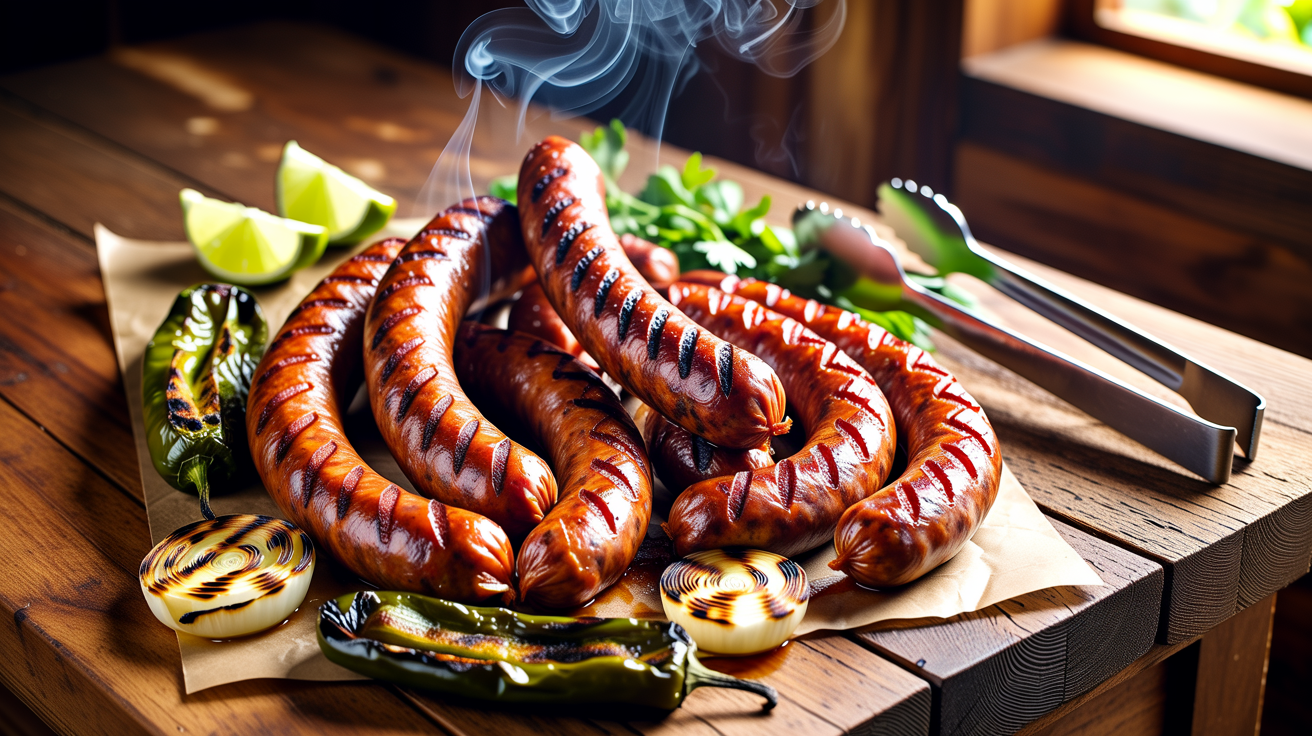
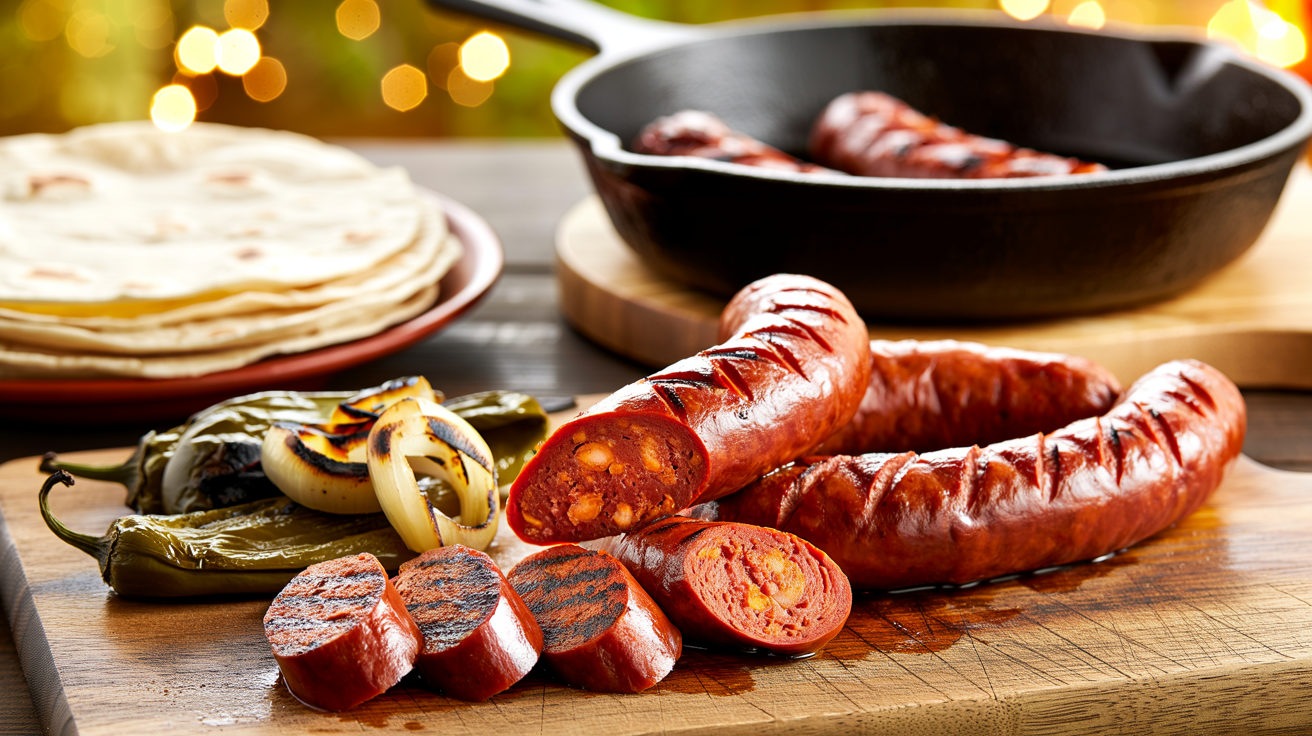
- Serve the rested chorizo links whole or sliced on the bias to show off that juicy interior. Pile the grilled onions and charred poblanos alongside, squeeze fresh lime over everything, scatter the chopped parsley on top, and get it to the table immediately. Grilled chorizo at peak heat and freshness is one of the great simple pleasures in outdoor cooking.
Nutrition
This grilled chorizo recipe is the kind of cook that reminds you why you fell in love with live fire in the first place – bold paprika-laced pork fat hitting hot grates, those natural casings blistering and crackling, and the kind of smoke-kissed aroma that pulls your neighbors right over the fence. Chorizo is one of the most rewarding sausages you will ever throw on a grill, but it does demand respect. Rush it over screaming hot coals and you will split those casings wide open and lose all those precious juices. Get the fire right, keep your temps in the 375 to 400 degree Fahrenheit range, and you will be rewarded with sausages that are snappy, juicy, and loaded with deep smoky flavor.
The magic of chorizo on the grill comes down to fat management and patience. A good fresh Mexican chorizo or a firm Spanish-style cured link carries a high fat content, which is exactly what makes it so outrageously delicious. That fat needs time to render slowly into the meat rather than flare up and char the outside before the interior hits a safe internal temp of 160 degrees Fahrenheit. We are talking a two-zone fire setup here – start those links over indirect heat to gently bring them up to temp, then finish them over direct flame for that gorgeous deep mahogany color and the char marks that tell your guests this pitmaster knows what they are doing.
At GrillMasterHQ we have grilled thousands of sausages over charcoal, wood, gas, and pellet grills, and we can tell you without hesitation that chorizo rewards a low and slow approach more than almost any other link. We are not talking brisket territory here – your total cook time is going to run 20 to 25 minutes – but that restraint and patience during the cook is what separates a competition-worthy grilled chorizo from a split, dried-out mess. Follow this method step by step and you will never grill chorizo any other way.
Grilled Chorizo Recipe: Perfect BBQ Sausages Every Time
This grilled chorizo recipe delivers smoky, spice-packed sausages with a snappy casing and juicy interior that will have your crew begging for more. With the right heat, timing, and technique, you get perfect char every single time. Fire up the grill because tonight is chorizo night.
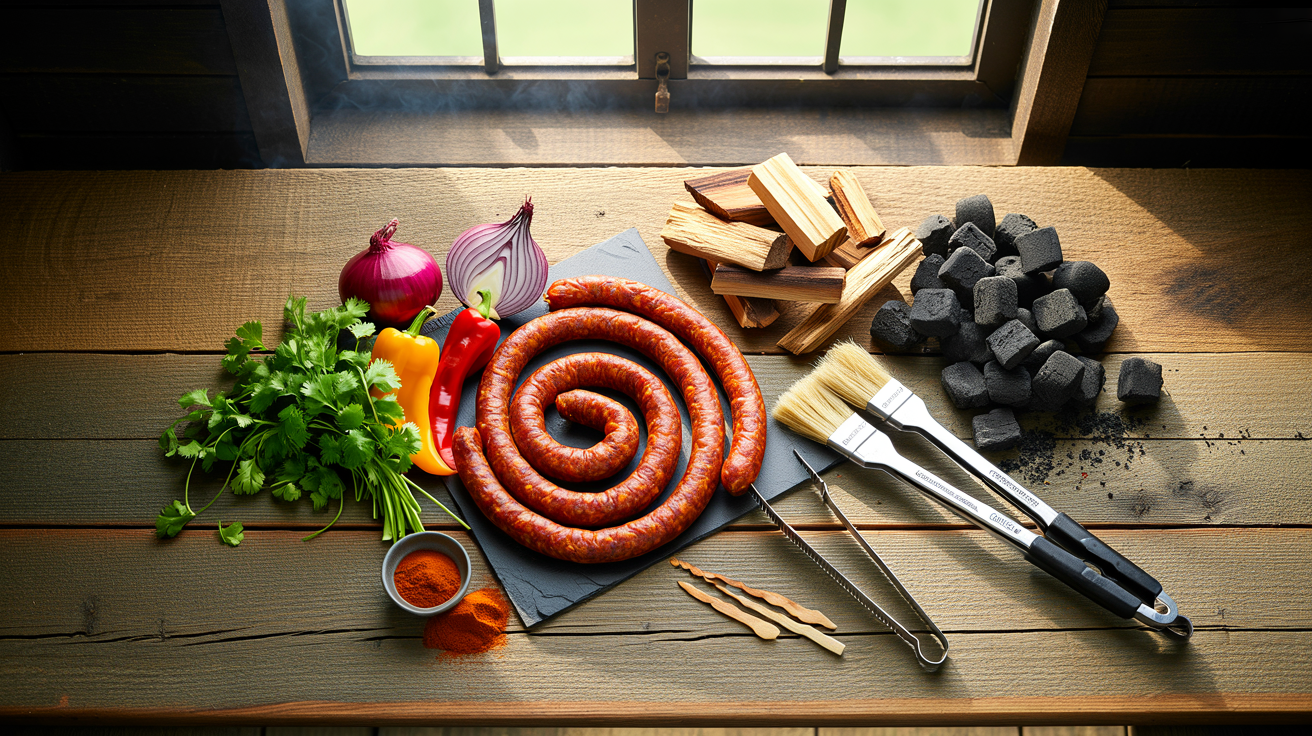
Ingredients
| AMOUNT | INGREDIENT | NOTES |
|---|---|---|
| 2 lbs | fresh Mexican chorizo or Spanish-style chorizo links | look for natural casings and a deep red color – about 8 medium links |
| 2 tablespoons | olive oil | for lightly oiling the grates – do not oil the sausages themselves |
| 1 large | white onion | sliced into thick half-inch rings for grilling alongside |
| 2 large | poblano peppers | halved and seeded for grilling as a side |
| 4 cloves | fresh garlic | smashed and minced for chimichurri or topping |
| 2 tablespoons | fresh flat-leaf parsley | finely chopped for garnish |
| 1 teaspoon | smoked paprika | for dusting the onions and peppers before grilling |
| 1 teaspoon | kosher salt | for seasoning the vegetables – the chorizo is already well seasoned |
| 8 pieces | flour tortillas or crusty bread rolls | for serving – warm them on the grill in the last two minutes |
| 1 whole | lime | cut into wedges for serving |
Instructions
Nutrition (per serving)
The BBQ Story Behind This Recipe
Chorizo has roots stretching back centuries across the Iberian Peninsula, where Spanish and Portuguese butchers developed a tradition of seasoning pork with smoked paprika, garlic, and salt to create a cured sausage that could survive long journeys at sea. When Spanish explorers and colonizers arrived in the Americas, they brought their sausage-making traditions with them, and over generations those techniques fused with New World chiles and spices to create what we now know as Mexican-style fresh chorizo. The result is two distinct and equally celebrated sausage traditions – the firm, dry-cured Spanish chorizo and the loose, fresh, aggressively spiced Mexican version – both of which absolutely shine over live fire.
In the American BBQ tradition, chorizo found its place on the grill somewhere between the taco stands of Texas border towns and the wood-fired asadores of the Southwest. Pitmaster culture in states like Texas, New Mexico, and California embraced chorizo as a natural partner to the smoky, meat-forward style of outdoor cooking that defines the region. Today you will find grilled chorizo as a staple at tailgates, backyard cookouts, and BBQ competitions from coast to coast. Whether served in a warm flour tortilla with grilled onions and peppers or plated alongside chimichurri and crusty bread in the Spanish tradition, grilled chorizo is a testament to how live fire transforms already incredible ingredients into something truly unforgettable.
Hot Off the Grill
A Closer Look
Pitmaster Tips for Best Results
- Never grill chorizo over high direct heat from start to finish. Always use a two-zone fire and start over indirect heat at 300 to 325 degrees Fahrenheit before finishing over direct flame. This prevents casing splits and ensures the interior reaches a safe 160 degrees Fahrenheit without the outside burning.
- If your chorizo casings are splitting repeatedly, your direct heat zone is too hot. Raise your grill grate higher if possible, close the vents slightly to drop the temp, or keep the links on indirect heat longer before the final sear. Patience wins every time.
- For an extra layer of smoke flavor, toss a small chunk of oak or applewood directly onto your charcoal just before you move the links to the indirect zone. The smoke will penetrate during that 12 to 15 minute indirect cook and you will start to see the faintest smoke ring on the cut surface – a beautiful thing.
- Always use an instant read thermometer rather than relying on color or touch. Fresh chorizo is heavily colored with paprika and will look deeply browned long before it is actually cooked to a safe internal temp of 160 degrees Fahrenheit. Probe the center of the thickest link every single time.
- If you are grilling a mix of Spanish cured chorizo and fresh Mexican chorizo on the same cook, remember that the Spanish cured variety is already fully cooked and only needs to be heated through to about 130 to 140 degrees Fahrenheit for best texture. Fresh Mexican chorizo must reach 160 degrees Fahrenheit. Keep them in separate zones or cook them separately to avoid overcooking the cured links.
🔧 Pitmaster Equipment
Charcoal Grill or Kettle Grill: Charcoal delivers the authentic high heat and subtle smoke that makes grilled chorizo sing. A kettle grill gives you excellent two-zone fire control.
Instant Read Thermometer: Hitting that safe internal temp of 160 degrees Fahrenheit is non-negotiable with fresh pork sausage. Do not guess – probe every link.
Long Tongs: You need precise control when rolling and flipping those links over the fire. Long tongs keep your hands clear of the heat and the flare-ups.
Chimney Starter: Gets your charcoal lit and ready in 15 minutes without lighter fluid, which can leave off-flavors on your sausages.
Wire Grill Brush or Grill Scraper: Clean grates are essential. Residue from previous cooks will cause sticking and tear those casings right open.
Aluminum Drip Pan: Place under the sausages during indirect cooking to catch fat drips and prevent flare-ups that will scorch your links.
🔥 Variations
Pellet Grill Version: Set your pellet grill to 375 degrees Fahrenheit with hickory or oak pellets loaded. Follow the same two-stage approach – 12 minutes indirect then a quick sear. Most pellet grills have a sear zone or high-temp setting that works perfectly for the final char. The consistent temperature control on a pellet grill makes it almost foolproof for sausages.
Gas Grill Version: Preheat your gas grill with all burners on high for 10 minutes, then turn off one or two burners to create an indirect zone. Add a smoker box filled with soaked oak or applewood chips to the active burner side. Place the chorizo over the unlit burners and cook indirect for 12 to 15 minutes before finishing over the lit burners for your sear. You will not get the same smoke profile as charcoal but a good smoker box gets you surprisingly close.
Chorizo and Shrimp Skewers: Cut Spanish-style cured chorizo into thick half-inch coins and alternate on metal skewers with large peeled shrimp, chunks of red bell pepper, and red onion. Grill over direct heat at 400 degrees Fahrenheit for 3 to 4 minutes per side. The fat from the chorizo bastes the shrimp as it renders and the result is absolutely spectacular.
Beer-Braised Then Grilled Chorizo: For a next-level cook, start your fresh chorizo links in a cast iron skillet or aluminum pan on the indirect zone with one cup of your favorite Mexican lager, one sliced onion, and two smashed garlic cloves. Let them braise gently for 10 to 12 minutes until nearly cooked through, then pull them out, pat dry, and hit them over direct heat for the finishing char. The braising step infuses extra moisture and flavor before the fire does its work.
Smoked Chorizo Low and Slow: Set your smoker or kettle grill up for true low and slow cooking at 225 to 250 degrees Fahrenheit using oak or hickory wood. Place fresh chorizo links directly on the grate and smoke them for 45 to 60 minutes until they hit an internal temp of 155 degrees Fahrenheit. Crank the heat to 400 degrees Fahrenheit or move to a hot grill for the final 5 minutes to set the casing and develop the bark. The slow smoke penetration on chorizo at low temps produces an incredible depth of flavor.
❓ Pitmaster FAQ
What internal temperature should grilled chorizo reach?
Fresh Mexican-style chorizo must reach an internal temp of 160 degrees Fahrenheit to be safe to eat, per USDA guidelines for ground pork products. Spanish-style cured chorizo is already cooked and only needs to reach 130 to 140 degrees Fahrenheit for optimal texture and warming. Always use an instant read thermometer – do not rely on color alone since the heavy paprika in chorizo makes it look cooked long before it actually is.
Should I prick chorizo before grilling?
This is one of the great debates in sausage grilling. Pricking the casings with a toothpick three or four times per side gives steam and expanding fat a controlled exit and greatly reduces casing splits, especially for beginners. The downside is a small amount of juice loss. If you are confident with your two-zone fire and indirect heat approach, you can skip pricking entirely and rely on controlled heat to prevent blowouts. For most home grillers, a light pricking is the safer move.
Can I use a gas grill instead of charcoal for this grilled chorizo recipe?
Absolutely. Set up a two-zone fire by leaving one or two burners off and load a smoker box with soaked oak or applewood chips on the active burner side. You will lose a little of the deep charcoal character but a quality smoker box bridges that gap significantly. Follow the same temps and timing – indirect at 300 to 325 degrees Fahrenheit first, then direct sear at 400 plus degrees to finish.
What is the difference between Spanish chorizo and Mexican chorizo for grilling?
Spanish chorizo is a cured, firm, dry sausage that comes in links and is already fully cooked. It grills beautifully and just needs to be heated through and charred. Mexican chorizo is a fresh, loose, highly spiced raw ground pork sausage that must be cooked to 160 degrees Fahrenheit internal temp. For this recipe either style works but the technique varies slightly – fresh Mexican chorizo benefits most from the indirect heat start while Spanish chorizo can handle more direct heat from the beginning.
How do I prevent chorizo from flaring up on the grill?
Chorizo has a high fat content and will cause flare-ups if placed directly over coals from the start. The two-zone setup is your best defense – keep the links over indirect heat for the first 12 to 15 minutes to render the fat gently before moving to direct heat. Keep a spray bottle of water handy for unexpected flare-ups, and never leave the grill unattended when cooking sausages over live fire.
How long should I rest grilled chorizo before cutting?
Rest the meat for a minimum of 3 to 5 minutes after pulling it off the grill. Sausages are under significant internal pressure from steam and heat during cooking, and cutting into them immediately will send all those juices running out onto the cutting board rather than staying inside where they belong. Cover loosely with foil while they rest and you will be rewarded with a noticeably juicier bite.