
BBQ Pork Steak Recipe: Smoky, Tender & Fall-Off-Bone
Ingredients
Method
- Remove the pork steaks from the refrigerator 30 to 45 minutes before cook time and pat them completely dry with paper towels. Moisture on the surface will steam instead of bark, and we are not in the steaming business. Coat each steak lightly with yellow mustard on both sides - this acts as a binder and will cook off completely, leaving zero mustard flavor behind. Do not skip this step.
- Mix your dry rub by combining the brown sugar, smoked paprika, kosher salt, black pepper, garlic powder, onion powder, cayenne, and dried oregano in a small bowl. Stir until fully combined. Apply the rub generously to all surfaces of each steak - top, bottom, and edges. Press the rub firmly into the meat with your hands so it adheres well to the mustard binder. Let the steaks sit at room temperature while you fire up the grill.
- Fire up the grill for a two-zone setup. If using a kettle grill, light a full chimney of charcoal and pour the coals to one side of the grill once they are covered in gray ash. This gives you a direct heat zone and an indirect zone. Add two to three chunks of apple or cherry wood directly onto the coals. You are targeting a grate-level temperature of 250 to 275 degrees Fahrenheit on the indirect side. Place an aluminum drip pan on the indirect side under where the steaks will sit.
- Mix your mop sauce by whisking together the apple cider vinegar, water, Worcestershire sauce, and hot sauce in a small bowl or jar. Set this next to the grill with your basting brush. The mop keeps the surface moist during the long cook and helps build layers of tangy flavor that complement the richness of the pork shoulder fat.
- Place the seasoned pork steaks on the indirect side of the grill, away from the direct coals, with the lid closed and vents adjusted to maintain 250 to 275 degrees Fahrenheit. You should see thin blue smoke wisping from the vents - that is clean smoke doing its job. Thick white billowing smoke means something is smoldering wrong, so adjust your airflow. Let the steaks cook undisturbed for the first 30 minutes so the rub can set and the early bark formation can begin.
- After 30 minutes, open the lid and apply your first coat of mop sauce using the basting brush, lightly coating both sides. Close the lid and continue cooking. Repeat this mop application every 20 to 30 minutes throughout the low and slow phase. Add fresh charcoal as needed to maintain your temperature - a fully loaded chimney of lit coals added to one side of the grill as the original coals fade will keep you in range.
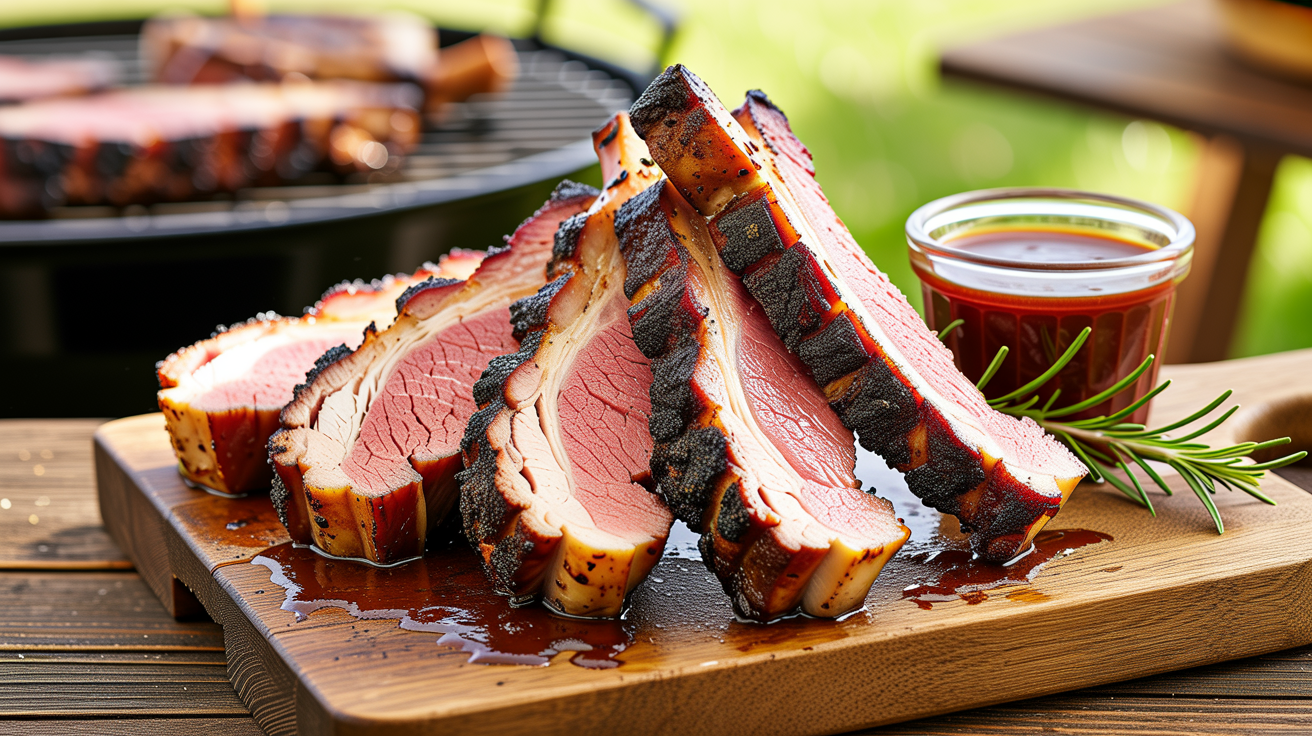
- Continue cooking on the indirect side for a total of 1.5 to 2 hours, mopping every 20 to 30 minutes, until the internal temp of the thickest steak reads 185 to 190 degrees Fahrenheit. At this point the bark should be set and dark, the fat should be visibly rendered, and a proper smoke ring should be visible if you peek at the edge of a steak. The meat will still have some firmness at this stage - that is correct. We are not done yet.
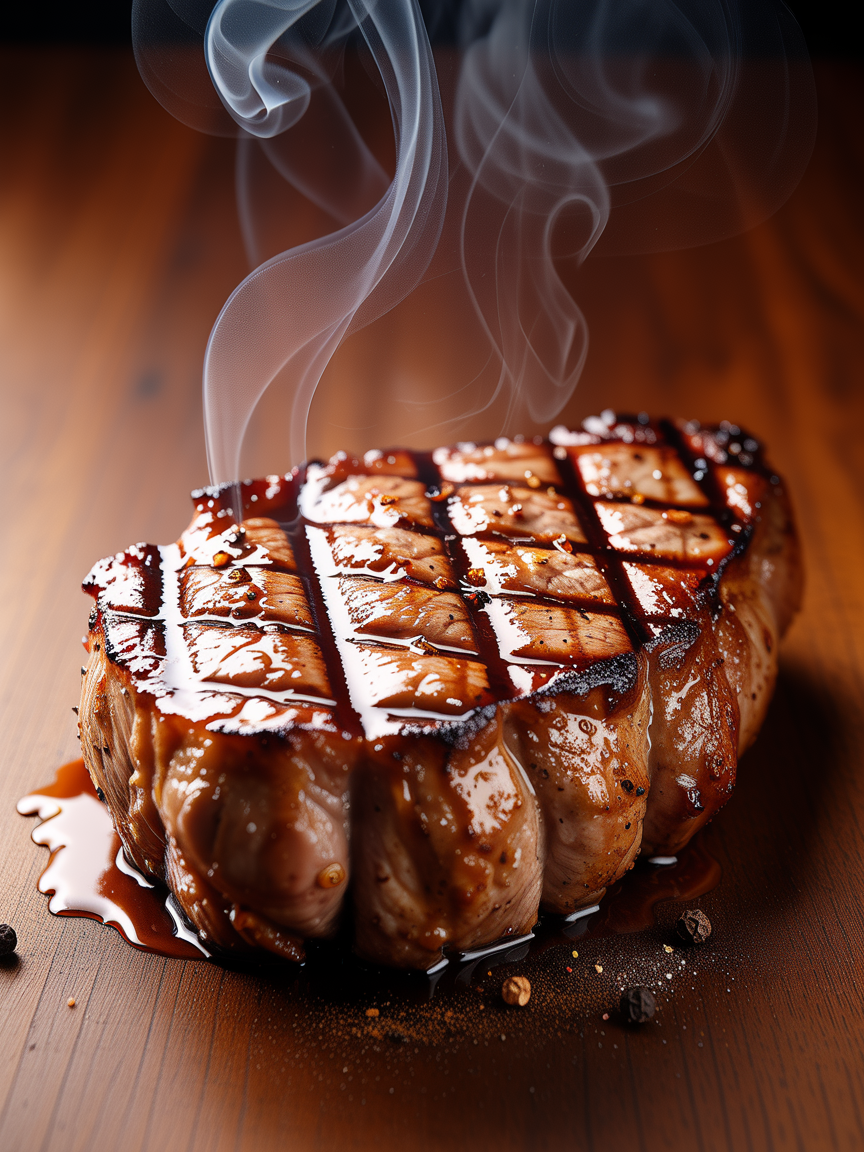
- Now it is time for the finishing move. Move the steaks directly over the hot coals for a quick sear. Apply a generous coat of BBQ sauce to both sides of each steak. Cook over direct heat for 3 to 5 minutes per side, watching closely and rotating as needed to build a caramelized, slightly charred glaze without burning. The sugar in the sauce will bubble and tighten beautifully. Pull the steaks when the internal temp hits 195 to 200 degrees Fahrenheit.
- Transfer the finished pork steaks to a cutting board or sheet pan and tent loosely with aluminum foil. Rest the meat for a full 10 minutes before serving. This rest allows the muscle fibers to relax and the juices to redistribute throughout the steak. Cutting into the meat immediately after pulling will drain those hard-earned juices onto your cutting board instead of into your mouth. Be patient - the wait is worth it. Serve whole or sliced against the grain.
Nutrition
A proper bbq pork steak recipe is one of those backyard legends that does not get nearly enough credit on the competition circuit or the weekend patio scene. We are talking about thick-cut pork shoulder steaks cooked low and slow over a two-zone fire until the fat renders down and the collagen breaks into pure silk, then finished hot over direct coals to build a lacquered, caramelized bark that will have your guests scraping the plate clean. This is St. Louis-style BBQ heritage done right, and once you nail the method, you will never look at a pork chop the same way again.
The secret to these beauties is treating them more like a braise than a quick grill job. We are starting at a grate-level temp of around 250 to 275 degrees Fahrenheit, letting the smoke do its work for the first hour, and then cranking the heat or moving the steaks directly over the coals to finish with that signature char. A good smoke ring forms when the nitrogen dioxide from your wood smoke reacts with the myoglobin in the meat, and with pork shoulder steaks that are cut at least one inch thick, you have enough mass to develop a beautiful pink ring just beneath the bark. That visual tells you the fire was doing its job from the very start.
We are also going to mop these bad boys during the cook, layering flavors every 20 to 30 minutes so the surface never dries out and the seasoning keeps building in complexity. The finishing sauce goes on during the last 10 minutes over direct heat, giving it time to tighten up, bubble, and develop those gorgeous char spots without burning to a bitter crust. Pull them at an internal temp of 195 to 200 degrees Fahrenheit for maximum tenderness, rest the meat for 10 minutes under a foil tent, and then get ready for the kind of BBQ that people talk about for years.
BBQ Pork Steak Recipe: Smoky, Tender & Fall-Off-Bone
This bbq pork steak recipe delivers fall-off-bone tenderness with deep smoke flavor and a sticky caramelized bark that will stop everyone in their tracks. Built on low and slow technique with a blazing finish, this is the pork recipe that will have your neighbors climbing the fence. Fire up the grill today.
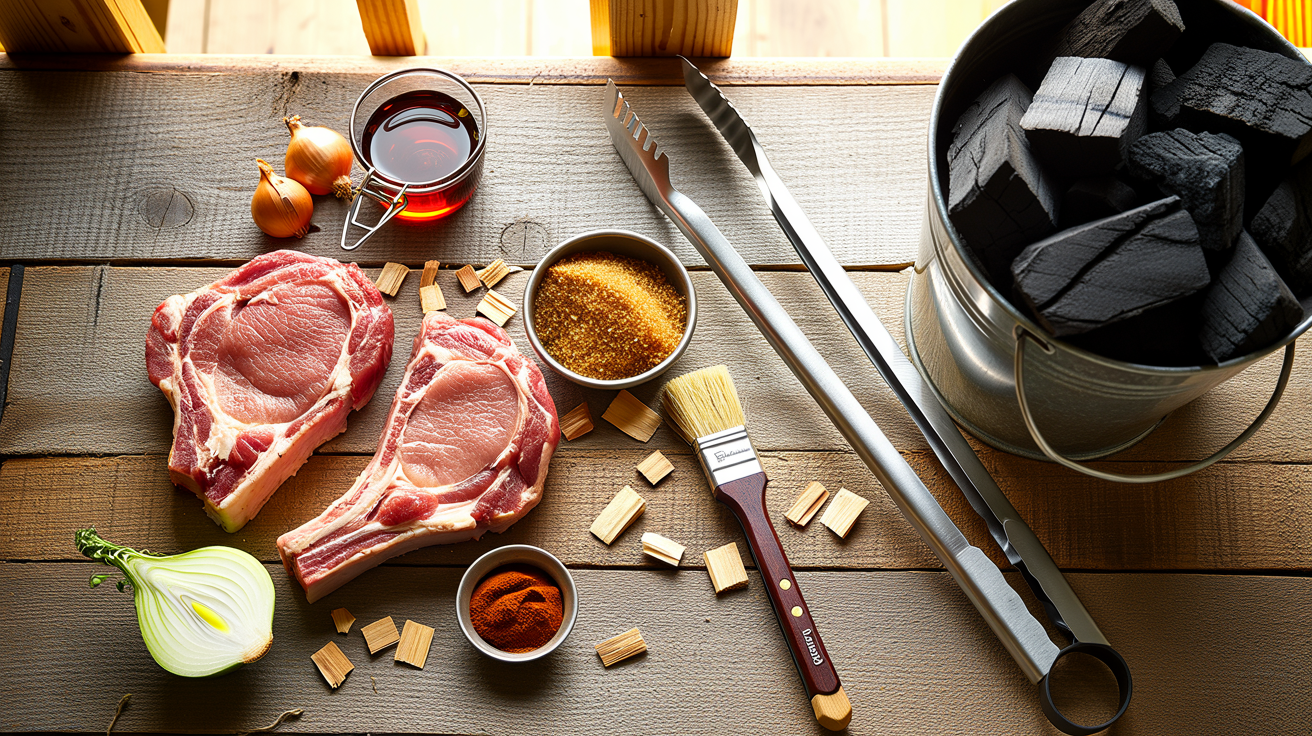
Ingredients
| AMOUNT | INGREDIENT | NOTES |
|---|---|---|
| 4 pieces | bone-in pork shoulder steaks | cut 1 to 1.5 inches thick, approximately 3 to 4 lbs total |
| 2 tablespoons | yellow mustard | used as a binder to help the rub adhere to the meat |
| 2 tablespoons | brown sugar | packed, for sweetness and caramelization in the bark |
| 1 tablespoon | smoked paprika | adds color and a subtle smoky backbone to the rub |
| 1 tablespoon | coarse kosher salt | do not substitute table salt – coarser grain gives better bark texture |
| 1 teaspoon | black pepper | freshly cracked for best flavor |
| 1 teaspoon | garlic powder | not garlic salt |
| 1 teaspoon | onion powder | balances the rub and adds savory depth |
| 1 teaspoon | cayenne pepper | reduce to half teaspoon if you prefer mild heat |
| 1 teaspoon | dried oregano | adds an herbal note to the rub profile |
| 3 chunks | apple or cherry wood chunks | for smoking – these fruity woods pair beautifully with pork |
| 1 cup | apple cider vinegar | base for the mop sauce |
| 0.5 cup | water | to thin the mop sauce |
| 2 tablespoons | Worcestershire sauce | adds umami depth to the mop |
| 1 tablespoon | hot sauce | optional, for the mop sauce |
| 1 cup | your favorite BBQ sauce | used only during the final 10 minutes of cook – apply too early and it burns |
Instructions
Nutrition (per serving)
The BBQ Story Behind This Recipe
Pork steaks are a St. Louis, Missouri original, and if you grew up in that city you already know this is sacred territory. The cut rose to prominence in the mid-20th century when local butchers began slicing pork shoulder or Boston butt crosswise into thick, bone-in steaks rather than leaving them whole for slow roasting. The result was a more affordable, faster-cooking cut that still carried all the fat, connective tissue, and rich flavor of the full shoulder. St. Louis pitmasters embraced the cut fiercely, slow-cooking them over charcoal and mopping them with Maull’s barbecue sauce, a local institution, until the meat was falling off the bone and the surface had developed a thick, tacky glaze. Backyard cookouts in St. Louis to this day often feature pork steaks as the centerpiece rather than ribs or brisket, and locals will defend that tradition with the same passion Texans bring to brisket.
Beyond St. Louis, pork steak BBQ traditions echo throughout the Midwest and deep South wherever pork shoulder was the economical centerpiece of community feasts. Church cookouts, family reunions, and Fourth of July gatherings from Missouri to Alabama have long featured some version of this slow-cooked, sauce-mopped pork steak as the dish that feeds a crowd without breaking the bank. The beauty of the cut is that it is nearly impossible to ruin if you are patient with the fire. The high fat and collagen content forgives a pitmaster who runs a little hot or lets the cook go a few minutes long, which made it the perfect cut for backyard warriors learning their craft. That forgiving nature combined with its bold, porky depth of flavor is exactly why this recipe deserves a permanent spot in every pitmaster playbook.
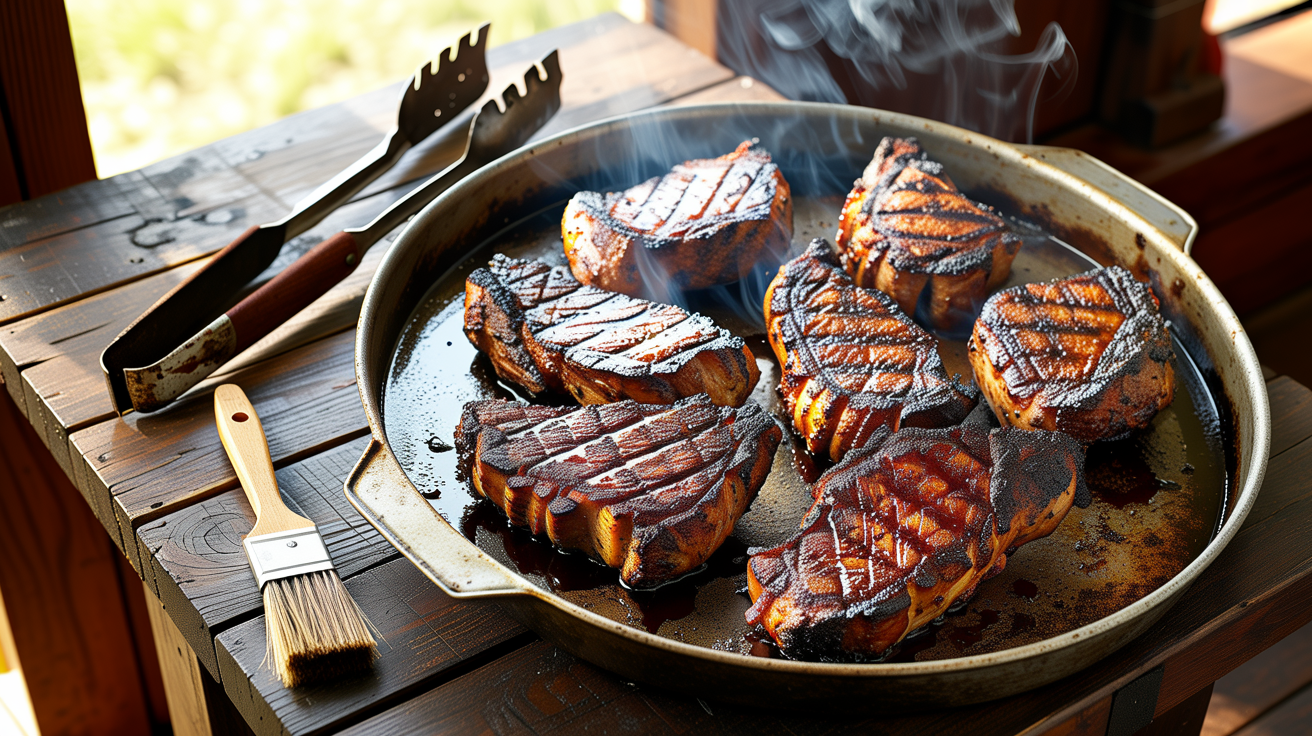
Hot Off the Grill
A Closer Look
Pitmaster Tips for Best Results
- Always buy pork shoulder steaks cut at least 1 inch thick – thin steaks will dry out during the low and slow phase before the collagen has a chance to break down. Ask your butcher to cut them fresh if the pre-packaged ones look thin.
- Maintain a consistent grill temp of 250 to 275 degrees Fahrenheit during the indirect cooking phase. Temps that run too high will tighten the muscle fibers before the fat renders, giving you a tough chewy result instead of that fall-off-bone texture we are after.
- Apply your BBQ sauce only during the final 10 minutes of the cook over direct heat. The sugars in most commercial and homemade BBQ sauces will burn to a bitter, black char if applied too early – save the sauce for the finish line.
- Rest the meat for a minimum of 10 minutes after pulling from the grill. The internal temp will continue rising 5 to 10 degrees during the rest, which is called carryover cooking – factor this into your pull temp so you do not overshoot your target.
- If you want an extra layer of smoke penetration, wrap the steaks tightly in butcher paper after the first hour of indirect cooking, return them to the indirect zone, and cook until they hit 195 degrees Fahrenheit internally. This is the Texas Crutch method adapted for pork steaks and it speeds up the cook while keeping moisture locked in.
🔧 Pitmaster Equipment
Charcoal Grill or Offset Smoker: Charcoal and wood smoke deliver the authentic flavor and bark development that makes this recipe exceptional. A kettle grill with a two-zone setup works perfectly.
Instant Read Thermometer: Critical for hitting that 195 to 200 degree Fahrenheit sweet spot where the collagen fully breaks down and the meat reaches fall-off-bone tenderness.
Long Tongs or Grill Gloves: Keep your hands safe when flipping thick steaks over a hot fire and when managing the charcoal for your two-zone setup.
Mop or Basting Brush: A silicone basting brush or cotton mop lets you layer on your mop sauce and finishing glaze without knocking off the bark you have been building all cook.
Aluminum Drip Pan: Place this under the steaks on the indirect side to catch drippings, add moisture to the cook environment, and prevent flare-ups during the low and slow phase.
Chimney Starter: Lights charcoal evenly and quickly without lighter fluid, so no chemical taste gets into your smoke and your fire is ready in about 15 minutes.
🔥 Variations
Pellet Grill Version: Set your pellet grill to 250 degrees Fahrenheit and load it with apple or cherry pellets for a mild, sweet smoke profile. Follow all the same steps including the two-stage cook, mopping schedule, and direct sear finish. Most pellet grills have a high-heat sear mode – use that for the final stage to get proper char on the BBQ sauce glaze. Pull at 195 to 200 degrees Fahrenheit and rest the meat the same way.
Gas Grill Version: Set up your gas grill for indirect heat by lighting only one side of the burners and targeting 250 to 275 degrees Fahrenheit on the cool side. Place a smoker box filled with soaked apple wood chips over the lit burners to generate smoke throughout the cook. Follow the same mop schedule and finish the steaks directly over the lit burners with BBQ sauce during the final 10 minutes. The smoke flavor will be lighter than charcoal but still genuinely delicious.
St. Louis Style with Maull Sauce: Go fully authentic by swapping your finishing sauce for Maull’s Original BBQ Sauce, the St. Louis staple that has been mopped onto pork steaks in backyards there for generations. Add a tablespoon of white vinegar and a dash of celery seed to your dry rub for an extra regional touch. Serve with white bread and dill pickles on the side exactly like the locals do it.
Spicy Chipotle Version: Add one tablespoon of chipotle powder and one teaspoon of ground cumin to your dry rub in place of the cayenne and oregano. Use a chipotle-based BBQ sauce for the finishing glaze and add a tablespoon of adobo sauce from a can of chipotles to your mop mixture. The smoky heat of the chipotle complements the apple wood smoke and the richness of the pork shoulder in an outstanding way.
❓ Pitmaster FAQ
What internal temperature should pork steaks reach to be safe and tender?
For food safety, the USDA requires pork to reach a minimum internal temp of 145 degrees Fahrenheit with a 3-minute rest. However, for pork shoulder steaks you want to push much further – target 195 to 200 degrees Fahrenheit. At this higher temp the tough collagen and connective tissue in the shoulder muscle fully break down into gelatin, giving you that fall-off-bone tenderness that makes this cut legendary. Use an instant read thermometer inserted into the thickest part away from the bone.
Can I use boneless pork steaks instead of bone-in?
You can use boneless pork steaks and they will still produce a great result, but bone-in is strongly preferred. The bone helps regulate temperature during cooking, adds collagen to the surrounding meat as it cooks, and contributes to richer flavor overall. If you can only find boneless, reduce your indirect cooking time by 15 to 20 minutes and monitor the internal temp closely since boneless cuts can dry out faster.
What is the difference between a pork steak and a pork chop?
A pork chop comes from the loin, which is a lean, tender muscle that runs along the back of the pig. It cooks quickly and dries out fast if overcooked. A pork steak is cut from the shoulder or Boston butt, which is a much fattier, more heavily worked muscle loaded with collagen and intramuscular fat. That fat content makes pork steaks ideal for low and slow BBQ cooking because they stay moist and flavorful even over a long cook. They are two very different animals even though both come from a pig.
How do I know when the bark is properly formed?
A properly formed bark will look dark mahogany to nearly black on the surface, feel firm and dry to a light touch, and should not smear or wipe off when you press it. If the surface feels tacky or wet, the bark has not fully set yet and needs more time on the indirect side before you apply sauce or move to direct heat. The bark forms through a combination of the Maillard reaction and the drying of the rub surface – both take time and consistent temperature to develop correctly.
Can I prepare these pork steaks ahead of time?
Yes – you can apply the dry rub and let the steaks sit uncovered on a rack in the refrigerator for up to 24 hours before cooking. This dry brine process draws moisture to the surface, dissolves the salt into that moisture, and then pulls it back into the meat, seasoning from the inside out. Pull the steaks from the fridge 30 to 45 minutes before grilling so they come closer to room temperature and cook more evenly from edge to center.