
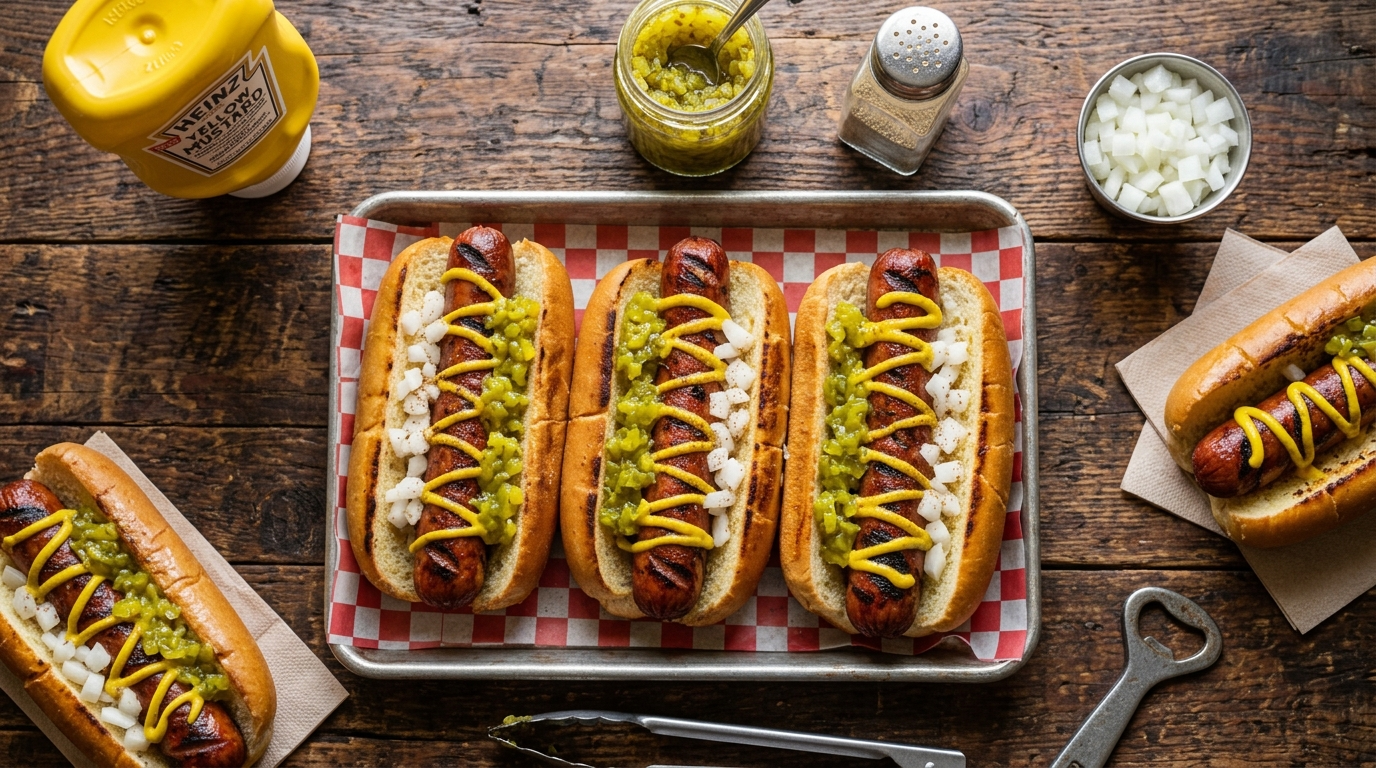
Grilled Hot Dogs Recipe: Stadium Style Done Right
Ingredients
Method
- Fire up the grill and build a two-zone fire. For charcoal, pile your lit coals on one side of the grill for direct high heat, leaving the other side empty for indirect cooking. Target a grate temperature of 400 to 425 degrees Fahrenheit over the direct zone. For gas, turn one or two burners to high and leave one burner off. Let the grill preheat with the lid closed for 10 to 15 minutes until it is fully up to temp. While the grill heats, use a folded paper towel dipped in neutral oil and held with tongs to wipe down the grates twice. Clean, oiled grates are the difference between perfect grill marks and a torn dog.
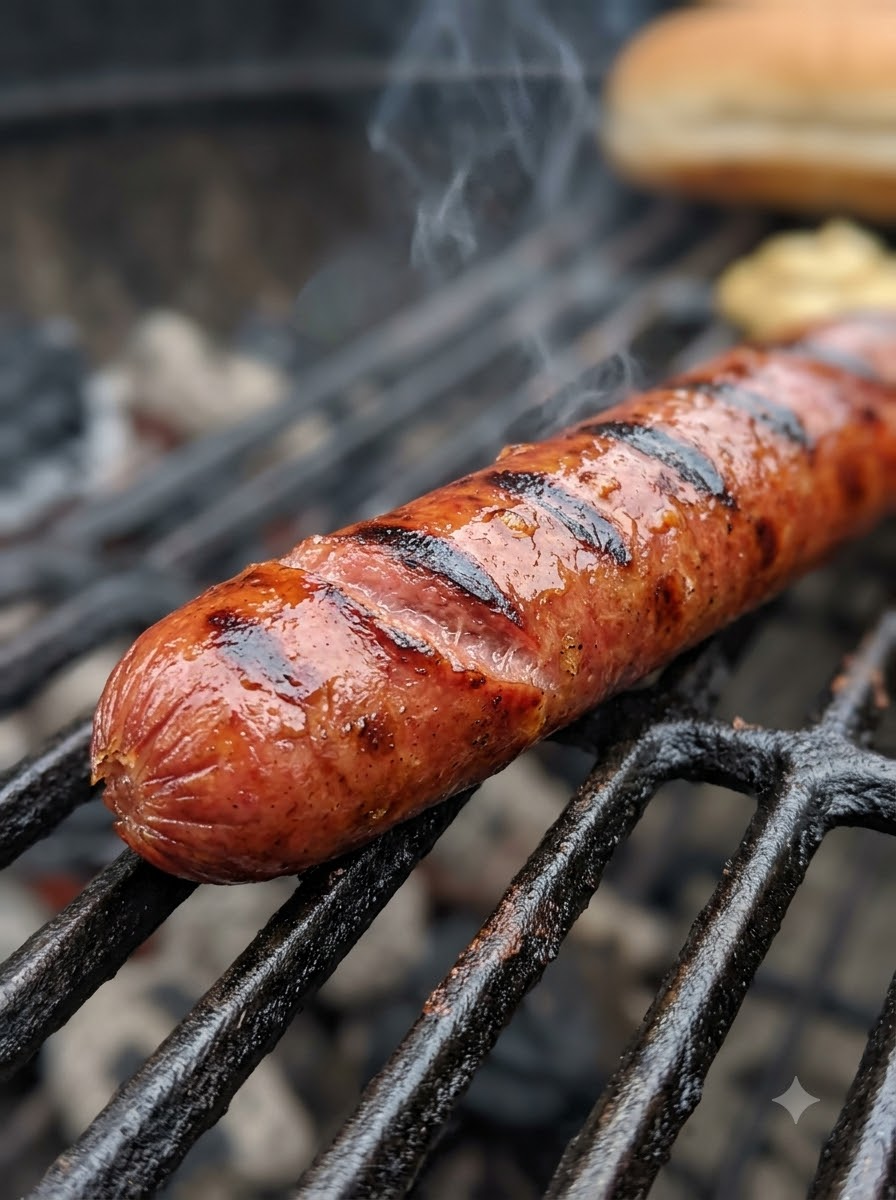
- Score your hot dogs before they touch the grates. Use a sharp paring knife to cut a shallow spiral around each dog, making cuts about an eighth of an inch deep and spacing each pass about one inch apart as you rotate. Alternatively cut four to five diagonal slashes across the top of each dog. This scoring technique opens up the surface of the casing, creates more opportunity for the direct heat to build char and a slight bark-like crust, and allows any smoke flavor from the grill to penetrate into the meat rather than just sitting on the surface. Do not skip this step if you want stadium-level results.
- Place the scored hot dogs directly over the high heat zone of your grill. Lay them perpendicular to the grates so you get defined crosshatch grill marks rather than just parallel lines. Close the lid and let them cook undisturbed for about 90 seconds to 2 minutes. You are looking for clear grill marks developing and the scoring opening up slightly as the casing starts to contract and blister. Rotate each dog a quarter turn using your long tongs, close the lid again, and cook another 90 seconds. Repeat this rotation process until you have char marks on all four sides of each dog, about 6 to 8 minutes total.
- Monitor the internal temp and watch the casing closely as you rotate. You are targeting an internal temp of 165 degrees Fahrenheit measured with your instant read thermometer inserted lengthwise through the end of the dog. If the casing starts splitting dramatically before you hit that temp, move the dogs to the indirect heat zone, close the lid, and let the indirect convective heat finish them off without more direct char. A small amount of splitting at the scored cuts is completely normal and actually looks great on a finished stadium dog. Major blowouts mean your fire is too aggressive.
- About 2 minutes before your dogs come off the grill, butter your buns. Spread a thin layer of softened butter on the cut sides of each bun and lay them butter-side down directly on the grates over the indirect heat zone or the lower-temp edge of the direct zone. Toast for 60 to 90 seconds until golden brown with a light char on the edges. Watch them closely because buttered buns go from perfectly toasted to burnt fast. Remove the buns and set them aside cut-side up on a platter.
- Rest the dogs off the heat for about 60 seconds after pulling them from the grill. This is a short rest but it matters. Letting the dogs sit allows the juices inside the casing to redistribute slightly so that first bite delivers full flavor rather than just squirting onto your shirt. While they rest, set up your topping station with mustard, ketchup, relish, diced onion, and sliced sport peppers. Nestle each dog into a toasted bun, build your toppings from the bottom up, and finish with a light dusting of celery salt over the whole dog for that true Chicago stadium signature.
- Serve immediately. Stadium style grilled hot dogs are a dish where timing matters. The contrast between the hot snapping dog and the toasty bun is best in the first two minutes after assembly. Set out extra condiments on the table, keep any remaining dogs warm on the indirect zone of the grill with the lid cracked, and fire up the next batch as needed. These go fast and your crew will be back for seconds before you can even get your own plate loaded.
Nutrition
This grilled hot dogs recipe is the one you have been searching for every time you want to bring that ballpark energy straight to your backyard. We are not talking about sad pale dogs rolled around in water on a steam tray. We are talking about split-seared, charred, snapping-with-every-bite hot dogs cooked over a properly managed fire at around 400 to 425 degrees Fahrenheit. That is the sweet spot where the casing blisters, the inside heats through to a safe internal temp of 165 degrees Fahrenheit, and the whole dog takes on a layer of smoky, caramelized flavor that no microwave will ever replicate.
The technique matters more than most people realize when it comes to hot dogs on the grill. You want two heat zones set up on your charcoal grill or gas grill. Start the dogs over direct high heat to get those deep grill marks and that satisfying char, then finish them over indirect heat if the casing starts splitting too fast. Scoring the dogs with a shallow spiral cut or a few diagonal slashes before they hit the grates opens up the surface area, creates more bark-like texture, and lets the smoke penetrate deeper into the meat. It takes maybe 6 to 8 minutes total, but the difference in flavor is massive.
At GrillMasterHQ we believe every cook deserves the same respect, whether you are smoking a brisket low and slow for 14 hours or firing up a quick game day spread. Stadium style hot dogs are a true American BBQ tradition and when you execute them correctly they are absolutely worthy of the grill. Toast those buns directly on the grates, pile on your toppings, and get ready to hear your crew go quiet because their mouths will be full.
Grilled Hot Dogs Recipe: Stadium Style Done Right
This grilled hot dogs recipe delivers that iconic stadium snap, deep char marks, and smoky flavor you can only get over live fire. Loaded with classic toppings and cooked to perfection, these are not your backyard boiled dogs. Fire up the grill because game day just got a serious upgrade.
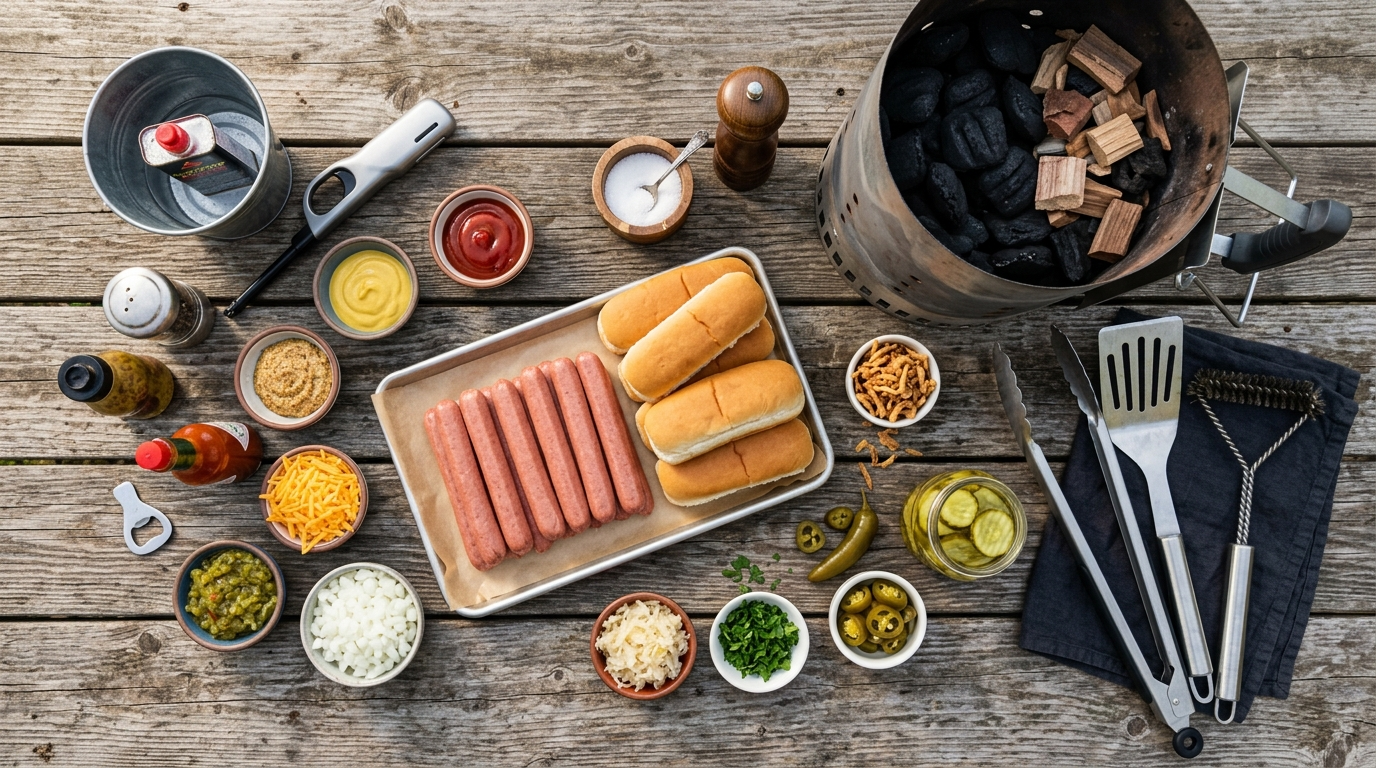
Ingredients
| AMOUNT | INGREDIENT | NOTES |
|---|---|---|
| 8 count | all-beef hot dogs | look for a natural casing variety for that authentic stadium snap |
| 8 count | hot dog buns | brioche or potato buns preferred for toasting on the grill |
| 1 tablespoon | neutral oil | canola or vegetable oil for brushing the grates before cooking |
| 1 cup | yellow mustard | classic stadium style condiment, do not skip this one |
| 1 cup | ketchup | optional but traditional for stadium style service |
| 1 cup | sweet pickle relish | use Chicago-style neon green relish if you can find it for full authenticity |
| 1 medium | white onion | finely diced raw for classic topping or grilled soft for a sweeter flavor |
| 4 ounces | sport peppers or pickled peppers | sliced thin, adds heat and acidity that cuts through the richness |
| 1 teaspoon | celery salt | the secret Chicago stadium finish, a light dusting over the finished dog |
| 2 tablespoons | softened butter | for buttering the buns before toasting on the grill |
Instructions
Nutrition (per serving)
The BBQ Story Behind This Recipe
The hot dog has deep roots in American baseball and street food culture going back to the late 1800s. German immigrants brought their sausage-making traditions to cities like New York, Chicago, and Cincinnati, and vendors quickly found that a sausage served in a roll was the perfect handheld food for ballparks and street carts. By the early 1900s hot dogs were already synonymous with American sporting events, and the tradition of the stadium dog has never faded. Chicago style, New York style, and Coney Island style all emerged from regional pride and local ingredient availability, each one carrying a distinct topping identity that locals defend to this day.
The grilling tradition specifically elevated the hot dog from a steamed or boiled convenience food into something with real fire-kissed character. Backyard pitmasters and tailgate legends across America figured out that a few minutes over live coals transformed the humble hot dog into something with genuine smoke flavor, caramelized casing, and a satisfying snap that steaming could never deliver. Today the grilled hot dog is a cornerstone of game day cooking and tailgate culture nationwide, sitting proudly alongside burgers and ribs as a true grill staple. Respect the dog, respect the fire, and you will always eat well on game day.
Hot Off the Grill
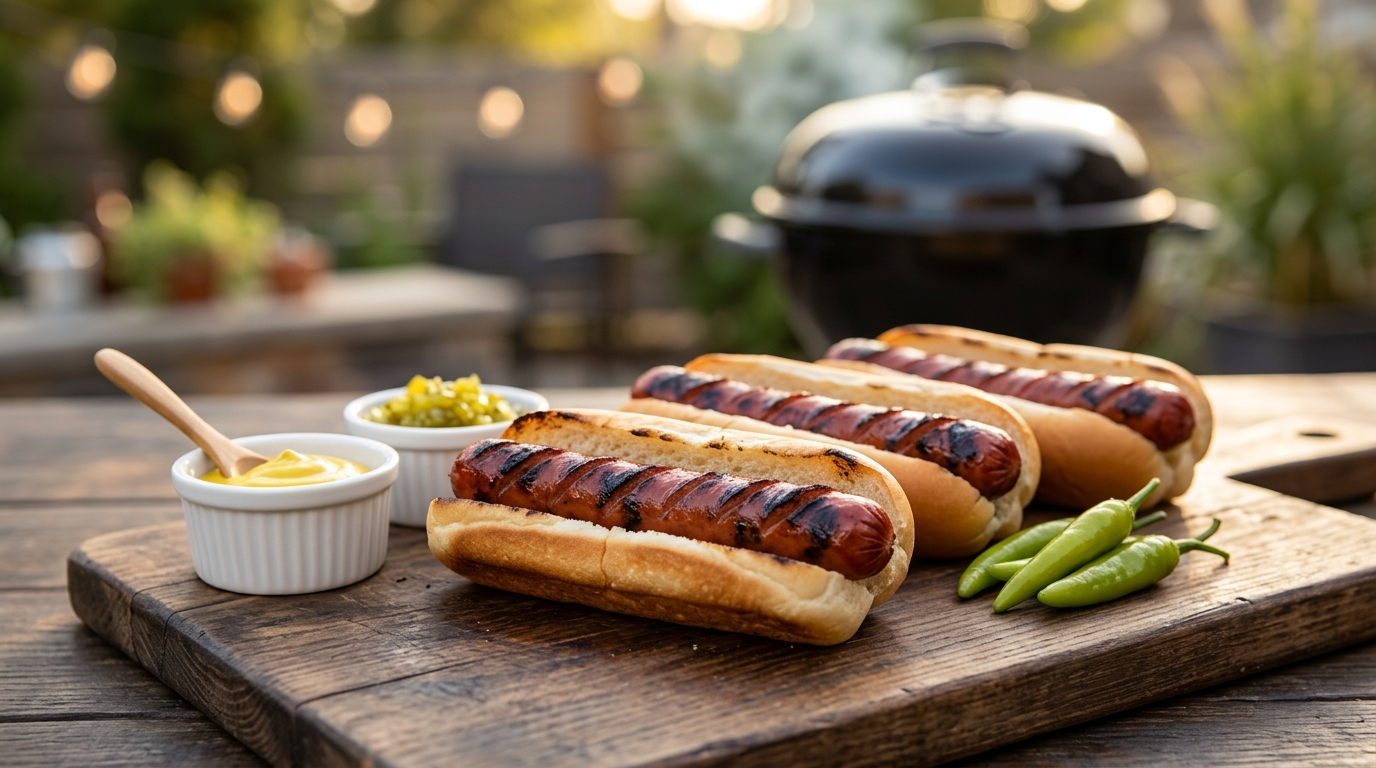
A Closer Look
Pitmaster Tips for Best Results
- Always use natural casing hot dogs for a stadium-style cook. The natural casing gives you that iconic snap when you bite through and it holds up to direct high heat much better than skinless dogs which tend to split and dry out fast over 400 degrees Fahrenheit.
- Do not poke or pierce your hot dogs with a fork before grilling. Every hole you make is a path for flavorful juices to escape onto the fire. Use your instant read thermometer inserted lengthwise through the end of the dog to check internal temp without losing moisture.
- If you want to add real smoke flavor to your hot dogs, toss a chunk of cherry wood or apple wood onto your charcoal right before the dogs go on. Cherry wood in particular adds a subtle sweetness that pairs beautifully with the savory snap of an all-beef dog. On a gas grill use a smoker box filled with soaked wood chips on the active burner.
- Butter is non-negotiable for bun toasting. Plain buns on a hot grill just dry out and get leathery. A thin coat of softened butter creates a barrier, promotes even browning, adds flavor, and gives you that golden stadium bun color that makes everything look more appetizing on the platter.
- Set up a proper two-zone fire every single time you grill hot dogs even if it feels like overkill for a simple cook. The indirect zone is your safety net. When one dog starts splitting or charring too fast you need a cooler zone to move it to immediately. Without that zone you are just chasing a fire you cannot control.
🔧 Pitmaster Equipment
Charcoal Grill or Gas Grill: A two-zone fire setup is essential for getting perfect char on direct heat without splitting the casing before the dogs are heated through.
Instant Read Thermometer: Hot dogs are pre-cooked but you still want to confirm an internal temp of 165 degrees Fahrenheit before serving for food safety and perfect texture.
Long Tongs: Keep your hands safely away from the fire while rotating dogs for even char on all sides without piercing the casing.
Sharp Paring Knife: Use this to score a spiral or diagonal cuts into the hot dogs before grilling to maximize surface area and smoke penetration.
Grill Brush: Clean hot grates prevent sticking and ensure those beautiful defined grill marks transfer cleanly to every dog.
🔥 Variations
Smoked Chili Cheese Dog Version: Fire up your smoker to 250 degrees Fahrenheit and lay the scored hot dogs directly on the grates for 30 to 40 minutes until the internal temp hits 165 degrees Fahrenheit and the surface has a deep mahogany color. Finish over direct high heat for 60 to 90 seconds per side to char up the casing. Top with your favorite beef chili, a pile of shredded sharp cheddar, and diced white onion for a low and slow twist on the classic stadium dog.
Gas Grill Stadium Dog Version: Set your gas grill up for two-zone cooking by turning the left burners to high and leaving the right burner off. Add a smoker box loaded with soaked apple wood chips over the active burner and let it preheat with the lid closed for 15 minutes until you see smoke. Follow the same scoring and rotation technique over direct heat and finish on the indirect side. You will get excellent grill marks and a hint of real smoke flavor even without charcoal.
Pellet Grill Smoked Hot Dog Version: Set your pellet grill to 375 degrees Fahrenheit using hickory or cherry pellets. Score the dogs and place them directly on the grates. The pellet grill will give you consistent temperature and steady smoke throughout the cook. Rotate every 2 minutes for about 8 to 10 minutes total until the internal temp hits 165 degrees Fahrenheit and the surface has visible char and a slight smoke ring just under the casing. Toast buns on the grill grates for the last 90 seconds of the cook.
New York Street Cart Style Version: After grilling your dogs to an internal temp of 165 degrees Fahrenheit and getting a solid char on all sides, transfer them to a small aluminum pan on the indirect zone with about a quarter inch of water, a tablespoon of butter, and a pinch of salt. Cover loosely with foil and let them steam for 2 minutes. This is the street cart steamer finish that keeps the dogs juicy and plump under the toppings. Serve on a steamed plain bun with spicy brown mustard and sauerkraut.
❓ Pitmaster FAQ
What internal temperature should grilled hot dogs reach?
Hot dogs are pre-cooked at the factory but you should always grill them to an internal temp of 165 degrees Fahrenheit. Insert your instant read thermometer lengthwise through the end of the dog for the most accurate reading. At 165 degrees Fahrenheit the casing will be snapping, the interior will be fully heated through, and any bacteria introduced during handling will be eliminated. Do not skip the thermometer even on a food that seems simple.
How do I keep hot dogs from splitting on the grill?
Two things cause hot dogs to split badly on the grill: too much direct heat and cooking too fast without any indirect zone to fall back on. Score the dogs before grilling to give the casing a controlled expansion point, build a two-zone fire so you can move dogs off direct heat the moment splitting gets aggressive, and aim for a grill temp of 400 to 425 degrees Fahrenheit rather than an inferno. A small amount of opening at the scored cuts is completely normal and looks great.
What is the best type of hot dog to use for grilling?
All-beef natural casing hot dogs are the top choice for grilling. The natural casing gives you that audible snap and holds together beautifully over direct flame. Skinless dogs work but they split more easily and do not develop the same char texture. Premium brands that use whole cuts of beef rather than trimmings will have noticeably better flavor over the fire. Avoid low-fat or reduced-sodium versions for grilling as they tend to dry out faster at high temps.
Can I grill hot dogs on a charcoal grill if I am a beginner?
Absolutely. Hot dogs are actually one of the best first cooks to do on a charcoal grill because the cook time is short, the window of success is wide, and you get to practice managing a two-zone fire without the stress of a long cook. Light your charcoal using a chimney starter, pile the lit coals on one side when they are fully ashed over, set the grate in place, let it heat for 10 minutes, and follow the scoring and rotation steps. You will have a great result your first time out.
How far ahead can I prep grilled hot dogs for a tailgate?
Score the hot dogs the night before and store them covered in the refrigerator. On game day fire up the grill at your tailgate spot and cook them fresh. If you need to hold finished dogs for a crowd, place them in a covered aluminum pan on the indirect zone of the grill with a splash of water and a little butter to keep them moist. Do not hold them longer than 20 to 30 minutes or the casing will start to toughen up. Fresh off the grill is always the best option.