
Brisket Butcher Paper Wrap Method: The Ultimate Guide
Ingredients
Method
- Trim the brisket the night before your cook. Using a sharp boning or trimming knife, remove excess fat from the fat cap down to about a quarter-inch thickness. Trim away any hard, waxy fat that will not render during the cook, and remove the thin sections of flat that would dry out and burn. A properly trimmed brisket is the foundation of a great result, so take your time here.
- Coat the entire surface of the brisket with a thin, even layer of yellow mustard. This acts as a binder and helps your seasoning stick. Do not worry about the flavor, it cooks off completely and you will not taste it in the finished product.
- Season the brisket generously with your salt and pepper rub, using roughly equal parts by volume. Apply a heavy, even coat to all surfaces including the sides and any exposed meat from trimming. If you are using garlic powder, mix it into the rub before applying. For a 12 to 14 lb packer brisket, you want a visible crust of seasoning. Wrap loosely in plastic wrap and refrigerate overnight, or for at least 2 hours.
- Pull the brisket out of the refrigerator 60 minutes before cooking so it can come closer to room temperature. While it rests on the counter, fire up the smoker and dial it in to a steady 250 degrees Fahrenheit. Add your wood chunks to the firebox or smoker box. Wait until you see thin blue smoke rather than thick white billowing smoke before putting the meat on. Thin blue smoke means clean combustion and clean flavor.
- Place the brisket fat side up on the smoker grate, away from direct heat. Insert your leave-in probe thermometer into the thickest part of the flat muscle, making sure it does not touch any fat pockets. Close the lid and maintain your 250 degree target throughout the cook. Resist the urge to open the smoker in the first few hours. Every time you lift that lid you lose 15 to 20 minutes of cooking time.
- Monitor your internal temp closely as it climbs. Around the 150 to 170 degree range, do not be surprised when the temperature stops moving for an extended period. This is the stall, caused by evaporative cooling on the brisket surface. It can last anywhere from 2 to 4 hours. This is completely normal and is your signal to get your butcher paper ready.
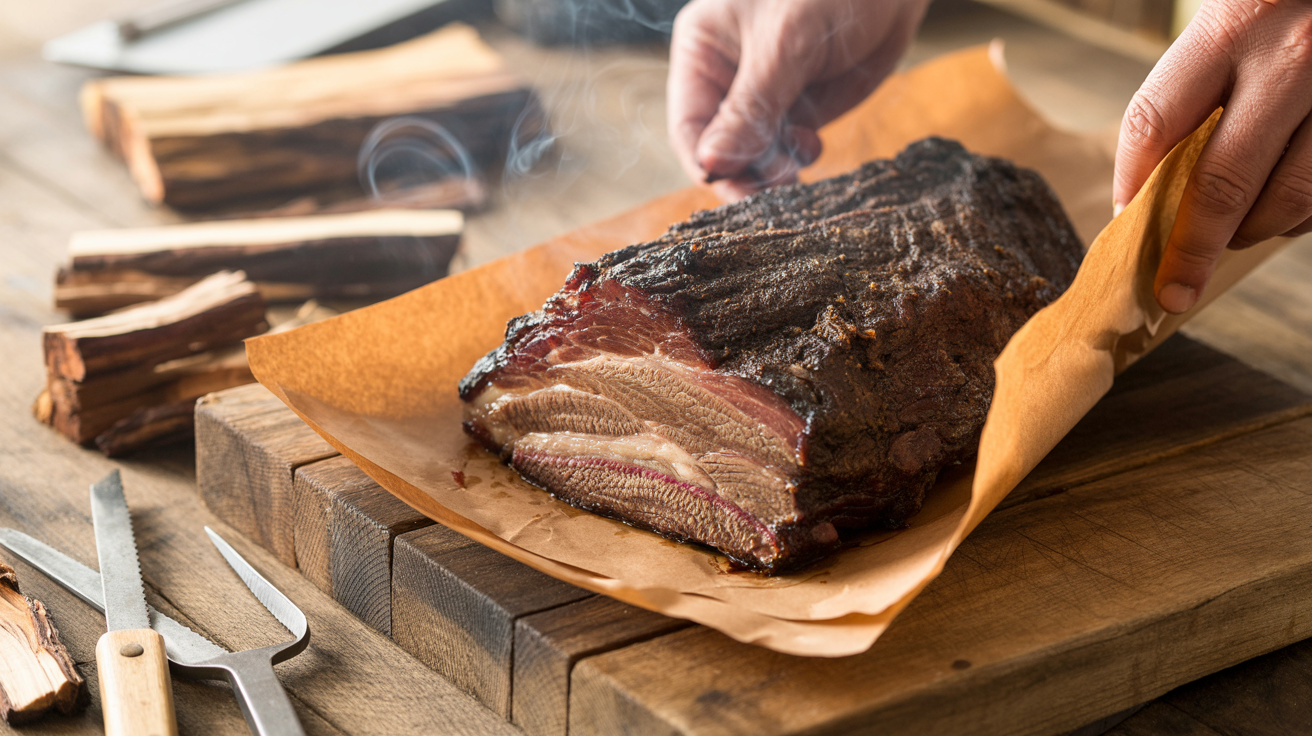
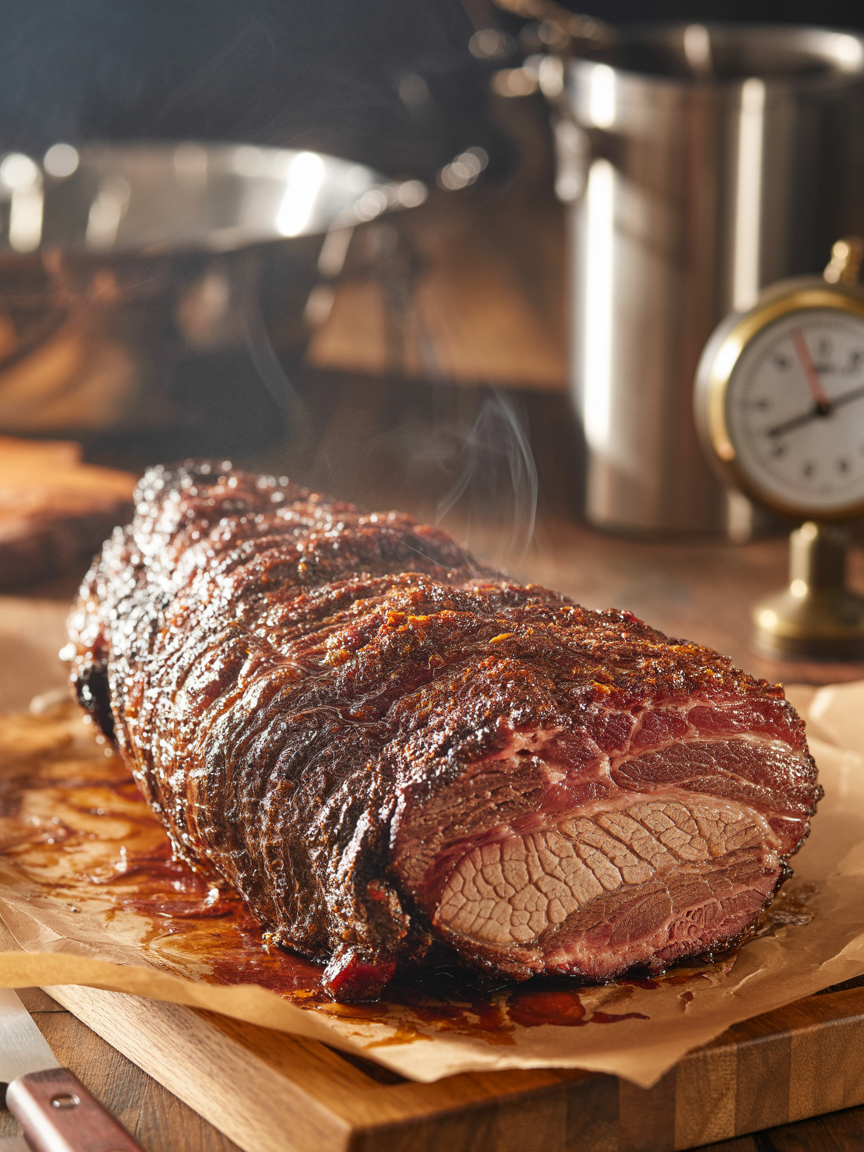
- When your brisket hits an internal temp between 165 and 170 degrees Fahrenheit and you are satisfied with the color and bark development, it is time to wrap. You are looking for a deep mahogany color, a firm exterior crust, and visible smoke ring development on any exposed meat edges. Pull the brisket off the smoker and set it on your large cutting board.
- Tear off two overlapping sheets of unlined peach butcher paper, each about 4 feet long. Lay them flat on your cutting board in a cross pattern to create a larger wrapping surface. Place the brisket fat side down in the center of the paper. Pull the long sides of the paper up and over the brisket, folding them tightly against the meat surface. Then fold the short ends over like a burrito and tuck them firmly underneath. The wrap should be snug but not crushing the bark. A loose wrap lets too much steam escape, while an overly tight wrap can compress your bark.
- Return the wrapped brisket to the smoker, fat side up, and reinsert your probe thermometer through the paper. Continue cooking at 250 degrees Fahrenheit. With the paper wrap in place, the brisket will now power through the stall much more quickly. Monitor the internal temp as it climbs toward the 195 to 205 degree finish zone.
- Start checking for doneness when the internal temp reaches 198 degrees. The temperature number is a guide, but the real test is probe tenderness. Insert your thermometer probe or a wooden skewer into the thickest part of the flat. It should slide in and out with almost no resistance, like pushing into warm butter. If you still feel any tension or drag, give it another 30 to 45 minutes and test again. The point will almost always be done before the flat, so always test the flat.
- Once the brisket passes the probe tenderness test, pull it off the smoker. Do not unwrap it yet. The rest is just as important as the cook itself. For best results, place the wrapped brisket in an empty cooler lined with a folded towel, close the lid, and let it rest for a minimum of 1 hour. Two hours is even better. This rest allows the muscle fibers to relax and the juices to redistribute evenly throughout the meat. Skipping the rest is the number one mistake home cooks make with brisket.
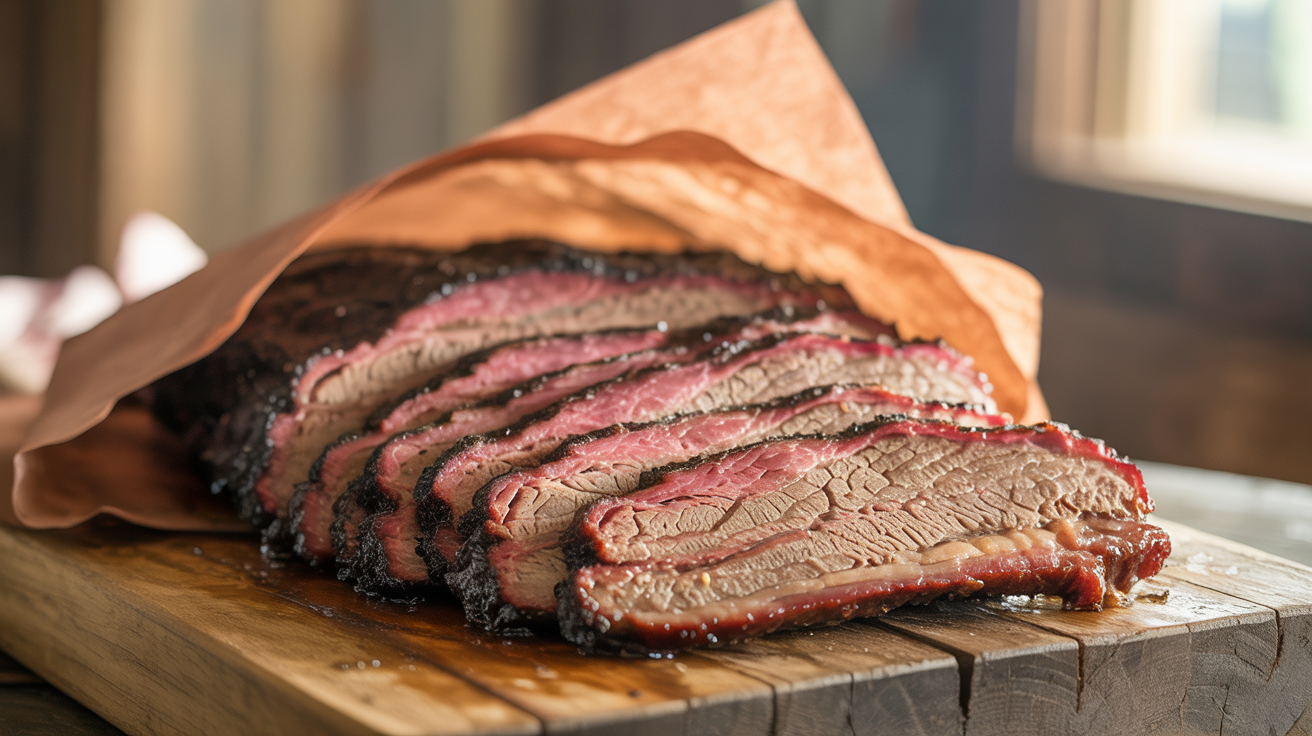
- After resting, unwrap the brisket over your cutting board to capture all the precious juices that have pooled inside the paper. Separate the point from the flat by locating the fat seam between the two muscles and slicing through it. Slice the flat against the grain into pencil-thin slices, about a quarter-inch thick. The point can be sliced or cubed for burnt ends. A proper brisket slice should hold together when lifted but pull apart with gentle tension. Serve immediately and enjoy the payoff from your low and slow dedication.
Nutrition
The brisket butcher paper wrap method is hands down one of the most important techniques any serious pitmaster can add to their arsenal, and once you nail it, you will never go back to foil again. The idea is simple: somewhere between the 150 and 170 degree internal temp range, your brisket hits what we call the stall, where evaporative cooling from the meat surface causes the temperature to plateau for hours. Wrapping in unlined butcher paper at this critical point helps you push through that stall without sacrificing the beautiful mahogany bark you have been building since you first fired up the smoker.
Unlike the so-called Texas Crutch foil wrap, butcher paper is breathable. It traps enough moisture and heat to keep things moving, but it still lets a small amount of steam escape so your bark stays firm and textured rather than turning into a soft, braised mess. We are talking about that perfect balance between a crackling outer crust and a buttery, probe-tender interior that makes a great brisket so unforgettable. You want to hit an internal temp of around 200 to 205 degrees Fahrenheit before you even think about pulling it off the smoker.
At GrillMasterHQ, we have smoked more briskets than we can count, and we can tell you with full confidence that the butcher paper wrap method consistently produces competition-worthy results in your own backyard. Whether you are running a 12-hour smoke on a full packer brisket or dialing in a smaller flat, this guide will walk you through every step, from choosing the right paper to nailing the wrap technique, monitoring internal temp, and giving your brisket the rest it deserves before you make that first slice.
Brisket Butcher Paper Wrap Method: The Ultimate Guide
The brisket butcher paper wrap method is the secret weapon of Texas pitmasters everywhere. Learn how to lock in moisture, protect that hard-earned bark, and push through the stall like a pro. This technique will transform your low and slow game and give you a reason to fire up the smoker this weekend.
Ingredients
| AMOUNT | INGREDIENT | NOTES |
|---|---|---|
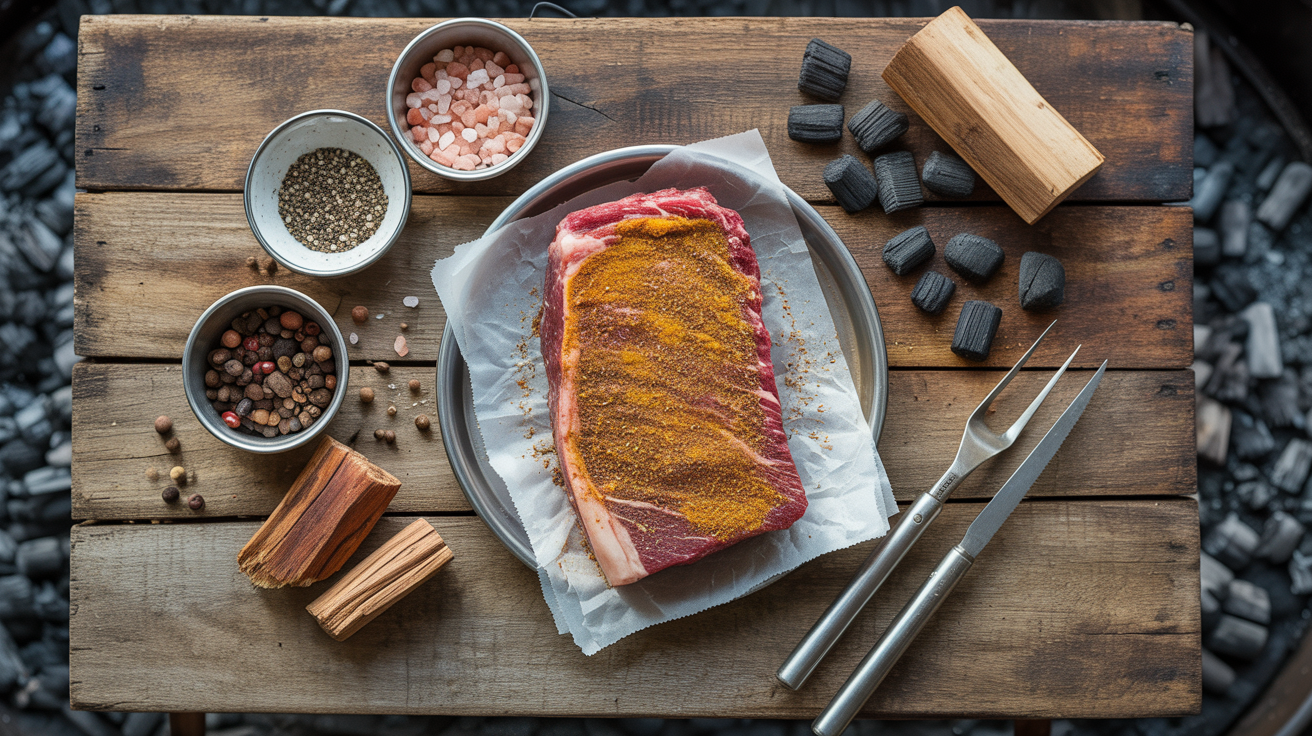
| 1 whole | packer brisket | 12 to 14 lbs with point and flat intact, choose USDA Choice or Prime for best results |
| 4 tablespoons | kosher salt | coarse kosher salt, not table salt |
| 4 tablespoons | coarse black pepper | freshly cracked, 16-mesh if you can find it for authentic Central Texas texture |
| 1 tablespoon | garlic powder | optional, adds a subtle depth to the bark |
| 2 tablespoons | yellow mustard | used as a binder to help the rub adhere, does not affect flavor after cooking |
| 4 feet | unlined peach butcher paper | pink or peach colored, must be unlined and food-safe, do not use wax paper or parchment |
| 4 chunks | post oak wood | or hickory for a bolder smoke profile, chunks work better than chips for long cooks |
Instructions
Nutrition (per serving)
The BBQ Story Behind This Recipe
Brisket has been the crown jewel of Texas BBQ culture for well over a century, rooted in the cattle drives and immigrant communities of Central Texas. Czech and German butchers who settled in towns like Lockhart, Taylor, and Luling brought with them a tradition of smoking tougher cuts of beef over post oak wood, originally as a way to preserve and sell meat that did not move off the butcher shop counter fast enough. Those butchers wrapped leftover smoked meat in the same pink or peach unlined butcher paper they used to wrap fresh cuts, and they discovered almost by accident that the paper kept the meat moist without wrecking the exterior texture. That humble discovery became the foundation of what we now call Central Texas-style BBQ.
Legendary spots like Franklin Barbecue in Austin helped bring the butcher paper method into the national spotlight in the 2010s, sparking a new generation of backyard pitmasters who started trading aluminum foil for rolls of peach paper. The technique spread from competition circuits to neighborhood backyards, and food scientists began examining why it worked so well. The key is the paper’s semi-permeable nature, which allows just enough airflow to keep the bark intact while still creating a moist environment around the meat. Today the brisket butcher paper wrap method is considered a cornerstone of authentic American BBQ craft, and learning it properly is a rite of passage for anyone serious about the art of low and slow cooking.
Hot Off the Grill
A Closer Look
Pitmaster Tips for Best Results
- Do not wrap too early. Wrapping before the bark has fully set, usually below 160 degrees internal temp, will result in a soft, pale exterior. Wait for that deep mahogany color and a firm crust before pulling it off for the wrap.
- Always use unlined, unwaxed, food-safe peach or pink butcher paper. Wax-coated or poly-lined paper can release harmful chemicals at smoking temperatures and will trap too much steam, essentially braising the brisket like foil would.
- If you want to push your brisket into a holding period after the cook, wrap it in paper, then wrap the whole package in an old towel and slide it into a dry cooler. A properly rested brisket held this way can stay at a safe temperature for 4 to 6 hours and often improves in texture and juiciness during that time.
- Save every drop of the tallow and juices that collect inside the butcher paper after you unwrap the rested brisket. Drizzle those drippings back over your sliced brisket before serving, or use them to season and cook vegetables, potatoes, or beans for an unbelievably rich side dish.
- Slicing direction makes or breaks the final texture. The flat and point muscles run in different directions, so always locate the grain on each section and slice perpendicular to it. Slicing with the grain produces chewy, stringy brisket no matter how perfect the cook was.
🔧 Pitmaster Equipment
Offset Smoker or Pellet Grill: Provides the sustained low and slow heat and real wood smoke flavor essential for a proper brisket cook.
Unlined Peach Butcher Paper: The breathable, food-safe paper that makes this method work. Do not substitute with wax-coated or poly-coated paper.
Instant Read Thermometer: Critical for monitoring internal temp accurately. You need to know exactly when you hit the stall and when the brisket reaches the probe-tender finish zone.
Leave-In Probe Thermometer: Lets you track temperature remotely throughout the long cook without opening the smoker and losing heat.
Long Tongs or Heat-Resistant Gloves: Essential for safely handling a large, hot brisket when transferring it to the paper for wrapping.
Large Cutting Board: Gives you a clean, stable surface to lay out your butcher paper and wrap the brisket without losing any drippings.
Sharp Slicing Knife: A long, sharp brisket knife lets you slice against the grain cleanly once the meat has rested.
🔥 Variations
Pellet Grill Version: Set your pellet grill to 250 degrees Fahrenheit and follow every step exactly as written. Use oak, hickory, or competition blend pellets for a robust smoke flavor. Pellet grills tend to produce a lighter smoke ring but deliver incredibly consistent temperatures throughout the long cook, making them excellent for brisket beginners and competition cooks alike. The butcher paper wrap method works identically on a pellet grill.
Overnight Low and Slow Version: Set your smoker to 225 degrees Fahrenheit and start the brisket late in the evening. The lower temp extends the cook time to 14 to 18 hours for a full packer, but produces an exceptional smoke ring and incredibly deep flavor. Wrap in butcher paper when you hit the stall, then transfer the wrapped brisket to a 200 degree oven if you need to sleep without monitoring the fire. Finish to probe tenderness and rest as normal.
Hot and Fast Version: Crank your smoker up to 300 to 325 degrees Fahrenheit and run a shorter, more aggressive cook. The stall hits faster and harder at higher temps, making the butcher paper wrap even more critical. Wrap at 165 degrees internal temp and push to probe tenderness, which can happen in as little as 8 to 9 hours total on a full packer. The bark will be slightly different in texture but the paper wrap keeps moisture intact even at the higher heat.
Brisket Flat Only Version: If you are working with just a trimmed flat rather than a full packer, reduce your cook time expectations and be extra watchful near the end of the cook since the flat muscle has less intramuscular fat and dries out more quickly. Wrap in butcher paper at 160 to 165 degrees internal temp, and pull for a rest the moment the probe slides in with little resistance, even if the temp is only at 195. Over-cooking a flat is the most common mistake pitmasters make with this cut.
❓ Pitmaster FAQ
Why use butcher paper instead of aluminum foil for brisket?
Foil creates a completely sealed, steam-filled environment that pushes the brisket through the stall fast but softens and degrades the bark in the process. Butcher paper is breathable, so it maintains enough moisture to keep the cook moving while still allowing a small amount of steam to escape. The result is a firm, intact bark with a moist, tender interior that you simply cannot achieve with foil.
What internal temperature should brisket reach before wrapping?
Wrap your brisket in butcher paper when it hits an internal temp between 165 and 170 degrees Fahrenheit and has developed a deep mahogany bark. Temperature alone is not the only signal, bark color and texture matter too. If the color is still light or the surface feels soft and moist, give it more time in the smoke before wrapping.
What is the finished internal temperature for a done brisket?
Target an internal temp of 200 to 205 degrees Fahrenheit, but always confirm doneness with a probe tenderness test. Insert your thermometer or a skewer into the thickest part of the flat. When it slides in with zero resistance, like pushing through warm butter, the brisket is done. Temperature is a guide, probe feel is the real test.
Can I use parchment paper instead of butcher paper?
Parchment paper is a common substitute and it does work in a pinch, but it is more moisture-resistant than butcher paper and creates a slightly different environment around the meat. Unlined peach or pink butcher paper is genuinely the best option for this technique because its fiber structure allows the right level of breathability. If you use parchment, expect results closer to a foil wrap than a true butcher paper wrap.
How long should brisket rest after smoking?
Rest your brisket for a minimum of 1 hour, and 2 hours is strongly preferred. For the best results, wrap the paper-wrapped brisket in a towel and place it in a dry cooler for 2 to 4 hours. This extended rest allows the muscle fibers to fully relax and the juices to redistribute so that every slice is moist from edge to edge. Cutting into a brisket too soon is one of the most common and costly mistakes a pitmaster can make.
Do I need to add anything inside the butcher paper wrap before sealing it?
Traditional Central Texas style uses no added liquid inside the paper, letting the brisket steam in its own rendered fat and juices. Some pitmasters add a small drizzle of beef tallow to the paper before wrapping for an extra layer of richness and moisture. Do not add water, apple juice, or other liquids, as those will create too much steam and compromise your bark the same way foil does.