Texas Crutch BBQ Method: Beat the Stall Every Time
Ingredients
Method
- Trim the brisket the night before your cook. Lay the brisket fat side up on a large cutting board and use a sharp boning knife to trim the fat cap down to a uniform quarter-inch thickness. Remove any hard waxy fat nodes on the underside that will not render during the cook. A clean trim gives you better bark coverage and more even cooking. After trimming, coat the entire brisket lightly with yellow mustard or olive oil as a binder. Mix your salt and pepper in a 1-to-1 ratio by volume and apply a generous, even coating to every surface of the brisket. If you are using garlic powder, onion powder, or paprika, mix them into your rub now. Wrap the seasoned brisket in plastic wrap and refrigerate overnight for at least 8 hours and up to 24 hours. This dry brine process draws moisture to the surface and back in, seasoning the meat deeply.
- The morning of your cook, remove the brisket from the refrigerator one hour before it goes on the smoker to take the chill off. Fire up the grill or smoker and bring it to a stable 225 to 250 degrees Fahrenheit. If you are running an offset smoker, build your fire with a good base of charcoal and add your post oak or hickory wood chunks to generate clean thin blue smoke. Avoid thick billowy white smoke which will make your brisket taste bitter and acrid. Insert your leave-in probe thermometer into the thickest part of the flat, avoiding any large fat seams, and set an alert for 150 degrees Fahrenheit so you know when you are approaching the stall zone.
- Place the brisket fat side up on the smoker grate and close the lid. Do not open it for the first 3 hours. The low and slow environment is doing its work, and every time you open the lid you lose heat and smoke. After 3 hours you can do a quick check on the bark development and your fire, then close it back up. During this early phase your brisket is building the beautiful smoke ring just below the surface and developing the dark mahogany bark that makes Texas-style brisket legendary. Trust your temps, trust your thermometer, and trust the process.
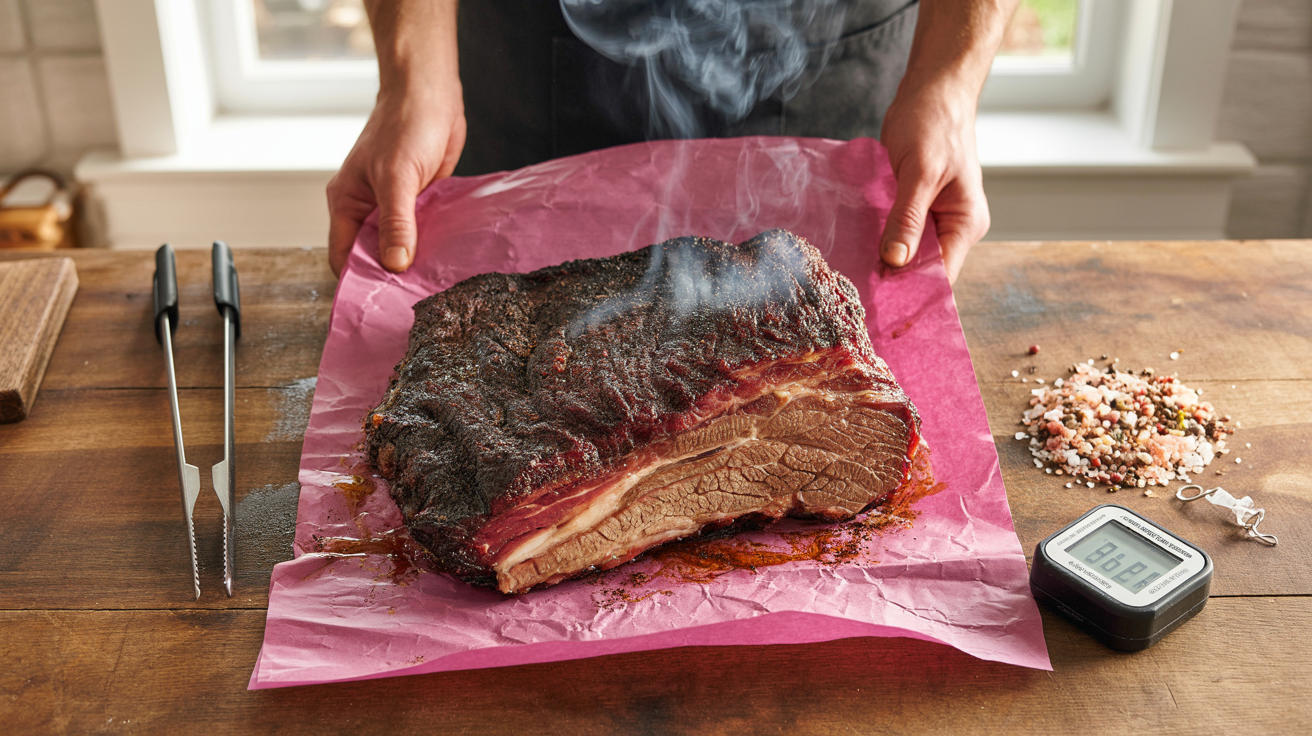
- When your leave-in probe hits 150 to 165 degrees Fahrenheit, you are in the stall zone. This is exactly where the texas crutch bbq method goes to work. Do not panic if the temperature seems stuck. Pull the brisket off the smoker and move it to a clean sheet pan or cutting board. Work quickly but carefully because you want to minimize the time the meat spends off the heat. Lay out two large overlapping sheets of heavy-duty aluminum foil or two overlapping sheets of pink butcher paper on a clean surface. If you are using foil, place a couple tablespoons of beef tallow or slices of unsalted butter in the center of the foil before setting the brisket on top. The fat will melt and baste the meat as it finishes cooking, adding incredible richness to the final product.
- Place the brisket fat side down onto your foil or butcher paper. Wrap it tightly, folding the edges over and crimping them securely so no steam can escape if using foil. If using butcher paper, fold it snugly but not as aggressively since a little breathability is part of the benefit. The goal with foil is a complete steam seal. With butcher paper you are slowing moisture loss without steaming the bark aggressively. Once wrapped, return the brisket to the smoker with the fat side still down. Bump your smoker temp up to 275 degrees Fahrenheit to help power through the stall faster now that evaporative cooling is no longer a factor.
- Continue cooking the wrapped brisket until your leave-in probe reads 200 to 205 degrees Fahrenheit in the thickest part of the flat. At that point, do a feel test by pressing the probe or a skewer gently into the meat through the wrap. It should slide in with almost zero resistance, like pushing into warm softened butter. If you feel any resistance at all, give it another 30 minutes and check again. The internal temp matters, but that probe feel is the real signal that the collagen has broken down completely and your brisket is done.
- Once your brisket passes the feel test, remove it from the smoker. Do not unwrap it yet. Place the still-wrapped brisket into a preheated cooler or insulated faux cambro. To preheat it, fill it with hot water for 15 minutes then dump the water and line the bottom with old towels. Place the wrapped brisket inside, add more towels on top, and close the lid. Let the brisket rest the meat for a minimum of 1 hour and ideally 2 to 4 hours. This resting period is not optional. It allows the muscle fibers to relax and reabsorb the juices that have been driven toward the center during cooking. A properly rested brisket will be dramatically more juicy than one sliced immediately off the smoker.
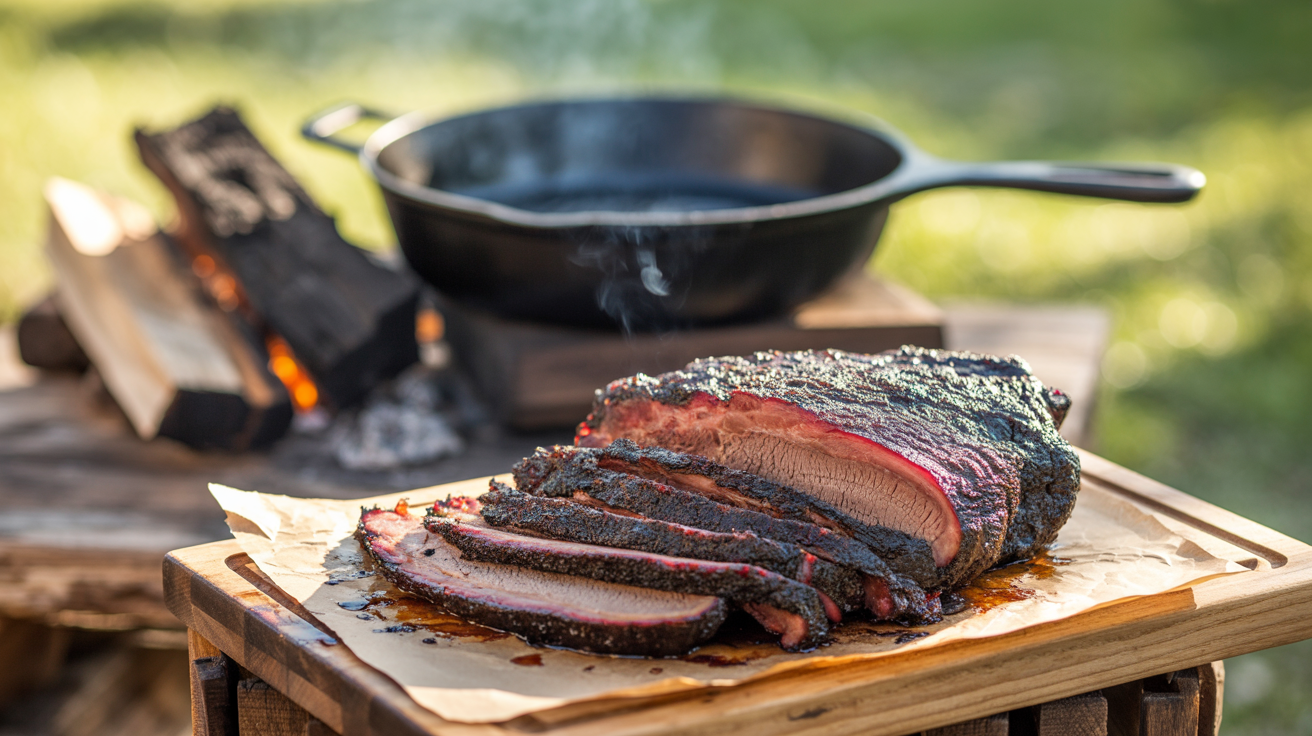
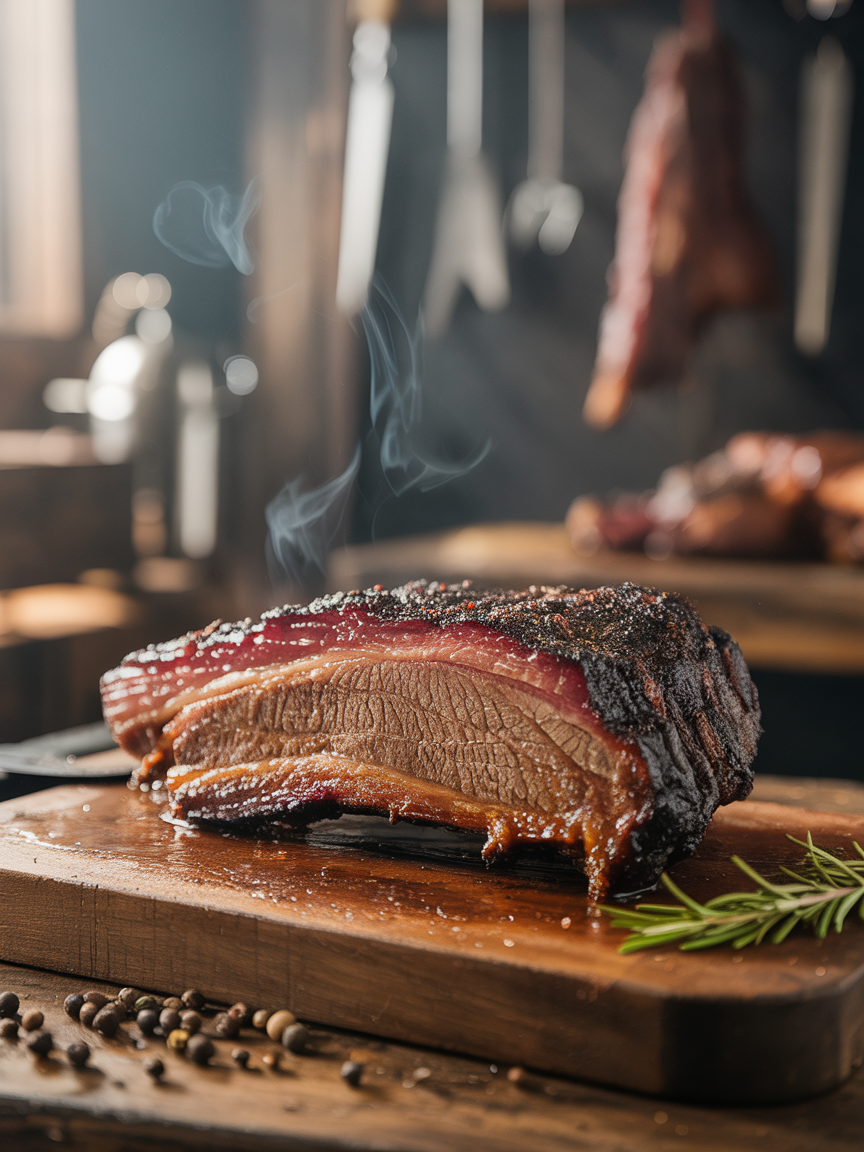
- After the rest, unwrap the brisket on a large cutting board and reserve any accumulated juices in the foil or paper. These juices are liquid gold and can be drizzled back over the sliced meat or used as a dipping sauce. Separate the point from the flat by locating the seam of fat between the two muscles and slicing through it. Slice the flat against the grain into pencil-width slices of about a quarter-inch thickness. The slices should hold together but bend slightly when held from one end without breaking. Slice the point into thicker cubes or chunks for burnt ends. Arrange on a butcher paper-lined tray, drizzle with the reserved juices, and serve immediately.
Nutrition
The texas crutch bbq method is one of the most powerful and misunderstood techniques in the world of low and slow barbecue, and once you understand exactly how and when to use it, you will never lose another brisket to the dreaded stall again. If you have ever fired up the smoker full of confidence, watched your brisket climb steadily to around 150 to 165 degrees Fahrenheit, and then watched in frustration as that internal temp refused to budge for two, three, even four hours straight, you have already met the stall firsthand. That plateau is not your smoker acting up and it is not a sign something went wrong. It is pure science, and the texas crutch is your answer.
The stall happens because as the internal temp of a large cut like a brisket or pork shoulder climbs into that 150 to 165 degree range, moisture begins evaporating from the surface of the meat at a rate fast enough to actually cool it down, essentially turning your brisket into a giant natural swamp cooler. This evaporative cooling effect can keep your cook locked in place for hours on end, threatening your timeline, your bark, and sometimes your sanity. The texas crutch solves this by wrapping the meat tightly in either heavy-duty aluminum foil or butcher paper, trapping that moisture and heat so the internal temp can power through the stall and keep climbing toward your target of 200 to 205 degrees Fahrenheit for a perfect brisket.
At GrillMasterHQ we get asked about this technique constantly, and there is a lot of debate in the BBQ community about whether wrapping is cheating or genius. Spoiler: competition pitmasters across the country wrap their meat and win championships doing it. The key is knowing when to wrap, what to wrap with, and how to handle the meat after it comes out of that foil or paper so you protect your smoke ring and finish with the kind of bark that cracks when you slice through it. This guide covers everything you need to fire up the grill or smoker with total confidence and nail the texas crutch every single time.
Texas Crutch BBQ Method: Beat the Stall Every Time
The texas crutch bbq method is the secret weapon every serious pitmaster keeps in their back pocket. Learn how wrapping your meat at the right moment crushes the dreaded stall, locks in moisture, and delivers fall-apart tender results. Fire up the smoker and take your low and slow game to the next level today.
Ingredients
| AMOUNT | INGREDIENT | NOTES |
|---|---|---|
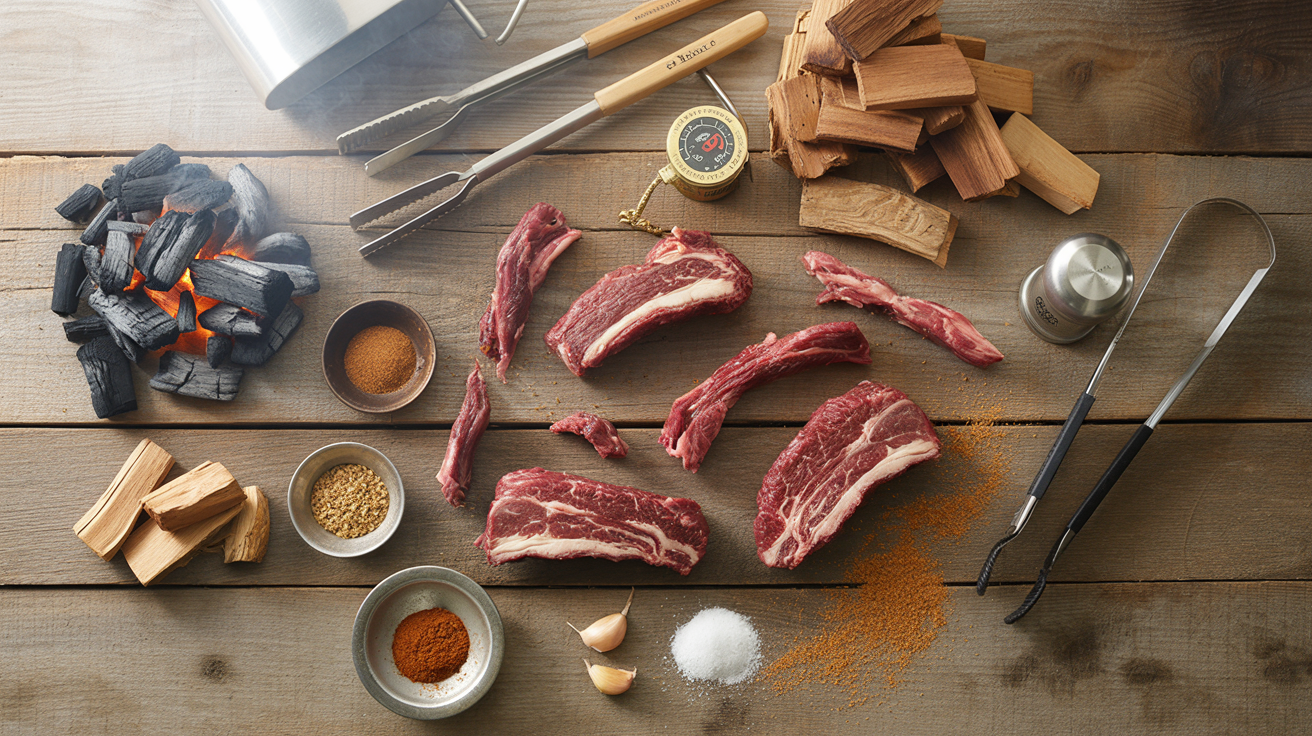
| 1 whole | packer brisket | 12 to 15 lbs, USDA Choice or Prime grade for best results |
| 4 tablespoons | coarse kosher salt | Morton or Diamond Crystal, not table salt |
| 4 tablespoons | coarse black pepper | 16-mesh butcher grind preferred for authentic central Texas bark |
| 1 tablespoon | garlic powder | optional, adds depth to the rub |
| 1 tablespoon | onion powder | optional |
| 2 teaspoons | smoked paprika | optional, helps build color on the bark |
| 2 tablespoons | yellow mustard or olive oil | used as a binder to help the rub adhere to the meat |
| 4 large sheets | heavy-duty aluminum foil or pink butcher paper | you will need enough to wrap the brisket completely with two layers |
| 0.25 cup | beef tallow or unsalted butter | optional but highly recommended for adding richness when wrapping in foil |
| 6 chunks | post oak or hickory wood | fist-sized chunks for the smoker, not chips |
Instructions
Nutrition (per serving)
The BBQ Story Behind This Recipe
The term texas crutch was born out of friendly rivalry between BBQ regions. Old-school central Texas pitmasters who ran legendary joints like Kreuz Market and Smitty’s Market in Lockhart prided themselves on cooking beef brisket completely unwrapped in massive post oak-fed offset smokers for 12 to 18 hours straight, relying on nothing but smoke, fire, and patience to build that legendary dark mahogany bark. When competition BBQ started gaining traction in the 1980s and 1990s and pitmasters began wrapping their meats to speed up cooks and control moisture, the purists of central Texas gave it that slightly condescending nickname, calling it a crutch, as in something weaker cooks leaned on to compensate for a lack of skill or proper equipment. The name stuck, but so did the technique.
Over time, the texas crutch evolved from a perceived shortcut into a fully respected and widely taught technique that even many of the most decorated competition BBQ teams swear by. The debate between foil wrapping and butcher paper wrapping became its own chapter in BBQ history when legendary pitmaster Aaron Franklin popularized the pink butcher paper method, arguing that it allowed the bark to breathe slightly while still breaking through the stall, giving you a better texture than a fully steamed foil wrap. Today the texas crutch bbq method is taught at BBQ schools, featured in championship cookbooks, and used by backyard pitmasters and professional competition teams alike. It represents the beautiful tension at the heart of great barbecue, tradition versus innovation, patience versus practicality, and the endless pursuit of the perfect bite.
Hot Off the Grill
A Closer Look
Pitmaster Tips for Best Results
- The single most common wrapping mistake is doing it too early. Wait until your internal temp is solidly in the 150 to 165 degree Fahrenheit range before wrapping. Wrapping too early at 140 degrees will give you soft, pale bark that never develops properly. The bark needs time and direct smoke exposure to set before it goes into the wrap.
- Foil versus butcher paper is not a religious debate, it is a practical one. Choose foil when you need to finish faster or when you are fighting a tight timeline. Choose pink butcher paper when you want a slightly firmer bark with a little more texture. Never use white or waxed paper as a substitute since only unlined pink butcher paper is food-safe for this application.
- When wrapping with foil for a competition-style finish, add a quarter cup of beef tallow, a few pats of unsalted butter, and a splash of beef broth to the foil package before sealing. This creates an intensely rich braising environment that produces brisket with a silky, almost buttery texture that will win over any crowd.
- Do not skip the rest period. If you slice into a brisket straight off the smoker you will watch a flood of juices run across the cutting board and onto the table, juices that should be inside every bite of meat. A two-hour rest in a preheated cooler is the difference between a good brisket and an exceptional one. The meat will still be well above 140 degrees Fahrenheit even after a 4-hour rest in a properly insulated cooler.
- If your bark softens too much inside the foil wrap and you want to firm it back up, unwrap the brisket for the last 20 to 30 minutes of the cook and return it to the smoker uncovered at 275 degrees Fahrenheit. This quick re-exposure to the dry smoker environment will help the bark tighten and set without drying out the interior of the meat.
🔧 Pitmaster Equipment
Offset Smoker or Kamado Grill: Provides the sustained low and slow heat and smoke environment needed to properly cook a full brisket or pork shoulder using the texas crutch method.
Heavy-Duty Aluminum Foil or Pink Butcher Paper: The core tool of the texas crutch. Foil creates a tighter seal for more moisture retention while butcher paper allows slight breathability and better bark preservation.
Instant Read Thermometer: Absolutely critical for monitoring internal temp throughout the cook. You need to know exactly when you hit the stall and when to pull the wrap.
Leave-In Probe Thermometer: Lets you monitor the internal temp of your meat continuously without lifting the lid and losing heat, which is essential during a long low and slow cook.
Long Tongs or Heat-Resistant Gloves: A full packer brisket can weigh 12 to 15 pounds and will be extremely hot when you transfer it for wrapping. Protect your hands and keep control of the meat.
Wire Cooling Rack and Sheet Pan: Provides a clean surface for wrapping the meat and catching any juices that escape during the process.
Cooler or Faux Cambro: Used to rest the meat after the cook is complete. A preheated insulated cooler holds temperature beautifully and allows the meat to rest for one to four hours for maximum juiciness.
🔥 Variations
Pork Shoulder or Boston Butt Version: The texas crutch works just as brilliantly on a pork shoulder as it does on brisket. Run your smoker at 225 to 250 degrees Fahrenheit and smoke the pork unwrapped until it hits an internal temp of 160 to 165 degrees Fahrenheit, which usually takes 6 to 8 hours on an 8-pound butt. Wrap tightly in foil with a splash of apple juice or apple cider vinegar and a couple tablespoons of butter, then return to the smoker at 275 degrees Fahrenheit until the internal temp hits 200 to 205 degrees and the bone wiggles freely. Rest the meat for at least 2 hours before pulling.
Beef Back Ribs Version: Beef back ribs benefit enormously from the texas crutch method since they have less meat than spare ribs and can dry out on a long unwrapped cook. Smoke them at 250 degrees Fahrenheit for 3 hours unwrapped to build smoke penetration and bark, then wrap tightly in foil with a tablespoon of tallow and cook for another 1.5 to 2 hours until the bones pull back a full half-inch and the meat probes tender at around 200 degrees Fahrenheit. Rest for 30 minutes before serving.
Pellet Grill Version: Set your pellet grill to 225 degrees Fahrenheit and use a competition blend or hickory pellets for a robust smoke profile. Because pellet grills typically produce a lighter smoke than a traditional offset, add a smoke tube filled with pellets to boost smoke output during the first 3 to 4 hours before wrapping. Follow all the same wrapping steps and temperature targets as the standard recipe. Bump the pellet grill to 275 degrees Fahrenheit after wrapping to power through the stall efficiently.
Gas Grill Version: You can absolutely use the texas crutch bbq method on a gas grill using a two-zone setup. Place a smoker box or foil pouch filled with soaked hickory or oak wood chips over one lit burner on low and set up the other side of the grill for indirect heat at 225 to 250 degrees Fahrenheit. Cook the brisket on the indirect side with the lid closed, replenishing your wood chips every 45 minutes for the first 3 hours to maximize smoke absorption before wrapping. Follow the same wrapping and temperature targets as the standard recipe.
❓ Pitmaster FAQ
What internal temperature should I wrap the brisket using the texas crutch?
Wrap when the internal temp reads between 150 and 165 degrees Fahrenheit. This is the stall zone where evaporative cooling is working hardest against you. Wrapping any earlier risks pale underdeveloped bark, and waiting much longer than 165 degrees means you are already fighting the stall longer than necessary. Use a reliable instant read thermometer or leave-in probe to monitor closely.
Does the texas crutch ruin the bark on a brisket?
It can soften the bark if you use foil, which creates a steaming environment inside the wrap. To preserve better bark texture, switch to pink butcher paper which allows some moisture to escape while still breaking through the stall. You can also unwrap the brisket for the last 20 to 30 minutes of the cook and return it to the smoker uncovered at 275 degrees Fahrenheit to firm up and re-set the bark before resting.
How long does the texas crutch add to a brisket cook?
The texas crutch actually reduces total cook time rather than adding to it. By eliminating or drastically shortening the stall, you can save anywhere from 1 to 4 hours on a full packer brisket cook. A brisket that might take 18 hours unwrapped from start to finish can often be completed in 12 to 14 hours when you wrap at the stall and bump the smoker temp to 275 degrees Fahrenheit after wrapping.
Can I use the texas crutch on ribs?
Yes, and it works especially well in the context of the 3-2-1 method for spare ribs. In that approach you smoke unwrapped for 3 hours, wrap in foil with a splash of liquid for 2 hours to power through any stall and tenderize the meat, then unwrap for 1 final hour to set the sauce and firm up the exterior. For beef ribs, a 3-1.5-0.5 approach works well given how different beef and pork respond to heat over time.
What is the difference between wrapping in foil versus pink butcher paper?
Foil creates a fully sealed steam chamber that locks in all moisture and accelerates cooking the most aggressively. It produces ultra-moist and tender meat but can leave the bark softer and sometimes slightly soggy. Pink butcher paper is breathable enough to let some moisture escape, which means it breaks through the stall while preserving a better bark texture. Most competition pitmasters prefer butcher paper for brisket. Foil is often preferred for pork shoulder and ribs where bark texture is less critical.
Is the texas crutch considered cheating in BBQ competitions?
Not at all. The texas crutch bbq method is completely legal and widely used in major BBQ competitions including the Kansas City Barbeque Society circuit and the Memphis in May World Championship. Many grand champion teams openly wrap their meats. The technique is judged on the final result, not the method used to achieve it. Flavor, tenderness, and appearance are what the judges score, and a properly executed texas crutch produces results that win at the highest levels of competition BBQ.