
Grilled Octopus Recipe: Tender, Charred Perfection
Ingredients
Method
- Start by getting your braising liquid ready. Fill a large stock pot with enough cold water to fully submerge your octopus, about 4 to 5 quarts. Add the white wine, quartered onion, half the lemon (squeezed in then dropped in), 3 smashed garlic cloves, kosher salt, whole peppercorns, 1 rosemary sprig, and 2 thyme sprigs. Bring the whole pot up to a rolling boil over high heat.
- Once the braising liquid is boiling, carefully lower the octopus in using tongs. Here is a classic pitmaster trick adapted from Mediterranean tradition: dip the octopus in and out of the boiling water three times before fully submerging it. This causes the tentacles to curl up tight and beautifully, which gives you those perfect grill-ready arms. Once fully submerged, reduce the heat to a gentle simmer at about 190 to 200 degrees Fahrenheit.
- Simmer the octopus low and slow for 45 to 60 minutes depending on size. A 3-pound octopus will need the full 60 minutes. You are looking for fork-tender flesh that offers almost no resistance when poked with a skewer or paring knife. Do not rush this stage. Just like a long brisket cook, this is where the collagen breaks down and transforms tough muscle into silky, tender meat. Check at the 45-minute mark by piercing the thickest part of the head.
- While the octopus braises, fire up the grill. You want a two-zone setup with a massive pile of lit lump charcoal on one side creating a direct heat zone that reaches 500 to 550 degrees Fahrenheit at the grate. Let the grill preheat with the lid down for at least 15 minutes. While it heats, mix your herb baste: combine the remaining 3 tablespoons of olive oil, 3 smashed garlic cloves (minced fine), chopped rosemary, stripped thyme leaves, smoked paprika, and red pepper flakes in a small bowl. Set aside.
- When the octopus is done braising, remove it from the pot and let it rest and drain on a wire rack or cutting board for 5 to 10 minutes. Pat the exterior lightly dry with paper towels. Moisture is the enemy of a good char. If the octopus has a large head, you can optionally cut it in half to create more surface area for grilling. Separate the tentacle cluster if it makes it easier to manage on the grate.
- Brush the octopus generously with the herb baste, making sure to get into all the nooks and crannies of those tentacles. Hit the hot grill grates with a quick brush to clean them, then lay the octopus directly over the hot coals. You should hear a serious sizzle the moment it touches down. That sound means you are building bark and char. Do not move it for the first 2 minutes.
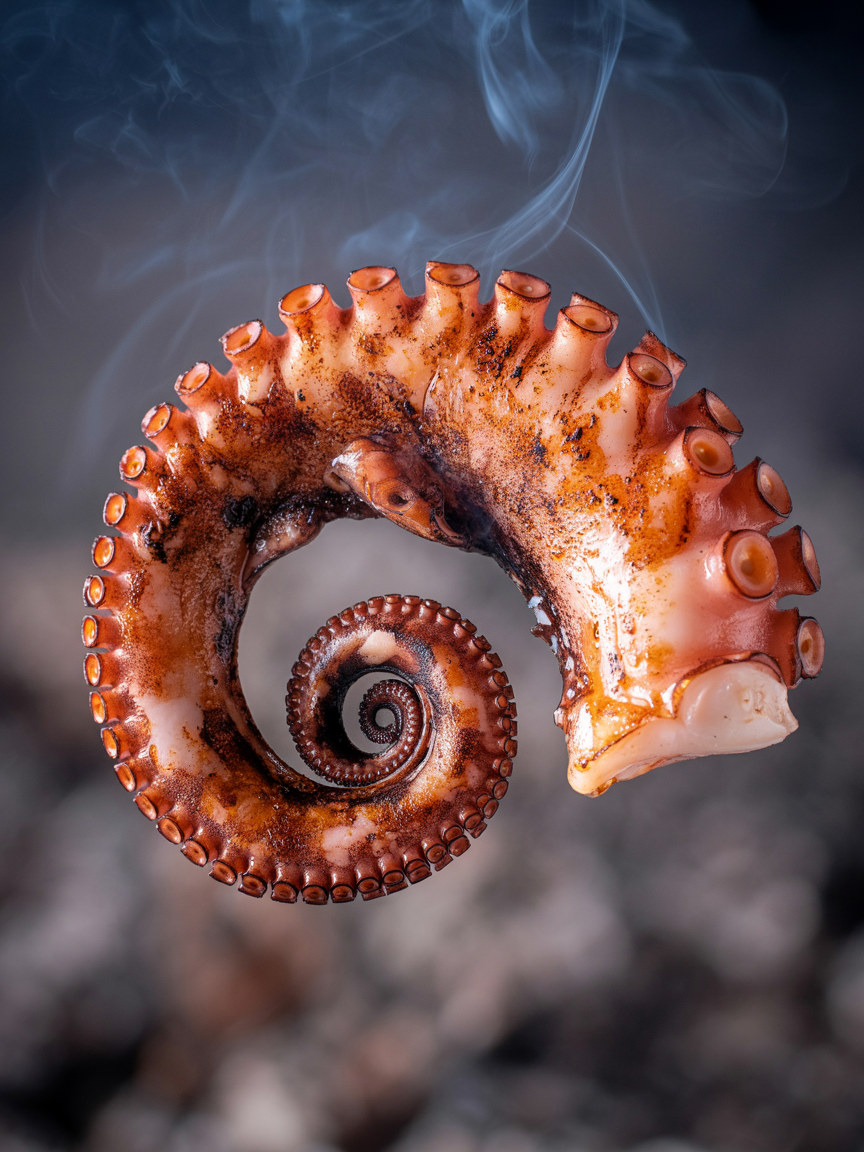
- Grill the octopus over direct high heat for 2 to 3 minutes per side, turning with your long tongs. You are looking for deep grill marks, a lightly crisped and charred exterior on the tentacle tips, and a gorgeous caramelized color all over. Baste with the herb oil each time you flip. The total grill time should be 6 to 8 minutes. Do not over-grill: you already cooked it through in the braise, so this stage is purely about texture, char, and flavor layering.
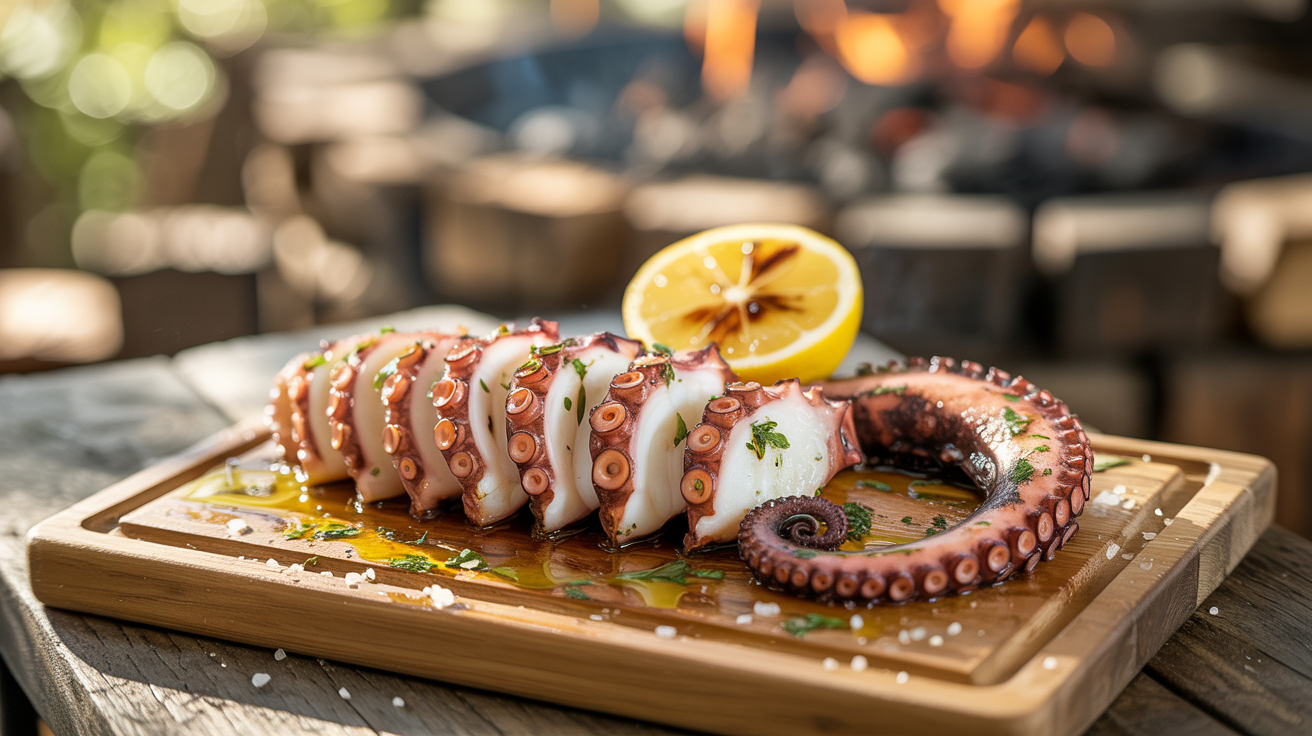
- Pull the octopus off the grill and let it rest for 5 minutes on a cutting board. Do not skip this rest. Just like you rest a steak or a pork shoulder, resting lets the juices settle back into the meat. After resting, slice the tentacles into 2-inch to 3-inch segments using a sharp knife, and cut the head into strips or chunks. Arrange on a serving platter.
- Finish the dish with a squeeze of fresh lemon over the top, a drizzle of your best olive oil, a sprinkle of flaky sea salt, the splash of red wine vinegar, and a generous shower of chopped fresh parsley. If you want to grill the lemon half cut-side down over the coals for 2 minutes before squeezing, do it. Charred lemon juice is an absolute game changer that adds a smoky-tart brightness you cannot get any other way. Serve immediately while still hot.
Nutrition
This grilled octopus recipe is hands down one of the most rewarding things you will ever put over live fire, and once you nail it, you will never look at your grill the same way again. The secret is a two-stage cook: a low and slow braise or boil first to break down those tough muscle fibers, followed by a screaming hot finish directly over the coals at around 500 degrees Fahrenheit to build that legendary char and caramelized crust. We are talking serious grill marks, a slightly smoky aroma, and meat so tender it practically melts off the tentacle.
A lot of backyard cooks shy away from octopus because they think it is complicated or reserved for fancy restaurants. That is flat out wrong. If you can manage fire and understand a little bit of protein science, you can absolutely crush this cook. The key internal temp you are chasing during the braise phase is full collagen breakdown, which happens around 180 to 190 degrees Fahrenheit sustained over time. Then when those tentacles hit the hot grate, you are building flavor through the Maillard reaction just like you do with a brisket bark, except instead of a spice rub you are working with natural sugars and sea salt.
At GrillMasterHQ we believe that real pitmaster skills translate across every protein, and octopus is proof of that. The same patience you bring to a 12-hour brisket cook, the same respect for fire and heat management, and the same obsession with texture and flavor all apply here. Plan for about 60 to 90 minutes of total cook time depending on the size of your octopus, and do not skip the rest period after grilling. Let that beautiful cephalopod rest for at least 5 minutes before slicing so the juices redistribute and every bite stays succulent.
Grilled Octopus Recipe: Tender, Charred Perfection
This grilled octopus recipe transforms a seemingly intimidating ingredient into a showstopping backyard masterpiece. With the right technique, you get fall-apart tender meat with a gorgeous char that rivals any seaside taverna. Fire up the grill today and prove that true pitmaster skills know no limits.
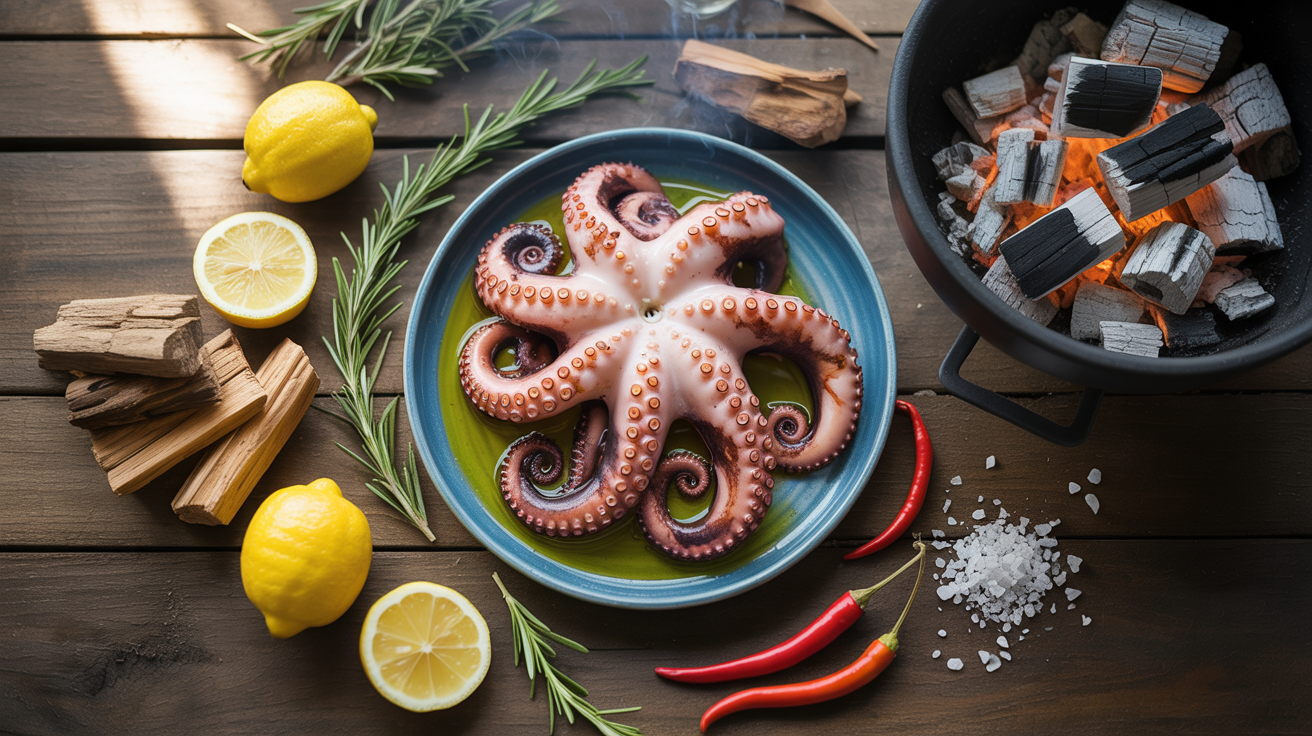
Ingredients
| AMOUNT | INGREDIENT | NOTES |
|---|---|---|
| 3 lbs | whole octopus | fresh or thawed from frozen, cleaned with beak and ink sac removed |
| 4 tablespoons | extra virgin olive oil | divided, for braising and basting |
| 1 whole | lemon | halved, one half for braising liquid and one half for grilling and finishing |
| 6 cloves | garlic | smashed, divided between braising pot and herb baste |
| 1 tablespoon | kosher salt | for braising liquid plus more for finishing |
| 1 teaspoon | black peppercorns | whole, added to braising liquid |
| 2 sprigs | fresh rosemary | one for braising, one finely chopped for the herb baste |
| 4 sprigs | fresh thyme | two for braising liquid, two stripped and chopped for baste |
| 1 teaspoon | smoked paprika | stirred into the herb baste for a subtle BBQ-forward flavor |
| 0.5 teaspoon | red pepper flakes | optional, adds a gentle heat to the baste |
| 2 tablespoons | fresh flat-leaf parsley | roughly chopped, for finishing and garnish |
| 1 tablespoon | red wine vinegar | a small splash to brighten the final dish |
| 1 cup | dry white wine | added to the braising liquid for depth of flavor |
| 1 medium | yellow onion | roughly quartered, added to braising pot |
Instructions
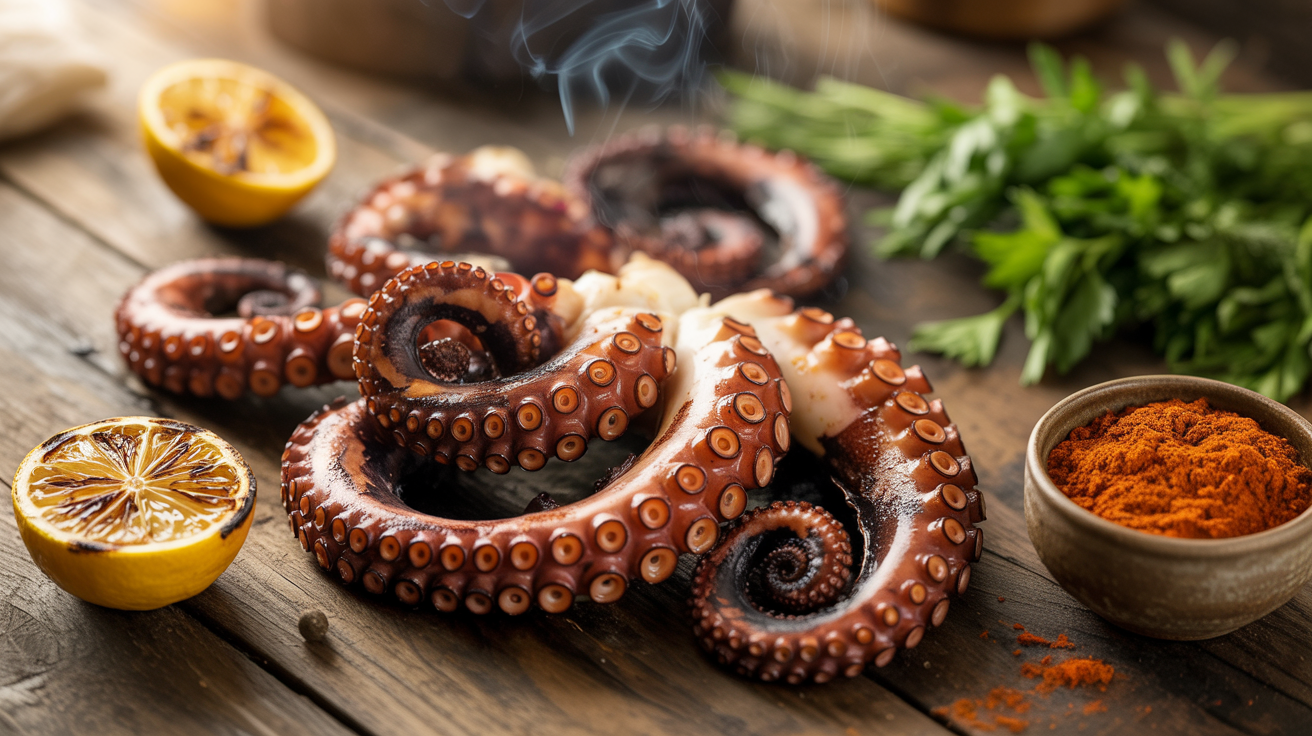
Nutrition (per serving)
The BBQ Story Behind This Recipe
Grilled octopus has deep roots in Mediterranean coastal cultures, particularly in Greece, Portugal, Italy, and Spain, where fishermen have been cooking freshly caught octopus over open fire and hot coals for centuries. The traditional Greek method involves beating the octopus against rocks to tenderize it, then hanging it to dry in the sun before grilling over wood charcoal. That drying step is not unlike how pitmasters dry-brine their briskets or ribs to develop bark, and the end result is the same: a concentrated exterior that caramelizes beautifully over flame. These fishing communities did not have fancy equipment or temperature gauges; they relied on instinct, fire, and generations of passed-down knowledge, which is something every BBQ pitmaster can deeply respect.
In more recent years, grilled octopus has made a major crossover into American food culture, appearing on gastropub menus and high-end BBQ restaurants alongside smoked brisket and wood-fired chicken. Chefs and pitmasters alike have embraced it as a vehicle for showcasing fire craft, pairing it with bold flavors like smoked paprika, charred lemon, and fresh herbs. Along the Gulf Coast and in coastal Southern states, you will find octopus showing up at fish fries and seafood boils, often finished on a charcoal grate right alongside shrimp and snapper. It is a dish that bridges old-world fishing tradition and new-school American grilling culture, and it belongs in every serious pitmaster repertoire.
Hot Off the Grill
A Closer Look
Pitmaster Tips for Best Results
- Do not skip the braise. Skipping straight to the grill results in rubbery, chewy octopus that will frustrate you every time. The low and slow braise at 190 to 200 degrees Fahrenheit for 45 to 60 minutes is the non-negotiable foundation of this recipe.
- Frozen octopus is often better than fresh. The freezing and thawing process breaks down muscle fibers and actually gives you a more tender result. Do not feel like you need to hunt down a live-catch fresh octopus to get restaurant-quality results.
- Pat the octopus as dry as possible before it hits the grill. Excess surface moisture creates steam instead of char, and steam is what stands between you and those beautiful grill marks and caramelized crust.
- Use lump hardwood charcoal instead of briquettes for this cook. Lump burns hotter and cleaner, which is exactly what you want for a fast high-heat sear on seafood. Mesquite or oak lump will add a light smoke character that pairs beautifully with the briny octopus.
- If your octopus tentacles are curling too much and rolling around on the grate, use two sets of tongs or a grill press to hold them flat. Good contact with the hot grates means better char development and more consistent cooking across the surface.
🔧 Pitmaster Equipment
Charcoal Grill: High-heat charcoal is ideal for creating the dramatic char and subtle smokiness that defines a great grilled octopus. A chimney starter and hardwood lump charcoal will get you to the 500-degree grate temp you need.
Large Stock Pot: You need a pot big enough to fully submerge and braise or boil the octopus before it ever touches the grill. This two-stage cook is non-negotiable for tender results.
Instant Read Thermometer: Monitoring the braising liquid temp and verifying the octopus flesh temp before grilling ensures you hit that collagen-breakdown sweet spot every single time.
Long Tongs (16-inch or longer): When you are working over a 500-degree fire, you need serious reach. Long tongs keep your hands and forearms safe while you flip and maneuver the tentacles.
Wire Grill Brush or Grill Scraper: A clean hot grate prevents sticking and ensures clean grill marks. Brush it down right before the octopus goes on.
Basting Brush: You will be applying olive oil and herb baste during the final grill stage, and a good heat-resistant silicone basting brush makes that easy and safe.
🔥 Variations
Pellet Grill Version: Set your pellet grill to 450 to 500 degrees Fahrenheit using cherry or alder pellets for a mild, slightly sweet smoke profile that complements seafood beautifully. Follow the same braise-first method on the stovetop, then transfer the dried and basted octopus directly to the hot pellet grill grates. The convection airflow on a pellet grill will crisp up the tentacle tips nicely. Grill for 3 minutes per side, basting each flip. The result will have a subtler smoke character than charcoal but still delivers excellent flavor and texture.
Gas Grill Version: Preheat your gas grill with all burners on high for 15 minutes to reach at least 500 degrees Fahrenheit at the grate. Turn one or two burners off to create an indirect zone, but keep at least two burners on high for direct heat grilling. Add a smoker box filled with soaked applewood or cherry wood chips over a lit burner to generate smoke. Braise the octopus exactly the same way, then grill over direct heat 2 to 3 minutes per side with the lid closed between flips. The smoker box adds a layer of wood-fire character that elevates a gas grill cook significantly.
Spanish-Style Pulpo a la Gallega Variation: After braising and grilling, slice the octopus into thick rounds instead of leaving the tentacles whole. Arrange over a bed of boiled and smashed rustic potatoes, then drizzle generously with olive oil and dust with sweet smoked paprika and coarse sea salt. This is the Galician street food version that has been served at festivals and markets in northwest Spain for centuries, and it is spectacular alongside a cold beer straight off the grill.
Charcoal Smoke Ring Variation: Before the final grill stage, smoke the braised octopus on the indirect side of your charcoal grill with the lid closed for 20 minutes at 275 degrees Fahrenheit using a chunk of cherry wood. This builds a faint but noticeable smoke ring on the exterior flesh and adds a deeper BBQ-forward flavor profile. Then crank the heat and finish over direct coals for the char. This method is for the serious pitmaster who wants to push grilled octopus into full BBQ territory.
❓ Pitmaster FAQ
Why is my grilled octopus rubbery?
Rubbery octopus is almost always the result of skipping or rushing the braise. The connective tissue and tough muscle fibers in octopus require sustained heat around 190 degrees Fahrenheit for 45 to 60 minutes to break down properly. If you went straight to the grill without braising first, the high heat caused the proteins to seize and tighten rather than relax. Always braise first, grill second.
What internal temp should grilled octopus reach?
Octopus does not follow traditional internal temperature rules the way beef or poultry does. The goal is textural doneness, not a specific safe temp. During the braise you are maintaining 190 to 200 degrees Fahrenheit in the liquid and cooking until a skewer slides into the thickest part of the tentacle with little to no resistance. After grilling, you are purely focused on char and surface texture. Use your instant read thermometer to monitor the braising liquid temperature, not the octopus itself.
Can I braise the octopus ahead of time?
Absolutely, and this is actually a great move for entertaining. Braise the octopus up to 24 hours ahead, let it cool in the braising liquid, then refrigerate it fully submerged. When you are ready to cook, pull it out, pat it dry, apply the herb baste, and go straight to the hot grill. The cold octopus will take an extra minute per side to heat through, but the final result is just as good and your party prep becomes much more manageable.
Can I use a gas grill instead of charcoal?
Yes, a gas grill works well as long as you get it screaming hot, at least 500 degrees Fahrenheit at the grate level. Use a smoker box with wood chips to add the smoke character that charcoal provides naturally. Preheat with all burners on high for 15 minutes, then cook over direct heat. Keep the lid closed between flips to trap heat and speed up the char development. The results will not be quite as dramatically charred as charcoal, but you will still produce a delicious grilled octopus.
Fresh or frozen octopus: which is better for grilling?
Frozen and thawed octopus is genuinely preferred by many experienced cooks and chefs for this recipe. The freezing process ruptures cell walls and breaks down muscle tissue, which actually makes the final braised texture more tender and forgiving. Fresh octopus requires more aggressive tenderizing before cooking. If you are using fresh, you can put it in the freezer for 24 hours, thaw it completely, and then proceed with the recipe for best results.
What should I serve with grilled octopus?
Grilled octopus pairs beautifully with simple, bright accompaniments that do not compete with its bold char and brine. Try a simple arugula salad with shaved fennel and lemon vinaigrette, crusty grilled bread rubbed with garlic, smashed roasted potatoes with olive oil and herbs, or a classic Greek-style chickpea salad. A dry white wine, crisp lager, or light-bodied rose cuts through the richness perfectly. Keep the sides light and fresh so the star of the show stays the octopus.