
Grilled Turkey Breast Recipe: Juicy and Smoky Results
Ingredients
Method
- Dry brine the turkey breast the night before, or at minimum four hours ahead. Pat the turkey breast completely dry with paper towels, getting into every crevice around the bone and under the skin as much as possible. Sprinkle kosher salt all over the exterior and gently work a small amount under the skin directly onto the breast meat. Place the turkey breast skin-side up on a wire rack set over a sheet pan and refrigerate uncovered for at least four hours, ideally overnight up to 24 hours. This step draws out surface moisture, then reabsorbs it as a seasoned brine, resulting in juicier meat and a skin that will crisp and develop a beautiful bark on the grill.
- When you are ready to cook, remove the turkey breast from the refrigerator and let it sit at room temperature for 45 minutes to one hour. This takes the chill off the meat and helps it cook more evenly from edge to center. While the turkey is resting on the counter, mix your dry rub. Combine the brown sugar, smoked paprika, garlic powder, onion powder, black pepper, dried thyme, dried rosemary, and cayenne in a small bowl and stir until fully blended. Coat the outside of the turkey breast with olive oil or softened butter, then apply the dry rub generously on all sides, pressing it firmly into the skin so it adheres well.
- Fire up the grill for two-zone indirect cooking. If using a charcoal kettle, light a full chimney of charcoal, roughly 80 to 100 briquettes, and let them ash over completely before dumping them to one side of the grill. Place your aluminum drip pan filled halfway with water or apple juice on the opposite side with no coals underneath it. This indirect zone is where the turkey will cook. Aim for a grill dome temperature of 325 to 350 degrees Fahrenheit. Add two to three wood chunks directly on top of the hot coals right before you put the turkey on the grill. If using a gas grill, light the burners on one side only and place a smoker box filled with soaked wood chips over those burners.
- Place the turkey breast skin-side up on the grill grate directly over the drip pan on the indirect heat side. Close the lid immediately to trap the smoke and heat. Maintain your dome temperature between 325 and 350 degrees Fahrenheit throughout the cook by adjusting your top and bottom vents on a charcoal grill. Every 45 minutes or so, check your coal levels and add 10 to 12 fresh briquettes on top of the existing coals to maintain temp. Add one additional wood chunk at this time if you want a heavier smoke flavor. Do not lift the lid constantly, as every peek adds time to your cook.
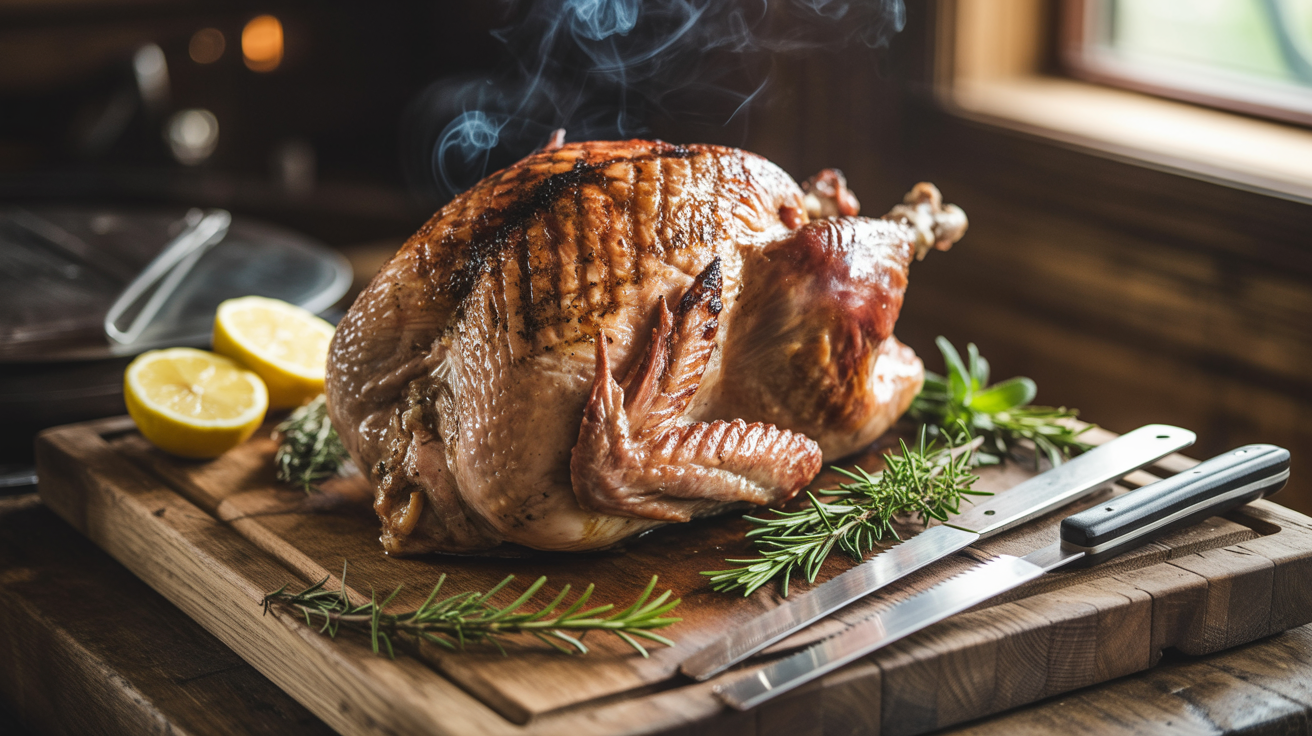
- Begin checking the internal temp of the turkey breast at the 75-minute mark. Insert your instant read thermometer into the thickest part of the breast, making sure you are not touching the bone, as that will give you a false high reading. You are looking for an internal temp of 160 degrees Fahrenheit at this point, knowing it will carry-over cook another 5 degrees while resting. The total cook time on a 4 to 5 pound bone-in turkey breast at 325 to 350 degrees will typically run 90 minutes to two hours, but always cook to temp, not to time. The bark should be a deep mahogany brown and firm to the touch.
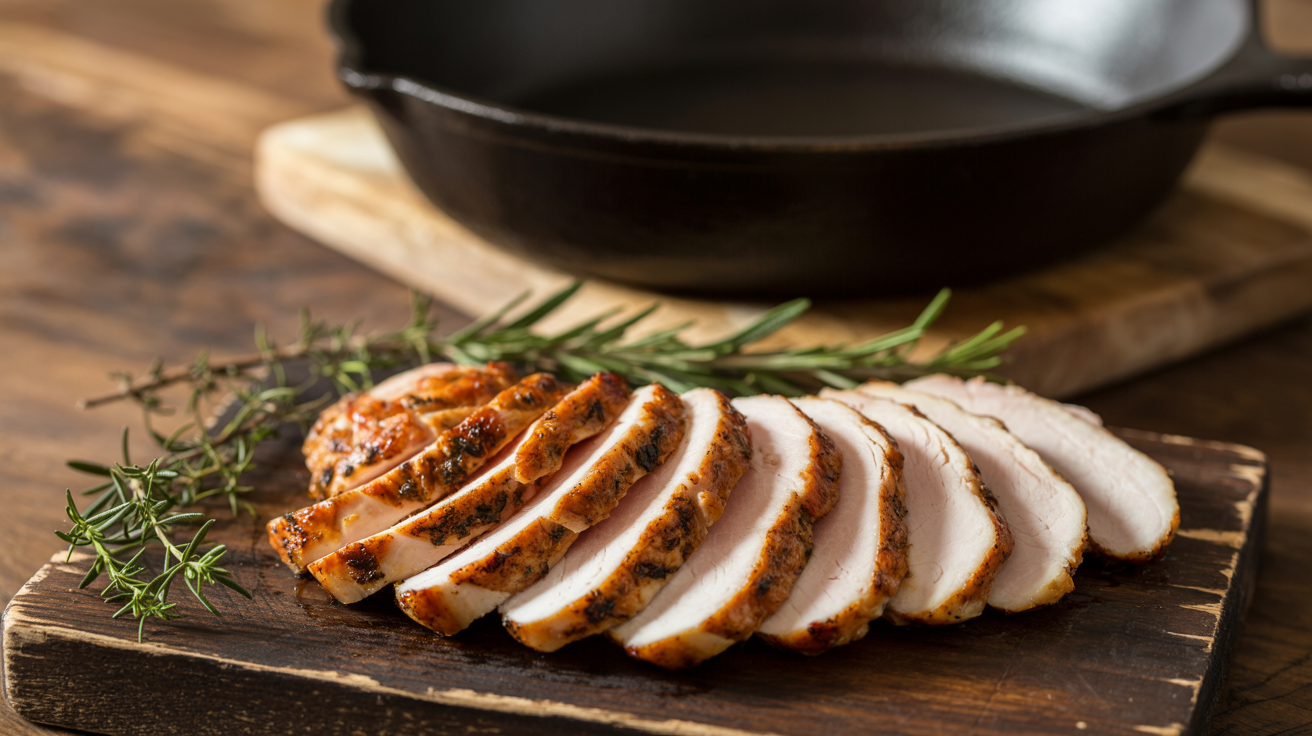
- Once the turkey breast reaches 160 degrees Fahrenheit, pull it off the grill and tent it loosely with aluminum foil. Rest the meat on a cutting board for a minimum of 15 to 20 minutes before slicing. This step is non-negotiable. Resting allows the juices that have been pushed to the center of the breast during cooking to redistribute throughout the entire piece of meat. Slice too early and those juices run all over your cutting board instead of staying in the meat. After resting, your internal temp will have climbed to a safe 165 degrees Fahrenheit. Slice against the grain and serve immediately.
Nutrition
This grilled turkey breast recipe is the one technique every serious backyard pitmaster needs in their arsenal before the next cookout or holiday gathering. We are talking a bone-in turkey breast kissed with hardwood smoke, crusted with a bold dry rub, and cooked low and slow over indirect heat until that internal temp hits a perfect 165 degrees Fahrenheit. This is not your grandma’s oven-roasted bird, and once you pull this off the grill, you will never go back.
The secret to a great grilled turkey breast is all about patience and fire management. Turkey breast is lean by nature, which means it dries out fast if you push the heat too hard or skip the resting step. We set up a two-zone fire on the charcoal grill, targeting a grill dome temp right around 325 to 350 degrees Fahrenheit, and we let that bird cook low and slow over indirect heat for roughly 90 minutes to two hours depending on size. The result is a deep mahogany bark on the outside and a smoke ring that tells the whole story.
Whether you are cooking for a crowd on Thanksgiving, prepping meal-prep protein for the week, or just looking to level up your grilling game, this recipe has everything you need. We will walk you through the dry brine, the rub, the fire setup, and most importantly, how to rest the meat properly so every single slice is juicy from edge to edge. Let us get into it.
Grilled Turkey Breast Recipe: Juicy and Smoky Results
This grilled turkey breast recipe delivers smoky, juicy results that will make you forget all about the oven. With the right rub, a two-zone fire, and a proper rest, you will have a centerpiece worthy of any backyard cookout. Fire up the grill today and taste the difference.
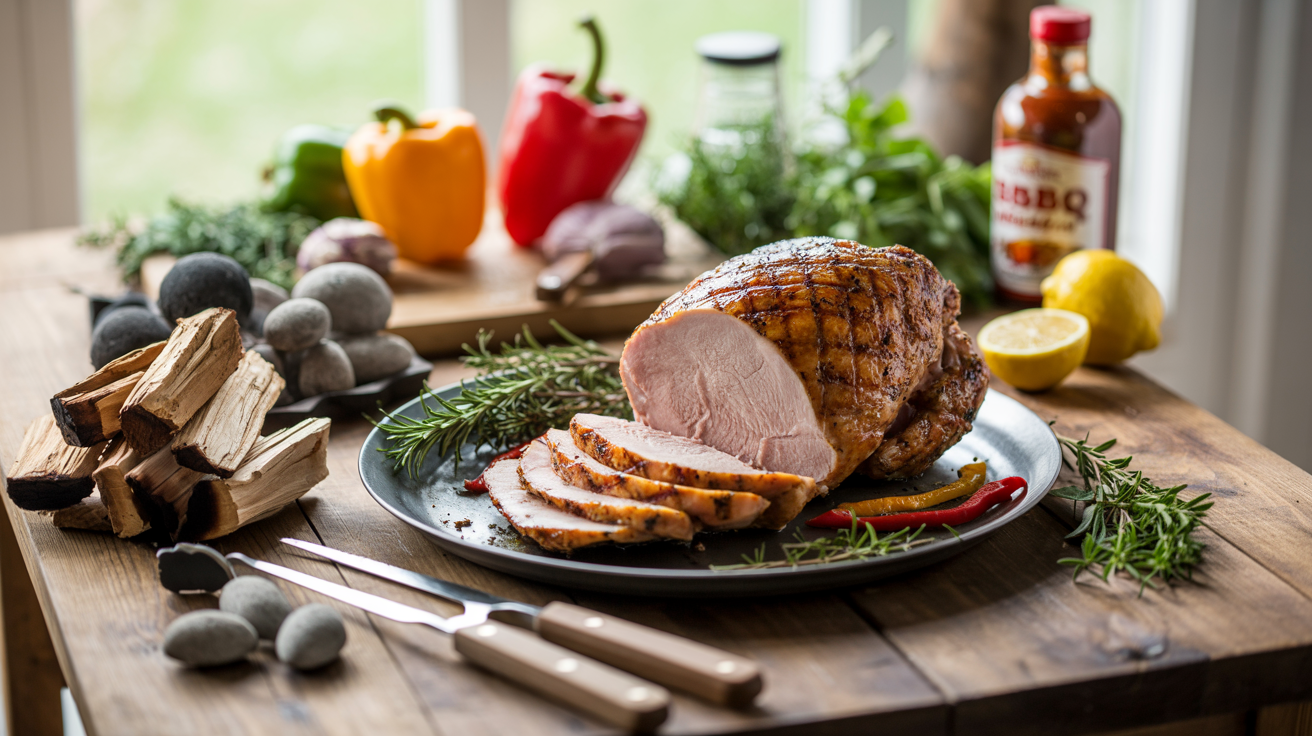
Ingredients
| AMOUNT | INGREDIENT | NOTES |
|---|---|---|
| 1 | bone-in skin-on turkey breast | approximately 4 to 5 lbs, thawed completely if previously frozen |
| 2 tablespoons | kosher salt | for dry brine, do not use table salt |
| 2 tablespoons | brown sugar | light or dark both work, adds color and sweetness to the bark |
| 1 tablespoon | smoked paprika | adds color and a subtle smokiness to the rub |
| 1 tablespoon | garlic powder | |
| 1 tablespoon | onion powder | |
| 1 teaspoon | black pepper | freshly cracked preferred |
| 1 teaspoon | dried thyme | classic herb pairing with turkey |
| 1 teaspoon | dried rosemary | lightly crush between your fingers before applying |
| 1 teaspoon | cayenne pepper | optional, reduce to half teaspoon for milder heat |
| 2 tablespoons | olive oil or softened butter | for binding the rub and basting the skin |
| 3 chunks | cherry or apple wood chunks | for smoke, pecan is also an excellent option |
| 1 | disposable aluminum drip pan | filled halfway with water or apple juice for moisture |
Instructions
Nutrition (per serving)
The BBQ Story Behind This Recipe
Turkey has been a cornerstone of American cooking since long before backyard grilling culture took hold. Native Americans were cooking wild turkey over open fire centuries before European settlers arrived, and that tradition of cooking this bird over live flame never really went away. When American BBQ culture began to codify itself in the South and the Midwest throughout the 19th and 20th centuries, whole birds and large cuts like turkey breast found their way onto the pits alongside brisket, pork shoulder, and ribs. Pitmasters quickly learned that turkey responds beautifully to low-and-slow smoke cooking, developing a bark and a smoke ring that rivals any cut of red meat.
Grilled and smoked turkey breast has seen a serious renaissance in recent decades, partly driven by competition BBQ circuits where teams showcase turkey as a featured category, and partly by home cooks looking for a leaner alternative to pork and beef that still delivers on smoke flavor and bark. Regional variations pop up across the country, from Texas-style turkey seasoned with just salt, black pepper, and a heavy post oak smoke to Carolina preparations that lean on a vinegar-forward glaze and hickory wood. At GrillMasterHQ, we split the difference with a well-balanced dry rub and a blend of fruitwood and hardwood smoke that complements the natural flavor of the turkey without overpowering it.
Hot Off the Grill
A Closer Look
Pitmaster Tips for Best Results
- Always dry brine your turkey breast uncovered in the refrigerator for at least four hours, ideally overnight. This single step does more for juiciness and bark development than any other technique in this recipe.
- Target a grill dome temp of 325 to 350 degrees Fahrenheit for the entire cook. Going higher risks drying out the lean breast meat before the interior reaches 165 degrees Fahrenheit. Patience is the pitmaster way.
- Use fruitwood like cherry or apple for a mild, slightly sweet smoke that complements turkey without overwhelming it. Hickory and oak work but can get heavy on a leaner white meat like turkey breast if you use too much.
- Do not skip the drip pan filled with liquid. The moisture it creates inside the grill environment acts as a buffer against the dry heat and helps keep the surface of the turkey breast from tightening up too fast.
- Rest the meat for a full 15 to 20 minutes under a loose foil tent before slicing. If you cut into the turkey breast right off the grill, you will lose a significant amount of juice to the cutting board and end up with a drier result on the plate.
🔧 Pitmaster Equipment
Charcoal Grill or Kettle Smoker: A charcoal grill gives you the authentic two-zone fire setup needed for indirect heat cooking and produces the real hardwood smoke flavor this recipe demands.
Instant Read Thermometer: Absolutely critical for this recipe. Turkey breast must hit 165 degrees Fahrenheit internally, and you cannot guess your way to a safe and juicy result. A quality instant read thermometer is non-negotiable.
Long Tongs and Heat-Resistant Gloves: Keep your hands protected while managing live coals, adding wood chunks, and moving the turkey breast around the grill safely.
Aluminum Drip Pan: Placed under the turkey on the cool side of the grill, a drip pan catches juices and helps regulate moisture in the cooking environment, keeping the breast from drying out.
Hardwood Chunks or Chips: Cherry, apple, or pecan wood chunks add the essential smoke flavor that separates a grilled turkey breast from an oven-roasted one. Chunks last longer than chips on a charcoal fire.
Wire Rack and Sheet Pan: Used during the dry brining step, elevating the turkey breast on a wire rack in the refrigerator allows air to circulate all around the meat for even moisture removal and better bark development.
🔥 Variations
Pellet Grill Version: Set your pellet grill to 325 degrees Fahrenheit and load it with cherry, apple, or pecan pellets for a clean mild smoke. Follow the same dry brine, rub, and cook steps exactly. The pellet grill excels at maintaining consistent temps with no babysitting, making it a great option for longer holiday cooks. Expect the same 90-minute to two-hour cook window on a 4 to 5 pound bone-in breast.
Gas Grill Version: Light only the burners on one side of the gas grill and place a smoker box loaded with soaked apple or cherry wood chips directly over those burners. Target the same 325 to 350 degree Fahrenheit indirect cooking zone for the turkey breast. Refresh the wood chips every 45 minutes for continuous smoke. The result will be slightly lighter on smoke flavor than charcoal but still far superior to oven roasting.
Spicy Cajun Style: Swap the standard dry rub for a bold Cajun blend of smoked paprika, cayenne, white pepper, dried oregano, dried thyme, garlic powder, and onion powder with a kick of crushed red pepper flakes. Finish the turkey breast with a brush of hot sauce thinned with melted butter during the last 15 minutes on the grill for a glossy, fiery crust that pairs great with collard greens and cornbread.
Herb Butter Injection Version: For maximum juiciness, use a meat injector to push a warm herb butter mixture of melted butter, garlic, thyme, rosemary, and a splash of white wine directly into the thickest parts of the breast before applying the dry rub. This technique floods the interior of the meat with fat and flavor, giving you extra insurance against dryness on the grill.
❓ Pitmaster FAQ
What internal temperature should grilled turkey breast reach?
Pull the turkey breast off the grill when it hits 160 degrees Fahrenheit and let it rest tented under foil for 15 to 20 minutes. Carry-over cooking will bring it up to the USDA safe minimum of 165 degrees Fahrenheit. Always verify with an instant read thermometer inserted into the thickest part of the breast without touching the bone.
Can I use a boneless turkey breast for this recipe?
Yes, a boneless turkey breast works fine but will cook faster, typically around 60 to 75 minutes at 325 to 350 degrees Fahrenheit. The bone-in version is preferred because the bone conducts heat more evenly from the inside and adds flavor to the meat during the cook. Monitor the internal temp more closely on a boneless breast since there is less thermal mass protecting it.
How do I keep my turkey breast from drying out on the grill?
Three things prevent dry turkey breast on the grill: a proper dry brine the night before, a drip pan filled with liquid underneath the turkey on the indirect side, and a full resting period after pulling it from the heat. Cooking at a moderate temp of 325 to 350 degrees Fahrenheit rather than blasting it with high heat also makes a significant difference in moisture retention.
What wood is best for smoking turkey breast?
Cherry and apple wood are the top recommendations for turkey breast. They produce a mild, slightly sweet smoke that enhances rather than dominates the natural flavor of white meat. Pecan is another excellent option with a slightly nuttier profile. Avoid mesquite for turkey, as it burns hot and produces an aggressive smoke that can easily overpower a leaner cut like turkey breast.
Can I grill a frozen turkey breast?
Never grill a turkey breast that is still frozen or partially frozen. It will cook unevenly, leaving the exterior overdone and the interior still in the danger zone temperature range. Thaw your turkey breast completely in the refrigerator, allowing approximately 24 hours of thaw time for every five pounds of weight. A fully thawed bird is the starting point for every great grilled turkey breast.